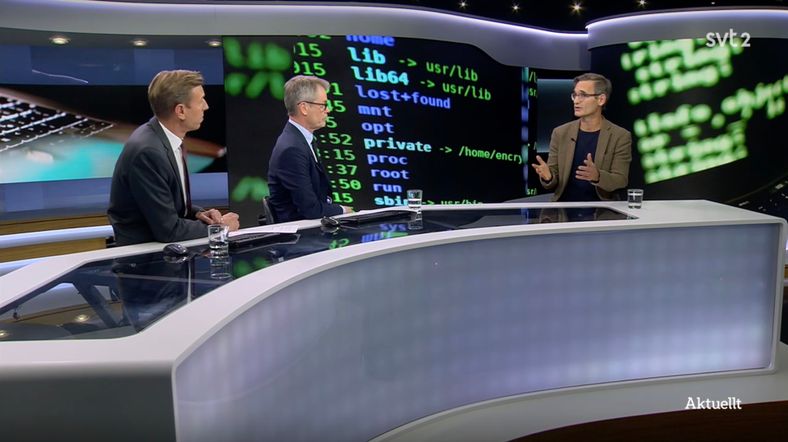
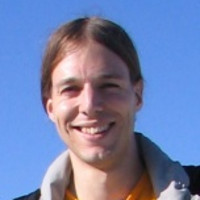
Pontus Johnson is a Professor at the KTH Royal Institute of Technology in Stockholm, Sweden. He leads the Center for Cyber Defense and Information Security (collaborating with Swedish Armed Forces, FRA, MSB, FOI, FHS) and serves as vice director of Cybercampus Sweden since 2024. His research focuses on cybersecurity , enterprise architecture analysis , and probabilistic threat modeling , particularly through his development of the Meta Attack Language (MAL) for simulating cyber attacks on networked systems. Education: MSc in Computer Science, Lund Institute of Technology (1997) PhD in Computer Science, KTH (2002) Docent title, KTH (2007) Leadership Roles: Director, Center for Cyber Defense and Information Security (2013–present) Vice Director, Cybercampus Sweden (2024–present) Board Member, Swedish Research Council (2025–present) Deputy Chair, Swedish Royal Academy of Engineering Sciences (IVA) Board (2024–present) His work spans cybersecurity research , attack simulation methodologies , and enterprise architecture frameworks . He has developed tools like securiCAD (acquired by Google) and pwnPr3d for probabilistic threat modeling. His 15 most recent publications highlight advancements in graph-based attack simulations , automated security assessments , and AI applications in cyber defense . Scientific recognition includes: Listed among Tech Awards Sweden's 50 Most Influential People in Swedish Tech (2022, 2023) Discovery of vulnerability in the Universal Turing Machine (2021) He supervises 16 PhD students and alumni (2005–2024), including Simon Gökstorp , Jakob Nyberg , and Sotirios Katsikeas . His academic service includes over 50 program committee roles and leadership positions in international conferences. He contributes to both academic and public domains through media appearances (SVT, Aftonbladet), courses in ethical hacking , and industry collaboration via his role at Google (20% of his time). His research group Software Systems Architecture and Security (SSAS) focuses on predictive security frameworks and system-of-systems analysis.
Johan Eklöf is a Professor at Stockholm University within the Department of Ecology, Environment and Plant Sciences . His research emphasizes marine ecology , focusing on interactions between marine biodiversity, environmental conditions (including climate), and societal impacts . He teaches courses such as Management of Aquatic Resources in the Tropics , Marine Ecology for the Biogeo Program , and Ecology II . Research Focus: Causal relationships between biodiversity and ecosystem resilience Foundation species as drivers of ecosystem services Optimizing resource management under climate change Projects: Principal Investigator for FORCE (2023-present), a transdisciplinary Baltic Sea recovery project Contributor to NordSalt (climate impacts on Nordic salt marshes) and PlantFish (Baltic Sea vegetation-fish interactions) Scientific Leadership : Supervises 2 current PhD students and co-supervises 6 additional PhD/postdocs Formerly mentored 4 PhD graduates and >40 MSc students Environmental Context: His work spans Baltic Sea and Western Indian Ocean ecosystems, using seagrass beds , mussel beds , and coastal benthic systems as primary models. Recent publications highlight climate change impacts on trophic cascades , habitat connectivity , and policy frameworks for marine conservation .
Olof Runborg is a Professor in Numerical Analysis at the Royal Institute of Technology (KTH) in Stockholm, Sweden. He works in the Division of Numerical Analysis, Optimization and Systems Theory within the Department of Mathematics at KTH. His research focuses on developing and analyzing numerical methods for partial differential equations, particularly for wave propagation problems. His educational background includes: MSc in Electrical Engineering from KTH (1992) BSc in Economics & Business Administration from SSE (1994) PhD in Numerical Analysis/Applied Mathematics from KTH (1998) Postdoc at Paris VI University (1999) Postdoc at Princeton University's Program in Applied and Computational Mathematics (2000-2001) Became Docent at NADA in 2003 Appointed Professor at KTH in 2010 Professor Runborg's research centers on the numerical treatment of partial differential equations, with special emphasis on wave propagation problems. His work spans multiple areas including high-frequency waves, multiscale phenomena, numerical homogenization, uncertainty quantification, multiresolution analysis, Gaussian beams, and mesh generation. A recurring theme in his research is developing methods to solve computationally expensive problems more efficiently while maintaining accuracy. His approach often involves coupling different numerical methods or reformulating equations to create more efficient computational approaches. His research has applications across physics and engineering domains where wave phenomena are important. An analysis of his recent publications (2015-2025) shows continued focus on high-frequency wave propagation with expanding applications to areas like the Landau-Lifshitz equation for magnetic materials and elastic wave propagation. His work bridges theoretical numerical analysis with practical computational techniques, often developing novel methods like the WaveHoltz iteration for solving the Helmholtz equation. The publications demonstrate increasing attention to uncertainty quantification and multiscale methods while maintaining strong theoretical foundations in error analysis. Professor Runborg teaches several courses at KTH including Numerical Methods (basic course), Applied Numerical Methods, Numerical Algorithms for Data-Intensive Science, and Selected Topics in Numerical Analysis II. He serves as examiner for degree projects in Scientific Computing. His teaching reflects his research expertise in numerical methods and computational mathematics, providing students with both theoretical foundations and practical implementation skills. Beyond his core research, Professor Runborg has engaged in interesting side projects, such as his analysis of 'Numbers on the Web' where he investigated the frequency of numbers 11-1000 in web content, revealing patterns related to dates, time, computer systems, and cultural phenomena. This demonstrates his broader interest in data analysis and computational approaches to understanding patterns in information.
Hedvig Kjellström is a Professor at the Division of Robotics, Perception and Learning within the School of Electrical Engineering and Computer Science at KTH Royal Institute of Technology. She holds significant affiliations with the Swedish e-Science Research Centre and the Max Planck Institute for Intelligent Systems in Germany. Her work spans multiple interdisciplinary domains and she serves as Editor-in-Chief for CVIU and was Program Chair for CVPR 2025. Her research centers on Computer Vision as a sub-field of AI, with three interconnected themes: Computational Aesthetics (exploring aesthetic aspects of human communicative behavior), Communicative Behavior (developing models of how humans and animals perceive and produce non-verbal communication), and Embodied Artificial Intelligence (creating methodologies for robots and autonomous agents to perceive the world through sensors, primarily vision). Her work has significant applications in medical diagnostics, animal welfare, human-robot interaction, and creative arts. Analysis of her recent publications reveals a strong trend toward multimodal AI systems that integrate vision, language, and action understanding. Her research increasingly focuses on animal-centered applications, particularly equine pain detection and behavior analysis, while maintaining strong foundations in human communication modeling, gesture recognition, and 3D reconstruction techniques. The interdisciplinary nature of her work bridges computer science with veterinary medicine, neuroscience, and performing arts. Hedvig Kjellström actively supervises numerous PhD and Master's students across various projects and maintains extensive collaborations with institutions including Karolinska Institutet, Swedish University of Agricultural Sciences, and international partners. Her research is supported by major funding bodies including WASP, VR, and SeRC. She leads or participates in several notable projects including OrchestrAI (communication between conductor and orchestra), ANITA (Animal Translator), MARTHA (3D horse motion analysis), and STING (synthesis and analysis with transducers and invertible neural generators). Her work with ACAI (Animal Centered Artificial Intelligence), which she co-founded and directs, demonstrates her commitment to applying AI for animal welfare.
Susanne Iwarsson is a Professor in Gerontology and Care for Older People at Lund University's Faculty of Medicine, holding the Mary and Seved Ribbing Professorship since 2005. She also serves as Director of the Centre for Ageing and Supportive Environments (CASE) and Coordinator of the Swedish National Graduate School for Competitive Science on Ageing and Health (SWEAH). Her academic journey includes a PhD in Medical Science (1997) and promotions to Associate Professor (1999) and Professor (2003). She has held leadership roles such as Pro-dean of the Faculty of Medicine (2006-2011) and Coordinator of the strategic research area MultiPark (2012-2014). Her research focuses on environmental gerontology, housing accessibility, and proactive ageing strategies. Key contributions include the Housing Enabler assessment tool and studies on ageing populations' participation in society. She has supervised 18 PhD students and 6 licentiates, with ongoing supervision of 4 current PhD candidates. Major projects include the Home, Health and Disability longitudinal study (2002-present) and the UserAge program exploring user participation in ageing research. Awards include the Excellent Teaching Practitioner title (2010) and Doctor Honoris Causa. Her work addresses UN Sustainable Development Goals related to health, sustainable cities, and reduced inequalities. Collaborations span universities in Sweden, Finland, Latvia, and the U.S., with partnerships in healthcare and municipal sectors.
Don Kulick is a Professor and Research Director at the Department of Cultural Anthropology and Ethnology, Uppsala University, Sweden. His academic career spans decades of anthropological fieldwork in Papua New Guinea, Brazil, and Scandinavia, with a focus on linguistic anthropology, sexuality studies, and disability studies. Dr. Kulick's research interests encompass linguistic anthropology, sexuality studies, disability studies, language death, vulnerability studies, and human-animal communication. His work challenges conventional views on vulnerability, arguing that it can be a resource rather than a lack. His fieldwork with adults with significant disabilities in Denmark and Sweden informed his influential book "Loneliness and its Opposite: sex, disability, and the ethics of engagement". Kulick has also made significant contributions to the understanding of transgender communities, particularly through his early ethnographic work with Brazilian travesti prostitutes documented in "Travesti: Sex, Gender and Culture among Brazilian Transgendered Prostitutes". His recent scholarly output demonstrates a trajectory from linguistic anthropology and sexuality studies toward broader questions of vulnerability, ethics, and human-animal relations. Kulick's work consistently engages with marginalized communities and challenges disciplinary boundaries, connecting linguistic anthropology with disability studies, queer theory, and ethical frameworks for engagement with vulnerable others. ERC Advanced Grant for a 5-year research project on people who are treated as though they aren't really there Dr. Kulick has received significant research funding, most notably an ERC Advanced Grant for a 5-year project examining people who are treated as though they aren't really there, including courtroom interpreters and peer reviewers. His mentorship extends through his extensive publications and edited volumes that have shaped multiple generations of anthropological scholarship, particularly in the areas of linguistic anthropology and sexuality studies. While specific lab structures aren't mentioned in the provided text, Kulick's research program on vulnerability appears to be an organized research initiative (referred to as the "EV program" in the text), suggesting a research team or collaborative network focused on vulnerability as a productive resource.
Elias Jarlebring is a Professor in Numerical Linear Algebra at the Department of Mathematics, KTH Royal Institute of Technology, Stockholm. He has held the position of Full Professor since 2021, following his tenure as Associate Professor (2013-2021) and Dahlquist Research Fellow (2011-2013). His research focuses on numerical analysis, numerical linear algebra, matrix computations, and scientific computing. Jarlebring develops linear algebra algorithms to solve problems from various fields including systems and control, acoustics, electromagnetics, data science, quantum mechanics, and quantum chemistry. He is a core developer of NEP-PACK, a scientific computing software package for nonlinear eigenproblems. His recent publications demonstrate significant contributions to computational methods for nonlinear eigenvalue problems, matrix functions, and parameterized linear systems. The research shows a clear trajectory toward increasingly complex applications in quantum computing, data science, and wave propagation problems. Project grant, Swedish research council (2019) Ruth och Nils-Erik Stenbäcks foundation, junior grant (2019) Göran Gustafsson Prize for junior researchers (2014) Project grant for junior researchers, Swedish research council (2014-2018) Professor Jarlebring has supervised numerous PhD students including Vilhelm Peterson Lithell, Gustaf Lorentzon, Siobhán Correnty, Parikshit Upadhyaya, Emil Ringh, Antti Koskela, and Giampaolo Mele. He has received multiple research grants from the Swedish Research Council and serves as editor for BIT Numerical Mathematics, Linear and Multilinear Algebra, NACO Numerical Algebra Control and Optimization, and CALCOLO. He is actively involved in the numerical linear algebra community as a member of ILAS (International Linear Algebra Society), GAMM Activity Group on Numerical Linear Algebra, and the Nordic Numerical Linear Algebra Association. He also contributes to open source projects, particularly in the Julia programming language ecosystem.
Lena Wahlberg is an Associate Professor and Senior Lecturer at the Department of Law, Lund University, serving as Assistant Head of Department. Her roles include interdisciplinary research and teaching in medical law, evidence law, and jurisprudence. She leads the Law, Evidence and Cognition (LEVIC) research group and participates in the Science and Proven Experience (VBE) program funded by the Swedish Foundation for Humanities and Social Sciences. Her research focuses on legal causation, expert evidence evaluation, and the intersection of law with natural sciences/medicine. Notable projects include analyzing expert testimony reliability, legal implications of scientific evidence gaps, and defining 'science and proven experience' in healthcare decision-making. Recent publications (2024-2025) emphasize healthcare policy, data governance, and legislative reform in abortion laws and research ethics. She collaborates internationally with institutions like Harvard Medical School and Carnegie Mellon University. Teaching responsibilities include coordinating the doctoral course Theoretical Foundations for Doctoral Studies in Law . Supervised doctoral students include Amanda Bills (Public International Law) and Yana Litins’ka (Medical Law). Research funding includes projects from the Swedish Research Council and Riksbankens Jubilieumsfond. Key affiliations: Member of the VBE research consortium (2015-2020+), LEVIC group, and contributor to national policy consultations on health data and medical ethics.
Saurabh Amin is a Professor in the Department of Civil and Environmental Engineering at the Massachusetts Institute of Technology (MIT), where he also serves as the Edmund K. Turner Professor and Undergraduate Officer. He is a Principal Investigator at the Laboratory of Information and Decision Systems and holds affiliations with the Operations Research Center and the Center for Computational Science and Engineering. His educational background includes: B.Tech. 2002, Indian Institute of Technology (IIT) Roorkee M.S. 2004, University of Texas (UT) Austin Ph.D. 2011, University of California (UC) Berkeley Saurabh Amin's research focuses on the design and control of infrastructure systems using game theory and optimization in networks. His work spans three main areas: resilient network control, information systems and incentive design, and optimal resource allocation in large-scale infrastructure systems. By concentrating on critical infrastructure domains including highway transportation, electric power distribution, and urban water networks, his research develops innovative theory and tools to enhance system performance against both stochastic and adversarial disruptions. His approach involves modeling cyber-physical interactions in infrastructures to assess vulnerabilities, developing detection and response tools for failures at various scales, and designing economic incentive schemes that improve aggregate public good while accounting for dependencies and private information among strategic entities. Amin's work bridges mathematical systems theory with practical civil engineering applications, creating a rigorous theoretical foundation for infrastructure resilience that addresses diverse failure mechanisms from natural disasters to deliberate malicious actions. His recent publications demonstrate a strong focus on decarbonization of energy systems, resilient infrastructure planning under climate uncertainty, optimization methods for complex networked systems, and game-theoretic approaches to sustainable infrastructure management. His work increasingly integrates artificial intelligence and machine learning techniques with traditional control theory to address contemporary challenges in infrastructure resilience and sustainability. The research shows a clear trajectory toward addressing climate change impacts on infrastructure systems while maintaining economic efficiency and operational reliability. Professor Amin has received numerous prestigious awards and honors: Common Ground Excellence in Teaching Award, 2025 HSCC Test-of-Time Award, 2024 MIT CEE, Distinguished Service and Leadership Award, 2023 Samuel M. Seegal Prize (SoE) – inspiring students in pursuing and achieving excellence, 2022 Earll M. Murman for Excellence in Undergraduate Advising, 2022 C3.ai Digital Transformation Institute Research Award, 2020 MIT, Ole Madsen Mentoring Award, 2020 MIT, Energy Initiative Research Award, 2020 National Academy of Engineering, China-America Frontiers of Engineering Symposium speaker, 2019 MIT, Robert N. Noyce Career Development Professor, 2015-2018 Google Faculty Research Award, 2015 National Science Foundation CAREER Award, 2015 Siebel Energy Institute Research Award, 2015 MIT, Solomon Buchsbaum AT&T Research Fund Award, 2012 Professor Amin has been actively involved in significant research projects including the C3.ai DTI project on Causal Reasoning for Real-Time Attack Identification in Cyber-Physical Systems and another on Learning in Routing Games for Sustainable Electromobility. He serves as the chief scientist on multi-institutional NSF grants, including the $9 million Foundations of Resilient Cyber-Physical Systems (CPS) project. His teaching portfolio includes courses such as 1.008 Engineering for a Sustainable World, 1.104 Sensing and Intelligent Systems, 1.020 Engineering Sustainability: Analysis and Design, and 1.208 Resilient Networks. As Undergraduate Officer, he plays a key role in shaping the educational experience for civil and environmental engineering students at MIT. Professor Amin leads the Resilient Infrastructure Networks Lab at MIT, where his team develops theoretical foundations and practical tools for infrastructure resilience. The lab focuses on the intersection of control theory, game theory, and optimization applied to cyber-physical infrastructure systems. Current research directions include pandemic-resilient urban mobility and hurricane-resilient smart grid operations, reflecting the lab's commitment to addressing pressing societal challenges through rigorous systems engineering approaches.
Cyrille Artho is an Associate Professor in the Division of Theoretical Computer Science at KTH Royal Institute of Technology, actively contributing to research in formal methods, software testing, and cybersecurity. His work spans model checking, smart contract security, and concurrent systems verification, with significant contributions to tools like Java Pathfinder and Modbat. PhD from ETH Zurich (2005) with dissertation on multi-threading fault detection Teaches Software Safety and Security, Software Engineering Fundamentals, and supervises degree projects His research focuses on developing formal techniques for safety-critical systems, particularly in blockchain security and distributed applications. Recent work emphasizes smart contract verification, anomaly detection in microservices, and trusted execution environments for secure cloud analytics. The 15 most recent publications reveal a strong trend toward blockchain security (6 articles), formal verification of distributed systems (5), and novel testing methodologies (4), with increasing integration of machine learning for vulnerability detection. As chair of the FTSCS workshop series and contributor to major conferences like ASE and ICST, Artho has significantly shaped the formal methods community. His leadership in organizing workshops demonstrates commitment to advancing safety-critical systems research. Principal investigator for C3.ai DTI Cyber Safety Cage for Networks project Develops Modbat framework for model-based API testing Active in Digital Futures research initiative at KTH
Georgios Dimitroglou Rizell is a Senior Lecturer in the Department of Mathematics at Uppsala University, Sweden, where he also serves as Head of the Department since 2020. His academic work is centered at the Ångström Laboratory, where he conducts research in symplectic and contact topology. He maintains dual affiliations with both the Department of Mathematics and the Center for Geometry and Physics at Uppsala University. Dr. Dimitroglou Rizell earned his PhD from Uppsala University in 2012 under the supervision of Tobias Ekholm. Following his doctoral studies, he held postdoctoral positions at the Université Libre de Bruxelles (2012-2013), Université Paris-Sud (2013-2014), and the University of Cambridge (2014-2015), all supported by prestigious fellowships from the Knut & Alice Wallenberg Foundation. He returned to Uppsala University as a researcher (2015-2017) and Assistant Lecturer (2017-2021) before being promoted to Senior Lecturer in 2021. His research primarily focuses on symplectic and contact topology, with special emphasis on understanding and classifying Lagrangian and Legendrian submanifolds. His work employs advanced mathematical techniques including pseudoholomorphic curves, pseudoholomorphic foliations, Symplectic Field Theory, and Floer homology. His investigations span a broad range of topics within geometric topology, from the classification of Lagrangians near the Whitney immersion to the study of Legendrian submanifolds and their invariants. His research has significant implications for understanding the geometric structures underlying classical mechanics and quantum physics. His recent publications (2020-2025) demonstrate a consistent focus on Lagrangian and Legendrian submanifolds, with particular attention to their classification, invariants, and interactions with symplectic structures. A notable trend is the development of new techniques for studying C^0-limits of Legendrians, exact Lagrangians in various settings, and the geometric generation of Fukaya categories. His collaborative work with researchers like Michael Sullivan, Roman Golovko, and others has produced significant advances in Floer theory and symplectic field theory. Scientific Awards Wallenberg Scholar (2023-2028, KAW 2023.0294) Wallenberg Academy Fellow (extension 2022-2027, KAW 2021.0191) Wallenberg Scholar (2022-2023, KAW 2021.0300) Wallenberg Academy Fellow (2017-2021, KAW 2016.0198) As Head of the Department of Mathematics, Dr. Dimitroglou Rizell oversees academic programs and research initiatives. His leadership is supported by significant funding from the Knut & Alice Wallenberg Foundation, which has awarded him multiple prestigious fellowships throughout his career. These grants have enabled his research in symplectic geometry and supported collaborative projects with international mathematicians. Dr. Dimitroglou Rizell is actively involved in the Center for Geometry and Physics at Uppsala University, where he collaborates with researchers across mathematical disciplines. His work intersects with theoretical physics, particularly in areas related to geometric quantization and the mathematical foundations of quantum mechanics. He participates in seminar series and reading groups focused on symplectic topology and its applications.
Carl-Gösta Ojala serves as Senior Lecturer at Uppsala University's Department of Archaeology, Ancient History and Cultural Preservation, where his research bridges archaeological practice with critical examinations of colonial history and indigenous heritage. His academic profile demonstrates deep engagement with Sámi communities across historical periods, from Bronze Age material culture studies to contemporary issues of cultural preservation and indigenous rights. Dr. Ojala's research program centers on decolonizing archaeological methodologies through rigorous analysis of how colonial frameworks have shaped archaeological knowledge production in Northern Europe. His work particularly examines the historical collection of Sámi material culture and human remains, the impact of colonial infrastructure projects like hydroelectric dams on indigenous heritage sites, and the political dimensions of archaeological interpretation in Sápmi. He investigates how archaeological narratives have been constructed within colonial contexts and how contemporary practice can better incorporate indigenous perspectives. An analysis of his recent publications reveals evolving scholarly attention from historical colonial practices to their contemporary implications for indigenous self-determination and cultural heritage management. His 2023-2025 works demonstrate increasing focus on Sámi mobilities, dammed heritage, and the politics of archaeological representation, reflecting a trajectory toward more applied, community-engaged scholarship that addresses ongoing colonial legacies in cultural heritage institutions. Dr. Ojala has established himself as a critical voice in Nordic archaeological discourse through numerous book chapters, journal articles, and edited volumes including 'Archaeologies of "Us" and "Them": Debating History, Heritage and Indigeneity' (2017). His scholarship consistently challenges conventional archaeological paradigms while offering constructive frameworks for more ethical, collaborative research practices with indigenous communities in Northern Europe.
Robert Östling is a Professor of Economics at the Stockholm School of Economics (SSE), affiliated with the Department of Economics and the Karl-Adam Bonnier Center for Governance within the House of Governance and Public Policy. He holds a PhD from SSE (2008) and previously worked at Stockholm University's Institute for International Economic Studies until 2018. His research focuses on applied microeconomics and behavioral economics, particularly examining how wealth impacts attitudes, behavior, and life outcomes using Swedish lottery data. He teaches econometrics, behavioral economics, and economics for MBA students, and serves as program director for SSE's MSc in Economics. Key roles include board membership of the Swedish Economics Association and the Expert Group on Public Economics (ESO), and membership in the scientific advisory board of the Swedish Consumer Protection Agency. He co-founded the popular economics blog Ekonomistas , recognized as 'Swede of the Year' in 2017. Awards include the Assar Lindbeck Medal (2021) and the Arnberg Prize (2009). His research spans wealth effects on labor supply, health, child development, and political behavior. Notable projects include studying lottery winners' long-term well-being and portfolio decisions. Teaching innovations include using animated GIFs for econometrics instruction. He has contributed to policy debates on economic reforms, consumer protection, and pandemic responses. Outreach activities include public writing and policy advisory roles. His research has been featured in outlets like the New York Times and Swedish media. He remains active in academic networks, including the Network for Evidence-Based Policy.
Malgorzata Blicharska is a Senior Lecturer in Sustainable Development at Uppsala University, affiliated with the Department of Geosciences and the Institute for Research on Conflicts of Interest in Sustainable Social Transformation. Her work spans multiple research domains focused on sustainable natural resource management and policy implementation. Dr. Blicharska's research focuses on sustainable development with expertise in ecosystem services, biodiversity conservation, climate change governance, and the Water-Energy-Food-Ecosystem (WEFE) nexus. She integrates social science perspectives with environmental management, examining policy implementation and stakeholder engagement in conservation initiatives. Her work includes extensive research on urban ponds, recreational fisheries, and nature-based solutions, particularly focusing on ponds and wetlands as key components of sustainable landscape management. Her recent publications reveal a strong emphasis on transdisciplinary approaches to environmental challenges, with growing focus on nature-based solutions, drought vulnerability in forested regions, and governance aspects of implementing the WEFE nexus concept. Her work increasingly addresses justice dimensions in environmental management and stakeholder engagement in policy implementation. LANDPATHS: Swedish Environmental Protection Agency-funded program on multifunctional landscapes (coordinator) PONDERFUL: Horizon 2020 project on pond biodiversity and ecosystem services (WP lead) NEXOGENESIS: Horizon 2020 project on WEFE nexus policy integration (WP lead) Wet-Kit: Swedish Environmental Protection Agency project on wetland optimization PUDDLE-JUMP: Formas-funded project on small artificial waterbodies
Michael Felsberg is a Professor and Head of Division at the Department of Electrical Engineering (ISY) at Linköping University, leading the Computer Vision Laboratory (CVL). His research focuses on artificial visual systems (AVS), including 3D computer vision, computational imaging, object tracking, and autonomous systems. He emphasizes HVS-inspired approaches to bridge the gap between human and machine vision capabilities. Notable achievements include over 20,000 citations (h-index 47), leadership roles in the Wallenberg AI, Autonomous Systems and Software Program (WASP), and recognition as Sweden’s top AI researcher by Vinnova. His work spans academic contributions, industry collaborations, and interdisciplinary projects like climate science applications of machine learning. Positions : WASP Executive Committee Member, WASP Area Cluster Leader for Machine Learning, and Vice-Head of Department (Electrical Engineering). Education : Extensive academic background in electrical engineering and computer vision (details not explicitly stated). Research trends in his articles reflect advancements in autonomous systems, multimodal AI, and robust vision models. His teams address challenges like object tracking, generative models for 3D simulation, and culturally diverse AI systems. Awards : Tracking Challenge Winner (OpenCV, 2015) Best Paper Awards (ICPR 2016, VISAPP 2021) Vinnova’s Highest-Ranked Swedish AI Researcher (2018) He advises numerous PhD students and oversees grants in WASP-funded initiatives. CVL collaborates on projects like disaster-response robotics and Berzelius supercomputer utilization for AI.