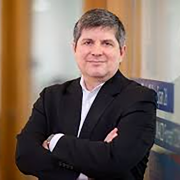
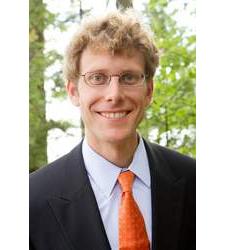
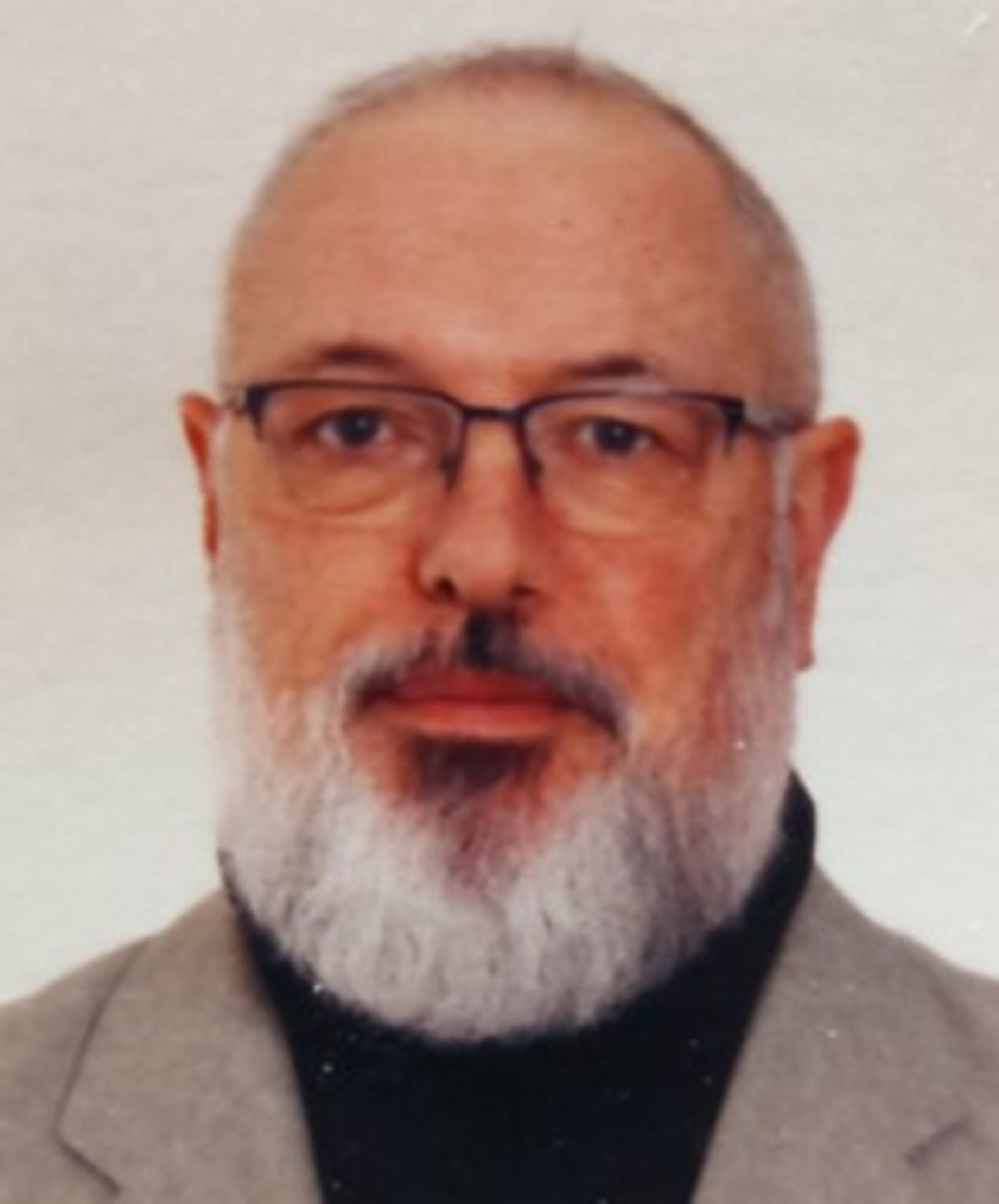
Matthew W. Easterday is an Assistant Professor at the School of Education and Social Policy, Northwestern University, focusing on technology-enabled civic education. His research develops educational technologies to cultivate informed citizens capable of addressing societal challenges like climate change and poverty through policy analysis and collective action.
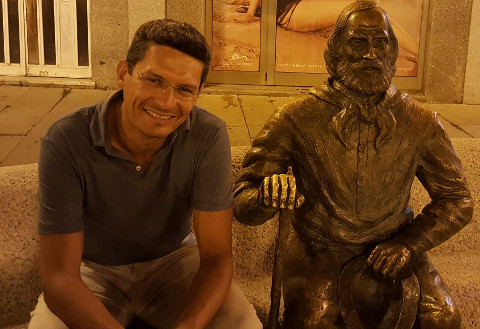
Balint Laczko is a Doctoral Research Fellow at the RITMO Centre for Interdisciplinary Studies in Rhythm, Time and Motion, affiliated with the Faculty of Humanities at the University of Oslo. His research focuses on image sonification and interdisciplinary studies in autophagy, combining expertise in music technology, machine learning, and computer vision. Education: Master's degrees in Classical Composition (Liszt Academy of Music, Budapest, 2017) and Performance Technology & Electroacoustic Composition (Norwegian Academy of Music, Oslo, 2021). Research interests include 3D audio, audiovisual analysis, and the development of tools for musical gesture analysis. His work bridges artistic and technical domains, with publications in conferences like ICAD and ACM. Key projects: AUTORHYTHM (biological-music tech collaboration), Sonification Pilot (bioRITMO).
Professor Jochen Leidner is a Visiting Professor in the Department of Computer Science at the University of Sheffield and a Research Professor for Explainable and Responsible AI at Coburg University of Applied Sciences, Germany. He has held leadership roles including Director of Research at Thomson Reuters and Refinitiv, and has founded companies like Polygon Analytics and KnowledgeSpaces. His academic background includes degrees from the University of Erlangen-Nuremberg, University of Cambridge, and a PhD in Informatics from the University of Edinburgh. Research focuses on AI ethics, natural language processing, information extraction, and geoinformatics. Notable contributions include work on question-answering systems (QED/ALYSSA), spatial toponym resolution algorithms, and risk-mining frameworks. Awards include the ACM SIGIR Doctoral Consortium Award and twice winning Thomson Reuters Inventor of the Year for patents. He has taught at institutions across Europe and advises EU funding bodies (FP7/Horizon). Holds multiple patents in information retrieval and mobile computing. Active in industry collaborations, blending academic research with real-world applications in finance, legal tech, and supply chain analytics.
Dominic Agyei is an Associate Professor of Food Chemistry at Monash University's School of Chemistry. His research focuses on leveraging bioprocess engineering and computational tools to develop high-value bioactives from novel sources like plant- and insect-based materials. He holds a BSc in Food Science from Kwame Nkrumah University of Science and Technology (2008) and a PhD in Chemical Engineering from Monash University (2014). He previously served as a Postdoctoral Research Fellow at Deakin University (2015–2017) and as a Lecturer in Food Science at the University of Otago. Education: BSc (Honors) in Food Science, Kwame Nkrumah University of Science and Technology, 2008 PhD in Chemical (Bioprocess) Engineering, Monash University, 2014 Alfred Deakin Postdoctoral Research Fellowship, Deakin University, 2015–2017 Postgraduate Certificate in Higher Education, University of Otago, 2023 Research Interests: Combines in silico modelling and bioprocess engineering to study food-derived compounds' structures, properties, and health implications. Key areas include food bioactives, edible insects, biocatalysis, and sustainable food innovation. His work aligns with UN Sustainable Development Goals, particularly addressing food security and environmental sustainability. Publications: Recent work emphasizes functional food development, legume health benefits, and sustainable extraction methods. His 2025 review on aloe vera bioactives highlights innovative applications, while studies on legumes and walnut oil explore nutritional and industrial potential. Awards: Young Researcher Award, International Union of Food Science and Technology (IUFoST), 2022 Advising & Grants: Supervises PhD candidates focusing on protein functionalities and bioactive compounds. Active in early-career scientist advocacy, serving on the Administrative Council of Early Career Scientists for IUFoST. Recognized as a 'Recognized Doctoral Supervisor' under the UK Council for Graduate Education's framework.
Alastair Gemmell is affiliated with the University of Reading, contributing to research in environmental science and oceanography. His work focuses on developing web-based tools for visualizing and analyzing environmental and oceanographic data, including the creation of portals and applications for model-data comparison. Key research interests include environmental data visualization, oceanographic modeling, computational modeling, and geospatial technologies. His publications span from 2007 to 2013, emphasizing interdisciplinary approaches combining environmental science with computational methods. Notable contributions include the development of a Web Map Service for multidimensional environmental data visualization and an ECOOP web portal for coastal oceanography data comparison. These projects highlight his expertise in integrating geospatial technologies with environmental data analysis.
Marco Baiesi is an Associate Professor in the Department of Physics and Astronomy at the University of Padua. His research focuses on nonequilibrium systems, polymers, biopolymers, topology, and machine learning applications in physics and biophysics. He has contributed to understanding the statistical mechanics of complex systems, including polymer dynamics, topological effects, and non-equilibrium thermodynamics. His work spans interdisciplinary areas such as biophysics, soft condensed matter, and machine learning for medical diagnostics. Notable contributions include studies on knotted polymer behavior, entropy production in non-equilibrium systems, and the application of AI to EEG-based dementia classification. Baiesi’s publications frequently explore topics like fluctuation theorems, stochastic processes, and the interplay between topology and material properties. His research has been published in high-impact journals such as Science , Physical Review Letters , and New Journal of Physics .
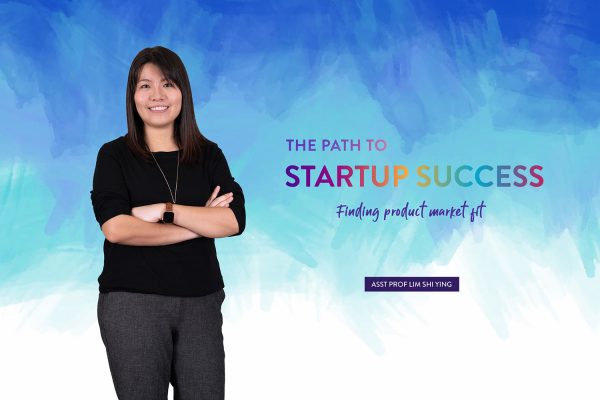
Dr. LIM Shi Ying is an Assistant Professor in the Department of Information Systems and Analytics at the National University of Singapore (NUS School of Computing). She holds a Ph.D. in Information Systems from The University of Texas at Austin, an M.P.H. in Health Management from Yale University, and a B.A. in Molecular & Cell Biology (Immunology) and Economics from UC Berkeley. Her research focuses on digital entrepreneurship, healthcare IT, and computational social science, emphasizing strategic reorientations in nascent ventures and digital artifact impacts. She has been recognized with teaching awards and nominations for best papers at ICIS and HICSS. Education: Ph.D. (UT Austin), M.P.H. (Yale), B.A. (UC Berkeley) Affiliations: NUS School of Computing, McCombs School of Business (UT Austin), Yale School of Public Health Her research explores how digital tools and platforms enable creative problem-solving in uncertain markets, particularly in healthcare and digital ecosystems. Notable projects include analyzing startup trajectories to product-market fit and investigating institutional barriers in digital health innovation. Collaborations span industries including hospitals, pharmaceuticals, and the WHO. Publications highlight themes like generativity in user innovation (e.g., IKEA hacks), platform versioning impacts, and telemedicine coordination. Awards include teaching excellence and multiple best paper nominations for work on resource mobilization and digital health ventures.
John P Papay is an Associate Professor of Education and Economics at Brown University and serves as the Director of Education Policy at the Annenberg Institute. His research focuses on educational inequality , teacher policy , and school reform , often collaborating with policymakers and practitioners through initiatives like the Educational Opportunity in Massachusetts project and the Research Partnership for Professional Learning (RPPL) . Locally, he partners with the Rhode Island Department of Education to address systemic challenges in urban schools. Education : EdD (2011), Harvard University; EdM (2005), Harvard University; BA (1999), Haverford College. Papay’s research explores teacher retention , instructional effectiveness , educational policy evaluation , and the impact of high-stakes testing on student outcomes. His recent publications analyze teacher hiring practices , career development , and income-based educational disparities . He employs advanced econometric methods, including regression-discontinuity designs , to assess policy impacts. Notable awards include the AERA Palmer O. Johnson Award (2015) , Spencer Foundation Dissertation Fellowship (2010-11) , and multiple Harvard fellowships. Papay teaches courses in education foundations , quantitative research methods , and policy analysis , and has led funded research projects examining teacher effectiveness and school turnaround strategies.
Prof. Dr. Armando Walter Colombo is a Professor at the Department of Technology, Electrical Engineering and Informatics at the University of Applied Sciences Emden/Leer. He leads the Institute I2AR as Scientific Director and coordinates the DAAD/DAHZ Binational Master in Industrial Informatics with the Universidad Tecnológica Nacional-FRRe in Argentina. His research focuses on Cyber-Physical Systems (CPS), Industrial Digitalization, Industry 4.0, and Smart Manufacturing. Key areas include asset administration shells, IoT integration, and sustainable industrial automation. He holds IEEE Fellow status and is a Distinguished Lecturer for the IEEE Systems Council. He has pioneered educational frameworks like T-CHAT and contributed to standards alignment (RAMI4.0, IEEE Industrial Agents). Recent publications emphasize Industry 4.0 compliance, digital twins, and AI in logistics. Responsibilities: DAAD Master Coordinator, Institute I2AR Director, and International Relations Officer. Awards: IEEE Fellow, Distinguished Lecturer (IEEE Systems Council). Grants & Partnerships: DAAD-funded binational programs, EU-funded PERFoRM projects. His work bridges academia and industry through platforms like the ICPS-based Digital Factory Lab, addressing SME digitalization and sustainable automation.
Uğur Efe Uçar is a Researcher at the Department of Interior Architecture, Faculty of Architecture, Istanbul Technical University. He holds a PhD in Informatics in Architectural Design (2021) and has been a Research Assistant since 2019. His academic journey includes a Master's in Interior Architecture Design International (2018–2020) and a Bachelor's in Interior Architecture (2015–2018), all from Istanbul Technical University. His research focuses on integrating technology into architectural education and design practices, particularly through virtual reality (VR) applications, computational frameworks, and phenomenological studies of interior spaces. Key areas include generative design pedagogy, anthropometric measurements using VR, and earthquake-resistant interior design. He has explored topics like the implicit meanings of domestic elements (e.g., beds, water systems) and flexible shelter designs for emergency scenarios. Uçar has authored over a dozen peer-reviewed articles since 2021, consistently advancing interdisciplinary approaches at the intersection of technology, human behavior, and space. His work emphasizes both theoretical exploration and practical applications in sustainable and resilient design. No scientific awards are listed, but his contributions reflect a strong commitment to academic innovation and pedagogical development.
Niko Nevaranta serves as an Associate Professor (Tenure Track) in the Department of Electrical Engineering at Lappeenranta-Lahti University of Technology (LUT), specifically within the School of Energy Systems. His academic journey began at LUT where he earned his B.Sc. (2010), M.Sc. (2011), and D.Sc. (2016) degrees in electrical engineering. His career path includes a visiting researcher position at KTH Royal Institute of Technology in Stockholm (2018) and a post-doctoral researcher role funded by the Academy of Finland (2019-2022). Nevaranta's research focuses on data-driven modeling and control systems for electromechanical and energy applications. His primary expertise lies in Industrial Informatics for Energy System Disruption, with specific interests in high-speed rotating machinery, system identification, parameter estimation, and intelligent control systems. His work bridges theoretical control engineering with practical industrial applications, particularly in the energy transition sector. Analysis of his recent publications reveals a strong emphasis on active magnetic bearing technology, rotor dynamics, and high-speed machinery applications. His research increasingly incorporates data-driven approaches and machine learning techniques to address complex control challenges in energy systems. The publications demonstrate a clear progression from fundamental control theory toward practical implementation in real-world energy conversion systems. As an educator, Nevaranta has developed innovative teaching materials for control engineering, including MATLAB-based tools and virtual learning environments. His educational contributions focus on making complex control concepts accessible to undergraduate students through interactive and visual learning approaches. Nevaranta works within the laboratory of Control Engineering and Digital Systems at LUT, where he leads research on advanced control methodologies for energy systems. His current projects involve high-speed machine technology, particularly in applications related to biomass and waste heat recovery, as well as emerging technologies in direct air capture systems.
Laura Poggio serves as a Research Associate at ISRIC - World Soil Information, which operates under Wageningen University & Research. Her work focuses on advancing digital soil mapping methodologies and global soil information systems through interdisciplinary research combining remote sensing, machine learning, and soil science. Her primary research interests include: Digital Soil Mapping at multiple scales (local to global) Soil Organic Carbon monitoring using satellite imagery Machine learning applications for soil property prediction Global soil information systems development (notably SoilGrids) Integration of remote sensing data with soil databases Analysis of her 15 most recent publications reveals strong emphasis on continental-scale soil monitoring systems, particularly using Sentinel-2 satellite data for soil organic carbon assessment across Europe. Her work consistently addresses methodological challenges in handling spatial uncertainty, integrating multi-source data, and developing scalable models applicable from local to global contexts. Key technological approaches include machine learning algorithms (particularly Random Forest), survival probability models for censored data, and multi-sensor remote sensing integration. Her research output demonstrates significant collaboration across European institutions through projects like EJP SOIL and contributions to the Global Soil Partnership. While no specific awards are documented in the available materials, her work shows substantial scholarly impact through high citation counts and dataset adoption. Dr. Poggio actively contributes to soil science through conference presentations and supervised research work, particularly focusing on operational implementation of digital soil mapping for environmental monitoring and policy support.
Stephen Voida is an Assistant Professor and Founding Faculty member in the Department of Information Science at the University of Colorado Boulder, part of the College of Communication, Media, Design, and Information. He holds a PhD in Computer Science and an MS in Human-Computer Interaction from Georgia Institute of Technology. His research focuses on mental health informatics, personal informatics, and HCI, particularly exploring how technology influences mental health and supports individuals in managing conditions like bipolar disorder and diabetes. His work has been recognized with best paper awards and funded by NSF and Google Research. Voida's research spans designing tools for personal data reflection, studying multitasking and interruptions, and developing interventions for mental health challenges. He has held academic positions at institutions including Indiana University, Cornell, and the University of Calgary, alongside industry roles at Microsoft and Boeing. His current projects include technology for bipolar disorder management and infrastructure for diabetes self-care. Key awards include a CRA Computing Innovation Fellowship and a Best Paper Honorable Mention at CHI 2024. His teaching includes courses on programming, ubiquitous computing, and research methods. He remains active in HCI communities, advocating for technology that balances innovation with human well-being.
Umberto Michelucci is a Professor of Scientific Machine Learning at Lucerne University of Applied Sciences and Arts (HSLU), Switzerland. He holds a PhD in Machine Learning applied to Physics and has over 20 years of industry experience. He is the Subject Head of Applied Data Intelligence in Continuing and Executive Education, Head of Certificates in Machine Learning/Data Engineering, and founder of TOELT LLC and the AI Center of Excellence at Helsana Versicherung AG. His research focuses on machine learning applications in science, astrophysics, uncertainty quantification, and sensor technology. Education PhD in Machine Learning applied to Physics (Portsmouth University) Master in Theoretical Physics (University of Florence) Postgraduate Certificate in Higher Education (Open University, UK) Research Interests Michelucci’s work bridges machine learning and scientific disciplines. Key areas include: Machine learning for astrophysics (INAF collaborations) Uncertainty analysis in high-stakes ML systems Deep learning for optical sensing (e.g., olive oil quality analysis) Foundational mathematical concepts for ML in science Awards & Recognition World’s Top 2% Scientists (Stanford List) Google Developer Expert in Machine Learning AI Global Ambassador (2022) TOP AI Influencer in Switzerland (2021) Grants & Collaborations He collaborates with institutions like INAF (Italy) and NVIDIA/Google, leading projects on AI for agrifood, medical imaging, and astrophysics. His work includes $multi-million industry partnerships and EU-funded research. Labs & Teams Director of the TOELT AI Lab and oversees HSLU’s Applied Data Intelligence programs. Active in open-source initiatives and global AI standardization efforts.
Dr. Tracy Ewen is a Professor in the Department of Computer Science at ETH Zürich. Her research spans computational geometry, algorithms, and interdisciplinary applications in climate informatics and environmental modeling. She leads initiatives in computational education, designing innovative courses like the Water in Switzerland online program and collaborating on citizen science projects such as CrowdWater. Dr. Ewen emphasizes fostering interdisciplinary dialogue through academic events and workshops, addressing climate change adaptation and decision-making under uncertainty. Her work integrates hydrological field studies, policy analysis, and educational innovation to advance sustainable practices and public engagement. Key focuses include: Climate modeling and Earth system dynamics Hydrological processes in alpine environments Game-based learning for resource management Public participation in environmental monitoring Recent publications explore: Climate change education methodologies Uncertainty in decision-support systems Interdisciplinary academic event design Geophysical data analysis techniques Dr. Ewen's work bridges computer science with environmental science, contributing to both theoretical advancements and practical solutions for global challenges.