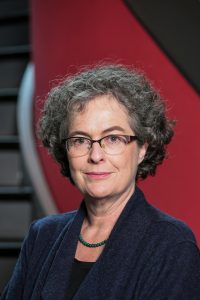
Melissa C. Smith is a Professor of Electrical and Computer Engineering and Associate Dean for Graduate Studies at Clemson University. She holds a Ph.D. from the University of Tennessee and degrees from Florida State University. Her research focuses on machine learning, reconfigurable computing, and high-performance systems, with applications in embedded systems and interdisciplinary scientific advancements. Before joining Clemson in 2006, she was a research associate at Oak Ridge National Laboratory (ORNL), contributing to projects like the Spallation Neutron Source and PHENIX experiments. Education: Ph.D., Electrical and Computer Engineering, University of Tennessee M.S., Electrical Engineering, Florida State University B.S., Electrical Engineering, Florida State University Research Interests: Machine Learning and AI High-Performance and Reconfigurable Computing System Performance Modeling Embedded Systems Articles Summary: Her recent work spans machine learning applications, GPU/FPGA architectures, speech enhancement, and medical systems. Key themes include optimizing heterogeneous computing for real-time and scientific workloads, and advancing interdisciplinary solutions through architecture-application co-design. Lab & Collaborations: Leads the Future Computing Technologies Lab and collaborates with ORNL and national labs on projects like GEMmaker and HPC-enabled medical systems.
Sabine Süsstrunk is a Full Professor and Director of the Images and Visual Representation Laboratory (IVRL) at EPFL's School of Computer and Communication Sciences. She holds a BS in Scientific Photography from ETH Zürich, MS from Rochester Institute of Technology, and PhD from University of East Anglia. Her career includes positions at Hewlett-Packard Labs and Corbis Corporation. Her research explores computational imaging, computational photography, color processing, computer vision, and image quality. Key interests include near-infrared applications, multispectral imaging, and computational aesthetics. Her work bridges hardware and software solutions for imaging challenges. Publications demonstrate consistent focus on advancing generative models (diffusion models, neural cellular automata), 3D reconstruction (NeRF variants), and media integrity (DeepFake detection). Recent trends show increased emphasis on 3D vision, robustness in generative AI, and video analysis. Awards & Honors: IS&T/SPIE Electronic Imaging Scientist of the Year (2013) Raymond C. Bowman Teaching Award (2018) EPFL AGEPoly IC Polysphere Award (2020) 8 Best Paper/Demo Awards Fellowships: IEEE, IS&T, ELLIS, AIIA She leads the IVRL lab and advises PhD candidates while serving as President of the Swiss Science Council. Research is supported through competitive grants and industry collaborations.
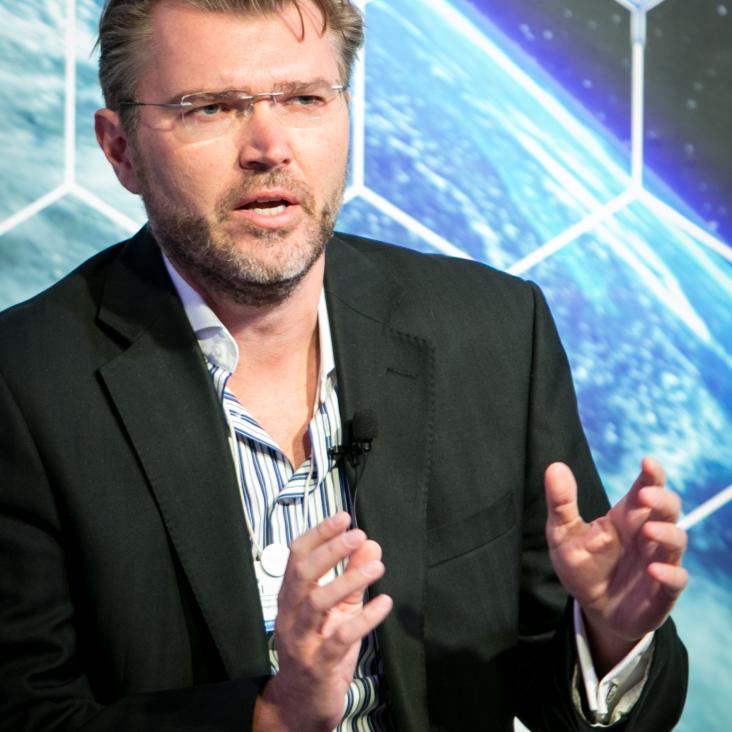
John Bagterp Jørgensen is a Professor at the Department of Applied Mathematics and Computer Science, Technical University of Denmark (DTU). His research focuses on computational methods for Model Predictive Control (MPC), numerical optimization, and dynamic optimization, with applications in industrial processes, biomedical systems, and sustainable energy. He holds leadership roles in 2-control ApS, a company developing advanced control solutions for industries such as cement production and oil recovery. Education: PhD and M.Sc. in Technical Sciences from DTU (1997–2005 and 1991–1997). Professional experience includes roles as an Assistant Professor at DTU and CTO/CEO at 2-control ApS. Research interests span MPC algorithms, numerical methods for differential equations, and system identification. His work bridges academia and industry, addressing challenges in energy efficiency, vaccine manufacturing, diabetes treatment, and cement production processes. His recent articles emphasize industrial applications of control systems, including cement rotary kiln dynamics, vaccine production optimization, and dual-hormone artificial pancreas development. He has received the Nordic Energy Research Award (1994) and contributed to UN Sustainable Development Goals related to affordable energy and industrial innovation. Advising and grants: Supervises multiple PhD projects on topics like electrification of industrial processes and sustainable SCP production. Collaborates with global institutions on energy and biomedical research. Labs/teams: Leads teams in DTU’s Scientific Computing and Center for Energy Resources Engineering, with active partnerships in industry and academia.
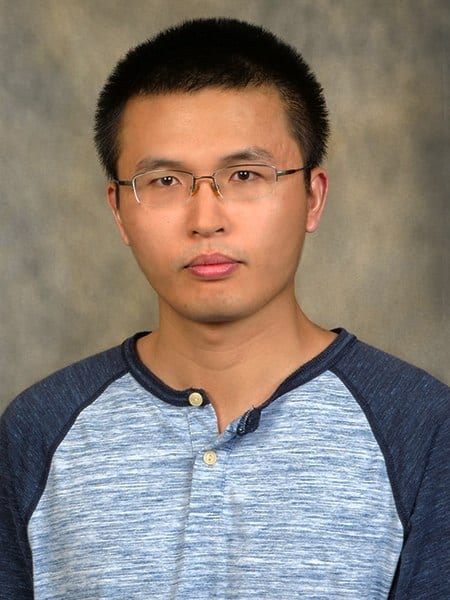
Yukun Li is an Associate Professor in the Department of Mathematics at the University of Central Florida (UCF), part of the College of Sciences. His research focuses on numerical analysis, stochastic partial differential equations, and computational finance. He holds a Ph.D. in Mathematics from the University of Tennessee, Knoxville (2010-2015), followed by postdoctoral roles at Penn State (2015-2016) and The Ohio State University (2016-2019). He has secured grants including NSF REU funding (2023-2026) and led an NSF-funded project on stochastic phase field models (2021-2025). Research interests include: Continuous/Discontinuous Finite Element Methods Numerical Solutions of Stochastic ODEs/PDEs Adaptive Algorithms and Fast Solvers Computational Finance Models Recent publications emphasize stochastic wave equations, phase field models, and financial mathematics. His work spans theoretical analysis and numerical methods for complex systems. Notable recognition includes the 2015 Achievement Award from the University of Tennessee's Mathematics Department. Teaching highlights include advanced graduate courses like Computational Methods for Financial Mathematics and Numerical Linear Algebra, alongside contributions to undergraduate mathematics education. He is proficient in computational tools including MATLAB, Python, FEniCS, and MPI.
Prof. Vlatko Vedral is a Professor of Quantum Information Science in the Department of Physics at the University of Oxford, affiliated with the Clarendon Laboratory. He leads research in the Frontiers of Quantum Physics group. His work focuses on quantum entanglement, quantum gravity, quantum foundations, and quantum thermodynamics, with applications to biological systems and quantum technologies. Notable contributions include theoretical frameworks for quantum gravity experiments and quantum causal inference protocols. Research interests span quantum information science, quantum gravity, atomic and laser physics, and the philosophical interpretation of quantum mechanics. Recent work explores emergent geometry from quantum correlations, quantum refrigeration with indefinite causal order, and experimental probes of quantum effects in macroscopic systems. Publications highlight interdisciplinary approaches, such as testing quantum gravity via entanglement and analyzing non-classicality in photosynthetic systems. His research often bridges theoretical physics with experimental feasibility, leveraging quantum simulators and NMR systems.
Shaowu Pan is an Assistant Professor of Aerospace Engineering at Rensselaer Polytechnic Institute (RPI), affiliated with the Future of Computing Institute (FOCI) and the Scientific Computation Research Center (SCOREC). He holds a Ph.D. in Aerospace Engineering and Scientific Computing from the University of Michigan and completed a postdoctoral fellowship at the University of Washington’s AI Institute in Dynamic Systems. Education: Ph.D., University of Michigan, 2021 M.S., University of Michigan, 2015 B.E. & B.S., Beihang University, 2013 Research Interests: His work focuses on the intersection of computational fluid dynamics, data-driven modeling, and scientific machine learning. Key areas include operator-theoretic modeling of fluid flows, generative AI for physical systems, and physics-informed neural networks. He develops novel algorithms for reduced-order modeling and stability-preserving surrogate models, with applications in turbulence, plasma physics, and aerodynamics. Key Contributions: Developed PyKoopman , an open-source Python package for Koopman operator approximation. Pioneered mesh-agnostic representation methods like Neural Implicit Flow for spatio-temporal data. Advanced physics-informed neural networks for solving Grad-Shafranov equations and plasma equilibrium problems. Awards & Recognition: John Tichy Junior Faculty Travel Grant (2024) Chinese Outstanding Student Abroad Award (2021) Richard and Eleanor Towner Prize Nominee (2019) Teaching & Mentorship: He teaches courses like MANE 2110: Numerical Methods and Programming for Engineers and mentors multiple Ph.D., master’s, and undergraduate students. His doctoral committee involvement spans interdisciplinary projects in fluid dynamics and AI. Grants & Software: Lead PI for NSF-funded projects on neural representation learning for turbulent flows. Developed software tools like spKDMD and Warp-DG for dynamics analysis and CFD simulations. Labs & Collaborations: Collaborates with institutions like Los Alamos National Laboratory and actively participates in conferences (e.g., AIAA SciTech, SIAM). His research bridges computational science, machine learning, and fluid dynamics to address complex nonlinear systems.
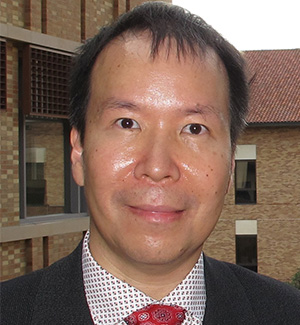
Professor Albert Cheng is a faculty member in the Department of Computer Science at the University of Houston. His research focuses on real-time systems, cyber-physical systems, smart cities, and embedded systems with societal impacts. He has authored over 270 publications and a textbook on real-time systems. Cheng holds roles as an Associate Editor for the IEEE Transactions on Knowledge and Data Engineering and ACM Computing Surveys. His research interests span real-time scheduling, machine learning applications, and systems optimization. Recent work includes vehicular traffic modeling for epidemiological risk reduction, quantum computing response time analysis, and satellite mission planning. Awards include Fulbright Specialist, Distinguished ACM membership, and IEEE Senior Member status. Cheng’s articles demonstrate expertise in real-time scheduling algorithms, cyber-physical systems development, and smart city infrastructure. His contributions bridge theoretical computer science with practical implementations in transportation, healthcare, and aerospace domains. Ongoing efforts include fault-tolerant systems, energy-efficient scheduling, and CPS education initiatives. Awards: Fulbright Specialist, ACM Distinguished Member, IEEE Senior Member, Institute of Physics Fellow Labs/Teams: Hewlett Packard Enterprise Data Science Institute (HPE DSI), Research Computing Data Core (RCDC)
Robert Winter is a Full Professor of Business IT at the University of St. Gallen (HSG), Switzerland, and Director of the Institute of Information Management (IWI-HSG). He serves as Founding Director of HSG’s Executive MBA in Business Engineering and has led the School of Management’s Doctoral Program. His roles include Vice Editor-in-Chief of Business & Information Systems Engineering and current editorial board membership at MIS Quarterly Executive. Education M.Sc. Business Administration (1984), Goethe University, Frankfurt M.Sc. Business Education (1986), Goethe University, Frankfurt Ph.D. in Social Sciences (1989), Goethe University, Frankfurt Venia legendi (1995), Goethe University, Frankfurt Research Interests Focuses on Design Science Research, Enterprise Architecture Management, and governance of digital platforms. His work explores methodologies for collaborative innovation, data-driven transformation, and complexity management in large-scale systems. Key areas include enterprise transformation steering, data mesh adoption, and agile methodologies in public-sector contexts. Key Contributions Developed frameworks for enterprise architecture governance and digital platform ecosystems Authored influential papers on design science methodology and simulation-based research Recipient of AIS Senior Scholars’ Global Best Paper Award (2017) and Herbert A. Simon Award (2022) Professional Roles President of the School of Management Doctoral Program Member of editorial boards for leading journals (e.g., European Journal of Information Systems) Leadership in professional associations: VHB Board (2011–2014), AIS Swiss Chapter President (2012–2016)
Dr. Alvin J. K. Chua is an Assistant Professor at the National University of Singapore (NUS) under the NUS Presidential Young Professorship. He holds a joint appointment in the Department of Mathematics and a courtesy appointment in the Department of Statistics and Data Science. His research focuses on gravitational-wave astronomy , particularly extreme mass ratio inspirals (EMRIs) as key sources for the LISA mission. He develops computational and statistical methods for modeling GW sources and analyzing detector data, with recent work on machine learning and Bayesian inference techniques. His selected publications highlight advancements in modeling beyond-vacuum-GR effects in EMRIs non-local parameter degeneracies rapid relativistic waveform generation neural networks for GW inference statistical sampling on manifolds These works span gravitational-wave astrophysics , computational relativity , and applied statistics . Scientific recognition includes the NUS Presidential Young Professorship. He collaborates with the LISA Consortium and the North American Nanohertz Observatory for Gravitational Waves (NANOGrav).
Lena Simine is an Associate Professor in the Department of Chemistry at McGill University, affiliated with the Faculty of Science. She holds a B.Sc. (2009) and Ph.D. (2015) from the University of Toronto, followed by a postdoctoral fellowship at Rice University (2015–2019). Her laboratory is located in P&P 118A, focusing on developing computational approaches for modeling molecular phenomena in theoretical chemistry and chemical physics. Her research interests center on computational materials design, quantum dynamics, and the application of machine learning to chemistry. Specific areas include simulating amorphous materials, aptamer design, and quantum systems modeling. She teaches CHEM 365 (Statistical Thermodynamics) and CHEM 593 (Statistical Mechanics and Machine Learning for Chemistry). Her work explores interdisciplinary frontiers, such as path-integral simulations, GFlowNets for molecular design, and the physical principles underlying deep learning in materials science. Recent studies highlight innovations like DeltaGzip for binding affinity prediction and the MAP protocol for 3D disordered matter simulations. Her lab’s contributions span computational methods, material innovation, and quantum phenomena, with a focus on advancing both theoretical frameworks and practical applications in chemistry and materials science.
Iris D. Tommelein serves as the Roy W. Carlson Distinguished Professor in the Civil and Environmental Engineering Department at the University of California, Berkeley's College of Engineering, where she directs the Project Production Systems Laboratory (P2SL). A globally recognized pioneer in Lean Construction, she has revolutionized architecture-engineering-construction (AEC) practices through research, industry workshops, and leadership since co-founding the Lean Construction Institute in 1997. Her educational foundation spans multiple disciplines: Ph.D. in Civil Engineering (Construction Engineering and Management), Stanford University, 1989 M.S. in Computer Science (Artificial Intelligence), Stanford University, 1989 M.S. in Civil Engineering (Construction Engineering and Management), Stanford University, 1985 B.S. (5-year degree) in Civil Engineer-Architect, Vrije Universiteit Brussel, Belgium, 1984 Professor Tommelein's research centers on transforming construction processes through Lean principles and digital innovation . Her work pioneers takt planning for workflow reliability, industrialized construction for labor and sustainability challenges, and mistakeproofing to eliminate errors. She integrates digital twins , AI , and optimization to develop practical decision-support systems for supply chains, logistics, and production management. Recent focus includes modular offsite construction and Industry 4.0 applications. Analysis of her 2023-2025 publications reveals intensifying research on takt planning maturity models and industrialized construction feasibility , with growing emphasis on mass timber automation and visual management systems. Her work consistently bridges lean theory with practical implementation across megaprojects, subcontracting networks, and heavy civil engineering. Her exceptional contributions have earned: Lean Pioneer Award (Lean Construction Institute, 2015) National Academy of Construction induction (2019) PPI Technical Achievement Award (2022) Robert B. Harris Award (University of Michigan, 2024) ASCE Construction Management Award (2024) - first woman recipient in 51 years Through the P2SL, she leads industry-collaborative research on production system design, mistakeproofing frameworks, and digital transformation. Her grant-funded projects develop assessment tools for industrialized construction adoption and takt planning methods adaptable to diverse project types. She actively mentors graduate students and drives knowledge transfer via workshops and the annual Construction Innovation Day. The Project Production Systems Laboratory (P2SL) operates as a global hub for construction innovation, partnering with owners, contractors, and suppliers to implement lean production systems. Current initiatives include developing serious games for mistakeproofing training, optimizing work density methods for heavy civil projects, and creating digital twins for real-time construction management.
Kyojin Choo is a Tenure Track Assistant Professor at the Swiss Federal Institute of Technology Lausanne (EPFL) in the School of Engineering , affiliated with the Mixed-Signal Integrated Circuits Lab (MSIC-LAB). He also holds teaching roles in Microengineering and Electrical and Electronics Engineering at EPFL. B.S. and M.S. in Electrical Engineering from Seoul National University (2007, 2009) Ph.D. in Electrical Engineering from the University of Michigan (2018) His research focuses on charge-domain analog/mixed-signal circuits , low-power sensor interfaces , and compact ADCs for IoT, wearables, and millimeter-scale systems. He has pioneered charge-injection cell techniques for energy-efficient circuits in energy management, sensor front-ends, and communication. His work emphasizes reducing power consumption to nanowatt levels while enabling ultra-compact designs. His recent publications highlight advancements in compact SAR ADCs , low-power MEMS accelerometers , millimeter-scale imaging systems , and ultra-low-power timing generators . His research integrates charge-domain circuit design with sensor interface optimization , energy harvesting , and high-speed link architectures . He holds over 20 US patents and has taught courses in Microengineering and Electrical Engineering at EPFL. His group (MSIC-LAB) addresses challenges in battery-free sensor design, power-constrained system scaling, and commercialization of wearables with unconventional form factors.
Simon Hanslmayr is a Professor in the School of Psychology & Neuroscience at the University of Glasgow. His research investigates neural oscillations' role in attention and memory processes, employing EEG, fMRI, and transcranial stimulation techniques. He focuses on healthy populations and clinical conditions like Schizophrenia and PTSD. His lab develops tools like the Brain Time Toolbox for electrophysiological data analysis. Education: Ph.D. in Cognitive Neuroscience (not explicitly detailed in text) Research interests include understanding how precise neural timing via oscillations underpins cognitive functions. Key areas: hippocampal memory coding, theta phase synchronization in associative memory, and causal effects of rhythmic stimulation on memory plasticity. Recent articles highlight mechanisms linking theta oscillations to memory formation, thalamocortical interactions in perception, and hippocampal-neocortical coupling. His work bridges experimental and computational approaches to model memory dynamics. Grants: Sensory stimulation for memory impairment (BIAL Foundation, 2025-2026) EU-funded studies on neural oscillations and memory (2020-2021) Awards: None explicitly listed, but active grant recipient. Supervised students include Kiera Capstick, Eleonora Marcantoni, and others. Collaborates with researchers worldwide through lab affiliates and visiting scholars. Current work emphasizes scalable neurotechnologies for cognitive enhancement and memory rehabilitation. Labs/Teams: Leads the Memory & Oscillations Lab at the University of Glasgow, collaborating with institutions like the University of Zurich and Maastricht University on neuroimaging and clinical studies.
Eshed Ohn-Bar is an Assistant Professor in the Department of Electrical & Computer Engineering at Boston University. He leads the Human-to-Everything (H2X) Lab, focused on developing intelligent systems for assistive and autonomous technologies. His research bridges machine perception, learning, and human-computer interaction, with applications in autonomous driving and accessibility for visually impaired individuals. Educated at UCLA (BS in Mathematics, 2010; MEd, 2011) and UCSD (PhD in Electrical Engineering, 2017), he holds a Humboldt Fellowship and has received the IEEE ITS Society Best PhD Dissertation Award (2017) and the 2025 BU Early Career Excellence in Research Award. His work emphasizes robust autonomy, real-time assistance, and inclusive design, collaborating with industry partners like Motional and receiving NSF grants (e.g., IIS-2152077). Research interests include autonomous systems, computer vision, and assistive technologies. Recent trends in publications highlight advancements in decision-making frameworks, neural volumetric models, and scalable learning for navigation. His lab’s projects address challenges in accessibility, such as blind motion generation and inclusive autonomous vehicle design. Awards: Humboldt Fellowship, IEEE ITS Best Dissertation, BU Early Career Award Grants: NSF IIS-2152077 Labs/Teams: H2X Lab, collaborating on projects with industry and academic partners
Antonello Monti is a Professor and Director of the Institute for Automation of Complex Power Systems at RWTH Aachen University. His research focuses on modern power systems, including smart grid technologies, hybrid AC-DC grids, and quantum computing applications in energy systems. Recent publications demonstrate innovations in grid resilience, EV charging optimization, quantum-assisted power system planning, and advanced simulation techniques. His team develops open-source tools like JuliaGrid for power system analysis and validates concepts through real-time testing platforms. Research addresses energy transition challenges including renewable integration, grid modernization, cyber-physical security, and next-generation optimization methods combining quantum computing with traditional power engineering approaches.