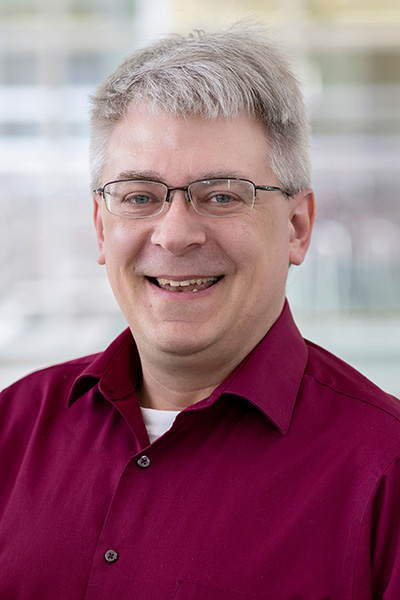
Darren R. Korber is a Professor and Department Head of Food and Bioproduct Sciences at the University of Saskatchewan. His research focuses on microbial biofilms, antimicrobial resistance in agricultural systems, and food bioprocessing. He holds a Ph.D. and B.Sc. in Microbiology and Agriculture from the University of Saskatchewan. Education: Ph.D. (Microbiology), University of Saskatchewan B.Sc. (Agriculture), University of Saskatchewan Research Interests: Microbial biofilms in aquatic and engineered systems Antimicrobial resistance in animal agriculture Fermentation-based food processing and bioprocessing Microbial response to environmental stressors Recent Research Trends: His work spans environmental biofilm dynamics, antibiotic resistance mitigation in hog barns, and valorization of legume proteins via fermentation. Key themes include microbial community resilience and biotechnological applications. Teaching: Teaches courses in food microbiology, quality assurance, and food security at both undergraduate and graduate levels. Labs/Teams: Active in microbial systems research within the Food and Bioproduct Sciences Department, focusing on applied microbiology and food innovation.
Steve Shirtliffe is a Professor in the Department of Plant Sciences at the University of Saskatchewan’s College of Agriculture and Bioresources. His research focuses on field crop agronomy, crop phenotyping, precision agriculture, and weed science. He holds a Ph.D., M.Sc., and B.Sc. from the University of Manitoba. Dr. Shirtliffe’s work integrates remote sensing, machine learning, and field experimentation to improve crop yields and agricultural sustainability. He has pioneered applications of UAV-based imaging for crop analysis, including canola yield prediction and weed management. His research emphasizes precision agriculture, crop lodging prediction, and mechanical weed control systems. He has received prominent awards including the ASA Professor of the Year (2008) and University of Saskatchewan’s Provost’s Outstanding Teaching Award (2011-12). Courses taught include PLSC 375 (Current Topics in Agronomy), PLSC 401 (Sustainable Crop Production), and PLSC 898 (Plant Population Biology). Recent research highlights include: Development of AI-driven field boundary delineation systems Integration of SAR and optical data for crop phenology mapping Optimized deep learning models for edge device yield prediction Long-term weed dynamics studies in organic/conventional systems His work addresses critical challenges in Prairie agriculture through innovative technology applications and systems-level crop management strategies.
Simon Lacoste-Julien is a Full Professor at the Université de Montréal's Department of Computer Science and Operations Research, part of the Faculty of Arts and Sciences. He is affiliated with the Centre de recherches mathématiques (CRM) and Mila – Quebec AI Institute. His research focuses on machine learning, deep learning, optimization, and theoretical foundations of AI. Notable contributions include advancements in constrained optimization algorithms, game-theoretic learning, and sparsity-aware models. Education: Doctorate in Machine Learning (PhD), specialized in optimization and graphical models. Research Interests: His work bridges theory and practice, exploring topics such as: - Optimization for Machine Learning : Developing efficient algorithms for large-scale problems. - Game-Theoretic Approaches : Applying game theory to prediction and mechanism design. - Disentangled Representations : Learning structured latent variable models for better interpretability. - Adaptive Gradient Methods : Improving convergence and stability of training processes. Grants & Projects: Lead researcher on multiple grants including: - Model-based Machine Learning with Guarantees (2025-2031, CRSNG) - Robust and Efficient Structured Prediction (2017-2025) - Projects on few-shot learning and algorithmic fairness funded by MITACS and IVADO. Labs & Teams: Active member of Mila, leading research in optimization and theoretical aspects of deep learning. Collaborates widely with industry (e.g., Samsung Electronics) and contributes to open-source tools like the Cooper library for constrained optimization.
Prof. Sylvain Quessy is a tenured Professor at the Université de Montréal's Faculté de médecine vétérinaire, leading research in food safety and veterinary microbiology. He holds the Canada Research Chair in Meat Safety (CRSV-CRSNG) and co-directs the CRSV research unit. His expertise spans pathogen epidemiology (Salmonella, Campylobacter, Listeria), risk assessment, and HACCP-based food safety systems. He has directed over 30 graduate students and advised government agencies like the Canadian Food Inspection Agency (CFIA). Education: Ph.D. Microbiology & Immunology, Université de Montréal (1994) M.Sc. Veterinary Pathology & Microbiology (1991) DVM (1984) Research focuses on: Molecular epidemiology of foodborne pathogens Risk assessment modeling in food production Antimicrobial resistance dynamics in agricultural settings HACCP implementation in emerging economies Key projects (2022-2025) include optimizing poultry meat safety through control of Salmonella and Clostridium perfringens. He leads a 30+ member research network (CRIPA) and collaborates with industry partners like Olymel and Quebec poultry associations. Labs/Teams: Co-director of CRSV (Meat Safety Research Chair) Member of GRESA (Food Safety Research Group) Pioneer of Canada's food safety risk assessment frameworks
Gerald Adams, MD, is an Adjunct Professor in the Department of Medicine at Queen’s University. He joined the faculty in 1990 as an interventional cardiologist and pioneered the Percutaneous Coronary Intervention (PCI) program at KHSC. In 2000, his team became the first in Ontario to offer 24/7 Primary PCI for STEMI. Dr. Adams has held leadership roles including Division Chair, Cardiology Service Chief, and postgraduate training Program Director. He remains clinically active in the PCI lab, inpatient services, and outpatient stress testing. His research interests span interventional cardiology, cardiovascular medicine, and healthcare administration. Recent scholarly work focuses on software engineering advancements, including cybersecurity protocols, AI-driven bug fixing, and blockchain smart contract analysis. Dr. Adams has contributed to over 15 peer-reviewed articles since 2020, addressing topics like MCP server security, semantic versioning of language models, and swarm robotics optimization. His interdisciplinary research bridges clinical practice and computational innovations.
Professor Boguslaw Kruczek is a faculty member in the Department of Chemical and Biological Engineering at the University of Ottawa. He holds a Ph.D. (1999) and B.Sc.Eng. (New Brunswick) from the University of Ottawa. His research focuses on advanced membrane technologies, including polymeric, inorganic, and hybrid membranes for gas separation, with emphasis on membrane characterization and transport phenomena. Key areas include mixed-matrix membranes (MMPE), zeolite synthesis, and nanocomposite materials. His work addresses challenges in membrane performance evaluation, such as gas accumulation resistance and time-lag effects in constant-pressure systems. He has published extensively in journals like Journal of Membrane Science and Separation and Purification Technology . Research interests span materials development for gas separation, inorganic membrane synthesis, and applications in environmental engineering, including water treatment and biofuel production. Collaborative efforts include membrane bioreactors for biomass processing and novel draw solutes for forward osmosis systems. Though no specific grants or awards are listed, his contributions to membrane science are evident through his prolific publication record and methodological advancements in membrane testing and analysis.
Jason Zhang is a Professor in the Department of Chemical and Biological Engineering at the University of Ottawa. He holds a Ph.D. from the University of Waterloo (1999), an M.Sc. from the University of Saskatchewan, and an MESc from Tianjin University. His research focuses on biochemical technology, pollution control, biomass energy, and petroleum processing. He has served as Asian Partnerships Coordinator since 2020, leveraging his expertise in Asian partnerships. Prior to this, he worked at BC Research Inc., the University of Alberta, and the University of New Brunswick. Education Ph.D. in Chemical Engineering, University of Waterloo (1999) M.Sc., University of Saskatchewan MESc, Tianjin University, China Research Interests Dr. Zhang’s work emphasizes sustainable energy solutions, environmental remediation, and advanced catalytic systems. His studies explore photocatalytic reactors, electrocatalysts for water splitting, and bioprocess optimization in algal cultures. Recent advancements include designing salinity-tolerant electrocatalysts for seawater electrolysis and developing novel materials for CO2 reduction. Publications Overview His recent articles highlight innovations in electrocatalytic systems (e.g., hydrogen evolution, CO2 reduction) and photocatalytic applications. Key themes include material design, energy efficiency, and environmental sustainability. His work bridges theoretical insights with practical applications in sustainable energy. Grants & Advising While specific grants are not listed, his research portfolio indicates sustained funding in sustainable energy and catalysis. No formal advisee list is provided in the text. Labs & Collaborations No specific lab affiliations are mentioned, though collaborations with industry (e.g., BC Research Inc.) and academic institutions (e.g., University of Alberta) are evident from his career trajectory.
Greg Richards is an Adjunct Professor and Interim Director of the Executive MBA (EMBA) Program at the Telfer School of Management, University of Ottawa. He also serves as Vice-Dean for Graduate Professional Programs. He holds a M.A. and MBA from the University of Ottawa, and a Ph.D. from Carleton University. His research focuses on organizational performance management, Business Intelligence (BI), and Business Analytics (BA) in public and private sectors. He leads the Centre for Business Analytics and Performance, exploring IoT and AI applications, and coordinates the BDO/Interis Public Sector Performance Management cluster. His work emphasizes regulatory intelligence, healthcare analytics, and strategic decision-making frameworks. Teaching includes courses on Corporate Performance Management, BI/BA, and Management Consulting in MBA/EMBA programs. He has over 20 years of consulting experience, including roles at Transport Canada and Cognos, and is a Certified Management Consultant with prestigious fellowships in management consulting institutes. His publications span organizational performance, regulatory compliance, and BI effectiveness. Notable contributions include frameworks for virtual organizations' performance measurement and AI integration in smart grids. Awards include recognition as a Fellow in management consulting and academic leadership roles.
Sharlene He is an Assistant Professor at the University of Waterloo, specializing in consumer behavior and decision-making. Her research focuses on judgment under uncertainty, pricing strategy, and the impact of technology like AI on consumer choices. She has developed frameworks such as the Comparative Method of Valuation to assess willingness-to-pay, aiding managerial decision-making. Her work bridges theoretical rigor with practical applications in marketing. Education: PhD in Management, Kellogg School of Management, Northwestern University (2018) MA in Economics, University of Toronto (2011) BCom in Business, Queen's School of Business (2010) Her research interests explore how consumers form judgments in uncertain environments, particularly regarding new technologies and pricing strategies. She has published in top journals like Journal of Consumer Research and Journal of Marketing Research . Recent articles highlight her focus on uncertainty's role in information seeking, consumer certainty measurement, and frameworks explaining decision heuristics. These trends underscore her contributions to behavioral marketing and managerial strategies. Awards: Dean’s Award for Distinguished Scholarship – Emerging Scholar (2023) Petro-Canada Young Innovator Award (2023) Teaching includes courses like Marketing Foundations for Early-stage Ventures and Marketing Strategies for New Technology-based Ventures . She is currently accepting graduate student applications.
Professor Kathy T. Mullen is a distinguished academic at McGill University's Department of Ophthalmology, affiliated with the McGill Vision Research unit. Her research focuses on understanding visual pathways and color perception through human behavioral experiments and brain imaging techniques like fMRI and MEG. She investigates how the brain processes color differences to construct spatial maps and perceives objects, with particular attention to chromatic and achromatic contrast encoding. Her work also explores developmental aspects of color cognition in young children. Her studies use advanced neuroimaging to identify brain regions involved in color processing, including the lateral geniculate nucleus (LGN) and visual cortex. Key areas of inquiry include cross-orientation masking in color vision, fMRI adaptation effects, and the impact of attention on binocular vision dynamics. Notable projects address amblyopia mechanisms, contrast sensitivity deficits, and the role of different visual pathways (parvocellular vs. magnocellular) in perception. Recent research highlights include uncovering 'coarse-to-fine' temporal dynamics in color representation and demonstrating how monocular attention can shift eye dominance. Her work bridges fundamental neuroscience with clinical applications, such as understanding neuroretinal dysfunction in multiple sclerosis and optimizing contrast sensitivity assessments for clinical use. No specific awards or grants are listed in the provided materials. Her lab's outputs emphasize methodological innovation in neuroimaging and psychophysics, with a focus on translating findings to improve understanding of visual disorders.
Uwe Brand is a Professor in the Department of Earth Sciences at Brock University, Faculty of Mathematics and Science, where he has held academic positions since 1980, rising from Assistant to Associate and then full Professor. He is a Professional Geoscientist (P.Geo.) and was awarded the Chancellor’s Chair for Research Excellence at Brock University from 2008 to 2010. He holds adjunct professorships at the University of Pittsburgh and previously at the University of Toronto and McMaster University. University: Brock University School: Faculty of Mathematics and Science Department: Department of Earth Sciences Rank: Professor Email: uwe.brand@brocku.ca Office: Mackenzie Chown D424 His educational background includes a Ph.D. from the University of Ottawa, an M.A. from the University of Missouri-Columbia, and a B.Sc. from the University of Waterloo. He was an NSERC Post-doctoral Fellow at the University of Waterloo from 1979 to 1980. Uwe Brand's research focuses on isotope geochemistry, particularly stable and radiogenic isotopes, applied to paleoclimatology and paleoceanography. He investigates climate and environmental changes in ancient oceans, especially during major events such as the Permian-Triassic extinction and Neoproterozoic glaciations. His work employs brachiopods as sensitive tracers of marine environments, analyzing trace elements, REE chemistry, and isotopic systems. He leads international projects like BASE-LINE Earth, an EU Horizon 2020 Marie Skłodowska-Curie Innovative Training Network, which trains PhD students in advanced geochemistry. His research also includes diagenetic screening of carbonates, fluid inclusion analysis in halites, and atmospheric evolution studies. The recent articles highlight a strong trend in using biogenic carbonates—especially brachiopods—as paleoenvironmental proxies. Research themes include ocean acidification impacts, mass extinction triggers, paleotemperature reconstruction via isotope thermometry, and secular changes in ocean chemistry. There is a clear emphasis on methodological innovation, such as triple oxygen isotope calibration and fluid inclusion analysis, to refine paleoenvironmental interpretations and distinguish primary signals from diagenetic overprints. Scientific awards and distinctions include: FMS Distinguished Research Award (2017) FMS Experiential Education Leadership Award (2016) Brock University Chancellor’s Research Chair (2008) Distinguished Fellow of the Geological Association of Canada (1995) Past President’s Medal of the Geological Association of Canada (1990) NSERC Post-doctoral Fellowship (1979–1980) He has supervised multiple graduate students, including MSc and PhD candidates working on Arctic brachiopod biogeochemistry and laboratory culturing of brachiopods under controlled conditions. His research is funded by NSERC and BUCCR. He has served as Editor-in-Chief of Chemical Geology (2010–2013), a grant reviewer for NSERC, NSF, and NERC, and a member of the editorial board for Carbonates & Evaporites and Chemical Geology . He is actively involved in international collaborations, including the ICS Subcommission on Carboniferous Stratigraphy, and contributes to global scientific initiatives like the EU’s Horizon 2020 program. He is part of a 25-member international team of geoscientists in the BASE-LINE Earth project, which integrates academic and industrial partners to train the next generation of geochemists. His lab and research group focus on high-precision isotopic and elemental analysis using state-of-the-art instrumentation, contributing to both fundamental science and applications in energy and environmental sectors.
Dr. W. Stephen McNeil is an Associate Professor in the Department of Chemistry at the University of British Columbia Okanagan Campus . His primary academic focus lies in Chemistry Education Research , where he investigates alternative conceptions in advanced chemical bonding models and develops innovative active/collaborative learning strategies. PhD in Chemistry from University of British Columbia (1995) BSc in Chemistry from University of British Columbia (1991) His research addresses two core areas: (1) identifying student alternative conceptions in chemical bonding theories through qualitative interviews, and (2) assessing the effectiveness of flipped-classroom methods on affective learning outcomes. He has developed educational frameworks integrating Johnstone’s Triangle and United Nations Sustainable Development Goals into introductory chemistry curricula. Dr. McNeil has received multiple teaching excellence awards including the 3M National Teaching Fellow (2025) and Chemical Institute of Canada Award for Chemistry Education (2019) . He actively mentors students in discipline-based educational research, emphasizing research design, theoretical frameworks, and pedagogical dissemination. Professional affiliations include serving as Past-Chair of the Chemistry Education Division at the Chemical Institute of Canada. His outreach work connects chemistry concepts to interdisciplinary contexts , including Indigenous knowledge systems and environmental sustainability.
Deborah Quintanilha Falcao is an Associate Professor at the Faculty of Pharmacy , University of Montreal, specializing in Medication Use Clinical Research Drug Development Formulations and Processes Galenic Research Nanotechnologies Her recent publications focus on pharmaceutical nanotechnology , with key contributions to Nanoemulsions for parasitic disease treatment Lipid-coated chitosan nanogels Optimized PLGA nanoparticle delivery systems Plant-based biopesticides Cosmetic formulation science Food processing for bioactive preservation Her work spans translational medicine , agricultural applications , and cosmetic/pharmaceutical product development .
Mireille E. Broucke is a Professor in the Department of Electrical and Computer Engineering at the University of Toronto's Faculty of Applied Science and Engineering. She holds a PhD in Electrical Engineering and Computer Sciences from UC Berkeley (2000) and has extensive industry experience in control systems at companies like Texas Instruments and Lockheed. Her academic career includes visiting roles at UC Berkeley and the University of Bologna. B.S. (1984), University of Texas at Austin M.S. (1987), University of California, Berkeley PhD (2000), University of California, Berkeley Her research focuses on mathematical system theory , particularly hybrid systems , reach control problems , and geometric control . Recent work explores systems neuroscience , modeling brain processes through control theory. She has developed adaptive internal models and robust parameter adaptation frameworks. Key article trends include adaptive control in neuroscience, reach control theory for robotics, and geometric methods in linear systems. Her collaborations span institutions like TU Delft and the University of Bologna, with applications in quadcopter motion control and multi-robot coordination . Scientific Awards Member of the Institute of Electrical and Electronics Engineers (IEEE) Professional Engineer of Ontario Broucke advises students in control theory , robotics , and hybrid systems . She has led projects at research units like PATH (UC Berkeley) and PARADES (Rome). Her teaching portfolio includes courses on robot control , nonlinear systems , and geometric control theory . She contributes to linear quadratic optimal control and motion planning algorithms .
Professor Otmane Ait Mohamed is a faculty member at the Department of Electrical and Computer Engineering, Concordia University. His research focuses on formal methods, hardware verification, model checking, and radiation effects on digital circuits. Education: Ph.D., University Henri Poincaré Nancy I (1996) Research Interests: Hardware specification and verification Formal methods for system-level modeling VLSI design automation Radiation effects on FPGA and digital circuits Quantitative analysis of cyber-physical systems Publication Trends: His work spans formal verification of hardware/software systems, radiation-induced faults in aerospace applications, model checking techniques, and abstraction frameworks for SysML/UML diagrams. He has contributed to journals and conferences like IEEE Transactions on Nuclear Science, Expert Systems with Applications, and IEEE International Symposium on Circuits and Systems. Scientific Recognition: Best Paper Award at NEWCAS-2010 Teaching: He teaches courses in Digital Design (COEN313), Computer Architecture (COEN316), and Functional Hardware Verification (COEN413/COEN6541).