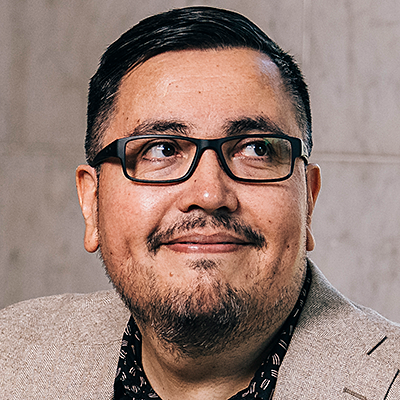
Andres Lucero is Associate Professor of Interaction Design at Aalto University's Department of Art and Media, specializing in human-computer interaction for mobile devices and interactive surfaces. His research integrates human-computer interaction, design methodologies, and playful interfaces. He holds a PhD from Eindhoven University of Technology and has industry experience from Nokia, where he led user-centered design projects as Senior Researcher. Research explores tangible interfaces, social wearables, museum experience design, human-AI collaboration, and cross-cultural co-design approaches. Recent projects investigate conversational agents in design processes, persona generation workflows, and freeform interactive devices. Dr. Lucero received the Honourable Mention Award at MUM 2020 for innovative interaction research. His work advances design methods through first-person perspectives, AI integration, and novel interaction paradigms.
Gavin McNicol is an Assistant Professor in the Department of Earth and Environmental Sciences at the University of Illinois at Chicago (UIC). His research focuses on soil biogeochemistry and its connection to Earth’s climate system, particularly methane emissions from wetlands, temperate rainforests, and waste systems. He employs field measurements, laboratory experiments, and data science to study greenhouse gas dynamics across scales. McNicol teaches courses on data science (EAES 420) and climate-ecosystem interactions (EAES 579). His work integrates machine learning with satellite remote sensing to monitor global wetland methane emissions. Key collaborations include FLUXNET-CH4, CRMRCN, and the SOIL NGO in Haiti. McNicol holds a BS from the University of Stirling (2010) and a PhD from UC Berkeley (2016). Research interests span wetland methane budgets, carbon cycling in coastal ecosystems, and climate impacts of sanitation systems. He has secured grants from NASA, DOE, and NSF, totaling over $87,000. His team, the McNicol Lab, emphasizes interdisciplinary approaches combining fieldwork, lab analysis, and computational modeling. Recent publications (2023–2025) address global methane upscaling, tropical wetland monitoring gaps, and boreal-Arctic methane feedbacks. McNicol’s work bridges local measurements to global climate models, with applications in climate change mitigation and sustainable development.
Brian Scholl is a Professor of Psychology at Yale University, specializing in visual cognition, perception, and cognitive science. His research explores how visual perception interacts with higher-level cognition, including object persistence, event perception, causality, and intuitive physics. He leads the Yale Perception & Cognition Lab, focusing on dynamic events, attention, and computational models. He earned his Ph.D. from Rutgers University in 1999. His work spans experimental psychology, neuroscience, and computational modeling, with a focus on phenomena like inattentional blindness, scaffolded attention, and event segmentation. He has authored numerous papers and presented at international conferences, contributing to debates on perception vs. cognition interactions. Key research areas include the perception of dynamic event types, the role of intuitive physics in visual processing, and the influence of event boundaries on memory and decision-making. His lab employs computer-based experiments and collaborations with computational models to study perception across species and clinical populations.
Konstantinos Drakos is a Professor at the Department of Accounting and Finance, Athens University of Economics and Business (AUEB). Previously, he served as Assistant Professor at AUEB (2009–2012), Assistant Professor at the University of Patras (2003–2008), and Lecturer at the University of Essex (2001–2002). He holds a PhD in Economics from the University of Essex, preceded by an MSc and undergraduate studies in Economics at the University of Athens. His research focuses on Applied Financial Economics and the Economics of Security, with recent work analyzing hedge fund leverage, geopolitical risk impacts, cryptocurrency markets, and green banking. Teaching responsibilities include Macroeconomic Theory, Finance for Banking, and Risk Management at both undergraduate and postgraduate levels. Drakos' publications span over two decades, addressing topics such as terrorism's economic effects, bank lending behavior, and investment under uncertainty. His recent articles (2022–2025) emphasize cryptocurrency dynamics, geopolitical risk interactions, and financial stability in green banking. Notable themes include market volatility, capital allocation under uncertainty, and policy responses to systemic risks. No scientific awards are listed in the provided materials. His research has explored structural shifts in financial risk, macroeconomic sentiment, and cross-market linkages following major global events like 9/11 and the 2008 crisis. Drakos has advised on policy-related topics related to financial markets and regulatory frameworks, though specific grants or lab affiliations are not detailed here.
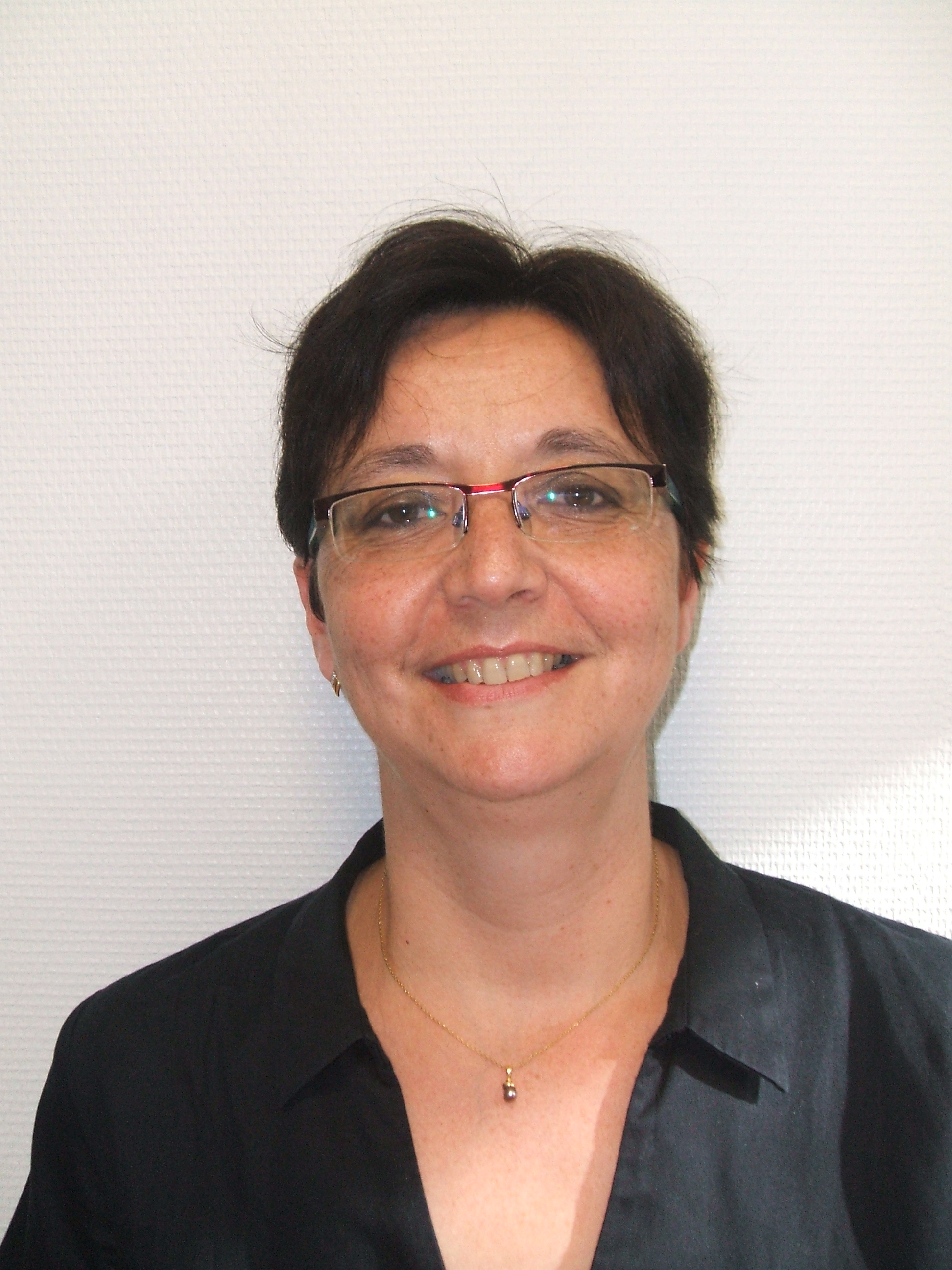
Catherine Pinel is a Research Director (DR2) at the Institute for Research on Catalysis and Environment of Lyon (IRCELYON, UMR 5256), a joint research unit of the French National Center for Scientific Research (CNRS) and Claude Bernard University Lyon 1. She has held this senior research position since October 2008, following progression from CR1 (1998-2008) and CR2 (1994-1998) roles at the same institution. Her academic journey includes postdoctoral research at Cambridge University (1992-1993) under Professor S.V. Ley and with Professor M. Lemaire (1993-1994). Her educational foundation includes: Diplôme Universitaire de Technologie in Chemistry from Paris XI University (1986) Engineering Degree from École Nationale Supérieure de Chimie de Paris (1989) Advanced Studies Diploma in Organic Chemistry from Paris VI University (1989) PhD in Organic Chemistry from Paris VI University (1992) on chiral ruthenium complexes and enantioselective reductions Habilitation à diriger des recherches from Lyon I University (1999) on catalysis and fine chemistry Dr. Pinel's research pioneers sustainable catalytic processes with emphasis on biomass valorization, green chemistry, and heterogeneous catalysis. Her work bridges fundamental catalyst design with industrial applications, particularly in hydrogenation, oxidation, and biorefinery processes. Current focus areas include catalytic conversion of biomass-derived platform molecules (glucose, succinic acid, polyols), development of bimetallic catalysts, and valorization of hemicellulose streams. Her approach integrates advanced catalyst characterization with reaction engineering to create environmentally benign chemical transformations. Analysis of her recent publication trajectory (2019-2025) reveals evolving expertise from fundamental organometallic chemistry toward applied sustainable catalysis. Key trends include increasing focus on biomass-derived feedstocks (glucose, succinic acid, polyols), development of metal-carbide/nitride catalysts, and optimization of aqueous-phase reactions for industrial biorefineries. Her work demonstrates strong interdisciplinary collaboration across catalysis, materials science, and green chemistry, with growing emphasis on circular economy principles and renewable chemical production. No scientific awards were explicitly mentioned in the source materials. Dr. Pinel actively contributes to academic training through graduate instruction at University of Lyon (Master 2 'Catalysis and Physical Chemistry' since 2007) and University of Savoie (M2 courses in New Catalysts in Organic Chemistry since 1999 and Coordination Chemistry since 2012). While specific grant details aren't provided, her extensive publication record across high-impact journals indicates sustained research funding. She maintains collaborative networks within IRCELYON and internationally, particularly in biomass conversion and catalyst characterization. As a core researcher at IRCELYON (celebrating 60 years of catalysis research in 2021), she operates within a world-class facility housing specialized equipment for catalyst synthesis, characterization (including in situ techniques), and testing. Her work aligns with the institute's focus on sustainable catalysis for energy transition, air/water depollution, and biomass valorization, contributing to France's strategic research priorities in green chemistry.
Dale Pullin is an Honorary Professor at the School of Mechanical and Mining Engineering, University of Queensland. His research focuses on fluid dynamics, particularly in magnetohydrodynamics and wave instability. University: University of Queensland School: School of Mechanical and Mining Engineering Email: d.pullin@uq.edu.au His work spans advanced materials processing, hypersonics, and multiscale energy systems, aligning with the School's research priorities. Publications highlight theoretical and applied studies in shock waves, vortex layers, and instability phenomena. Recent publications emphasize: Converging cylindrical shocks in ideal magnetohydrodynamics (2014) Wave instability on vortex layers (1989) MHD Richtmyer-Meshkov instability with oblique fields (2015)
Nirupam Roy is an Assistant Professor at the Department of Computer Science, University of Maryland, College Park, and Director of the iCoSMoS research lab. His work bridges wireless networking, mobile computing, and acoustic sensing with applications in IoT, localization, healthcare, security, and wearables. Research Focus: Wireless Networking & Mobile Sensing Awards: Best paper award, MobiSys 2022 Best demo award, MobiSys 2021 CSL Ph.D. Thesis Award, UIUC 2019 Students: Nakul Garg, Yang Bai, Irtaza Shahid, Harshvardhan Takawale, Aritrik Ghosh, Ayushi Mishra, Sumbul Zehra, Justin Goodman Grants: NSF CAREER award (2023), Meta Research Award (2023)
Huamin Qu is a Chair Professor in the Department of Computer Science and Engineering at the Hong Kong University of Science and Technology (HKUST). He serves as the Founding Dean of the Academy of Interdisciplinary Studies (AIS), Founding Head of the Division of Emerging Interdisciplinary Areas (EMIA), and was the Founding Acting Head of Computational Media and Arts (CMA) at HKUST(GZ). Qu directs the VisLab and coordinates the Human-Computer Interaction (HCI) group. He obtained his BS in Mathematics from Xi'an Jiaotong University and MS/PhD in Computer Science from Stony Brook University. Qu's research integrates Data Visualization , Human-Computer Interaction , and Human-Centered AI , with applications in urban informatics, social networks, and explainable AI. His work focuses on developing interactive systems for big data analytics, visual storytelling, and AI-driven decision support. Research extends to multimodal communication, fintech, and augmented reality applications. His publications emphasize visual analytics for complex datasets (mobility, social media, financial), interaction techniques for immersive environments, and AI-enhanced visualization tools. Recent works explore explainable AI interfaces and large-scale data communication frameworks. IEEE Visualization Academy (2020) IEEE VGTC Technical Achievement Award AI 2000 Most Influential Scholar (2019, 2023, 2024) 21 Best Paper/Honorable Mention awards IBM Faculty Award (2009) APICTA Merit Award (2015) Yelp Dataset Grand Prize (2018) Qu has advised 48 PhD graduates (21 now faculty at institutions like UC Davis, University of Minnesota, Texas A&M) and 30 MPhil students. He secured major grants including RGC theme-based projects (digital citizenship, air pollution), UGC AoE (slope safety), and China's 973 Program. As VisLab director, he leads 20+ researchers in visualization/HCI projects adopted by Microsoft, IBM, Huawei, and Tencent.
Professor Gabriel Brostow is a faculty member in the Department of Computer Science at University College London (UCL), where he leads research in Computer Vision and Human-Computer Interaction. He also serves as Chief Research Scientist and Senior Director of the R&D Team at Niantic, the company behind Pokémon GO. His work bridges academic research and industry applications, focusing on developing AI systems that enhance human capabilities through what he terms 'Human in the Loop AI'—now commonly referred to as Human-Centered AI. Brostow completed his BS in Electrical Engineering at UT Austin, followed by a PhD with Irfan Essa at Georgia Tech. He then pursued postdoctoral research with Roberto Cipolla's Computer Vision & Robotics Group at Cambridge University as a Marshall Sherfield Fellow, and with Marc Pollefeys in ETH Zurich's CVG Group. His research explores how AI, particularly Computer Vision, can serve as 'super-tools' for professionals across various domains including filmmaking, architecture, robotics, and scientific research. Specific interests include assistive technology for everyday life, authoring systems that maximize user effort, 3D reconstruction, depth estimation, and vision-language models. His work often involves creating systems that are validated through real-world human interaction to ensure practical utility. Analysis of his recent publications reveals a strong focus on practical applications of Computer Vision that directly interact with humans. His research spans 3D scene understanding, depth estimation, sketch-based interfaces, and multimodal AI systems. There's a clear emphasis on creating benchmarks and tools that facilitate human-AI collaboration, with applications in assistive technology, urban planning, filmmaking, and biodiversity monitoring. His work frequently appears at top conferences including CVPR, NeurIPS, ECCV, and CHI. Marshall Sherfield Fellowship Brostow actively mentors PhD students, with current advisees including Ross Murphy, Skanda Koppula, Gizem Unlu, Omiros Pantazis, and Jamie Watson. His alumni include numerous PhD graduates and MSc students who have gone on to successful careers in academia and industry. He emphasizes selecting students based on passion and potential rather than just academic credentials, valuing traits like helpfulness, drive, and hunger to learn. His research is supported through collaborations with major institutions and companies including DeepMind, MIT, and the University of Edinburgh. He leads a research group at UCL that collaborates closely with Niantic's R&D team, creating a unique bridge between academic research and industry application. His team's work frequently involves developing novel Computer Vision techniques that are validated through real-world human interaction, ensuring practical utility alongside technical innovation. The group explores blue-sky research problems with applications ranging from assistive technology to professional tools for filmmakers, architects, and scientists studying diverse environments.
Professor Alexandra Birch serves as Chair of Multilingual Natural Language Processing at the Institute for Language, Cognition and Computation (ILCC) within the School of Informatics at the University of Edinburgh. She is a leading member of the StatMT group and Edinburgh Natural Language Processing group, while also co-founding and serving as Chief Scientist of Aveni.ai, a fintech company delivering GenAI solutions to the UK finance sector. Her research centers on advancing multilingual natural language processing with applications that improve people's lives. Professor Birch has made significant contributions to the paradigm shift toward neural networks and large language models in NLP, with expertise spanning multilingual and multimodal processing, ethical considerations, model explainability, and computational efficiency. Her work addresses critical challenges in making language technologies accessible across diverse linguistic contexts. Professor Birch's publication record includes over 100 peer-reviewed papers that demonstrate strong trends in multilingual machine translation, low-resource language processing, and ethical AI frameworks. Her research bridges theoretical advances with practical implementations, particularly evident in her current leadership of the FinLLM project for the financial sector. As a research leader, she has secured and directed major EU-funded projects including EuroLLM (developing a large language model for European languages), UTTER (creating a multilingual meeting assistant), and GoURMET (focusing on low-resource machine translation for media content). Her industry collaboration through Aveni.ai demonstrates successful translation of academic research into commercial applications, particularly in the financial services domain. Professor Birch maintains active leadership in both academic and industry communities, with her current work on domain-specific language models representing an important direction in adapting general-purpose LLMs to specialized professional contexts while addressing multilingual challenges.
Richard E. Turner is a Professor of Machine Learning at the University of Cambridge's Department of Engineering and Research Lead for AI for Weather Prediction at the Alan Turing Institute. He serves as Cambridge Lead for the EPSRC Probabilistic AI Hub and previously held roles including Visiting Researcher at Microsoft Research, Co-Director of the AI4ER CDT, and Course Director for the Machine Learning and Machine Intelligence MPhil program. Current research focuses on probabilistic machine learning fundamentals, environmental prediction (weather/climate), and spatio-temporal modeling combining deep learning with Bayesian methods Supervised 26 PhD students (13 graduated) and 7 research assistants/associates Secured over £30M in research funding from EPSRC, Microsoft, Toyota, Google, DeepMind, Amazon, and Improbable Featured in BBC Radio 5 Live's The Naked Scientist, BBC World Service's Click, and Wired Magazine His recent publications demonstrate expertise in diffusion models for PDE simulations, Gaussian Processes for environmental applications, and Bayesian methods for spatio-temporal forecasting. Key trends include climate modeling using ML, neural PDE solvers, and scalable probabilistic inference. Awards : Cambridge Students' Union Teaching Award for Lecturing; supervised Qualcomm Innovation Fellowship winner Collaborations : Microsoft Research (AI4Science), Alan Turing Institute, EPSRC Probabilistic AI Hub Turner leads the Turner Group within Cambridge's Machine Learning Group, focusing on uncertainty-aware ML for scientific applications. Current research assistants work on topics like meta-learning, Bayesian inference, and climate science applications.
Edward L. Shaughnessy serves as the Lorraine J. and Herrlee G. Creel Distinguished Service Professor in Early Chinese Studies and Director of Graduate Studies in the Department of East Asian Languages and Civilizations at the University of Chicago. A renowned scholar of ancient China, he specializes in archaeologically recovered texts from the Zhou dynasty period (c. 1045-249 BCE), particularly bronze inscriptions, bamboo-slip manuscripts, and the classical texts Zhou Yi (I Ching), Shang Shu, and Shi Jing. His research interests focus on the intersection of archaeological discoveries and literary traditions, with particular expertise in bronze inscriptions and the Zhou Yi. Shaughnessy has pioneered efforts to bridge Western and Chinese scholarly traditions, publishing extensively in both English and Chinese. He has written seven volumes of technical scholarship in Chinese and is currently leading an international team translating Tsinghua University's fourth-century BCE bamboo-slip manuscripts. His recent scholarly output shows strong trends in paleographic studies, with numerous publications analyzing newly excavated manuscripts. His work demonstrates a consistent focus on textual transmission, historical context, and the relationship between archaeological evidence and received literary traditions. Notable patterns include systematic analysis of bamboo-slip manuscripts, comparative studies of textual variants, and interdisciplinary approaches combining philology, archaeology, and historical analysis. Shaughnessy has received recognition through his appointment as a Distinguished Service Professor, one of the highest academic honors at the University of Chicago. His scholarly contributions have significantly advanced the field of early Chinese studies through both original research and editorial work. As an educator, Shaughnessy teaches seminars on oracle-bone inscriptions, bronze inscriptions, bamboo-strip inscriptions, and courses on the Yi jing, Shi jing, and Shang shu. He serves as Director of Graduate Studies for the department and has supervised numerous graduate students. His current and upcoming courses include 'The Ji Zhong Discovery,' 'The Development of Early China Studies in the West,' 'Western Zhou Bronze Inscriptions,' 'The Shang shu,' and 'The Shi jing.' Shaughnessy maintains an active research program with current projects including the translation of Tsinghua University's bamboo manuscripts and serving as co-editor of the journal Bamboo and Silk. His scholarly network extends internationally, as evidenced by his 2013 lecture series at the Collège de France titled 'Unearthing the Chinese Classics,' where he presented on the Zhou Yi, Shang Shu, Shi Jing, and Laozi.
Claus Lamm is a Full Professor of Biological Psychology at the University of Vienna , where he leads the Social, Cognitive and Affective Neuroscience Unit (SCAN-Unit) . He serves as Vice Dean for Research and Advancement of Early Career Researchers at the Faculty of Psychology and holds affiliations with the Vienna Cognitive Science Hub , Environment & Climate Change Hub , and Austrian Academy of Sciences . His academic career spans international collaborations and formative research experience abroad. Scientific Focus: Lamm investigates the neural underpinnings of empathy and prosocial behavior , employing multi-modal approaches combining neuroimaging, psychopharmacology, and psychoneuroendocrinology . His work extends to comparative studies with ravens and dogs, and explores environmental social neuroscience through climate change decision-making research. Recent publications show trends in cross-cultural psychology , machine learning applications , and neurobiological pathways related to social behavior. Awards & Grants: Recipient of the APS Mentor Award for his support of early career researchers. Funded by European Research Council , Austrian Science Fund , Vienna Science and Technology Fund , and intramural grants exceeding €10 million. Key projects include "Unravelling the opioid system in empathy" and "Comparative dog-human fMRI" . Media Engagement: A prominent public science communicator, Lamm has appeared in Nature , Science Magazine , and Austrian media outlets like Ö1 Mittagsjournal and ORF2 , discussing topics from pandemic psychology to social media effects . He maintains active outreach through Science TV and educational programs .
Professor Jianhua Guo is a faculty member at The University of Queensland (UQ), holding the position of Professor and UQ Amplify Fellow in the Australian Centre for Water and Environmental Biotechnology (ACWEB). He is also the ACWEB Deputy Director - Research. His research focuses on integrating process engineering, environmental microbiology, and biotechnology to develop sustainable solutions for contaminant removal in water and wastewater systems. He is a pioneer in studying the environmental dimension of antimicrobial resistance (AMR), particularly how non-antibiotic pharmaceuticals and chemicals contribute to AMR spread. His groundbreaking work has been featured in over 100 media outlets and has secured over $14M in research funding. He has published over 200 peer-reviewed articles in journals like Nature Microbiology , Water Research , and Environmental Science & Technology . His accolades include the 2013 DECRA and 2017 ARC Future Fellowship. He serves as an editor for Journal of Hazardous Materials and Water Science & Technology . Research Interests Environmental AMR and microbial ecology Methane-based biotechnology and bioconversion Nitrogen cycling microorganisms Bioremediation and biofilm reactors Microplastics and health risks Wastewater treatment innovations Grants & Funding $14M+ in ARC Discovery/Linkage grants and industry partnerships ARC Training Centre for Environmental and Agricultural Solutions to Antimicrobial Resistance (CEA-StAR) Dual-membrane upgrading and anaerobic alkane oxidation projects Awards 2013 DECRA 2017 ARC Future Fellowship Supervision Prof. Guo actively supervises PhD and master’s students in areas like AMR mitigation, methane-based bioreactors, and microbial ecology. Notable supervised projects include studies on antibiotic resistance in wastewater, novel disinfection processes, and microbial oxidation of gaseous alkanes. Labs & Teams He leads research teams within ACWEB and collaborates with the Queensland Alliance for Environmental Health Science. His lab focuses on cutting-edge technologies like membrane biofilm reactors and gas fermentation systems.
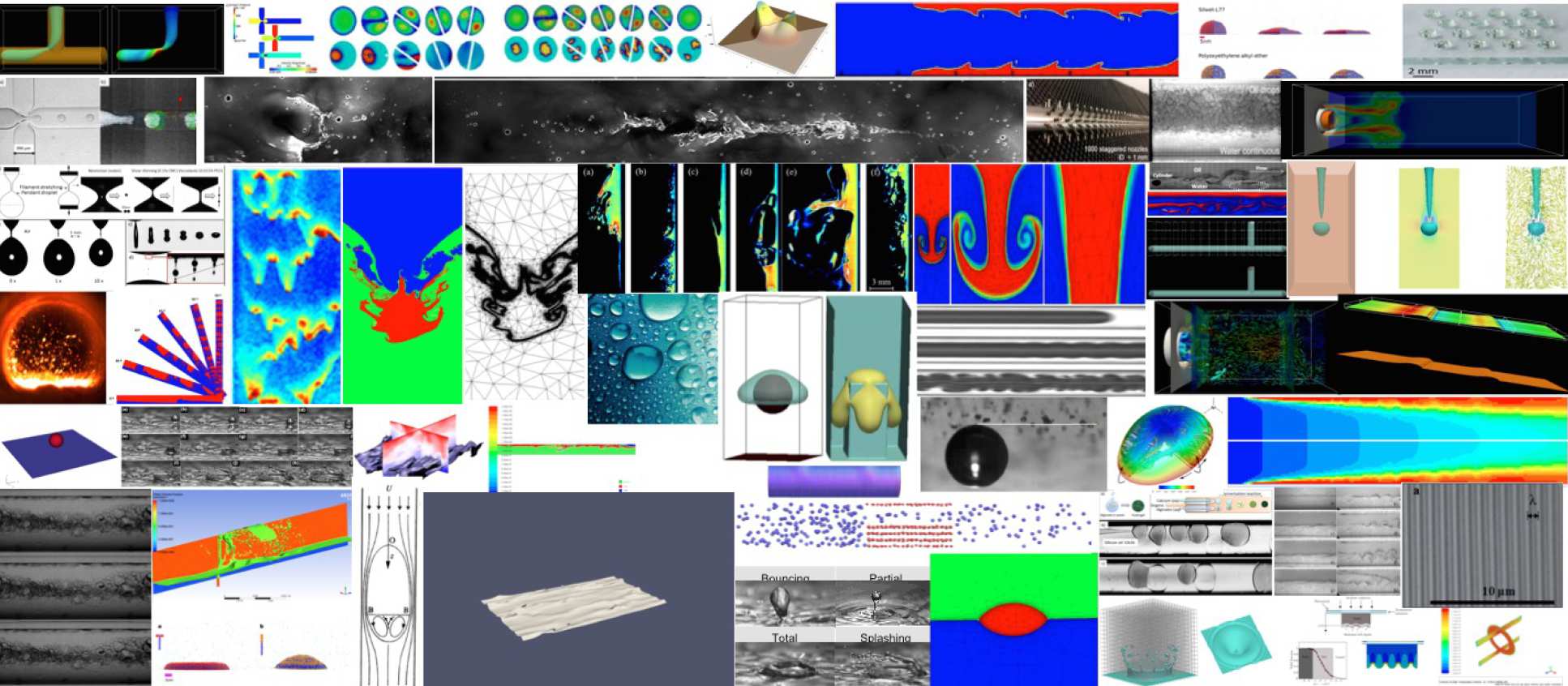
Professor Omar Matar is a Professor of Fluid Mechanics and RAEng/PETRONAS Research Chair in Multiphase Fluid Dynamics at the Department of Chemical Engineering, Imperial College London. He leads the Matar Fluids Group, focusing on interfacial fluid mechanics, multiphase flows, computational fluid dynamics (CFD), and applications in energy, manufacturing, and nanotechnology. His roles include Head of Department of Chemical Engineering, Director of the PETRONAS Centre for Engineering of Multiphase Systems (PETCEMS), and Editor-in-Chief of the Journal of Engineering Mathematics. Education: PhD in Chemical Engineering, Princeton University (1993) MEng Chemical Engineering, Imperial College London (1989) Research Interests: Interfacial fluid mechanics, multiphase flows, CFD, and machine learning 2D materials exfoliation and scale-up, immersive technologies (AR/VR) Applications in energy systems, nanotechnology, and personalized education Awards: Fellow of the Royal Academy of Engineering (2020) Recipient of the Imperial College President’s Medal (2020) EPSRC Programme Grant Principal Investigator (MEMPHIS, PREMIERE) Grants & Projects: MEMPHIS: £5M EPSRC-funded Programme Grant (2012–2017) PREMIERE: EPSRC Programme Grant (2019–present) PETCEMS: PETRONAS-funded Centre for Multiphase Systems Engineering Labs & Collaborations: Leads the Matar Fluids Group, collaborating with institutions like UCL, University of Edinburgh, and industry partners such as BP and First Light Fusion. Active in developing high-performance CFD codes (e.g., BLUE) and machine learning-driven models for multiphase systems.