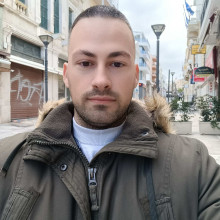
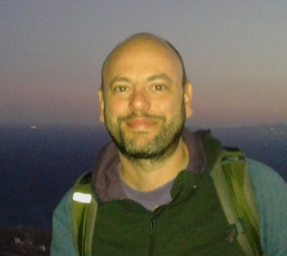
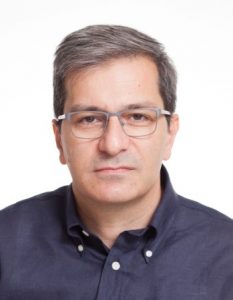
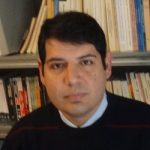
Dimitrios Frangoulis serves as a Lecturer at the Department of Natural Resources Management and Agricultural Engineering , under the School of Environment and Agricultural Engineering at the Agricultural University of Athens . His role focuses on integrating advanced technological systems into agricultural engineering contexts. Education: Diploma in Electrical Engineering and Computer Engineering, National Technical University of Athens PhD Research Interests encompass the development of analog and digital systems for agricultural applications, digital signal processing, pattern recognition, sensor technologies, and intelligent systems. His work bridges engineering principles with agricultural challenges, particularly in automation and data-driven resource management. Academic Contributions: He teaches undergraduate courses such as Applied Automatic Control and Automation, Automatic Process Control, Applications of Informatics in Agriculture, and Electronics - Microprocessors, spanning the 7th to 9th semesters. His pedagogical approach emphasizes hands-on automation and informatics in agricultural settings. Scientific Affiliation: Member of the Greek Academy of Agricultural Sciences
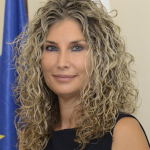
Kyriaki Sotirakoglou is a Professor at the Department of Natural Resources Management and Agricultural Engineering , part of the School of Environment and Agricultural Engineering at the Agricultural University of Athens (AUA). Her academic work focuses on statistical analysis of experimental data, soil science, water resources management, and agricultural chemistry. She teaches undergraduate courses such as Statistical Analysis of Experimental Data Using Computers (5 teaching units, 6th/8th semester) and Statistics (4 teaching units, 3rd semester). Email: sotirakoglou@aua.gr Research Interests: Her research spans soil salinity assessment using dielectric sensors, modifications of milk quality through rumen-modifying supplements, and the application of statistical methods in agricultural experiments. She has extensively studied the impact of dietary additives like Schizochytrium spp. and Chlorella vulgaris on ruminant physiology, milk composition, and oxidative stability. Publication Trends: Recent work emphasizes sustainable feed strategies, rumen microbiota manipulation, and innovative soil/water monitoring techniques. Her studies frequently intersect agricultural engineering with nutritional biochemistry, particularly in optimizing livestock diets and environmental resource management.
Dr. Stavrou Michalis serves as a Research Fellow at the Institute of Electronic Structure and Laser (IESL), part of the Foundation for Research and Technology - Hellas (FORTH) in Greece. His work centers on advanced photonic materials research within FORTH's multidisciplinary scientific ecosystem, focusing on next-generation optical technologies. His research expertise spans Nonlinear Optics and Photonics , with pioneering investigations into 2D Nanomaterials including MXenes, hematene, magnetene, and transition metal dichalcogenides. He examines ultrafast carrier dynamics, saturable absorption, and optical limiting phenomena across UV-NIR spectra, enabling breakthroughs in ultrafast laser systems and multiphoton lithography . His methodology combines green synthesis of mineral-derived nanomaterials with precise femtosecond laser characterization to optimize material responses for photonic applications. Analysis of his 15 most recent publications (2023-2026) reveals three dominant research thrusts: (1) Discovery of exceptional nonlinear optical properties in non-van der Waals 2D materials like hematene exfoliated from iron ores; (2) Development of novel carbazole and indane-dione photoinitiators for high-resolution 3D microfabrication; and (3) Fundamental studies of carrier dynamics in MXene nanosheets for ultrafast photonic switching. His work consistently demonstrates broadband (450-2300 nm) optical limiting performance exceeding conventional materials, with recent focus on Ta 4 C 3 MXenes and magnetene nanoplatelets.
Savvas L. Douvartzides is an Assistant Professor at the Department of Mechanical Engineering , University of Western Macedonia , where he has served since 2019. Previously, he held academic positions at the Western Macedonia University of Applied Sciences from 2014 to 2019 (Assistant Professor) and 2005-2011 (Lecturer). He earned his PhD in Mechanical Engineering (2004) and Mechanical Engineer degree (1997) from the University of Thessaly . Education : PhD (2004), Mechanical Engineering, University of Thessaly Education : Mechanical Engineer (1997), University of Thessaly His research interests focus on heat engine optimization , alternative fuels , fuel cells , and energy storage technologies , with specific emphasis on biogas purification , catalytic deoxygenation , and thermodynamic cycle analysis . Current research trends highlight contributions to solid oxide fuel cells , biogas electrolysis , and renewable diesel production . Scientific contributions include the Greek State Scholarship Institute (IKY) scholarship (2005-2006). As faculty advisor of the Perseus Racing Team , he supervises FSAE car development. He also contributes to academic publishing as a guest editor for Energies Journal . Research is conducted in the Laboratory of Internal Combustion Engines and the Laboratory of Formula Student FSAE Car Development , with teaching responsibilities in undergraduate and postgraduate courses including Thermodynamics , Emerging Renewable Energy Technologies , and Energy Storage Systems .
Athina Krestou is an Assistant Professor in the Department of Mechanical Engineering at the University of Western Macedonia (UoWM), affiliated with the Polytechnic School. She holds a PhD in Chemical Engineering from NTUA (2013), an MSc in Materials for Engineering Applications from the University of Surrey, UK (2001), and a Diploma in Chemical Engineering from NTUA (2000). Her research focuses on nanomaterials, environmental applications of materials, and waste valorization, with expertise in ceramic film fabrication and pollution control technologies. Education: PhD (2013): Synthesis of nano-crystalline boehmite, NTUA MSc (2001): Materials for Engineering Applications, University of Surrey Diploma (2000): Chemical Engineering, NTUA Research Interests: Nanomaterials development for energy and environmental applications Ceramic films fabrication via solution aerosol thermolysis and spray pyrolysis Exploitation of industrial by-products for sustainable materials Air pollution modeling and fugitive dust management in mining areas Publications Trends: Her work spans materials synthesis (e.g., boehmite, ceramic films), environmental engineering (pollution control, green tanning), and interdisciplinary applications (energy storage systems, urban climate modeling). Recent studies emphasize thin-film technologies for electrochemical devices and computational fluid dynamics for air quality analysis. Labs/Teams: Active in the Department of Mechanical Engineering’s research groups focused on materials science and environmental geotechnology.
Stergios Maropoulos is a Professor at the Department of Mechanical Engineering, University of Western Macedonia (UoWM), and serves as Vice Rector of Research and Lifelong Learning. He holds a PhD in Mechanical Properties and Microstructure of Alloy Steels from the University of Manchester/UMIST, with earlier degrees in the same field. His academic focus includes 'Machine Elements' and teaching on topics like Material Technology, Welding, Non-Destructive Testing, Tribology, and Metal Forming. He leads the Laboratory of Mechanical Processes and Quality Control, the Centre for Testing of Materials and Constructions, and directs the MSc program in 'Welding Engineering and Non Destructive Inspection'. His research spans mechanical properties of steels, additive manufacturing (e.g., 3D-printed components), biomechanics (athletic footwear design), and finite element modeling of materials. Notable contributions include studies on fracture toughness of HSLA steels and the Vanadium Award-winning work on Cr-Mo-3.5Ni-V steel properties. He actively participates in national and EU research projects, emphasizing structural integrity and material testing. Awards: Vanadium Award (1994). Labs/Teams: Laboratory of Mechanical Processes and Quality Control, Centre for Testing of Materials and Constructions. Administrative Roles: President of UOWM's University Research Centre; member of Western Macedonia's Regional Research and Innovation Council and Special Development Program Monitoring Committee.
Giorgos Panaras is an Assistant Professor in the Department of Mechanical Engineering at the University of Western Macedonia (UOWM), affiliated with the Polytechnic School. He holds a PhD in Thermal Energy Systems from Aristotle University of Thessaloniki (2010), an MSc in Environment & Development (NTUA, 2000), and a Diploma in Mechanical Engineering (NTUA, 1996). His research focuses on energy-efficient buildings, HVAC systems, indoor air quality, thermal comfort, solar thermal technologies, and performance assessment of energy systems. He has extensive experience in renewable energy integration and has participated in 16 R&D projects and published over 50 articles. He teaches courses like Fluid Mechanics, HVAC, Energy Planning of Buildings, and Renewable Energy Systems. Education: PhD in Thermal Energy Systems, Aristotle University of Thessaloniki (2010) MSc in Environment & Development, NTUA (2000) Dipl. Mechanical Engineer, NTUA (1996) Research Focus: His work emphasizes sustainable building design, energy performance optimization, and advanced HVAC technologies. Key areas include solar thermal integration, thermal comfort assessment in diverse environments (university classrooms, hospitals, aquatic centers), and lifecycle analysis of energy systems. He also explores flexibility in district heating systems and smart thermostat development. Grants & Collaborations: Principal/Co-Investigator in 16 R&D projects Reviewer for Greek Secretariat for Research and Technology Accredited testing collaborations with NCSR Demokritos and NTUA Labs & Teams: His research group investigates energy-efficient buildings and HVAC systems, with a focus on quantitative performance analysis and uncertainty assessment in energy measurements.
Kostas Philippides serves as Professor in the Department of Mechanical Engineering at the Polytechnic School of the University of Western Macedonia, Greece, a position held since 2019 following the institution's transition from the Technological Educational Institute of Western Macedonia (where he was Professor from 2017-2019). Born in Athens in 1965, he maintains active roles in both theoretical physics research and innovative science education methodologies within an engineering faculty context. His academic credentials include: Philosophy Doctorate in Theoretical Physics of Elementary Particles, New York University (1996) Master in Science, New York University (1993) Postgraduate Fellowship, NCSR Demokritos (1989-1991) Bachelor of Physics, National and Kapodistrian University of Athens (1990) Professor Philippides' research demonstrates a significant evolution from high-energy particle physics to educational science. His early career (1990s-2000s) produced foundational work in electroweak theory, gauge boson couplings, and radiative corrections published in Physical Review D and Nuclear Physics. Since 2011, he has pioneered interdisciplinary studies at the physics-education interface, investigating how force concept teaching reinforces language acquisition, implementing CLIL (Content and Language Integrated Learning) methodologies, and analyzing science club impacts on academic performance. His educational philosophy emphasizes making complex scientific principles accessible through fundamental concepts. Publication trends reveal a strategic pivot from theoretical particle physics to educational research around 2010. While his pre-2010 work focused on Standard Model validations and electroweak corrections for major facilities like CERN, recent publications examine pedagogical frameworks, language integration in science instruction, and assessment metrics. This transition aligns with his dual commitment to advancing physics knowledge and transforming its transmission across educational levels. His notable recognition includes: Marie Curie Fellowship for postdoctoral research at University of Durham (1997-1999) Professor Philippides has supervised students across multiple educational tiers: mentoring secondary students during his tenure at Thessaloniki's 2nd Experimental Lyceum (2007-2017), guiding undergraduate engineers in mechanical engineering courses, and advising research projects in physics education. Though specific grant details aren't documented, his consultancy work with Atlantis S.A. and Q-PLAN International on laboratory accreditation systems demonstrates applied research translation. His teaching portfolio spans Physics, Mechanics, Electrical Circuits, and Electrical Machines at university level. He maintains connections with international research networks through past presentations at CERN, UCLA, and University of Cambridge, while currently focusing on pedagogical innovation within the Department of Mechanical Engineering. His work bridges theoretical physics foundations with practical engineering education through curriculum development and assessment frameworks.
Rafaella Eleni P. Sotiropoulou is an Assistant Professor at the Department of Mechanical Engineering, University of Western Macedonia. She holds a PhD in Atmospheric Sciences (2005) and a Diploma in Environmental Science (1999) from the University of the Aegean. Her research focuses on atmospheric environment management, climate change, and aerosol processes. She has conducted postdoctoral research at Georgia Institute of Technology and previously worked at NCSR Demokritos. Research interests include air quality modeling, aerosol formation, and anthropogenic impacts on climate. She leads the Air and Waste Management Laboratory (AWMA Lab) and teaches courses like Atmospheric Pollution and Computational Mechanics. Her work has been published in over 15 peer-reviewed journals and 70 conference papers. Notable recognition includes participation in the UCAR/NCAR Early Career Scientist Assembly (2006). Key contributions address shipping emissions’ ozone impacts, climate change projections via dynamical downscaling, and biogenic emission effects on air quality. Her studies combine field observations with advanced modeling (e.g., WRF, NASA GMI) to assess pollution dynamics and inform policy. Awards: UCAR/NCAR ECSA Junior Faculty Forum Participant (2006) Labs: Air and Waste Management Lab (AWMA), School of Engineering Grants/Projects: BOND project (biogenic aerosols in urban areas), climate change downscaling initiatives
Professor Theodoros Theodoulidis serves as Rector of the University of Western Macedonia and holds a Professorship in the Department of Mechanical Engineering at the Polytechnic School. He earned his PhD (1997) and Diploma (1992) in Electrical Engineering from Aristotle University of Thessaloniki (AUTH). His professional career includes roles as Professor at the University of Western Macedonia since 2013 and previous positions at Technical Education Institute of Western Macedonia (TEIWM). Research Interests: Focus on electromagnetic fields in power systems and nondestructive testing , with emphasis on eddy current techniques for material characterization, defect detection, and sensor design. His work integrates computational methods such as finite-element modeling, boundary-element analysis, and semi-analytical solutions. Publications: Recent work emphasizes high-frequency eddy current testing, superconducting magnet design, and uncertainty quantification in defect detection. Key trends include hybrid modeling approaches, sparse data techniques, and applications in industrial inspection (e.g., drill-bit tools, ferromagnetic welds). Earlier contributions address analytical solutions for coil interactions with conductive media and transient response calculations. Affiliations & Teaching: Teaches undergraduate courses in Electrotechnics , Electric Machines , and Nondestructive Testing . Active in academic leadership as Rector, overseeing institutional strategy and research initiatives. Labs & Teams: Research activities are conducted within the University’s mechanical engineering facilities, focusing on electromagnetic testing and computational electromagnetics. Collaborates with international institutions on projects like the WFNDEC benchmarks and ISEM conferences.
Konstantinos Voudouris is a full Professor in the Department of Electrical and Electronics Engineering at the University of West Attica, Athens, Greece. Previously, he served as a full Professor at the Higher Colleges of Technology in Abu Dhabi (2015-2018) and as a Professor at the Technological Institute of Athens (2004-2015). His career spans academia, industry, and government, including roles as telecoms expert at OTE, technical advisor to the Greek Ministry of Transports and Telecommunications, and Embassy Counsellor to the EU for Telecommunications. Education: PhD in Wireless Telecommunication Systems, University of Bradford, UK Professor Voudouris's research focuses on wireless communications with emphasis on 5G/6G networks, millimeter-wave technology, antenna design, and relay networks. His work includes developing relay stations for WiMAX networks, 60 GHz transceivers, and RF energy harvesting systems. He has led significant projects such as the FP7 ICT REWIND project (5.5M€) and the WiCEAR group in the NexGenMiliwave project, demonstrating expertise in both theoretical and applied telecommunications engineering. His publication record (2024-2014) reveals consistent innovation in wireless power transfer, antenna array optimization, substrate integrated waveguide technology, and green RF solutions for mobile networks. Key trends include reducing mutual coupling in antenna arrays, enhancing industrial wireless sensor networks through distributed fusion, and developing sustainable energy harvesting techniques for 5G infrastructure. No scientific awards are listed in the provided documentation. Professor Voudouris has supervised numerous diploma and PhD theses while coordinating major research initiatives including the FP7 ICT REWIND project. He serves on the University of West Attica Quality Assurance Committee and has held significant administrative roles including chairing the Promotions Committee at HCT, coordinating the ERASMUS program, and managing the internship office for the Electronic Engineering Department. He leads the WiCEAR research group and has developed electromagnetic wave transmission prediction software to enhance laboratory instruction for electronic engineering students, demonstrating commitment to both research innovation and educational advancement.
Panagiota Tselenti is a Lecturer in the Department of Informatics and Computer Engineering at the University of West Attica. She holds a PhD in Computer Science from Kingston University (UK, 2017), specializing in artificial intelligence algorithms, social network analysis, and recommender systems. Her teaching spans undergraduate and postgraduate programs since 1995, covering Robotics, Artificial Intelligence, Information Retrieval, and Natural Language Processing. She actively contributes to the Lab Teaching Staff, integrating academic rigor with practical applications. Her research focuses on artificial intelligence, data mining, and robotics, with notable work on trust-based recommendation systems and fuzzy logic methodologies. Education: PhD in Computer Science (Kingston University, UK, 2017) MSc in Data Communication Automation Engineering (BSc) Research interests include Recommender Systems, Social Network Analysis, Knowledge Management, and Robotics. Her work bridges machine learning techniques with real-world applications in education and energy systems. Recent publications explore trust models, deep learning for electric load forecasting, and policy development in maritime education using fuzzy cognitive maps. Her teaching spans over two decades, emphasizing both theoretical foundations and hands-on experience in informatics disciplines. Professional contributions are documented in her CV and personal website.
Paris Mastorocostas is a Professor at the University of West Attica, specializing in computational intelligence, signal processing, and algorithmic data mining. His research focuses on neuro-fuzzy systems, deep learning applications, and their integration into domains like energy systems, transportation networks, and industrial automation. He has pioneered methodologies for short-term load forecasting, telecommunications fraud detection, and adaptive noise cancellation in medical signals. Key research themes include: Neuro-fuzzy modeling for dynamic systems Machine learning in energy and transportation Data warehouse development using Python/MySQL UAV-based inventory quantification Graph neural networks for urban metro flow His work demonstrates a strong interdisciplinary approach, combining algorithm design with practical industrial applications. Notable contributions include the ReNFuzz-LF model for electricity load forecasting and TMD-BERT for transportation mode detection. His publications span over 25 years, showing sustained innovation in computational intelligence techniques and their real-world implementation.
Cleo Sgouropoulou is a Professor at the Department of Informatics and Computer Engineering at the University of West Attica (UNIWA) and currently serves as Vice-Rector for Finance, Planning, and Development. She holds a Diploma and PhD in Electrical and Computer Engineering from NTUA. Her academic roles include Scientific Director of UNIWA's Institute of Lifelong Education and former Head of the Department of Informatics and Computer Engineering. Her research focuses on software engineering for Learning Technology and Research Information Systems, with an emphasis on standardization (e.g., CEN TC353) and European projects related to e-Learning, Open Educational Resources (OER), and digital skills frameworks. She has coordinated major initiatives like the EuroLMAI European Norm and contributed to standardization of learning outcomes and learner mobility models. Prof. Sgouropoulou has authored over 140 publications in journals like Information and Software Technology and IEEE Transactions on Learning Technologies , with over 1,400 citations. Her work bridges AI, AR/VR, and pedagogy, exploring adaptive learning systems, fuzzy logic applications, and gamified educational tools. Recent research includes AI-enhanced augmented reality systems (e.g., PARSAT AR), digital escape rooms for environmental education, and personalized learning frameworks using Bayesian and reinforcement learning approaches. She actively participates in European standardization bodies, shaping policies for digital competencies and ICT professionalism. Her contributions have been formalized into CEN standards and adopted across education sectors. She also advocates for the integration of AI ethics and human-centered design in educational technology. Her grants and projects emphasize open educational resources, digital skill frameworks, and immersive technologies in special education. She collaborates with institutions like CEN, ELOT, and the Greek Mirror Committees to advance standardization efforts and promote equitable access to lifelong learning.
Ioannis Voyiatzis is a Professor and Head of the Department of Informatics and Computer Engineering at the University of West Attica, Greece. He directs the Computing and Embedded Systems Technology, Internet of Things and Optimization (CESIO) lab. His research focuses on dependability/security of digital systems, AI/ML algorithms, UAVs, and blockchain. He has authored over 120 publications and participated in EU/Government-funded projects. His educational contributions include serious games for informatics and blockchain-based smart city frameworks. Despite no listed awards, his work spans cybersecurity tools, UAV communication systems, and adaptive learning systems. Education: BSc/MSc from National Kapodistrian University of Athens, PhD in Computing. Research interests bridge hardware-software systems (e.g., FPGA architectures for UAV security) and educational technology (e.g., AR/VR in nursing training). Recent publications emphasize drone hardware selection, aggression prediction in dementia patients, and AI-driven personalized education. Active in EU projects, his lab develops IoT seismic monitoring systems and photovoltaic fault detection algorithms.