Prof. Dr.-Ing. Dr. h.c. Detlef Zühlke leads research at the German Research Center for Artificial Intelligence (DFKI) in Kaiserslautern, Germany. His work focuses on Industrie 4.0 , Smart Manufacturing , and Business Model Innovation , particularly through the development of the SmartFactoryKL demonstrator. Research interests include: Networked production systems Human-robot collaboration Flexible manufacturing architectures Mobile industrial device interfaces Current projects involve: Generic device identification systems Task-based communication for multi-user environments Business model transformations in production technology
Georg Rehm is an Honorary Professor for Computational Linguistics and Language Technology at Humboldt University Berlin and a Principal Researcher at the German Research Center for Artificial Intelligence (DFKI) in Berlin, where he serves as Deputy Director of the DFKI Lab Berlin. He is also the Head of the German-Austrian Chapter of the World Wide Web Consortium (W3C) based at DFKI Berlin. Rehm has over 300 scientific publications and extensive experience in leading major research projects in computational linguistics and language technology. His research focuses on Natural Language Processing, Computational Linguistics, and Artificial Intelligence, with specific interests in multilingual language technologies, semantic web, digital humanities, and language data spaces. He has led numerous significant projects including European Language Grid, OpenGPT-X, and NFDI4DataScience. Rehm is particularly active in initiatives promoting digital language equality in Europe by 2030. Rehm's recent work demonstrates a strong focus on large language models, scholarly document processing, scientific knowledge representation, and climate-related fact-checking systems. His publications span across multiple high-impact venues including ACL, ESWC, and LREC, with a notable emphasis on practical applications of language technology in real-world scenarios. DFKI Research Fellow (2018) As an active member of the academic community, Rehm regularly serves as an expert for the European Parliament, reviews EU projects, and organizes numerous scientific conferences and workshops. His leadership extends to multiple European initiatives aimed at advancing language technology infrastructure and promoting digital language equality across Europe.
Liu Jing is an Associate Professor at the School of New Materials and New Energy, Shenzhen University of Technology, recognized as a Shenzhen Overseas High-Level 'Peacock Plan' Talent (Category C). His research focuses on thermal management solutions for next-generation electronics and energy storage systems. His academic credentials include: PhD in Engineering Thermophysics from Iowa State University (2013-2017), supervised by Professor Xinwei Wang Bachelor's degree in Thermal Energy and Power Engineering from Southeast University (2008-2012) Dr. Liu's research program centers on Raman spectroscopy-based chip thermal management , thermal management material design for high-power semiconductor devices , and lithium-ion battery thermal management technology . His work bridges fundamental heat transfer phenomena with practical applications in third-generation semiconductor HEMTs and energy storage systems, emphasizing nanoscale thermal characterization and material engineering. Analysis of his 15 most recent publications reveals dominant themes in graphene thermal transport, Raman-based thermometry, and sustainable carbon materials. Key journals include Nanomaterials, ACS Applied Materials & Interfaces, and Carbon, with consistent focus on defect engineering, temperature-dependent properties, and advanced characterization techniques for nanomaterials. Major recognitions include: Shenzhen Overseas High-Level 'Peacock Plan' Talent (Category C), 2019 Iowa State University Research Excellence Award (top 10%), 2016 As Principal Investigator, Dr. Liu leads multiple funded projects including a Guangdong Provincial Basic Research Fund project (100,000 RMB) and a Shenzhen University High-Level Talent project (2.7 million RMB). His portfolio spans semiconductor thermal management, battery safety, and sustainable materials, with total secured funding exceeding 3 million RMB through national, provincial, and municipal grants.
Sebastian Timmerberg is a Professor in the Department of Environmental Engineering at Hamburg University of Applied Sciences. His research focuses on renewable fuels, energy system analysis, and sustainability assessment, particularly in hydrogen production and its role in transportation and industrial applications. Expertise in hydrogen technology and GHG emissions reduction Active in projects like NRL | Wasserstoff in der Kupfererzeugung and Northern German Living Lab Teaching areas: Renewable Fuels, Energy Systems Analysis His research spans hydrogen supply chains, wind energy integration, and economic analyses of hydrogen use in industry. He examines the environmental impact of energy systems through life cycle assessment and cost optimization, with recent work on electricity price signals and demand-side management for sustainable hydrogen deployment. Current projects focus on hydrogen production from renewables, blending hydrogen into existing pipelines, and assessing the feasibility of large-scale hydrogen infrastructure. His publications highlight cross-disciplinary approaches combining energy economics, environmental engineering, and industrial sustainability.
Prof. J. Rod Franklin, PhD is a Full Professor of Logistics and Academic Director of Executive Education at Kühne Logistics University (KLU) in Hamburg, Germany. With an extensive background spanning both academia and industry, Professor Franklin brings deep practical experience to his academic role. He has held significant leadership positions at KLU, including Dean of Programs, and was instrumental in the university's planning stages as he states: "KLU is near and dear to my heart, because I was one of the individuals that helped plan the university." His unique blend of academic rigor and industry expertise makes him a central figure in KLU's mission of providing world-class logistics education and research. Professor Franklin's academic foundation is impressive: Doctorate of Management, Case Western Reserve University, USA (2000) Master of Business Administration, Harvard Graduate School of Business, USA (1979) Master of Science in Mechanical Engineering, Stanford University, USA (1975) Bachelor of Science in Mechanical Engineering, Purdue University, USA (1974) His research focuses on applying modern management techniques to supply chain operations, with pioneering work in sustainable business models, green logistics, corporate social responsibility, and cloud-based supply chain management. Professor Franklin is a leading authority on the Physical Internet concept, which seeks to revolutionize logistics through interconnected systems inspired by the digital internet. His research consistently bridges theoretical frameworks with practical industry applications, addressing critical challenges in modern logistics networks while promoting sustainability and efficiency. Professor Franklin's publication record over the past two decades reveals a clear evolution from traditional logistics service innovation toward cutting-edge research on the Physical Internet, predictive analytics, and big data applications in supply chains. His recent work demonstrates increasing emphasis on urban logistics solutions, sustainability challenges, and the integration of digital technologies with physical logistics networks. His seminal 2020 paper "From the Digital Internet to the Physical Internet" has significantly advanced the conceptual framework for this emerging field, while his 2024 protocol design work continues to push the boundaries of practical implementation. Professor Franklin leads significant research initiatives including "Accelerating the Path Towards Physical Internet - SENSE," "Internet of Food and Farm 2020," and "URBANE - Upscaling innovative green urban logistics solutions." His work has been published in top-tier journals including Journal of Business Logistics, IEEE Transactions on Systems, Man and Cybernetics, and International Commerce Review, demonstrating substantial scholarly recognition. While specific individual awards aren't detailed in available information, his leadership in major funded research projects indicates significant institutional support for his work. As Academic Director of Executive Education at KLU, Professor Franklin oversees programs that effectively bridge academic theory with industry practice. His teaching portfolio includes MBA courses on Critical Thinking, Design Thinking, Managing Multiple Complex Expectations, and Systems Thinking - all emphasizing practical application of theoretical concepts. His extensive industry background, including executive roles at Kühne + Nagel and other major logistics firms, directly informs his approach to academic supervision and executive education. Professor Franklin has successfully secured research funding for multiple projects focused on sustainable logistics innovation, demonstrating his ability to translate theoretical concepts into impactful research initiatives. Professor Franklin leads collaborative research teams focused on the Physical Internet concept and its applications in modern logistics. Through projects like SENSE and URBANE, he works with international researchers, industry partners, and policymakers to develop innovative solutions for sustainable urban logistics. His research integrates expertise from computer science, operations research, and business management to address complex supply chain challenges. The BizSLAM App, developed as part of his work on multi-level SLA management, exemplifies his team's ability to create practical tools with direct industry applications, demonstrating the real-world impact of his research vision.
Prof. Dr.-Ing. Holger Blume serves as Vice President for Research and Transfer at Leibniz University Hannover while maintaining his academic position as Professor in the Architectures and Systems Section within the Faculty of Electrical Engineering and Computer Science. He holds multiple leadership positions including Chairperson of the Research Commission and Central Ethics Committee, Executive Board member of eNIFE (Leibniz Research Initiative for Neurosciences), and membership in both the Laboratory of Nano and Quantum Engineering and L3S Research Centre. His research interests span computer architecture, hardware design, signal processing, AI accelerators, hearing aid technology, and biomedical engineering. His work bridges theoretical computer science with practical applications in automotive systems, medical devices, and quantum engineering. Professor Blume's research demonstrates strong interdisciplinary connections between electrical engineering, computer science, and biomedical applications, with particular emphasis on hardware-oriented solutions for real-world problems. Analysis of his recent publications (2023-2025) reveals a strong focus on hardware acceleration for AI and signal processing applications, particularly in automotive radar/LiDAR systems and hearing aid technology. His work shows consistent innovation in RISC-V processor design, specialized hardware for mathematical functions, and biomedical applications of engineering principles. The research demonstrates a clear trajectory toward energy-efficient, specialized computing architectures for specific application domains. As Vice President for Research and Transfer, Professor Blume oversees significant research initiatives at Leibniz University Hannover, which hosts multiple Clusters of Excellence including PhoenixD (Photonics, Optics, and Engineering), QuantumFrontiers, and Hearing4all. The university participates in numerous collaborative research centers and junior research groups funded by DFG, BMBF, and EU programs. Professor Blume is actively involved in multiple research facilities including the Laboratory of Nano and Quantum Engineering and the L3S Research Centre. His work connects with Leibniz University's research focuses on optical technologies, quantum optics and gravitational physics, and biomedical research and technology. His leadership positions indicate strong involvement in shaping the research strategy and ethical framework of the university's scientific endeavors.
Prof. Dr.-Ing. Karl-Heinz Niemann is a Professor at the University of Applied Sciences and Arts Hanover , affiliated with the Department of Electrical Engineering and Information Technology . His work focuses on advanced industrial technologies and systems. Subject Areas Energieeffizientes Design von Produktionsanlagen IT-Sicherheit von Produktionsanlagen Industrielle Bussysteme Integrierte Automation Labor Automatisierungstechnik und Prozessinformatik Research Areas Energieeffizienz in der Produktion IT-Sicherheit in der Produktion Industrie 4.0 Industrielle Kommunikation Contact: karl-heinz.niemann@hs-hannover.de
Leonardo Tonetto is a researcher at Technical University of Munich (TUM) within the Chair of Connected Mobility, working under Prof. Jörg Ott. His office is located in FMI 01.05.038 and he maintains an active presence in both academic research and open-source development with significant GitHub contributions (19 repositories, 73 stars). His work bridges theoretical research and practical implementation in mobility systems. Dr. Tonetto's research spans Mobile User Modeling , Deep Learning & Data Analysis , Signal Processing , and Complex Networks . His work demonstrates particular expertise in extracting meaningful patterns from human mobility data while addressing critical privacy concerns. Recent publications show increasing focus on ethical implications of location-based data and energy-efficient computing for augmented reality applications. Analysis of his publication record from 2014-2025 reveals a consistent research trajectory evolving from fundamental mobility pattern analysis toward more complex systems integrating privacy considerations and energy efficiency. His work increasingly intersects computer science with social implications, particularly in location-based services and epidemic modeling. The research shows strong methodological diversity, employing machine learning, network analysis, and signal processing techniques across various application domains. Through his GitHub profile and open-source contributions, Tonetto demonstrates commitment to reproducible research and community engagement. His technical skills span multiple programming languages and systems, supporting both theoretical research and practical implementation of mobility-aware systems. While specific grant information isn't publicly available, his consistent publication output suggests successful research funding.
Markus Richter serves as Professor of Horticultural Plant Production and Production Technology at the Berlin University of Applied Sciences (BHT), within Department V - Life Sciences and Technology. His academic career combines extensive industry experience with scholarly research, focusing on the practical application of botanical knowledge to solve horticultural challenges. Since joining BHT in 2008, he has established himself as a specialist in ornamental plant cultivation technology and precision irrigation systems. Prof. Richter earned his foundational education as a Horticultural Engineer from the Technical University of Applied Sciences Berlin (1987-1990), followed by an MSc in Technology of Crop Protection from the University of Reading (1990-1991). He completed his doctorate (Dr. rer. hort) at Humboldt University of Berlin between 1996 and 2001. Prior to his academic appointment, he gained valuable industry experience as a test engineer at the Chamber of Agriculture Westphalia-Lippe (1991-2003), and later as Head of the Horticultural Research Center in Münster-Wolbeck (2003-2006) and Head of ornamental plant trials at GBZ Straelen/Cologne-Auweiler (2006-2007). His research interests center on ornamental plant cultivation , technology in horticulture , and irrigation systems , with a particular emphasis on developing sensor-based solutions for resource-efficient plant production. Prof. Richter has pioneered work in photogrammetric monitoring systems for irrigation management, with applications spanning both greenhouse and field production environments. His expertise bridges plant physiology, engineering, and practical horticulture, addressing critical challenges in water conservation and plant health monitoring. Analysis of his recent publications reveals a dominant focus on the PLANTSENS research initiative, which has evolved through multiple phases (2017-2023). This work demonstrates a consistent trajectory toward increasingly sophisticated multi-sensor systems for detecting plant water stress and automating irrigation. His research spans agricultural engineering, plant physiology, and computer vision, with applications in both ornamental and vegetable production systems. A secondary research thread examines nutrient management issues in specialty crops like Helleborus and Hydrangea. At BHT, Prof. Richter actively supervises student theses on topics including sensor systems for irrigation management, growth control of ornamental plants, and sustainable production methods. His research has been supported through multiple projects, including the PLANTSENS project (2017-2020), PlantSens II (2020-2023), and ongoing doctoral research on Helleborus cultivation. He serves on the Training Commission and Audit Committee, and acts as an academic advisor and officer for recognition of academic achievements.
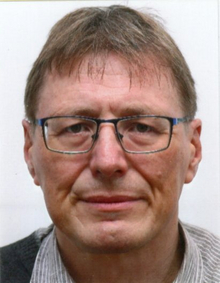
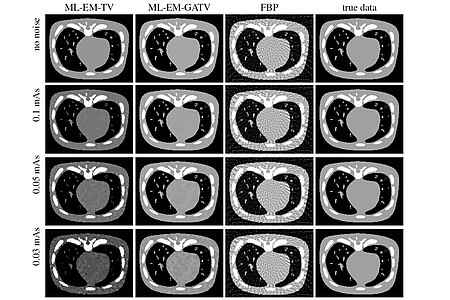
Jürgen Hesser is a Professor at the Mannheim Medical Faculty , Heidelberg University, specializing in Experimental Radiotherapy and Medical Imaging . His research focuses on solving inverse problems in imaging, particularly for CT reconstruction , brachytherapy planning , and low-dose imaging . Current affiliations: Clinic for Radiotherapy and Radiooncology, Mannheim University Hospital Collaborative ties: Interdisciplinary Center for Scientific Computing (IWR) and Center for Bioinformatics (ZITI) at Heidelberg University Research interests center on anisotropic total variation techniques for medical and industrial applications, including MR-guided interventions and real-time radiation therapy . His work has led to a 1000x speed improvement in brachytherapy planning algorithms. Recent publications highlight expertise in image reconstruction (CT/X-ray), noise optimization , machine learning for cancer classification, and big data management solutions. His methods are applied to both clinical and industrial imaging challenges. Additional contributions include scientific data infrastructure development and variance stabilization techniques for medical sensors. The research group maintains strong interdisciplinary links with Physics, Mathematics, and Computer Science faculties.
Smajil Halilovic is a Researcher at the Chair of Renewable and Sustainable Energy Systems at the Technical University of Munich . His work focuses on energy systems modeling and optimization, particularly for geothermal and renewable energy integration. Current projects include Geo.KW , a coupled hydrothermal and infrastructure model for urban-scale geothermal use Research emphasizes optimization techniques for groundwater heat pump systems Key contributions in PDE-constrained optimization and thermal resource assessment Halilovic has published extensively in Renewable Energy and Energy Conversion and Management , with recent work on spatial optimization of geothermal systems and urban heat planning. His collaborations with Prof. Thomas Hamacher and Kai Zosseder highlight his role in advancing sustainable energy infrastructure. He teaches Mathematical Modeling of Complex Systems in the Energy Field and contributes to interdisciplinary projects like the Interdisciplinary project internship: Concept development of a renewable energy system in a developing country . His publications demonstrate expertise in geothermal integration, optimization algorithms, and urban energy modeling.
Prof. Dr. Hermann Winner is a full Professor and Head of the Institute of Automotive Engineering (FZD) at Technische Universität Darmstadt since 2002. He previously held leadership roles in predevelopment and series development at Robert Bosch GmbH (1987–2001) and served on international standards committees like ISO/TC204/WG14. Education : Diplomphysicist (1981), Westfälische Wilhelms-Universität Münster Doctorate (1987), Westfälische Wilhelms-Universität Münster (Topic: Dynamics of domain walls in metal ferromagnetic materials) Research Interests : His work focuses on automated driving systems , automotive sensor modeling , and safety validation methodologies . Key contributions include modular safety frameworks (S2I2), behavior-semantic scenery descriptions for autonomous vehicle development, and advanced driver assistance systems (PRORETA 5). He has pioneered research on lidar sensor simulation, brake wear particle emissions, and motorcycle dynamics safety. Article Trends : Recent publications (2022–2024) emphasize automated urban driving safety , semantic scenario modeling , and sensor-based localization . Earlier works (2012–2021) established foundational concepts in fail-operational architectures , collision criticality metrics , and automotive system decomposition . Scientific Awards : IEEE-ITS Institutional Award (2012) for leadership in automated driving research Labs & Projects : He leads the Institute of Automotive Engineering (FZD) at TU Darmstadt and has been integral to projects like UNICARagil (disruptive vehicle architectures), PRORETA series (collision avoidance systems), and collaborations with institutions such as the Daimler und Benz Stiftung and the Bundesanstalt für Straßenwesen.
Professor Volker F. Wendisch serves as Professor and Chair of Genetics of Prokaryotes at Bielefeld University's Faculty of Biology. He is Scientific Director of the Center for Biotechnology (CeBiTec) since 2024 and has held leadership roles including Dean of the Department of Biology (2016-2018) and Vice Chairman of the Cluster of Industrial Biotechnology (CLIB) since 2023. His research focuses on microbial metabolic engineering, particularly using Corynebacterium glutamicum as a cell factory for sustainable production of valuable compounds. His work spans industrial biotechnology, molecular genetics, and synthetic biology with applications in pharmaceuticals, food additives, and bio-based materials. His team develops novel metabolic pathways for producing amino acids, carotenoids, pharmaceutical precursors, and specialty chemicals from renewable resources. Wendisch's recent publications reveal a strong focus on sustainable bioproduction from waste streams, optimization of microbial processes, and development of novel microbial cell factories. His research increasingly emphasizes circular economy principles, utilizing agricultural sidestreams and food waste as feedstocks for amino acid and specialty chemical production. Distinguished Scientist Award of the International Bioprocessing Association (2019) Schwarzbich Inventor Award (2019) As Scientific Director of CeBiTec and former Dean of Biology at Bielefeld University, Wendisch has secured significant research funding and established numerous collaborative projects including the CLIB-Competence Centre Biotechnology. His leadership extends to coordinating the BMBF collaborative research network on Genome reduction and serving on the Senate of Bielefeld University. Wendisch leads the Prokaryote Genetics Group at CeBiTec, which focuses on fundamental and applied research in bacterial genetics and metabolic engineering. His team maintains strong industry partnerships through CLIB and works on translating basic research into industrial applications, particularly in the bioeconomy sector.
Michael Raupach is a Professor at RWTH Aachen University holding the Chair of Building Materials Science - Building Conservation. His work focuses on concrete durability, reinforcement corrosion, and sustainable construction materials, with particular expertise in alkali-activated binders, carbon textile reinforcement, and electrochemical monitoring systems. Research Interests: Concrete durability, corrosion protection, sustainable materials, structural maintenance, BIM applications, and non-destructive testing. Recent Work: Investigates electrically heated carbon textile reinforced concrete systems, develops hybrid alkali-activated materials for realkalization, and explores chloride diffusion mechanisms in low-carbon binders. Publications: Active in journals covering concrete technology, corrosion engineering, and sustainable construction methods.
Dr. Florian Merget is a senior researcher ( Oberingenieur ) at the Institut und Lehrstuhl für Integrierte Photonik at RWTH Aachen University since 2011. His research spans silicon photonics , photonic integrated circuits (PICs) , and their applications in biomedical imaging , quantum optics , and optical communication systems . Education : Diplom-Ingenieur and PhD in Electrical Engineering from RWTH Aachen University Research Areas : Photonic device design (grating couplers, modulators, external cavity lasers), optical packaging, quantum interfaces, and biomedical photonics His recent publications focus on silicon nitride components for biomedical and quantum applications, alignment-tolerant optical couplers , and nonlinear optical transmission systems . Collaborations include work with Jeremy Witzens, Alvaro Moscoso Martir, and other photonics experts. Key contributions involve photonic interposer technology , resonant modulator design , and spin qubit-photon interfaces . He has also filed patents related to optical alignment and photonic integration .