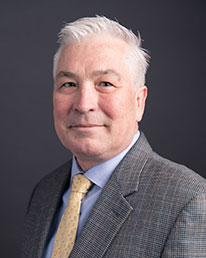
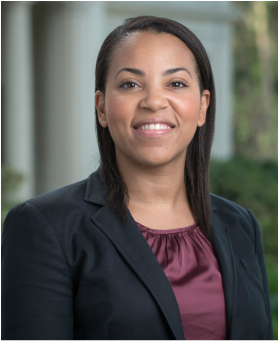
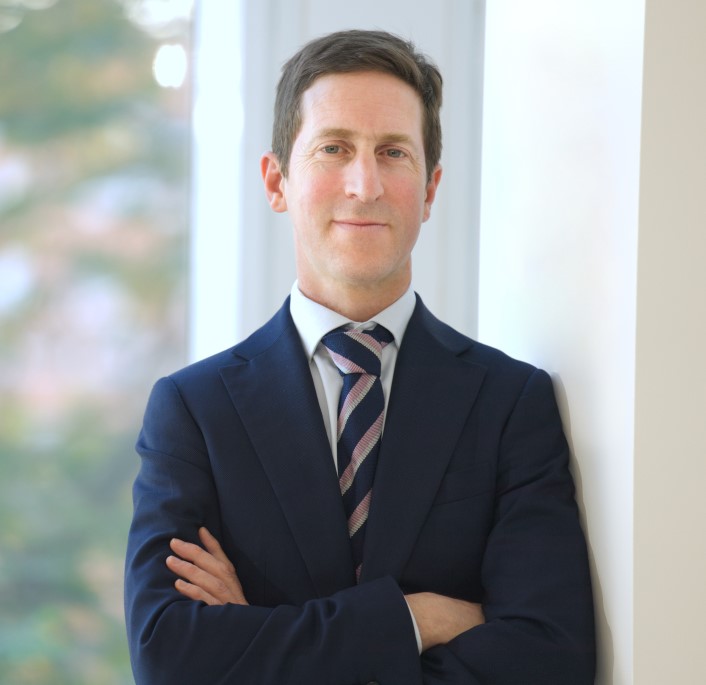
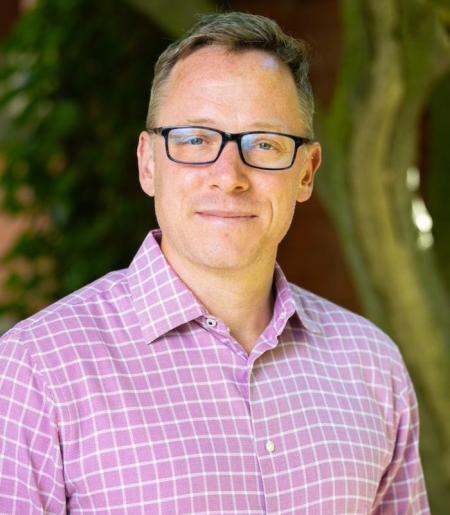
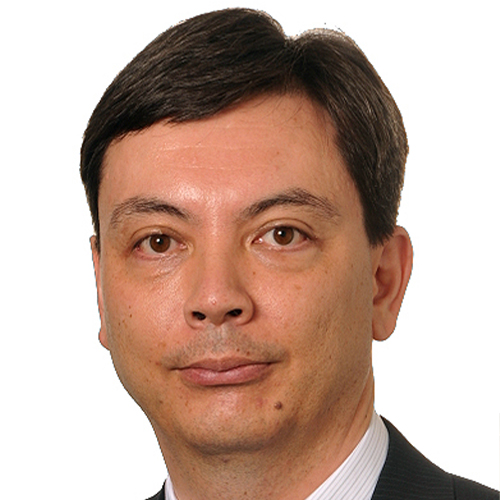
George Willis is a Clinical Professor at Chapman University Fowler School of Law , where he serves as Director of the Tax Law Clinic and Administrator of Graduate Tax Programs. He teaches Tax Law Clinic , Tax Procedure and Admin Clinic , Business Associations , and Client Interviewing & Counseling . Education : Bachelor of Science in Finance (California State University, Long Beach), Juris Doctor (Chapman University Fowler School of Law) Prior Roles : Tax attorney, IRS Estate and Gift Tax Division, First American Corporation legal counsel, Senior Engineer at Northrop-Grumman His research focuses on Tax Law , Clinical Legal Education , and IRS Procedures , emphasizing pro bono representation for low-income taxpayers. Recent publications address IRS form revisions, confidentiality policies, and volunteer tax preparer programs. Professor Willis actively participates in the American Bar Association Taxation Section and moderates the Low-income Taxpayers Committee listserv. He contributes to clinical legal education through chapters in practitioner manuals and casebooks.
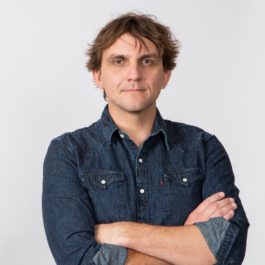
Dr. Johnson Xuesong Shen is an Associate Professor at the School of Civil and Environmental Engineering , University of New South Wales . His work integrates Digital Twins , Building Information Modeling (BIM) , and Construction Automation with a focus on robotics, AI, and LiDAR/UAS technologies. Research Interests: Digital Twins, BIM, Construction Robotics, Emissions Modeling, LiDAR/UAS, Structural Health Monitoring Education: Ph.D. in Construction Engineering and Management, The Hong Kong Polytechnic University His publications span 2025–2005, emphasizing construction automation , environmental impact reduction , and innovative tunneling solutions . Recent work includes IoT-Bayes fusion for real-time safety monitoring and life cycle analysis of construction waste. Scientific Awards: Vice Chancellor's Award for Teaching Excellence, UNSW, 2014 Best PhD Student Paper Award, CONVR, UK, 2013 Postdoctoral Fellowship, University of Alberta, 2011-2013 Best Paper Award, ASCE Construction Research Congress, 2010 Dr. Shen mentors 9 PhD candidates in areas like 3D object detection , fuel consumption modeling , and UAV-based LiDAR . His grants include $5.98M from the Australian Research Council (2022–2027) for resilient infrastructure systems and projects on modular construction and intelligent tunneling .
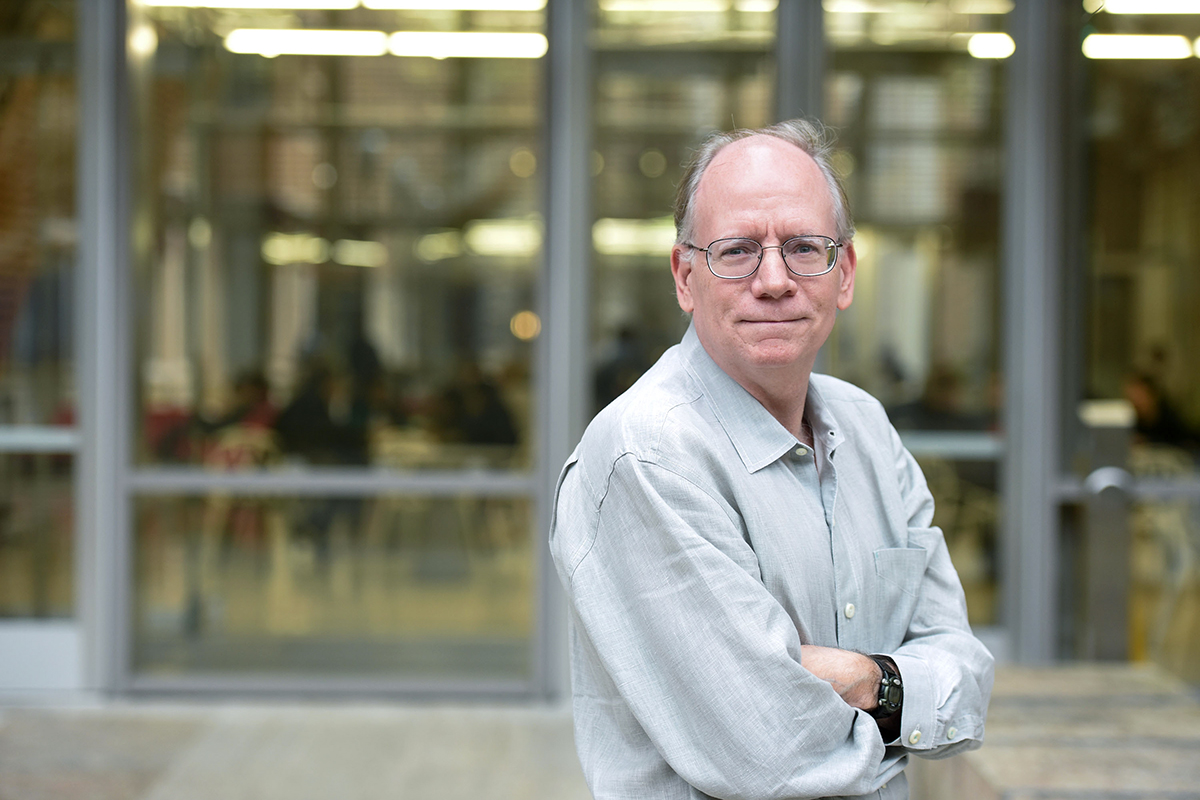
Thorsten Koch serves as Head of the Department of Applied Algorithmic Intelligence Methods within the Division of Mathematical Algorithmic Intelligence at Zuse Institute Berlin (ZIB). His research spans mathematical optimization, energy systems modeling, quantum computing applications, and scientometrics. Koch leads significant research projects including FAN (focusing on AI in scholarly communication), UNSEEN (energy scenarios), HPO-NAVI (research software visibility), and Multi-Energy Models for European Energy System Planning. Koch's research interests center on developing advanced optimization algorithms for complex systems, particularly in energy networks and scientific data analysis. His work bridges theoretical mathematics with practical applications in gas network optimization, wind farm design, portfolio management, and quantum computing. He has pioneered methods for large-scale mixed-integer programming, scenario generation, and the integration of machine learning with traditional optimization techniques. His recent publications demonstrate growing emphasis on quantum optimization, scientometrics, and the application of AI to scientific communication infrastructure. His publication trends reveal a strategic expansion from traditional mathematical optimization into quantum computing applications and scientific data infrastructure. Recent work shows increasing collaboration across disciplines - connecting energy systems analysis with financial modeling, integrating machine learning with optimization solvers, and applying computational methods to scientometrics. The 15 most recent articles highlight three major thrusts: quantum optimization (33%), energy systems modeling (27%), and scientific data infrastructure (40%), reflecting his leadership in both theoretical algorithm development and practical implementation for societal challenges. Koch actively contributes to research infrastructure through leadership roles in projects like KOBV (Berlin-Brandenburg Cooperative Library Network), HDC (Humanities Data Centre), and CIB (future library networks). His work on the DeepGreen initiative focuses on establishing legally secure workflows for implementing open-access components in scientific publication licensing agreements, demonstrating his commitment to open science principles and research data management.
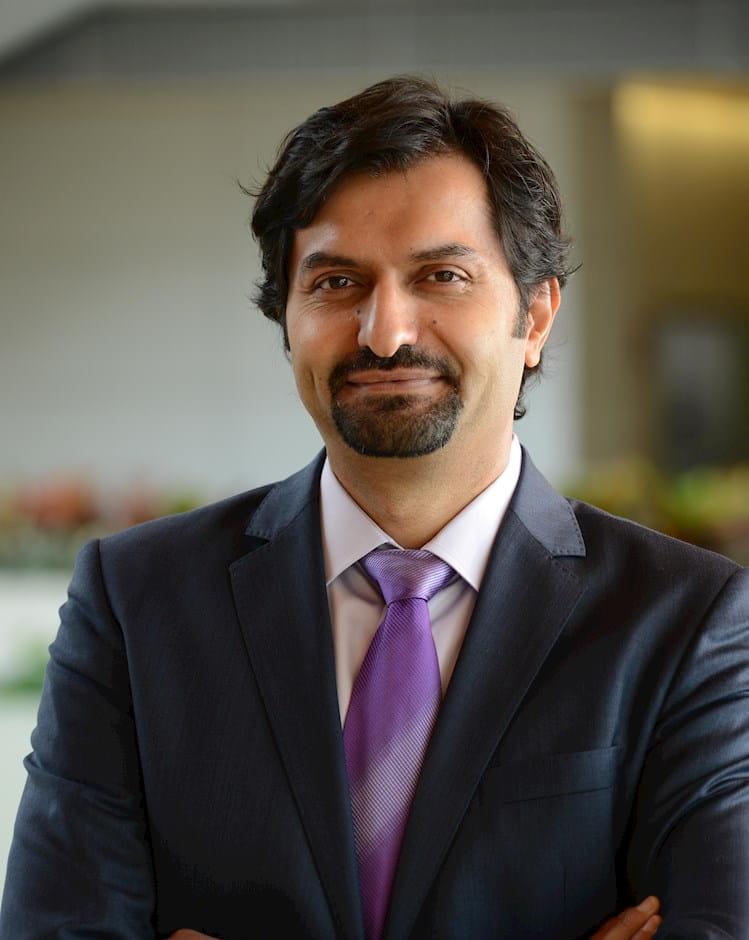
Daniel E. Horton is an Associate Professor in the Department of Earth, Environmental & Planetary Sciences at Northwestern University's Weinberg College of Arts and Sciences, where he leads the Climate Change Research Group (CCRG). His interdisciplinary work bridges atmospheric science, environmental health, and geoscience through advanced modeling techniques. Education: Ph.D. in Geological Sciences from University of Michigan B.S. in Atmospheric Science from Texas A&M University B.S. in Physics from Tulane University Horton's research spans extreme weather events, near-term societal impacts of climate change, geologic climate evolution, and exoplanet habitability. His group integrates atmospheric, biospheric, cryospheric, hydrospheric, and lithospheric processes using numerical models, environmental observations, and machine learning. Recent work emphasizes environmental justice through neighborhood-scale air quality analysis and transportation electrification impacts. Analysis of his 10 most recent publications (2022-2023) reveals three dominant research thrusts: (1) urban air quality modeling with WRF-CMAQ systems focusing on racial disparities in pollution exposure, (2) transportation electrification impacts on public health and equity, particularly for heavy-duty vehicles, and (3) hydrological extremes including precipitation variability and post-wildfire debris flows. Machine learning applications are increasingly prominent across all research areas. Scientific Awards: NSF CAREER Award (2023) for research on air quality, public health, and equity implications of transportation electrification Horton secured a $600,000 NSF grant supporting both research and educational initiatives, including after-school sustainability programming for Chicago middle schools. His Climate Change Research Group actively recruits graduate students for projects at the intersection of climate science and societal impacts, with strong collaborations across environmental health, urban planning, and engineering disciplines. Current work emphasizes equity-centered climate solutions through fine-scale spatial analysis of pollution and health outcomes.
Chao Liu is a Research Scientist at CNRS (French National Center for Scientific Research) since 2008, affiliated with the DEXTER team and the Department of Robotics, LIRMM at University of Montpellier, France. He earned his Ph.D. in Electrical & Electronic Engineering from Nanyang Technological University, Singapore (2006). Current research focuses on surgical robotics , haptics , teleoperation , and nonlinear control theory with applications in computer vision. His work addresses challenges in robotic-assisted telesurgery, including: Stable and transparent human-robot interaction through wave variable compensators and passivity filters Physiological motion compensation using spatio-temporal LSTM and dual Kalman filters EMG-based motion recognition for surgical skill assessment 3D soft-tissue reconstruction with stereo-endoscopes and deep learning Dr. Liu leads European and French projects like: TS2RT (CNRS-funded): Safer teleoperation with motion compensation ROBACUS (ANR-funded): Needle positioning with MPC control HaTUMoCo (CNRS-funded): Haptic teleoperation with uncertainty handling ARAKNES (EU-funded): Microrobotic systems for endoluminal surgery Scientific honors include Senior Member of IEEE and Member of Sigma Xi . He supervises Ph.D. and Master's students working on topics such as concentric tube robot optimization, haptic teleoperation, and EMG-based force estimation. Dr. Liu serves on IEEE Technical Committees for Telerobotics and Haptics , and as Technical Editor of IEEE/ASME Transactions on Mechatronics.
Raymond J. Mooney is a Professor in the Department of Computer Science at the University of Texas at Austin, where he has been a faculty member since 1987. He is the Director of the UT Artificial Intelligence Laboratory and affiliated with multiple research groups including the Machine Learning Research Group, UT Computational Linguistics Lab, and the UT Center for Computational Biology and Bioinformatics. He holds a B.S., M.S., and Ph.D. in Computer Science from the University of Illinois at Urbana-Champaign, where his thesis was supervised by Gerald DeJong. His research spans diverse areas in artificial intelligence, machine learning, and natural language processing: Natural Language Learning Connecting Language and Perception Statistical Relational Learning Information Extraction Transfer and Active Learning Abductive Reasoning Text Mining and Clustering Recommender Systems Knowledge-Base Refinement Recent publications highlight trends in grounded language processing, human-robot interaction, and multimodal reasoning. He has been recognized with prestigious fellowships including ACL (2014), ACM (2010), and AAAI (2005). Scientific awards: Fellow of the Association for Computational Linguistics (2014) Fellow of the Association for Computing Machinery (2010) Fellow of the American Association for Artificial Intelligence (2005) Classic Paper Award (2019) Best Paper Awards (2007, 2004, 1996) He teaches graduate courses like CS 371R: Information Retrieval and Web Search (Fall 2025) and CS 395T: Grounded Natural Language Processing (Spring 2025). His research labs include: UT Artificial Intelligence Laboratory Machine Learning Research Group UT Computational Linguistics Lab UT Center for Computational Biology and Bioinformatics
Baris Ata is the Sigmund E. Edelstone Distinguished Service Professor of Operations Management at the University of Chicago Booth School of Business. His work bridges theoretical operations management with practical applications, focusing on dynamic decision-making under uncertainty. Research Interests Ata’s research spans stochastic networks, manufacturing/service operations, healthcare delivery, and social sector innovation. Recent projects address high-dimensional stochastic control, xenotransplantation candidate selection, criminal justice logistics, and last-mile delivery challenges in Africa. Scientific Awards Best Paper in Service Science Award, INFORMS (2009) William Pierskalla Best Paper Award, INFORMS (2015) Wickham Skinner Best Paper Award, POMS (2019) Manufacturing and Service Operations Management Young Scholar Prize, INFORMS (2015) Emory Williams MBA Teaching Award (2021) Recent Publications Ata’s recent work includes topics in dynamic pricing, stochastic control, and healthcare logistics. His papers examine congestion-based pricing strategies, equilibrium analysis in queues, and policy design for organ transplantation. Broad disciplines include operations management, stochastic modeling, and healthcare analytics.
Krystale Littlejohn is an Associate Professor in the Department of Sociology at the University of Oregon’s College of Arts and Sciences. Her research focuses on race, gender, and reproduction, examining how cultural categories shape intimate relationships and health outcomes. She employs mixed methods across disciplines such as reproductive justice, health and medicine, social cognition, and intersectionality. B.A. in Sociology and Spanish Language and Culture, Occidental College (2007) Ph.D. in Sociology, Stanford University (2013) Her work interrogates the social underpinnings of reproductive processes, including projects on contraceptive use, abortion access, and the embodiment of biomedical technologies. She has secured grants from the Society of Family Planning, American Association of University Women, and NIH, including a K01 award for research on risk tolerance in contraceptive use among couples. Recent publications explore themes like mental and emotional health in reproductive care (2025), gendered heterosexuality and mixed feelings about sex (2024), and disparities in contraceptive dissatisfaction by race and education (2012). These works span subfields including reproductive justice, intersectionality, and social cognition. ASA Minority Fellowship Program American Association of University Women Fellowship Society of Family Planning Funding NIH K01 Award Professor Littlejohn mentors graduate and undergraduate researchers, though specific advisees are not listed. She also provides productivity consulting and performance coaching to academics, reflecting her commitment to interdisciplinary collaboration and public health advocacy.
Gavin Schwarz is a Professor and Head of School at the School of Management and Governance within the UNSW Business School . He specializes in organizational change , organizational failure and inertia , and the dynamics of virtual teams , with a focus on how organizations fail during change processes and how to develop applied strategies for change management . His work spans diverse sectors including healthcare, technology, and education, with publications in leading journals such as Academy of Management Learning and Education and Administrative Science Quarterly . Education : PhD in Management (University of Queensland), MPhil (Hons) in Management (University of Auckland), BA in Management and English (University of Auckland). Grants : 2020 Brock University grant for "University communication in times of COVID-19" , 2020 UNSW Medicine grant for "Translation and change: Embedding effective change management in health" , and earlier Australian Research Council and Gordon J. Samuels Fellowship awards. His research explores the development of knowledge in organizational theories , with an emphasis on collective responses to change , HR management during crises , and technology strategy . He has contributed to understanding organizational communication , team innovation , and structural inertia . His 15 most recent publications cover topics from AI’s role in organizational change to pandemic-driven research adaptation, with keywords spanning management science , behavioral economics , and digital transformation . Scientific Awards 2021-2023 : Outstanding Reviewer Awards (Academy of Management Review) 2017-2020 : Best Reviewer Awards (Journal of Organizational Behavior) 2019, 2013, 2011 : Best Paper Finalist/Awardee (Academy of Management divisions) 2007, 2006 : Editorial Board Excellence (Academy of Management Journal) and Gordon J. Samuels Fellowship As an active supervisor in organizational change and HR development , his work supports healthcare innovation and digital transformation. He serves as Editor-in-Chief for the Journal of Applied Behavioral Science and is on the editorial boards of Academy of Management Review , Journal of Management , and Journal of Organizational Behavior . Contact: g.schwarz@unsw.edu.au
Thomas Pepinsky holds the prestigious Walter F. LaFeber Professorship of Government and Public Policy at Cornell University, where he is a faculty member in the Department of Government within the College of Arts and Sciences. He additionally serves as a Nonresident Senior Fellow at the Brookings Institution, bridging academic research with policy engagement. His academic career, which began at Cornell in 2008 after earning his Ph.D. from Yale University, has established him as a leading scholar in comparative politics with deep regional expertise in Southeast Asia. Professor Pepinsky's research examines the complex interactions between political and economic systems globally, with particular attention to democratic backsliding in Southeast Asia and Europe, the evolution of social categories like ethnicity in the Malay world, and methodological approaches to social science explanation. His work consistently connects theoretical political science with empirical analysis of real-world political phenomena, often employing innovative methodological frameworks to understand complex political dynamics across different contexts. His scholarly output demonstrates a clear trajectory from foundational work on Southeast Asian politics to increasingly comparative analyses examining democratic erosion, electoral behavior during political transitions, historical persistence of political attitudes, and the intersection of social categories with political economy. Recent publications reveal growing attention to contemporary crises including refugee flows, pandemic politics, and the challenges to democratic institutions worldwide. Among his significant professional activities, Dr. Pepinsky serves as editor of the Journal of East Asian Studies and is a co-founder and Executive Board member of the Southeast Asia Research Group (SEAREG). He also contributes to the Association for Analytical Learning about Islam and Muslim Societies (AALIMS) and the International Political Economy Society (IPES), reflecting his interdisciplinary approach. At Cornell, he actively participates in the Southeast Asia Program (SEAP) and teaches courses including Introduction to Comparative Government and Politics, Southeast Asian Politics at both undergraduate and graduate levels, and independent study opportunities. His international scholarly engagement is evident through visiting appointments at institutions including Amsterdam, the Australian National University, Freiburg, Griffith University, the Hertie School, and the National University of Singapore.
Parfait Martial Eloundou-Enyegue is a Professor in the Department of Global Development at Cornell University and serves as Section Head and President of the Recruitment, Tenure and Promotion Committee at Institut National D'Etudes Démographiques (INED, France). He also holds appointments at Cornell's Brooks School of Public Policy and leads the Cornell Institute of African Studies. His work spans demography, sociology, and development economics with a focus on reconciling micro- and macro-level social change analysis. Education : Doctorate and Master's from Pennsylvania State University; Ingenieur Agroeconomiste from University of Dschang (Cameroon) Research Interests center on demographic transitions, global inequality, education-development linkages, fertility-schooling relationships, and decomposition methods for social change. His work examines how population dynamics affect economic development, poverty, and policy in sub-Saharan Africa. Recent Articles explore demographic dividends, micro-macro integration in sociology, and global child inequality trends. Awards include Pennsylvania State University's Distinguished Alumnus (2020), multiple Comparative International Education Society recognitions, and UN-related policy engagements. Scientific Awards : 2020 Pennsylvania State University Distinguished Alumnus, 2018 Cornell CALS Science & Policy Award, 2008 Marilyn Emmons Williams Undergraduate Research Advising Award Teaching includes courses on social indicators, education inequality, and development empirics. He has consulted for UN, World Bank, and USAID, and led large-scale demographic training initiatives across Francophone Africa.
Christopher G. Healey is the Goodnight Distinguished Professor of Analytics in the Institute for Advanced Analytics and a Professor in the Department of Computer Science at North Carolina State University. His research spans visualization, data analytics, text analytics, sentiment analysis, machine learning, cognitive psychology, computer graphics, and social media analytics. He has graduated 15 Ph.D. and 26 master's students and secured over $6 million in research funding from agencies including the National Science Foundation, Department of Defense, National Security Agency, Army Research Office, and various industry partners. He has published over 100 peer-reviewed articles and is a senior member of both IEEE and ACM, as well as a member of the NC State Academy of Outstanding Teachers. His research focuses on developing visualization techniques that leverage visual perception to support rapid, accurate, and effective analysis of large, complex datasets. More recently, he has been investigating machine learning for natural language processing and text analytics. His work includes projects on visualizing election results, sentiment estimation for social media, and wildfire narratives using large-scale social media data. His publications demonstrate a strong trend toward integrating machine learning with visualization, particularly for text analytics and social media analysis. He has made significant contributions to visualizing deep neural networks, cyber situation awareness, and pandemic response analytics, showing how visualization can enhance understanding of complex systems and large datasets across multiple domains. IBM Faculty Award (2007, 2008, 2010, 2011, 2012) Senior member, Association of Computing Machinery (ACM) (2007) Senior member, Institute of Electrical and Electronics Engineers (IEEE) (2007) NC State Academy of Outstanding Teachers inductee (2003) National Science Foundation Faculty Early CAREER Award (2001) He has successfully mentored numerous graduate students and secured significant research funding across multiple projects. His work with the Laboratory for Analytic Sciences, National Science Foundation, and Department of Defense demonstrates strong industry and government partnerships. His recent projects focus on visualizing social media narratives, deep neural networks for text understanding, and predictive analytics for large document collections. He leads research groups focused on visualization and analytics, working with teams to develop innovative approaches for data exploration and analysis. His current work continues to push the boundaries of how visualization can be used to enhance understanding of complex data across domains including public health, cybersecurity, and social media analysis.
Prof. Dr. Christian Mayer is a Professor in Physical Chemistry at the Faculty of Chemistry, University of Duisburg-Essen. He serves as Head of the working group focusing on origin of life research, nanocapsules, and NMR spectroscopy techniques. His research group is located at Universitätsstraße 5, D-45141 Essen, Germany, with contact information including phone number +49 201 183-2570. Prof. Mayer's research interests primarily focus on the origin of life in deep tectonic fault zones of the first continental fragments, where he collaborates with Prof. Dr. Ulrich Schreiber from the Faculty of Biology and Prof. Dr. Oliver Schmitz from Applied Analytical Chemistry. His work investigates how vesicle formation occurs in tectonic fault systems through cyclic phase transitions of carbon dioxide, creating ideal conditions for molecular evolution. He specializes in pulsed field gradient NMR (PFG-NMR), high-resolution NMR, and solid-state NMR techniques to characterize nanoscale systems including nanocapsules, vesicles, and microemulsions. His recent publication trends reveal a strong interdisciplinary focus spanning physical chemistry, prebiotic chemistry, and astrobiology. The articles demonstrate increasing integration of computational methods with experimental approaches, particularly in analyzing molecular structures and dynamics. His research has evolved from fundamental studies of nanocapsule systems to broader investigations of protocell formation mechanisms under early Earth conditions, with recent work extending to astrobiological contexts including potential life formation on Titan. Prof. Mayer has established significant collaborations across multiple disciplines, particularly with geologists and biologists, to investigate the physical chemical processes that could have led to the emergence of life. His work bridges fundamental physical chemistry with practical applications in nanomedicine, particularly in developing artificial oxygen carriers based on nanocapsule technology. His laboratory utilizes high-pressure facilities to simulate early Earth crust conditions, with a particular focus on supercritical CO 2 environments. The working group combines experimental approaches with theoretical modeling to understand vesicle formation processes and their implications for the origin of cellular life.
Unn Røyneland is a Professor of Scandinavian Linguistics and Multilingualism at the University of Oslo 's Faculty of Humanities . She is affiliated with the Center for Multilingualism in Society Across the Lifespan (MultiLing) and has been a key figure in Norwegian language policy and standardization efforts, including the Nynorsk 2011 orthographic revision . Current Research Focus: Multilingual and multilectal practices on social media Dialect acquisition among migrants Dialect levelling and language attitudes Language and embodiment Multiethnolectal speech styles Language policy and planning Ongoing Projects: Multilectal Literacy in Education (2020-2025) (RCN-funded, Co-PI) Multilectal Practices on Social Media (2020) (with Øystein A. Vangsnes) Urban Talk and Text (MultiLing Core-group project, 2021) AquaAurora (2021, UiT The Arctic University of Norway) Her scholarly work spans 15+ years of research output, with recent publications analyzing: Language activism and social justice (2024) Multilingualism across the lifespan (2022) Migration-induced dialect acquisition (2020) Youth multilingual practices in digital spaces (2018) Nynorsk standardization processes (2016) Multiethnolectal speech patterns (2008-2010) As Co-Chief Editor of the LME Linguistic Minorities in Europe Online series at De Gruyter, she continues shaping academic discourse in multilingualism studies.
Gareth Hall is a Senior Lecturer in Psychology at Aberystwyth University's Department of Psychology, where he has been an established member since the department's founding in 2007. He holds a PhD from Glamorgan University and is a Chartered Member of the British Psychological Society (BPS) and a Fellow of the Higher Education Academy (FHEA). His academic career includes significant administrative roles such as Examinations Officer (2007-2014, 2016), Senior Tutor (2014), and Acting Director of Admissions and Recruitment (2009, 2011). Dr. Hall's research focuses on social psychology with particular expertise in social identity theory applied to real-world contexts. His work spans sport psychology, examining sport for development programs, intergroup behavior in fandom, and well-being in physical culture communities like CrossFit. He has pioneered research testing laboratory theories in real-world settings, challenging traditional experimental paradigms through creative methodologies that incorporate digital technologies and interdisciplinary approaches. His publication record shows consistent output since 2006, with significant contributions in 2019-2023 focusing on sport psychology applications in Brazil, forensic psychology, and educational technology. His work demonstrates a clear trajectory toward interdisciplinary collaboration, particularly in sport for development contexts and the application of social identity theory to complex social issues. Scientific Awards and Recognition: Teaching and Learning Improvement Award from Aberystwyth University (2011) Active editorial roles including for Frontiers in Sports and Active Living (2021) and Bulletin of Latin American Research (2019) Dr. Hall has secured research funding from prestigious organizations including the Economic and Social Research Council (2018) and British Council (2015). His external engagements include committee membership with the British Psychological Society's Undergraduate Education Committee (2015-present), AQU Catalunya (2022-2023), and visiting researcher positions at the University of Padua (2017-2018). His work contributes to multiple UN Sustainable Development Goals, particularly those related to social development and inclusion.