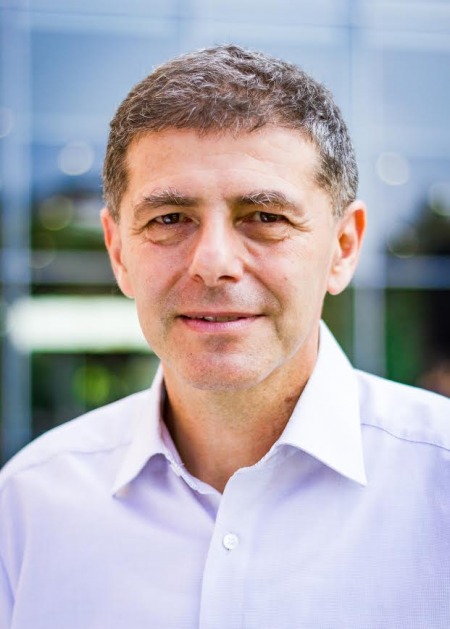
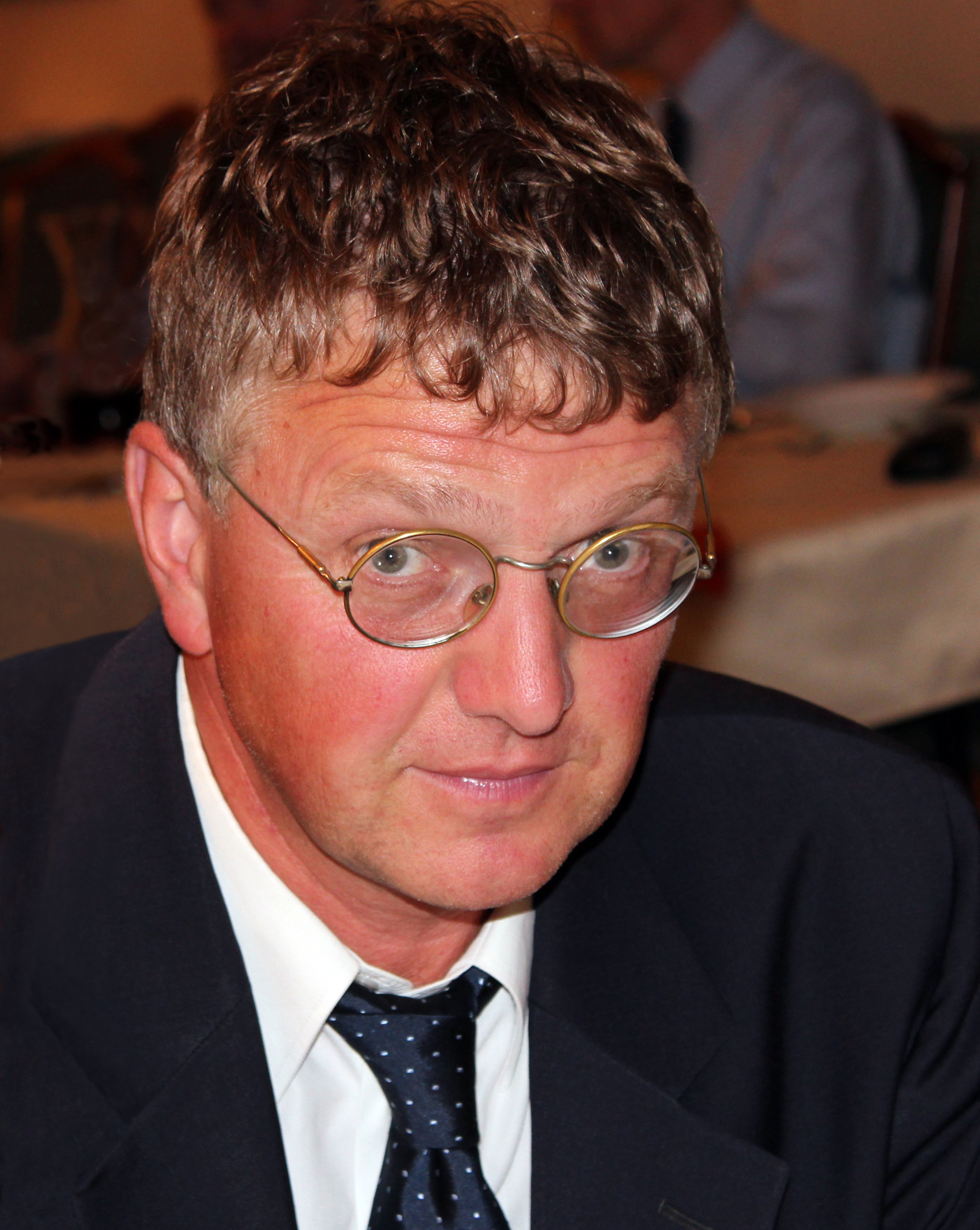
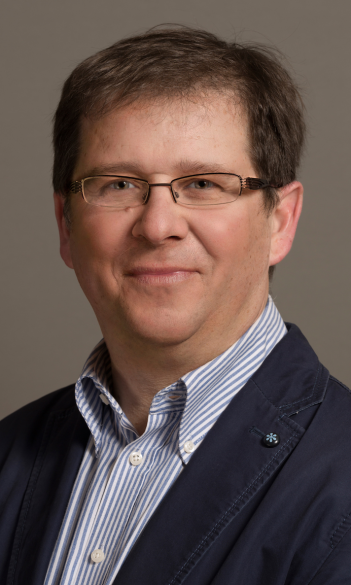
Dr. Gábor Pintér holds dual academic appointments as Assistant Professor at Károli Gáspár Reformed University's Faculty of Humanities and Social Sciences (Department of Japanology) and as Associate Professor at Kobe University's School of Languages and Communication. Born in Hungary in 1977, he earned his MA (2005) and PhD (2008) in Linguistics from Kobe University, Japan, with a dissertation on asymmetrical segment distributions in Japanese. His research focuses on three interconnected domains: phonological theory (especially Japanese phonology), experimental phonetics, and applications of automatic speech recognition in language education. Specific interests include vowel devoicing patterns, prosodic perception in L2 learners, phonotactic constraints, and diachronic sound changes in Japanese. Pintér actively contributes to international research collaborations, including the JSPS-funded project 'Stochastic & theoretical phonological research' and serves as chair of the Phonology Association in Kansai (PAIK). His 15 most recent publications demonstrate methodological diversity, combining theoretical linguistics with computational approaches and experimental studies, primarily focused on Japanese phonetics and speech technology applications. Professional memberships include board positions in The Phonological Society of Japan and memberships in the International Speech Communication Association and Association for Laboratory Phonology.
Dr. Tamás Koltai is a Professor and Dean at the Faculty of Economics and Social Sciences of Budapest University of Technology and Economics (BME). He leads the doctoral school's Specialization Group in Production Management. His roles include overseeing academic programs and research in production management, operations research, and efficiency analysis. Education: Doctor of the Hungarian Academy of Sciences (2016) Dr. habil. (2000), Budapest University of Technology and Economics Candidate of Technical Sciences (1987), Hungarian Academy of Sciences M.Sc. in Mechanical Engineering (1983), BME Faculty of Mechanical Engineering Research Interests: Dr. Koltai focuses on production management optimization, including the application of Data Envelopment Analysis (DEA), sensitivity analysis in mathematical models, and the integration of robotics in assembly lines. His work bridges theoretical models (e.g., MILP/CP optimization) with practical industrial challenges, particularly in healthcare efficiency and educational management. Notable Awards: IEOM Society Teaching Excellence Award (2021) BME GTK Faculty Memorial Medal (2016) János Susánszki Award (2013) Széchenyi Professorship Scholarship (1999–) Teaching & Leadership: He has held visiting roles at the University of Seville (1990–1992) and the University of Michigan (1988/89). His teaching excellence is recognized through awards and his contributions to business simulation education. His research often collaborates with industry partners to address real-world operational challenges. Labs/Teams: Leads the Production Management Specialization Group and contributes to interdisciplinary teams focusing on manufacturing efficiency and healthcare operations within BME.
Dr. Ivett Orsolya Bacskay is an Assistant Professor at the Department of Analytical and Environmental Chemistry, Institute of Chemistry, Faculty of Science, University of Szeged. Her research focuses on fundamental and applied aspects of separation science, particularly in liquid chromatography, with expertise in retention mechanisms, mass transfer, and stationary phase characterization. Research Interests: Her work spans several key areas in analytical chemistry, including hydrophilic interaction liquid chromatography (HILIC), size-exclusion chromatography, chiral separations, pore size distribution analysis, and molecular imprinting for artificial antibody development. She investigates both theoretical models and practical applications in chromatographic systems. An analysis of her recent publications (2010–2025) reveals a strong emphasis on improving chromatographic efficiency and understanding molecular interactions in separation processes. Her studies frequently address challenges in hold-up volume determination, overloading effects, and mass transfer in various stationary phases, contributing significantly to the advancement of HPLC and LC-MS methodologies. Scientific Awards: No awards mentioned in the provided text. Advising and Grants: While specific details about students or funded projects are not listed, her active research output and faculty position suggest involvement in mentoring graduate students and securing research support. She has contributed to interdisciplinary studies involving neuropharmacology and plant biochemistry, indicating collaborative research efforts. Labs and Teams: Dr. Bacskay is part of the Institute of Chemistry at the University of Szeged, where she conducts research within the Department of Analytical and Environmental Chemistry. Her work likely involves collaboration with analytical chemistry research groups focusing on method development, column technology, and environmental or pharmaceutical analysis.
Andrea Kő is a researcher at the Corvinus University of Budapest's Institute of Data Analysis and Informatics, with a focus on artificial intelligence, fintech, and big data applications. She has held positions in the Department of Information Systems until 2022 before transitioning to her current role. Her work emphasizes investment recommenders, Industry 4.0 readiness, and e-government solutions. Her research spans financial technologies, manufacturing optimization, and organizational resilience in SMEs. Notable contributions include hybrid AI models for production systems and frameworks for digital transformation assessment. She actively contributes to international conferences like EGOVIS and BiDEDE, editing proceedings and presenting on topics such as robo-advisors and smart manufacturing. Key projects include the CCMS2.0e maturity model for Industry 4.0 adoption and studies on pandemic impacts on SMEs. Her work integrates machine learning (ANFIS, MMNN) with domain-specific challenges, addressing both theoretical and practical aspects of digital innovation across sectors.
András Perczel is a Professor at the Department of Organic Chemistry, Eötvös Loránd University (ELTE), Faculty of Science, and a Full Member of the Hungarian Academy of Sciences. He holds additional roles as a lecturer in the Institute of Chemistry and has been awarded the honorary title Doctor et Professor Honoris Causa. His research focuses on peptide synthesis, protein structure and dynamics, amyloid formation mechanisms, and drug discovery, with particular emphasis on KRAS inhibitors and biotechnological applications. Key research interests include the development of sustainable peptide synthesis methods using flow chemistry and machine learning, structural studies of amyloid polymorphism, and the design of functional proteomimetics. He has contributed to understanding the molecular basis of protein aggregation in diseases and advancing analytical techniques for peptide characterization. His publications highlight advancements in amyloid core interfaces, GLP-1 receptor agonists, and the application of chiral spectroscopy in protein stability analysis. Scientific awards include membership in the Hungarian Academy of Sciences and an honorary doctoral title. Dr. Perczel collaborates on projects involving KRAS-G12C inhibitors, SARS-CoV-2 nanobody design, and the synthesis of small protein domains via automated flow chemistry. His work bridges organic chemistry, biochemistry, and biotechnology, with a focus on translational research in healthcare and sustainability.
László Lengyel is a Professor at the Budapest University of Technology and Economics (BME), affiliated with the Department of Automation and Applied Informatics . His work bridges theoretical and applied computer science, focusing on industrial automation, IoT systems, and model-driven engineering. Research interests include Model transformations and domain-specific languages IoT device management and multi-domain integration Software obfuscation and cybersecurity Graph algorithms and distributed computing (MapReduce) Real-time data analysis in manufacturing Automotive sensor networks His recent publications reflect expertise in model-driven IoT architectures , granule manufacturing automation , and MapReduce-based graph analysis , with a focus on industrial and automotive applications. He contributes to open-source frameworks like SensorHUB and explores gamification in driver behavior systems.
Zoltán Sütő is an Associate Professor at the Budapest University of Technology and Economics, affiliated with the Department of Automation and Applied Informatics. His research focuses on advanced power electronics and control systems, with expertise in real-time implementation using FPGA technology. He maintains an active presence through institutional contacts at Budapest 1117, Magyar tudósok krt. 2., Q.B114, and can be reached via phone (+36 1 463-2337) or email (Suto.Zoltan@aut.bme.hu). Dr. Sütő's research encompasses: Design and optimization of power converters (dual active bridge, multilevel inverters) Real-time control algorithms for grid-connected systems and microgrids FPGA-based hardware-in-the-loop simulation methodologies Nonlinear dynamics in power electronic systems Artificial intelligence applications for fault diagnosis in drive systems His work bridges theoretical control models with practical implementations in renewable energy integration and power quality management. Recent publications demonstrate a strong focus on predictive control techniques, adaptive compensation methods, and optimization of power converter topologies. Research trends emphasize real-time validation, FPGA implementation, and AI-enhanced diagnostics across applications ranging from energy storage systems to industrial drives. Articles consistently address efficiency improvements, stability challenges, and novel modulation strategies in power conversion.
Dr. Balázs Varga is a Research Fellow at the Department of Control for Transportation and Vehicle Systems, Budapest University of Technology and Economics (BME). He holds a PhD in Transportation and Vehicle Sciences (2021) and an MSc in Vehicle Engineering (2015) from BME. His industry experience includes roles at AVL Hungary as a Software and Function Developer (2016–2018) and academic positions at Chalmers University of Technology (2015) and SZTAKI (2012–2014). Current Role: Research Fellow (2021–present) Teaching: Programming, Control Theory, Traffic Modeling (English language course) Research Interests: Varga specializes in road traffic modeling and control, focusing on AI-based traffic estimation and dynamic traffic management. His work integrates machine learning with mesoscopic and microscopic traffic simulation tools like SUMO to optimize urban mobility and reduce emissions. Projects: He leads the 2020–2024 national development project 'Dynamic, adaptive traffic control services and evaluation tools based on digitally connected data sources' (2019-1.1.1-PIACI KFI). This initiative leverages connected data sources for real-time traffic control and policy evaluation. Key Publications Trends: His recent articles explore topics such as graph neural networks for sensor placement, multiobjective control of emissions, and mixed-reality V2X testing. These works emphasize data-driven approaches, emission reduction, and simulation frameworks for autonomous vehicles.
József Garay is a Senior Research Fellow at the ELTE-MTA Theoretical Biology and Evolutionary Ecology Research Group, part of the Department of Plant Systematics, Ecology and Theoretical Biology at Eötvös Loránd University in Budapest, Hungary. His research spans evolutionary biology, mathematical ecology, and game theory, with a particular focus on evolutionary stable strategies and their applications to biological systems. Dr. Garay received his M.Sc. in Biology from Eötvös University (1981-1986), followed by postgraduate studies in Mathematics (1985-1989). He completed his PhD at the Hungarian Academy of Science in 2004, after doctoral studies in the Department of Plant Taxonomy and Ecology (1990-1994) and a summer school on Evolutionary Models of Cooperation in Seewiesen, Germany (1994). Garay's research interests center on evolutionary game theory and its applications to biological systems. He has made significant contributions to understanding evolutionarily stable strategies (ESS) in sexual populations, the evolutionary roots of morality, and the mathematical foundations of population dynamics. His work bridges theoretical mathematics with practical ecological applications, particularly in areas like optimal foraging, habitat selection, and the evolution of cooperation. A key aspect of his research involves extending classical game theory concepts to more complex biological scenarios, including multi-species systems and time-constrained evolutionary processes. His work on the evolutionary stability of self-sacrificing behavior and the relationship between individual fitness and group survival has provided important insights into the evolution of altruism and social behavior. Analysis of Garay's recent publications reveals a consistent focus on evolutionary game theory applied to biological systems, with increasing sophistication in modeling approaches. His work has evolved from foundational studies on evolutionarily stable allele distributions (ESAD) to more complex applications in areas like cannibalism dynamics, predator-prey interactions, and kin selection. There's a clear trajectory toward more integrative models that combine mathematical rigor with biological realism, often addressing questions at the intersection of evolutionary theory, ecology, and behavior. Notably, his research increasingly incorporates mathematical modeling techniques to analyze complex ecological phenomena, demonstrating the power of theoretical approaches to address empirical biological questions. Dr. Garay has received several prestigious awards and fellowships throughout his career: Juhász-Nagy Pál junior fellowship at Collegium Budapest Institute for Advanced Study (1999-2000) NATO research fellowship at Wilfrid Laurier University, Waterloo, Canada (2002) Research fellowship at Konrad Lorenz Institute, Austria (2005) Bolyai János fellowship of the Hungarian Academy of Sciences (2006-2008) While specific information about his advising activities is limited in the provided materials, Garay's extensive publication record spanning over three decades suggests he has likely mentored numerous graduate students and early-career researchers. His collaborations with colleagues like Zoltán Varga, Manuel Gámez, and Tomás Cabello indicate a strong network of research partnerships. Garay has secured multiple research grants supporting his work, including the Bolyai fellowship and international research opportunities that have enabled him to extend his theoretical models to practical ecological applications. His work on ecological monitoring systems demonstrates how theoretical frameworks can be applied to real-world environmental challenges. Garay is a core member of the HAS Theoretical Biology Group at Eötvös Loránd University, where he contributes to a vibrant research environment focused on mathematical approaches to biological problems. His work intersects with several research teams studying evolutionary ecology, population dynamics, and mathematical biology, creating opportunities for interdisciplinary collaboration on complex biological questions that require both theoretical insight and empirical validation. The group's research has significant implications for understanding fundamental biological processes and developing more effective conservation and management strategies.
Dr. Balázs Nagy serves as an Associate Professor and Head of the Department of Medieval History within the Faculty of Humanities at Eötvös Loránd University (ELTE) in Budapest, Hungary. His academic profile uniquely bridges historical scholarship and advanced engineering disciplines, maintaining an active research agenda across both domains from his office at 1088 Budapest, Múzeum körút 6–8. His primary research interests span Robotics , Artificial Intelligence , Machine Learning , and Ethorobotics , alongside History and Medieval Studies . This interdisciplinary focus manifests in work on deep learning for telerobotic control, evolutionary algorithms for robot navigation, and ethologically inspired behavior systems, often integrating sensor technologies like MARG for movement analysis. Analysis of his 2016-2025 publications reveals a consistent trajectory in computational intelligence applied to robotics, with increasing emphasis on deep learning (2022-2025) and ethorobotics. His work demonstrates strong methodological continuity in sensor fusion and behavior modeling, while showing evolving applications from mobile navigation to biological behavior analysis.
Vajk István is a Professor at the Department of Automation and Applied Informatics within the Budapest University of Technology and Economics (BME) . His work focuses on control theory, autonomous vehicles, robotics, and optimization algorithms. Position: Professor University: Budapest University of Technology and Economics Department: Automation and Applied Informatics Research Interests : Vajk’s research spans robust control systems for autonomous vehicles, trajectory optimization, and multi-actuator control strategies. His recent work emphasizes parameter-free and minimal-tuning control frameworks, leveraging internal model control and predictive algorithms. Publications : He has contributed extensively to journals and conferences on robotics, control theory, and optimization. Key themes include autonomous vehicle dynamics, nonconvex trajectory planning, and harmonics compensation in power systems. Contact : Vajk.Istvan@aut.bme.hu
Dr. Attila Balogh is an Associate Professor at the Department of Automation and Applied Informatics within the Budapest University of Technology and Economics . His work focuses on advanced pharmaceutical technologies, particularly electrospinning for drug delivery systems. He has contributed to scalable manufacturing methods for solid dispersions and dissolution enhancement techniques. Research spans electrospinning, melt extrusion, and 3D printing for pharmaceutical applications Key areas include stability of amorphous drugs, biopharmaceutical modeling, and nanoparticle/nanofiber formulation Publications highlight collaborations between materials science and drug delivery optimization Contact: Budapest 1117, Magyar tudósok krt. 2., Balogh.Attila@aut.bme.hu
Tamás Benedek is an Associate Professor at the Department of Fluid Mechanics, Budapest University of Technology and Economics (Faculty of Mechanical Engineering). His research focuses on aeroacoustics, computational fluid dynamics (CFD), and turbomachinery design optimization. He has published extensively on axial and radial flow fans, noise reduction techniques, and vortex dynamics. Education: Ph.D. in Fluid Mechanics (2018, BME) M.Sc. in Fluid Mechanics (2012, BME) Research Interests include: Tip leakage vortex quantification in axial fans Phased array microphone techniques for noise source localization CFD simulation of aeroacoustic phenomena Industrial fan design optimization for contaminated gas flows Acoustic duct design and flow-induced noise control Beamforming methods for rotating machinery diagnostics Publications highlight his work on: URANS simulations for vortex dynamics Hybrid CFD-experimental noise modeling Statistical analysis of turbulent flow effects on noise Blade geometry influence on aerodynamic loss coefficients Flow separation mechanisms in ducted systems Acoustic-transparent duct design Contact: benedek.tamas@gpk.bme.hu
Gergely Csibra is a Professor and Principal Investigator at the Central European University. He leads the Cognitive Development Center, focusing on cognitive development in human infants, particularly how infants understand actions, social interactions, and communication. His research employs behavioral and neuroimaging methods to explore topics like social cognition, episodic memory, and symbol use. His academic background spans developmental psychology and cognitive science. Current and former PhD students include Mariem Diané, Denis Tatone, and others. Csibra’s work emphasizes methodological diversity, integrating experimental and theoretical approaches. Research interests include infants' understanding of social relationships, mental state attribution, and symbolic representation. His studies investigate how infants interpret communication, learn from others, and form social evaluations. Key themes involve the cognitive foundations of cooperation and communication in early development. Despite prolific publication output (over 100 articles listed), no explicit scientific awards are cited in the provided text. His lab, the Cognitive Development Center, serves as a hub for collaborative research projects and methodological innovation in developmental science.
JÓZSA János is a Professor at the Department of Hydraulic and Water Resources Engineering, Faculty of Civil Engineering, Budapest University of Technology and Economics. He serves as Coordinator of the Specialization in Infrastructure Engineering (MSc) and is a member of both the Pál Vásárhelyi Doctoral School of Civil Engineering and Earth Sciences and the Faculty's Habilitation and Doctoral Council. His research focuses on: Hydrodynamics of surface waters and interface processes Wind-induced lake currents and sediment motion Flow, mixing, and sediment transport in compound-channel rivers Floodplain inundation modeling Effects of ship-induced waves on river banks Analysis of his 2019-2024 publications reveals consistent emphasis on Danube River hydrodynamics, sediment transport mechanisms, and environmental impacts of engineering interventions. Key methodological contributions include validation of 2D/3D numerical models against field measurements, novel sediment transport calculation methods using shear Reynolds number, and practical frameworks for assessing ship wave impacts. His work bridges computational fluid dynamics with environmental monitoring. Professor Józsa has participated in international collaborations including the ERDF-funded SEDDON project for Austrian-Hungarian sediment research. No information on specific research grants or student advising was provided in the source materials.