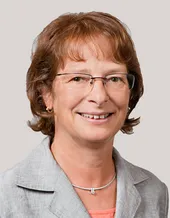
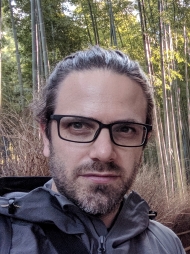
Kun-Han Lin is an Associate Professor at National Tsing Hua University since June 2022. Previously, he served as a Postdoctoral Fellow in the theory group at the Max Planck Institute for Polymer Research (MPI-P) from October 2020 to 2022. His research focuses on computational design of organic semiconductors for applications in organic light-emitting diodes (OLEDs), perovskite solar cells, and photovoltaic materials. Lin holds a Ph.D. in Chemistry from École Polytechnique Fédérale de Lausanne (EPFL) and a Master’s in Materials Science from National Taiwan University. His research interests emphasize structure-property relationships in organic materials, virtual screening for optimal molecular candidates, and understanding charge transport mechanisms. Key projects include predicting molecular ordering in thin films and developing non-fullerene acceptors for balanced charge transport. In 2023, he was awarded a prestigious Max Planck Partner Group to advance collaborative research. Publications highlight innovations in high-entropy alloy catalysts for hydrogen production, molecular design for charge-carrier trapping elimination, and computational approaches to predict glass transition temperatures. His work bridges theoretical simulations with experimental validation, targeting sustainable energy technologies.
Michael Baake is a Professor of Mathematics at Bielefeld University, affiliated with the Faculty of Mathematics. His research focuses on Aperiodic Order, Dynamical Systems, Combinatorics, and Mathematical Physics. He leads multiple research projects, including the SFB/TR 358 'Integral Structures in Geometry and Representation Theory' and SFB 1283 'Taming Uncertainty'. His work bridges pure mathematics with applications in crystallography and stochastic systems. Affiliations: Representative for the Faculty Library, Co-Director of the Research Focus on Mathematical Modeling. Cooperations: Collaborates with international experts like Uwe Grimm, Daniel Lenz, and Nicolae Strungaru on topics such as aperiodic tilings and spectral theory. Research Groups: Leads a vibrant research group with members including Anna Klick, Daniel Luz, and Timo Spindeler, focusing on quasicrystals, combinatorial structures, and number theory applications. His contributions include co-editing the book 'Aperiodic Order: Crystallography and Almost Periodicity' and organizing workshops on spectral theory and dynamical systems. He actively engages in academic service, including editorial roles and conference organization.
Yuan Liu is a faculty member affiliated with Guangzhou University's Cyberspace Institute of Advanced Technology. Their research focuses on cybersecurity, blockchain technology, federated learning, and IoT systems. They have held roles at multiple institutions, including Northeastern University (Software College) and Nanyang Technological University (PhD in Computer Engineering). Liu's work emphasizes secure communication, edge computing, and distributed systems, with contributions to protocols like blockchain-based redactable systems and quantum federated learning frameworks. They have collaborated extensively on projects addressing IoT security, smart healthcare, and privacy-preserving technologies. Key research trends include leveraging AI for enhanced security (e.g., watermarking frameworks, attack detection) and optimizing resource allocation in edge computing environments. Their publications span journals like IEEE Communications Surveys & Tutorials and conferences such as GLOBECOM.
Prof. Dr.-Ing. Jürgen Melzner is a Professor at the Faculty of Civil and Environmental Engineering at Bauhaus-Universität Weimar. His research focuses on construction operations, occupational health and safety, and BIM integration. He leads projects in lean construction management, noise pollution modeling, and safety planning using BIM. His work emphasizes digital transformation in construction processes and legal aspects of building permits. Education includes a Dr.-Ing. (Doctor of Engineering) with extensive career contributions to construction safety and process optimization. His teaching and research involve BIM applications, IoT integration, and interdisciplinary methods in construction education. Research interests span BIM-based safety systems, predictive noise simulation, ontology networks for construction data, and lean principles in project management. Recent articles address stakeholder management in permits, machine learning for site monitoring, and metaverse applications in urban planning. Notable advising includes guidance of master's students like Mahshid Birkholz and Nasim Babazadeh. His work bridges academic research with practical implementation through projects like BIMwissT and DROHNIS. Labs/teams: Active in the Chair for Construction Management and BIM, focusing on digital tools and safety innovation.
Prof. Regina Palkovits is a Full Professor of Heterogeneous Catalysis & Chemical Technology at RWTH Aachen University's Institute of Chemical Technology & Macromolecular Chemistry (ITMC). She serves as Acting Director of ITMC since 2015 and holds a Max Planck Fellowship at the MPI for Chemical Energy Conversion (since 2019). Her research focuses on sustainable catalytic processes for renewable energy and biomass conversion, including photocatalytic CO2 reduction, electrochemical water splitting, and biorefinery pathways. Key projects involve developing solid molecular catalysts, immobilized heteropolyacids, and single-atom catalysts on covalent triazine frameworks. Palkovits leads a research group with ongoing projects in catalytic hydrogenation, bio-based tandem reactions, and hydrogen production technologies. Education: Diploma in Chemical Engineering, Technical University Dortmund (1998–2003) PhD, Max Planck Institute for Coal Research (2003–2006) Postdoc, Utrecht University (2007) Group Leader, Max Planck Institute for Coal Research (2008–2010) Research Interests: Palkovits’ work bridges heterogeneous catalysis and materials innovation to address global challenges. Key areas include: Electrochemical hydrogen production and water splitting Biomass conversion to platform chemicals (e.g., xylitol) CO2-to-fuel processes using photocatalytic systems Immobilized catalyst design for recyclability and stability Awards: Max Planck Fellow (2019) EFCATS Young Researcher Award (2019) DECHEMA Award (2017) Robert Bosch Junior Professorship (2010) Hendrik Casimir–Karl Ziegler Award (2006) Grants & Collaborations: Active in interdisciplinary projects with MPI-CEC and Hamburg University. Her group seeks students for research in catalytic hydrogenolysis, electrochemical conversions, and biorefinery pathways. Labs/Teams: Leads the “Solid Molecular Catalysts” group, focusing on sustainable chemical processes and material synthesis for green energy applications.
Claudia Klüppelberg is a Professor and Chair of Mathematical Statistics at the Center for Mathematical Sciences, Technische Universität München (TUM). Her academic journey includes positions at ETH Zurich, University of Mainz, and TUM since 1997. She holds a Carl von Linde Senior Fellowship at TUM-IAS, focusing on Risk Analysis and Stochastic Modeling. Her research bridges applied probability, statistics, and their applications in finance and insurance, emphasizing extreme value theory, risk processes, and stochastic networks. She has received prestigious awards such as the New Frontiers in Risk Management Award (2007) and Cross of Merit (2001). Her work addresses real-world challenges in financial risk management, including systemic risk in networks and operational risk modeling. Her recent publications explore causal analysis of extreme risks in networks, max-linear models, and Bayesian networks for extreme events. She contributes to academic leadership as an editorial board member and advisor, promoting interdisciplinary stochastic sciences.
Dr. Tido Semmler is a Senior Scientist in the Climate Dynamics department at the Alfred Wegener Institute (AWI). His research focuses on polar-latitude linkages in the atmosphere and ocean, particularly the response of the climate system to anthropogenic emissions. He contributes to global climate modeling efforts, including CMIP6 simulations with the AWI-CM model, and investigates Arctic amplification effects on mid-latitude weather patterns. Affiliations: AWI Climate Dynamics Department, Helmholtz Association Key Projects: APPLICATE (Arctic Predictability and Prediction of sea ice and climate), HighResMIP (High Resolution Model Intercomparison Project) His work emphasizes high-resolution modeling, data assimilation for sea ice prediction, and understanding mechanisms behind Arctic sea ice decline and its global impacts. Semmler collaborates internationally on climate assessment frameworks and contributes to advancements in coupled ocean-atmosphere modeling systems.
Dr. Jan Streffing is a Scientific Programmer in the Climate Dynamics department at the Alfred Wegener Institute (AWI) in Bremerhaven, Germany. His work focuses on advancing Earth System Models (ESMs) with an emphasis on coupled climate modeling, paleoclimate simulations, and ensuring model scalability while preserving mass and energy conservation. He coordinates Earth System Model development efforts, particularly with the AWI-CM3 climate model framework. His research interests include high-resolution climate projections, atmosphere-ocean coupling mechanisms, and improving model physics through numerical methods. Streffing contributes to global kilometer-scale simulations using frameworks like IFS-FESOM, addressing challenges in resolving ocean eddies and cloud processes. He has developed ESM-Tools infrastructure to modularize climate modeling workflows and enhance computational efficiency. Key projects involve the MOSAiC expedition evaluation, where nudging techniques were applied to align model outputs with in-situ observations, revealing model deficiencies in cloud dynamics and snowpack representation. His work also explores deep-water formation impacts on climate sensitivity and integrates data assimilation techniques to improve sea ice forecasts in the AWI coupled prediction system. Streffing's contributions bridge climate science and computational practices, supporting advancements in model resolution, scalability, and accuracy for understanding future climate scenarios.
Haitham Abu-Rub is a Professor at Texas A&M University at Qatar specializing in power systems, renewable energy integration, and power electronics. His research focuses on developing innovative solutions for grid stability, EV charging infrastructure, and intelligent control systems. He has published extensively in IEEE journals and conferences, addressing challenges in smart grids and sustainable energy systems. His work spans power converter design, fault diagnosis, and AI applications in energy management. Recent projects include decentralized PV trading systems, resilient inverter networks, and physics-informed neural networks for insulation diagnostics. Dr. Abu-Rub collaborates internationally on projects involving grid-interactive buildings, digital twins for power converters, and adaptive control techniques for electric vehicle charging.
Rizwan Qureshi is an active researcher and academic specializing in artificial intelligence, machine learning, and their applications in medical imaging and bioinformatics. With a robust publication record spanning from 2017 to 2025, he has established himself as a significant contributor to the fields of computer vision and biomedical AI. His research interests focus on Artificial Intelligence , Machine Learning , Medical Imaging , Computer Vision , and Biomedical Engineering . Qureshi's work demonstrates particular expertise in object detection systems (especially YOLO variants), medical image segmentation, vision-language models, and applications of AI to healthcare problems including lung cancer research and diabetic retinopathy detection. Analysis of his recent publications (2023-2025) reveals a strong trend toward medical applications of AI, with approximately 60% of his work focusing on healthcare-related problems. His research shows increasing emphasis on model robustness, explainability, and handling distribution shifts in real-world applications. The publications span top venues including IEEE Access, IEEE Transactions on Medical Imaging, CVPR, and BIBM. Qureshi maintains extensive collaborations with researchers across multiple institutions, with frequent co-authorship with Hong Yan, Tanvir Alam, Jia Wu, and Sheheryar Khan. His work demonstrates both technical depth in machine learning methodologies and practical application to significant healthcare challenges. While specific details about his academic advising are not evident from the publication record alone, his numerous publications with multiple co-authors suggest active participation in research teams and likely supervision of graduate students. His work shows consistent funding support through publication in reputable journals and conferences.
Shahid Hussain is an Associate Professor at King Abdullah University of Science and Technology (KAUST) in the Computer, Electrical and Mathematical Sciences and Engineering Division. His research spans multiple domains including electric vehicle infrastructure, blockchain technology, and intelligent systems for IoT applications, with a focus on practical implementations of computational intelligence techniques. Dr. Hussain's research interests include: Electric Vehicles and Smart Grid Integration Fuzzy Logic and Intelligent Decision Systems Blockchain Applications for Security and Privacy Machine Learning for IoT and Healthcare Applications Energy Management Systems Smart City Infrastructure Development His recent publications demonstrate a strong focus on applying hybrid computational approaches to solve complex engineering problems, particularly in transportation systems and healthcare applications. Dr. Hussain has published extensively in IEEE journals, with particular emphasis on innovative approaches to electric vehicle charging infrastructure, secure IoT systems, and blockchain-enabled solutions for real-world challenges. Dr. Hussain maintains active collaborations with researchers globally, particularly with Reyazur Rashid Irshad, Young-Chon Kim, and Subhasis Thakur. His work bridges theoretical advancements with practical implementations, as evidenced by his research on fuzzy integer linear programming for EV charging stations and blockchain-enabled security frameworks for medical IoT systems.
David B. Grayden is a Professor at The University of Melbourne, affiliated with the Melbourne School of Engineering and the Department of Electrical and Electronic Engineering . His work spans Biomedical Signal Processing , Computational Neuroscience , and Brain-Computer Interfaces (BCI) , focusing on applications in Epilepsy Research and Cochlear Implants . Melbourne Neural Engineering Laboratory member Collaborator in multidisciplinary biomedical research Key research interests include: Developing Seizure Prediction Algorithms using long-term EEG/iEEG data Neural mass modeling for Epilepsy and Inhibitory Network Behavior Optimizing Cochlear Implants via computational models Advancing Endovascular BCI Systems and Neural Stimulation Recent publications highlight trends in Machine Learning , Path Signatures , and Multi-Frequency Stimulation for SSVEP-based BCIs . His work integrates Computational Modeling with Biomedical Engineering to address clinical challenges in neuroprosthetics and sensory processing. Grayden leads projects on Neural Network Dynamics , Biomedical Signal Analysis , and Neurostimulation , often collaborating with institutions like Monash University and Royal Melbourne Hospital .
Vladimir V. Terzija is a prominent researcher specializing in power systems engineering with a focus on smart grid technologies, synchronized measurement systems, and power system protection. His extensive publication record spans over two decades, demonstrating continuous contributions to the field of electrical power engineering across numerous IEEE journals and conferences. Terzija's research primarily centers on advanced power system monitoring, protection, and control methodologies. His work has significantly contributed to the development of synchronized measurement technology applications, fault analysis algorithms, and state estimation techniques for modern power systems. He has pioneered approaches for wide-area monitoring systems, transmission line fault analysis, and integrating renewable energy resources into power grids while maintaining stability and reliability. His research spans from fundamental power system theory to practical implementations addressing contemporary challenges in grid operation. Analysis of his recent publications reveals a strong focus on integrating artificial intelligence and machine learning techniques into power system applications, particularly for condition monitoring, anomaly detection, and predictive maintenance. His work increasingly addresses challenges posed by the energy transition, including grid stability with high renewable penetration, multi-energy system integration, and advanced control strategies for low-inertia power systems. The interdisciplinary nature of his research connects power engineering with data science, optimization theory, and cybersecurity. Throughout his career, Terzija has collaborated extensively with researchers across Europe and internationally, as evidenced by his numerous co-authored publications with institutions worldwide. His work appears consistently in top-tier IEEE publications, indicating recognition by the power engineering community. While specific awards aren't documented in the available publication records, his sustained research productivity and influence in the field suggest significant professional recognition. Terzija has supervised numerous research projects focused on power system monitoring and control, with particular emphasis on practical implementations that bridge theoretical developments with real-world grid applications. His work on WAMS (Wide Area Monitoring Systems), fault location algorithms, and state estimation techniques has contributed to advancing grid operational capabilities. The research trajectory shows increasing focus on addressing challenges associated with renewable energy integration, grid digitalization, and maintaining stability in modern power systems. His research group appears to focus on developing advanced monitoring and control systems for power networks, with particular expertise in synchrophasor technology applications. The collaborative nature of his work suggests involvement in international research consortia addressing contemporary power system challenges, particularly those related to grid stability in systems with high renewable penetration and the development of intelligent monitoring solutions for power infrastructure.
Dr. Fabian Panse is a Researcher at the Database and Information Systems (DBIS) group within the Department of Informatics at the University of Hamburg. His work focuses on database systems, data quality, and probabilistic data management, with significant contributions to polyglot persistence, duplicate detection, and data simulation frameworks like SmartOpenHamburg and HADeS. Research Assistant since 2009 PhD in Computer Science Research interests center on polyglot persistence , probabilistic databases , duplicate detection , and data pollution techniques . His publications span conferences like VLDB, ICDE, and workshops on database fundamentals. He has supervised over 20 theses including Master's and Bachelor's projects on topics ranging from data synthesis to smart city applications . Key collaborations include Prof. Norbert Ritter and Dr. Wolfram Wingerath.
Rebecca Albrecht is a Researcher at the University of Freiburg, affiliated with the Center for Cognitive Science and the Chair of Software Engineering. She holds a Master’s and Bachelor’s in Computer Science with minors in Cognitive Science from the University of Freiburg. Her research focuses on cognitive modeling, formal methods in cognitive science, and task analysis, particularly within the ACT-R cognitive architecture framework. She has contributed to projects like SFB/TR 8 'Spatial Cognition' since 2014 and published extensively on topics such as judgment processes, spatial reasoning, and computational modeling. Her work combines empirical methods with theoretical modeling, such as analyzing decision-making strategies using eye-tracking and cognitive models. Notable areas include the impact of landmark salience on spatial navigation, risk perception in public health contexts, and the integration of multiple cognitive strategies. Albrecht has supervised student projects on ACT-R model development and taught courses in cognitive modeling, software engineering, and formal methods for cognitive scientists. Her publications reflect a blend of empirical studies and computational approaches, addressing questions in judgment, spatial cognition, and model validation. While no specific awards are listed, her contributions to the formalization of cognitive architectures highlight her methodological rigor. She has been actively involved in teaching and research since 2011, demonstrating a commitment to bridging theoretical and applied aspects of cognitive science and computer science.