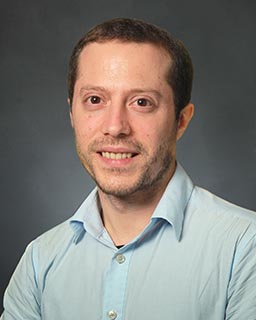
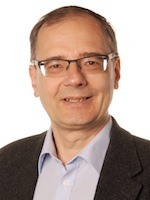
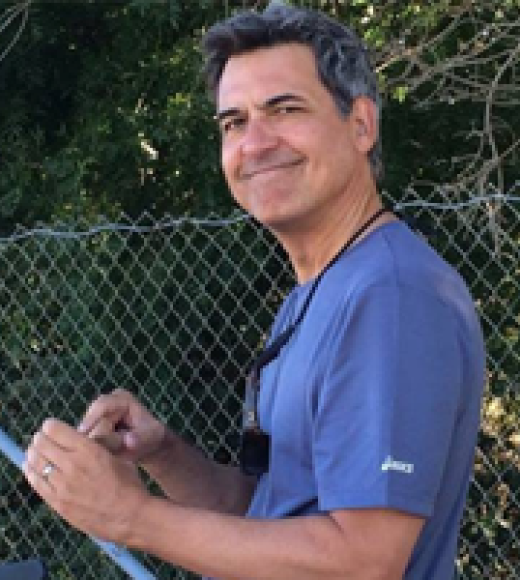
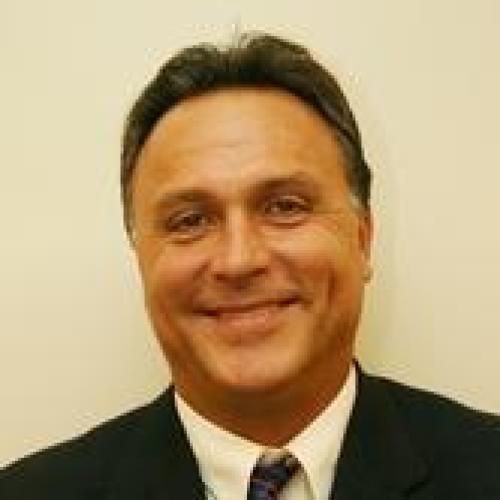
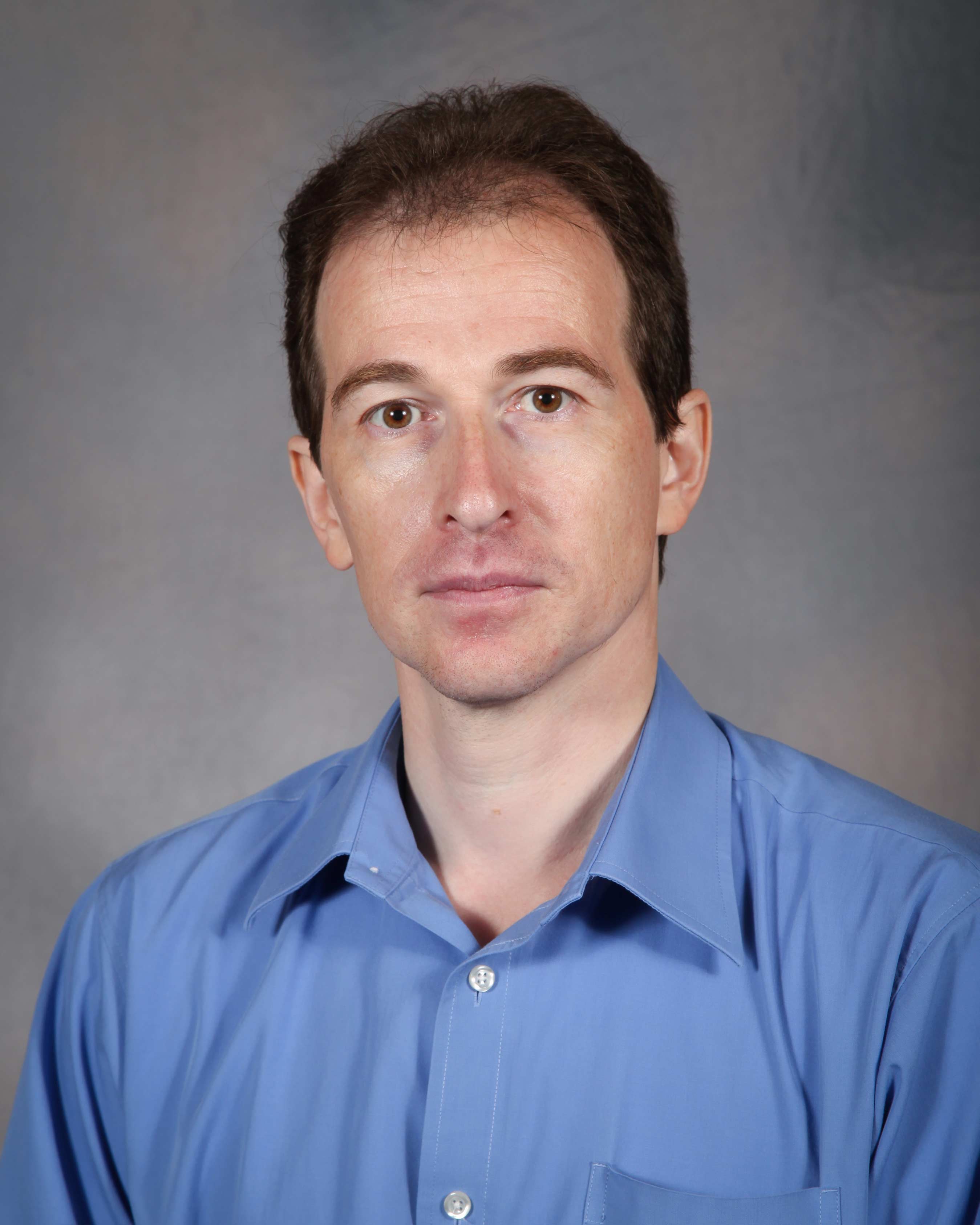
Kostas Papakonstantinou is an Associate Professor in the Department of Civil Engineering at Penn State University, affiliated with the College of Engineering. His research bridges Artificial Intelligence (AI) with Civil Engineering, focusing on uncertainty quantification and decision-making under uncertainty. Research Areas: Uncertainty Quantification Stochastic Control Deep Reinforcement Learning Bayesian Analysis Nonlinear Filtering Computational Mechanics Infrastructure Management Rare Events Quantification His work emphasizes AI-driven solutions for structural life-cycle management, infrastructure systems, and autonomous operations. Funded by the NSF and USDOT, his projects include AI-enabled fiscally constrained life-cycle asset management and Deep reinforcement learning for multi-asset infrastructure management . Scientific Awards: NSF CAREER Award: Optimal engineering decision-making under uncertainties for enhanced structural life-cycle He teaches graduate courses on Uncertainty and Reliability in Civil Engineering (CE 566) and Computational Analysis of Randomness in Engineering (CE 597) .
Gonzalo Manzano Paule is a Ramón y Cajal tenure-track researcher at IFISC (Instituto de Física Interdisciplinar y Sistemas Complejos), a joint research institute of CSIC (Consejo Superior de Investigaciones Científicas) and UIB (University of the Balearic Islands), where he has been working since January 2023. He previously held a Juan de la Cierva Incorporation fellowship (2021-2023), was an ESQ Postdoc at IQOQI Vienna (2020-2021), and a Postdoc at ICTP Trieste (2018-2020) funded by Scuola Normale Superiore. He obtained his PhD in Physics from Universidad Complutense de Madrid in July 2017, followed by a short Postdoc at IFISC (2017-2018). His research interests focus on quantum and stochastic thermodynamics, open quantum systems, information theory, and the foundations of nonequilibrium statistical physics and quantum mechanics. He is particularly interested in applying concepts from nonequilibrium thermodynamics to understand classical and quantum complex systems. While his work is primarily theoretical, he actively seeks collaborations with experimentalists. His research has been featured in popular science journals including Physics, Quanta Magazine, and Diario de Mallorca. He has also collaborated with artist Evarist Torres to merge art and science and has written a popular science article for Investigación y Ciencia (Scientific American). Manzano Paule's recent publications demonstrate a strong focus on quantum thermodynamics, fluctuation theorems, and quantum information processing. His work spans theoretical foundations of quantum thermodynamics to applications in quantum heat engines and molecular motors. A notable pattern in his research is the exploration of how quantum effects can enhance thermodynamic processes and the relationship between information theory and thermodynamics. His scientific achievements have been recognized through prestigious fellowships including the Ramón y Cajal program, Juan de la Cierva Incorporation fellowship, and ESQ Postdoc fellowship. His work has also garnered attention in popular science media, indicating its broader impact beyond academic circles. As an educator, Manzano Paule supervises Master's students and teaches advanced courses including Open Quantum Systems for the Master's Degree in Advanced Physics and Applied Mathematics and the Master's Degree in Physics of Complex Systems. His teaching portfolio also includes Quantum Collective Phenomena, Quantum and Nonlinear Optics, Thermodynamics, and Atomic and Molecular Physics. He currently leads the research project 'QTD-InFlexity Quantum thermodynamics: information, fluctuations and complexity' and participates in the 'CoQuSy Complex Quantum Systems' project. He is also part of the María de Maeztu Unit of Excellence at IFISC, which has received continuous funding since 2008.
Kristin Livingston, MD is an Assistant Professor of Orthopedic Surgery at Harvard Medical School and serves as Director of the Orthopedic Trauma Program at Boston Children’s Hospital. She plays key roles in clinical leadership, quality improvement, and education within the department. Education: Dartmouth College (Undergraduate), UCSF School of Medicine (MD), Harvard Combined Orthopedic Residency, Boston Children’s Pediatric Fellowship Professional Engagement: Member of Orthopaedic Trauma Association, POSNA, AAOS; serves on multiple hospital and departmental committees Research Focus: Specializes in pediatric orthopedic trauma, innovative imaging modalities, and family-centered care protocols. Her work addresses diagnostic accuracy, treatment standardization, and trauma system optimization. Clinical Innovation: Developed family education programs, revised fracture treatment protocols, and established triage algorithms for pediatric trauma urgency. Academic Collaborations: Partnered with Harvard Medical School Orthopaedic Trauma Initiative to bridge pediatric and adult trauma care.
Prof. Dr. Gerald Urban is a distinguished Professor at the Institute for Microsystems Technology (IMTEK) within the Faculty of Engineering at the University of Freiburg, Germany. With over three decades of academic and research experience, he has established himself as a leading expert in biomedical microtechnology and sensor systems. His career spans prestigious institutions including the Vienna University of Technology and collaborations with major research centers worldwide. His educational journey includes: 1973: Graduated from Sigmund Freud Gymnasium in Vienna 1979: Completed studies in Technical Physics at Vienna University of Technology 1985: Earned Doctorate (Dr.-Ing.) with distinction (Summa cum Laude) from Vienna University of Technology 1994: Completed habilitation in Sensorics Prof. Urban's research focuses on the development and application of miniaturized integrated sensors for clinical and industrial applications. His work bridges the gap between fundamental materials science and practical medical devices, with particular emphasis on biomedical microtechnology , electrochemical biosensors , and organ-on-chip systems . His team has pioneered innovations in point-of-care diagnostics, therapeutic drug monitoring, and micro energy harvesting technologies. The research group maintains strong collaborations with clinical partners to ensure translational impact of their technological developments. Analysis of Prof. Urban's recent publications reveals a clear trajectory toward increasingly sophisticated multiplexed sensing platforms that integrate CRISPR-based diagnostics with electrochemical detection systems. His work demonstrates growing emphasis on point-of-care applications, with particular focus on making complex diagnostic capabilities accessible outside traditional laboratory settings. The integration of additive manufacturing techniques with sensor technology represents another significant trend in his recent work, enabling customized microreactor and organ-on-chip platforms. Among his notable scientific achievements: Stefan Schuy Prize for Biomedical Engineering (1990) AVL-List Prize (1993) Best Poster at Eurosensors (1993) Hoechst-Price (1994) Corresponding member of the Austrian Academy of Sciences (2010) EAMBES-Fellow (2018) Prof. Urban has successfully secured substantial research funding throughout his career, with accumulated third-party funding reaching approximately 5 million euros between 1986-1995. He has established multiple spin-off companies including Otto Sensorenfabrikationsgesellschaft (1985), Biosensor GnbR (1994), and Jobst Technologies GmbH (2002), demonstrating his commitment to translating research into practical applications. His leadership extends to major research initiatives including the excellence initiative "µMAT" and the graduate school "PolyMIC". At the University of Freiburg, Prof. Urban leads a vibrant research group within the Institute for Microsystems Technology, which forms part of the larger BrainLinks-BrainTools and BIOSS research clusters. His laboratory maintains state-of-the-art facilities for microsensor fabrication, including cleanroom access through the WebFab service center. The research environment benefits from strong connections with the Freiburg Material Research Center (FMF) and the Freiburg Institute for Advanced Studies (FRIAS), where he served as an Internal Fellow (2008-2010).
Lyndia Wu is an Assistant Professor in the Department of Mechanical Engineering at the University of British Columbia's Faculty of Applied Science, where she holds the prestigious Canada Research Chair in Wearable Brain Injury Sensing. She leads the SimPL (Sensing in Biomechanical Processes Lab) and maintains an active research program focused on biomechanics and medical device development. Her educational background includes: B.A.Sc. from the University of Toronto M.S. from Stanford University Ph.D. from Stanford University Postdoctoral Fellowship from Stanford University Dr. Wu's research program centers on developing novel sensing and data analytics technologies to study human biomechanics in health and disease states. Her primary research areas encompass brain injury or concussion biomechanics using advanced sensing, modeling, and machine learning approaches, as well as the development of innovative sensors and algorithms for studying sleep disorders like obstructive sleep apnea. She specializes in wearable sensors for brain health monitoring, traumatic brain injury mechanisms, and AI applications in healthcare settings. Analysis of her recent publications reveals a strong focus on sports-related head impacts (particularly in soccer), EEG monitoring following impacts, and sleep monitoring after concussions. Her work demonstrates interdisciplinary collaboration across biomechanical engineering, neuroscience, and clinical medicine, with publications spanning biomechanics, neurotrauma, biomedical instrumentation, and signal processing domains. Dr. Wu has received significant recognition for her work, including: Scholar Award from the Michael Smith Foundation for Health Research (2019) Junior Faculty Teaching Award from UBC Mechanical Engineering (2022) She actively supervises graduate students in Mechanical Engineering programs (MASc and PhD) and collaborates extensively across disciplines. Dr. Wu is affiliated with multiple research centers including the Institute for Computing, Information and Cognitive Systems (ICICS), Origins of Balance Deficits and Falls, and SmarT Innovations for Technology Connected Health (STITCH), reflecting her interdisciplinary approach to solving complex biomedical challenges. As director of the SimPL lab, she leads a research team developing cutting-edge sensing solutions for biomechanical processes with particular emphasis on brain injury prevention, monitoring, and recovery assessment through innovative engineering approaches.
John M. Henderson is a Distinguished Professor at the University of California, Davis , affiliated with the Visual Cognition Lab . He holds additional roles at the Center for Mind and Brain , Center for Vision Science , Center for Neuroscience , and Plasticity and Memory Program . As an editor for Collabra: Psychology and associate editor for Journal of Experimental Psychology: General , he contributes to open science and cognitive research dissemination. Ph.D. in Cognitive Psychology, University of Massachusetts, Amherst (1988) M.S. in Cognitive Psychology, University of Massachusetts, Amherst (1986) B.S. in Psychology, University of Massachusetts, Amherst (1983) Professor Henderson’s research investigates how visual information is acquired, recognized, and integrated into cognitive systems to guide behavior. His work combines scene perception , reading processes , and visual memory using eye tracking , fMRI , brain stimulation , and computational modeling . Recent studies explore semantic guidance of attention in natural scenes, neural correlates of fixation duration, and developmental attentional patterns. His 15 most recent publications (2023-2025) reflect a focus on semantic processing in visual cognition , scene perception , and computational modeling of attention . Topics include meaning-based attentional guidance, deep learning applications in scene analysis, and neural mechanisms of memory-guided eye movements. Collaborations span cognitive neuroscience, developmental psychology, and AI-driven scene understanding. Scientific honors include: Google Scholar Classics recognition (2017) for groundbreaking 2006 paper Fellow of the Association for Psychological Science, American Psychological Association, and Psychonomic Society Grants from the National Eye Institute and National Institute on Aging support his work on visual cognition and aging. His lab trains students in cognitive methods and interdisciplinary research, bridging psychology, neuroscience, and computational modeling.
Ebru Turanoglu Bekar is a Senior Lecturer at the Department of Industrial and Materials Science, Chalmers University of Technology, specializing in Smart Maintenance and Production Systems. She contributes to the Production Service Systems & Maintenance research group. Research Interests: Total Productive Maintenance (TPM), Artificial Intelligence applications in manufacturing, Multi-Criteria Decision Making, Performance Measurement systems Recent Focus: Development of data-driven algorithms for predictive maintenance, integration of digital twins in industrial contexts Key Projects: Factory SensAI (2025–2028) - Data integration for AI in manufacturing Trustworthy Predictive Maintenance TPdM (2022–2025)
Daniel Vallero is an Adjunct Professor in the Department of Civil and Environmental Engineering at Duke University . He holds a Ph.D. from Duke (2000) , an M.S. from the University of Kansas (1996) , and a B.A. from Southern Illinois University (1974) . His career spans environmental engineering, exposure assessment, and climate change adaptation, with affiliations including North Carolina Central University (2012-2013) as Associate Professor. Education B.A., Southern Illinois University, 1974 M.S., University of Kansas, 1996 Ph.D., Duke University, 2000 Key Research Areas Environmental systems science Air pollution modeling and control Hazardous waste bioremediation Climate change governance Exposure-based chemical prioritization Biogeochemical cycling under climate stress Publication Trends Focus on PFAS exposure pathways , climate adaptation strategies , and pollutant fate in ecosystems Recent work includes high-throughput exposure models and environmental justice in global warming Scientific Awards Federal Honor Awards (2025) from the U.S. EPA Jeffrey B. Taub Award (1999) at Duke University Notable Contributions Authored Air Pollution Calculations and Environmental Systems Science Developed exposure prioritization tools like Ex Priori Post-9/11 environmental contamination studies in New York City
Mikael Johansson is a Professor in the Department of Psychology at Lund University, where he leads research on the cognitive and neural bases of memory and cognitive control. His academic appointments include membership in eSSENCE: The e-Science Collaboration, LAMiNATE (Language Acquisition, Multilingualism, and Teaching), LU Profile Area: Proactive Ageing, and LU Profile Area: Natural and Artificial Cognition. With 159 research outputs and leadership in 18 projects (8 active), he maintains a prominent position in cognitive neuroscience research. His research focuses on the neural mechanisms of memory using behavioral, electrophysiological (EEG/ERP), and functional magnetic resonance imaging (fMRI) methods. Key interests include interactions between memory systems, formation and retrieval of episodic memories, emotion regulation and emotional memory, mechanisms underlying incidental and intentional forgetting, and the relationship between eye-movements, mental imagery and memory. His work has significant implications for understanding memory functions in psychiatric conditions such as depression and post-traumatic stress disorder. Analyzing his extensive publication record spanning from 2012-2025 reveals a consistent focus on memory mechanisms with increasing integration of eye-tracking methodologies and clinical applications. His research demonstrates an evolving trajectory from basic memory processes toward understanding memory in real-world contexts and clinical populations, with recent work emphasizing the role of eye movements in memory construction and the neural dynamics of memory integration. Mikael Johansson serves as a member of The Swedish National Committee for Psychological Sciences at the Royal Swedish Academy of Sciences since 2011 and has received significant research funding including from The Bank of Sweden Tercentenary Foundation, Swedish Research Council, and Stiftelsen Marcus och Amalia Wallenbergs Minnesfond. His current major projects include TEAM: Transdisciplinary Approaches to Learning, Acquisition, Multilingualism (2024-2029), Tracking cognitive change as a function of normal ageing and different types of degenerative disease, and How the brain constructs the present and reconstructs the past via sequences of eye movements. He leads the Lund Memory Lab where his team investigates how the brain constructs and maintains coherent episodic memories through eye movements. His research group actively collaborates with international partners across multiple disciplines, bridging cognitive psychology, neuroscience, and clinical applications. The lab's work has gained significant attention, with several publications being highlighted in news outlets and academic discussions.
Dr Yongle Sun is a Lecturer in Additive Manufacture at Cranfield University , specializing in cross-scale modelling of metal manufacturing processes for aerospace and energy applications. BSc & MSc in Mechanics from Xi'an Jiaotong University PhD in Mechanical Engineering from The University of Manchester His research focuses on multi-physics modelling of additive manufacturing and welding processes, with particular emphasis on residual stress/distortion prediction and mitigation. Current projects include: NEWAM (cross-scale additive manufacturing) SAM (smart manufacturing) I-Break (process innovation) With over £10M in research funding, his work bridges mechanistic models with engineering applications through collaborations with: GE Avio Aero WAAM3D Airbus EPSRC Innovate UK Key achievements include: First author of 16 leading journal papers Co-author of 35+ peer-reviewed works H-index of 23 Queen's Anniversary Prize contribution Top-cited paper in International Journal of Impact Engineering
Professor Pavel V. Tsvetkov is a faculty member at Texas A&M University , holding the rank of Professor of Nuclear Engineering and serving as the Director of the Graduate Program in Nuclear Engineering . He is also an Affiliated Faculty member of the Multidisciplinary Engineering program . His office is located in the AIEN M205B building, and he can be contacted at tsvetkov@tamu.edu . Educational Background: Ph.D. in Nuclear Engineering, Texas A&M University (2002) M.S. in Theoretical & Experimental Reactor Physics, Moscow State Engineering Physics Institute (1995) Research Interests: Professor Tsvetkov's research spans a wide range of advanced nuclear engineering topics. His primary focus includes system analysis and optimization methods , complex engineered systems , and symbiotic nuclear energy systems . He is deeply involved in waste minimization and sustainability , particularly through the development of high-temperature gas-cooled reactors (HTGRs) and molten salt reactors (MSRs) . His work also explores direct nuclear energy conversion systems and the integration of AI and deep learning into nuclear reactor control and monitoring systems. Research Trends in Publications: Over the past few years, Professor Tsvetkov has published extensively on the application of machine learning and deep learning in nuclear engineering. His recent works focus on autonomous reactor control , reactor dynamics simulation , and remote monitoring systems using satellite data and AI. He has also contributed to the design and analysis of microreactors for space applications and molten salt reactor dynamics . Scientific Awards: George Armistead, Jr ’23 Faculty Excellence Teaching Award Advising and Grants: As Director of the Graduate Program in Nuclear Engineering, Professor Tsvetkov plays a key role in mentoring and advising graduate students. While specific student names are not listed, his leadership in the program and extensive research output suggest active involvement in student research and training. Labs and Teams: Professor Tsvetkov is associated with the Nuclear Power Engineering group at Texas A&M University, contributing to both academic and applied research in nuclear systems design and safety.
Sean B. Andersson is a Professor in the Department of Mechanical Engineering at Boston University's College of Engineering. His research focuses on optimal estimation, system identification, single particle tracking, robotics, and control theory. He earned his Ph.D. from the University of Maryland, College Park. Education : Ph.D. in Mechanical Engineering (University of Maryland, College Park) His work integrates control algorithms with applications in microscopy, nanofabrication, and multi-agent systems. Recent research trends highlight persistent monitoring, trajectory optimization, MRI reconstruction, and dip-pen nanolithography. He has mentored numerous graduate and undergraduate students, many of whom now hold positions at institutions like MIT Lincoln Labs, University of Pennsylvania, and Juniper Networks. Scientific Contributions : Developed robust multi-agent control policies for data harvesting Advanced single particle tracking with real-time feedback Innovated in non-raster scanning probe microscopy Optimized sensor scheduling via minimax and semidefinite programming His lab team combines theoretical and applied research in robotics and control systems, with alumni contributing to academia, industry, and research labs globally.
Lianne Lefsrud serves as Associate Professor and Risk, Innovation, and Sustainability Chair (RISC) in the Department of Chemical and Materials Engineering at the University of Alberta's Faculty of Engineering. Her interdisciplinary research bridges engineering, social sciences, and policy to transform risk management practices across energy, mining, construction, and railroading industries, directly influencing regulations, building codes, and industry operations for sustainable development. Her academic credentials include: BSc in Civil Engineering (Cooperative Program), University of Alberta (1994) MSc in Interdisciplinary Civil & Environmental Engineering and Sociology, University of Alberta (1996) PhD in Strategic Management and Organization, Alberta School of Business (2014) Dr. Lefsrud's research centers on risk management frameworks for sustainability challenges. She examines hazard identification, social license to operate, and technology adoption drivers in high-hazard industries, with emphasis on prospective risk assessment (e.g., hydrogen infrastructure design) and retrospective analysis (e.g., microplastic pollution impacts). Her work integrates circular economy principles into energy systems while addressing unintended consequences across UN Sustainable Development Goals. Recent publications (2024-2025) demonstrate heavy focus on machine learning applications for rail and construction safety, hydrogen infrastructure risk analysis, and science denial mitigation. Key patterns show cross-industry adaptation of AI for incident prediction, regulatory gap analysis for emerging energy systems, and socio-technical approaches to reconcile sustainability goals with operational realities. Scientific recognition includes: Erb Post-Doctoral Fellowship (University of Michigan) Dow Sustainability Research Fellowship (Ross School of Business) Dr. Lefsrud mentors graduate students through industry-integrated projects like her Sustainable Design course where teams generated patents and city solutions. Her research secures Alberta Innovates funding with 1:4 industrial-to-federal matching, collaborating with Suncor, Transport Canada, and Canadian Standards Association. Grants target practical implementations including railcar inspection systems and hydrogen safety protocols. She co-founded Insight Risk Systems and leads the Lefsrud Lab, prioritizing inclusive teams with under-represented groups (women, Indigenous, LGBTQ2S+, neurodiverse) to tackle 'wicked problems' in sustainability. The lab leverages interdisciplinary partnerships across engineering, computer science, psychology, and environmental sociology for real-world risk management solutions.
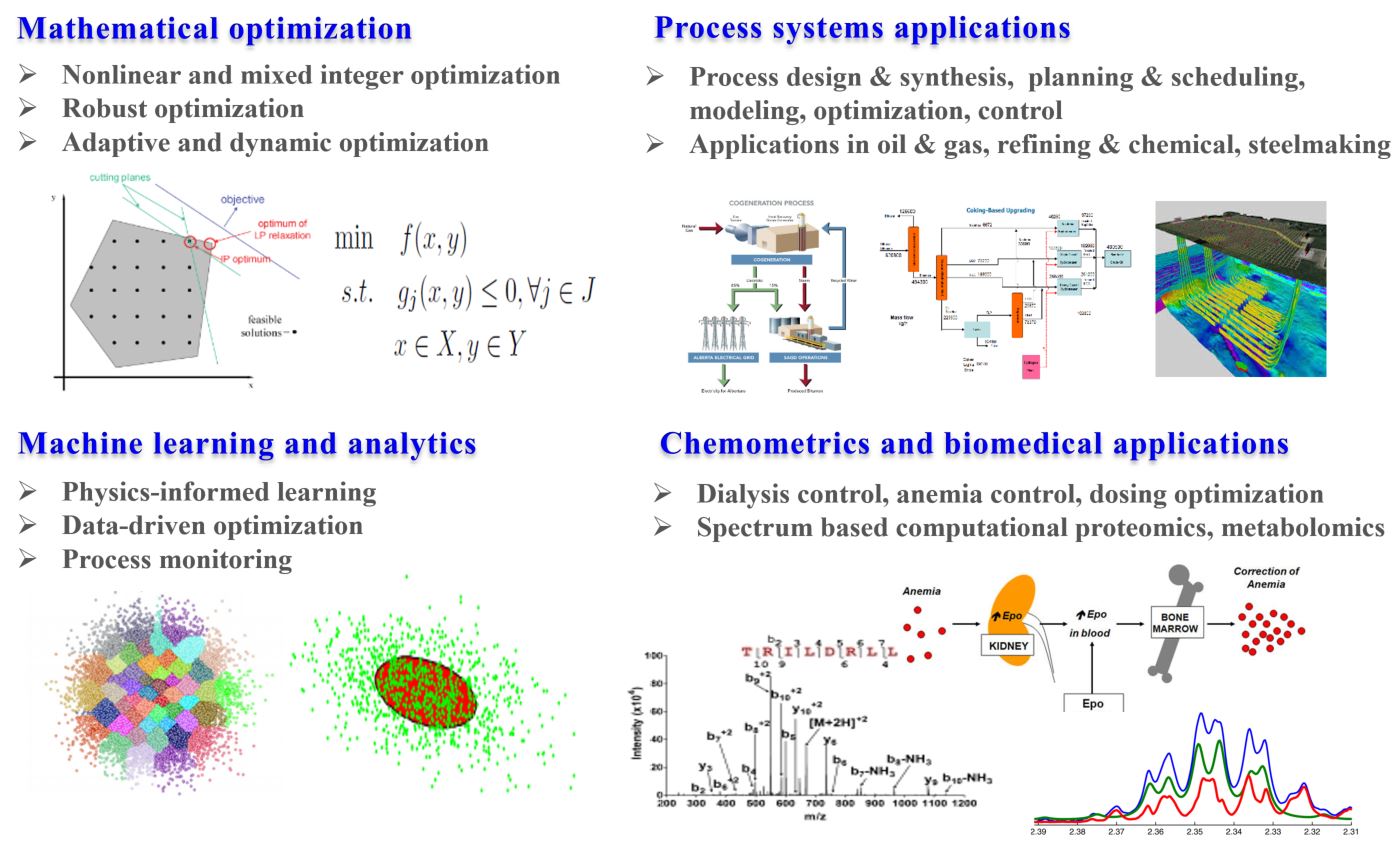
Zukui Li is a Professor in the Department of Chemical and Materials Engineering at the University of Alberta's Faculty of Engineering, where he leads a research group focused on mathematical optimization, machine learning, and process systems engineering. His work spans oil sands extraction, steel production, biomedical applications, and advanced optimization methods. Education: Ph.D. in Chemical Engineering, Rutgers University (2010) M.Sc. in Control Theory and Control Engineering, University of Science and Technology of China (2005) B.Sc. in Automatic Control, University of Science and Technology of China (2002) Postdoctoral Training: Princeton University (2010-2012) Research Focus: Dr. Li's research integrates mathematical optimization and machine learning for complex process systems. His primary areas include: Advanced optimization techniques (robust, stochastic, and distributionally robust optimization) Machine learning applications in process monitoring and biomedical systems Industrial applications in energy, manufacturing, and resource extraction Specific innovations include physics-informed ML for anemia treatment, adaptive optimization for steel production, and distributionally robust methods for uncertainty management. Publication Trends (2019-2023): Recent articles demonstrate a strong focus on uncertainty-aware optimization methods, with increasing integration of machine learning techniques. Dominant themes include distributionally robust optimization, adaptive decision-making under uncertainty, neural network approximations for complex constraints, and applications in industrial process control and biomedical systems. Theoretical advancements are consistently coupled with practical implementations in energy and manufacturing sectors. Research Group: Leads an active team developing optimization frameworks and machine learning solutions for process engineering challenges. Group website: Dr. Zukui Li's Research Group
Dr. Le-Nam Tran is a researcher at the UCD School of Electrical & Electronic Engineering , University College Dublin. His work focuses on optimizing the last hop of 5G/6G wireless networks through mathematical programming, with emphasis on energy efficiency, interference management, and security against eavesdropping. Develops low-cost, low-complexity transmission techniques Projects supported by Science Foundation Ireland Career Development Award Author of over 80 peer-reviewed publications Research Keywords: Wireless Communications Network Security Signal Processing Energy-Efficient Systems Beamforming Optimization Interference Mitigation