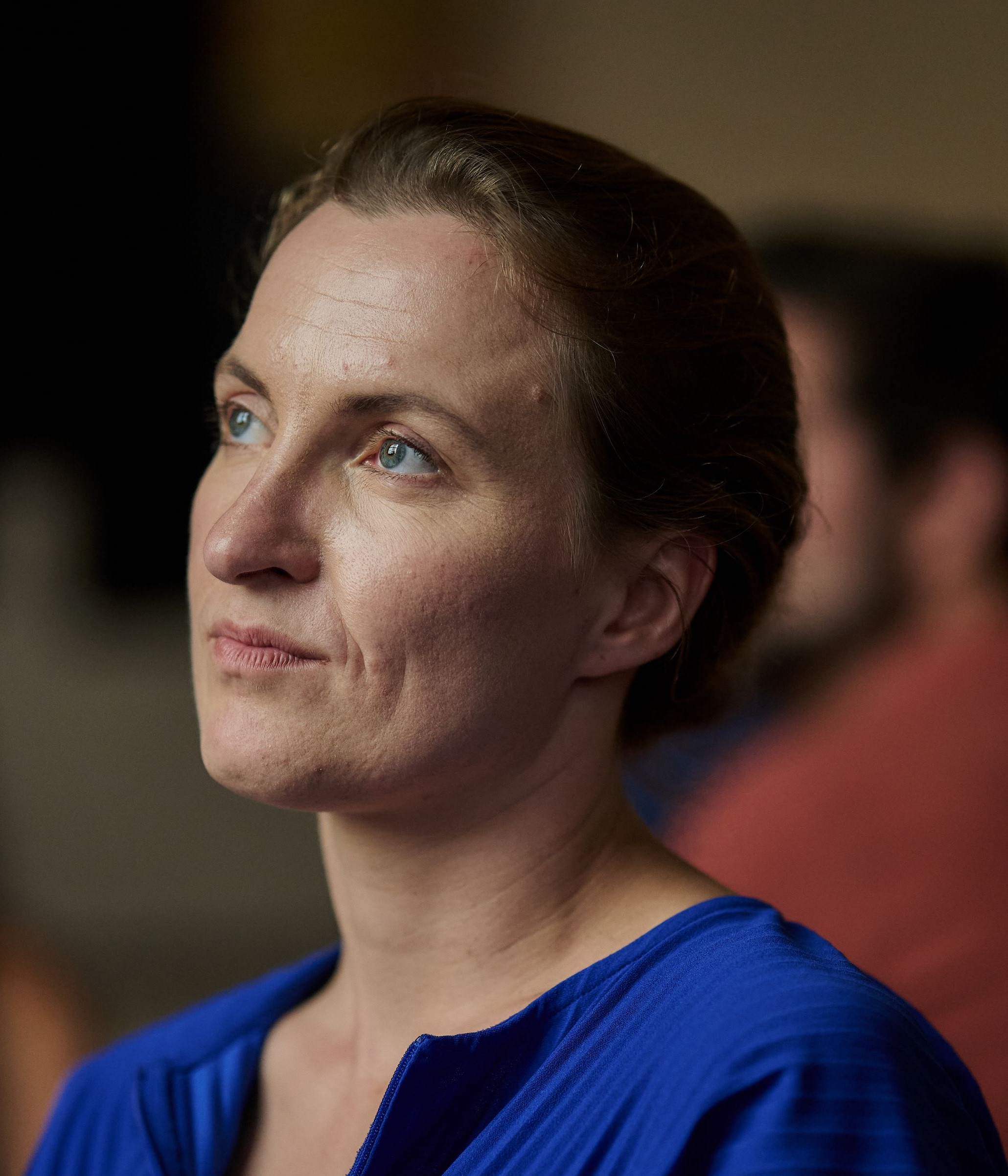
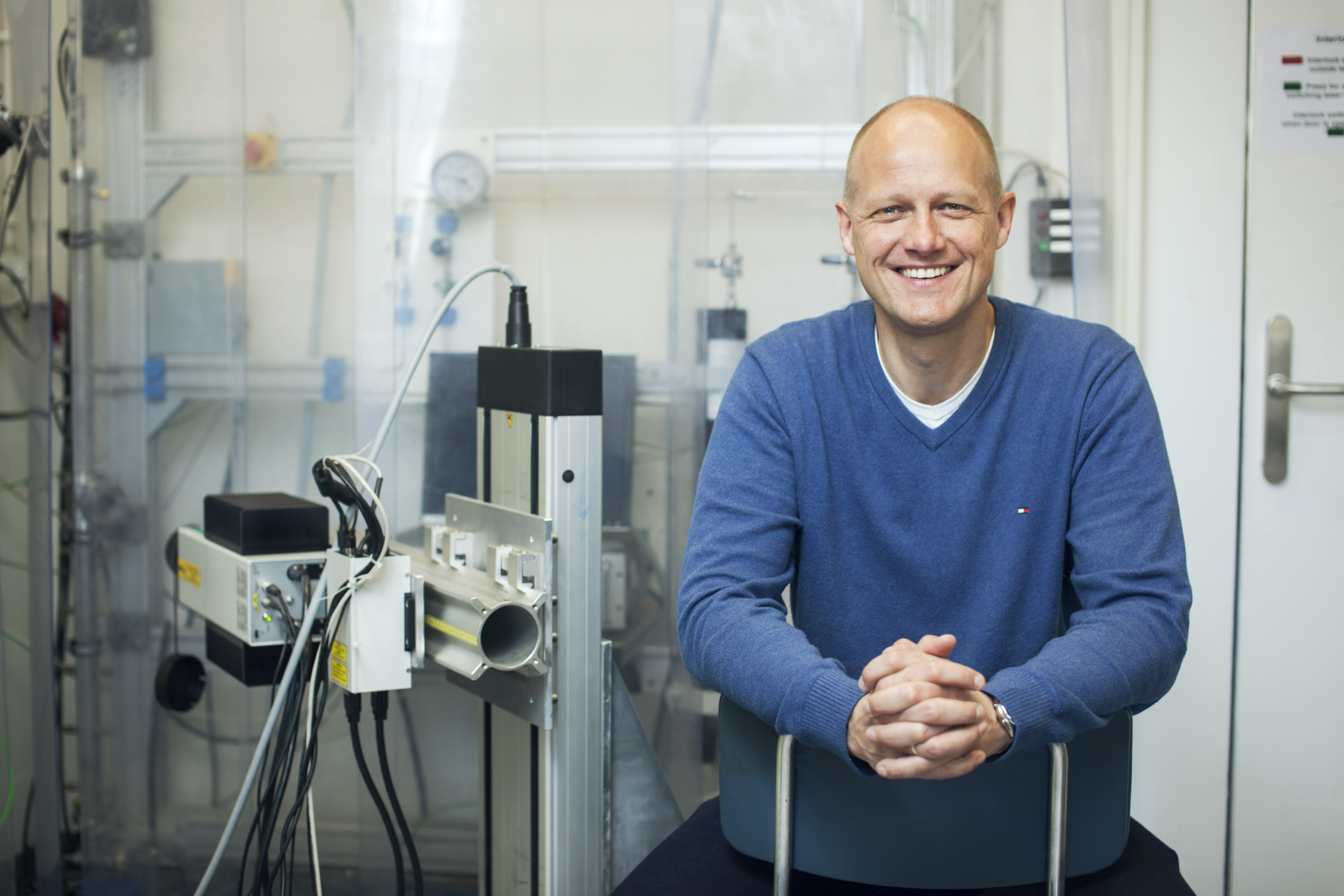
Paul Boersma is a Professor of Phonetic Sciences at the University of Amsterdam within the Faculty of Humanities. His research explores how phonetic, phonological, and morphological phenomena emerge through computational modeling using artificial neural networks and Optimality Theory, with a focus on multi-level constraint interactions and distributional learning. University of Amsterdam Faculty of Humanities Phonetic Sciences Key research areas include: Computational Modeling : Simulations of phonological category emergence from phonetic data Optimality Theory : Gradual Learning Algorithm applications BiPhon Framework : Parallel bidirectional phonology/phonetics models Statistical Learning : Cross-situational and distributional learning mechanisms Recent publications emphasize: 2025: Inclusive speech recognition systems using Whisper model 2025: F0 ratio analysis for creaky voice diagnostics 2024: Prosodic clitics in child speech and checked tones in Shanghai Chinese 2023: Distributional learning in developmental language disorder contexts 2022: Substance-free phonological features and ghost segment phenomena He has also contributed extensively to the Praat software for phonetic analysis, with continuous updates since 1993.
Professor Vedran Dunjko is a faculty member at the Leiden Institute of Advanced Computer Science (LIACS), Leiden University, with affiliations to the Leiden Institute of Physics (LION). He leads the Applied Quantum Algorithms group and co-founded the Quantum@LIACS initiative, focusing on the intersection of quantum computing, machine learning, and artificial intelligence. His research interests include quantum machine learning, quantum-enhanced reinforcement learning, quantum heuristics, and the application of AI to quantum computing challenges. Dunjko's work bridges theoretical foundations with experimental implementations on near-term quantum devices, exploring both quantum advantages in learning and the use of classical AI for quantum system design. The recent publications show a strong trend toward proving quantum advantages in learning tasks, optimization, and topological data analysis, with publications in Nature , Nature Communications , and NeurIPS . Key themes include quantum policy gradients, quantum TDA, and reinforcement learning for quantum circuit optimization. ERC Consolidator Grant (2024) PNAS Cozzarelli Prize (2018) Editor’s Suggestion in Physical Review Letters (2014, 2018) Featured in Physics (American Physical Society) (2014, 2018) Dunjko advises several PhD candidates and postdocs, including Rahul Bandyopadhyay, Sofiene Jerbi, and Lea Trenkwalder. He has received competitive grants, most notably the ERC Consolidator Grant in 2024. His group fosters international collaborations with institutions across Europe and industry partners. The Applied Quantum Algorithms group and the Quantum@LIACS team combine theoretical investigations with practical implementations on quantum hardware, focusing on scalable quantum algorithms and AI-driven quantum discovery.
Antonia Krefeld-Schwalb is an Assistant Professor at the Department of Marketing Management, Rotterdam School of Management, Erasmus University. With a background in cognitive science and management, her research bridges computational modeling, eye-tracking, and consumer decision-making to address sustainability challenges. Current Affiliation: Assistant Professor, Rotterdam School of Management Research Focus: Sustainable consumer behavior, decision-making processes, and methodological improvements Key Collaborations: Columbia University, University of Geneva, Erasmus Sustainability Program Her cognitive science training informs methodological approaches like mouse/eye tracking and computational modeling applied to marketing problems. She investigates structural parameter interdependencies, external validity threats in surveys, and climate risk communication effectiveness. Recent research trends include climate adaptation strategies, sustainable behavior interventions, and meta-scientific analyses of statistical practices in consumer research. She advocates for heterogeneous population sampling and preregistration to enhance validity. Scientific Honors: Veni Grant (NWO) She develops targeted sustainability interventions through collaborations like the Erasmus Sustainability Program. Her work appears in journals such as PNAS, Journal of Marketing Research, and Psychological Review.
Said Hamdioui serves as a full Professor in the Department of Computer Engineering within the Faculty of Electrical Engineering, Mathematics and Computer Science at Delft University of Technology. His research focuses on cutting-edge hardware architectures for neuromorphic computing and energy-efficient AI acceleration, with particular emphasis on memristor-based systems, emerging memory technologies, and fault-tolerant designs for edge applications. His research interests span Neuromorphic Computing , Memristor-Based Architectures , and Energy-Efficient AI Hardware , addressing critical challenges in hardware security, computation-in-memory, and reliable edge AI deployment. Recent work demonstrates significant advancements in RRAM/FeFET testing methodologies, spiking neural network implementations, and spin wave computing alternatives to traditional CMOS. His publications reveal strong trends toward real-world deployment of brain-inspired hardware with practical constraints like power efficiency, testability, and security. Award highlights include: DATE'20 Best Paper Award DFT'21 Outstanding Student Paper ETS 2021 Best Paper Award LATS 2018 & 2022 Best Paper Awards Professor Hamdioui actively contributes to the research community through editorial roles at IEEE Transactions on VLSI Systems , IEEE Design & Test , and Journal of Electronic Testing from 2017-2018. His leadership in multi-partner projects like CONVOLVE and NEUROKIT2E demonstrates strong industry-academia collaboration for edge AI solutions. Current work shows increasing focus on practical deployment challenges including in-field fault monitoring, security vulnerabilities in neuromorphic systems, and realistic brain simulation frameworks.
Thom de Vries is an Associate Professor at the University of Groningen's Faculty of Economics and Business, based in the HRM & Organizational Behavior department. He also serves as Program Director for the Master of Science in Human Resource Management and holds a lecturer position in Industrial Engineering Management. His expertise focuses on organizational resilience, team boundary spanning, and infrastructure management. He holds a Ph.D. in Business Administration (cum laude) from the University of Groningen (2015), with prior experience as a Business Researcher at TNO and academic leadership roles in program committees. Education highlights include: Ph.D. in Business Administration (cum laude), University of Groningen (2015) Res. M.A. and M.A. in Business Administration (cum laude), University of Groningen (2011, 2009) B.A. in Public Administration, Thorbecke Academie (2007) Research interests emphasize team dynamics in complex environments, particularly: Resilience and adaptability in critical infrastructure organizations Boundary spanning across teams/organizations Design of multiteam systems for complex tasks Disruption management in supply chains Notable projects include the NGinfra-funded ConCorCom initiative studying coordination during infrastructure challenges, and NWO grants exploring resilience and decision-making under uncertainty. His work has earned awards like the Academy of Management Best Paper Award and multiple teaching recognitions. Grants include: NGINFRA/NWO: ConCorCom (Context, Coordination, Competencies) NWO VENI: Team Boundary Spanning in Disruptions NWO: Resilience-Efficiency Balance in Planning Teaching roles span disciplines including Organizational Behavior, Survey Research, and Experimental Design across faculties. He actively supervises research master students and contributes to executive education programs.
Lesley G.A. de Putter-Smits is an Assistant Professor and teacher educator at the Eindhoven School of Education (ESoE), affiliated with Eindhoven University of Technology . Her work focuses on STEM education , teacher education , and continuing teacher professional development with an emphasis on student-centred learning environments and social scientific issues. Education : MSc in Chemistry (Utrecht University, 2000), PDEng in Process and Product Design (TU/e, 2003) Roles : Physics teacher (2003-2012), Chemistry teacher educator (2012-present), Assistant Professor (2014-present), Manager ESA (2019-2022) Her research explores engaging science learning environments , leveraging generative AI , virtual reality , and inquiry-based learning . Recent publications analyze PhET simulations , student-generated drawings , and interdisciplinary science projects . She has contributed to chemistry courses for Radboud University Nijmegen and is active in editorial work for European Journal of STEM Education . Scientific Awards : 3e Prijs 'Beste artikel VELON tijdschrift' (2019)
Dr. Ed E. Moret is an Associate Professor of Computational Medicinal Chemistry at Utrecht University, where he serves as Managing Director of the Utrecht Institute for Pharmaceutical Sciences. He is a member of the Departmental Executive Board and Chair of the Board of Examiners of the School of Pharmacy. His academic career spans over three decades with significant contributions to pharmaceutical sciences. Utrecht University, Utrecht Institute for Pharmaceutical Sciences School of Pharmacy, Department of Chemical Biology and Drug Discovery Managing Director since January 2010 Dr. Moret's educational background includes completing Gymnasium-b at Gymnasium Camphusianum in Gorinchem in 1979, followed by pharmacy studies at Utrecht University until 1988. He earned his PhD in 1993 with research on calculations and simulations of DNA-alkylating cytostatics under supervision of Prof. L.H.M. Janssen and Prof. J.P.A.E. Tollenaere. He also conducted postdoctoral research at the Scripps Research Institute with Prof. A.J. Olson. His primary research interests focus on molecular recognition, particularly in auto-immune diseases, with expertise spanning computational medicinal chemistry, computer-aided drug discovery, cheminformatics, and bioinformatics. Dr. Moret's work bridges the gap between theoretical calculations and experimental validation in drug design. His research portfolio demonstrates a consistent trajectory from fundamental molecular interactions to applied drug discovery, with particular emphasis on enzyme inhibitors, carbohydrate-protein interactions, and molecular recognition processes. Analysis of his publication record reveals a strong focus on structure-based drug design, with significant contributions to the development of inhibitors for enzymes like β-glucocerebrosidase, NNMT, and neuraminidase. His work spans multiple therapeutic areas including lysosomal storage disorders, cancer metabolism, and infectious diseases. The interdisciplinary nature of his research is evident in the integration of computational approaches with experimental validation across biochemistry, pharmacology, and medicinal chemistry. Teacher of the Year (awarded three times by Pharmacy students) Member of editorial boards for Medicines and Conceptuur journals Secretary of Board of FIGON (2016) Secretary of Raad voor de Farmaceutische Wetenschappen (2024) Member of Board of Stichting Farmaceutische Erfgoed (2024) Dr. Moret has been actively involved in educational innovation, developing and coordinating the master's programme Drug Innovation, the profile Drug Regulatory Sciences, and the Honours programme Pharmaceutical Sciences. He has taught courses for pharmacy, chemistry, UCU and medical sciences students, as well as PhD courses in bioinformatics and computer-aided drug discovery. His educational contributions include developing an inquiry-based elective course on drug discovery, for which he published educational research. He holds BKO and SKO teaching qualifications and participated in the Centre of Excellence in University Teaching program. As Managing Director of the Utrecht Institute for Pharmaceutical Sciences, Dr. Moret leads research initiatives across chemical biology, drug discovery, and pharmaceutical sciences. His leadership extends to multiple advisory and editorial roles within the pharmaceutical research community, reflecting his significant contributions to both academic and professional spheres of pharmaceutical sciences.
Federico Toschi is a Full Professor at Eindhoven University of Technology (TU/e), holding joint appointments in Applied Physics and Mathematics and Computer Science departments. His research focuses on multi-scale transport phenomena, combining statistical physics, fluid dynamics, and computational methods. He leads projects in the 4TU Centre for Multiscale Phenomena and EAISI. Education: PhD in Physics (University of Pisa, 1998) and academic background at Scuola Normale Superiore di Pisa. Interdisciplinary expertise in fluid dynamics turbulence, Lagrangian turbulence, crowd dynamics, and Lattice Boltzmann methods. Recipient of APS Fellow (2015), Euromech Fluid Mechanics Fellow (2012), and Ig Nobel Prize for Physics (2021). Research emphasizes turbulence modeling, pedestrian dynamics, and active matter, with applications in environmental flows and crowd management. His work bridges computational innovations with experimental validations. Recent articles explore kinetic data-driven turbulence modeling, pedestrian flow optimization, and turbulence effects in biological systems. Projects include digital twins for seismicity modeling and rarefied gas dynamics. Teaches fluid mechanics, computational physics, and chaos theory courses. Founded Flow Matters Holding BV, applying research to practical solutions.
Dr. Martin Rohde is a Professor and Group Leader at the Radiation Science & Technology department within the Faculty of Applied Sciences at Delft University of Technology (TU Delft) in the Netherlands. He leads the Transport Phenomena & Nuclear Applications research group, focusing on advanced nuclear reactor technologies, particularly molten salt reactors, and their associated transport phenomena. Professor Rohde's research interests span across several critical areas in nuclear engineering and fluid dynamics. His work primarily focuses on understanding transport phenomena in nuclear applications, with particular emphasis on molten salt reactors for sustainable and safe nuclear power generation, innovative production techniques of medical isotopes, and advanced energy storage systems like flow batteries. His research group actively investigates complex physical phenomena occurring under extreme conditions such as high pressures, high temperatures, and interactions with radioactive processes. His publication record demonstrates a strong focus on computational methods for nuclear applications, particularly the Lattice Boltzmann Method (LBM), which is used to model fluid flow, heat transfer, and phase change phenomena in nuclear systems. Recent work has concentrated on freezing and melting processes in molten salt reactors, microfluidic separation techniques for medical isotopes, and advanced modeling of flow batteries. His research shows a clear progression toward increasingly sophisticated numerical methods applied to real-world nuclear engineering challenges. Professor Rohde has secured significant funding through multiple European Commission projects including ENDURANCE, MIMOSA, and ReZilient, demonstrating the international recognition of his research. He has supervised numerous PhD and MSc students, many of whom have gone on to complete theses on topics related to molten salt reactors, microfluidics, and flow battery technology. His research group includes several technicians, post-doctoral researchers, and PhD candidates working collaboratively on cutting-edge nuclear technology. The Transport Phenomena & Nuclear Applications laboratory operates several specialized facilities including the ESPRESSO facility for measuring melting and solidification under convective boundaries, and experimental setups for studying molten salt behavior, microfluidic purification, and flow battery technology. The group maintains strong collaborations with international partners including TRIUMF (Canada), NRG, and URENCO (The Netherlands).
Tessa H.S. Eysink is a Full Professor in Instructional Technology, affiliated with the Digital Society Institute. Her research focuses on educational technology, inquiry-based learning, and technology-enhanced STEM education for children. 2024 Research Highlights : Investigated physiological and gaze metrics for learner emotions in Frontiers in Psychology Studied hypothesis generation in simulation-based learning in the Journal of Research in Science Teaching Co-developed the gamified Science Chaser app for STEM engagement at the ACM Interaction Design and Children Conference Her work bridges psychology, computer science, and education, emphasizing multimedia learning and cognitive modeling. No scientific awards or student supervision details were explicitly mentioned in the provided texts.
Peter A. Lloyd is a Professor of Integrated Design Methodology at the Faculty of Industrial Design Engineering, Delft University of Technology. He is a leading figure in design research, serving as Editor-in-Chief of Design Studies and former Chair of the Design Research Society. His work bridges design theory, ethics, and artificial intelligence. Doctorate in Psychological Investigations of the Conceptual Design Process, University of Sheffield (1994) His research focuses on design thinking, methodology, and the cognitive processes in design. He explores how designers and AI can collaborate, emphasizing ethical considerations and reflective practice. His work contributes to the UN Sustainable Development Goals, particularly in education and responsible innovation. The recent publications highlight a strong trend in integrating AI into design processes, examining designer-AI dialogue, synthetic users, and the role of reflection in design practice. His research spans cognitive science, human-computer interaction, and organizational transformation through creative practices. Editor-in-Chief, Design Studies (2017–present) Chair, Design Research Society (2017–2022) Vice President, IASDR (2021–present) Prof. Lloyd has supervised research students and contributes extensively to editorial and peer-review activities. He has been involved with Delft University of Technology’s Faculty of Industrial Design Engineering since at least 2001 in editorial and academic roles. His work is supported through academic leadership and collaborative research networks. He is actively involved in the Design Research Society and contributes to major conferences such as DRS and IASDR, often in organizational and editorial capacities. His research group or network includes collaborators from various institutions, focusing on interdisciplinary design innovation.
H.A.P. Blom is a Professor in Aerospace Engineering, specializing in Operations & Environment. His research spans stochastic processes , unmanned aircraft systems (UAS) , and safety risk analysis , with a focus on modeling, simulation, and safety assurance for future air transportation systems. Recent work addresses 2050 sustainable aviation goals through engineering challenges. Investigates UAS-human collision risks and impact mitigation strategies. Develops advanced regime-switching jump diffusion models for stochastic systems. Blom's publications highlight interdisciplinary approaches combining aircraft design , risk modeling , and human safety in aviation contexts. Key collaborations include studies on parachute systems for UAS and interdisciplinary risk analysis frameworks.
Michel Mandjes is a Professor at the University of Amsterdam's Faculty of Science and holds a Visiting Professor position at the Faculty of Economics and Business (FEB). His research focuses on stochastic processes, queueing theory, and probability theory, with applications in risk modeling, network analysis, and operations research. Recent publications highlight his contributions to multivariate Hawkes processes , Lévy-driven systems , and dynamic random graphs , emphasizing large deviations, rare event simulation, and statistical inference. His work bridges theoretical probability with practical challenges in traffic flow, financial risk, and social network modeling. The trends in his research include the development of stochastic models for network stability, appointment scheduling optimization, and inference techniques for non-stationary processes. His methodological innovations often leverage advanced probability theory and queueing frameworks to address real-world problems in transportation, healthcare, and finance.
Mila N. Koeva is a Vice Dean Research and senior Associate Professor at the University of Twente's Faculty of Geo-Information Science and Earth Observation (ITC), Department of Urban and Regional Planning and Geo-Information Management. Her research focuses on 3D modeling and Digital Twins for land management and urban planning, integrating geospatial technologies, UAV data, and AI/ML methods. PhD in architectural photogrammetry MSc in Engineering (Geodesy) Research Themes: Digital Twinning for urban ecosystems AI-driven cadastral boundary extraction 3D modeling with LiDAR and satellite data Global partnerships in Rwanda, Kenya, and Ethiopia Interoperability standards for local digital twins Scientific Contributions: Geospatial World Innovation Award 2021 Copernicus Masters Competition (3rd place 2016) Editorial roles in Photogrammetric Records and MDPI journals Keynote speaker at 3D GeoInfo, GI Forum, and FIG events Her educational impact includes developing courses, lecturing, and supervising students whose work has received top awards in The Netherlands and international competitions.
Chen Zhou is a Full Professor of Mathematical Statistics and Risk Management at the Econometric Institute, Erasmus School of Economics, Erasmus University Rotterdam. He is a member of the Research Advisory Committee of Erasmus School of Economics and actively contributes to academic leadership and research governance. His research focuses on extreme value statistics and financial risk management , with significant contributions to the theoretical and applied understanding of extreme events in financial and statistical contexts. His work bridges mathematical rigor with practical applications in finance and econometrics. The recent publications highlight a strong trend in advancing methodologies for extreme value estimation, including bootstrapping techniques, tail copula modeling, dimension reduction for extremes, and semi-supervised frameworks. These works are published in high-impact journals such as the Journal of the American Statistical Association , Bernoulli , and the Journal of Finance , indicating broad disciplinary relevance across statistics, econometrics, and finance. Editorial work: Editor, Extremes (since 2015) He teaches in the Bachelor program of Econometrics and Management Science and the MSc program in Quantitative Finance, and is affiliated with the Tinbergen Institute. He has supervised multiple doctoral students, reflecting his active role in academic mentorship and research training. Chen Zhou leads a research network focused on extreme value theory, systemic risk, and statistical inference, collaborating with leading scholars in the field. His work continues to shape methodological developments in the analysis of rare and high-impact events.