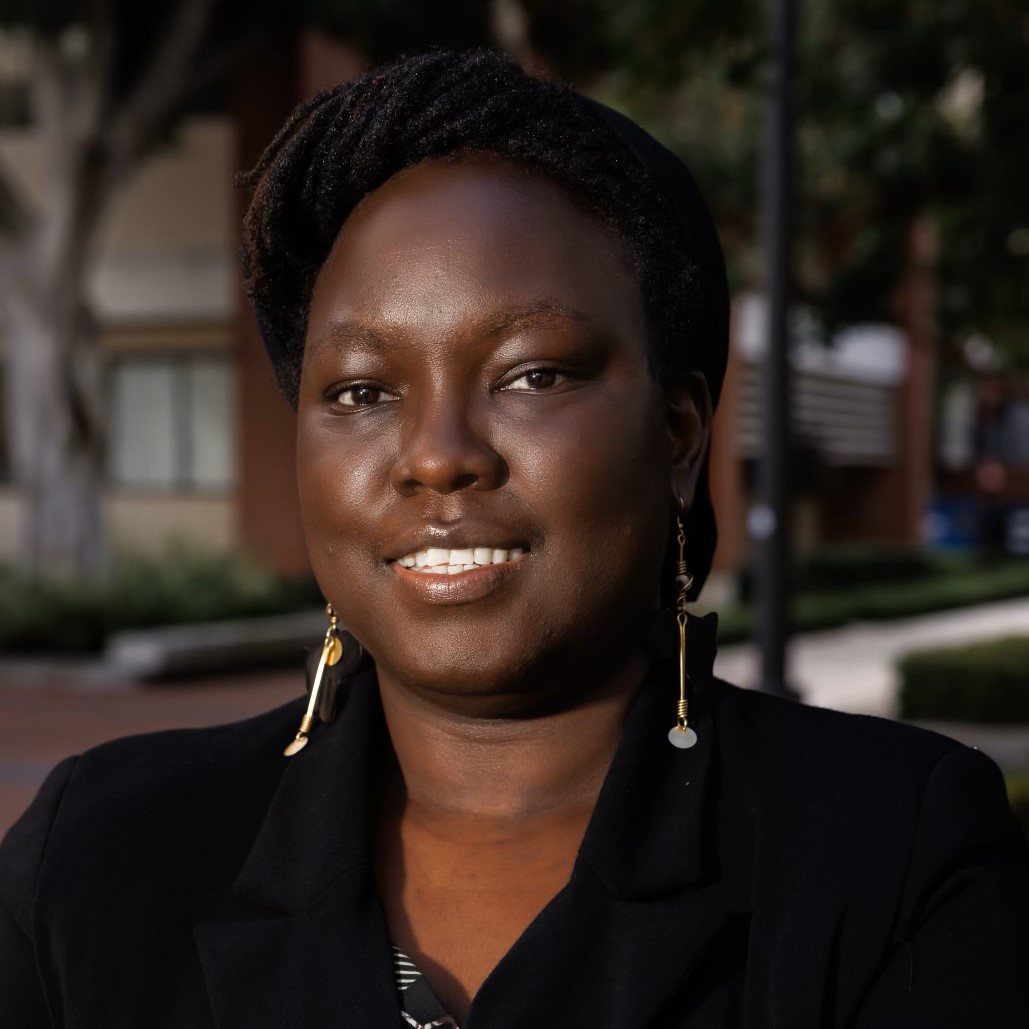
Elizabeth Akinyi Ondula is an Assistant Professor of Computer Science at Winthrop University , with a Ph.D. in Computer Science from the University of Southern California where she was part of the Autonomous Networks Research Group under Prof. Bhaskar Krishnamachari. Her research focuses on AI systems operating under uncertainty , integrating reinforcement learning , decision theory , and control-theoretic perspectives to design reliable AI for high-stakes environments . Research Interests She specializes in: Evaluating AI decision-making under stochastic environmental and model variability Developing domain-specific frameworks for AI deployment in physical/social contexts Designing interpretable and safe AI through coordination structures and information pattern analysis Her work spans epidemic response systems (SafeCampus-RL, Classroom-MDP), multi-agent fairness frameworks (Fair-MARL), and agricultural optimization tools for Kenyan farmers. Teaching Roles (Fall 2025) CSCI 475: Software Engineering I CSCI/DIFD 141: Introduction to Web Application Design CSCI 245: Front End Web Development Her email is eondula@usc.edu .
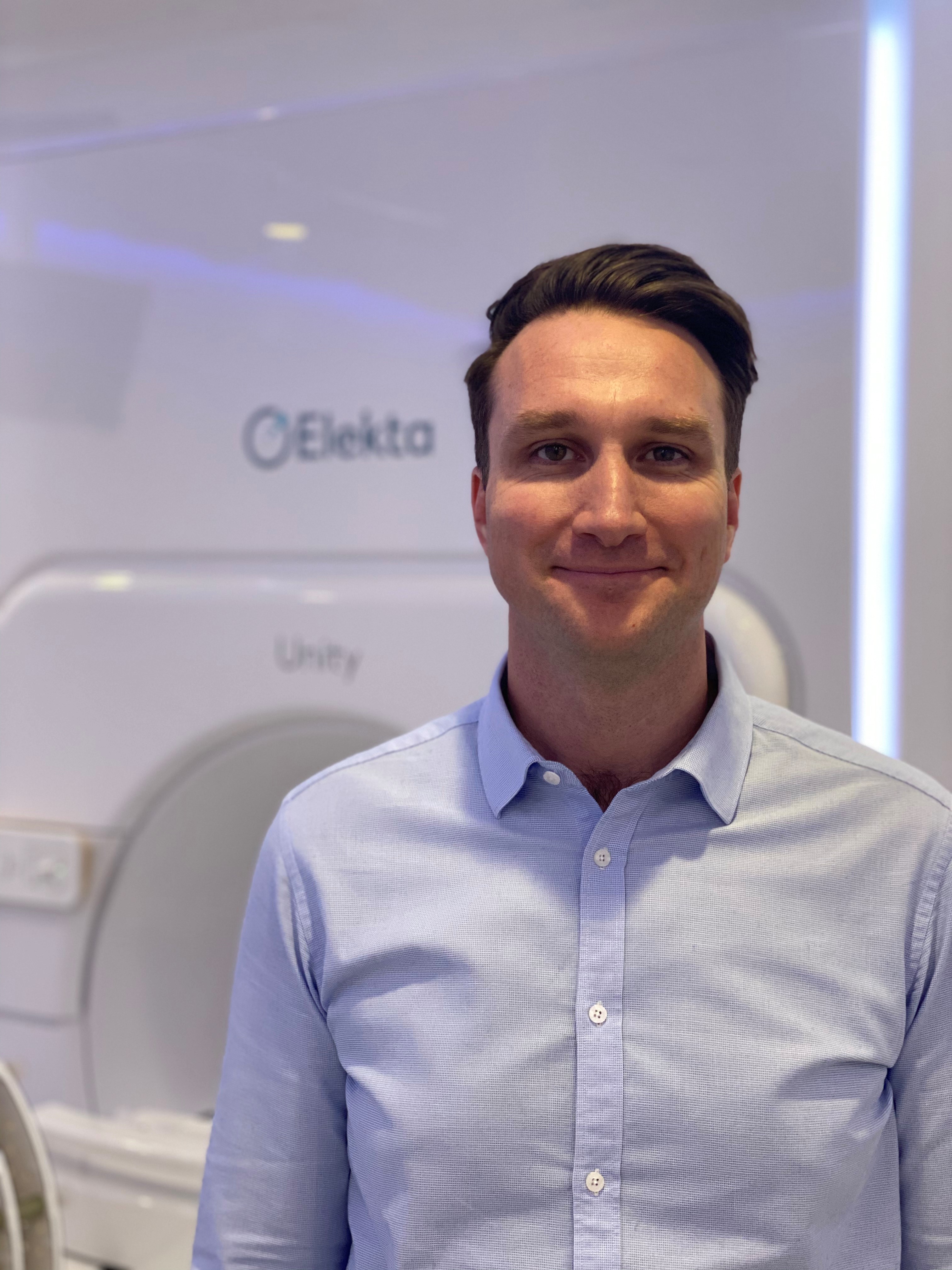
Dr. Michael Geoffrey Jameson is a Medical Physics researcher at the University of New South Wales, Medicine & Health faculty, based at St Vincent's Clinical School. His work focuses on improving radiotherapy accuracy and precision through innovative research across the entire treatment planning and delivery process. Education: Ph.D., University of Wollongong, NSW, Australia (2016) B.Med.Rad.Phys (hons1), University of Wollongong, NSW, Australia (2007) His research interests center on Medical Physics, Radiation Oncology, MRI applications, Image Processing, Radiation Dosimetry, and 3D Printing. Dr. Jameson has made significant contributions to understanding uncertainties in target delineation and has co-invented The HexaCheck medical device, now licensed to Standard Imaging Inc. His publications demonstrate a strong focus on adaptive radiotherapy, particularly for brain cancer treatment, with an emphasis on integrating MRI technology to improve treatment accuracy. Scientific Recognition: Cancer Institute NSW Early Career Fellowship recipient NHMRC Program Grant recipient Associate Editor, Australasian Physical & Engineering Sciences in Medicine (since 2014) Dr. Jameson serves as Principal Investigator on multiple research projects including the INTREPID trial for brain cancer outcomes and has secured significant funding from Cancer Institute NSW, NHMRC, and UNSW. His professional affiliations include the Australasian College of Physical Scientists and Engineers in Medicine, Australian Institute of Physics, American Association of Physicists in Medicine, and Trans-Tasman Radiation Oncology Group.
Dr. Yong Wang serves as Senior Lecturer in the School of Chemical Engineering at the University of New South Wales Sydney, where he leads cutting-edge research in food engineering and technology. His academic journey includes a PhD from a joint program between China Agricultural University and University of California Davis (2011), followed by research positions at Monash University (2019-2020) and COFCO Nutrition and Health Research Institute in Beijing (2011-2019), including an Australian Endeavour Fellowship at The University of Queensland in 2016. Most recently, he was awarded an OECD Fellowship for the Co-operative Research Programme: Sustainable Agricultural and Food Systems, collaborating with MIT in April-June 2024. Dr. Wang's research focuses on food structure design (including mechanical properties for solid foods and rheological design for liquid/semi-solid foods), food processing technology (drying, emulsion, encapsulation), plant-based food developments, and human mimicking digestion systems. His work bridges fundamental science with practical applications in sustainable food systems, with particular emphasis on improving plant-based alternatives and novel food manufacturing processes. His current research projects span plant milk technologies, Australian hazelnut processing, alternative texturizers for plant-based meats, and fat distribution in food emulsion gels. His publication record includes 170 journal articles and 12 book chapters, with research trends showing increasing focus on sustainable food technologies, plant-based alternatives, and advanced food structure characterization. Recent work demonstrates expertise in interfacial rheology, 3D food printing, molecular dynamics of plant proteins, and AI applications in food science. OECD Fellow for the Co-operative Research Programme: Sustainable Agricultural and Food Systems (2024) Australian Endeavour Fellowship (2016) Editor of Food Chemistry X (Elsevier) Associate Editor of Measurement: Food (Elsevier) Editorial Board Member of Food Chemistry (Elsevier) Dr. Wang has secured over 1 million AUD in research funding since 2011, currently leading multiple projects including 'Advancing Plant Milk Technologies through Interfacial Rheology' (Sanitarium & Future Food Systems CRC, $232,000), 'Australian hazelnuts processing and quality enhancement' (AgriFutures Australia, $160,000), and 'Engineering network-forming behaviours of plant proteins' (Australian Research Council, $699,300). His research supervision focuses on food structure design, rheology, plant-based foods, and encapsulation technologies, with available honours projects spanning food 3D printing, vegetable chip development, and AI applications in flavor identification. He coordinates and teaches Advanced Food Engineering (FOOD4450/8450) and several other food science courses at UNSW.
Dr. Yu Liu is a Postdoctoral Research Fellow at the School of Mechanical and Mining Engineering , The University of Queensland, with affiliations to the Centre for Hypersonics . His academic career focuses on hypersonic flight , planetary entry simulations , and advanced materials processing , particularly in radiation measurement and thermodynamic modeling. Yu Liu holds a PhD in Mechanical and Aerospace Engineering from The University of Queensland (2021) and a Bachelor (Honours) in Power and Energy Systems Engineering from Xi'an Jiaotong University. His research centers on non-equilibrium radiation in planetary entry conditions , validated through expansion tube experiments and spectroscopic analysis. Key contributions include electron density measurements , test gas substitution for Saturn entry simulations, and high-speed thermography using near-infrared cameras. The 15 most recent articles (2018–2025) span journal publications in Acta Astronautica , AIAA Journal , and Experiments in Fluids , alongside conference proceedings at major aerospace symposia. Topics emphasize hypersonic flow diagnostics , plasma radiation , and planetary mission testing . Dr. Liu is available for supervision and has participated in 2024 AEDS Sarl grant for radiation reconstruction in ExoMars capsule flowfields.
Dr. Julie Hunt is a geologist and geometallurgist at the Centre for Ore Deposit and Earth Sciences (CODES) within the School of Natural Sciences at the University of Tasmania. As of February 1, 2025, she transitioned to adjunct status while maintaining active research collaborations. Her work bridges geology and mineral processing with a focus on geometallurgy, critical metals, and sustainable resource extraction. Her research interests center on geometallurgy, mineral processing/beneficiation, geochemistry, and critical metals. Dr. Hunt specializes in understanding the geological controls on mineral processing behavior, with particular expertise in IOCG (Iron Oxide Copper Gold) deposits, tungsten systems, and Tasmanian mineral resources. Her work integrates geological, mineralogical, and geochemical data to optimize resource extraction while minimizing environmental impacts. Dr. Hunt's recent publications reveal a strong focus on critical metals in Tasmanian deposits, geometallurgical characterization of various ore systems, and environmentally sustainable production methods. Her work demonstrates how geological understanding can directly inform processing decisions, particularly for complex deposits where traditional approaches may be inefficient. She has secured significant funding for research projects related to geometallurgy and critical metals, demonstrating the practical applications of her work for the mining industry. Dr. Hunt actively supervises doctoral and masters students, with completed supervision including Karla Alejandra Morales Leiva, Nathaly Estefania Guerrero Ramirez, Cassady Lee Harraden, Paula Andrea Montoya Lopera, Angela Jane Escolme, Stacey Leichliter, and Natalee Kate Bonnici. Her current doctoral supervision includes projects on Nautanen IOCG deposit characterisation, Critical Metal Potential in Savage River Magnetite Deposit, and Pathways to Production for Critical Metals at the Kara W deposit.
Hugh Entwistle is a part-time lecturer at the School of Mathematical and Physical Sciences, Macquarie University. His research focuses on theoretical and applied aspects of stochastic processes and decision theory, particularly in optimal stopping problems. His work bridges probabilistic modeling with computational methods for dynamic optimization scenarios. Research Trends: His publications over the last three years demonstrate expertise in asymptotic analysis of stopping rules, dynamic programming approximations, and sequential decision frameworks. Common themes include maximizing reward functions under uncertainty, developing bounds for stochastic systems, and computational approaches to multi-stage stopping problems.
Associate Professor Simon Smart is a chemical engineering researcher at The University of Queensland , affiliated with the Dow Centre for Sustainable Engineering Innovation and the ARC Centre of Excellence for Green Electrochemical Transformation of CO 2 . His work focuses on sustainable energy systems , inorganic membrane technologies , and molten salt catalysis for hydrogen production and CO 2 utilization. Energy Systems Modeling Low-CO 2 Hydrogen from Methane Pyrolysis CO 2 Dry Reforming Molten Salt Catalysts Membrane Reactor Design His recent research explores net-zero transitions , carbon capture pathways , and energy access in developing economies . Articles analyze hydrogen production technologies , CO 2 electrochemical reduction , and nanocomposite membrane development . Smart leads the Net Zero Australia project, collaborating with institutions like Princeton and the University of Melbourne. 2018 Influential Researcher (Industrial & Engineering Chemistry Research) 2016 UQ Foundation Research Excellence Award 2012 Queensland Government Early Career Fellowship As course coordinator for Energy Systems and Sustainable Energy Technologies , he contributes to online education through UQx platforms. His work addresses technical, economic, and social dimensions of decarbonization, including material constraints in power-to-X systems and hydrothermal stability of catalytic membranes.
Adjunct Associate Professor Andrew Watkinson is affiliated with the School of Civil Engineering at The University of Queensland , Australia. His research focuses on environmental engineering , water quality , and antimicrobial resistance . Education : PhD in Antibiotics and antibiotic resistant bacteria in the aquatic environment (2008), School of Medicine, The University of Queensland. Collaborations : Frequently collaborates with colleagues like Simon D. Costanzo , Andrew Smolders , and Darren Ryder on water quality and pollution studies. His research interests revolve around the occurrence, fate, and effects of antibiotics and antimicrobial-resistant bacteria in aquatic environments . He investigates water treatment processes , source water protection , and microbial contamination from anthropogenic and wildlife sources . The 15 most recent publications reveal a consistent focus on pharmaceutical pollutants (especially antibiotics), water recycling , and environmental risk assessment . Studies span wastewater treatment plants , source water reservoirs , and coastal/marine ecosystems . He has not been explicitly linked to advising students or receiving grants. His work appears to be part of broader environmental management initiatives like the ARC Advance Timber Hub .
Associate Professor Michael Bermingham is an ARC Future Fellow at the School of Mechanical and Mining Engineering , University of Queensland , with affiliations to the Centre for Advanced Materials Processing and Manufacturing (AMPAM) . His research focuses on advanced manufacturing of metal materials , particularly additive manufacturing and subtractive machining technologies , aiming to optimize alloy design and process interactions for improved material performance. Education: Bachelor of Engineering (The University of Queensland) PhD (The University of Queensland, 2010) with Dean's Award for Outstanding Higher Degree Theses His research spans solidification processing (casting, welding, soldering, additive manufacturing), titanium alloy development for aerospace and biomedical applications, and microstructure optimization through techniques like trace element additions and hot isostatic pressing . Recent work explores 3D printing quality improvement via alloy design and machine learning applications for porosity analysis in metal manufacturing. Michael's 15 most recent publications (2023-2025) highlight advancements in titanium additive manufacturing , fatigue crack correction methods , ω phase embrittlement mitigation through Sn additions, and cryogenic coolant applications in machining. These works demonstrate his expertise in materials characterization , defect control , and process optimization . Scientific Awards: Dean's Award for Outstanding Higher Degree Theses (2010) ATN Go8 EIA National Report Rating 'A: Outstanding impacts' (2012) Australian Award for University Teaching (AAUT) Citation (2020) Michael has secured $9.2 million in ARC funding (including a Future Fellowship, Discovery Early Career Award, Discovery Projects, Linkage Project, and Research Hub) and $0.5 million in industry/internal funding . He supervises multiple PhD and Master's students in projects related to titanium alloy optimization , additive manufacturing defects , and biodegradable metal scaffolds .
Dr. Tristan Vanyai is a Lecturer at the School of Mechanical and Mining Engineering , The University of Queensland, and an Affiliate of the Centre for Hypersonics . With a PhD in Aerospace Engineering from UQ (2018), his work bridges experimental and numerical research in hypersonic propulsion systems. Doctor of Philosophy (2018), The University of Queensland Bachelor of Aerospace Engineering (First Class Honours) and Bachelor of Science (2012), Monash University Dr. Vanyai's research focuses on fundamental scramjet combustion processes , particularly thermal compression techniques for enhancing robust combustion in low-intake-compression scramjets. His experimental work utilizes advanced laser diagnostics (e.g., OH PLIF) and numerical simulations to study fuel injection, combustion stability, and flow dynamics in facilities like the T4 Stalker Tube . Recent publications highlight his expertise in supersonic combustion modeling , multiport injector arrays , and ethylene/hydrogen fuel analysis under Mach 8 conditions. His work addresses challenges in ignition delay , boundary layer combustion , and thermal management for hypersonic vehicles. 2025-2027: ARC Discovery Project on magnetic field deflection in MHD heat shields 2023-2025: US Aerospace Research Grant for boundary layer transition studies 2019-2024: Oxford-funded transpiration cooling research for sharp leading edges As a principal/associate advisor, Dr. Vanyai supervises projects on thermal compression scramjet performance and supercritical ethylene injection . He collaborates with institutions like the University of Oxford and works extensively with the T4 Stalker Tube hypersonic test facility.
Dr. Miranda Chilver is a Research Fellow at the Department of Health Economics, Wellbeing and Society within the National Centre for Epidemiology and Population Health at the Australian National University. She holds a Bachelor of Psychology (Honours) and PhD from the University of New South Wales. Her research focuses on mental health assessment methodologies, psychological distress measurement, wellbeing economics, and cognitive neuroscience. Key interests include validation of psychological instruments, mental health service utilization patterns, and neural correlates of cognitive processes. Her recent publications demonstrate a strong focus on methodological aspects of mental health measurement, including scale validation studies and comparative analyses of assessment techniques. The research spans clinical psychology, epidemiological methods, and cognitive neuroscience. Dr. Chilver is currently involved in several research projects: Internal Validation of Defence Wellbeing Measure - Stage 3 (2023-2025) Mental health analysis to support policy (2024-2025) Using MADIP data to provide insights into Better Access (completed 2022) She is registered to supervise research students but no specific advisees are listed in available records.
Associate Professor Junwen Chen is a prominent researcher in the School of Medicine and Psychology at the Australian National University, where she serves as International Programs Coordinator. She also holds an Adjunct Senior Lecturer position at the University of Adelaide (2019-2027). With over two decades of academic experience across Japan and Australia, her career trajectory shows steady progression from Research Associate at Waseda University to her current leadership role at ANU. Dr. Chen's research program centers on anxiety disorders, with particular emphasis on Social Anxiety Disorder and transdiagnostic processes across anxiety and depression. Her work investigates three interconnected domains: (1) the cognitive mechanisms maintaining social anxiety through biased information processing; (2) development and evaluation of intervention programs targeting excessive worry using behavioral and emotion regulation approaches; and (3) cross-cultural manifestations of social anxiety. Her methodological approach combines experimental, clinical, and longitudinal designs with increasing incorporation of neuroscientific methods in recent work. Analysis of her recent publications (2023-2025) reveals a sophisticated research program expanding into school-based interventions, cross-cultural applications, and transdiagnostic approaches to anxiety disorders. Her work increasingly examines social identity factors, cognitive biases, and emotion regulation as both mechanisms and treatment targets. Notably, she has strengthened interdisciplinary collaborations, particularly with educational researchers and cross-cultural psychologists, while maintaining her core focus on social anxiety. Dr. Chen actively supervises research students and leads significant grant-funded projects including the development of mobile health interventions for perinatal mental health and the CHIME Australia project exploring social singing for perinatal mental health. Her research demonstrates consistent productivity with over 50 publications and an h-index of 18, reflecting substantial impact in clinical psychology and mental health research. Her laboratory work focuses on cognitive processes in anxiety, with particular expertise in interpretation bias, emotion regulation strategies, and cross-cultural manifestations of social anxiety. Recent projects indicate expansion into school-based interventions and digital mental health solutions, suggesting evolving research directions that maintain her core expertise while addressing contemporary mental health challenges.
Qiuzhuang Sun is a Lecturer in the School of Mathematics and Statistics at the University of Sydney. His research focuses on data-driven decision-making, industrial statistics, and reliability engineering, with applications in healthcare, transportation, and sustainable urban systems. Alma Mater: Joint B.Eng. in Industrial Engineering and Computer Science from Shanghai Jiao Tong University; Ph.D. in Industrial Systems Engineering from National University of Singapore His research interests include: Data-Driven Decision-Making for healthcare, emergency response, and preventive maintenance Applied data science and machine learning for transportation data, clinical data, and megacity sustainability Reliability engineering with emphasis on anomaly detection, degradation modeling, and prognostic health management Recent publications highlight advancements in degradation modeling, robust optimization, and healthcare system design, reflecting interdisciplinary collaborations in industrial engineering, statistics, and biomedical research. His work aligns with the Faculty of Science's research strengths in Data and Decisions, Precision Health, and Sustainable Systems. Scientific accolades include: Finalist, IISE Data Analytics & Information Systems Case Study Competition (2024) First Place, INFORMS Blue Summit Supplies Data Mining Challenge (2023) Best Student Paper Award, INFORMS Society on Location Analysis (2023) Best Paper Award, INFORMS Conference on Quality, Statistics, and Reliability (2023) Winner, INFORMS QSR Industrial Data Challenge Competition (2022) ISE Magazine Featured Article (2020) Excellent Paper Award, Operations Research Society of China Reliability Chapter (2019) He supervises students in projects related to reliability engineering and data-driven decision-making. His work integrates statistical modeling, machine learning, and industrial systems optimization.
Associate Professor Furqan Hussain is a distinguished academic at the University of New South Wales, Faculty of Engineering, specializing in petroleum engineering and carbon sequestration research. Based in the Tyree Energy and Technology Building at the Kensington Campus, he leads cutting-edge research in CO 2 geosequestration and enhanced oil recovery techniques. PhD in Petroleum Engineering from the University of New South Wales, Sydney, Australia BSc and MSc in Petroleum Engineering from the University of Engineering & Technology, Lahore, Pakistan Professor Hussain's research focuses on CO 2 geosequestration in aquifers and hydrocarbon reservoirs, with particular emphasis on enhancing feasibility in heterogeneous and low-pressure formations. His groundbreaking work includes the discovery of water-saturated CO 2 injection into oil reservoirs to simultaneously improve oil recovery and CO 2 storage capacity. His expertise spans petroleum engineering, carbon capture utilization and sequestration (CCUS), and laboratory investigation of CO 2 injection processes. His recent publications demonstrate a strong focus on addressing mobility control challenges in high-pressure reservoirs, pore heterogeneity effects in carbonate rocks, and fines migration phenomena during water injection. These works represent significant contributions to both petroleum engineering and environmental sustainability through carbon management. Professor Hussain is actively involved in research supervision, focusing on experimental investigation of CO 2 injectivity and trapping, co-optimization of CO 2 storage and oil recovery, and related areas including CO 2 -water wettability and trapping mechanisms. A spatio-temporal partitioning approach to colloidal flows in porous media (Australian Research Council / Discovery Project, 2020-2022) Multiscale physics for enhanced oil recovery (University of Adelaide / ARC Linkage Project, 2020-2023) Low Salinity Fines-Assisted Waterflooding (Wintershall Holding Gmbh, 2019-2021) EOR assessment phase-1 (Bridgeport Energy Limited, 2019-2021) Core testing – Boggabri Mine (Boggabri Coal Operations, 2019-2020) He teaches core petroleum engineering courses including PTRL 3001 Reservoir Engineering B and PTRL3040 Numerical Reservoir Simulation, integrating his research expertise into the classroom while exploring innovative teaching methods to enhance student engagement in engineering education.
Lutfun Hossain is a Research Fellow at the Centre for Health Economics Research and Evaluation (CHERE) within the Faculty of Health at the University of Technology Sydney. With a background in pharmacy and health economics, she focuses on improving healthcare delivery through applied microeconometrics , health policy research , and community pharmacy services . Master of Pharmacy (Research), University of Technology Sydney Her research interests revolve around optimizing healthcare systems, particularly in: Value-based payment reforms Implementation of community pharmacy services Cardiovascular disease prevention models Intervention mapping for healthcare programs Evaluation of bundled payment systems Data-driven medication management Recent publications highlight her work in multi-center clinical studies , pharmaco-economic evaluations , and health service integration . She has contributed to high-impact journals like British Journal of Clinical Pharmacology and BMC Health Services Research . Scientific awards include the UTS Chancellor’s Research Scholarship . Her funded research involves grants from: Cancer Australia Australian Government Department of Veterans’ Affairs Western Sydney Primary Health Network Lutfun collaborates across disciplines with institutions such as the Institute for Sustainable Futures , University of Lisbon , and NPS MedicineWise , demonstrating her commitment to interdisciplinary health economics research.