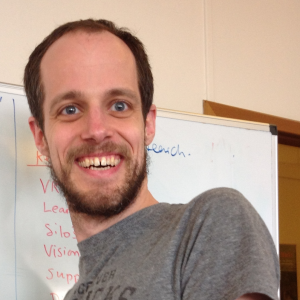
Kumari Pooja is a Marie Curie Doctoral Researcher and PhD Student at the Technical University of Denmark (DTU), affiliated with the Department of Applied Mathematics and Computer Science Visual Computing. She contributes to open-source computational tools and geometric modeling. Research Interests: Machine Learning and Deep Learning for imaging 3D Visualization and Fiber Tracking Medical Imaging and Hyperspectral Data Analysis Optimizing Computational Efficiency in Image Reconstruction Scientific Contributions: Her work spans 3D Python tool development , deep unrolled neural networks , and hyperspectral classification architectures , with a focus on robustness to noise and multi-scale analysis. Awards: Marie Curie Doctoral Researcher Fellowship Contact: pooja@dtu.dk
Christa Gall is an Associate Professor at the Niels Bohr Institute , University of Copenhagen, specializing in astrophysics within the DARK and Cosmic Dawn Center (DAWN) research groups. Her work focuses on the life cycle of cosmic matter, particularly elemental synthesis in massive stars and subsequent cosmic dust formation. Research Areas : Astrophysics, Cosmic Dust Evolution, Supernovae Studies, Galaxy Formation, Machine Learning Applications Projects : Villum Experiment COSMO-BRIDGE, LSST transient follow-up systems, Gravitational Wave Multi-messenger Studies Methodologies : Bayesian modeling, Hierarchical data analysis, Multi-wavelength observations Her publications demonstrate expertise in Type Ia supernova standardization, dust removal timescales in galaxies, and real-time transient detection systems. She contributes to machine learning implementations for time-domain astronomy and gravitational wave counterpart studies. Collaborations span institutions in Europe, North America, and Asia, with recent work appearing in Astronomy & Astrophysics and Monthly Notices of the Royal Astronomical Society . She actively participates in international telescope campaigns and data stream optimization initiatives.
Trine Dahl-Jensen is an Affiliate Associate Professor at the Niels Bohr Institute , University of Copenhagen, affiliated with the Physics of Ice, Climate and Earth department. Her research spans glaciology, seismology, and tectonic processes, focusing on Greenlandic geology and North Atlantic dynamics. Research Focus: Crustal structure, mantle dynamics, volcanic rifted margins, seismic data analysis, and paleoclimatology. The articles in her publication record highlight seismic investigations of Greenland margins, continental breakup mechanisms, and historical geological events. While not explicitly listing grants or teaching roles, her work contributes to understanding Earth's thermal evolution and tectonic history.
Majbritt Kristin Eckert is a Research Fellow at the Niels Bohr Institute , University of Copenhagen, specializing in Physics of Ice, Climate and Earth . Her work focuses on interdisciplinary climate research, integrating glaciology and geophysics to study Earth's systems and paleoclimatic processes. Research Focus Dr. Eckert's research explores: Ice core analysis for climate reconstruction Earth system modeling Glaciological processes Climate dynamics
Graig Wiglesworth is an Assistant Professor at the University of Copenhagen 's Niels Bohr Institute , affiliated with the Experimental Particle Physics department. His research focuses on particle physics, high energy physics, and quantum physics, with particular emphasis on ATLAS experiments at the Large Hadron Collider (LHC). Recent publications highlight his work on: Neural simulation-based inference for parameter estimation in ATLAS. Exotic Higgs boson decays and additional scalars in LHC Run 2 data. Charged-hadron yield measurements in photonuclear collisions. Vectorlike top quark searches and b-jet trigger commissioning. His current research explores Higgs boson properties, top quark dynamics, and detector optimization for ATLAS. He collaborates extensively with the ATLAS Collaboration and contributes to LHC data analysis frameworks. Contact: wigleswt@nbi.ku.dk
Helle Astrid Kjær is an Associate Professor at the Physics of Ice, Climate and Earth department within the Niels Bohr Institute at the University of Copenhagen . With 9 years of expertise in analyzing ice core impurities via Continuous Flow Analysis (CFA) , she has participated in 6 deep ice core campaigns across both hemispheres and developed novel CFA methods for acid and phosphorus. Her fieldwork includes 9 months across 6 seasons on the Greenland ice sheet. Education: Cand. Scient. in Geophysics Research Focus: Kjær's work centers on leveraging ice core impurities to reconstruct climate processes like volcanic eruptions, sea ice dynamics, and atmospheric transport. She contributes to projects such as ice2ice , investigating abrupt climate events and nutrient fluxes in polar ice. Article Trends: Her recent publications span Greenland and Antarctic ice core chronologies, aerosol and mercury fluxes during climate transitions, and DO event spatial patterns. Methodological innovations in CFA and field equipment like the Lightweight In-Situ Analysis (LISA) box are recurring themes. External Roles: She has held positions at institutions including the Desert Research Institute (USA) , National Institute for Polar Research (Japan) , and GNS Science (New Zealand) .
Keisuke Yonehara is a Visiting Researcher at DANDRITE - Yonehara Group , Aarhus University, Denmark. His research spans neuroscience, neurobiology, and neuromodulation. Education: D.V.M., Ph.D. His research focuses on retinal ganglion cell dynamics, amacrine cell function, and neuromodulation mechanisms. He investigates how neural circuits encode visual information and how interventions like vagus nerve blockade affect anesthesia and neural oscillations. Recent publications highlight advancements in retinal circuit analysis and clinical neuromodulation applications , including open-source tools like RoentVR for neuroscience research. Yonehara leads projects on vagus nerve modulation, retinal computational motifs, and brain network topology, funded by organizations such as Jascha Fonden . Collaborations: S. Arvin, A. Glud, A. Matsumoto.
Patrizia Gragnani is a Research Fellow in the Department of Technology and Innovation at the University of Southern Denmark, specializing in urban climate governance and sustainable development policy. Her work bridges international climate frameworks like the Paris Agreement with municipal implementation strategies, focusing on multilevel governance dynamics and administrative capacity building for local climate action. Her research centers on Urban Climate Action , Nationally Determined Contributions (NDCs) , and Sustainable Development Goals integration , employing methodologies such as configurational analysis and qualitative comparative analysis. She examines how cities operationalize global climate commitments through policy instruments, stakeholder engagement, and institutional innovation, with significant contributions to UN-Habitat and Global Green Growth Institute reports on urban NDC content and climate action frameworks. Recent publications reveal a clear trend toward evidence-based frameworks for strengthening urban climate governance, particularly through her 2025 configurational analysis of local government capacity and the 3-step NDC 3.0 framework. Her work consistently emphasizes actionable pathways for policymakers, highlighting Denmark’s role as a case study while expanding to African and global contexts through in-depth country analyses.
Julien Duxin is an Associate Professor and group leader at the Novo Nordisk Foundation Center for Protein Research (CPR), affiliated with the Faculty of Health and Medical Sciences at the University of Copenhagen, Denmark. He previously worked at Harvard Medical School (2012–2016) under Johannes C. Walter. Education: PhD in Biochemistry (2005–2011) from Washington University in St. Louis, advised by Sheila Stewart, and a BSc in Chemistry (2000–2004) from Missouri State University. His research focuses on genome maintenance and DNA repair , particularly mechanisms of DNA-protein crosslink (DPC) repair induced by chemotherapeutic agents. His lab developed the first in vitro system for DPC repair (2014) and investigates how repair processes integrate with DNA replication. Key collaborations involve proteins like SPRTN, RFWD3, and the proteasome. His publications (2012–2021) explore ubiquitin signaling , translesion synthesis , and replication-coupled proteolysis in DNA repair, with implications for cancer therapy. The lab's work bridges biochemistry , molecular biology , and clinical oncology , targeting novel chemotherapeutic strategies.
Dorthe Dahl-Jensen is a Professor of Geophysics at the Niels Bohr Institute, University of Copenhagen, where she leads the Ice, Climate and Geophysics research group. As Director of the Center of Excellence for Ice and Climate, she oversees major international research initiatives focused on understanding past climate through ice core analysis and modeling ice sheet dynamics. Her leadership extends to chairing the NEEM Steering Committee and previously leading the NGRIP deep drilling program. University of Copenhagen (2002-present): Professor, Niels Bohr Institute Center of Excellence for Ice and Climate: Director NEEM Deep Drilling Project: International Coordinator IPY Cluster 'Stability of the Greenland Ice Sheet': Cluster Leader Royal Danish Academy of Sciences: Member Dahl-Jensen's research focuses on reconstructing past climate records using ice cores and borehole data, with particular emphasis on the Greenland Ice Sheet. Her work combines theoretical modeling of ice flow with empirical analysis of ice core data to understand both historical climate patterns and future ice sheet behavior. She specializes in developing anisotropic flow laws to describe ice deformation and uses radio echo sounding to map ice fabric and subglacial conditions. Her current research projects include the ERC Advanced Grant WATERundertheICE and the EU FP7 Past4Future program, which aim to understand past warm periods and improve projections of ice sheet response to climate change. Her publication record demonstrates expertise across multiple disciplines, with recent work spanning glaciology, remote sensing, paleoclimatology, and climate science. The research themes consistently focus on ice sheet dynamics, climate reconstruction, and the implications of past climate changes for understanding current and future warming. Her team's work on the Northeast Greenland Ice Stream has provided critical insights into ice fabric evolution and deformation mechanisms that govern ice flow. EU Descartes Price (2008) VEGA Medal (2008) Amalienborg Prize (2009) Munch Prize (2009) Multiple foundation honors including Inge Lehman's, Christine Meyers, and Ole Rømers Foundations Professor Dahl-Jensen has advised 38 PhD and Master's students throughout her career, currently supervising 4 PhD candidates and 2 Master's students. She has secured significant research funding including the ERC Advanced Investigators Grant WATERundertheICE (2010-2014) and coordination of the EU FP7 Past4Future project. Her leadership extends to chairing the Danish National Committee for the International Polar Year and serving on numerous international scientific boards including the Scientific Council of the ISAC and the Advisory Board for IDPO. She leads the Center of Excellence for Ice and Climate and coordinates the international NEEM deep drilling program involving 14 nations. Her research group operates multiple field sites in Greenland and maintains strong collaborations with international polar research institutions. The team utilizes advanced techniques including radio echo sounding, ice core analysis, and high-resolution climate modeling to investigate ice sheet dynamics and past climate conditions.
Rahul Dey is a Postdoctoral Researcher at the Niels Bohr Institute , University of Copenhagen, specializing in Ice, Climate and Geophysics . He focuses on glaciology and paleoclimatology through ice core analysis. His research integrates Fieldwork in polar regions Laboratory analysis of ice cores Computational climate data modeling Recent publications emphasize Digital ice core imaging techniques Antarctic climate variability reconstruction IPCC report collaborative assessments Ice shelf surface mass balance patterns Radar-ice core data correlation External affiliations include Project Scientist at National Center for Polar and Ocean Research (2023-2025). Peer review activities for journals like Frontiers in Water and The Cryosphere demonstrate his academic engagement.
Peter Ditlevsen is a Professor at the Ice, Climate and Geophysics section of the Niels Bohr Institute, University of Copenhagen, where he has been employed since 2021. He is a member of the Physics of Ice Climate and Earth (PICE) research group and serves as Principal Investigator for the CriticalEarth Horizon 2020 Marie Sklodowska-Curie Initial Training Network (2021-2024) and the TiPES RIA H2020 project (2019-2023). His research focuses on the physics of climate, dynamical systems, stochastic processes, and tipping points in the Earth system, particularly the risk of Atlantic Meridional Overturning Circulation (AMOC) collapse. His work combines theoretical physics with climate modeling, timeseries analysis of paleoclimatic records, and detection of bifurcation points in climate systems. His highly cited 2023 Nature Communications paper on AMOC collapse received global attention with over 4,000 news outlets covering it and was ranked as the top Nature Communications paper. His recent publications reveal a strong focus on abrupt climate change, particularly Dansgaard-Oeschger events and AMOC stability. His work integrates stochastic modeling with climate dynamics, using advanced mathematical techniques like α-stable processes to understand tipping points. His research shows increasing emphasis on climate risk assessment and the detection of early warning signals for potential climate system collapses. Member of the Royal Danish Academy of Sciences Carlsberg fellow (1994-1997) Ole Rømer Prize (1998) San Cataldo refuge grant (2002) Niels Bohr Institute teaching prize (2004) Ditlevsen provides comprehensive teaching across all levels, including a graduate course in Turbulence with an associated textbook. He has supervised numerous students and served as Didactic and Pedagogic Supervisor for Physics at the Faculty of Science (2007-2020). His outreach activities include a weekly podcast with journalist David Trads, over 40 popular science articles, and regular media appearances (4-6 times/year). He leads significant research initiatives including the CriticalEarth and TiPES projects, securing substantial research grants for climate tipping point research. His laboratory work focuses on the Physics of Ice Climate and Earth (PICE) group, which investigates paleoclimate dynamics and future climate risks.
Andrea Grimaldi is a Postdoctoral Research Fellow at the Niels Bohr Institute (NBI), University of Copenhagen, specializing in Quantum Optics and Photonics under the prestigious Marie Skłodowska-Curie Fellowship program. Based at Blegdamsvej 17 in Copenhagen Ø, Dr. Grimaldi contributes to cutting-edge research in quantum technologies within NBI's dedicated Quantum Optics section. Research focuses on quantum sensing architectures and optical cavity physics, with expertise in hybrid quantum networks for acoustic-frequency applications and thermal management of precision optical systems. Work bridges theoretical modeling and experimental validation to advance quantum metrology, information processing, and sensor development for fundamental physics applications. Recent publications reveal strong trends in quantum network scalability for practical sensing and thermal stabilization of optical cavities, driving innovations in quantum-enhanced measurement systems. These efforts target real-world quantum technology deployment through interdisciplinary approaches combining photonics, materials science, and quantum control. Key recognition includes: Marie Skłodowska-Curie Fellowship (competitive EU research grant) Dr. Grimaldi leads independent research while collaborating with international teams including Professor Eugene Polzik's group, with recent work generating significant academic attention (7 news outlets, 33+ X posts, and 12 Bluesky references for the 2025 Nature paper). Current projects focus on grant-funded development of quantum sensing architectures and next-generation cavity stabilization techniques. As an active member of NBI's Quantum Optics group, Dr. Grimaldi utilizes state-of-the-art photonics laboratories and participates in European quantum initiatives, contributing to Denmark's leadership in quantum technology research through experimental innovation and cross-institutional partnerships.
Toine Bogers is an Associate Professor at the IT University of Copenhagen in Denmark, affiliated with the Department of Computer Science . He also holds a part-time Lecturer position at Aalborg University Copenhagen within the Faculty of Humanities 's Department of Communication and Psychology . Additionally, he serves as Chief Scientific Officer at the AI Pioneer Centre for fundamental AI research. Research Interests : Information access technologies, recommender systems, search engine behavior, human information interaction, personal information management, and algorithmic fairness in HR. Key Research Areas : Algorithmic hiring systems for fair recruitment Complex search/recommendation scenarios Personal information management on handheld devices Interactive information retrieval reproducibility Scientific Contributions : Over 134 publications since 2005, including Google Scholar works on serendipity in recommendation systems, HR information behavior, and cross-domain relevance analysis. His 2022 data storytelling experiments and 2021 CHIIR collaboration manifesto highlight his methodological rigor. Awards : 2021 Best Paper Award 2020 & 2018 Best Reviewer recognitions 2020 Outstanding PC Member honor
Yu Liu is a researcher at the Center for Quantum Devices within the Niels Bohr Institute at the University of Copenhagen. The Center for Quantum Devices focuses on cutting-edge research in quantum physics, particularly in areas related to spin qubits, topological quantum systems, novel devices, superconducting qubits, and quantum materials. Dr. Liu's research spans multiple disciplines within quantum physics and condensed matter. His primary focus appears to be on quantum devices, particularly investigating superconductivity in hybrid nanowire systems with ferromagnetic components. His work explores spin-split superconductivity, supercurrent transport, and spin-polarized bound states in semiconductor-superconductor-ferromagnetic-insulator hybrid structures. Beyond quantum physics, Dr. Liu has also published work in computer vision, mathematics, particle physics, transportation studies, and medical imaging, demonstrating remarkable interdisciplinary breadth. His recent publications (2021-2025) show a strong focus on quantum transport phenomena in hybrid nanostructures, particularly examining the interplay between superconductivity, ferromagnetism, and spin-orbit coupling in nanowire systems. These investigations have important implications for the development of topological quantum computing platforms and novel quantum devices. The observed phenomena include supercurrent reversal near coercive fields of ferromagnetic insulators, spin-splitting exceeding induced superconducting gaps, and percolative supercurrent flow in bilayer systems. Dr. Liu has collaborated extensively with researchers at the Center for Quantum Devices, including P. Krogstrup, S. Vaitiekėnas, C. M. Marcus, M. Leijnse, and R. Seoane Souto. His work often involves experimental measurements combined with theoretical modeling to explain observed phenomena in quantum transport systems, bridging the gap between fundamental physics and potential quantum technology applications.