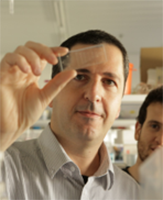
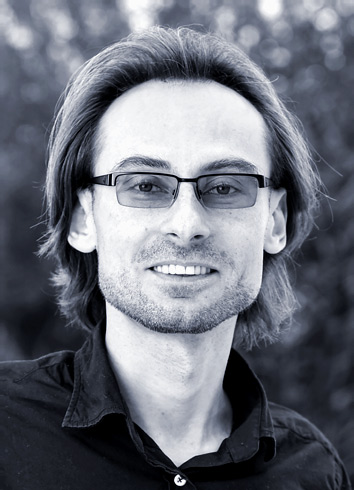
Prof. Yair Weiss is a faculty member at the School of Computer Science and Engineering, The Hebrew University of Jerusalem . He holds a PhD in Brain and Cognitive Sciences from MIT and an MSC in Applied Mathematics from Tel-Aviv University. Education: MSc in Applied Mathematics, Tel-Aviv University (1993) PhD in Brain and Cognitive Sciences, MIT (1998) His research focuses on Human and Machine Vision , Machine Learning , Bayesian Methods , and Neural Computation . Recent work explores adversarial examples, generative models, and robustness in neural networks. Recent publications highlight trends in: Understanding neural network representations Advancements in GANs and adversarial training Image restoration and translation techniques Perceptual distance modeling Bayesian approaches to computer vision Mathematical analysis of deep learning architectures
Shie Mannor is a Professor at the Technion - Israel Institute of Technology in the Department of Electrical Engineering. He also holds a visiting professorship at Cornell-Tech in New York City and is affiliated with the Technion Machine Learning Center and the Grand Technion Energy Program . Key Research Interests: Machine Learning: Theory, algorithms, and applications to high-dimensional data and dynamics modeling. Reinforcement Learning and Markov Decision Processes: Adaptive control in large stochastic systems. Learning and control under uncertainty: Robust/stochastic optimization frameworks. Game Theory: Stochastic, dynamic, and network games applied to power markets and resource allocation. Multi-agent systems: Online learning and designing economic systems with optimal equilibria. Power Grid: Data-driven reliability, pricing, and decision-making in smart grids (e.g., EU-funded GARPUR project). Applications: Communication network optimization, mobile health, LDPC codes, and large-scale optimization problems. He actively seeks postdocs, graduate, and undergraduate students with strong mathematical or programming skills for projects in mobile phone programming and complex system optimization. Contact: shie.mannor@ee.technion.ac.il | Phone: ++972-4-829-3284
Lihi Zelnik-Manor is a Professor at the Faculty of Electrical and Computer Engineering at the Technion - Israel Institute of Technology . Her research focuses on digitizing the sense of touch, integrating Haptics , Robotics , and Computer Vision to create digital representations of physical properties and develop haptic feedback devices for virtual interactions. Executive Vice President for Innovation and Industry Relations (2023-2026) Vice Dean for Graduate Studies (2022-2023) General Chair: CVPR’21, ECCV’22 Her work spans Neural Architecture Search (NAS) , 3D Reconstruction , and Image Processing , with recent publications on haptic devices (2025), diffusion models (2025), and soft-tissue simulation (2024). She actively contributes to academic leadership through roles in top conferences and community initiatives like the Schmidt Postdoctoral Award steering committee.
Omri Abend is an Associate Professor at The Hebrew University of Jerusalem, affiliated with the School of Computer Science and Engineering and serving as Chair of the Department of Cognitive and Brain Sciences. His research lies at the intersection of Computational Linguistics, Natural Language Processing, and Cognitive Science, with a focus on semantic representation and language acquisition modeling. His primary research interests include: Computational modeling of child language acquisition Semantic representation frameworks, particularly Universal Conceptual Cognitive Annotation (UCCA) Statistical learning and machine translation Unsupervised grammar learning and lexical relation induction Cross-lingual and cross-domain alignment in language models Evaluation methodologies for NLP systems His recent publications demonstrate a strong trend toward analyzing large language models (LLMs), exploring human-like patterns in AI, improving evaluation metrics, and applying NLP to humanitarian domains such as Holocaust testimony analysis. His work combines theoretical linguistic insights with practical machine learning applications. Scientific awards include: Outstanding Paper Award at ACL 2017 Area Chair Award for Best Paper in the Track at ACL 2023 He has supervised and collaborated with numerous researchers and students across projects in semantic parsing, machine translation, and cognitive modeling. His work has been supported by community-wide initiatives such as the MRP shared tasks, which he co-organized. He also leads research on ethical AI, open human feedback, and the computational analysis of historical narratives. Omri Abend leads several research teams focused on: The development and application of the UCCA framework for semantic annotation Cross-lingual and cross-domain knowledge representation in LLMs Computational modeling of language acquisition Evaluation and improvement of NLP systems Application of NLP to digital humanities and historical testimony analysis
Idit Keidar is currently the Dean of the Viterbi Faculty of Electrical and Computer Engineering at the Technion - Israel Institute of Technology, where she also holds the Lord Leonard Wolfson Academic Chair. She received her BSc, MSc, and PhD (all summa cum laude) from the Hebrew University of Jerusalem in 1992, 1994, and 1998 respectively, with Danny Dolev as her PhD advisor. She completed her postdoctoral studies at MIT with Nancy Lynch. Her academic lineage includes notable figures such as Copernicus, Leibniz, Jacob Bernoulli, Euler, Lagrange, Laplace, and Poisson. Keidar's research focuses on fault-tolerant distributed and concurrent algorithms and systems, with particular interest in distributed storage theory and systems, concurrent data structures and transactions, and scalable Byzantine fault-tolerance. She approaches her work with the goal of finding theoretical foundations that can help explain and improve practical implementations. Her research has significant implications for large-scale distributed systems, cloud computing, and multi-core architectures. Keidar has made substantial contributions to the field through her editorial work as editor of the ACM SIGACT News Distributed Computing Column from 2007-2013 (previously co-editing with Sergio Rajsbaum from 2000-2007). Her publications span theoretical foundations, practical applications, and educational aspects of distributed computing. The trends in her work show a consistent focus on bridging theory and practice in distributed systems, with increasing attention to large-scale systems, transactional memory, and Byzantine fault tolerance as these areas have gained practical importance. Scientific Awards and Recognition: Lord Leonard Wolfson Academic Chair Editor of ACM SIGACT News Distributed Computing Column (2000-2013) Keidar has held significant leadership positions in the distributed computing community, serving as PC Chair for PPoPP 2019 and PODC 2018, Organizing Committee Chair for DISC 2013 in Jerusalem, and PC Co-Chair for LADIS 2021. She has been actively involved with the Networked Software Systems Laboratory at the Technion. Beyond her technical work, Keidar is also a creative writer, with a short story winning 2nd place in the Shirat Ha'Mada creative writing contest for scientists.
Dr. Omri Finkel is an Assistant Professor and Principal Investigator at the Alexander Silberman Institute of Life Sciences, The Hebrew University of Jerusalem. His research focuses on terrestrial microbial ecology and plant-microbe interactions, with a particular emphasis on understanding microbiome assembly dynamics and their effects on plant health. He leads the Finkel Lab, which explores topics such as desert plant microbiomes and the ecological context shaping microbiome functionality. Dr. Finkel has been awarded an ERC Starting Grant 2022 for his project on molecular evolution of plant-microbiome interactions in drylands. His work combines experimental microcosms, synthetic communities, and genomic approaches to dissect microbiome-induced plant phenotypes and desert microbiome adaptations. The lab collaborates on projects involving drought-resistant crops, microbial community design, and functional genomics. Students and researchers in his lab include PhD candidates Tzila Vikiniansky and Zheniya Mogilevski, along with several MSc students. The lab is actively involved in analyzing root microbiome responses to environmental stressors, including drought tolerance and pathogen resistance.
Prof. Doron Shmilovitz serves as a Professor at Tel Aviv University's School of Electrical Engineering, focusing on advanced power conversion systems. His core research domains include: Photovoltaic Energy Power Processing High-Frequency Converters Active Power Factor Correction (APFC) Topologies Energy Harvesting from Single Photovoltaic Cells/Piezoelectric Devices Ultra-Low-Voltage Conversion for Biomedical Sensors Power Quality Optimization Specializing in micro-scale energy conversion, his work enables efficient power delivery for remote sensing and medical applications where conventional systems fail. Current projects address the challenges of harvesting energy from minuscule sources like individual solar cells. Contact: shmilo@tauex.tau.ac.il | Office: Electrical Engineering Building 225 | Tel: 03-6406238
Tomer Michaeli is an Associate Professor at the Faculty of Electrical and Computer Engineering, Technion – Israel Institute of Technology. His research focuses on interdisciplinary areas bridging computer vision, machine learning, and signal processing methodologies. Research Interests Computer Vision Machine Learning Image Processing Signal Processing
Michael Margaliot is a Professor of Electrical Engineering and the incumbent of the Systems and Control Chair at Tel Aviv University, Israel. He is affiliated with the School of Electrical and Computer Engineering. Research Interests His research spans dynamical systems, control theory, and systems biology, with specific expertise in: Stability analysis of switched systems Control-theoretic properties of Boolean networks Theory/applications of compound matrices (k-contractive, alpha-contractive, k-cooperative systems) Mathematical modeling of ribosome flow in gene expression Optimal control and fuzzy logic applications Neural network information retrieval Publication Analysis His recent work (2022-2025) demonstrates strong focus on contraction theory (k-contraction), matrix compounds, and biological applications like ribosome flow modeling. Publications frequently appear in top control theory journals ( IEEE Transactions on Automatic Control , Automatica ) and interdisciplinary venues ( Journal of the Royal Society Interface ). Key themes include networked systems stability, biological translation processes, and novel mathematical frameworks for dynamical systems. Research Leadership He leads a research group at Tel Aviv University, evidenced by frequent co-authorship with PhD students and postdoctoral researchers. His team collaborates internationally with institutions like MIT, UC Santa Barbara, and TU Munich, focusing on theoretical control and biological applications.
Eran Yahav is a Professor in the Computer Science Department at the Technion, Israel Institute of Technology, and serves as CTO at Tabnine. His research bridges programming languages, software engineering, program analysis, and machine learning, focusing on program synthesis, verification, and code intelligence. Research Interests: His work spans program synthesis , abstract interpretation , verification of concurrent systems , binary analysis , and AI for code . He leads the PRIME project, which uses machine learning and static analysis to enable programming with millions of examples, improving code completion, search, and prediction. The recent publications reflect a strong trend toward integrating neural models with program analysis—using structured representations of code (e.g., AST paths) for property prediction, generating sequences from code (code2seq), learning distributed representations (code2vec), and interpreting neural networks via automata extraction. His work consistently appears in top-tier venues such as POPL, PLDI, ICSE, OOPSLA, and ICLR. Scientific Awards: Best paper award at ISSTA'07 Best paper award at ISSTA'06 Advising and Grants: He has advised numerous PhD and Master’s students, many of whom have published in premier conferences and now hold academic or industry positions. While specific grants are not mentioned, his sustained high-impact research and leadership in major projects (e.g., PRIME, Fender, SAFE) imply significant funding support. He has served on program committees for PLDI, POPL, CAV, OOPSLA, and VMCAI, reflecting his standing in the programming languages and verification communities. Labs and Teams: He leads a research group focused on program analysis and synthesis, with strong collaborations, particularly with Martin Vechev and others, on concurrency, synthesis, and machine learning for code. The group has developed influential tools such as PRIME, code2seq, code2vec, TRACY, and SAFE.
Zvi Lotker is a Lecturer in the Department of Communication Systems Engineering at Ben-Gurion University. His research focuses on computer networks, distributed systems, and mobile/wireless computing. Education: Ph.D. in Electrical Engineering (2003), Tel-Aviv University, Israel. Dissertation: Algorithms in Networks under Prof. Boaz Patt-Shamir. M.Sc. in Mathematics (1998), Tel Aviv University. Thesis: On the d distance between iid and Markov process under Prof. Meir Smordinsky. B.Sc. in Mathematics & Computer Science (1991), Ben-Gurion University. B.Sc. in Industrial Engineering (Information Systems track, 1991), Ben-Gurion University. No scientific awards, grants, or advised students are listed in the provided information.
Dr. Gili Greenbaum is an Assistant Professor at The Hebrew University of Jerusalem's Department of Ecology, Evolution and Behavior. His research focuses on computational population genomics, addressing eco-evolutionary processes through genomic data analysis and mathematical modeling. Key areas include conservation genomics, gene drive technology, and human evolution under disease pressures. He leads a lab with interdisciplinary collaborations, advising students across biology, mathematics, and computer science disciplines. Research emphasizes genomic approaches for endangered species conservation, particularly fragmentation impacts on population genetics. Projects also explore gene drive deployment risks and ecological modeling of ancient human interactions with Neanderthals. His lab develops tools like DORA for ancient DNA visualization and modelRxiv for model sharing. Current projects include predicting conservation risks using machine learning, studying immune-related genomic signatures in human populations, and modeling social evolution dynamics. The lab collaborates with institutions globally and offers training opportunities for graduate students and postdocs in computational biology and theoretical ecology.
Prof. Yaakov Nahmias is a Professor and Managing Director at the Hebrew University of Jerusalem's Silberman Institute of Life Sciences, Department of Genetics. His research focuses on bioengineering applications in metabolism, tissue engineering, and drug discovery. His lab develops organ-on-chip systems, sensors for toxicity studies, and cultivated meat technologies. Key projects include metabolic control of viral infections, kidney nephrotoxicity mechanisms, and cost-effective bioprocessing for cultured meat. Research Interests: Metabolic programming and nuclear receptor control Liver tissue engineering and HCV infection Organ-on-chip platforms for drug discovery Cultivated meat production and bioprocessing innovations Scientific Awards: AIMBE Fellow, ERC Consolidators Grant (2015), Rosetrees Trust Prize (2017), and Rappaport Prize (2014). Lab Members: Includes researchers like Mohammad Ghosheh and Aaron Cohen. Collaborations span Grass Center for Bioengineering and Tissue Dynamics.
Prof. Alex Bronstein is a Professor at the Henry and Marilyn Taub Department of Computer Science, Technion – Israel Institute of Technology, where he holds the Dan Broida Academic Chair and heads the VISTA Lab and the Center for Intelligent Systems. He concurrently serves as a Visiting Professor at the Austrian Institute of Science and Technology. His research spans computer vision, machine learning, computational geometry, signal processing, and bioinformatics, with a focus on geometric data analysis and AI applications in science. He has held significant industry roles including Principal Engineer at Intel Corporation, co-founding startups such as Invision (acquired by Intel), VideoCites, and Sibylla. His work bridges academia and industry, emphasizing practical applications of theoretical insights. Research interests include foundational AI models for molecular biology, robust machine learning systems, and interdisciplinary applications in healthcare and robotics. Notable projects include protein structure prediction using AlphaFold integration, adversarial robustness frameworks, and medical imaging innovations like T1-PILOT for MRI acceleration. He actively collaborates with global institutions, maintaining labs in Haifa, Vienna, and Sardinia. Recent publications highlight advancements in quantum computing simulations, wearable health monitoring systems, and AI-driven biomedical solutions. While no explicit awards are listed, his leadership roles and industry impact underscore significant contributions to computational science. He mentors graduate students in his VISTA Lab, focusing on cutting-edge projects in AI, computer vision, and computational chemistry.
Prof. Yonatan Sivan is a Professor at the School of Electrical & Computer Engineering, Ben-Gurion University. His research focuses on nanophotonics, plasmonics, and electromagnetism, with particular emphasis on thermal and non-thermal effects in metallic systems. Key areas include plasmon-assisted photocatalysis, electron non-equilibrium dynamics, and numerical methods for nanophotonic systems. He advises multiple PhD and MSc students, including current candidates like Tamir Grossinger and Ben Spiegel, and collaborates internationally (e.g., with South China Normal University and UC Berkeley). Education details are not explicitly stated, but his work spans theoretical and experimental domains, integrating advanced numerical techniques with experimental validation. Notable contributions include redefining plasmonic photocatalytic mechanisms through thermal/non-thermal analysis and pioneering modal expansion methods for open optical systems. Research interests are organized into thematic clusters: Thermo-plasmonics, Drude materials, metal luminescence, thermal emission, and numerical methods. His work often involves interdisciplinary collaborations, addressing both fundamental physics and applied nanotechnology challenges. Publications span high-impact journals like ACS Catalysis , Nano Letters , and Physical Review Applied , with a focus on experimental validation and theoretical modeling. He also contributes to teaching courses on plasmonics, metamaterials, and wave propagation. Current group members include Dr. Imon Kalyan and Sravya Rao, while past members hold positions at institutions like UC Berkeley and KLA Tencor. His lab focuses on advancing nanophotonic technologies through rigorous computational and experimental frameworks.