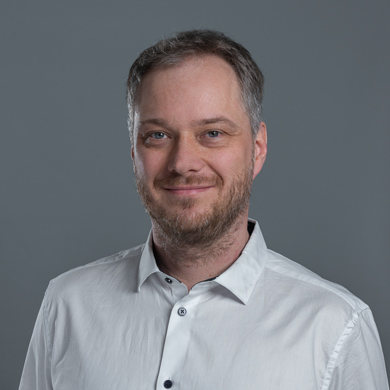
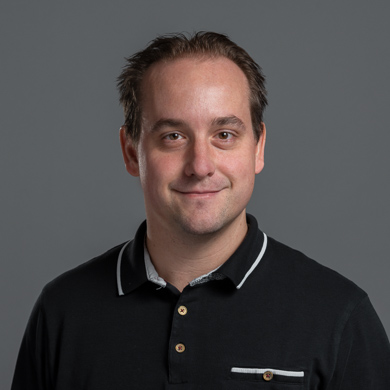
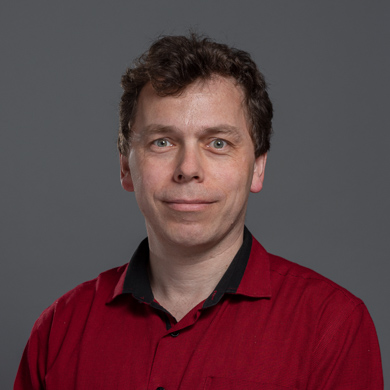
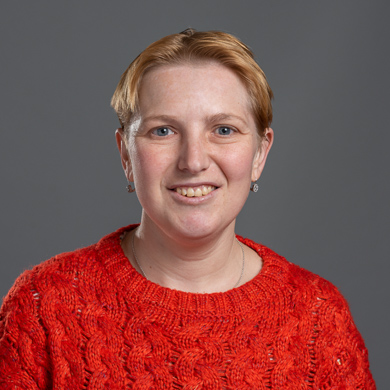
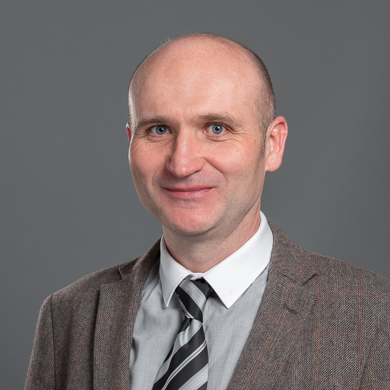
Libor Pekař is an Associate Professor at the Institute of Automation and Control Engineering, Faculty of Applied Informatics, Tomas Bata University in Zlín, Czech Republic. He has been employed at the university since 2006, progressing from Assistant to Associate Professor in 2018. His education includes a Ph.D. in Technical Cybernetics (2013) and a Habilitation in Machine and Process Control (2018), both from Tomas Bata University. His academic journey began with a Bachelor's degree in Automation and Informatics (2002) and a Master's in Automation and Control Technology (2005). Dr. Pekař's research focuses on Control Engineering and Automation, with particular emphasis on Process Control and Machine Control. His work bridges theoretical cybernetics and industrial applications in consumer industries. He actively contributes to the academic community as Editor of Mathematical Problems in Engineering since 2018 and as a member of the Academic Senate of Tomas Bata University. His international collaborations span institutions in Slovenia, Austria, Slovakia, Poland, Portugal, Croatia, and Germany.
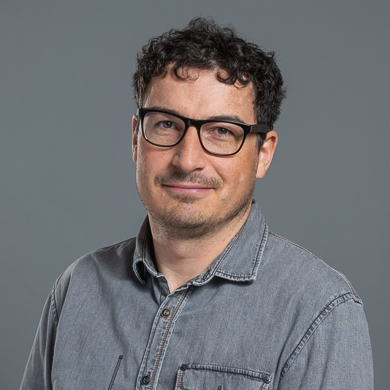
Roman Šenkeřík is an Associate Professor at the Department of Informatics and Artificial Intelligence within the Faculty of Applied Informatics at Tomas Bata University in Zlín (TBU Zlín). He serves as the Head of the Artificial Intelligence Laboratory (AILab) and has been actively involved in interdisciplinary research at the intersection of AI and complex systems. Specializes in evolutionary algorithms, neural networks, and hybridization of soft-computing techniques Focuses on optimization of process control using AI and development of metaheuristics Key interests include chaos theory, cryptology, and cybersecurity applications His research spans data mining, high-performance computing, and synthesis of complex systems. He has supervised over 80 bachelor's and master's theses and guided multiple doctoral students to successful completion. Scientific Awards: Best paper award at AETA Conference (2018) Best paper award at CISIM Conference (2014) Best paper awards at Nostradamus Conferences (2012, 2013) Best paper award at PCO Conference (2010) Prof. Šenkeřík has participated in numerous international collaborations through Erasmus and other mobility programs, including extended internships at University of Maribor (Slovenia) and Strathclyde University (UK). He is a Senior Researcher at CEBIA-Tech Regional Research Centre and has contributed to multiple EU-funded projects.
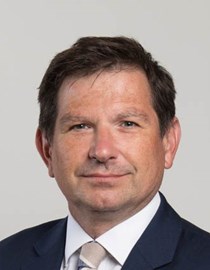
Jan Dolinay is an Assistant Professor at the Department of Automation and Control Engineering within the Faculty of Technology at Tomas Bata University in Zlín, Czech Republic. His academic career has been dedicated to automation, control systems, and applied informatics, with a focus on technical cybernetics and process control. Education: Ph.D. in Technical Cybernetics (2002-2010), Tomas Bata University in Zlín Employment: Assistant Professor at Department of Automation and Control Engineering (2010-present) His research aligns with interdisciplinary applications in automation technologies and control engineering. He maintains regular teaching consultation hours on Wednesdays from 11:00 to 13:00.
Petr Chalupa is a researcher at Tomas Bata University in Zlín, affiliated with the Center for Security, Information and Advanced Technologies (CEBIA-Tech) since 2012. He previously worked at the Center for Applied Cybernetics (2005–2011) and has held diverse roles including wireless communication system developer, civil service, and lecturer. Education: Ph.D. in Technical Cybernetics (2003), Master's in Technology (1999), C programming instructor (1997–2002). Research focuses on automation, control engineering, polymer systems, and IT security. International experience: Lecturer at Ruhr-Universität Bochum (2005) and University of Strathclyde (2005). Contact: Email chalupa@utb.cz | Phone +420 576 035 316 | Office U51/316
Hana Charvátová is a Researcher at Tomas Bata University in Zlín, Faculty of Applied Informatics, Institute of Automation and Control Engineering, and member of the Regional Research Center CEBIA-Tech since 2007. Education: Master's degree in Chemistry and Technology of Materials (Environmental Technology) from Tomas Bata University in Zlín, Faculty of Technology (1999-2004) PhD in Chemistry and Technology of Materials (Technology of Macromolecular Substances) from Tomas Bata University in Zlín, Faculty of Technology (2004-2007) Research Interests: Her work focuses on polymer processing modeling, recycling technologies, thermal stability simulation for buildings, and computational thermography. She integrates materials science with environmental engineering and computational visualization, emphasizing sustainable polymer applications and energy-efficient building diagnostics through advanced simulation techniques. Scientific Awards: No scientific awards were mentioned in the source material. Advising and Grants: Dr. Charvátová participated in Research Program 3 and the Regional Research Center CEBIA-Tech. Her prior work included the MSM 7088352102 project on polymer processing control (2005-2007). No student advising or specific grant awards were documented. Labs and Teams: She operates within the Institute of Automation and Control Engineering and contributes to the Regional Research Center CEBIA-Tech, focusing on interdisciplinary engineering research.
Lubomír Macků is an Assistant Professor at the Institute of Process Management within the Faculty of Applied Informatics at Tomas Bata University in Zlín, Czech Republic. His academic career spans from 2004 to present across departments including Security Engineering, Electronics and Measurements, and Electrical Engineering and Measurement. Education Ph.D. in Technical Cybernetics, Tomas Bata University in Zlín, Faculty of Technology (1996-2004) Additional pedagogical studies, Brno University of Technology, Faculty of Technology (1995-1996) Ing. in Automation and Control Technology, Brno University of Technology, Faculty of Technology (1991-1996) Research Interests : Macků specializes in process modeling and simulation , manufacturing control systems , and electronics applications . His work bridges theoretical control of unstable systems with practical industrial implementations, emphasizing real-world technological process optimization and microelectronics integration in production environments. Professional Activities : He participated in the Erasmus program as a lecturer at Middle East Technical University (2014) and completed internships in Colorado, USA (1998, 2001). Administrative roles include Secretary of the Institute of Electrical Engineering and Measurements (2006-2009). Contact: macku@utb.cz, office hours Wednesday 10:30-12:30, office U51/517.
Assoc. Prof. Milan Navrátil, Ph.D., serves as an Associate Professor in the Department of Electronics and Measurement at the Faculty of Applied Informatics, Tomas Bata University in Zlín, a position held continuously since 2005. His academic foundation includes a habilitation in Machine and Process Control (2025) and doctoral studies in Technical Cybernetics (2002–2008), both completed at Tomas Bata University in Zlín's Faculty of Applied Informatics. Earlier, he earned a Master's degree in Automation and Control Technology in the Consumer Industry from Brno University of Technology (1997–2002) and attended Dairy Technical High School in Kroměříž (1993–1997). Research interests center on Control Systems and Automation, with specialized focus on Measurement Systems and Machine Control applications in industrial contexts. His technical cybernetics background informs work spanning electronics instrumentation and process optimization. Internationally, Navrátil has lectured under Erasmus programs at Portugal's Polytechnic Institute of Beja (2022, 2024) and Instituto Politécnico de Viana do Castelo (2023), following a 2004 internship at the UK's BLC-Leather Technology Centre. University governance roles include membership on the Faculty of Applied Informatics Academic Senate since 2006 (six consecutive terms) and service on the Dean's Board. Consultation hours are held Tuesdays 8:00–10:00, with contact via email navratil@utb.cz, mobile +420 603 882 391, and office U51/807.
Ing. Pavel Navrátil, Ph.D. is an Assistant Professor at the Faculty of Applied Informatics , Tomas Bata University in Zlín, affiliated with the Institute of Automation and Control Engineering . His work focuses on control systems, optimization, and simulation of industrial processes. Education: Ph.D. in Technical Cybernetics (2004), Ing. in Automation and Control Technology (2000) Research Interests: Pavel specializes in Multivariable Control Systems , Time Delay Systems , and Energy Optimization . His work applies mathematical modeling and simulation to solve complex problems in industrial automation, district heating, and automotive control systems. He also contributes to Computer-Aided Control Education through innovative low-cost laboratory devices. Publications Trends: His articles emphasize Simulation (6 papers), Optimization (5 papers), and Control Systems (12 papers). Key subfields include Time Delay Stability Analysis , Heat Source Modeling , and Educational Technology Development . Labs & Teams: He works within the Institute of Automation and Control Engineering , collaborating with researchers like Libor Pekař and Jaroslav Balátě on control theory and industrial applications.
Tomáš Sysala serves as an Assistant Professor at the Institute of Automation and Control Engineering within the Faculty of Technology at Tomas Bata University in Zlín, where he contributes to academic instruction and research in engineering disciplines. His research focuses on core engineering domains: Automation systems design and implementation Advanced control engineering methodologies Robotics integration in industrial applications Systems engineering for complex processes Contact details: Email: sysala@utb.cz Phone: +420 576 035 260 Office: U51/717 Consultation hours: Monday 1:00 PM - 3:00 PM
Lucie Žižková serves as Assistant Professor at the Department of Engineering within the Faculty of Architecture at Brno University of Technology. Holding both Ing. (Engineering) and Ph.D. qualifications, she actively teaches Building Elements 1 and Building Materials courses during winter semesters for the 2025/2026 academic year. Her contact details include office B/812 (Poříčí 93/7, Brno 639 00), phone +420 54114 6765, and email zizkova@vutbr.cz. Her research expertise centers on building physics phenomena, particularly moisture behavior in construction materials. She investigates water vapor diffusion through wooden structures, moisture effects on oriented strand boards (OSB), and shrinkage mechanisms in concrete flooring systems. Her work addresses critical building performance issues including mold growth prevention, indoor humidity control, and material durability under varying environmental conditions. Recent publications (2014-2015) demonstrate her specialization in material hygrothermal properties, with studies examining wood moisture impacts on indoor environments and industrial concrete floor deformation. These works reflect consistent focus areas in building science despite limited recent output. No scientific awards or honors were documented in the provided materials. She has led three significant research projects: analysis of mold growth and diffusion properties in moisture-damaged wood panels (2016), development of material models for combined technological structures (2015), and investigation of drying methods' effects on OSB panel properties in wooden buildings (2014). No student advisement records were listed in available documentation.
Martin Bareš is Professor of Neurology at Masaryk University's Medical Faculty and currently serves as Rector of Masaryk University. He also leads the Neurophysiological Laboratories and consults at the Movement Disorders Center at St. Anne's Faculty Hospital in Brno, Czech Republic. His academic journey at Masaryk University spans over two decades, progressing from Resident in Neurology to Full Professor. Professor Bareš earned his M.D. from Medical Faculty Masaryk University Brno (1987-1993) and completed his Ph.D. in 2002. His academic progression includes Assistant Professor (1999-2003), Associate Professor (2005-2009), and Full Professor since 2009. He also holds an Adjunct Professor position at the University of Minnesota's Department of Neurology since 2015. His research focuses on Movement Disorders, particularly the cerebellum's role in motor control and timing. His laboratory investigates Parkinson's disease, dystonia, essential tremor, and functional movement disorders using advanced neuroimaging techniques. Professor Bareš has pioneered research on predictive motor timing and has made significant contributions to understanding neural mechanisms underlying movement disorders, with particular emphasis on cerebellar function. Professor Bareš has earned recognition including the Poster of the Day award at the XI International Congress on EMG and Clinical Neurophysiology (1999) and the Czech Neurological Society award for best publication (2002). He serves on editorial boards of Clinical Neurophysiology, Tremor and Other Hyperkinetic Movements, and Cerebellum and Ataxias. As an educator, Professor Bareš mentors dissertation theses in Neurology and Neuroscience, teaches medical students and allied health professionals, and has served as an opponent for professorships at multiple Czech universities. His research has been supported by significant grants including Horizon 2020 projects and Ministry of Health research programs. Professor Bareš has held numerous administrative positions at Masaryk University including Dean of the Medical Faculty (since 2018), Vice-Rector for Academic Affairs (2015-2018), Deputy Rector (2012-2018), and Vice-Rector for Development (2011-2015). He currently leads one of the largest and most prestigious universities in the Czech Republic as its Rector.
Tomáš Urbánek is a Professor at the Institute of Psychology, Faculty of Arts, Masaryk University in Brno, Czech Republic. His office is located at Arna Nováka 1/1, building C/C.515, with contact information including phone 549 49 7626 and email tomas.urbanek@phil.muni.cz. With 131 publications to his name, Professor Urbánek has established himself as a significant contributor to psychological research in the Czech academic community. Professor Urbánek's research spans multiple domains within psychology. His work focuses on autism spectrum disorders , where he investigates diagnostic processes and social cognition differences. He has made notable contributions to graphomotor skills research , developing new approaches to diagnose handwriting difficulties in children. His expertise in cognitive assessment is evident through adaptations of international testing instruments like the Woodcock-Johnson IV for the Czech population. Additional research interests include visual perception , particularly color categorization, and the validation of psychodiagnostic methods . Analysis of Professor Urbánek's recent publications (2020-2024) reveals a strong focus on clinical applications of psychological research. His work demonstrates consistent collaboration with researchers specializing in autism (Hrdlicka Michal), graphomotor analysis (Safarova Katarina, Mekyska Jiri), and cognitive assessment. The research shows a methodological sophistication, incorporating computerized assessment techniques, advanced statistical analyses, and cross-cultural validation approaches. This body of work bridges theoretical psychology with practical applications in educational and clinical settings. Professor Urbánek serves on academic bodies including the Sectoral Committee for Neurosciences and the Industry Council for Psychology, reflecting his standing in the academic community. His extensive publication record demonstrates sustained scholarly productivity across multiple subfields of psychology.
Zuzana Nevěřílová serves as an Assistant Professor at Masaryk University's Department of Czech Language within the Faculty of Arts. She also maintains external cooperation with the Department of Machine Learning and Data Processing at the Faculty of Informatics, demonstrating interdisciplinary engagement between linguistic theory and computational approaches. Her research interests span computational linguistics with particular emphasis on Czech language processing, natural language processing methodologies, and development of language resources. Her work bridges theoretical linguistics with practical computational applications, focusing on areas such as named entity recognition, text analysis, word embeddings, and language resource development. Dr. Nevěřílová's recent publication trends (2021-2025) reveal strong focus on Czech language technologies, including named entity processing in parallel corpora, efficient language models, and educational applications of NLP. Her work demonstrates consistent contributions to Slavonic language processing communities through workshops like RASLAN and conferences like TSD. Her scientific contributions include extensive publications in proceedings of international conferences and workshops, software development for language resources, and educational materials for digital humanities. She has supervised various projects related to language technology and has contributed to significant resources like the New Encyclopedic Dictionary of Czech and VerbaLex lexical database. Her research has practical applications in language services, educational technology, and digital humanities. Dr. Nevěřílová works within the Institute of the Czech Language at Masaryk University, contributing to research teams focused on Czech language processing, corpus development, and computational lexicography.