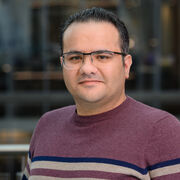
Dr. Seyed Mojtaba Hoseyni is a Lecturer in Process Safety and Loss Prevention at the School of Chemical, Materials and Biological Engineering, University of Sheffield. Previously a Postdoctoral Research Associate at the same institution (2022-2024), he holds a PhD in Energy Engineering from Politecnico di Milano (2021). His research focuses on enhancing system resilience, risk assessment, and decision-making under uncertainty in engineering systems, particularly for decarbonization applications. Royal Academy of Engineering Global Talent (Exceptional Promise) in Chemical and Process Engineering His work spans hydrogen safety, climate change risk, nuclear engineering safety, and predictive maintenance. Recent publications emphasize integrating resilience metrics into HAZOP analysis and optimizing sensor placement for risk-informed decision-making. Teaching activities include the Hazards and Protections module (CPE61020). Specializes in RAMS (Reliability, Availability, Maintainability, and Safety) analysis Develops safety frameworks for hydrogen energy systems Applies advanced computational techniques to nuclear and industrial safety
Lianne Lefsrud serves as Associate Professor and Risk, Innovation, and Sustainability Chair (RISC) in the Department of Chemical and Materials Engineering at the University of Alberta's Faculty of Engineering. Her interdisciplinary research bridges engineering, social sciences, and policy to transform risk management practices across energy, mining, construction, and railroading industries, directly influencing regulations, building codes, and industry operations for sustainable development. Her academic credentials include: BSc in Civil Engineering (Cooperative Program), University of Alberta (1994) MSc in Interdisciplinary Civil & Environmental Engineering and Sociology, University of Alberta (1996) PhD in Strategic Management and Organization, Alberta School of Business (2014) Dr. Lefsrud's research centers on risk management frameworks for sustainability challenges. She examines hazard identification, social license to operate, and technology adoption drivers in high-hazard industries, with emphasis on prospective risk assessment (e.g., hydrogen infrastructure design) and retrospective analysis (e.g., microplastic pollution impacts). Her work integrates circular economy principles into energy systems while addressing unintended consequences across UN Sustainable Development Goals. Recent publications (2024-2025) demonstrate heavy focus on machine learning applications for rail and construction safety, hydrogen infrastructure risk analysis, and science denial mitigation. Key patterns show cross-industry adaptation of AI for incident prediction, regulatory gap analysis for emerging energy systems, and socio-technical approaches to reconcile sustainability goals with operational realities. Scientific recognition includes: Erb Post-Doctoral Fellowship (University of Michigan) Dow Sustainability Research Fellowship (Ross School of Business) Dr. Lefsrud mentors graduate students through industry-integrated projects like her Sustainable Design course where teams generated patents and city solutions. Her research secures Alberta Innovates funding with 1:4 industrial-to-federal matching, collaborating with Suncor, Transport Canada, and Canadian Standards Association. Grants target practical implementations including railcar inspection systems and hydrogen safety protocols. She co-founded Insight Risk Systems and leads the Lefsrud Lab, prioritizing inclusive teams with under-represented groups (women, Indigenous, LGBTQ2S+, neurodiverse) to tackle 'wicked problems' in sustainability. The lab leverages interdisciplinary partnerships across engineering, computer science, psychology, and environmental sociology for real-world risk management solutions.
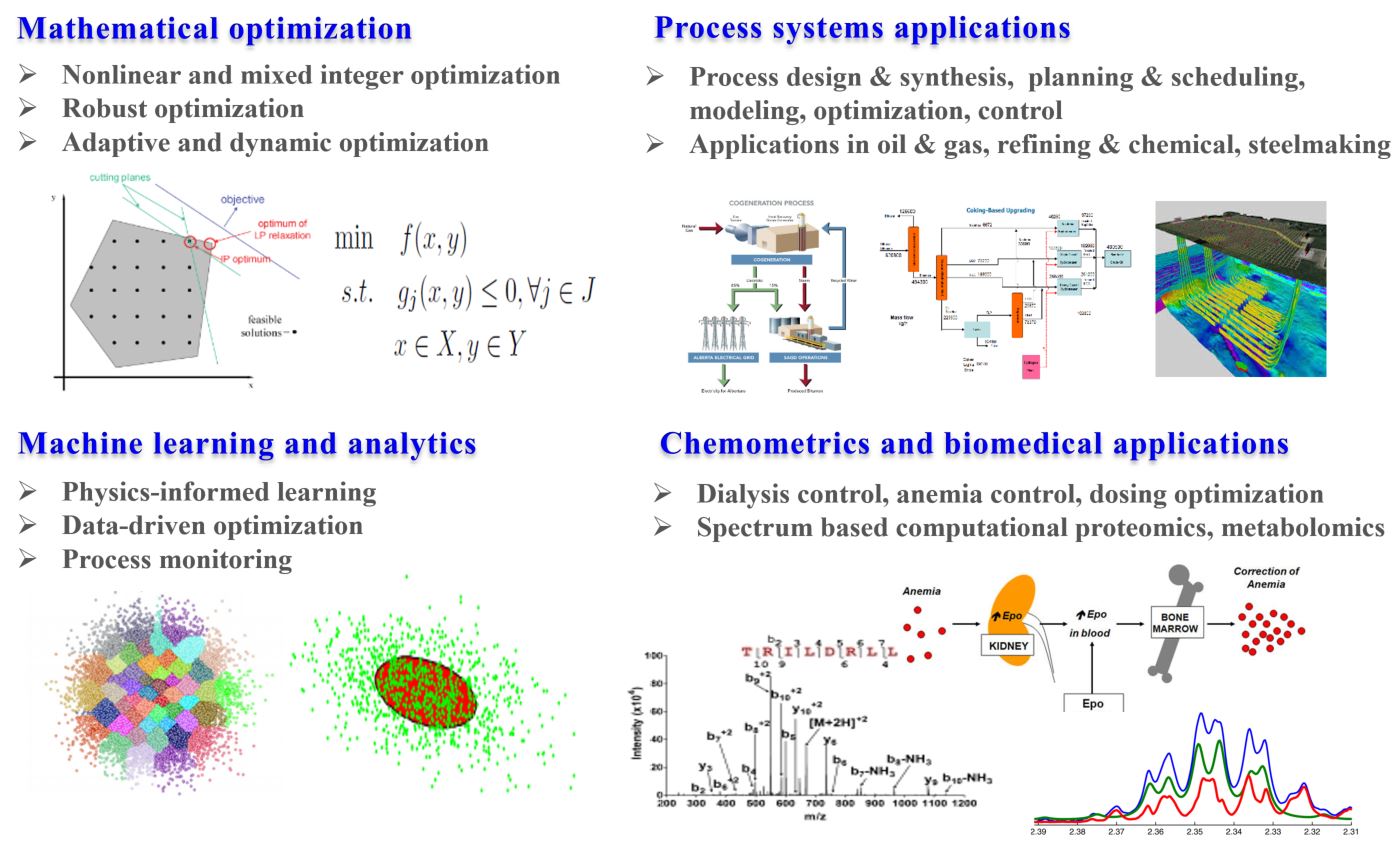
Zukui Li is a Professor in the Department of Chemical and Materials Engineering at the University of Alberta's Faculty of Engineering, where he leads a research group focused on mathematical optimization, machine learning, and process systems engineering. His work spans oil sands extraction, steel production, biomedical applications, and advanced optimization methods. Education: Ph.D. in Chemical Engineering, Rutgers University (2010) M.Sc. in Control Theory and Control Engineering, University of Science and Technology of China (2005) B.Sc. in Automatic Control, University of Science and Technology of China (2002) Postdoctoral Training: Princeton University (2010-2012) Research Focus: Dr. Li's research integrates mathematical optimization and machine learning for complex process systems. His primary areas include: Advanced optimization techniques (robust, stochastic, and distributionally robust optimization) Machine learning applications in process monitoring and biomedical systems Industrial applications in energy, manufacturing, and resource extraction Specific innovations include physics-informed ML for anemia treatment, adaptive optimization for steel production, and distributionally robust methods for uncertainty management. Publication Trends (2019-2023): Recent articles demonstrate a strong focus on uncertainty-aware optimization methods, with increasing integration of machine learning techniques. Dominant themes include distributionally robust optimization, adaptive decision-making under uncertainty, neural network approximations for complex constraints, and applications in industrial process control and biomedical systems. Theoretical advancements are consistently coupled with practical implementations in energy and manufacturing sectors. Research Group: Leads an active team developing optimization frameworks and machine learning solutions for process engineering challenges. Group website: Dr. Zukui Li's Research Group
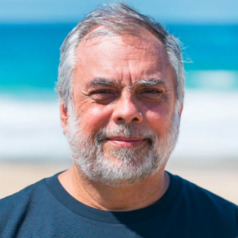
Gerhard (Gerry) F. Swiegers is a Professor of Chemistry at the University of Wollongong , with affiliations to the Australian Institute for Innovative Materials and Intelligent Polymer Research Institute . He holds an Australian Research Council Industry Laureate Fellowship (2023 - present) and has been a key figure in commercializing fundamental research, bridging academia and industry. Previously, he was a Principal Research Scientist at CSIRO (1998-2009) and has founded 7 spin-off companies, licensing 3 technologies. PhD in Chemistry (1991) , University of Connecticut BSc with Honours (1982) , Nelson Mandela University His research focuses on electrochemical catalysis , particularly hydrogen generation from water using renewable electricity. He explores electrocatalytic process engineering and synergistic effects in catalysis with interacting supports. His book Bioinspiration and Biomimicry in Chemistry (Wiley) received a Prose Award (2012). Recent publications highlight advancements in capillary-fed electrolysis for cost-competitive green hydrogen, DFT studies on oxygen evolution by manganese complexes, and electrochemical process modeling . His work spans materials engineering , renewable energy , and industrial electrochemistry . American Publishers Award (Prose Award) for Chemistry (2012) DuPont Innovation Awards (2011, 2008) for 'Intelliseed' and 'Datatrace' National Australia Bank Excellence in Agribusiness Award (2010) Copper Theft Campaign Award (2009) for 'Datatrace' Professor Swiegers has participated in $24.5 million of competitive academic grants and is actively supervising PhD students in electrochemical engineering. His inventions are deployed in pharmaceuticals, energy, and agriculture industries through 66 patent families and 436 individual patents .
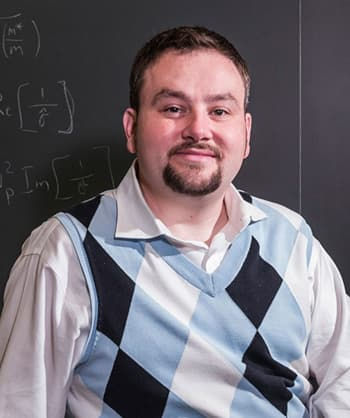
Kenneth Burch is the John H. Rourke Professor of Physics and Chairperson of the Department of Physics at Boston College. He holds a Ph.D. from the University of California at San Diego, with prior degrees from UC Santa Cruz. His research focuses on spectroscopic investigations of novel solids, interfaces, and nano-materials, particularly in topological insulators, unconventional superconductors, and 2D atomic crystals. His work explores phenomena such as spin/valleytronics, thermoelectrics, and magnetic proximity effects. Education: B.S., University of California at Santa Cruz M.S., University of California at San Diego Ph.D., University of California at San Diego Research Interests: His studies emphasize the interplay between electronic structure, magnetism, and light-matter interactions in quantum materials. Key areas include: 2D van der Waals heterostructures Magnetic and topological phase transitions Ultrafast carrier dynamics in photodoped systems Design of novel materials for energy and sensing applications Recent Work Trends: Recent publications highlight advancements in layered magnetism (e.g., Cr2Te3 ferromagnetism), correlated insulators (La2O3Mn2Se2), and ultrafast dynamics in Mott insulators. His work often integrates optical spectroscopy, nanofabrication, and theoretical modeling to uncover emergent phenomena. Labs & Collaborations: His research group focuses on experimental condensed matter physics, with access to advanced facilities for nanoscale material synthesis and characterization. Collaborative projects include developing graphene-based sensors for environmental monitoring and studying topological phases in kagome lattices.
Professor Kenneth S Schweizer is the G. Ronald and Margaret H. Morris Professor of Materials Science and Engineering, and holds concurrent professorships in Chemistry, Chemical and Biomolecular Engineering, and the Materials Research Laboratory at the University of Illinois at Urbana-Champaign (UIUC). He earned his B.S. (summa cum laude) from Drexel University and his Ph.D. in Physics from UIUC. His research focuses on statistical mechanics of soft materials, including polymers, colloids, and complex fluids, with emphasis on their thermodynamics, phase transitions, and nonlinear rheology. Key contributions include theories of glass transition dynamics, nanoparticle-polymer suspensions, and vitrimer networks. Schweizer has received prestigious awards such as the American Academy of Arts and Sciences membership (2021), APS Polymer Physics Prize (2008), and Hildebrand Award (2016). He has led major NSF-funded initiatives, including the Nanoscale Science and Engineering Center for Directed Assembly of Nanostructures. His work bridges fundamental theory and practical material design, addressing challenges in energy storage, biomaterials, and nanotechnology. Research interests span structural organization in soft materials, dynamic arrest phenomena, and the interplay between thermodynamics and relaxation processes. Recent studies explore ion transport in polymerized ionic liquids, activated dynamics in colloidal suspensions, and elastic properties of vitrimers. His theoretical frameworks, such as elastically collective activated dynamics and self-consistent hopping models, provide predictive tools for material innovation. Teaching and advising excellence is highlighted by UIUC awards including the 2022 Campus-wide Award for Excellence in Graduate Teaching. Schweizer’s labs and collaborations involve interdisciplinary teams addressing cutting-edge topics like biomolecular condensates and nanoconfined systems.
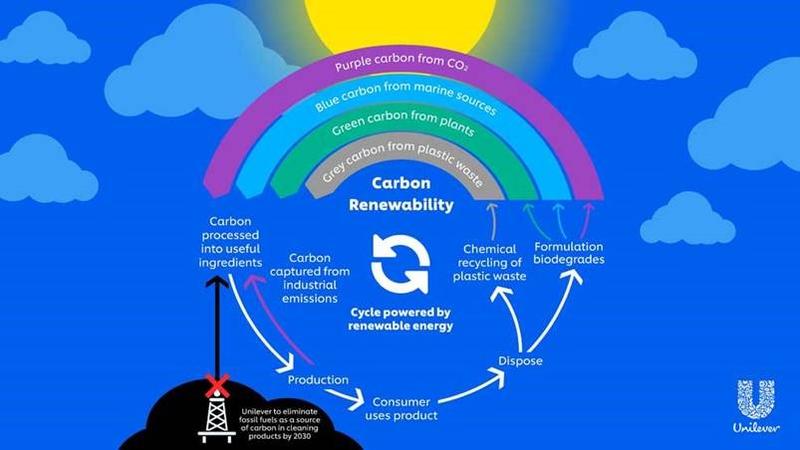
Professor Charlotte Williams is a leading academic in sustainable materials science at the University of Oxford. Her research focuses on developing catalysts to transform renewable resources and CO₂ into polymers, aiming to replace petrochemicals in scalable materials production. She collaborates with Unilever on the Clean Future initiative, pioneering recyclable and biodegradable polymers for consumer products. Her work was recognized with the 2021 Unilever Clean Future Supplier Brilliance Award, jointly awarded with Professors Rosseinsky and Cooper. Williams’ research spans heterodinuclear catalyst design, ring-opening copolymerization, and chemical recycling of polymers. She leads a multidisciplinary team including scientists, engineers, and policy experts to decarbonize chemical supply chains, contributing to the UK’s net-zero goals. Key collaborations include the EPSRC Prosperity Partnership with the Universities of Liverpool and Oxford, focusing on low-carbon laundry detergent materials. Education: Not explicitly detailed in text. Grants: EPSRC Prosperity Partnership (2021–2026), Unilever-funded projects. Labs/Teams: Collaborations with Liverpool University and industry partners like Unilever. Future Work: Expanding applications of CO₂-derived polymers in consumer goods and advancing recyclable materials. Her publications emphasize catalyst innovation, sustainable polymer synthesis, and materials lifecycle analysis, reflecting her commitment to bridging academic research with industrial sustainability challenges.
R. D. Cusick is an Associate Professor in the Department of Civil & Environmental Engineering at the University of Illinois at Urbana-Champaign. He earned his B.S. from the University of California, Riverside (2005), and his M.S. and Ph.D. from Pennsylvania State University (2010 and 2013). His research focuses on advancing sustainable water treatment technologies by integrating electrochemical processes with energy systems and nutrient recovery from wastewater. Dr. Cusick also serves on multiple professional committees, including the Demographics Committee of the Association of Environmental Engineering and Science Professors. Education: Ph.D. Environmental Engineering, Pennsylvania State University, 2013 M.S. Environmental Engineering, Pennsylvania State University, 2010 B.S. Environmental Engineering, University of California, Riverside, 2005 Research Interests: Electrochemical water treatment, nutrient recovery from wastewater, process modeling, and energy-water-environment sustainability. His work emphasizes developing technologies to recover nutrients (e.g., phosphorus) and energy from wastewater while reducing environmental impacts. Professional Activities: Member of the American Chemical Society, Electrochemical Society, Water Environment Federation, and the International Working Group for Capacitive Deionization. He chairs the Energy-Water-Environment Sustainability Program and serves on several departmental and national committees. Awards: W. Wesley Eckenfelder Graduate Research Award (2013) Penn State Alumni Association Dissertation Award (2013) Dow Sustainability Student Challenge Award (2012) Grants & Consulting: Active consulting roles with companies like Island Water Technology and Aquapod. His research is supported by grants from NSF, DOE, and the Bill & Melinda Gates Foundation. Labs & Teams: Leads the Cusick Lab, focusing on electrochemical technologies and nutrient recovery. Collaborates with industry partners to advance scalable solutions for water infrastructure challenges.
Muralee Murugesu is a Full Professor and Associate Vice-Rector of Innovation, Partnership & Entrepreneurship at the University of Ottawa's Department of Chemistry and Biomolecular Sciences within the Faculty of Science. His research focuses on designing nanoscale inorganic materials to study magnetic, conductive, and optical properties, with emphasis on molecular magnets, hybrid materials, and quantum applications. Notable projects include the development of single-molecule magnets (SMMs), lanthanide-based cluster-aggregates, and energetic materials. The Murugesu Group explores applications in quantum computing, molecular-scale electronics, and luminescence thermometry. Education details are not explicitly provided, but his academic career spans over two decades, initiating the Murugesu research program in 2006. Research interests include inorganic/organometallic chemistry, molecular magnetism, quantum properties, and nanomaterials. Key techniques used are X-ray diffraction, NMR, and SQUID magnetometry. Recent publications highlight advancements in SMMs, hybrid fullerene/carbon nanotube systems, and lanthanide-based optical/thermometric materials. Articles emphasize magnetic relaxation, luminescence thermometry, and energy transfer processes in nanostructured systems. The group's work intersects energy storage (e.g., photocatalytic hydrogen production), security (fingerprint detection), and quantum technologies. While no awards are listed, the research portfolio demonstrates significant contributions to materials science and magnetism. Advising and grants are not detailed here, though the group’s sustained output suggests strong institutional and external support. The lab’s focus on cluster-aggregates and molecular-scale devices reflects a vision for next-generation optomagnetic and energy systems.
Jennifer Dunn is a Professor of Chemical and Biological Engineering at Northwestern University, with a courtesy appointment in Mechanical Engineering. She serves as Director of the Center for Engineering Sustainability and Resilience and Associate Director of the Northwestern-Argonne Institute of Science and Engineering. Her research focuses on sustainability, energy systems, and environmental impacts of emerging technologies such as hydrogen, biofuels, and nutrient recovery. Dunn leads the Systems Analysis Research Group, applying techno-economic, life-cycle, and materials flow analyses to evaluate low-carbon technologies and circular economy strategies. Education includes a Ph.D. in Chemical Engineering from the University of Michigan, an M.S.E. in Sustainable Chemical Engineering Systems from the University of Michigan, and a B.S. in Chemical Engineering from Purdue University. Her research interests span sustainable mineral supply chains, water treatment innovations, and decarbonization pathways. Recent work emphasizes methane reduction strategies, critical mineral policy, and circular nitrogen economies. Dunn has contributed to National Academies committees and serves as an Associate Editor for the SAE International Journal of Sustainable Transportation. Labs/Teams: Dunn Lab, Center for Engineering Sustainability and Resilience, and the Northwestern-Argonne Institute of Science and Engineering.
Lee Rybeck Lynd is the Paul E. and Joan H. Queneau Distinguished Professor of Engineering and Adjunct Professor of Biology at Dartmouth College's Thayer School of Engineering. He has been a member of the Dartmouth faculty since 1987 and serves as Co-Founder and Chief Technology Officer of Terragia Corporation, Consolidated Bioprocessing Team Leader for the DOE Center for Bioenergy Innovation, and Director of the Advanced Second Generation Biofuel Laboratory. Professor Lynd's research spans microbial cellulose utilization, metabolic engineering, innovative biomass processing technologies, and sustainable bioenergy futures. His work focuses on cost-effective production of cellulosic biofuels that benefit people and the environment, with particular emphasis on consolidated bioprocessing (CBP) which offers potential for transformative cost reductions in biofuel production. His research integrates molecular biology, microbiology, and chemical/biochemical engineering to advance both fundamental understanding and applied capability in bioenergy. His publication record includes over 300 papers with more than 42,000 citations and an h-index of 88. Recent research trends show increasing focus on sustainability metrics, carbon-negative biofuels, and the integration of bioenergy systems with food production and environmental protection. His work increasingly addresses the socio-economic dimensions of bioenergy deployment alongside technical innovations. Charles Thom Award, Society for Industrial Microbiology and Biotechnology (2021) Thayer Distinguished Research Award for Faculty (2020) Lemelson-MIT Sustainability Award (2007) AAAS Fellow (2012) Charles D. Scott Award for Distinguished Contributions (2005) Professor Lynd has advised numerous graduate students and postdoctoral researchers, currently mentoring several PhD candidates including Nick Cervenka, Madeline Hoey, Shu Huang, Matthew Kubis, and Bishal Sharma. His research has been supported by multiple funding sources including the Department of Energy, USDA NIFA, Sao Paulo Research Foundation (Brazil), and The Link Foundation. He has testified before the US Senate three times and has been featured in Wired, Forbes, and Nova. He leads the Lynd Research Lab which includes postdoctoral associates, graduate students, technicians, and undergraduate researchers. The lab collaborates closely with the DOE Center for Bioenergy Innovation and maintains an international network of collaborators. Current research focuses on consolidated bioprocessing, metabolic engineering of cellulolytic microbes, and sustainable bioenergy futures that integrate environmental, economic, and social considerations.
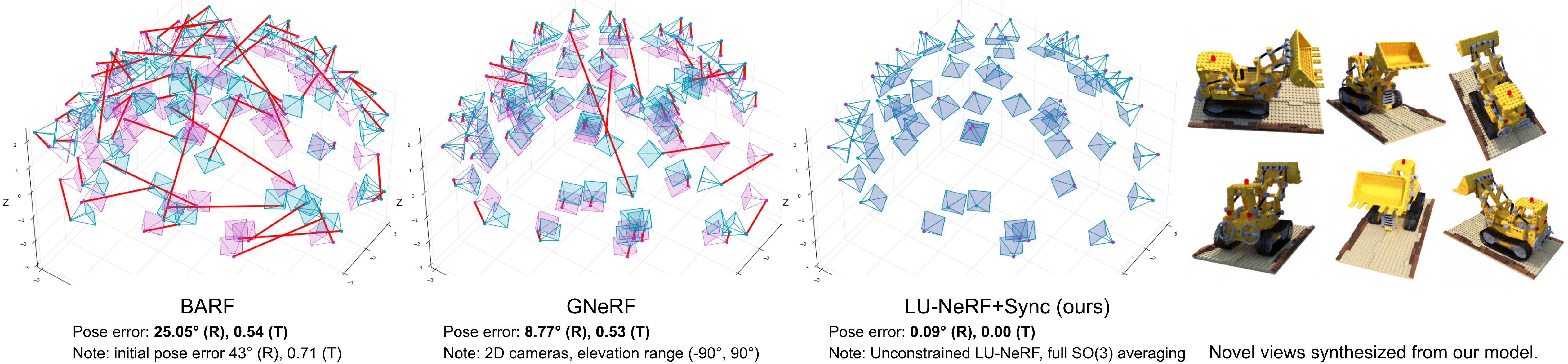
Zezhou Cheng is an Assistant Professor of Computer Science at the University of Virginia, leading the Computer Vision Lab. He holds a Ph.D. from UMass Amherst (2023), a postdoctoral position at Caltech, and a Bachelor's degree from Sichuan University (2015). His research focuses on computer vision, machine learning, and their applications in ecology, materials science, and autonomous systems. Key areas include 3D understanding, self-supervised learning, and AI-driven ecological monitoring. He has received awards such as the Best Synthesis Award (2020) and Outstanding Reviewer (CVPR 2021). His work spans publications in top venues like CVPR, ICCV, and ECCV, addressing challenges in 3D reconstruction, generative models, and ecological data analysis. Education: Ph.D. in Computer Science, UMass Amherst (2023) Bachelor's Degree, Sichuan University (2015) Postdoctoral Researcher, Caltech (advised by Georgia Gkioxari) Research Highlights: Developed LU-NeRF for unposed scene reconstruction and camera pose estimation Contributed to AI for ecology via bird roost detection using weather radar data Advanced 3D representation learning through procedural programs and self-supervised techniques Awards & Recognition: Outstanding Reviewer, CVPR 2021 Best Poster Award, New England Computer Vision Workshop 2019 National Scholarship (China, 2014 and 2016) His lab explores cutting-edge topics in computer vision, with a focus on interdisciplinary applications. Teaching roles include leading Caltech's AI Bootcamp and serving as a Teaching Assistant at UMass Amherst. Industry collaborations include internships at Google Research, Snap, and Amazon.
Dr. Fengwang Li is a Senior Lecturer at the School of Chemical and Biomolecular Engineering, University of Sydney, specializing in electrochemical energy systems and CO₂ conversion. He joined in 2020 after completing postdoctoral research at the University of Toronto, focusing on CO₂ capture and utilization. His PhD from Monash University (2017) earned the Mollie Holman Medal for best thesis. Research interests include electroactive materials, green hydrogen/ammonia, and sustainable chemical synthesis. He leads projects on CO₂ electrolysis catalysts and reactor design, utilizing operando/in-situ techniques for material characterization. Collaborations span institutions globally, including the University of Warwick and California Institute of Technology. Awarded the 2023 Eureka Prize for Outstanding Early Career Researcher, he has published over 90 articles in top journals like Nature , Science , and Angewandte Chemie . His work aims to economically viable CO₂-to-fuel conversion, advancing renewable energy and carbon neutrality. Key grants include the ARC DECRA (2019) and University of Sydney SOAR Prize (2023). He co-leads the GETCO2 Centre and is affiliated with Sydney Nano Institute and the Net Zero Institute.
Liqiu Hu is a Doctoral Researcher at the Laboratory of Natural Materials Technology , affiliated with the Faculty of Science and Engineering at Åbo Akademi University. Their research focuses on bio-based materials , polymerization techniques , and nanocellulose applications , contributing to Sustainable Development Goals like responsible consumption and climate action. Key research areas: Lignin, Nanocellulose, Polymerization, Bio-based films, Green chemistry, Biocomposites Recent work trends: In-situ polymerization, Pickering emulsions, Drug delivery systems, Agricultural waste upcycling, Aqueous dispersion processing Collaborations include researchers from Åbo Akademi University and TAPPI Press. Publications span from 2017 to 2025, highlighting innovations in biopolymer interfaces and sustainable packaging . The laboratory's fingerprint indicates strong alignment with lignin (100%), nanocellulose (75%), and polymerization (66%) research.
Professor Hao Wang is a distinguished academic and researcher in materials science and manufacturing at the University of Southern Queensland (UniSQ). He holds the position of Professor (Materials and Manufacturing) within the School of Engineering and serves as the Theme Leader for Functional Materials at the Centre for Future Materials. His career spans over 30 years, with a PhD from the University of Queensland (2001) and a GCertEd from Queensland (2005). Professor Wang’s research focuses on advanced materials, including carbon fiber composites, flame retardants, CO2 conversion technologies, and green concrete (geopolymer). He has authored over 450 papers, earning a Google Scholar H-index of 100 and recognition as a Clarivate Highly Cited Author (2023) and Top 2% World Scientist. He leads the Asian-Australasian Association for Composite Materials and was Chair of the 2018 Asian-Australasian Conference on Composite Materials. His recent publications emphasize sustainable materials, recyclable polymers, and fire-safe composites. Over 150 doctoral students have been supervised under his mentorship, focusing on topics like CO2 electrolysis, geopolymer concrete, and flame-retardant epoxy resins. His work bridges academia and industry, addressing global challenges in materials innovation and environmental sustainability.