Professor P. Narayana is a faculty member in the Department of Electrical & Computer Engineering at the University of Houston. His research focuses on biosensor technology, nanotechnology, and diagnostic systems, with an emphasis on developing innovative solutions for point-of-care diagnostics and biomarker detection. He holds an NSF Career Award and has contributed to advancements in luminescent materials, SERS-based assays, and multiplex diagnostic platforms. His work integrates interdisciplinary approaches from biomedical engineering, materials science, and analytical chemistry to create practical tools for infectious disease monitoring, chronic condition management, and molecular diagnostics. Recent efforts include smartphone-readable lateral flow assays and nanophosphor-based reporters for high-sensitivity detection. Key achievements include the development of multicolor multiplex assays and magnetofection techniques using functionalized nanoparticles. His research addresses critical gaps in affordable, rapid diagnostic technologies for clinical and home use.
Dr. Gary Lawrence is an Assistant Professor of Molecular Neurobiology in the School of Biotechnology at Dublin City University (DCU). His research focuses on functional neurobiology, particularly the role of neurotoxins like botulinum in understanding nervous system function and therapeutic applications for peripheral neuropathies. He holds a doctorate from Imperial College London, where he studied SNARE proteins in neurotransmitter release. Lawrence joined DCU in 2003 as a Research Lecturer and transitioned to his current role in 2023. His work investigates botulinum toxin effects on peripheral nerve types (motor, sympathetic, parasympathetic, sensory) and processes like synaptic transmission, neuropeptide exocytosis, and TRP channel signaling in pain pathways. Education: PhD in Molecular Neurobiology from Imperial College London, followed by postdoctoral research there. Professional trajectory includes foundational roles in DCU’s International Centre for Neurotherapeutics established by Prof. Oliver Dolly. Research interests emphasize botulinum toxin mechanisms, TRP channels in pain signaling, and membrane trafficking. Recent studies explore how TRP channels encode pain intensity and are modulated by neurotrophins. His lab uses primary neuron cultures, in vivo models, and toxin-based tools to dissect neuron-specific exocytosis pathways and SNARE protein roles. Publications highlight advancements in toxin-based therapeutics, neuron type-specific effects, and pain signaling mechanisms. Collaborative efforts focus on translating neurotoxin research into clinical applications for neuropathic pain and autonomic disorders. Lab/Team: Part of the International Centre for Neurotherapeutics at DCU, specializing in neurotoxin research and neuropharmacology.
Paschalis Antonis is a Professor at the Department of Informatics and Telecommunications, National and Kapodistrian University of Athens. His research focuses on hardware architectures for space systems, embedded systems, and image compression standards such as CCSDS. He specializes in FPGA implementations, radiation-hardened electronics, and biomarker development for immunogenic responses to cancer therapies. Research Interests: High-performance FPGA-based hardware accelerators Space-grade embedded systems and data compression CCSDS standard implementations for aerospace applications Molecular biomarkers for immunotherapy response prediction Recent Trends: His work emphasizes resilient systems against radiation effects (e.g., SEUs in FPGAs), high-throughput image compression cores for space missions, and interdisciplinary research linking computational hardware with medical diagnostics via prothymosin α analysis. Grants & Labs: Leads the ASPIICS coronagraph project for ESA's Proba-3 mission, involving advanced optical instrumentation and formation flying systems. Collaborates on COTS FPGA utilization in extreme environments.
Kwahun Lee is an Assistant Professor in the Department of Chemistry and Chemical Biology at Stevens Institute of Technology, part of the Charles V. Schaefer, Jr. School of Engineering and Science. His research focuses on developing nanoparticle-based probes for in situ imaging of biological processes and modeling biomolecular phase behaviors. He employs interdisciplinary approaches combining biochemical assays, spectroscopy, and microscopy to understand interfacial dynamics relevant to cancer immunotherapy and neurodegenerative diseases. Education : PhD (2018) in Chemistry from Indiana University Bloomington; BS (2011) in Chemistry & Chemical Education from Seoul National University. Research interests include nanoparticle synthesis, biomaterials design, and quantitative imaging techniques. His lab explores applications in targeted drug delivery and therapeutic strategies. Notable achievements include the 2021 ASEE Postdoctoral Fellowship and multiple travel awards for conference presentations. Awards : 2021 ASEE Postdoc Fellowship, 2016 Outstanding Oral Presentation Award (3rd Material Symposium), 2015 HHMI Fellowship Nomination. Prof. Lee actively mentors students and postdocs, emphasizing interdisciplinary training. He serves on institutional committees such as the SES Working Group on PhD Recruitment and the Professional Development Committee. His work bridges nanotechnology with biomedical applications, with over 20 publications in high-impact journals like JACS , Nano Letters , and ACS Nano .
Dr. Mark Baillie is an Assistant Professor in the Department of Chemistry at the University of Arkansas at Little Rock. He also serves as Director of the STRIVE Program and the Mobile Institute on Scientific Teaching (MoSI) Workshop. His research focuses on Chemistry Education Research and Institutional Change Research, exploring how faculty training, teaching strategies, and student backgrounds impact STEM success. He holds a PhD in Organic/Medicinal Chemistry from Emory University and a BS from Bucknell University. Education highlights include a Post-Doctoral Fellowship in Chemical Biology at EPFL (Switzerland), an Emory University NSF Fellowship, and a Six Sigma Green Belt from General Electric. His work bridges educational innovation with organic chemistry expertise, addressing barriers to equitable STEM participation through programs like Learning Assistant initiatives and evidence-based teaching workshops. Research trends show a transition from medicinal chemistry (e.g., Enigmol anti-cancer agents) to STEM education analytics, using machine learning for classroom monitoring. Awards include multiple Student Faculty Appreciation Awards and recognition as a Rising Star in STEM education. His Baillie Research Group collaborates on institutional reforms and active learning frameworks, emphasizing student mindset and belongingness in STEM retention. Key Awards: Student Faculty Appreciation Award 2023 NSF Graduate Fellowship (2007–2008) Outstanding Teaching Assistant Award (2006) Advising/Grants: Leads workshops and programs without explicit grant mentions in provided texts. Labs/Teams: Directs the Baillie Research Group, focusing on education research and institutional change.
David Langer is an Associate Professor in the Department of Psychology at Suffolk University. He is currently on sabbatical during Spring 2025. His academic journey includes a PhD and MA from the University of California, Los Angeles, and a BA from Washington University in St. Louis. His research focuses on clinical child and adolescent psychology , with particular emphasis on shared decision-making , personalizing treatment planning , and psychosocial treatment processes . Funded by the National Institute of Mental Health, he investigates methods to improve treatment efficacy for youth depression and anxiety through family-clinician collaboration. His publications between 2011 and 2019 span youth mental health , family therapy , and therapeutic alliance . While no scientific awards are explicitly listed, his work highlights contributions to treatment personalization and shared decision-making in clinical settings. He teaches graduate and undergraduate courses including Clinical Practicum, Research Methods, and Behavioral Statistics, and maintains an office at 73 Tremont St., Room 8024, with contact via dlanger@suffolk.edu.
Audra Foggin is an Associate Professor in the Department of Social Work at Mount Royal University. She holds an MSW and BSW from the University of Calgary and a BA from the University of Lethbridge. Her work focuses on anti-racism, Indigenous knowledges, decolonial pedagogy, and community collaboration in social work practice and education. She is a member of the Alberta College of Social Workers (ACSW) and a Registered Social Worker (RSW). Education Background: MSW, University of Calgary BSW, University of Calgary BA, University of Lethbridge Research Interests: Audra prioritizes decolonizing social work education through frameworks like Anitopisi, addressing systemic racism in child welfare, and integrating Indigenous knowledges into professional practice. She emphasizes anti-oppressive methodologies and leadership in interprofessional settings. Recent Scholarship Trends: Her publications (2020) explore truth-telling in reconciliation, allyship in Indigenous practices, and anti-racist pedagogies. Presentations include discussions on anti-racism in Alberta and community collaboration via the Changemakers Studio’s equine therapy project. Awards/Grants: No specific awards or grants are listed, but her work aligns with MRU’s Indigenization and decolonization initiatives. Advising: No formal advisee names are provided in the text. Labs/Teams: Engagement with the Changemakers Studio highlights applied community-based projects.
Shrikant Bangdiwala , Professor at McMaster University 's Faculty of Health Sciences in the Department of Health Research Methods, Evidence, and Impact , leads groundbreaking research in disorders of gut-brain interaction, cardiovascular epidemiology, and statistical methodology. 2025 Research Focus: Gut-brain disorder subtyping, dietary pattern analysis, and machine learning applications in clinical trials 2024 Innovations: Development of GROOVE tool for symptom overlap visualization and exposome-DNA damage correlation studies Longitudinal Impact: 20+ years tracking GI comorbidities, cardiovascular outcomes, and educational interventions Research Clusters Gut-Brain Disorders: Prevalence modeling across 26+ countries, symptom stratification, and psychological comorbidities Cardiovascular: Mortality prediction models, antithrombotic risk assessment, and ACE-inhibitor effectiveness Epidemiological Innovation: Hybrid trial adjudication systems, statistical frameworks for complex interventions, and exposome analysis tools Methodological Expertise Specializes in biostatistical frameworks for cardiovascular trials, machine learning detection of trial irregularities, and epidemiological modeling of gut-brain disorders through the Rome Foundation Global Epidemiology Study.
Vayu Hill-Maini is an Assistant Professor in the Department of Bioengineering at Stanford University, focusing on microbial systems engineering and their applications in food technology and human health. Their research bridges synthetic biology with microbiome studies. Academic Rank: Assistant Professor Institution: Stanford University Department: Bioengineering Research interests span: Synthetic biology tools for microbial upcycling Gut microbiome dynamics and xenobiotic metabolism Fermentation-based food innovations Interspecies pathway modulation Recent publications highlight interdisciplinary work combining: Waste-to-food conversion using edible fungi Gut microbial enzyme discovery Therapeutic microbiome engineering Culinary process microbiology
Sue Widdicombe is a Senior Lecturer in the Department of Psychology within the School of Philosophy, Psychology and Language Sciences at the University of Edinburgh. She teaches Social Psychology at second-year undergraduate level, Qualitative Methods in Psychology at third-year level, and supervises final honours projects. At postgraduate level, she instructs Qualitative Methodologies in Psychological Research and Problem-based Social Psychological Research while supervising MSc projects. Her academic profile combines rigorous teaching with active research supervision and methodological innovation. Her research program centers on discursive psychology and conversation analysis as frameworks for examining language in social interaction. Key foci include identity construction in everyday talk, the delicate management of self-praise and authenticity claims, resistance to identity ascriptions, and negotiation of agency. She investigates these processes across diverse contexts including youth subcultures, cross-cultural interactions, religious identity, health communication, and climate activism. Her methodological approach emphasizes how psychological phenomena emerge through interactional practices rather than pre-existing mental states. Analysis of her fifteen most recent publications reveals consistent application of discursive and conversation analytic methods to examine identity work across social domains. Her work demonstrates increasing engagement with contemporary societal issues, particularly climate activism in media contexts, while maintaining theoretical rigor in identity research. The publications span clinical health settings (ART adherence), digital communities (online emo groups), cross-cultural fieldwork (Syria), and broadcast media (climate interviews), showcasing methodological adaptability. Widdicombe currently supervises four PhD students: Paula Greenlees, Lasse Schaefer, Kayleigh Smith, and Miranda Heath. Her supervision focuses on discursive psychological approaches to self and identity, climate activism, and psychology in social interaction. She has established collaborative networks with scholars including Cristina Marinho, Rahul Sambaraju, and Eric Laurier, leading to interdisciplinary projects that bridge academic research and practical applications in healthcare, media, and social justice contexts. Her research group engages with real-world interactional data through workshops on telephone helplines, HIV medication adherence, and racism reporting. Current initiatives include a four-country feasibility study on public engagement with climate news (UK, India, Portugal, Brazil) and investigations into 'trial by social media' regarding domestic violence allegations. These projects emphasize the practical utility of conversation analysis in addressing pressing social phenomena while advancing theoretical understanding of identity construction.
Dr. Alejandro Melendez-Calderon is a Senior Lecturer at the University of Queensland (UQ), holding dual affiliations with the School of Electrical Engineering and Computer Science (primary appointment) and the School of Health and Rehabilitation Sciences. He also serves as a Principal Research Fellow at the Jamieson Trauma Institute, leading the Rehabilitation and Outcomes theme. With over 19 years of interdisciplinary experience in robotics, biomedical engineering, and clinical research, his work focuses on human augmentation technologies, neuromuscular control, and neurorehabilitation engineering. He earned his PhD in Robotics and Biomedical Engineering from Imperial College London (2011) and has held roles at institutions such as Northwestern University, ETH Zurich, and industry leader Hocoma AG. His lab, the NeuroEngineering, Rehabilitation and Medical Robotics Lab at UQ, develops innovative solutions for movement disorders, wearable robotics, and sensorimotor rehabilitation. Research interests include human-robot interaction strategies, computational modeling of motor control deficits, and clinical translation of assistive technologies. His recent work emphasizes adaptive robotic systems for gait training, competition-driven physical effort modulation, and sensor-based assessments for stroke and spinal cord injury populations. Publications highlight contributions to movement smoothness metrics, robotic exoskeleton control algorithms, and interdisciplinary frameworks for sensorimotor evaluation. Collaborations span academic, clinical, and industrial partners to bridge engineering innovation with clinical needs.
Janet Gunter is an Associate Professor of Clinical Occupational Therapy and Director of the Graduate Certificate Program in Sensory Processing and Sensory Integration at the University of Southern California's Division of Occupational Science and Occupational Therapy. She also serves as Director of Clinical Operations at Therapy West, Inc., overseeing three clinical sites and supervising administrative and therapeutic staff. Her expertise spans pediatric occupational therapy, specializing in Autism Spectrum Disorders, neuromotor disorders, and feeding challenges. She holds a BS (1994), MA (1995), and OTD (2010) in Occupational Therapy from USC. Education: Doctorate of Occupational Therapy (OTD), 2010, USC Master of Arts in Occupational Therapy, 1995, USC Bachelor of Science in Occupational Therapy, 1994, USC Research Interests: Sensory integration theory and intervention Autism Spectrum and Fetal Alcohol Spectrum Disorders Early intervention programs for developmental disabilities Role of sensory-enriched environments in child development Publications highlight her work on group-based interventions like the Therapy West Integrated Specialized Play Program (TWISPP) and studies evaluating interdisciplinary early intervention programs. Her 2016 study demonstrated significant improvements in developmental outcomes for children with sensory processing difficulties. Though no formal awards are listed, her leadership roles reflect recognition of her contributions. Advising and Grants: No specific advisees or grant details are mentioned, but her clinical leadership at Therapy West and academic roles imply active involvement in program development and supervision. Labs/Teams: Leads clinical operations at Therapy West, Inc., and directs USC's sensory integration certificate program.
Dr. Maria Grazia Turri is a Senior Lecturer in Creative Arts and Mental Health at Queen Mary University of London, co-directing the MSc program collaborating between the Centre for Psychiatry and the Department of Drama. Affiliated with the Wolfson Institute of Population Health, she holds dual expertise as a psychiatrist, psychoanalytic psychotherapist, and theatre scholar. Her roles include teaching, research, and clinical practice. Educated in Padova (Italy) for medicine, she earned a DPhil in Psychiatry from Oxford and a PhD in Drama from Exeter. She trained in medical psychotherapy and practised for 15 years in the NHS, including as a Consultant Psychiatrist in Medical Psychotherapy. Her research bridges psychoanalytic theory with theatre studies, focusing on processes like identification in performance and the role of laughter in Commedia dell’Arte. She also explores creative arts in mental health interventions, including social prescribing and arts-based therapies. Her teaching spans critical mental health, psychoanalysis, and theatre practice, with supervision of MSc and PhD students. Public engagement includes the annual 'Mad Hearts' conference and collaborations with arts organizations to enhance mental health through the arts. She co-founded the MadHeartists collective and advocates for integrating artistic practices into mental health care systems.
Prof. Diana Mager is an Adjunct Professor in the Department of Pediatrics (Faculty of Medicine & Dentistry) and holds a primary appointment as Professor in the Department of Agricultural, Food & Nutritional Science (Faculty of Agricultural, Life & Environmental Sciences) at the University of Alberta. Her research focuses on pediatric nutrition, particularly addressing sarcopenia in children with chronic liver disease, outcomes following organ transplantation, and optimizing gluten-free dietary guidelines for celiac disease patients. She teaches advanced clinical nutrition courses (AFNS/NUTR 568, 578, 468, 476) emphasizing practical nutritional care for diverse populations. Her work integrates clinical, biochemical, and dietary interventions to improve health outcomes in pediatric and adult populations with chronic conditions. Key areas include muscle wasting syndromes, metabolic disorders, and the impact of dietary patterns on disease progression. She has contributed to evidence-based guidelines for pediatric liver transplant patients and pioneered studies on exercise rehabilitation in transplant populations. Publications highlight translational research on sarcopenia diagnostics, nutritional management of celiac disease, and the role of medium-chain triglycerides in neurological recovery post-infection. Her interdisciplinary approach addresses gaps in nutrition screening tools for malnutrition-sarcopenia syndromes and evaluates practical bioimpedance techniques for clinical use.
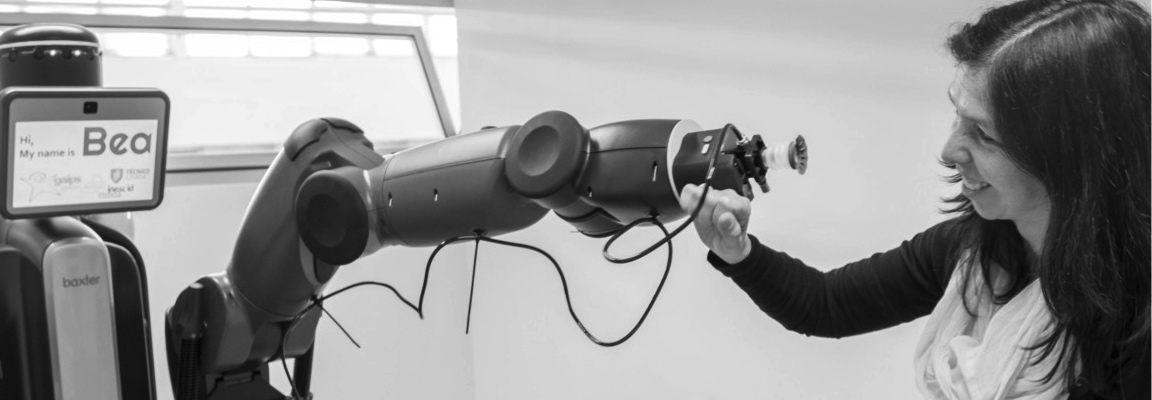
Ana Paiva is a Full Professor in the Department of Computer Science and Engineering at the University of Lisbon's Instituto Superior Técnico (IST), and coordinator of the GAIPS research group at INESC-ID, now focused on AI for People and Society. She holds a Katherine Hampson Bessell Fellowship at Harvard University's Radcliffe Institute for Advanced Study. Her work centers on creating socially intelligent AI and robots through agent-based approaches, emphasizing emotional and cultural competencies. Key research areas include Social Robotics, Affective Computing, and Pro-social Computing. She leads projects like the EU-funded ANIMATAS ITN network and Portugal's AMIGOS/AGENTS initiatives. Notable contributions include the FAtiMA Toolkit for developing emotional AI agents and pioneering work in hybrid human-machine societies. She has received awards such as the EurAI Fellowship (2019) and the Blue Sky Ideas Award at AAAI’18. Her research explores how machines can foster prosocial behaviors like altruism and cooperation, with applications in education, therapy, and ethical AI design. Her advising includes PhD students like Fernando Santos (Victor Lesser Award winner) and Elmira Yadollahi (ACM award recipient). Current projects focus on inclusive robotics for mixed-ability classrooms and ethical frameworks for human-robot collaboration.