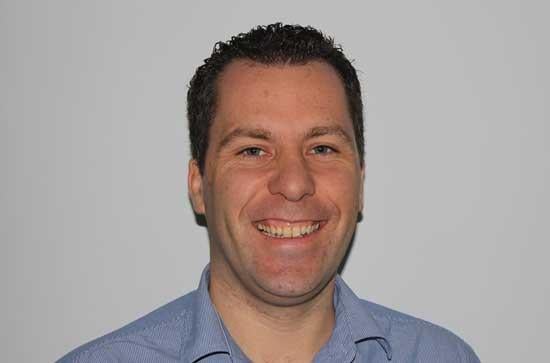
Waqar Shahid Qureshi is a Lecturer in Robotics and Automation at the Department of Mechanical & Industrial Engineering, National University of Ireland, Galway. His research focuses on robotics, automation, deep learning applications in agriculture and infrastructure, and cyber-physical systems. He has published extensively in journals like Automation in Construction and Precision Agriculture, with notable work on pavement condition rating using deep learning and crop classification systems. His research has garnered 1,136 citations and an h-index of 17. Key research areas include: Pavement engineering and infrastructure maintenance Deep learning methodologies for agriculture (crop/weed classification, drone-based monitoring) Cyber-physical system optimization in industrial settings Image processing for agricultural automation Recent publications emphasize smart agriculture solutions and infrastructure health monitoring, reflecting his interdisciplinary approach to solving real-world engineering challenges.
Dr. Bhaskar Murari is an Assistant Lecturer in the Department of Engineering Technology at Setu Institute of Technology. His career includes prestigious roles such as Professor and Head of Department at Vellore Institute of Technology (2019–2023), and prior faculty positions since 2007. He holds a PhD in Biomedical Instrumentation from Indian Institute of Technology Delhi (2008) and a Master's from Birla Institute of Technology, Mesra (1999). His research focuses on fluorescence spectroscopy , biomedical sensors , and biomaterials , with contributions to sensor development for environmental monitoring and medical diagnostics. Key areas include sol-gel based biosensors, non-invasive glucose monitoring systems, and advanced materials characterization. Recent work explores nanotechnology integration with fluorescence techniques for point-of-care diagnostics. Dr. Murari has authored over 36 peer-reviewed articles, with notable publications in Biomedical Materials and Devices , RSC Advances , and Frontiers in Neuroscience . His work aligns with UN Sustainable Development Goals related to healthcare innovation and environmental sustainability. He currently mentors PhD students and actively collaborates internationally on biomedical engineering projects. Professional contributions include editorial roles in journals and leadership in engineering education reform. His lab develops innovative solutions in biomedical instrumentation and medical device prototyping, emphasizing interdisciplinary approaches.
Dr. Matthew Cannon serves as Lecturer in the Department of Applied Social Sciences at the University of Chester, affiliated with the Faculty of Applied Sciences and Technology. His research explores knowledge translation processes in social services, migration experiences, and peace education frameworks, with geographical focus on Ireland and European contexts. Educational background and qualifications are not explicitly detailed in available materials. Research interests center on migration dynamics, knowledge transfer in multi-agency environments, and educational approaches to peacebuilding in post-conflict societies. Recent publications address gender-based violence response systems and postgraduate research training. Longitudinal publication patterns indicate evolving focus from security studies toward contemporary social policy applications. Research on migration workshops demonstrates commitment to applied social science methodologies. Student supervision activities include postgraduate research guidance in social sciences domains. Grant acquisition and laboratory/team affiliations are not documented in available sources.
Dr. Md Shaheen Sarkar is a Lecturer in the Department of Applied Science at the Faculty of Applied Sciences and Technology. His research focuses on sustainable materials, catalytic processes, environmental chemistry, and nanomaterials. His work aligns with UN Sustainable Development Goals, particularly in pollution prevention and affordable clean energy. Key research areas include: Design of eco-friendly adsorbents for heavy metal removal using bio-waste derived polymers Development of heterogeneous nanocatalysts for organic synthesis reactions Optimization of photocatalytic systems for water treatment and energy applications Mechanical property prediction of polymers via machine learning His recent studies emphasize: Cellulose-based chelating ligands for industrial wastewater remediation Palladium and copper nanocatalysts for cross-coupling reactions Hydrogen production and storage technologies Research methodologies incorporate advanced material characterization, computational modeling, and eco-friendly synthesis approaches.
Ioannis Manolakis is a Lecturer in Chemistry at the Department of Life Sciences, Athlone Technological University (ATU) Sligo. He is a Principal Investigator at the Mathematical Modelling and Intelligent Systems for Health and Environment (MISHE) and the Precision Engineering Materials and Manufacturing Research Centre (PEM Research Centre). His research focuses on composite materials, particularly thermoplastics, carbon fiber-reinforced polymers (CFRPs), and their applications in biomedical, environmental, and marine sectors. He specializes in sustainable material processing, recycling of composites, and bio-inspired polymers for advanced applications such as antifouling coatings and 3D-printed implants. Education: Not explicitly stated in the text. Affiliations: PEM Research Centre, MISHE, ATU Sligo. His research interests span material science and polymer chemistry, with a focus on improving the recyclability and performance of composite materials. Notable areas include the use of recycled carbon fibers in CFRPs, development of biocompatible PEEK-based implants, and the creation of mussel-inspired antifouling coatings. Manolakis has contributed to over 20 peer-reviewed articles since 2007, with a strong emphasis on practical applications of materials in sustainable and biomedical contexts. His work aligns with UN Sustainable Development Goals, particularly those addressing environmental sustainability and innovation in health technologies. Collaborations have explored material calibration, failure analysis, and the integration of rare-earth elements in magnetic materials. Grants and Advising: No specific grants or advisees are listed, though his research activities suggest involvement in collaborative projects. His labs focus on advancing material science through experimental and numerical methods. Labs/Teams: Leads research at the PEM Research Centre and MISHE, emphasizing interdisciplinary approaches to materials engineering and environmental health systems.
Paul Greaney is a Lecturer in Computing at Atlantic Technological University, affiliated with the Department of Computing. He is a Principal Investigator in the Mathematical Modelling and Intelligent Systems for Health and Environment (MISHE) research unit. His work aligns with UN Sustainable Development Goals, particularly in advancing technologies for environmental and health applications. Greaney holds an h-index of 38 with over 2025 citations, reflecting his research impact. Research interests span machine learning, artificial intelligence, IoT security, and materials science. His recent projects include pedestrian trajectory prediction using neural networks, resume parsing with BERT-based models, and IoT trustless environments. He has also contributed to studies on dielectric membranes and quantum dot cytotoxicity. Greaney’s publications emphasize interdisciplinary approaches, blending computational methods with real-world applications. His work on spatial-temporal attention models and generative frameworks demonstrates expertise in AI-driven solutions for complex systems. No advising or grant details are provided in the text. He is part of the MISHE team, focusing on mathematical modeling and intelligent systems for societal challenges.
Dr. Muhammad Mahmood Ali is a Principal Investigator at the Precision Engineering Materials and Manufacturing Research Centre (PEM Research Centre) and holds an affiliation with the Department of Mechatronic Engineering at Atlantic Technological University. His research spans metamaterials, nanotechnology, biomedical engineering, and materials science, with a focus on applications in energy, sensors, and sustainable materials. Dr. Ali has contributed to over 93 publications, with a citation count of 2,430 and an h-index of 27, reflecting significant academic impact. His work aligns with UN Sustainable Development Goals, particularly in advancing clean energy and sustainable infrastructure. His research interests include metamaterials design, nanocomposite synthesis for biomedical uses, and thermal engineering applications. Notable contributions include studies on fibre optic sensors, electrocatalysts for hydrogen generation, and cementitious materials' behavior under accelerated curing. Dr. Ali’s recent work explores green energy solutions through hydrothermal liquefaction of waste and neural network-driven fluid flow modeling. Dr. Ali’s articles highlight interdisciplinary approaches, blending materials science with computational methods and renewable energy technologies. His research often addresses practical challenges in manufacturing, sensor technology, and environmental sustainability. While no specific awards are listed, his extensive publication record underscores his active role in advancing engineering and materials science. He has been involved in collaborative projects on global scales, focusing on areas such as microchannel heat exchangers, antimicrobial nanomaterials, and laser-based manufacturing. His lab, the PEM Research Centre, emphasizes precision engineering and innovative material solutions. No specific grants or student advisees are detailed in the provided information.
Professor Robert Galavan holds the Chair in Strategic Management at Maynooth University's School of Business, where he directs the MSc in Strategy and Innovation. He previously served as founding Head of Business and Dean of the Faculty of Social Sciences. An international expert in Strategic Management, he has taught globally and consulted for organizations like Google, Pfizer, and the Irish Defence Forces. His research focuses on managerial discretion in strategic decision-making, firm performance, and cognition. He has authored books including Uncertainty and Strategic Decision Making and Strategy, Innovation and Change . Awards include the Cranfield University Director’s Prize for Best Doctoral Thesis (2006) and Emerald/EFMD Outstanding Doctoral Thesis commendation. He chairs the Irish Academy of Management’s Strategy Interest Group and serves on multiple academic and industry boards. His teaching uses innovative business simulations and technology-based approaches. Education: Honours BA in Management (Irish Management Institute), MA in Adult Education (National University of Ireland Maynooth), PhD in Management (Cranfield University). Professional roles include Board member of the Institute of Public Administration and trustee of Mount Street Club Trust. Research interests span strategic leadership, cognitive models, and organizational behavior. Recent work examines uncertainty management and cooperative competition (coopetition). Over 17 years of industry experience in manufacturing/service sectors, including roles in Quality Assurance and General Management, inform his academic work.
Aidan Mooney is a Senior Lecturer and Head of the Computer Science Department at Maynooth University, part of the Faculty of Science & Engineering. He holds a PhD in Computer Science from the National University of Ireland Maynooth and a Postgraduate Diploma in Third-Level Teaching & Learning. His research focuses on computer science education, eye-tracking technologies, accessibility, and digital watermarking. He has led initiatives like the PACT project to introduce computational thinking in secondary education and co-developed resources such as Bebras-style computational thinking modules. Mooney has published extensively on programming education, including works on hybrid programming environments (Hybrid Java) and automated grading systems. He received the Maynooth University Teaching Award (2023) and actively contributes to committees such as the Science Faculty Teaching and Learning Committee and the Academic Council Discipline Board. His teaching roles include first-year coordinator and MAP Academic Advisor, emphasizing student support through the Computer Science Support Centre. His research spans over two decades, with early work on chaos-based digital watermarking and recent advancements in AI-driven predictive models for student success. Collaborations include projects with educators and institutions to enhance computational literacy across primary and secondary levels. Key contributions include co-authoring books on digital watermarking (e.g., Generation and Detection of Chaotic Watermarks ), and peer-reviewed articles in journals like the All Ireland Journal of Teaching and Learning in Higher Education . His work bridges theoretical computer science with practical educational innovations, addressing challenges in programming pedagogy and student engagement.
Asif Yar, PhD, is a researcher in the Department of Computing, focusing on deep learning, wireless sensor networks, and environmental monitoring. His work bridges machine learning and IoT technologies to address real-world challenges in sensor calibration and data accuracy. Research Themes : Deep learning methods, wireless sensor networks, extreme learning machines, environmental monitoring, and distributed optimization. Collaborations : Active in interdisciplinary research with affiliations in IIoT edge environments and air pollution monitoring systems. Citations : 1 citation (Scopus), with a h-index of 1. His recent publications highlight advancements in self-calibration algorithms for large-scale wireless sensor networks using deep learning and attention-based GRUs, alongside novel approaches like temporal fusion transformers for air pollution monitoring in IIoT edge environments. He also explores distributed optimization frameworks using Apache Spark for scalable systems. Asif Yar is currently accepting PhD students and contributes to the academic community through peer-reviewed conference publications and collaborative research projects.
Fiona Murphy is a socio-cultural anthropologist and academic staff member at Dublin City University's School of Applied Language & Intercultural Studies (SALIS). She holds the role of Programme Chair for the Master's in Refugee Integration and specializes in Indigenous politics, refugee mobility, sustainability, and business/design anthropology. Her research explores forced displacement, trauma, memory, and reconciliation, with fieldwork in Australia, Ireland, the UK, and Turkey. She has contributed to policy dialogues through roles like Secretary of the Anthropological Association of Ireland and member of the European Association of Anthropologists' executive committee. Research interests span displacement studies, including Stolen Generations reconciliation and asylum seeker integration. She advocates for creative and public anthropology, experimenting with ethnographic storytelling and multimedia formats. Her work intersects with business anthropology, exploring sustainable consumption and CSR in neoliberal contexts. Education: Doctorate in Anthropology (details not specified in text) Professional Roles: Member of EASA Executive Committee (2021-2023) Co-ordinator of Peace and Conflict Anthropology Network (EASA) Vice-Chair of Anthropological Association of Ireland (until 2020) Awards include the 2019 Vice Chancellor's Research Prize for collaborative work on displacement narratives. She actively engages in public scholarship through blogs (e.g., Allegra Lab), podcasts, and creative outputs like short stories (e.g., Earl Grey ). Teaching focuses on decolonizing pedagogy and interdisciplinary approaches to displacement studies, having supervised 7 PhD candidates and taught across multiple universities. Her research outputs bridge academic and creative domains, emphasizing empathy and dialogue in addressing displacement crises. Current projects include co-editing A Collection of Creative Anthropologies and exploring refugee food initiatives as sites of solidarity.
Annalisa Setti is a Senior Lecturer in the School of Applied Psychology at University College Cork (UCC), Ireland. She also serves as an Adjunct Assistant Professor at Trinity College Dublin and is actively involved in multiple research initiatives including the steering committee of UCC Futures - Future Ageing and Brain Sciences, co-leading the ISS21 Ageing Cluster, and membership in the Environmental Research Institute. Her work bridges cognitive psychology, aging research, and environmental psychology with practical applications for healthy aging. Dr. Setti's research focuses on cognitive psychology across the lifespan, particularly in aging. Her work examines how environments and activity levels influence cognition, perception, and wellbeing. Recent interests include Sensory Processing Sensitivity and its relationship to nature connectedness and pro-environmental behavior. She collaborates extensively with Cork Healthy Cities on aging well initiatives and with Green Campus on nature contact's role in student wellbeing. Her research is funded by major organizations including Science Foundation Ireland, the Health Research Board, Irish Research Council, and Horizon Europe. Dr. Setti's publication record demonstrates consistent contributions to understanding multisensory integration in aging populations, environmental influences on cognition, and the relationship between sensory processing and wellbeing. Her work spans experimental studies, systematic reviews, and community-based research with strong translational potential, particularly in understanding how audiovisual integration relates to fall risk, how urban versus rural environments shape perception, and how sensory sensitivity connects to environmental behavior. Associate Editor: Scientific Reports, Frontiers in Psychology Editorial Board: International Review of Sport and Exercise, Frontiers in Human Neuroscience Member: Psychonomic Society, ISS21 Ageing Cluster, Environmental Research Institute Dr. Setti has secured significant research funding for projects addressing healthy aging, environmental influences on cognition, and multisensory processing in older adults. She actively mentors students through the BA in Applied Psychology program at UCC and collaborates with researchers at Trinity College Dublin, University of Bologna, and across multiple international projects. Her outreach activities include media contributions to RTE Brainstorm on nature's benefits for wellbeing, keynote addresses at international conferences, and community workshops on biodiversity action plans. Dr. Setti is dedicated to translating research into practical applications that promote healthy aging and environmental engagement across the lifespan.
Angela Veale is a Senior Lecturer in the School of Applied Psychology at University College Cork (UCC). She is an accredited Child & Adolescent Psychoanalytic Psychotherapist and Supervisor, registered with the Irish Forum for Child & Adolescent Psychoanalytic Psychotherapy (IFCAPP) and Irish Council for Psychotherapy (ICP). Her expertise spans developmental, sociocultural & critical community psychology, psychoanalysis and qualitative research methodologies. Her educational background includes: BA in Psychology from University College Cork (1989) PhD in Applied Psychology from University College Cork (1996) MSc in Child & Adolescent Psychoanalytic Psychotherapy from Trinity College Dublin (2003) Dr. Veale's research focuses on three major themes: psychology of peace & conflict (particularly post-conflict social reintegration of children & families), children's experiences with globalization and migration, and psychosocial interventions to support children's wellbeing. Her work takes a sociocultural and politically situated understanding of psychological wellbeing, often using participatory action research approaches. She has conducted extensive fieldwork in conflict-affected regions including Sierra Leone, Liberia, northern Uganda, and Lebanon. Her recent publications demonstrate a consistent focus on war-affected children, migration experiences, and community-based interventions. The research spans multiple continents and addresses issues of trauma recovery, social reintegration, transnational families, and community resilience. Her methodological approach emphasizes participatory and emancipatory research frameworks that center the voices of marginalized populations. Scientific awards and recognition: President's Award for Teaching Excellence (2020) Fulbright Scholarship (2007) Royal Irish Academy Travel Fellowship (2004) International Criminal Court Visiting Professional (2006) Dr. Veale has secured significant research funding from diverse sources including Irish Aid, Irish Refugee Council, UNICEF, Oak Foundation, Provictimus, Fulbright Commission, Irish Research Council, and NORFACE/EU. Her projects have included the social reintegration of young mothers formerly associated with armed forces in Sierra Leone, Liberia and northern Uganda; Transnational Child-Raising between Europe and Africa; and 'Engaging Men for Community Resilience' with Concern Worldwide in Lebanon. She serves on the steering committee of the Development Studies Association of Ireland (DSAI). Her current research examines intergenerational processes in contexts of mental health and social trauma, and migrant parenting in a new culture, funded by the CACSSS Interdisciplinary Research Fund (2023-2025). She is particularly interested in individual-in-collective processes of disruption, imagination, reorganisation, resistance and social change.
Rachel Murphy is a Lecturer in the School of History and Geography at the University of Limerick since 2018, specializing in Irish history and digital humanities. She concurrently serves as Editorial and Mapping Assistant for the Royal Irish Academy's Irish Historic Towns Atlas program. Her academic roles include chairing the Irish Historic Towns Atlas Digital Working Group and membership on the National Library of Ireland's Genealogy and Heraldry committee. Education includes a PhD in History and Digital Humanities from University College Cork (2017), MA in History of Family from University of Limerick (2008), and BA from University of Oxford (1992). She holds a Higher Diploma in GIS from UCC and a Grad. Dip. Teaching, Learning and Scholarship from UL (2020). Research focuses on landholding history, urban history, family history, and digital tools like GIS. Notable projects include the 'Death and Burial Data: Ireland 1864-1922' (2020-2023) and 'Deep Maps: West Cork Coastal Cultures' (funded by IRC). She emphasizes interdisciplinary approaches, collaborating with computer scientists on data modeling and transcribathon initiatives. Teaching contributions include supervising 37 MA dissertations (2018-2024), directing the MA History of Family program, and lecturing in Irish history. Awards include 2023 UL Team Teaching Award and AHSS Award for collaborative pedagogy. She has held roles in international business prior to academia, including at eBay Ireland and Accenture. Publications span historical demography, digital humanities methodologies, and Irish social history. Current research explores intersections between historical data curation and emerging technologies, with a focus on open educational resources (OER) development.
Con Sheahan is an Associate Professor at the University of Limerick with joint appointments in Lero – the Research Ireland Centre for Software and the School of Engineering. His research focuses on industrial engineering solutions including additive manufacturing, serious games for engineering education, and optimization of production systems. Sheahan develops innovative approaches to product development processes and sustainable manufacturing techniques. Research domains: Application of 3D printing for industrial tooling Gamification of product development processes Techno-economic analysis of biofuel production Mass customization strategies in manufacturing Discrete event simulation for production environments Publication analysis shows consistent focus on bridging theoretical engineering principles with practical industrial applications. Recent work demonstrates strong interdisciplinary connections between manufacturing technology, educational innovation, and sustainable production methods. Community engagement includes collaborative research with European partners on bioethanol production optimization and participation in engineering design education conferences. Current projects explore democratization of product development through game-based learning frameworks.