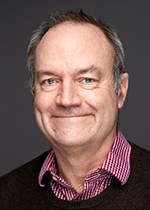
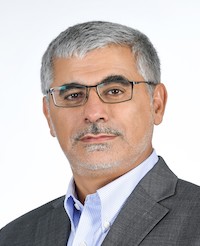
Dr. Primoz Skraba is a Professor in Applied and Computational Topology at the School of Mathematical Sciences, Queen Mary University of London. As Deputy Head of the Centre for Probability, Statistics and Data Science, he bridges theoretical topology with practical applications in data analysis, machine learning, and optimization. Education : PhD in Electrical Engineering from Stanford University (2009) Prior Roles : Positions at INRIA, France; Jozef Stefan Institute, Slovenia; University of Primorska; University of Nova Gorica His research focuses on applying topological methods to analyze complex data. Key areas include: Stability of persistence diagrams for quantitative control in finite sampling Variants of persistence (zig-zag, robustness, multiparameter) Algorithmic Complexity in computational topology Stochastic Topology for random geometric models (Poisson, Boolean) Recent publications emphasize persistent homology in random geometric complexes, universality theorems, and integrating topological methods into machine learning. He received grants from the Leverhulme Trust, EPSRC, and Alan Turing Institute for projects on topological universality and AI foundations. His advisee Gabryel Mason-Williams explores wireless sensor network applications of homology.
Ben Fisch is an Assistant Professor of Computer Science at Yale University's School of Engineering & Applied Science. He is also the co-founder of Espresso Systems, a company focused on blockchain infrastructure. His research focuses on privacy and verifiability in decentralized systems like Bitcoin and Ethereum, with applications in digital finance and healthcare. Dr. Fisch received his B.A. from the University of Pennsylvania and completed his Ph.D. at Stanford University, where he worked with Dan Boneh in the applied cryptography research group. His educational background provided the foundation for his work at the intersection of cryptography, distributed systems, and economics. His research centers on leveraging cryptographic tools such as succinct non-interactive zero-knowledge proofs (zk-SNARKs), private information retrieval, and homomorphic encryption to address challenges in verifiable computation, verifiable storage, and verifiable fairness. He has made significant contributions to verifiable delay functions (VDFs) and proofs of replication, which have been adopted by major blockchain projects including Ethereum 2.0, Chia, and Filecoin. His work on Filecoin's Proofs of Replication has helped the network reach over 1.5 exabytes of storage capacity. His publication record shows a clear trend toward increasingly sophisticated cryptographic protocols for blockchain applications, with recent work focusing on data availability for Bitcoin rollups, efficient folding schemes for pairing-based arguments, and privacy pools with proof-carrying disclosures. His research bridges theoretical cryptography with practical implementations that have real-world impact in decentralized systems. His notable recognition includes: Best Paper Finalist at ACM CCS 2017 for 'Iron: Functional Encryption using Intel SGX' Dr. Fisch's research has led to significant technology transfer, most notably with his work on Verifiable Delay Functions (VDFs) sparking a multimillion dollar industry initiative through the VDF Alliance. His research on Proofs of Replication forms the basis of Filecoin's incentive layer and consensus protocol. His newer SNARK system Basefold is being used by several commercial products. He maintains active collaborations across academia and industry, with publications spanning top conferences in cryptography and security. As co-founder of Espresso Systems, Dr. Fisch leads a team developing next-generation blockchain infrastructure, particularly focusing on sequencing layers for rollups. His work bridges academic research with practical implementation, ensuring that theoretical advances in cryptography find real-world applications in decentralized systems.
Monika Henzinger is Professor at the Institute of Science and Technology Austria (ISTA), heading the research group of Theory and Applications of Algorithms. She also serves as Vice President for Technology Transfer at ISTA since 2024. Previously, she held professorships at the University of Vienna (2009-2023) and EPFL, Switzerland (2005-2009), was Director of Research at Google (1999-2005), and served as Assistant Professor at Cornell University. Professor Henzinger's research centers on efficient algorithms and data structures with three main thrusts. First, she investigates dynamic settings where program inputs are repeatedly updated, seeking solutions faster than restarting computations. Second, she develops privacy-preserving algorithms that add minimal noise to protect input data while maintaining efficiency. Third, she translates theoretically optimal algorithms into practical implementations for dynamically changing inputs. Her work consistently addresses resource conservation in data processing, particularly computing time and memory space, while exploring the theoretical limits of possible savings. Henzinger's recent publications (2024-2025) reveal strong trends in dynamic algorithms, differential privacy, and graph theory. Her research consistently bridges theoretical computer science with practical applications, focusing on algorithms that adapt to changing inputs while preserving computational efficiency and data privacy. She has made significant contributions to problems like dynamic matching, minimum cut computation, and privacy-preserving data analysis across various domains. Professor Henzinger has received numerous prestigious awards and honors: Wittgenstein Award (2021) Two ERC Advanced Grants (2014, 2021) Carus Medal of the German Academy of Sciences Leopoldina (2019) SIGIR Test of Time Award Fellow of the Association of Computing Machinery (2016) Member of the Austrian Academy of Sciences (2017) CAREER Development Award of the National Science Foundation Best paper Award at the Symposium on Discrete Algorithms (2024) Professor Henzinger currently advises PhD students Bardiya Aryanfard, Antoine El-Hayek, and Roodabeh Safavi Hemami, along with postdocs Anamay Chaturvedi and Niklas Hahn. Her research is supported by multiple significant grants including an ERC Advanced Grant for 'Design and Evaluation of Modern, Fully Dynamic Data Structures,' the FWF Wittgenstein Prize, and the WEAVE Project on 'Static and dynamic hierarchical graph decompositions.' She also serves as Principal Investigator for the FWF project 'Fast algorithms for a reactive network layer,' providing substantial funding for her innovative work in algorithms and data structures. Professor Henzinger leads the Theory and Applications of Algorithms research group at ISTA, which focuses on developing practical algorithms for dynamic environments. Her team investigates resource conservation in data processing, specializing in dynamic algorithms that efficiently handle changing inputs, privacy-preserving algorithms that minimize noise while protecting data, and translating theoretical algorithms into practical implementations. The group maintains a strong presence in theoretical computer science through regular publications in top conferences and journals, and collaborates extensively with institutions worldwide to advance algorithmic research.
Shirshendu Ganguly is an Associate Professor in the Department of Statistics at the University of California, Berkeley. His research focuses on probability theory, statistical physics, and their applications, including percolation models, phase transitions, Markov chains, and random graphs. He holds a PhD in Mathematics from the University of Washington and has held postdoctoral positions at UC Berkeley. Ganguly has been recognized with the 2019 Sloan Research Fellowship. Education: PhD in Mathematics, University of Washington, 2011–2016 Miller Postdoctoral Fellow, UC Berkeley, 2016–2018 Research Interests: Probability Theory, Statistical Mechanics, Markov Chains, Random Graphs, Percolation Theory, Sparse Combinatorial Structures His work explores geometric and probabilistic phenomena in disordered systems, including polymer models, self-organized criticality, and random matrix theory. He has advised multiple PhD students and contributes to teaching advanced probability courses at Berkeley. Awards: 2019 Sloan Research Fellowship
Rahul Sarkar is a Postdoctoral Fellow at the University of California, Berkeley, affiliated with the Department of Mathematics . He was previously a Ph.D. student in the Institute for Computational and Mathematical Engineering (ICME) at Stanford University, graduating in 2022 under the advisement of Biondo Biondi and András Vasy. Research Interests : Quantum information theory, inverse problems, machine learning, microlocal analysis, and numerical methods for PDEs. Scientific Contributions : Developed novel quantum computing algorithms and numerical schemes for geophysical imaging, with applications in seismic tomography and quantum signal processing. Teaching : Taught courses at Stanford including Introduction to Quantum Computing and 3D Seismic Imaging , with roles as instructor and course assistant. Awards : Schlumberger Innovation Fellowship (2019-2020). His work bridges mathematical analysis and quantum computation , with a focus on solving real-world problems through interdisciplinary approaches. He has collaborated with institutions like IBM and Schlumberger to apply quantum algorithms to geoscience and financial optimization.
Maarten de Hoop is the Simons Chair and Professor of Computational and Applied Mathematics at Rice University, part of the George R. Brown School of Engineering. He holds visiting roles at MIT and the Chinese Academy of Sciences. His research spans seismic wave analysis, inverse problems, deep learning, and planetary seismology. He earned his Ph.D. in Technical Sciences from Delft University of Technology (1992), and earlier degrees from Utrecht University. Notable awards include the 1996 J. Clarence Karcher Award and 2001 Fellowship from the Institute of Physics. His work integrates computational mathematics with geophysics, focusing on extracting signal information from large datasets, developing novel inverse scattering methods, and applying deep learning to geoscience challenges. Recent studies include transformer models for in-context learning, semialgebraic neural networks, and seismic waveform foundation models like SeisLM. He leads the Geo-Mathematical Imaging Group, fostering interdisciplinary projects in planetary missions and data-driven discovery.
Sanjit A. Seshia is the Cadence Founders Chair Professor in the Department of Electrical Engineering and Computer Sciences at the University of California, Berkeley . He is affiliated with the Group in Logic and the Methodology of Science and participates in centers like the Industrial Cyber-Physical Systems Center , Berkeley AI Research , and the Simons Institute for the Theory of Computing . Research interests include formal methods for automated verification and synthesis of dependable systems, with applications to cyber-physical systems , AI-based autonomy , and computer security . His work spans SMT solving, model counting, syntax-guided synthesis, and algorithmic improvisation, with tools like UCLID5 , VerifAI , and Scenic for verifying autonomous systems and educational platforms like CPSGrader . Students and collaborators include notable researchers such as Dorsa Sadigh (Stanford), Daniel Fremont (UC Santa Cruz), and Hazem Torfah (Chalmers). He has co-founded startups like Decyphir and 20ⁿ Labs based on his research.
Howard Elman is a Professor in the Department of Computer Science at the University of Maryland, with affiliations to the Institute for Advanced Computer Studies (UMIACS) and as an Affiliate Professor in the Department of Mathematics. His research spans numerical analysis, computational fluid dynamics, and uncertainty quantification, focusing on iterative solvers for partial differential equations. Education: PhD in Computer Science, Yale University (1982); BA in Mathematics, Columbia University (1975); Stuyvesant High School (1971) Elman's research integrates Scientific Computing with Numerical Linear Algebra , Computational Fluid Dynamics , and Uncertainty Quantification . His work addresses Stochastic Galerkin Methods , Reduced-Order Modeling , and Low-Rank Approximations for PDEs with random data. Recent publications emphasize Surrogate Models and Deep Learning in Bayesian inverse problems. His scientific awards include SIAM Fellowship (2009) and roles as Associate Editor for journals like Mathematics of Computation and SIAM Journal on Scientific Computing . He served as SIAM Editor-in-Chief (1998-2004) and Vice President for Publications. Contact: helman@umd.edu | Office: 4210 Iribe Center | Courses: AMSC/CMSC 460 Computational Methods
Assia Mahboubi is a tenured researcher ( directrice de recherche ) at INRIA in the Gallinette team, Nantes, France, and an endowed professor in the Algebra and Number Theory section of the Vrije Universiteit Amsterdam, Netherlands. Her work bridges theoretical computer science and formal mathematics, with significant contributions to proof assistants and formal verification. Her research focuses on the foundations and formalization of mathematics in type theory, particularly on the automated verification of mathematical proofs. She explores the interplay between computer algebra and formal proofs, and is a key contributor to the Rocq prover (formerly Coq) and the Mathematical Components libraries. Her work often examines how familiar mathematical objects can be optimally represented for computer-aided proof checking. Recent publications show a strong trend toward categorical reasoning, diagram chasing, and continuity properties in constructive type theory, with increasing focus on practical applications of formal methods in computational mathematics. Her work demonstrates the maturation of formal verification techniques from theoretical foundations to practical tools for mathematical research. ERC Consolidator grant for the FRESCO (Fast and Reliable Symbolic Computation) project Mahboubi actively supervises doctoral students including Vojtěch Štěpančík, Tomás Vallejos Parada, and Alain Chavarri Villarello. She has received significant research funding through her ERC Consolidator grant for the FRESCO project, which aims to develop fast and reliable symbolic computation techniques. She is deeply involved in the international research community, serving on program committees for major conferences including POPL, CPP, and ICFP. She leads research in the Gallinette team at INRIA, which focuses on the intersection of proof assistants, programming languages, and formal mathematics. Her work has helped establish formal verification as a practical tool for mathematical research, moving beyond theoretical foundations to real applications in computational mathematics.
Florian Schäfer is an Assistant Professor at the School of Computational Science and Engineering at Georgia Tech. His research spans numerical computation, statistical inference, and competitive games, with applications in materials science, turbulence modeling, computer graphics, and computational geometry. He will join the Courant Institute at NYU in September 2025. PhD in Applied and Computational Mathematics, Caltech Bachelor’s and Master’s in Mathematics, University of Bonn His work focuses on information geometric mechanics to design structure-preserving numerical methods for continuum mechanics. This includes: State-of-the-art solvers for elliptic PDEs via Gaussian elimination and conditional independence Efficient multi-agent optimization algorithms Information geometric regularization for compressible fluid dynamics Enabling the first compressible fluid simulation exceeding 100 trillion grid cells His recent research trends integrate: Machine learning for materials science (e.g., active learning, Bayesian approaches) Stochastic modeling of microstructures and phase-field problems Neural operators for super-resolution fluid dynamics Generative models for polycrystalline material datasets Optimal transport and diffusion models for conditional density transformations High-performance computing at extreme scales Florian collaborates with researchers including Houman Owhadi, Jessie Liu, Spencer Bryngelson, Tamer Zaki, and Ali Mani. He actively presents at conferences like SIAM and UCLA seminars, and is recruiting PhD students for work at the Courant Institute starting 2025.
John F. Canny is the Paul and Stacy Jacobs Distinguished Professor of Engineering at the University of California, Berkeley, in the Department of Electrical Engineering and Computer Science (EECS). He joined the faculty in 1987 and is affiliated with the Berkeley Artificial Intelligence Research Lab (BAIR), Berkeley Center for New Media (BCNM), and other research institutes. His research focuses on artificial intelligence, robotics, human-computer interaction, and computational geometry. Canny is renowned for developing the Canny edge detector and contributions to motion planning, privacy-preserving algorithms, and real-time simulation. Education: B.Sc. in Computer Science and Theoretical Physics (Adelaide University, 1979), B.E. (Hons) in Electrical Engineering (Adelaide University, 1980), M.S. and Ph.D. in Electrical Engineering (MIT, 1983 and 1987). Research Interests: His work spans AI, robotics (including universal planar manipulation), HCI (e.g., MultiView video conferencing), and security (privacy in collaborative filtering). He has pioneered algorithms for edge detection, non-linear FEM simulation, and computational algebra. Awards: ACM Fellow (2020), Okawa Research Grant (2003), AAAI Classic Paper Award (2002), NSF PYI (1989), Packard Fellowship (1988), and ACM Doctoral Dissertation Award (1987). Advising & Grants: Advised over 30 Ph.D. students, many of whom hold prominent roles in academia and industry. His grants include NSF and Packard funding for foundational research in robotics and computational methods. He currently teaches CS188: Introduction to Artificial Intelligence. Labs/Teams: Leads research at the Berkeley Institute of Design (BiD), focusing on RISC robotics, activity-based computing, and privacy-enhanced telepresence systems.
Prof. Baker Mohammad serves as Professor and Director of the System on Chip Lab in the Department of Computer and Information Engineering at Khalifa University. With over 15 years of industrial experience at Intel and Qualcomm designing microprocessors and DSP chips, he bridges academic research with real-world engineering challenges in high-performance computing and low-power systems. His educational background includes: Ph.D. in Electrical and Computer Engineering, University of Texas at Austin (2008) M.S. in Electrical and Computer Engineering, Arizona State University B.S. in Electrical Engineering, University of New Mexico Dr. Mohammad's research spans cutting-edge domains where VLSI design converges with AI acceleration and emerging memory technologies . His work pioneers Memristor applications in environmental sensing (radiation, vacuum, glucose) and neuromorphic computing, while advancing energy harvesting systems for wearable electronics. The integration of in-memory computing with security primitives represents a paradigm shift in hardware design, moving beyond traditional CMOS limitations. His publication trajectory reveals accelerating focus on self-powered neuromorphic systems and RRAM-based architectures, with recent work (2021-2023) emphasizing hardware-software co-design for edge AI. Over 75% of his recent publications involve cross-disciplinary collaborations spanning materials science, chemistry, and biomedical engineering. Notable scientific recognition includes: IEEE TVLSI Best Paper Award 2016 IEEE MWSCAS Myrill B. Reed Best Paper Award Qualcomm Qstar Award for Performance Leadership KUSTAR IP Excellence Award Multiple SRC Techon Best Session Papers As a dedicated mentor, he has supervised over 15 graduate students while securing competitive funding from Khalifa University, ADEK, Qualcomm, Tii, and UAE space agencies. His grant portfolio demonstrates exceptional translational impact, converting fundamental research in memristive devices into drone flight computers and medical sensors. Current projects integrate academic rigor with industrial deployment timelines. The System on Chip Lab operates as a multidisciplinary hub where semiconductor physicists collaborate with AI researchers to develop RISC-V-based secure processors and piezoelectric nanogenerator systems. Recent expansions include partnerships with Tii for aerospace applications and medical device startups for glucose monitoring technology.
Yiping Lu is an Assistant Professor in the Department of Industrial Engineering and Management Sciences at Northwestern University's McCormick School of Engineering. His research focuses on developing interdisciplinary approaches combining domain knowledge (differential equations, stochastic processes), machine learning, and experiments. Key interests include scientific machine learning (AI4Science), stochastic simulation, and robust machine learning. Education: Ph.D. in Applied and Computational Mathematics, Stanford University (2023) B.S. in Computational Mathematics, Peking University (2019) Research Highlights: Hybrid research integrating ML with scientific domains like PDEs and inverse problems Development of Physics-Informed Learning frameworks Contributions to deep learning theory (ResNets, neural collapse) Advances in kernel operator learning and adversarial robustness Awards: CPAL Rising Star Award (2024) University of Chicago Data Science Rising Star (2022) Stanford Interdisciplinary Graduate Fellowship (2021) Labs/Teams: SCALE Lab (Scientific Computation and Learning at Northwestern) Collaborations with NYU's Courant Institute and Stanford
Gordon Plotkin is a Professor at the School of Informatics, University of Edinburgh, where he is affiliated with the Laboratory for Foundations of Computer Science (LFCS). His research lies at the intersection of theoretical computer science and programming language semantics, with a profound influence on the formal understanding of computation. His research interests include Programming Language Theory, Semantics of Programming Languages, Domain Theory, Operational Semantics, Lambda Calculus, Type Theory, Concurrency Theory, and Algebraic Effects. His seminal work on structural operational semantics and domain theory has laid the foundation for modern semantics of programming languages. His publications span over five decades, showing a sustained and evolving research trajectory from foundational work in lambda calculus and domain theory to recent contributions in algebraic effects, probabilistic computation, and biochemical systems modeling. The articles demonstrate a consistent focus on formal methods, mathematical rigor, and the algebraic structure of computational effects. He has collaborated with leading researchers including Martín Abadi, John Power, Glynn Winskel, and John Reynolds. His work continues to influence both theoretical and practical developments in programming languages and systems. Gordon Plotkin has made foundational contributions to computer science, particularly through his development of structural operational semantics and domain-theoretic models of computation. He has advised numerous researchers and supervised many influential PhD theses, though specific student names are not listed in the provided text. His work has been supported by long-standing affiliations with the Laboratory for Foundations of Computer Science and the University of Edinburgh, and he has contributed to major collaborative projects in programming language design and verification. He is associated with several research groups and labs, most notably the Laboratory for Foundations of Computer Science (LFCS), which serves as a hub for theoretical research in programming languages, semantics, and logic at the University of Edinburgh.
Lucia Carichino is an Assistant Professor in the School of Mathematics and Statistics at Rochester Institute of Technology (RIT). She holds a PhD in Mathematics from Purdue University and a BS/MS in Mathematical Engineering from Politecnico di Milano, Italy. Her research focuses on mathematical and computational models of multiscale biological systems, particularly fluid-structure interaction in biological contexts like ocular blood flow and microswimmers. She emphasizes integrating experimental data with mathematical models to advance medical understanding. Carichino teaches courses such as Differential Equations, Linear Algebra, and oversees undergraduate research projects. In 2023, she received the National Science Foundation LEAPS-MPS award for her work on computational modeling of eye-contact lens interactions. Her research has been published in high-impact journals and presented at conferences. She actively collaborates on projects addressing glaucoma, ocular hemodynamics, and biomedical applications. Education: PhD in Mathematics, Purdue University BS and MS in Mathematical Engineering, Politecnico di Milano, Italy Research interests include fluid dynamics, numerical methods, and mathematical biology. Her work bridges theoretical models with biomedical applications, such as optimizing gene therapy delivery and analyzing ocular physiology under varying environmental conditions (e.g., altitude). She explores topics like sperm motility, computational simulations of biological systems, and the interplay between fluid dynamics and biological structures. Her recent articles highlight advancements in ocular pharmacokinetics, contact lens interactions, and altitude effects on intraocular pressure. These studies underscore her expertise in multiscale modeling and fluid-structure interaction. Carichino also contributes to educational initiatives, fostering a collaborative classroom environment. Notable awards include the NSF LEAPS-MPS award (2023). She advises student research projects and collaborates with colleagues, such as Maki, on interdisciplinary studies. Her work is supported by grants and has led to presentations at ophthalmology and mathematics conferences. Carichino’s lab focuses on computational modeling of biological systems, particularly in ophthalmology and microscale fluid dynamics. Her team develops tools to simulate complex physiological processes, aiding in medical diagnostics and treatment strategies.