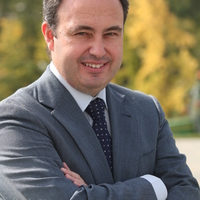
Professor Valeska Ferrer Usó is a canon lawyer and theologian at Comillas Pontifical University, specializing in abuse prevention in ecclesiastical environments. She coordinates the UNIJES-funded Jordán research project (since 2021) and teaches subjects including 'Christianity and Social Ethics' and 'State Ecclesiastical Law' since 2022/23. Education: Doctorate in Canon Law (2022), Law Degree (2002), Ecclesiastical Studies (2012), Expert in Neuropsychology (2017), Specialist in Spiritual Exercises (2008). Her research focuses on canonical criminal law, restorative justice, and structural analysis of abuse mechanisms in religious institutions. Recent publications address procedural reforms, memory spaces for reconciliation, and interdisciplinary abuse prevention frameworks. She practices law at Madrid's Ecclesiastical Tribunal in marriage annulment cases and contributes to the Society of Jesus' Safe Environment System team (since 2024). Her work integrates theological, legal, and neuropsychological perspectives.
Dr. Steven Kemp is a Senior Lecturer in the Department of Public Law at the University of Girona, Spain. His research focuses on the intersection of criminal law, cybercrime, and criminological analysis, with affiliations to institutions like UNICRI, Open University of Catalonia, and the Institute of Public Security of Catalonia. His work spans digital security, fraud victimization, and sentencing disparities. Current roles: Serra Hunter Fellow, University of Girona (2023–present); Collaborating Teacher, UNICRI (2024–present) Previous roles: Associate Professor, University of Girona (2015–2021); Postdoctoral Researcher, Pompeu Fabra University (2021–2023) and University of Manchester (2021) His research interests include: Cybercrime dynamics during global crises (e.g., pandemic-related fraud trends) Victimization patterns in digital societies, particularly among older adults Legal implications of smart technologies and cybersecurity frameworks Comparative criminal justice systems, especially plea bargaining and sentencing disparities Key trends in his recent publications (2025–2019) highlight: Rising cyberfraud incidents and their societal impacts Interdisciplinary approaches to digital security and legal systems Statistical modeling of crime trends post-COVID-19 Behavioral responses to cybercrime risks Scientific recognition includes: Serra Hunter Fellow He actively collaborates with research groups like the Research Group in the Seminar of Criminal and Criminological Sciences and contributes to public policy initiatives in cybersecurity and fraud prevention.
Marta Gonzalo Quiroga serves as a faculty member at King Juan Carlos University's School of Law, specializing in Private International Law with extensive contributions to international arbitration, mediation systems, and the intersection of artificial intelligence with legal frameworks. Her academic profile spans over two decades of scholarly work, thesis supervision, and active engagement in legal reform initiatives across European and Latin American jurisdictions. Her research focuses on the evolving landscape of Alternative Dispute Resolution (ADR) mechanisms, with particular emphasis on how artificial intelligence transforms family law arbitration, sustainable development goal integration in mediation practices, and cross-border legal harmonization. Recent publications demonstrate a strategic pivot toward technology's role in legal systems, examining AI applications in international arbitration while maintaining foundational work in traditional mediation frameworks and private international law. Academic leadership is evidenced through her direction of four doctoral theses addressing critical gaps in mediation practices across Ecuador, Spain, and Mexico, with research outputs contributing to emerging frameworks like the University Coexistence Law and transnational mediation protocols. Her collaborative work extends to European regulatory frameworks, particularly in developing standardized mediation practices across jurisdictions while addressing cultural and systemic differences. Professional engagement includes significant contributions to collective works on international dispute resolution, with recent chapters addressing psychosocial risks in digital-age conflict resolution and technological innovations in workplace mediation. Her scholarly impact is reflected in a publication record spanning 25 journal articles, 48 collective work contributions, 11 books, and consistent engagement with contemporary legal challenges through both theoretical and practical lenses.
Andrea Jamardo Lorenzo is an Assistant Professor at the University of León , affiliated with the School of Law and working within the Department of Public Law . Her research focuses on Procedural Law , with particular emphasis on Chain of Custody mechanisms, Technology in Law , and Legal Education innovations. Education : PhD in Law from the University of León (2023), thesis titled La cadena de custodia: análisis sistemático , supervised by Dr. Piedad González Granda. Her research explores the legal configuration and technological evolution of chain of custody systems in both national and European contexts. She investigates how digital evidence handling , AI applications , and cybersecurity protocols impact judicial integrity and procedural guarantees. Recent work also addresses pedagogical methods like flipped classrooms and role-playing in legal education. Analysis of her publications reveals trends in criminal procedure reforms , comparative chain of custody models (Spain vs. US), and ethical implications of legal technology . While no scientific awards are documented, her work contributes to debates on judicial efficiency , fundamental rights , and data protection in criminal contexts.
Dr. Jose R Juan Sanchez is a full Professor at the Faculty of Law, Universitat de València, specializing in Procedural Law within the Institute of Criminology and Criminal Science (ICCP). He serves in the Administrative Department and leads the NCPJ New conflicts and judicial process research group. Doctorate in Law (1997) from Universitat de València Thesis: Autonomous Communities as Parties in Civil Proceedings Supervised by Dr. Manuel Ortells Ramos His research focuses on procedural law, judicial management, and legal reforms. He investigates tribunal jurisdiction, victim rights, and data protection in criminal proceedings. Recent work includes Photovoice analysis of pandemic healthcare systems and efficiency in Spanish criminal justice. Key article trends span judicial reforms (2015-2024), victim rights in EU legal frameworks (2020-2023), digital justice systems (2016-2017), and social justice in legal education (2022-2023). His work bridges law, criminology, and policy analysis. Current affiliations: Universitat de València, ICCP Institute Research group: NCPJ New conflicts and judicial process
Maria Elena Cobas Cobiella is an Associate Professor in the Department of Civil Law at the Faculty of Law, University of Valencia. Her academic work is deeply rooted in civil and private law, with significant contributions to inheritance, family, mediation, and European private law. She is an active member of two research groups: the GPF Research Group on Person and Family and the GEDPED Study Group on European Private and Digital Law. Research Interests: Her research spans civil law, succession law, bio-law, legal mediation, reproductive rights, and legal education. She has explored the legal implications of posthumous reproduction, European succession instruments, Cuban property law, and innovative teaching methods such as concept mapping and cooperative learning in legal education. Her work often bridges doctrinal analysis with practical and ethical considerations. The trends in her scholarly publications from 2001 to 2017 reflect a sustained focus on succession law and legal modernization, with increasing attention to European harmonization, digital law, and interdisciplinary issues in bio-law. Her articles also reveal a strong commitment to pedagogical innovation and comparative legal analysis, particularly between Spanish and U.S. legal systems. Scientific Contributions: PhD from the University of Valencia (2001) on testamentary executorship. Active researcher in European private and digital law. Prolific author on mediation, inheritance, and legal education. Advising and Grants: While no specific grants are listed, she has supervised PhD research, as evidenced by her role as advisor to Dr. Lorenzo Prats Albentosa’s thesis. She actively contributes to academic discourse through publications and research group leadership. Her work in legal education suggests involvement in curriculum development and pedagogical projects. Labs and Teams: She collaborates with the GPF Research Group on Person and Family and the GEDPED Study Group on European Private and Digital Law, indicating active participation in team-based legal research focused on contemporary civil law challenges.
Antonio Viana Tomé is a Professor and former Dean (2012–2021) of the Faculty of Canon Law at the University of Navarra. He holds PhDs in Canon Law (1984) and Law (1987) from the University of Navarra, and studied at the University of Deusto (Law, 1979) and University of Bamberg (as DAAD scholar, 1992). His research focuses on hierarchical Church governance, canon law structures, and ecclesiastical organizations. He directed the journal Ius Canonicum (1991–2009) and co-edited the General Dictionary of Canon Law (2012). Awards include the DAAD Scholarship (1992). He has served in leadership roles such as Vice President of the Spanish Association of Canonists (2002–2004) and on the board of the Consociatio Internationalis Studio Iuris Canonici Promovendo . His work bridges legal and theological dimensions of church governance. Educación: Licenciado en Derecho, Universidad de Deusto (1979) Doctor en Derecho Canónico, Universidad de Navarra (1984) Doctor en Derecho, Universidad de Navarra (1987) Investigación: Specializes in Church governance structures, canon law codification, and ecclesiastical institutions. Key themes include: Hierarchical organization of the Church Legal foundations of prelatures Canon law interpretation in contemporary contexts Reconocimientos: DAAD Scholarship (1992) Docencia y liderazgo: Dean of Canon Law Faculty (2012–2021), full professor since 2005. Involved in major projects like the General Dictionary of Canon Law , a collaborative global effort. Active in academic and professional networks, contributing to legal scholarship and church policy.
Julia Ammerman Yebra is an Assistant Professor at the Department of Common Law within the Faculty of Law at the University of Seville. She holds a Doctorate from the University of Santiago de Compostela (2020) with a thesis titled "The right to one's voice as a right to personality" , supervised by Dra. María Paz García Rubio and Dr. Marta Otero Crespo. Her research focuses on intersections of civil law, family law, data protection, and AI ethics. Key interests include privacy rights in digital contexts (e.g., voice biometrics, metaverse regulation), legal frameworks for emerging technologies (AI/voice assistants), and gender perspectives in legal systems. She has pioneered projects linking legal education with journalism and digital literacy. Her recent work addresses legislative modernization of civil codes, consent mechanisms in digital contracts, and protections for minors' privacy rights (sharenting). She critiques judicial systems' gender biases, particularly regarding maternal rights and family law. Publications span 2025-2012, covering topics like the right to voice in AI contracts, metaverse privacy, and legal responses to pandemics. Her work bridges theoretical legal analysis with practical applications in education and technology governance.
Alicia Rivas Vaño serves as Associate Professor in the Department of Public Law at the School of Law, Universidad Pablo de Olavide (UPO). Her academic career focuses on constitutional and European legal frameworks governing human rights, with particular emphasis on sexual and gender diversity protections. Research Interests: Her scholarly work spans Constitutional Law, European Union Law, Sexual Diversity Law, Gender Identity Law, Anti-Discrimination Law, and Human Rights Law. She examines the intersection of political activism and legal development in advancing LGBTIQ+ rights across European jurisdictions, analyzing judicial interpretation trends and legislative reforms. Her publication record reveals consistent scholarly contributions since 2001, with recent work (2021-2025) increasingly focusing on contemporary challenges in gender identity recognition, international human rights mechanisms, and Spanish constitutional implementation. The research demonstrates methodological rigor through comparative legal analysis, treaty interpretation, and examination of judicial reasoning patterns across European and international courts. Academic Background: PhD from Universidad Pablo de Olavide (2015) Thesis: "The evolution of the protection of sexual diversity in European law, political activism and legal development" Supervised by Dr. Manuel José Terol Becerra
Sara Fassi El Mechachti serves as an Interim Substitute Teacher within the Department of Public International, Criminal and Procedural Law at the University of Cadiz, Spain. Her primary academic focus centers on Criminal Law, where she contributes to legal education through teaching and departmental activities in this specialized field. Her research and teaching interests comprehensively cover Criminal Law, Public International Law, and Procedural Law. These disciplines form the core of her departmental responsibilities, addressing critical aspects of legal systems including domestic criminal justice frameworks, international legal obligations, and judicial procedures. Her work bridges theoretical legal concepts with practical applications in contemporary jurisprudence. Professional correspondence may be directed to sara.fassi@uca.es , reflecting her active engagement with the university community.
Dr. Antoni Gili Pascual is a full Professor of Criminal Law at the Faculty of Law, University of the Balearic Islands (UIB). He holds the prestigious position of Catedrático de Universidad in the Department of Criminal Law and maintains an active teaching schedule across multiple campuses including Mallorca, Menorca, and Ibiza. His academic office is located in room DA218 on the second floor of the Gaspar Melchor de Jovellanos building. Professor Gili Pascual specializes in various aspects of criminal law including accessory crimes, statute of limitations, desistance, complicity, and private sector corruption. His research has been significantly influenced by international perspectives, with research stays at the Max Planck Institute for Foreign and International Criminal Law in Germany and the European University Institute in Italy. His scholarly work demonstrates consistent focus on theoretical aspects of criminal law with practical judicial applications. Professor Gili Pascual has served as a Substitute Judge at the Provincial Court of Balearic Islands from 2001 to 2014 and previously held the position of General Secretary of the University of the Balearic Islands. His publications reveal a career-long dedication to analyzing specific criminal law concepts within the Spanish legal framework while incorporating comparative perspectives. Professor Gili Pascual has been consistently active in competitive research projects through Spain's National Research Plan (Plan Nacional). His work shows particular interest in how theoretical criminal law concepts translate into practical judicial application, with notable contributions to understanding accessory crimes, criminal responsibility in multi-offender scenarios, and corruption in private sectors. As an educator, he teaches core criminal law courses and supervises final degree projects for law students across multiple campuses. His teaching responsibilities include the foundational course 'Criminal Law: Concept and Theory of Crime' and specialized courses like 'Criminal Law and Gender Violence' at the Master's level.
David José Soto Díaz is a Professor in the Department of Public Law at the Faculty of Law, University of A Coruña (UDC). His academic focus centers on procedural law, particularly criminal procedural law, with growing expertise in digital law and artificial intelligence applications in legal contexts. He maintains an active research profile with an ORCID identifier 0000-0002-5078-4291 and is affiliated with the research group "Criminology, Legal Psychology and Criminal Justice in the 21st Century". Dr. Soto Díaz's research spans criminal procedural law, digital law, artificial intelligence in legal contexts, criminology, and legal psychology. His work explores the intersection of technology and law, particularly in digital legal proceedings and AI applications in justice systems. He has investigated how emerging technologies impact traditional legal frameworks and procedural justice, with publications addressing evidence in criminal proceedings, alternative dispute resolution, and the implications of digital transformation for legal practice. His publication record demonstrates consistent scholarly output from 2013-2023, with increasing attention to digital law and AI in recent years. His work appears in journals like Anuario da Facultade de Dereito da Universidade da Coruña , REVISTA VASCA DE DERECHO PROCESAL Y ARBITRAJE , and Ars Iuris Salmanticensis , alongside numerous book chapters and conference communications. His research shows a clear trajectory from traditional procedural law toward contemporary challenges at the intersection of law and technology. Dr. Soto Díaz has directed numerous bachelor's and master's theses since 2013 covering diverse legal topics including constitutional law, criminal procedure, private contracting, and European Union law. His thesis supervision addresses contemporary legal challenges such as human trafficking, gender violence, immigration issues, and the legal implications of AI. He has participated in multiple research projects funded by the Ministry of Education, University and Vocational Training, the Ministry of Science and Innovation, and regional Galician authorities, with project durations spanning from 2015-2026. He is actively involved with the "Criminology, Legal Psychology and Criminal Justice in the 21st Century" research group and has collaborated with the "Grupo de Investigación sobre Criminoloxía, Psicoloxía Xurídica e Xustiza Penal no século XXI, Ecrim." His work connects legal theory with practical applications in contemporary justice systems, as evidenced by his conference presentations at universities across Spain, Portugal, Italy, and the Netherlands.
Carmelo Faleh Pérez is an Associate Professor at the University of Las Palmas de Gran Canaria, specializing in Public International Law and International Relations within the Department of Basic Legal Sciences. His academic work focuses on human rights frameworks, migration law, and international treaties. Research interests include: Implementation of UN human rights conventions in national contexts Migrant rights and freedom of movement in irregular migration scenarios Non-discrimination principles under international law The human right to peace and security frameworks His publications demonstrate consistent focus on human rights enforcement mechanisms, particularly regarding migrant protections, state obligations under international treaties, and legal remedies against arbitrary detention. Recent works analyze Spain's compliance with UN conventions. Professor Pérez actively supervises graduate research, advising over 20 students since 2020 on topics including: Human rights violations in migration contexts Implementation of UN treaty obligations Non-discrimination in education systems Judicial protections against arbitrary detention He collaborates with the research group GIR Society and Law.
Montserrat Abad Castelos es Catedrática en el Departamento de Derecho Internacional, Derecho Canónico y Filosofía del Derecho de la Universidad Carlos III de Madrid, y forma parte del Instituto Francisco de Vitoria de Estudios Internacionales y Europeos . Su investigación se centra en el derecho internacional, particularmente en áreas relacionadas con la UE, desarrollo sostenible, derechos humanos y energías marinas renovables. Sus artículos recientes abordan temas como: la rendición de cuentas por crímenes del ISIS desplazamientos climáticos y normativa de la UE energías marinas renovables y el derecho internacional diplomacia paralela de ONGs en conflictos reforma de instituciones económicas internacionales protección de derechos humanos en crisis Ha liderado proyectos como PaxNatura (2023-2027) financiado por AEI, y ODS, derechos humanos y Derecho internacional (2019-2022) patrocinado por el Ministerio de Economía español. Sus colaboraciones internacionales incluyen estancias en el CELI (Reino Unido), Lucsus Centre (Suecia) y British Institute of International and Comparative Law (2018-2011).
Antonio Vázquez del Rey Villanueva is a Full Professor at the University of Navarra's Faculty of Law, specifically within the Department of Public Law and Legal Institutions. His academic career demonstrates deep expertise in tax law with a particular focus on Value Added Tax (VAT), international taxation, and the Spanish tax system, especially as it relates to the Economic Agreement (Concierto Económico) governing taxation in Navarra. Professor Vázquez del Rey Villanueva's research spans multiple critical dimensions of tax law: Value Added Tax regulations, particularly the right of deduction and international aspects International taxation, including double taxation agreements and taxation of non-residents The Spanish tax system framework, with special attention to the Economic Agreement EU tax regulations and their national implementation Emerging challenges in digital economy taxation Environmental taxation within the energy transition context His recent publications reveal a strategic focus on contemporary tax challenges arising from technological innovation (digital economy, cryptocurrencies) and environmental concerns (green taxation, energy transition). He has extensively analyzed the Spanish VAT system, particularly regarding the right of deduction, international transactions, and the unique aspects of the Economic Agreement in Navarra. His work consistently bridges theoretical foundations of tax law with practical implementation issues faced by taxpayers and tax authorities, demonstrating exceptional relevance to both academic discourse and potential tax policy development. Professor Vázquez del Rey Villanueva maintains an active academic profile with numerous publications in prestigious Spanish legal journals and edited volumes. His work appears under the direction of prominent scholars like I. Merino Jara in comprehensive works on VAT and corporate tax reform, establishing him as a recognized authority in specialized tax areas. With 97 followers and over 1,800 public views on Academia.edu, his research has substantial reach within the academic community.