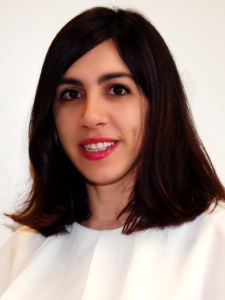
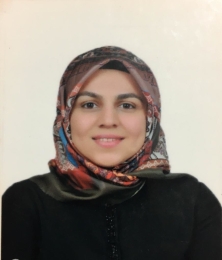
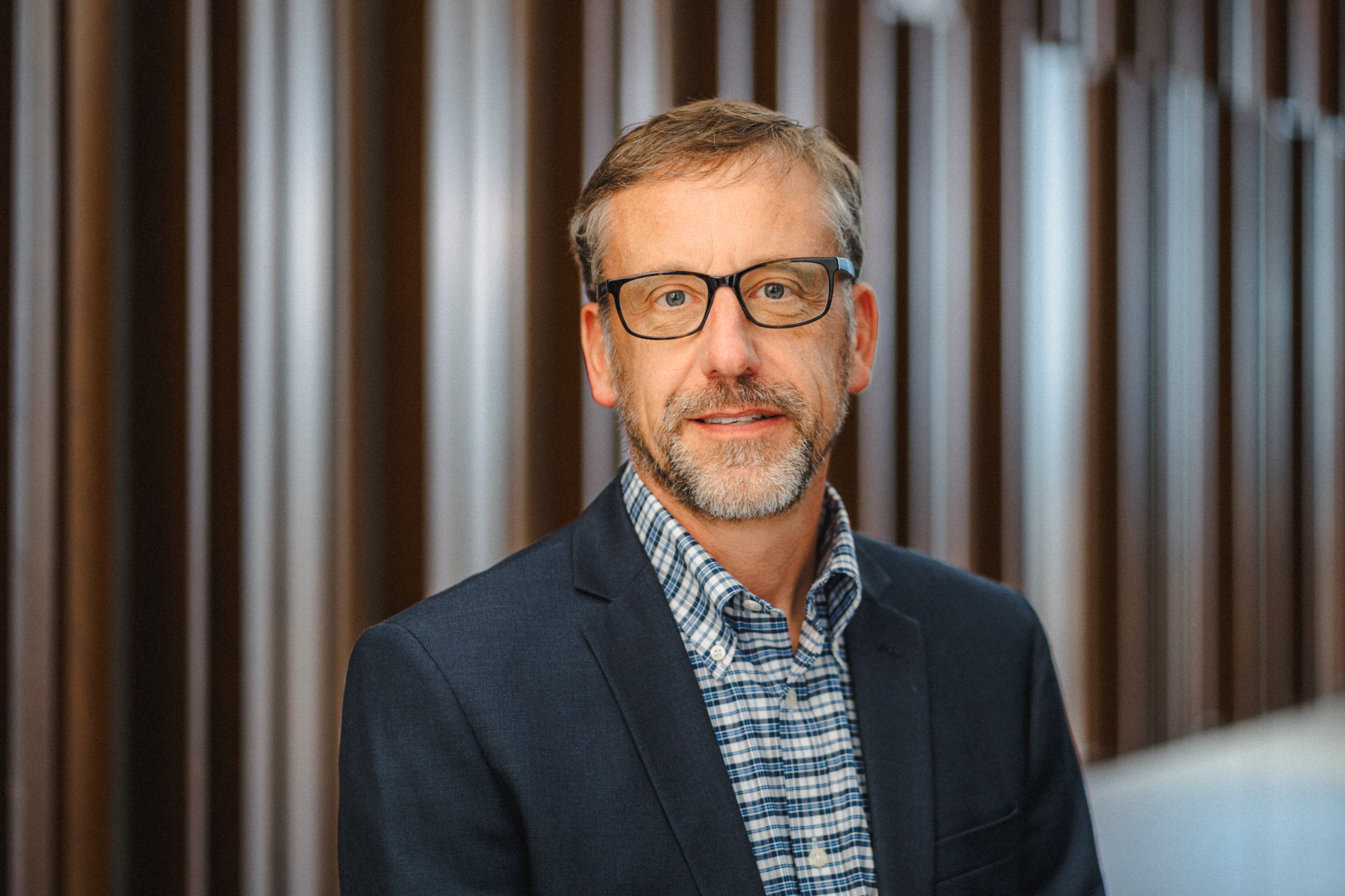
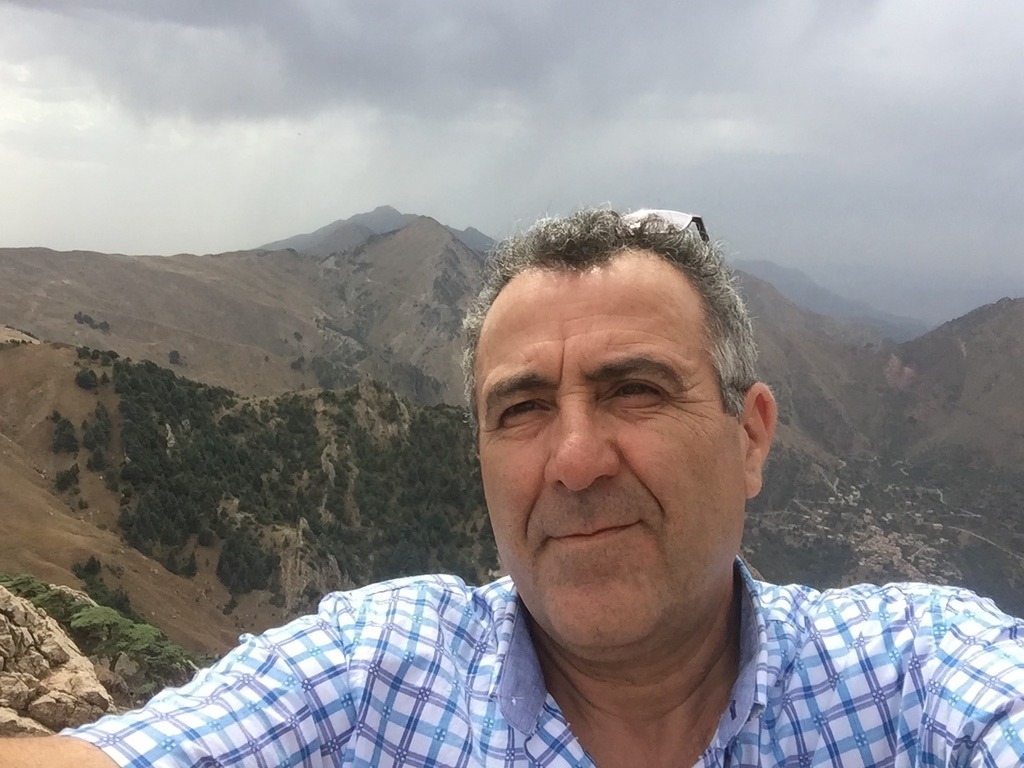
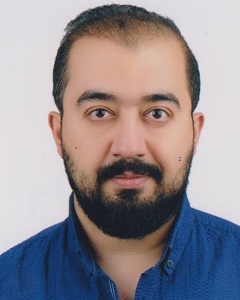
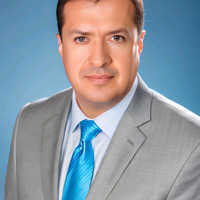
Pietro Sala is an Associate Professor at the University of Verona , Department of Computer Science. His research intersects Temporal Data Mining , Biomedical Decision Support Systems , and Formal Verification of temporal logic specifications. Key Research Areas: Interval Temporal Logic and Model Checking Temporal BPMN for healthcare processes Data fusion in clinical environments Algorithm design for repetitive task automation Notable Projects: Dioxin impact analysis on cardiovascular development Open-source clinical data warehousing (DW-SAN) Real-time system verification frameworks Teaching: Lecturer for Biomedical Decision Support Systems (Master's) Instructor for Data Mining and Software Engineering courses The articles highlight his work in temporal logic verification (2025), clinical process modeling (2024-2025), and data integration for NLP pipelines (2023). His publications span theoretical computer science conferences (LICS, ICALP) and healthcare informatics journals (ICHI, CBM).
Dr. Freya St John serves as Reader in Conservation Science at Bangor University's School of Environmental & Natural Sciences, where she leads the Conservation & Human Behaviour Research Group and contributes to Conservation@Bangor. Her work bridges conservation biology, social psychology, and criminology to address critical challenges in human-wildlife interactions. She holds leadership roles including Environmental Planning Pathway Link for the ESRC Welsh Graduate School of Social Science and Lead for the Place, Environment and Development Cluster. Her research focuses on conservation conflict , illegal resource use , and the human well-being-conservation nexus , with particular emphasis on developing innovative social science methods for studying sensitive behaviors. Key projects include ERC-funded research on poverty and rule-breaking in conservation, Darwin Initiative projects in Indonesia on agroforestry and community land rights, and Leverhulme Trust research on tiger-human coexistence in Sumatra. Her methodological innovations include randomized response techniques for measuring illegal activities. Dr. St John's recent publications reveal strong thematic trends in protected area management (2023-2025), with significant focus on Indonesian conservation landscapes (Gunung Leuser National Park, Harapan Rainforest) and human behavioral drivers of illegal activities. Her work increasingly integrates cross-cultural perspectives on environmental attitudes and procedural justice frameworks for improving conservation compliance. European Research Council Starting Grant (2018-2024) Darwin Initiative Grants (2016-2019) for Indonesian forest restoration projects Leverhulme Trust Grant (2014-2017) on tiger-human coexistence University of Kent Faculty Research Grant on human-goose conflicts She supervises multiple PhD students including Harriett Ibbett (ERC-funded rule-breaking research), Elizabeth Morris-Webb (intertidal collection), and Sorrell Jones (Liberian hunting landscapes). Her group conducts fieldwork across Indonesia, Tanzania, Scotland, and Liberia, emphasizing community engagement and capacity building through workshops for conservation practitioners and government representatives. Current projects focus on improving conservation law enforcement through criminal justice insights and developing spatial planning tools for community forest management.
Anisa Rula is an Assistant Professor in Computer Science at the Department of Information Engineering, University of Brescia since 2021. Previously, she was a researcher at the University of Bonn's SDA group (2017–2019). She holds a PhD in Computer Science from the University of Milano-Bicocca (2014). Her research focuses on data management and exploration, particularly in data quality assessment for Information Systems and Knowledge Graphs. Key interests include semantic data enrichment, large datasets, and knowledge extraction. Education: PhD in Computer Science, University of Milano-Bicocca (2014) Prior academic and research roles at University of Bonn (2017–2019) Research Interests: Data Quality Assessment for Knowledge Graphs and Information Systems Large-Scale Dataset Management & Exploration Procedural Knowledge Extraction from Text Ontology-Driven Semantic Enrichment Human-in-the-Loop Data Annotation Systems Publications reflect her expertise in Knowledge Graph lifecycle management, quality assessment tools like KGHeartBeat, and LLM applications for schema mining and data discovery. Her work emphasizes practical implementations such as MantisTable for semantic table interpretation and K-hub ontology for industrial knowledge extraction. Awards: None explicitly mentioned in text. Advising & Grants: No student advisees listed. Active in developing open-source tools and collaborative frameworks for data quality and semantic web applications. Labs/Teams: Involved in Knowledge Graph validation and quality initiatives, including contributions to the EU Business Graph platform and cross-institutional workshops on Linked Data Quality.
Dr. Andrej Stankovski is a researcher at the Reliability and Risk Engineering department of ETH Zürich. His work focuses on assessing risks and reliability in critical infrastructure systems, particularly power grids and nuclear energy facilities. Key research areas include climate risk quantification, cascading failure analysis, and socio-technical vulnerabilities in energy systems. He has developed novel methodologies for blackout event analysis and maintains a curated database of nuclear safety incidents. His research integrates multi-disciplinary approaches combining probabilistic modeling, data analytics, and socio-technical systems thinking. Notable contributions include frameworks for energy transition impact assessment, cross-sector climate risk comparisons, and multi-hazard security evaluations of transmission systems. Dr. Stankovski collaborates with industry partners and policymakers to translate technical insights into actionable resilience strategies. Publications span high-impact journals and conference proceedings, with a focus on empirical analyses of blackout events, nuclear fuel cycle optimization, and infrastructure vulnerability mapping. His work frequently addresses the intersection of technical systems and societal impacts, emphasizing equitable energy access and disaster resilience for vulnerable populations.
Miray EGE is a Lecturer in the Department of Pharmacognosy at Adıyaman University Faculty of Pharmacy since 2019. Previously, she served as a Lecturer at İstinye University's Pharmacy Services Program (2017–2019) and worked as a pharmacist/quality assurance officer at Selçuk Pharmaceutical Warehouse (2011–2014). She holds a Pharmacy degree from Atatürk University (2011) and is pursuing a Ph.D. in Phytotherapy at Hamidiye Health Sciences Institute (University of Health Sciences) since 2017. Her research focuses on Pharmacognosy , Phytotherapy , and Aromatherapy , with emphasis on phytochemical analysis, DNA barcoding of medicinal plants, and herbal product efficacy evaluation. Recent work includes studies on nano-formulated plant extracts for cancer therapy and herbal supplement usage trends during pandemics. Key research contributions include investigations into antimicrobial/anticancer activities of plant extracts (e.g., Ferulago cassia, Teucrium polium), anesthetic efficiency comparisons (Tramadol vs. Lidocaine), and assessment of student/patient attitudes toward complementary therapies. She has published 10 peer-reviewed articles in journals like Pakistan Journal of Botany and European Journal of Integrative Medicine , and contributed to 5 books including translations of pharmacognosy textbooks. Current projects involve experimental studies on herbal oils for wound healing and nano-technology applications.
Dr. Adrian Gonzalez is a Senior Lecturer in Sustainability and Director of Learning and Teaching at the Department of Environment and Geography, University of York. He holds a PhD in Human Geography from Royal Holloway, University of London, alongside degrees in History (De Montfort) and War Studies (King’s College London). His research bridges political ecology and sustainability education, focusing on natural resource governance, environmental justice, and pedagogical innovation. Key roles include Strategic Lead for Sustainability in the upcoming Department of Architecture and Built Environment (launching 2025) and leadership in redesigning the MSc Sustainable Business program. He chairs committees such as the ESAY Community of Learning and Teaching Practice and the Interdisciplinary Global Development Centre (IGDC). Education: PhD Human Geography, Royal Holloway, University of London (2017) MA War Studies, King’s College London (2010) BA (Hons) History, De Montfort University (2008) Research Interests: Sustainability education pedagogy, political ecology of voice (PEV), environmental justice in extractive industries, and Latin American resource governance. Recent work emphasizes transforming sustainability education to ensure students gain actionable knowledge for addressing climate and social crises. Professional Contributions: Authored articles in Teaching Geography , Environment and Planning E , and Geoforum . External roles include Fellow of Advance HE, Royal Geographical Society member, and contributor to The Conversation. His work critiques state-corporate exclusion of indigenous voices in resource projects and proposes collaborative frameworks for equitable development. Grants & Leadership: Co-developed the MSc Sustainable Business program with Maastricht University and restructured teaching frameworks at York. His initiatives prioritize inclusive sustainability practices and operational redesign in higher education. Labs/Teams: Active in the Interdisciplinary Global Development Centre (IGDC) and Architecture and Built Environment Programme Board at York.
Dr. Ajay Bansal is a Teaching Professor and Associate Program Chair of the Software Engineering program at Arizona State University's School of Computing and Augmented Intelligence. He joined ASU in 2011 and previously served as a visiting assistant professor at Georgetown University. His academic journey includes a Ph.D. in Computer Science from the University of Texas at Dallas, an MS from Texas Tech University, and a B.Tech. from NIT Warangal. His research focuses on declarative programming languages, including Logic Programming, Answer Set Programming, and Knowledge Representation. He also explores Computing Education, particularly Individualized Learning and Game-based approaches. Notable achievements include the Test of Time Award at ICLP 2016 for coinductive logic programming and multiple teaching awards, including the Fulton Teaching Excellence Award (2019, 2022). Dr. Bansal has over 80 peer-reviewed publications spanning journals, conferences, and book chapters. His work bridges theoretical contributions (e.g., stableKanren integration) and practical applications like automated assessment systems. He actively contributes to courses such as Intro to Programming Languages and Database Management. Education: Ph.D. Computer Science, University of Texas-Dallas (2007) M.S. Computer Science, Texas Tech University (2002) B.Tech. Computer Science and Engineering, NIT Warangal, India (1999) Awards: Test of Time Award (ICLP 2016) Fulton Teaching Excellence Award (2019, 2022) Best Teacher Award (Top 5%) (6x) Advising & Grants: While no specific student names are listed, his roles involve academic advising and curriculum development. Industry experience includes software engineering roles at SIEMENS India, Metallect Corp., and Tyler Technologies. Labs/Teams: Engaged in educational technology initiatives and declarative programming research groups.
Dr. Andrzej Żołnierek is a researcher at the Department of Systems and Computer Networks within the Faculty of Information and Communication Technology at Wrocław University of Science and Technology. His office address is Janiszewskiego 11/17, 50-372 Wrocław (Building C-3, Room 111). He maintains regular office hours across odd/even weeks for student consultations. Academic affiliation: Faculty of Information and Communication Technology Research focus: Hybrid AI systems, medical diagnostics, and Polish language processing Contact: andrzej.zolnierek@pwr.edu.pl | +48 71 320 2972 Dr. Żołnierek's research spans multiple interdisciplinary domains including biomedical engineering applications of AI systems, Polish language processing for speech recognition, and hybrid pattern recognition methodologies combining rough sets with fuzzy logic. His work addresses both technical implementation challenges and real-world healthcare applications. Recent publications demonstrate his focus on sequential medical diagnosis frameworks (2016), neural network control systems (2014), and Polish language modeling (2013). His technical expertise includes machine learning algorithms, signal processing techniques, and rule-based decision systems. As a frequent contributor to international conferences like CORES, HAIS, and ISCBI, he has published extensively on pattern recognition (2013, 2016), medical diagnostics (2011, 2016), and computational linguistics (2011, 2013). His work often involves collaborative research with colleagues like Marcin Majak and Marek Kurzyński.
Friedrich Slivovsky is a researcher at the Institute of Logic and Computation within the Faculty of Informatics at Technische Universität Wien (Vienna University of Technology). His work focuses on theoretical and practical aspects of computational logic, with particular expertise in Quantified Boolean Formulas (QBFs), Propositional Model Counting (#SAT), and Knowledge Compilation. His research interests span the theoretical foundations and practical applications of computational logic. Slivovsky investigates the complexity of logical reasoning problems, develops efficient algorithms for solving them, and creates practical tools that implement these theoretical advances. His work bridges the gap between theoretical computer science and practical applications in areas like hardware verification, artificial intelligence, and electronic design automation. Analysis of his publication trends reveals a consistent focus on QBF solving techniques, with increasing emphasis on circuit minimization, proof complexity, and practical solver engineering. His recent work (2023-2024) shows a strong focus on circuit minimization techniques, combining QBF and SAT approaches to solve complex optimization problems in hardware design. Earlier work (2019-2021) emphasized dependency schemes, certification methods, and theoretical foundations of QBF solving. Slivovsky leads several significant software projects that have become important tools in the computational logic community: Qute : A dependency learning QBF solver with GitHub repository showing active development (latest commit December 2024) Unique : A preprocessor for (D)QBF that computes unique Skolem and Herbrand functions Pedant : A certifying DQBF solver These projects demonstrate his commitment to translating theoretical advances into practical tools that benefit the broader research community.
Alexey Ignatiev is an Associate Professor in the Optimisation research group at Monash University's Faculty of Information Technology. Previously, he was a postdoctoral researcher and researcher at the University of Lisbon's Faculty of Sciences, focusing on SAT/SMT-based decision procedures. He holds a Ph.D. from the Matrosov Institute for System Dynamics and Control Theory (Russian Academy of Sciences), where his thesis explored parallel CDCL-BDD integration. His research emphasizes formal methods in AI, including explainable AI (XAI), SAT-based reasoning, and optimization for applications like software upgradability, model-based diagnosis, and fault localization. His work spans over 100 publications, with notable contributions to MaxSAT solving (RC2 solver), neuro-symbolic frameworks (NEUSIS), and rigorous explanations for machine learning models. He has collaborated extensively with institutions like the University of Lisbon and Monash University, contributing to advancements in formal verification and interpretable machine learning.
John Ruple is a Research Professor of Law at the University of Utah S.J. Quinney College of Law and a Stegner Center Fellow at the Wallace Stegner Center for Land Resources and the Environment, where he directs the Law and Policy Program. He previously served as Senior Counsel in the White House Council on Environmental Quality during the Biden Administration and has held positions at the University of Utah since 2008, progressing from Research Associate Professor (2015-2018) to Research Professor (2018-present). Professor Ruple's educational background includes a JD from the University of Utah (2004), an MS in Resource Development from Michigan State University (1997), and a BA in Demography/Sociology from Western Washington University (1992). Prior to academia, he worked as a policy analyst in Governor Jon Huntsman Jr's Public Lands Office, as an environmental attorney in private practice, and as a NEPA contractor specializing in National Forest System permitting. His research focuses on pragmatic solutions to complex federal public lands management challenges, with particular emphasis on improving environmental analysis and permitting processes. Professor Ruple champions evidence-based reform, having conducted empirical analyses of over 41,000 NEPA decisions to identify factors contributing to delays. His work also addresses the legality of state efforts to control federal lands, presidential authority regarding national monuments, and climate change mitigation strategies for public lands management. He has established himself as a leading expert on the intersection of energy development, water resources, and land management, particularly in Utah's Uinta Basin. Professor Ruple's scholarly trajectory reveals a consistent deepening of engagement with contemporary environmental law challenges. His early work established foundational understanding of public lands law and transfer movements, while his recent publications increasingly focus on climate change mitigation, net-zero emissions strategies for fossil fuel development, critical mineral policy, and the integration of climate science into permitting processes. His research demonstrates methodological rigor through empirical analysis of large datasets, challenging conventional wisdom about environmental review processes. Celebrate U Researcher (2018) Top 20 article (Environmental Law Institute and Vanderbilt University Law School, 2021) Top article (Environmental Law Reporter, 2021) Top article (Land Use & Environment Law Review, 2020) Though holding a research appointment without a regular teaching load, Professor Ruple has taught in the University's Masters of Legal Studies Program and the Law As Influence Law As Change (LAILAC) Program. His professional service includes serving as a Trustee of the Foundation for Natural Resources & Energy Law (2022-2023) and on the Board of Directors for Friends of Cedar Mesa (2017-2022). He has also contributed to numerous government reports and environmental impact statements, bridging academic research with practical policy development. As director of the Stegner Center's Law and Policy Program, Professor Ruple oversees a vital hub for environmental law scholarship and policy engagement. The Center facilitates interdisciplinary collaboration among scholars, practitioners, and policymakers to address pressing natural resources challenges. His leadership connects academic insights with real-world applications, particularly evident in his White House service where his expertise directly informed national environmental policy development.
Andrea Bottino is an Associate Professor at the Department of Control and Computer Engineering (DAUIN) at the Polytechnic University of Turin. He has been actively involved in the Computer Graphics and Vision Group and leads various VR@POLITO initiatives. Chair of the Master HUMANAIZE program Coordinator of multiple Machine Learning for Vision and Multimedia courses Research Focus : Augmented and Virtual Reality for education and safety Computer Vision with applications to medical imaging and kinship analysis Human-Computer Interaction in immersive environments Multimodal Learning systems XR for Cultural Heritage Publication Trends : Recent works focus on AI applications , XR training systems , and computer vision techniques applied to medical diagnostics and cultural preservation . Leadership Roles : Scientific Director for MEI - Interactive Egyptian Museum Coordinator of PNRR Mission 4 projects Principal Investigator for Holo-BLSD and ALPTECH initiatives Labs and Collaborations : Active in Visionary LAB and VR@POLITO Collaborates with Balletto Teatro di Torino for cultural XR applications Partners with Fondazione Museo Egizio and Robin Studio
Lakhdar Sais is a Professor of Computer Science at the Centre de Recherche en Informatique de Lens (CRIL), CNRS UMR 8188, at Université d'Artois, Faculty of Jean Perrin Sciences in Lens, France. His research focuses on search and representation problems in Artificial Intelligence, including propositional satisfiability, quantified boolean formulas, constraint programming, knowledge representation and reasoning, data mining, and AI applications in Social and Human Sciences. He has supervised numerous PhD students throughout his career, with recent students including David ING (2021-present) working on migration data knowledge extraction, and previously Ikram NEKKACHE (2021), Sofiane TOUATI (2021), and Kahina BOUCHAMA (2020). His research has been recognized with multiple awards including best paper awards at SAT'11 and ICTAI'2009, and first place in the International SAT 2009 competition. His current research projects include the ANR project HYCI (2023-2026) on Hyper-places, Crises, Migrations and Inequalities, Project ERA (2022-2025) on producing new knowledge in juvenile justice and mental health, and ANR project POSTCRYPTUM (2021-2023) on algebraic cryptanalysis for post-quantum cryptography. He has also edited the Handbook of Parallel Constraint Reasoning (Springer, 2018). Scientific Awards: Best paper award at SAT'11 for 'On freezing and reactivating learnt clauses' Best paper award at ICTAI'2009 for 'Learning for Subsumption' ManySAT - First rank at International SAT 2009 competition (Parallel Track) LySAT - Two bronze medals at International SAT 2009 competition (Sequential Track) ManySAT - First rank at SAT Race 2008 competition Professor Sais has taught numerous courses including Artificial Intelligence, Constraint Programming, Knowledge Representation and Reasoning, Expert Systems, Complexity Theory, Advanced Data Structures, Algorithmics, and Functional Programming. He has served as leader of the inference and decision process research group at CRIL (2002-2013) and as Delegate Director of the CRIL laboratory (2013-2018).
Mehmet Kiliç serves as an Associate Professor in the Department of Foreign Language Education at Gaziantep University's Faculty of Education. His academic journey includes a Doctorate in English Language Education from Çukurova University (2008-2013), a Master's from Gaziantep University (2005-2007), and undergraduate studies at Boğaziçi University (2001-2005). Current Rank: Associate Professor (2020-present) Previous Positions: Doctor Lecturer (2013-2020), Lecturer (2005-2013) Administrative Roles: Department Head (2018-2020), Institute Deputy Director (2018-2020), Erasmus Coordinator (2013-present) His research spans English Language Teaching with emphasis on second language acquisition mechanics, particularly phonetic phenomena like pausing patterns and lexical stress in cross-linguistic contexts. Key interests include teacher identity construction, language learning strategies, foreign language anxiety, and the impact of L1 on L2 acquisition. His work integrates psycholinguistic analysis with educational applications, examining how speech patterns correlate with proficiency and how teacher development affects classroom outcomes. Kiliç's publication trends reveal sustained focus on empirical linguistic analysis (40% of recent work), teacher development (30%), and language learning psychology (30%). His research increasingly incorporates cross-cultural comparisons (Turkish, Iraqi, Swahili, Hausa speakers) and examines technology's role in language education. The 2020-2024 period shows growing emphasis on AI integration in ELT and refugee language acquisition. As a thesis supervisor, he has guided 17 master's students to completion and currently oversees 2 doctoral candidates. His administrative contributions include journal editorships for Gaziantep University Journal of Social Sciences and Educational Sciences. Current teaching responsibilities include Linguistics, Teaching Language Skills, and Psychological Foundations of Language Education courses at graduate and undergraduate levels. Professional activities include frequent conference presentations at international venues like GlobELT and ULEAD Congress. His editorial work focuses on advancing Turkish scholarship in language education through national journal development.
Dr. Cesar Rommel Salas is a Professor at UAGM University's Business School (AACSB Accredited) and a Department Member at Universitat Autònoma de Barcelona's Department of Philosophy. He holds a Ph.D. in Philosophy with a specialization in Cognitive Sciences from the Autonomous University of Barcelona (UAB), Spain, and a Doctorate in Business Administration with a concentration in Management Information Systems from UAGM, USA. His academic career bridges philosophy, business administration, and digital technology fields. Dr. Salas' research interests span across Computers, Data, Digital Anthropology, Ethnographic Theory, Information/Data Governance, Infrastructure, Open Science, Science & Technology Studies, and Virtual worlds. His work focuses on the intersection of human cognition, digital environments, and social structures, with particular emphasis on Social Cybernetics, Cyber Anthropology, Cyber-Physical Systems, and Neuroscience. He has developed theoretical frameworks like the Biocybernetic Learning Model (BLM) and the Theory of Techno-Social Convergence. His publication history reveals a strong focus on applying technology to human cognitive and social challenges. Recent work includes the Cognitive AI Framework (2025) that simulates human thought processes, virtual immersion biotechnology for attention disorders (2021), and analyses of digital economic activity's impact on regional growth (2020). His research consistently integrates quantitative methodologies with theoretical frameworks from anthropology, cybernetics, and cognitive science. Dr. Salas' work demonstrates particular strength in digital forensics, cybercrime analysis, and the anthropological aspects of digital environments. His publications cover topics from binaural white noise's impact on working memory to the theoretical dimensions of cyber hate crime, showing remarkable interdisciplinary breadth while maintaining focus on the human-technology interface.