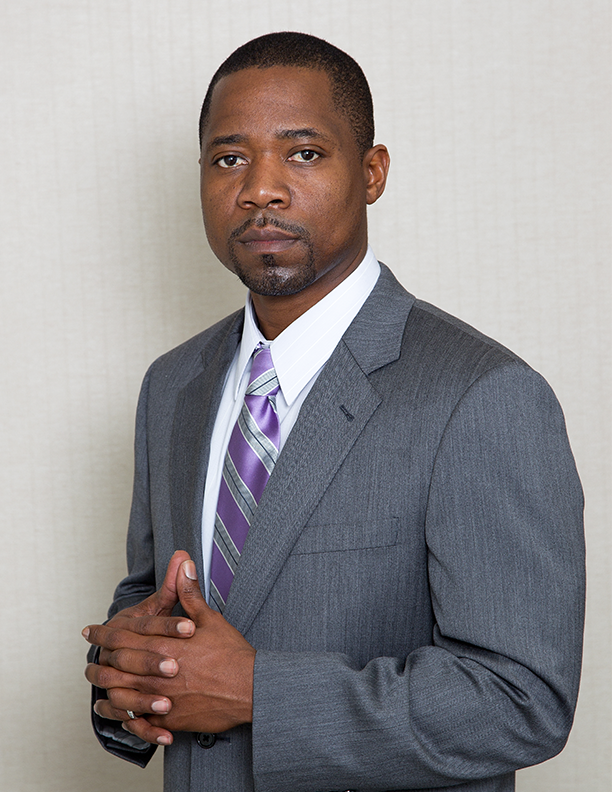
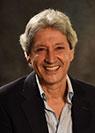
Marvin Bennett serves as a Professor of Practice in Construction Management at Morgan State University's School of Architecture and Planning, bringing 25+ years of industry experience to the classroom since joining in 2016. As principal of Metro Engineering Services since 2005, he bridges academic instruction with real-world engineering challenges in community development. B.S., Morgan State University M.S., Lehigh University His pedagogical approach emphasizes experiential learning through job site visits, industry partnerships, and guest lectures from organizations like ASCE and ACI. Courses including CMGT 204 (Construction Law & Contracts) and CMGT 401 (Sustainable Construction Practices) integrate practical problem-solving with theoretical frameworks, preparing students for immediate workforce impact. His research interests focus on sustainable infrastructure development in underserved communities, drawing from childhood experiences in St. Kitts-Nevis. Professor Bennett's mentorship philosophy treats students as future industry assets, with alumni highlighting his teamwork emphasis and real-world deadline management techniques. Through structured internships and co-ops with commercial developers and property managers, he cultivates workplace readiness while maintaining active industry engagement through Metro Engineering Services. Professional affiliations include the American Society of Civil Engineers (ASCE), American Concrete Institute (ACI), Community Association Institute (CAI), and National Association Home Builders (NAHB). As a licensed Professional Engineer (PE) and Reserve Specialist (RS), he applies technical expertise to community association projects while modeling professional conduct for students.
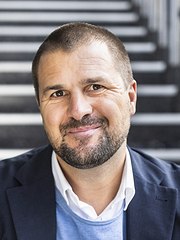
Minjoon Seo is an Associate Professor at KAIST AI, Korea Advanced Institute of Science and Technology. He holds a BS in Electrical Engineering & Computer Science from UC Berkeley and previously worked as a software engineer at Oracle. His research focuses on natural language understanding, large-scale end-to-end question answering, and multimodal AI systems combining language and vision. Research Interests: His work spans Natural Language Processing, Machine Learning, Deep Learning, and Language-Vision integration. He develops neural network architectures for machine comprehension and multimodal understanding, with applications in question answering systems and diagram interpretation. Publications: His research demonstrates a consistent focus on multimodal AI systems, with recent works advancing neural approaches to machine comprehension and diagram understanding. Publications show strong emphasis on NLP-CV integration and practical applications in healthcare and education. Awards: Best Paper Nomination at UbiComp 2014 for BiliCam research Professional Activities: Maintains active open-source contributions through GitHub repositories related to question answering systems and NLP research. Co-founded Config Intelligence while maintaining academic position.
Jan Christof Recker is Nucleus Professor and holder of the chair for Information Systems and Digital Innovation at the University of Hamburg Business School, funded through the Excellence Strategy of the Federal and State Governments. He also holds adjunct professor positions at the University of Agder (Kristiansand, Norway) since 2022 and at the QUT Business School (Brisbane, Australia) since 2018, and has previously served as Professor for Information Systems and Systems Development at the University of Cologne (2018-2021) and Full Professor for Digital Innovation at QUT Business School. Dr. Recker holds bachelor's and master's degrees in information systems from the University of Münster and a PhD in Information Systems from the Queensland University of Technology. His educational background forms the foundation for his expertise in bridging technical and organizational aspects of digital transformation. His research focuses on how organizations deal with digital innovation, digital transformation, and digital entrepreneurship. As a field researcher, he has collaborated with large organizations including Woolworths, SAP, Hilti, Commonwealth Bank, Federal Police, Lufthansa, and Ubisoft, as well as various startups. Dr. Recker employs quantitative, qualitative, and mixed field methods in his research and is also competent in design research. His current research interests include technology analysis and design in the digital age, digital entrepreneurship and new venture creation, digital innovation and transformation in large organizations, digitalization of products, services, and processes, and digital solutions for sustainable development. His work aligns with multiple UN Sustainable Development Goals including Industry, Innovation and Infrastructure (SDG 9), Responsible Consumption and Production (SDG 12), and Reduced Inequalities (SDG 10). Dr. Recker's recent publications demonstrate a sophisticated exploration of the intersection between physical and digital experiences, generative AI development methodologies, societal impacts of crises on business growth patterns, and responsible digital innovation frameworks. His work spans multiple high-impact journals across information systems, management science, and entrepreneurship disciplines, consistently addressing practical organizational challenges with theoretically grounded approaches. His notable awards and honors include: AIS Fellow Award (2018) Outstanding Associate Editor Award by MIS Quarterly (2019) SIGGreen Best Paper Award (2021) Best Paper Award by the Journal of Information Technology Theory and Application (2014) Vice Chancellor's Award for Excellence (2014) Dr. Recker has secured significant research funding for projects related to digital innovation and transformation, including the HIVESOUND start-up scholarship (2024-2025) and research on how digital products are created through hardware-software interactions (2022-2024). As Editor-in-Chief for Communications of the Association for Information Systems (2015-2020) and current Senior Editor for the MIS Quarterly, he has shaped scholarly discourse in the field. His supervision of doctoral students has been recognized with multiple awards, reflecting his commitment to developing the next generation of information systems scholars. His Management Transfer Lab at the University of Hamburg serves as a nexus for academic-industry collaboration, focusing on translating theoretical insights into practical solutions for digital transformation challenges. The lab maintains strong partnerships with major corporations and startups alike, ensuring research relevance while providing students with real-world experience in digital innovation contexts.
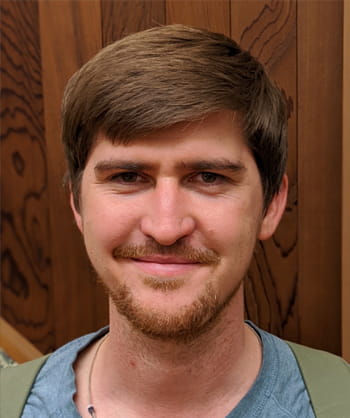
David Kurz is a Visiting Assistant Professor in Environmental Studies at Boston College. He holds a PhD in Environmental Science, Policy, and Management from UC Berkeley, an MPhil in Zoology from the University of Cambridge, and an AB in Ecology & Evolutionary Biology from Princeton University. His interdisciplinary research focuses on the human dimensions of wildlife conservation, climate policy, and socio-ecological systems. Dr. Kurz explores how climate change, urbanization, and land-use shifts impact ecosystems and human communities. Key research projects include studying bearded pig distributions in Borneo, cultural implications of lobster die-offs in the Long Island Sound, and equity in urban green space access. His work bridges natural and social sciences to address challenges in biodiversity conservation and climate resilience. Recent publications highlight topics like wildfire biodiversity overlaps in California, socio-ecological dynamics in Malaysian Borneo, and the impacts of the COVID-19 pandemic on wildlife. He emphasizes mentorship, guiding students toward real-world problem-solving and engaged scholarship. Dr. Kurz’s teaching and research align with Boston College’s commitment to environmental justice and interdisciplinary collaboration.
Päivi Häkkinen is a **Professor and Vice Director** at the **Finnish Institute for Educational Research (FIER)**, part of the University of Jyväskylä. Her research focuses on technology-enhanced learning, particularly in collaborative problem-solving, computer-supported collaborative learning (CSCL), and the integration of virtual/augmented reality in education. She leads projects like the EDUCA Flagship for future education and LearnDigi , exploring digitalization in learning. Research Interests: She investigates ICT integration in education, learning analytics, and the cognitive and social dynamics of collaborative learning. Her work emphasizes remote collaboration mechanisms, digital tools for assessment, and AI-driven educational innovation. Key Projects: EDUCA Flagship: Addresses future education challenges through interdisciplinary research. LearnDigi: Examines technology’s role in knowledge construction and digitalization impacts. METEOR: Enhances transversal skills for early career researchers via teamwork methodologies. Recent Work Trends: Her publications analyze joint attention in remote collaboration, AI-human partnerships in education, and neural bases of problem-solving. She emphasizes practical applications for teachers and educators. Labs/Teams: Active in FIER and LearnDigi, focusing on collaborative learning design and technology evaluation.
James Dixon is a Professor and Director of Ecological Psychology at the University of Connecticut, where he leads the Department of Psychological Sciences and directs the Center for the Ecological Study of Perception & Action (CESPA). CESPA fosters interdisciplinary research across optics, acoustics, movement science, and nonlinear dynamics, establishing UConn as a pioneer in ecological psychology. Research Focus Dr. Dixon investigates the self-organizing principles underlying perception, action, and cognition, with emphasis on thermodynamic foundations of behavior. His work bridges psychology, physics, and complex systems theory: Self-organization in biological and non-living dissipative systems Fractal dynamics in cognitive processes Inter-entity coordination across scales End-directed evolution in complex systems Publication Trends His publications (2009-2016) converge on emergent phenomena in complex systems, with recurring themes of self-organization, entropy, and coordination dynamics. Recent work emphasizes thermodynamic principles in behavioral emergence, while earlier studies explore representational change and insight through nonlinear models. Leadership & Academic Environment As CESPA Director, he oversees collaborative research spanning 10+ specialties. The center’s ethos integrates ecological principles with physics and development, maintaining UConn’s legacy in perception-action science since its founding by J.J. Gibson.
Shawki M. Areibi is a Professor and Area Head of Engineering Systems and Computing in the School of Engineering at the University of Guelph. His research focuses on VLSI Physical Design Automation, Reconfigurable Computing Systems, and Hardware/Software Co-design for Embedded Systems. He leads efforts in developing advanced algorithms for CAD tools, FPGA design, and machine learning applications. His work addresses challenges in VLSI layout optimization, parallel processing, and embedded systems design. Affiliations: AI Affiliated Faculty, Area Heads, Computer Engineering, Engineering Systems and Computing Research. Research Interests: VLSI Circuit Layout, Reconfigurable Computing, Machine Learning, and FPGA-based Accelerators. His research integrates meta-heuristics like Genetic Algorithms and Tabu Search to solve complex optimization problems. He has contributed to hardware acceleration frameworks for machine learning algorithms and embedded systems, with applications in domains like signal processing and data mining. His recent work includes congestion-estimation models for modern FPGAs and analytic placement tools for ultra-scale architectures. Publications span VLSI design, reconfigurable computing, and machine learning, emphasizing algorithmic innovation and hardware-software co-design. His students have explored topics ranging from FPGA placement to domain adaptation in remote sensing. Grants and Advising: Advises graduate and undergraduate students on projects involving FPGA acceleration, machine learning, and embedded systems. His labs focus on developing next-generation CAD tools and hardware accelerators.
Zhipeng Lu is currently an Associate Professor of Pharmacology and Pharmaceutical Sciences at the University of Southern California (USC) School of Pharmacy. His research focuses on understanding RNA molecules and their structural complexity as a second layer of genetic instructions beyond protein encoding. He directs the Lu Lab at USC, which develops and applies novel technologies to investigate RNA structures, interactions, chemical modifications, and functions in cellular processes and animal development. Dr. Lu's research interests center on "RNA machines" in living cells, with particular emphasis on how RNA molecules fold into structures and form intermolecular interactions to execute genetic instructions. His work spans multiple dimensions of RNA biology, including RNA structure-function relationships, RNA-protein interactions, RNA modifications, and the role of RNA in human diseases such as genetic disorders and viral infections. The lab combines computational, chemical, and biological approaches to elucidate fundamental mechanisms of RNA machines, with the ultimate goal of developing new understanding and therapies targeting human diseases. Analysis of Dr. Lu's publication history reveals a strong trajectory in RNA structure and interaction mapping technologies. His work has evolved from foundational studies on RNA processing and modification to developing innovative high-throughput methods like PARIS and RISE for analyzing RNA interactomes. Recent publications focus on specific RNA systems like XIST and snoRNAs, demonstrating how his lab has moved from method development to applying these tools to solve longstanding biological questions in epigenetics and RNA therapeutics. Dr. Lu has received numerous prestigious awards recognizing his contributions to RNA research: NHGRI K99/R00 NIH Pathway to Independence Award (2017-2022) RNA Society Scaringe Award (2017) Stanford University Jump Start Award for Excellence in Research (2016-2017) Damon Runyon-Sohn Fellowship (2015-2017) His research is supported by multiple funding sources from organizations including the National Institutes of Health and other foundations. The Lu Lab is actively recruiting PhD students and postdoctoral researchers to work on several cutting-edge directions including RNA structures, interaction networks, RNA modification mechanisms, and their roles in development and disease. The lab integrates biological, chemical, and computational approaches to advance RNA biology and push forward RNA medicine. The Lu Lab at USC is a dynamic research environment focused on "RNA machines" with recent highlights including solving aspects of the orphan snoRNA problem and discovering snoRNAs that control eMet tRNA activity. The lab's vision emphasizes creative exploration of RNA biology, with researchers encouraged to pursue innovative ideas much like "wild animals running in the African savannah." Current research directions include analysis of RNA structures, interaction networks, RNA modification mechanisms, and their roles in development and disease, with applications to genetic disorders, cancers, and viral infections.
Yuhao Chen is a Research Assistant Professor at the University of Waterloo, specializing in cutting-edge research at the intersection of computer vision, robotics, and healthcare. His work focuses on 3D reconstruction, food tracking, medical imaging, and AI-driven solutions for nutrition analysis and sports analytics. He has contributed to benchmark datasets like NutritionVerse, MetaGraspNet, and FoodVerse, advancing applications in robotic grasping, dietary intake estimation, and human-object interaction analysis. Research interests include egocentric video analysis, real-time 3D reconstruction, zero-shot learning, and multi-task learning. His projects often integrate Gaussian splatting, photometric SLAM, and diffusion models to solve complex problems in food tracking, medical image segmentation, and sports player motion analysis. Recent work highlights include FoodTrack for dietary monitoring and RepViT-MedSAM for medical image segmentation. Yuhao Chen’s innovations span robotics, healthcare, and AI, with a focus on practical applications such as automated nutrition assessment, robotic bin picking, and athlete performance analysis. His research emphasizes scalable frameworks and physically informed 3D reconstruction methods to address real-world challenges in health, sports, and automation.
Jonas Stålhand is a Professor at Linköping University, affiliated with the Department of Management and Engineering (IEI) and the Division of Solid Mechanics (SOLMEK). His research focuses on biomechanics, smart textiles, haptic technologies, and cardiovascular mechanics. He leads interdisciplinary projects such as a study on pain relief using smart textile garments, combining neuroscience, materials science, and biomechanics. His work spans arterial wall mechanics, wearable haptic systems, and biomaterial characterization. Recent projects include parameter identification in arteries and the development of electroactive yarn actuators for wearable applications. Collaborations involve multidisciplinary teams across engineering, medicine, and textile science. Research interests emphasize translating biomechanical insights into clinical and industrial applications. Notable contributions include studies on aortic stress analysis, acetabular cup stability, and electroactive polymer-based actuators. His publications address both fundamental and applied aspects of soft tissue mechanics and medical engineering. No scientific awards are explicitly listed, but his work has been highlighted in university news for its innovative potential in healthcare and technology.
Professor Finn Olesen is affiliated with Aalborg University Business School under the Faculty of Social Sciences and Humanities. His research focuses on macroeconomics, post-Keynesian economics, economic methodology, and the history of economic thought. Olesen explores ethical dimensions in economics and investigates pedagogical approaches like problem-based learning. His research interests span macroeconomic theory, economic ethics, crisis management, and innovative teaching methodologies. Olesen's work frequently examines the intersection of economic behavior and moral philosophy, particularly in contexts of global economic instability. Olesen's publications demonstrate a consistent focus on re-evaluating macroeconomic paradigms post-financial crisis, exploring Keynesian solutions to contemporary economic challenges, and advancing pedagogical methods in economics education. His recent work increasingly engages with sustainability and ethical dimensions of economic policy. Awards: Årets underviser på oecon 2020 He supervises doctoral students and leads research projects including 'Critical thinking and discovery based learning' and 'Macroeconomic and ethics'. His work emphasizes pluralistic approaches to economic education and policy analysis.
Konstantin Wernli is an Assistant Professor in the Department of Mathematics and Computer Science at the University of Southern Denmark, affiliated with the Quantum Mathematics research group. His research focuses on quantum field theory, geometric quantization, and mathematical physics, with a particular emphasis on topological field theories and perturbative methods. He has contributed to foundational work in Chern-Simons theories, BV-BFV formalisms, and geometric analysis. His research interests include quantum field theories, algebraic geometry, and the intersection of topology with physics. Notably, he explores combinatorial approaches to quantum field theory, geometric quantization frameworks, and the application of advanced mathematical tools to solve problems in theoretical physics. Recent work includes studies on partition functions, constrained dynamical systems, and the globalization of sigma models. His articles often bridge abstract mathematics with physical applications, such as analyzing heat kernels, theta invariants, and entanglement polytopes. Wernli is a project participant in the Sapere Aude grant 'FROM PERTURBATIVE TO NON-PERTURBATIVE QUANTUM FIELD THEORY BY CUTTING AND GLUING' (2024–2028), which aims to advance non-perturbative QFT techniques. He has advised on research projects involving heat kernel analysis and geometric quantization, though no formal student advisees are listed.
Prof. Allen Knutson is a Professor of Mathematics at Cornell University, affiliated with the College of Arts and Sciences. He earned his Ph.D. from the Massachusetts Institute of Technology in 1996. His research focuses on algebraic geometry, algebraic combinatorics, and geometric representation theory, with an emphasis on Schubert calculus, quiver varieties, and the combinatorial structures underlying geometric problems. Education: Ph.D. (1996) from MIT. His work often involves degenerating complex algebraic varieties into simpler combinatorial pieces, bridging geometry and discrete mathematics. Notable contributions include foundational results in Schubert calculus, honeycomb models, and the use of puzzles in cohomology computations. Research Interests: Algebraic geometry, algebraic combinatorics, Schubert calculus, quiver varieties, geometric representation theory, and applications to integrable systems. His interdisciplinary approach integrates algebraic, geometric, and combinatorial methods to solve problems in mathematics and theoretical physics. Advising: Current students include Portia Anderson, Raj Gandhi, and others. Past advisees have contributed to areas like flag manifolds, Frobenius splitting, and Bruhat atlases. He has taught advanced courses on topics such as symplectic resolutions, differentiable manifolds, and algebraic geometry. Labs/Teams: Collaborates widely, with contributions to projects like the ICM 2022 paper on Schubert calculus and quiver varieties. His work often involves visual tools like puzzles and pipe dreams to encode geometric invariants.
Tom Verhoeff is an Assistant Professor at the Faculty of Mathematics and Computing Science of Eindhoven University of Technology (TU/e) , working within the Software Engineering & Technology group. His research focuses on Model-Driven Engineering (MDE) , Domain-Specific Languages (DSLs) , and the intersection of mathematics, computing, and the arts . He teaches courses in data analytics, programming, algorithms, theoretical computer science , and logic . Verhoeff earned both his MSc and PhD in Technical Science (Mathematics and Computer Science) from TU/e. He is actively involved in promoting mathematics and informatics through initiatives like the annual Bridges conference , and serves as board member and treasurer of the Dutch Mathematics Olympiad , as well as chair of the Koos Verhoeff MathArt foundation . He has also held roles as guest lecturer in Lithuania and Finals Director for the ACM International Collegiate Programming Contest . Research Interests: Verhoeff’s work spans Model-Driven Engineering , domain-specific language development , and 3D geometric modeling . His scholarship often explores symmetry, recursion, and mathematical visualization , particularly through computational art and algorithmic puzzles . Recent publications highlight 3D rotation methods , knot theory , and mathematical art using lattice paths and geometric transformations . Scientific Awards: ACM ICPC European Founders Award (2004) IOI Distinguished Service Award (2007) Second Place in the 2022 Wolfram Computational Art Contest Notable Collaborations and Affiliations: He is affiliated with the Esprit Working Group on Asynchronous Circuit Design (ACiD-WG) , WIRE (TUE Mathematics Alumni) , ACM (Senior Member) , CSTA , IEEE Computer Society , and Royal Dutch Mathematical Society (KWG) .
Professor Matt Garratt is a faculty member at the University of New South Wales (UNSW Canberra), School of Engineering and IT, serving as AI theme lead for the Defence Trailblazer Universities initiative with over $200 million in funding. His primary research focuses on sensing, guidance, and control for autonomous systems within robotics and unmanned aerial vehicles. Garratt's research spans robotics, swarm intelligence, and autonomous systems with emphasis on bio-inspired navigation techniques and adaptive flight control. His work addresses critical challenges including terrain following using vision systems, landing UAVs on moving platforms, and developing self-organizing swarms. He integrates artificial intelligence, computer vision, and machine learning to advance unmanned systems capabilities in complex environments. Analysis of his recent publications reveals strong trends in bio-inspired UAV navigation (particularly honeybee behavior modeling) and swarm robotics applications. His work increasingly incorporates deep learning for perception tasks while addressing real-world challenges like gas plume detection and adversarial robustness in 3D vision systems. The research demonstrates consistent progression toward practical implementation of autonomous systems in dynamic environments. Professor Garratt has secured over $7.7 million in external research funding as Chief Investigator on 33 grants. He actively mentors graduate students with scholarships available for Masters and PhD research in robotics and AI, focusing on: UAV path planning and adaptive control systems Swarm robotics collective motion optimization Bio-inspired autonomous navigation techniques Computer vision for robotic perception He co-founded the UNSW Canberra AIR (AI and Robotics) Group (AIR Lab), which drives research in trusted autonomy, swarm intelligence, and AI integration for defense applications. The lab develops practical solutions for autonomous systems operating in complex, real-world environments while maintaining ethical AI frameworks.