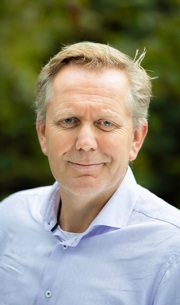
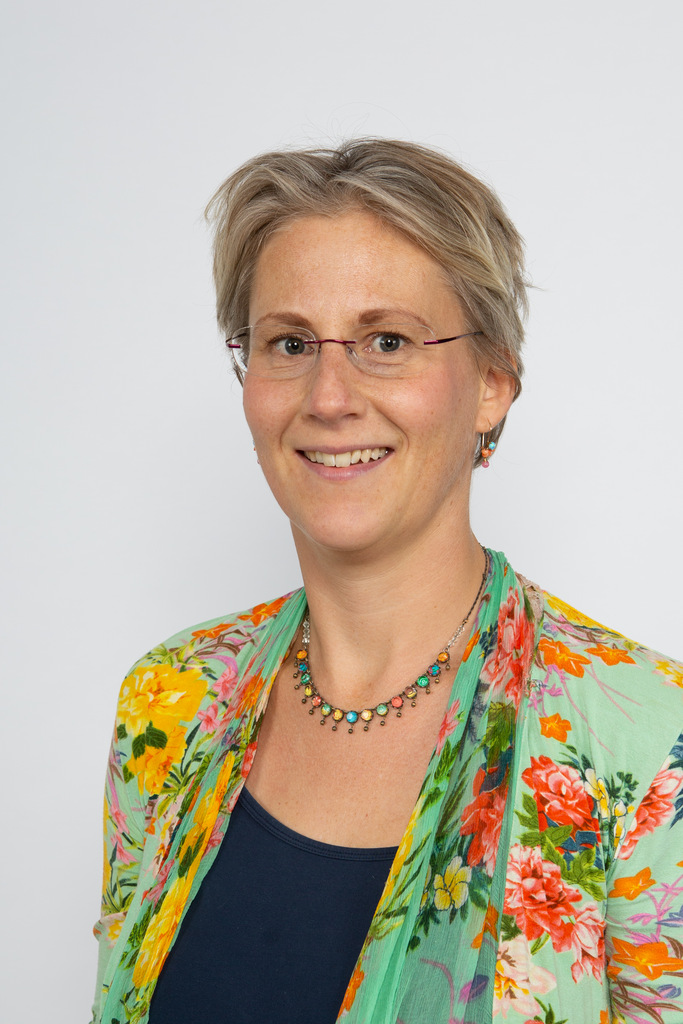
Dr. Guido Stompff is a Lecturer in Design Thinking at Inholland University of Applied Sciences, working three days a week. He leads the Design Thinking Lectorate within the Applied Research x Creativity Research Center, focusing on methodological foundations and broad educational integration of Design Thinking. His research emphasizes living labs, such as the Urban Leisure & Tourism Lab addressing tourism pressures in Amsterdam. He collaborates with educational institutions, museums (e.g., Cube Design Museum), and organizations like Brightlands Innovation Factory to advance innovation processes. Stompff’s work bridges design practice and academic research, advocating for practitioner-driven methodologies. He holds a PhD from TU Delft and authored a best-selling book on Design Thinking. Key projects include the Students as Partners initiative (with Comenius Grant) and the Dutch Pop Music Sector Research Agenda. His research explores team dynamics, design inquiry in education, and systemic co-design approaches for societal challenges. Education: PhD in Innovation Processes (TU Delft) MSc Industrial Design Engineering (TU Delft) Research Interests: Design Thinking Methodology Interdisciplinary Collaboration Education Innovation Urban Social Challenges Practitioner-Academia Synergy Grants & Recognition: Comenius Grant (2023) for Students as Partners Project Author of bestseller Design Thinking; Radical Change in Small Steps (2018) Advising & Partnerships: Cube Design Museum (Kerkrade) Brightlands Innovation Factory (Limburg) Urban Leisure & Tourism Lab (Amsterdam-North) Expertisenetwerk Systemisch Co-design
Dr. Kiki de Jonge is an Assistant Professor at the Faculty of Behavioural and Social Sciences of the University of Groningen , specializing in Organizational Psychology . She combines her academic role with running her company, Groeiflow Coaching & Training , where she focuses on enhancing flow experiences and creativity in personal and professional development. Her research explores how individual differences interact with work contexts to optimize performance and well-being. Her research interests include Flow and creativity in the workplace Matching individual needs with work environments Blended working practices Conflict resolution through creativity Age-related work strategies Key trends in her publications revolve around understanding how creativity, age, and organizational climates influence work outcomes, with recent studies on AI acceptance, gender dynamics in conflict resolution, and ethical implications of creative behavior. She has contributed to journals like International Journal of Conflict Management and Frontiers in Psychology . Scientific awards include nominations for the David van Lennep masterthesis price GAP-masterthesis price She teaches Academic Skills to first-year psychology students and has held roles in educational committees and as a mindfulness trainer. Her outreach activities include media commentary on productivity, brainstorming, and blended work challenges.
John M. Carroll is a Professor at The Pennsylvania State University , affiliated with the College of Information Sciences and Technology . He co-directs the Collaboration and Innovation Laboratory and leads the Center for Human-Computer Interaction . Secondary appointments span Computer Science and Engineering , Learning, Design and Technology , and Psychology . Education : Mathematics and Information Science (undergraduate), Experimental Psychology (Ph.D.) Research Focus : Human-Computer Interaction (HCI), community informatics, scenario-based design, and minimalist instructional models. Key Projects : Mobile timebanking systems, smart city initiatives, community data analytics, and accessibility technologies for visually impaired users. Scientific Awards include lifetime honors from ACM, IEEE, and AAAS. He has led NSF-funded projects on collaborative sensemaking, educational technology, and disaster response systems. His work bridges social theory, design practice, and computational innovation.
Liesbeth Ruijgrok serves as a Researcher within the Pharmacy department at Erasmus University Medical Center (Erasmus MC) in Rotterdam, Netherlands. Her academic work bridges pharmaceutical science with clinical applications, focusing on optimizing drug therapies for complex medical conditions through rigorous translational research. Her primary research spans Pharmacology, Toxicology, and Pharmaceutical Sciences with specialized expertise in Adrenal Insufficiency management, Preeclampsia pathophysiology, Drug-Drug Interactions, and advanced Drug Delivery Systems. She pioneers innovative approaches including pharmaceutical 3D printing for personalized hydrocortisone formulations, functional respiratory imaging for aerosol deposition analysis in pediatric asthma, and mechanistic studies of statins in hypertensive pregnancy disorders. Her work consistently addresses critical therapeutic challenges in pharmacokinetics and pharmacodynamics. Analysis of her 2024 publications reveals a strong trend toward solving real-world pharmacotherapy problems through technological innovation and mechanistic understanding. Key themes include cost-effective manufacturing of personalized medicines, precision drug delivery for respiratory diseases, and repurposing existing drugs for novel indications like preeclampsia. Her collaborative studies frequently integrate clinical data with pharmaceutical technology to enhance therapeutic outcomes. No scientific awards were documented in the available profile information. No details regarding student mentorship, research grant funding, or laboratory infrastructure were provided in the source materials. Her research appears to be conducted through multidisciplinary collaborations within Erasmus MC's clinical departments rather than a dedicated independent laboratory.
Dr. Sophie Oudman is an Assistant Professor at the Department of Education, Utrecht University, within the Faculty of Social and Behavioural Sciences. Her work bridges academic research with practical applications in primary and secondary education, focusing on teacher-student interactions and student self-regulated learning. University: Utrecht University School: Faculty of Social and Behavioural Sciences Department: Education Academic Rank: Assistant Professor Research Interests center on improving teachers' and students' judgment accuracy, metacognition, and adaptive instruction. She employs advanced multilevel models and quantitative methods to address educational challenges in mathematics and classroom dynamics. Recent Publications (2017–2024) span topics like metacognition, peer dynamics, and cue utilization in primary education. Key trends include feedback mechanisms, self-assessment strategies, and the role of teachers in shaping social-emotional outcomes. Teaching includes courses such as Educational Psychology, Design of Learning Environments, and Interaction in the Classroom, primarily in the ALPO program and Educational Sciences bachelor's/master's degrees. She supervises PhD candidate Stephanie Hepner on text comprehension judgments. Projects include collaboration with secondary school teachers to enhance basic mathematics skills via the Werkplaats Onderwijs en Onderzoek Oudenbosch initiative.
Frank Staals serves as Assistant Professor in the Department of Information and Computing Sciences at Utrecht University's Faculty of Science, specializing in algorithmic solutions for geometric data problems with practical applications in geographic information systems. His academic foundation includes: PhD in Computer Science from Utrecht University Postdoctoral research at MADALGO, Aarhus University Bachelor's and Master's degrees in Computer Science from Eindhoven University of Technology Staals' research centers on Computational Geometry within Theoretical Computer Science, with emphasis on kinetic data structures for moving objects, trajectory analysis, polygonal obstacle navigation, and distance computations. His work maintains theoretical rigor while actively seeking real-world implementations, particularly in geographic information science domains where geometric algorithms solve spatial analysis challenges. He contributes to academic instruction through courses including Functional Programming and Geometric Algorithms, integrating cutting-edge research into curriculum development. Staals operates within the Geometric Computing research group under the Algorithms section, advancing computational methods for dynamic spatial data processing.
Jan Bergmans is a Full Professor in the Department of Electrical Engineering at Eindhoven University of Technology (TU/e). He leads the Signal Processing Systems group and holds professorships at multiple research centers including the Eindhoven MedTech Innovation Center (e/MTIC), Center for Care & Cure Technology Eindhoven, NeuroPlatform, EAISI Health, and EAISI Foundational. With approximately 35 years of experience in signal processing theory and applications, Bergmans focuses on developing computationally efficient signal analysis techniques for healthcare, wireless communication, surveillance, and intelligent lighting applications. Bergmans' educational background includes: MSc in Electrical Engineering from Eindhoven University of Technology (1981) PhD in Electrical Engineering from Eindhoven University of Technology (1987) His research interests center around signal processing and data analytics theories, algorithms, architectures, and systems. Bergmans develops mathematical models that incorporate domain-specific knowledge, such as propagation models for radio communication channels or pathophysiological models for clinical decision support systems. His work emphasizes creating powerful yet computationally efficient signal analysis techniques, with significant applications in healthcare technology and medical diagnostics. The integration of engineering principles with clinical needs is a hallmark of his research approach, enabling practical solutions that address real-world medical challenges. Analysis of Bergmans' recent publications reveals a strong focus on medical signal processing, particularly in ECG and fetal monitoring applications. His work combines advanced signal processing techniques like adaptive Kalman filtering with practical healthcare applications. There's also significant research in visible light communications and sensor network technologies, showing the breadth of his expertise across different application domains of signal processing. The consistent theme across his work is developing computationally efficient algorithms that incorporate domain-specific knowledge to solve practical engineering problems. Scientific recognition includes: Senior Member of the IEEE Author of numerous papers and 2 books Holder of approximately 40 US patents Bergmans has established smooth collaborations with strategic industrial and clinical partners, including Philips Research and multiple hospitals in the Eindhoven region. He co-manages BrainBridge, the strategic collaboration between TU/e, Philips Research, and Zhejiang University (China). His research group has secured numerous projects, including recent third-tier projects like MEDEIA, PISANO SPS, and RAISE projects focusing on medical engineering innovations and robust AI for radar signal processing. As a key figure in the Signal Processing Systems group and one of the founders of the Eindhoven MedTech Innovation Center (e/MTIC), Bergmans plays a central role in bridging academic research with industrial and clinical applications. His leadership extends to managing multiple research teams working on healthcare technology, wireless communications, and sensor systems, fostering an environment where theoretical signal processing advances translate into practical medical and technological solutions.
Teun J Dekker is a full-time Professor of Liberal Arts and Sciences Education at Maastricht University 's University College Maastricht (Faculty of Science and Engineering). He teaches courses at the intersection of Social Sciences and Humanities, including History of Political Thought and Distributive Justice in Contemporary Political Philosophy. Bachelor's and Master's in Political Theory (University College Utrecht, Oxford University) PhD in Political Theory from Oxford University Karl M. Loewenstein Fellow at Amherst College His research focuses on: Theoretical foundations of Liberal Arts education in Europe Distributive justice theories Democratic civic education Curricular choice and student ownership Educational reform in the European Higher Education Area Recent publications analyze: Generic skills development in liberal arts programs Graduate labor market outcomes Democratic virtue cultivation Interdisciplinary integration challenges Student-centered educational reforms Scientific recognition includes: VSB Scholarship Huygens National Talent Scholarship NWO VENI Grant He also contributes to educational governance through: Chair of University Council at Maastricht University Board member at European Consortium of Liberal Arts and Sciences (ECOLAS) Advisory roles at University of Sussex and University College Tilburg
Giulia Calabretta is an Associate Professor at the Delft University of Technology (TU Delft), affiliated with the Faculty of Industrial Design Engineering and the Department of Design, Organisation and Strategy. Her research focuses on strategic design, design thinking, sustainability, and innovation management. She actively contributes to courses such as 'Strategic Value of Design' and supervises graduation projects. Her work bridges theoretical frameworks with practical applications, particularly in areas like circular economy, sustainable business models, and design-led organizational transformation. Key contributions include studies on consumer co-creation processes, the role of digital technologies in design thinking, and frameworks for addressing sustainability challenges. Giulia’s research emphasizes the integration of design methodologies into innovation strategies, with notable projects exploring the implementation of tactical sustainability tools and the impact of creative practices during organizational crises. She collaborates with academic and industry partners to advance strategic design practices and has published extensively in top-tier journals. Her office is located in room 32.B-4-050 at TU Delft.
Rens G.A. Brankaert is an Assistant Professor of Active and Healthy Ageing at Eindhoven University of Technology (TU/e), specializing in dementia research. He leads the TU/e Expertise Center for Dementia & Technology (ECDT) and focuses on 'warm technology' that improves well-being through user-friendly, non-stigmatizing solutions. His academic background includes an MSc in Industrial Design (2012) and a PhD from TU/e (2016), where he researched radical design approaches for people with dementia. Academic Background: Bachelor's and Master's in Industrial Design at TU/e PhD in 2016: 'Design for dementia' (radical approaches for dementia care) Research Interests: Brankaert’s work emphasizes a person-centered design perspective, applying Living Lab methodologies to assess healthcare interventions. He investigates assistive technologies that empower individuals with dementia while addressing stakeholders’ needs. Notable areas include: Warm technology Impact of design on healthcare organizations Vitality in elderly communities and office environments His research aligns with UN Sustainable Development Goals, particularly improving quality of life and fostering inclusive societies. Scientific Awards: Innovation Award for Dementia Researcher (TU/e) Young Outstanding Researcher Award 2021 Advising & Grants: Brankaert has coached students on exemplary projects like 'Wijstijd' (Thilly Coppelmans) and 'Sentic' (Myrte Thoolen). He leads several funded projects, including 'Sounds like Home' (2021–2021) and 'Everyday Sounds of Dementia' (2018–2021), emphasizing participatory design and best practices. His advising style prioritizes student independence and stakeholder collaboration. Labs & Teams: As founder and leader of the ECDT, he collaborates with researchers like Dr. Myrthe Houben and Dr. Lu, focusing on dementia dynamics and technology integration in healthcare settings.
Birgul Arslan is an Associate Professor of Innovation Strategy at Rotterdam School of Management (RSM), Erasmus University Rotterdam. She holds a Ph.D. in Strategic Management from HEC Paris, France. Her research focuses on interorganizational collaboration in new product development, particularly addressing grand challenges such as the Ebola outbreak and antimicrobial resistance. She is also a sought-after executive program instructor, specializing in corporate innovation, emerging technologies, and design thinking application. Education: Ph.D. in Strategic Management (HEC Paris), France. Academic Background: Prior experience in business intelligence consulting. Research Interests: Birgul’s work explores how organizations collaborate under high-stakes scenarios like public health crises and environmental sustainability. Her studies investigate partnership dynamics, innovation pathways, and the balance between competition and cooperation in strategic alliances. Scientific Awards: Full-time MBA Faculty Award (2023) Advising & Grants: Co-promotor for two PhD tracks: Public-private collaboration in water resources management projects (with Mamohau Cecilia Mpojane) Technology Development and Adoption for Zero-emissions in Inland Shipping (with Nader Ranjbar) Professional Activities: Active in organizing research seminars on topics ranging from collective problem-solving in online deliberation to skilled immigrant career networks. Recent contributions include policy-relevant analyses on pandemic response strategies derived from Ebola and COVID-19 case studies.
Chris Seijger is an Assistant Professor in Water Resources Management at Wageningen University & Research. His research focuses on water governance, climate change impacts, and policy integration in agricultural and environmental systems. He has collaborated extensively with institutions in Jordan, Germany, Egypt, and Vietnam, addressing challenges such as water scarcity, delta management, and IoT-driven resource monitoring. He co-promotes three PhD projects focused on water system efficiency, agricultural innovation, and hydrological modeling. Seijger's work bridges academic research and policy, emphasizing participatory approaches and interdisciplinary solutions. Research interests include strategic delta planning, cross-sectoral policy analysis, and the application of technology in natural resource management. His recent projects explore IoT systems in Germany, transformative water policies in Jordan, and agricultural productivity in water-scarce regions. Seijger has published widely in journals like Hydrological Processes and Environmental Science and Policy , contributing to debates on sustainable water use and climate resilience. He actively engages in knowledge transfer, as seen in his media contribution advocating for centralizing water in food systems. Current projects involve optimizing Nile water systems, assessing irrigation modernization in Egypt, and evaluating water governance in the Mekong Delta.
Dr. Diana Rus is an Associate Professor at the University of Groningen , specifically within the Faculty of Behavioural and Social Sciences and the Department of Organizational Psychology . Her research focuses on leadership dynamics, creativity, and organizational change. Key roles include Chair of the Academic Development and Skills Unit, Confidential Advisor for Psychology PhD students, and Editor-in-Chief of EWOP In Practice Journal. Education : She holds a PhD in Management from the Rotterdam School of Management, Erasmus University (2009). Prior to academia, she worked in industry, including leading an innovation management consultancy. Research Interests : Destructive Leadership : Studies abusive supervision, power dynamics, and corporate psychopathy. Creativity & Innovation : Explores leadership roles in fostering innovation, sustainable practices, and random constraints in creative processes. Organizational Change : Examines workplace innovation, governance mechanisms in family firms, and sustainable development. Teaching : Offers courses on Organizational Development and Change and Power and Leadership , emphasizing critical perspectives on leadership and behavioral science. Awards : Received the Best paper award 2019 from the European Journal of Work and Organizational Psychology for her work on leader self-serving behavior. Collaborations : Active in international research networks, co-authoring studies on ethical leadership, feedback dynamics, and innovation ecosystems. Her work intersects with UN Sustainable Development Goals, particularly in sustainable innovation and ethical practices.
Dr. Joyce Rupert is a Lecturer and Visiting Fellow at the Center for Strategy, Organization & Leadership. She actively participates in the Master of Management program as a graduation supervisor, second reader, and quality assessor. Her research focuses on diverse team dynamics, leadership in organizations, and change management. Key research contributions include exploring how 'leading from love' (agape) outperforms transactional leadership, as detailed in her co-authored book Agapè | Caritas in Bedrijf . Collaborations include projects with Erasmus University Rotterdam and Tilburg University on people-centered entrepreneurship series. Her work examines faultlines in teams, error culture's impact on learning, and resistance to change mechanisms. Professional activities emphasize cultivating analytical thinking in students through research supervision. No scientific awards are explicitly mentioned in the provided texts. She has advised students in the Master of Management program but no specific grant information is available. Her affiliation with the Center for Strategy, Organization & Leadership positions her within organizational strategy and leadership research networks.
Renee Hoekzema is an Assistant Professor in the Department of Mathematics within the Faculty of Science at Vrije Universiteit Amsterdam (VU Amsterdam). Her research spans multiple disciplines including mathematics, biology, and cognitive science, with a particular focus on topological structures and their applications across scientific domains. Dr. Hoekzema's research interests encompass a diverse range of mathematical and interdisciplinary topics: Algebraic Topology and Manifold Theory Geometric Analysis and Spectral Methods K-Theory and Cobordism Invariants Mathematical Biology and Developmental Patterns Mathematical Cognition and Spatial Reasoning Feature Selection and Unsupervised Learning Methods Her recent publications demonstrate a strong interdisciplinary approach, bridging pure mathematics with applications in biology, medical imaging, and cognitive science. Dr. Hoekzema frequently applies topological and geometric methods to problems in developmental biology and mathematical cognition, showing how abstract mathematical structures can illuminate concrete scientific questions. Her work on manifolds with odd Euler characteristic represents significant contributions to geometric topology, while her research on visuo-spatial thinking explores the cognitive foundations of mathematical expertise across multiple dimensions of analysis. Dr. Hoekzema serves as Principal Investigator for the research project "Shapes inside shapes in mathematics, physics, and biology" (2022-2025), which has generated substantial academic and public engagement across multiple platforms including news outlets, social media, and Wikipedia. She also teaches "Elements of Geometry" and maintains an active research profile with publications spanning mathematical topology, biological applications, and cognitive aspects of mathematical thinking, demonstrating her commitment to both theoretical advancement and practical scientific applications.