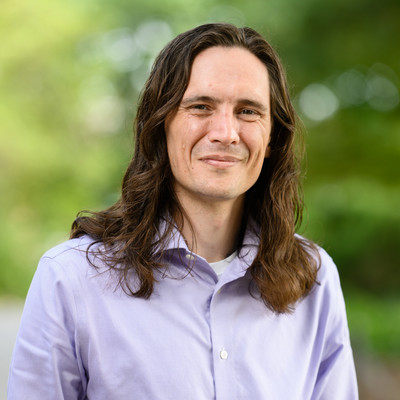
Adam Fromme is an Assistant Professor of Teaching in the Department of Design at The Ohio State University's College of Arts and Sciences, with a shared appointment in the College of Nursing's Master of Healthcare Innovation program. He holds an MFA in Design Research and Development from Ohio State and a BSD in Visual Communication Design. His research explores the designer's mindset and its application in value-based decision making, with interests in creativity, play, ambiguity and risk-taking in both professional and public settings. He hosts the "Thinking through Design" podcast examining how designers approach problem-solving. Professor Fromme teaches primarily in the Design Thinking Minor and studies how individuals, teams and organizations utilize design thinking to improve quality and add value. His service includes chairing the department's Communications and Visual Identity Committee.
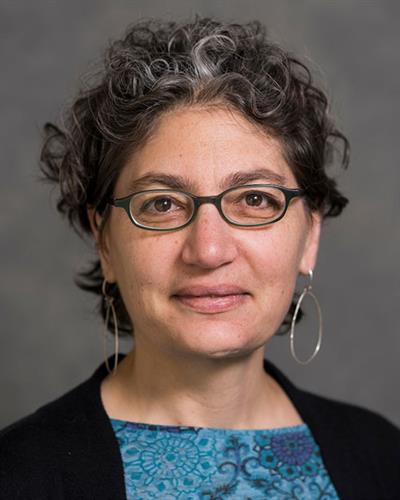
Dr. Erin Twyford is a Senior Lecturer in Accounting at the University of Wollongong's School of Business. Her work critically examines accounting's societal impacts, particularly in contexts of oppression and vulnerability. She holds Chartered Accountant (CA) credentials and has contributed to parliamentary inquiries, government policy, and media commentary on consulting industry ethics and accountability. Her research focuses on historical accounting practices during the Holocaust, modern issues in aged care financialization, and the role of accounting in asylum seeker policies. Notable achievements include the Robert W. Gibson Manuscript Award and Mary Parker Follet Award, reflecting her innovative contributions to social and environmental accounting scholarship. Dr. Twyford bridges academia and practice through teaching grants advancing work-integrated learning and curriculum reforms. Her professional background includes roles at Deloitte and IMB Bank, informing her critical perspective on corporate accountability. She actively reviews for journals like Accounting Auditing & Accountability Journal and contributes to professional organizations such as AFAANZ.
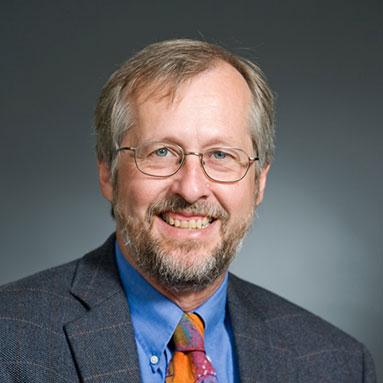
Alexander P. Karp is a Professor of Mathematics Education at Teachers College, Columbia University. His academic affiliations include the Mathematics, Science & Technology division and the Mathematics Education department. He holds a Ph.D. and prior degrees in Mathematics and Education from Leningrad State Pedagogical University and St. Petersburg State Pedagogical University, complemented by an M.A. in History and Education. Fluent in Russian, English, German, and Latin, his research focuses on gifted education, problem-solving methodologies, and the history of mathematics education. Karp has authored numerous publications on Russian and Soviet mathematics education, including edited volumes like Russian Mathematics Education: History and World Significance . His work explores topics ranging from the biographies of influential educators like Mark Vygodsky to the evolution of teaching practices in the Soviet Union during early 20th-century reforms. Notable contributions include analyzing historical pedagogical trends in Russian mathematics education and investigating strategies for fostering creativity among gifted students. His recent publications address international dimensions of mathematics education and the challenges faced by prospective teachers in problem-solving instruction. Karp’s scholarship bridges historical analysis with contemporary educational practices, emphasizing cross-cultural comparisons and the global context of mathematics teaching methodologies. He currently serves as a faculty member with office hours on Wednesdays and Thursdays. His work is characterized by meticulous historical research and practical pedagogical insights, making significant contributions to both academic discourse and teacher training programs.
Irina Lyublinskaya is a Professor of Mathematics and Education at Teachers College, Columbia University. She is affiliated with the Mathematics, Science & Technology department and specializes in STEM education, mathematics education, and educational technology. Her research interests include teacher education, international education, and curriculum development. Lyublinskaya holds a Ph.D. and M.S. in Theoretical and Mathematical Physics from Leningrad State University (now St. Petersburg State University). Her scholarly work spans over three decades, with a focus on integrating technology into mathematics and science education. Notable contributions include co-authoring textbooks such as Geometry investigations with GeoGebra and Exploring precalculus with The Geometer’s Sketchpad . Her recent research emphasizes culturally responsive teaching, TPACK framework applications, and robotics integration in elementary education. Lyublinskaya’s publications explore topics like teacher professional development, special education technology competency, and cross-cultural STEM pedagogy. She has mentored students such as Xiang Du and Alyssa Kaplon-Schilis, who co-authored impactful studies on TPACK trajectories and culturally relevant mathematics tasks. Her work bridges theoretical research and practical classroom applications, advocating for innovative educational technologies.
Dr. Michael Kiernan is a Lecturer in the Department of General Engineering at Clemson University. He holds a Ph.D. in Civil Engineering from Auburn University (2021), an M.S. from Auburn (2019), and a B.S. from the University of California, Davis (2015). His research focuses on numerical methods for landslide analysis in strain-softening clays and integrating geophysical techniques with traditional geotechnical explorations for sinkhole and landslide site characterization. Kiernan teaches courses such as ENGR 1010, ENGR 1410, and ENGR 1640, emphasizing engineering problem-solving and programming. His work spans landslides, sinkhole detection, and geophysical integration into infrastructure projects. Notable publications include studies on landslide simulations, sinkhole geophysical surveys, and highway-related geotechnical investigations. Kiernan is affiliated with the American Society of Civil Engineers (ASCE) and the United States Society of Dams (USSD). His contributions to Auburn University’s National Geotechnical Experimentation Site and Alabama Department of Transportation (ALDOT) projects highlight his applied research in geotechnical engineering.
Laurie Goldman is an Associate Teaching Professor in the Department of Urban and Environmental Policy and Planning at Tufts University's School of Arts and Sciences, specializing in housing policy, gentrification strategies, and organizational change theories. She actively engages in teaching courses like Housing Policy, Capstone Projects, and Homelessness in America, while integrating her extensive experience as a community organizer, policy advocate, and organizational consultant. PhD in Public Policy from MIT (2009) MS in Urban and Regional Planning from Technion (1996) BS in Anthropology from Reed College (1986) Her research focuses on urban policy innovation, inter-organizational collaboration, and grassroots contributions to social services. Recent publications analyze strategic partnerships in community development, peer-driven frontline service improvements, and cognitive leadership dynamics. She contributes to policy discussions through professional engagements with organizations like the Association of Collegiate Schools of Planning and Somerville Community Corporation. HDR Tripods Grant (NSF, 2019-2023) for data-intensive studies Goldman's teaching emphasizes housing policy, homelessness, and gentrification, with over a decade of experience at Tufts University. Her work bridges academic research and practical applications, informed by decades of fieldwork in urban policy and nonprofit management.
Dr. Lukas Wallrich is a Lecturer in Organisational Psychology at Birkbeck Business School, University of London. He holds a PhD in Social Psychology from Goldsmiths, University of London, and prior degrees including an MA in Education (Psychology) from UCL and a BA in Politics, Philosophy, and Economics from the University of Oxford. His research focuses on leveraging workforce diversity to enhance organisational performance, intergroup contact theory, and Open Science practices. He is a member of several academic societies including the Society for the Improvement of Psychological Science and the International Society of Political Psychology. Key research interests include the relationship between diversity and team performance, replicability in psychological research, and the impact of intergroup contact on societal attitudes. His work has been supported by grants such as the British Academy Small Research Grant and the Einstein Foundation Early Career Award shortlist. Dr. Wallrich teaches on organisational psychology master's programs and has contributed to R packages like timesaveR and metaUI to support open research practices. He has presented at conferences globally and led workshops on evidence synthesis and meta-analysis methodologies. His recent publications include comprehensive meta-analyses on team diversity and the development of the Replication Database to track replicability in psychological science. Dr. Wallrich also serves as a reviewer for multiple journals and an External Examiner for LSE's Management modules.
Dr. Clair Reynolds Kueny serves as Associate Professor, Department Chair, and Graduate Program Director for the Master of Science in Industrial-Organizational Psychology within the Psychological Science Department at Missouri University of Science and Technology's College of Arts, Sciences, and Education. She joined as full-time faculty in August 2016 after completing her doctorate, and assumed program leadership in 2020 while teaching core graduate courses including Organizational Development and Ethics. Her educational foundation includes a Ph.D. and M.S. in Industrial-Organizational Psychology from Saint Louis University, complemented by dual B.S. degrees in Psychology and Political Science with Statistics minor from Truman State University. Dr. Kueny's research centers on employee discretionary behaviors, workplace stress, and person-environment fit , with specialized focus on healthcare applications in rural settings. She integrates Industrial-Organizational Psychology principles to improve healthcare professional experiences and radiation therapy delivery, while also examining safety culture in transportation industries. Her methodology frequently employs simulation modeling and cross-sectional surveys. Recent publications (2021-2025) reveal strong emphasis on rural healthcare innovation (particularly mobile radiation oncology systems), global health disparities in low-resource cancer care, and safety behavior analysis in transportation. Her work consistently bridges organizational psychology theory with practical healthcare implementation challenges. Her accolades include multiple university teaching awards, service recognitions, and Outstanding Reviewer honors from Group & Organization Management journal: 2022 Faculty Service Award 2021 Outstanding Contributions to Graduate Studies 2021 CASB Alumni Student Impact Award 2020 CASB Community Outreach Award 2019 Faculty Teaching Award 2020-2021 Outstanding Teaching Commendations 2020-2021 Outstanding Reviewer Awards As Graduate Program Director, Dr. Kueny oversees curriculum development for the MS I-O program while securing research funding for rural healthcare improvement initiatives. Her teaching portfolio spans undergraduate Industrial Psychology to graduate Ethics courses, with demonstrated excellence through repeated commendations. She actively contributes through R-NetWORC collaboration and GIOP Executive Team leadership, focusing on interdisciplinary applications of organizational psychology in healthcare systems improvement and community-engaged senior design projects.
Deborah O'Connor is Head of the Department of Health Professions at Manchester Metropolitan University’s Faculty of Health and Education. A physiotherapist with over 27 years of healthcare experience, she serves as a Senior Lecturer in Education and international Work-Integrated Learning Research Fellow at Elon University. Her roles include Faculty Director of Placements and Partnerships since 2007. MSc Physiotherapy Postgraduate Certificate in Academic Practice Principal Fellow of the Higher Education Academy Her research focuses on work-integrated learning , interprofessional education , and virtual reality applications in rehabilitation . She explores how practice-based learning enhances professional belongingness and employability in healthcare students. Recent publications examine care home placement models, upper limb stroke recovery using VR, and community-based rehabilitation technologies. Key scientific recognitions include Principal Fellowship of the Higher Education Academy and international research fellowships . She co-leads the Greater Manchester Practice Education Centre of Excellence and serves as external examiner at Robert Gordon University. Her clinical practice and academic work intersect to ensure evidence-based teaching in neurological physiotherapy.
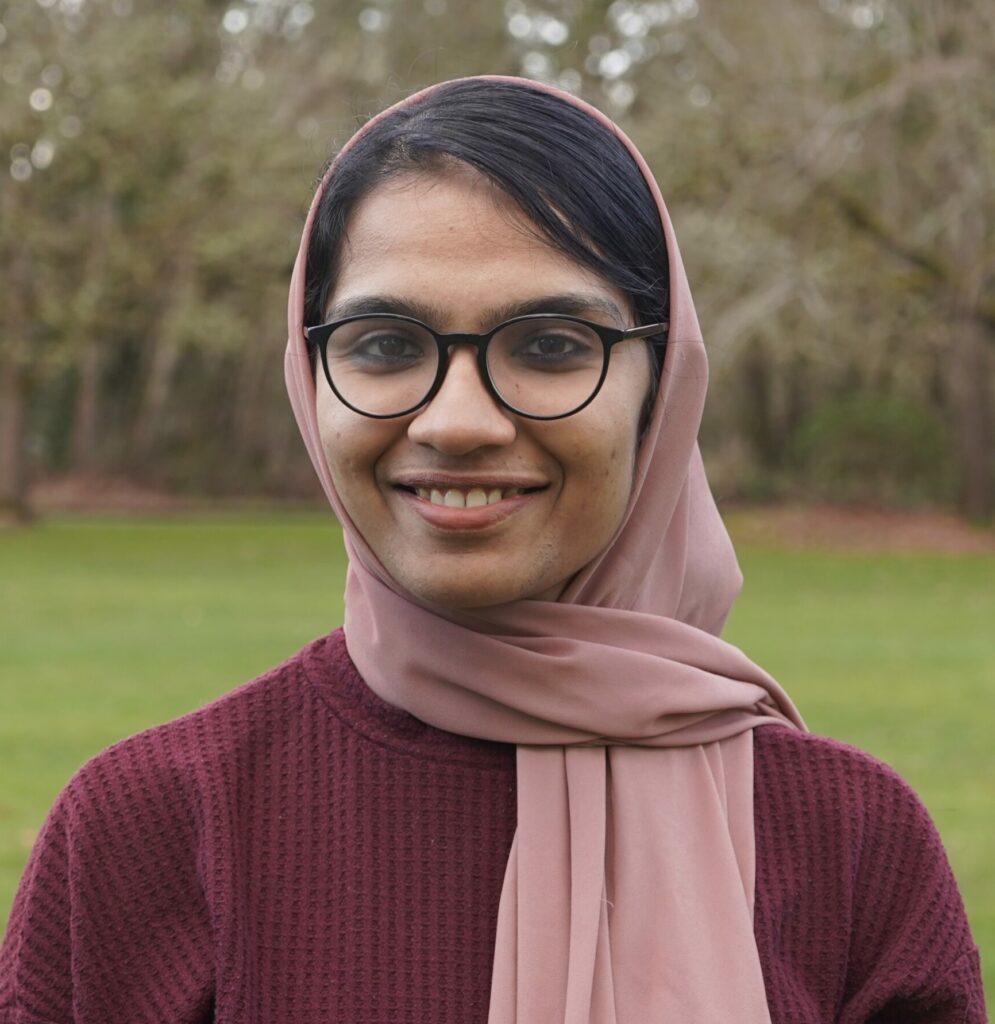
Shahana Ibrahim is a tenure-track Assistant Professor at the University of Central Florida under the AI Initiative, holding a joint appointment in the Department of Electrical and Computer Engineering and Computer Science. Her research develops provable methods for robust machine learning systems with applications in critical real-world scenarios. Education: Ph.D. in Electrical and Computer Engineering, Oregon State University (advised by Dr. Xiao Fu) Prior industry experience: System Validation Engineer at Texas Instruments (2012-2017) and NVIDIA GPU intern (2018) Her research spans machine learning, signal processing, and optimization with core expertise in weakly supervised learning, tensor decomposition, and stochastic algorithms. She focuses on enhancing AI reliability through theoretical guarantees for noisy data environments, particularly addressing label noise, incomplete annotations, and structured factorization challenges. Her work bridges signal processing theory with modern AI to solve practical problems in data quality and system robustness. Recent publications (2023-2025) reveal strong thematic consistency in handling imperfect supervision. Key trends include crowdsourced label modeling, instance-dependent noise characterization, and tensor/matrix completion techniques. Her approach uniquely integrates signal processing perspectives with deep learning, emphasizing identifiability conditions and geometric regularization to extract reliable patterns from corrupted data. Scientific Awards: Outstanding PhD Dissertation Award from EECS, Oregon State University (2024) Dr. Ibrahim actively mentors graduate researchers including Faizul and Grey, who co-authored her ICIP 2025 and IEEE CAMSAP 2023 publications. She secured the AI-BTO DARPA grant (December 2024) for physics-informed machine learning research on intrinsically disordered proteins. Current funding supports multiple RA/TA positions for PhD students in her lab. She serves on program committees for AISTATS, AAAI AI for Social Impact, and WiML at NeurIPS. Her research group develops end-to-end learning frameworks for noisy data environments, with active projects funded by DARPA focusing on biomedical applications and robust AI validation. The lab maintains strong industry connections through NVIDIA and Texas Instruments collaborations.
Jim Doyle is an Associate Professor in the Department of Social Science & Policy Studies at Worcester Polytechnic Institute (WPI) . He is a social psychologist specializing in judgment and decision making , with a focus on mental models of complex systems. Education: BA, University of California, Berkeley (1982) MA, University of Colorado, Boulder (1990) PhD, University of Colorado, Boulder (1991) His research integrates psychology with science and engineering, particularly examining environmental cognition , survey methodology , and risk perception . His work emphasizes practical applications, such as behavior change techniques to reduce environmental footprints and innovative teaching methods for cognitive skill development. Recent publications highlight collaborations in STEM education , systems modeling , and survey design , reflecting his interdisciplinary approach to environmental and societal challenges. Professional Highlights: Cocreated WPI degree programs in Psychological Science, Environmental and Sustainability Studies, and System Dynamics At WPI, Doyle mentors student project groups in survey research and advocates for experiential learning that bridges cognitive psychology with real-world problem-solving.
Dr Jenni Ward is an Associate Professor in Criminology at Middlesex University, within the Faculty of Business and Law and the Department of Law and Social Sciences. Her research focuses on criminal court sentencing, particularly for 18-25-year-old 'young adults,' youth transitions from state care, and therapeutic jurisprudence in drug courts. She has collaborated with institutions like HMP Wandsworth Prison on educational initiatives and evaluated probation services such as the Newham Y2A Hub. Ward holds a PhD in Criminology from Goldsmiths College (2007), specializing in rave culture drug use and dealing. Her teaching includes courses on prisons, comparative criminal justice systems, and urban criminology. Ward's work spans qualitative research and policy analysis, addressing issues like drug markets, prison education, and social justice intersections with criminal justice systems. Her recent articles emphasize youth sentencing reforms and the role of problem-solving courts. Her research also explores care leavers' transitions to independent living and the efficacy of resettlement services like Prisoners Abroad. Ward supervises doctoral students, including David Ellison and Terrance Belfon, focusing on criminal justice system reforms. She has been funded by the UK Ministry of Justice for evaluations of youth transition programs.
Professor David Stevenson serves as the Dean of the School of Arts, Social Sciences and Management at Queen Margaret University, where he also holds a Professorship in Arts Management and Cultural Policy. He leads the Centre for Communication, Cultural and Media Studies and is affiliated with the Centre for Culture in Society. His academic credentials include a BA (First Class) in Art History, an MA (Distinction) in Arts and Cultural Management, and a PhD on cultural non-participation. Research Interests: David specializes in cultural policy, cultural participation, cultural value, and strategic management in arts organizations. His work explores power dynamics in cultural sectors, organizational resilience, and participatory policy-making. He employs qualitative methods such as discourse analysis and interpretative policy analysis. Key Projects: AHRC-funded studies on cultural participation failure narratives, evaluation of Scotland’s Get In rural promoters project, and capacity-building initiatives in Malta. Awards: Fellow of the Royal Society of Arts (FRSA) and Fellow of the Higher Education Academy (FHEA). Teaching: Focuses on strategic management, governance, and leadership in cultural organizations. Service: Editorial board member of Cultural Trends , external examiner for arts programs, and board member of the Out of the Blue Arts Education Trust. His research emphasizes the interplay between cultural policies and grassroots realities, advocating for honest discourse about policy successes and failures. He has supervised numerous PhD and professional doctorate candidates in arts management and cultural policy.
Dr. Jae Hwa Lee is an Associate Professor in the Department of Interior Architecture & Design at Florida State University (FSU), where she has been since 2024. Previously, she served as an Assistant Professor at Iowa State University's College of Design (2018–2024), concurrently affiliated with the Human Computer Interaction Graduate Program. Her research focuses on creative pedagogy, evidence-based design for creativity, and multisensory inclusive design. Lee holds a Ph.D. from the University of Florida, an M.S. from Yonsei University, and a B.A. from Ewha Womans University. Her scholarly work bridges design education and psychological principles, emphasizing creative self-beliefs, interdisciplinary learning, and environmental impact on creativity. Notable contributions include studies on physical environments' role in fostering creativity and the transferability of creative skills across disciplines. Lee has been recognized with the 2024 ASID Ones to Watch Winner and Scholar award. Teaching responsibilities include courses like Interior Design Studio III and First Professional Graduate Studio , where she integrates theoretical and practical evidence into design education. She serves on the Journal of Interior Design’s review board and maintains certifications in Evidence-Based Design (EDAC) and Torrance Tests of Creative Thinking scoring.
Prof. Lukas Einkemmer is a faculty member at the University of Innsbruck, holding a position in the Institute of Mathematics. He specializes in numerical analysis, plasma physics, and high-performance computing. His work focuses on developing advanced numerical methods for solving complex kinetic equations and PDEs, with applications in plasma simulation and computational fluid dynamics. Education: He earned a PhD in applied mathematics (2014) and MSc in physics (2013) from the University of Innsbruck, alongside BSc in applied mathematics (2010). He completed research stays at UC Merced and holds notable academic awards, including the SciCADE New Talent Award (2015) and participation in the Heidelberg Laureate Forum (2013). Research & Teaching: His research includes exponential integrators, dynamical low-rank methods, and semi-Lagrangian discontinuous Galerkin schemes. He teaches numerical methods, PDEs, and computational courses at both undergraduate and graduate levels. He also leads training programs in parallel computing (OpenMP/MPI) at the University’s Research Center for High-Performance Computing. Publications & Grants: Over 70 peer-reviewed articles in journals like J. Comput. Phys. and SIAM J. Sci. Comput. , focusing on numerical algorithms and their applications. He has secured grants from FWF and other agencies, advancing methods for plasma physics and kinetic theory. Awards & Recognition: Multiple honors, including the Oberwolfach Leibniz Graduate Student award (2014) and sustained scholarship support for academic excellence.