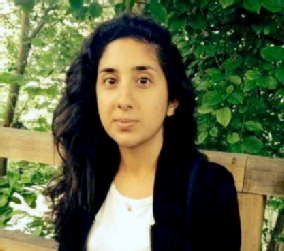
Marya Bazzi is an Honorary Assistant Professor at the University of Warwick. Her research focuses on developing methods for analyzing large time-dependent data, with a primary focus on Network Science. She investigates mesoscale structures in networks such as community detection, core-periphery structures, and multilayer networks, applying these tools to domains like online media, biology, finance, and digital humanities. Her work includes contributions to scalable graph representation learning (Local2Global framework), semantic change detection using the UK Web Archive, and computational journalism. She co-organizes academic initiatives like Data Science for Social Good, Data Study Group, and workshops on media in the digital age. Her research bridges algorithmic development with practical applications, emphasizing interdisciplinary collaboration. Key publications span Machine Learning, Network Science, and Computational Biology, reflecting her expertise in both theoretical frameworks and applied problem-solving. While no awards are explicitly mentioned, her active participation in organizing academic activities demonstrates leadership in fostering collaborative research environments.
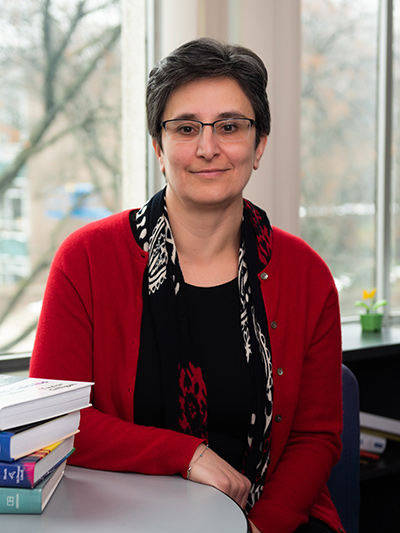
Dr. Tim Sullivan is an Associate Professor in Predictive Modelling at the University of Warwick, affiliated with the Mathematics Institute and School of Engineering. He serves as Co-Director of the Warwick Centre for Predictive Modelling. His research focuses on uncertainty quantification, inverse problems, probabilistic numerics, and mathematical data science. These areas bridge applied mathematics, computational science, and Bayesian statistics, emphasizing rigorous methodologies for modeling and analyzing complex systems under uncertainty. His academic work includes contributions to kernel matrix compression, Bayesian probabilistic numerical methods, and critiques of Bayesian inference robustness. His recent publications (2011–2021) highlight themes in optimal uncertainty quantification, probabilistic numerical techniques for PDE-constrained problems, and foundational Bayesian analysis. Sullivan’s textbook Introduction to Uncertainty Quantification (2015) remains a key resource in the field. In teaching roles, Sullivan oversees tutorial responsibilities across Mathematics and Engineering disciplines, including courses on predictive modeling fundamentals and control theory. His work at the Warwick Centre for Predictive Modelling underscores interdisciplinary collaboration in advancing computational and mathematical approaches to predictive science.
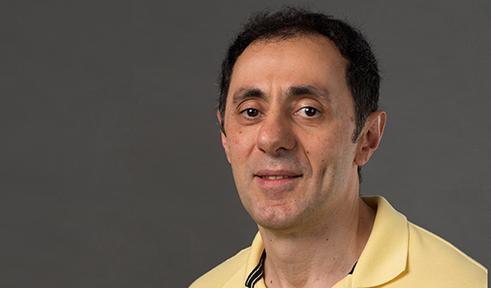
Cezary Z. Janikow is an Associate Professor and former Chair of the Department of Mathematics and Computer Science at the University of Missouri–St. Louis (UMSL), where he conducts research in artificial intelligence, evolutionary computation, and machine learning. He is the developer of FID (Fuzzy Inference Decision tree), a system for generating fuzzy decision trees that handle missing, noisy, and continuous data. His research is supported by NIH, NSF, and NASA/JSC, and he has contributed significantly to the field of genetic programming, particularly in constrained and adaptable representations (ACGP). Ph.D. in Computer Science, University of North Carolina at Chapel Hill, 1991 His research interests center on evolutionary algorithms , fuzzy decision trees , and symbolic machine learning . He explores how genetic programming can adapt representations and incorporate constraints to improve search efficiency and solution quality. His work on FID has advanced fuzzy logic applications in classification and data analysis. The recent publications reflect a sustained focus on genetic programming , particularly Adaptable Constrained Genetic Programming (ACGP) , heuristics in evolutionary search , and fuzzy decision systems . His work spans theoretical development, algorithm design, and practical implementation, with applications in optimization and machine learning. Dr. Janikow has delivered corporate training in software development and served as an expert witness in software-related legal cases. He has also organized academic workshops and presented tutorials on evolutionary algorithms. Co-PI, NIH: Statistical Methods for Recursively Partitioned Trees NSF Support: Fuzzy Decision Trees NASA/JSC Collaboration: Constrained Genetic Programming He leads the FID project, a software system for fuzzy decision tree generation, which includes a GUI and supports cross-validation and noise simulation. This tool reflects his integration of research and software development.
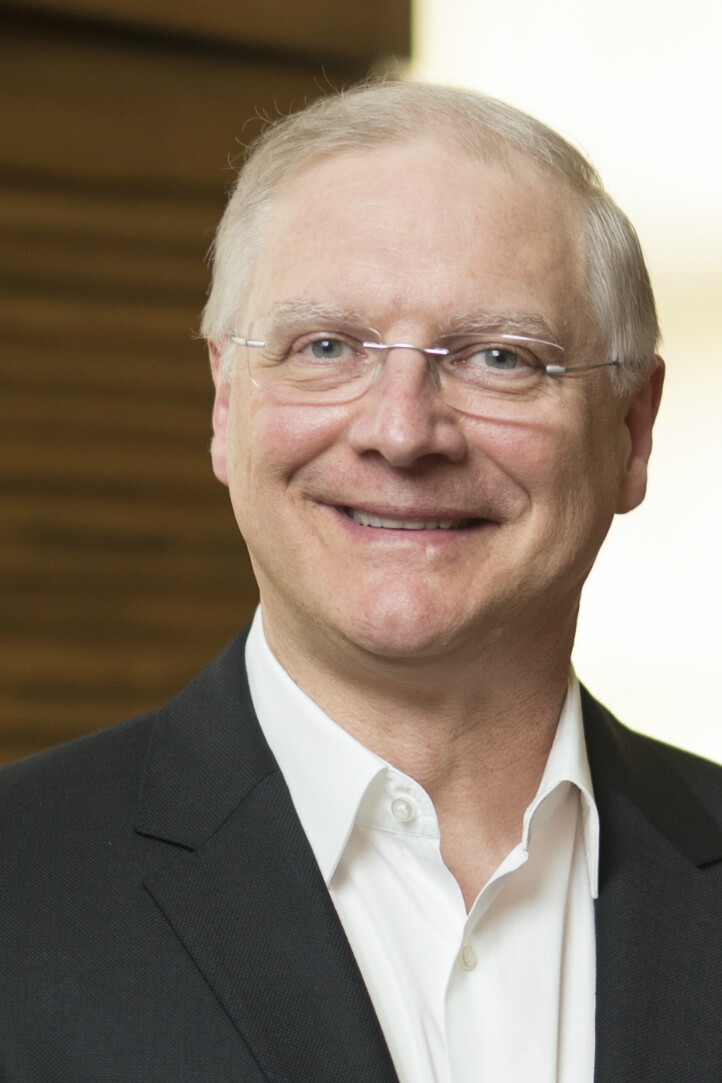
Poul G. Hjorth is an Associate Professor in the Department of Applied Mathematics and Computer Science (DTU Compute) at the Technical University of Denmark (DTU). He specializes in dynamical systems, mathematical modeling, and industrial applied mathematics, with strong interdisciplinary ties to neuroscience and industrial problem-solving. He has held visiting positions at the University of Southern Denmark and maintains affiliations with the University of Copenhagen as an External Lecturer. Ph.D. in Mathematical Physics, University of California, San Diego (1988) cand.scient in Mathematics, University of Copenhagen (1982) His research focuses on mathematical physics, classical mechanics, dynamical systems, and geometry , particularly in real-world industrial applications. He has been instrumental in organizing the European Study Groups with Industry (ESGI) in Denmark and is Executive Director of the European Consortium for Mathematics in Industry (ECMI). His recent work includes modeling the glymphatic system and cerebrospinal fluid dynamics in the brain, contributing to neuroscience and medical research. The most recent publications reflect a shift toward interdisciplinary applications, especially in neuroscience, fluid dynamics, and environmental modeling , while maintaining a strong foundation in pure and applied mathematics. Themes include brain efflux, phytoplankton dynamics, and philosophical explorations of probability and cosmology. DTU Teaching Award (2010) Hjorth has supervised students and led multiple long-term research projects since the 1990s. He serves as Editor for the Danish Mathematical Society Newsletter Matilde and the Fields Institute journal Mathematics in Industry Case Studies . His collaborative network spans institutions in Denmark, Israel, the UK, and the USA, reflecting his international engagement in both research and academic service.
Kuntal Bhattacharyya is an Associate Professor in the Department of Marketing and Operations at the Scott College of Business, Indiana State University. He has held significant administrative roles including Department Chairperson (2018–2021) and currently serves as Executive Director (2021–present). He also directs the Center for Supply Management Research (CSMR), fostering industry-academia collaboration. Education: Ph.D., Operations Management (Information Systems Minor), Kent State University, 2011 M.B.A., Management (Minor in Applied Statistics), The University of Akron, 2005 M.S., Electrical Engineering (Semiconductor Fabrication), The University of Texas at Arlington, 2003 B.S., Electrical & Electronics Engineering, BIET, 2000 His research spans Supply Chain Management , Sustainable Supply Chains , Supply Chain Risk Management , and Global Sourcing . He integrates quantitative modeling, blockchain, and Six Sigma methodologies to solve real-world operational challenges. His expertise is reflected in courses such as Global Sourcing (OSCM 455/555), Strategic Supply Chain Decisions (PMBA 612), and the capstone Global Supply Chain Management (OSCM 490). The 15 most recent publications reveal a strong focus on supplier performance modeling , blockchain in supply chains , conflict mineral tracking , and resilience through technology . These works span disciplines including operations research, sustainability, service quality, and humanitarian logistics, demonstrating interdisciplinary depth and practical relevance. Scientific Awards and Honors: Career Readiness Advocate (2020) Dean's Achievement Award (2018) Best Paper Award, Academy of Business Review (2016) Teaching Excellence Award (2015) Outstanding Academic Advisor Award (2017) Summer Research Grants and multiple internal funding awards Dr. Bhattacharyya has secured numerous grants from Indiana State University and external foundations like the Wabash Valley Community Foundation, supporting student research and center development. He actively mentors students through research projects and capstone courses. He has served on key university committees related to strategic planning, diversity, faculty governance, and community engagement. His consulting experience with firms like Toyota Material Handling and Masterbrand Cabinets further strengthens his applied perspective. He leads the Center for Supply Management Research (CSMR) , which serves as a hub for supply chain innovation, student experiential learning, and industry partnerships. The center has received continuous internal funding, reflecting its institutional importance.
Theodore B. Trafalis is a Professor in the Department of Industrial & Systems Engineering at the University of Oklahoma. He leads the Laboratory of Optimization and Intelligent Systems (LOIS), focusing on optimization, machine learning, and data-driven methods with applications in weather prediction, healthcare, manufacturing, and finance. Education: Ph.D., Industrial Engineering, Purdue University M.S., Industrial Engineering, Purdue University M.S., Mathematics, Purdue University B.S., Mathematics, University of Athens Research Interests: Uses optimization and machine learning to solve real-world challenges such as tornado prediction, supply chain resilience, and fair AI systems. Specializes in federated learning, robust algorithms, and imbalanced data problems. Active in developing mathematical frameworks for data assimilation in geophysical models and medical prognosis systems. Key Achievements: Recipient of OU Regents Award for Superior Research (2004) Editor-in-Chief, Journal of Intelligent Control and Automation Author of over 150 peer-reviewed articles spanning optimization theory, machine learning, and interdisciplinary applications Grants & Collaborations: NASA-funded projects on tornado prediction systems DOE grants for robust optimization in energy networks Industry partnerships with aerospace and manufacturing firms Labs & Teams: Directs the LOIS Lab, which collaborates with institutions globally on AI ethics, risk-aware control systems, and sustainable supply chains.
Asli Ozgun-Koca is a Professor of Mathematics Education in the College of Education at Wayne State University. Her work spans teaching, research, and leadership in mathematics teacher education, with a focus on secondary and elementary levels. She is actively involved in national and state-funded initiatives to improve mathematics instruction and equity. B.S. in Mathematics Education, Hacettepe University, Turkiye (1993) M.S. in Mathematics, Middle East Technical University, Turkiye (1996) Ph.D. in Mathematics Education, The Ohio State University (2001) Dr. Ozgun-Koca's research centers on mathematics education, particularly the integration of technology in teaching, professional development for teachers, lesson study, and fostering mathematical knowledge for teaching. She emphasizes equitable practices and the use of real-world, interdisciplinary contexts to enhance learning. Her work explores how teachers analyze tasks and student work to improve instruction, especially in proportional reasoning and statistics. The recent publications and presentations reflect a strong trend in using technology (e.g., GeoGebra) to deepen conceptual understanding, designing integrated STEM and literature-based tasks, and improving feedback and task selection in teacher education. Her scholarship consistently addresses equity, teacher learning, and innovative pedagogies. President's Awards for Excellence in Teaching (2015) COE Faculty Research Award (2014) Career Development Chair Award (2013) Dr. Ozgun-Koca has secured major grants from the NSF and Michigan Department of Education, including SSTEPs, TeachDETROIT, and REALM projects, focusing on evidence-based pedagogies, teacher fellowships, and equity in mathematics education. She advises graduate students and collaborates widely on research. She teaches courses such as Methods and Materials of Instruction, Advanced Studies in Teaching Algebra and Statistics, and Detroit by the Numbers, reflecting her commitment to practical, context-rich teacher preparation. She is a key figure in lesson study adaptations for preservice teachers and leads professional development initiatives that connect theory and practice. Her work is disseminated through national conferences and leading journals in mathematics education.
Vardges Melkonian is an Associate Professor in the Department of Mathematics at Ohio University, part of the College of Arts and Sciences. His academic work bridges theoretical and applied mathematics, with a strong emphasis on optimization and algorithmic problem-solving. Research Interests: Dr. Melkonian specializes in combinatorial optimization, network design, approximation algorithms, and applications of operations research. His research integrates mathematical programming and discrete modeling to solve complex real-world scheduling and allocation problems. These interests are reflected in his extensive publication record spanning sports leagues, hybrid work, exercise routines, and social partitioning. Publication Trends: Over the past decade, his scholarly output has consistently focused on developing integer programming and optimization models for diverse domains—from recreational puzzles like KenKen to large-scale logistical challenges in manufacturing and public policy. His work demonstrates a unifying theme: transforming practical problems into formal mathematical frameworks for efficient solution. Scientific Awards: No awards are mentioned in the provided text. Advising and Grants: The available information does not list any students or grant funding. However, his research contributions suggest active engagement in academic mentorship and potential involvement in funded projects, though specifics are not disclosed. Labs and Research Teams: There is no mention of specific labs, research groups, or collaborative teams associated with Dr. Melkonian in the provided content.
David J. Lubinski is the Cornelius Vanderbilt Professor of Psychology and Human Development at Peabody College, Vanderbilt University. He is a leading researcher in psychological measurement and the study of intellectually precocious youth, with a focus on cognitive and vocational development. His research centers on understanding individual differences and talent development, particularly through the longitudinal Study of Mathematically Precocious Youth (SMPY), which he co-directs with Camilla Benbow. His work explores how early intellectual promise translates into educational and career outcomes. His key research areas include: Cognition and cognitive development Gifted individuals and schooling Problem solving and reasoning His influential theoretical frameworks are detailed in publications such as Lubinski and Benbow (2000, 2006) and Lubinski (1996, 2000, 2004). Although specific awards and publications are not listed, his long-standing leadership in SMPY underscores his significant contributions to developmental and educational psychology. He earned his Ph.D. from the University of Minnesota in 1987 and continues to contribute to research on human potential and talent identification.
Håkan Örman is an Associate Professor at the Department of Biomedical Engineering, Linköping University, within the Faculty of Science and Engineering. He is actively engaged in teaching, research, and academic leadership, including serving as Chairman of the Board of Studies for Electrical Engineering, Physics, and Mathematics. His work bridges engineering and healthcare through digital innovation. His research focuses on health informatics and e-health , particularly in developing information models, ontologies, and knowledge representation systems to create interconnected, learning healthcare ecosystems. He advocates for rational use of digital tools to enhance accessibility, safety, and personalization in healthcare. The recent publications highlight a strong trend in digital health infrastructure , interoperability standards (e.g., openEHR, SNOMED CT), and educational development in engineering and health informatics. His work spans technical architecture, semantic modeling, and pedagogical innovation. Håkan is passionate about pedagogical development and views students as co-creators of knowledge. He teaches in the Master’s program in Biomedical Engineering, the Medical Program, and interdisciplinary eHealth courses. He collaborates with Didacticum for educational advancement and emphasizes dialogue, reflection, and sustainable skill development. He is involved in interdisciplinary initiatives at Linköping University, where students from medicine and engineering jointly develop digital health solutions. This reflects his commitment to collaborative, real-world problem solving and institutional investment in e-health education and research.
Elizabeth Byrne is a Lecturer in Psychology at the University of East Anglia, affiliated with the School of Psychology and the Developmental Science research group. She is actively involved in research and supervises PhD students. PhD in Psychology, University of Cambridge (2014–2018) MRes Psychology (Distinction), University of Manchester (2012–2013) BSc (Hons) Psychology (First Class), University of Manchester (2008–2011) Her research focuses on cognitive and behavioral development in early childhood, particularly working memory, self-regulation, and the role of guided play in learning. She investigates how educational interventions and adult-child interactions shape developmental outcomes. Her recent publications highlight a strong trend in developmental and educational psychology, with an emphasis on psychometric validation, cognitive architecture, and evidence-based interventions. Key themes include guided play, behavioral assessment tools, and the use of physical manipulatives in learning. Elizabeth Byrne has contributed to impactful research widely covered in media and policy discussions, particularly her meta-analysis on guided play. Her work has been referenced in policy sources and highlighted across news outlets, blogs, and social media platforms. She collaborates with leading researchers such as Joni Holmes and Paul Ramchandani and leads an active British Academy-funded project on cognitive segmentation in problem solving. No formal grants beyond this are detailed, but her research output suggests sustained funding and collaboration. She has contributed to open datasets and engages in public outreach through press and media contributions, promoting evidence-based early education practices.
Markus Kuhn is a researcher at the University of Cambridge with a diverse academic career spanning over two decades, evidenced by publications from 2003 to 2023. His work bridges educational technology, computer science, and autonomous systems, demonstrating significant interdisciplinary reach across multiple domains. Dr. Kuhn's research has evolved through distinct phases. Initially focused on educational technology (2003-2007), he published extensively on classroom scenarios, collaborative learning, and media integration. His work then broadened to include physics computation (2008) and process support for inquiry learning (2010). More recently (2016-2023), his research has shifted toward autonomous systems, with publications on self-localization technologies and map generation for autonomous vehicles. This publication trajectory reveals a researcher who has successfully adapted his expertise from educational applications to more technical domains while maintaining connections to his foundational work in learning systems. His research demonstrates consistent innovation in applying computational approaches to solve practical problems across different contexts. Dr. Kuhn has maintained long-term collaborations with researchers including Heinz Ulrich Hoppe, Andreas Harrer, and Andreas Lingnau, indicating strong interdisciplinary networks. His work has been published in diverse venues ranging from IEEE Access and Microelectronics Reliability to Research and Practice in Technology Enhanced Learning and International Conferences on Computer-Supported Collaborative Learning.
Ryan Cory-Wright is an Assistant Professor in the Analytics and Operations Group at Imperial College Business School . He previously held a Goldstine Postdoctoral Fellowship at IBM Research and earned his PhD in Operations Research from MIT in 2022 under Dimitris Bertsimas , after obtaining a BE (1st class Hons) in Engineering Science from the University of Auckland. Education : MIT (PhD), University of Auckland (BE) Affiliations : Imperial College Business School, IBM Research, MIT His research bridges optimization, machine learning, and sustainability, focusing on extending optimization methods to solve practical problems like rank-constrained product recommendations and low-carbon economy transitions . Collaborations include projects with OCP to guide two billion USD solar-battery investments . Recent work includes AI-Hilbert (2024 Nature Communications , Outstanding Technical Achievement Award ), Stability Regularized Cross-Validation , and Matrix Goemans-Williamson Rounding . He has developed scalable algorithms for sparse portfolio selection and certifiably optimal matrix completion . Honors : Goldstine Fellowship (2022-23) Nicholson Prize (2020) Pierskalla Award (2020) INFORMS DMDA Best Paper (2024) ICS Student Paper Award (2019) Advising : Co-advises Lingjun Meng as a doctoral student. He teaches Decision Making Under Uncertainty (PhD), Optimization and Decision Models (Online MSc), and Data Structures/Algorithms (UG Econ/Finance), with a focus on Python-based computational methods.
Prof. Dr. Robert Klein is a Professor at the University of Augsburg within the Faculty of Business and Economics . He holds the Chair of Analytics & Optimization , focusing on the application of mathematical models from operations research to solve real-world decision problems. Research Interests: Pricing and revenue management, last-mile logistics, mobility-on-demand systems, integration of demand management and vehicle routing, discrete choice analysis, integer programming, and approximate dynamic programming. Teaching: Undergraduate mathematics for business, advanced courses in operations research, logistics, and revenue management. His chair offers seminars on Smart Logistics & Mobility and supervises bachelor’s and master’s theses. Publications: Over 20 years, he has co-authored 25+ peer-reviewed articles in journals like Transportation Science , European Journal of Operational Research , and OR Spectrum . His work spans theoretical advancements and practical applications in revenue management and logistics. Students: Supervised 15+ PhD students including David Fleckenstein (2025), Julia Heger (2025), and Jochen Mackert (2019). Collaborations: Works with IBM on mathematical software applications and has co-edited textbooks such as Decision Optimization with IBM ILOG CPLEX (2022).
Yutao Pan is an Associate Professor in Geotechnical Engineering at the Department of Civil and Environmental Engineering, Norwegian University of Science and Technology (NTNU). His academic journey includes a BSc and MSc from Huazhong University of Science and Technology (2010, 2012) and a PhD from the National University of Singapore (NUS) in 2016, followed by a postdoctoral research fellowship. Research Focus: Ground improvement, seepage mechanics, risk assessment, and offshore geotechnical engineering with emphasis on spatial variability and numerical modeling. Key Contributions: Development of algorithms for water-tightness estimation in cut-off walls, stability analysis of tunnels in cement-admixed soils, and transient-state leakage evaluation methods. His publications reflect expertise in cement-treated soils, tunneling mechanics, and probabilistic risk assessment. Collaborations with researchers like Yong Liu, Fook-Hou Lee, and Michael A. Hicks appear frequently. Recent work integrates physical mechanisms with AI for geotechnical problem-solving.