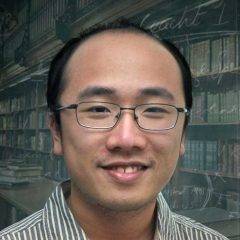
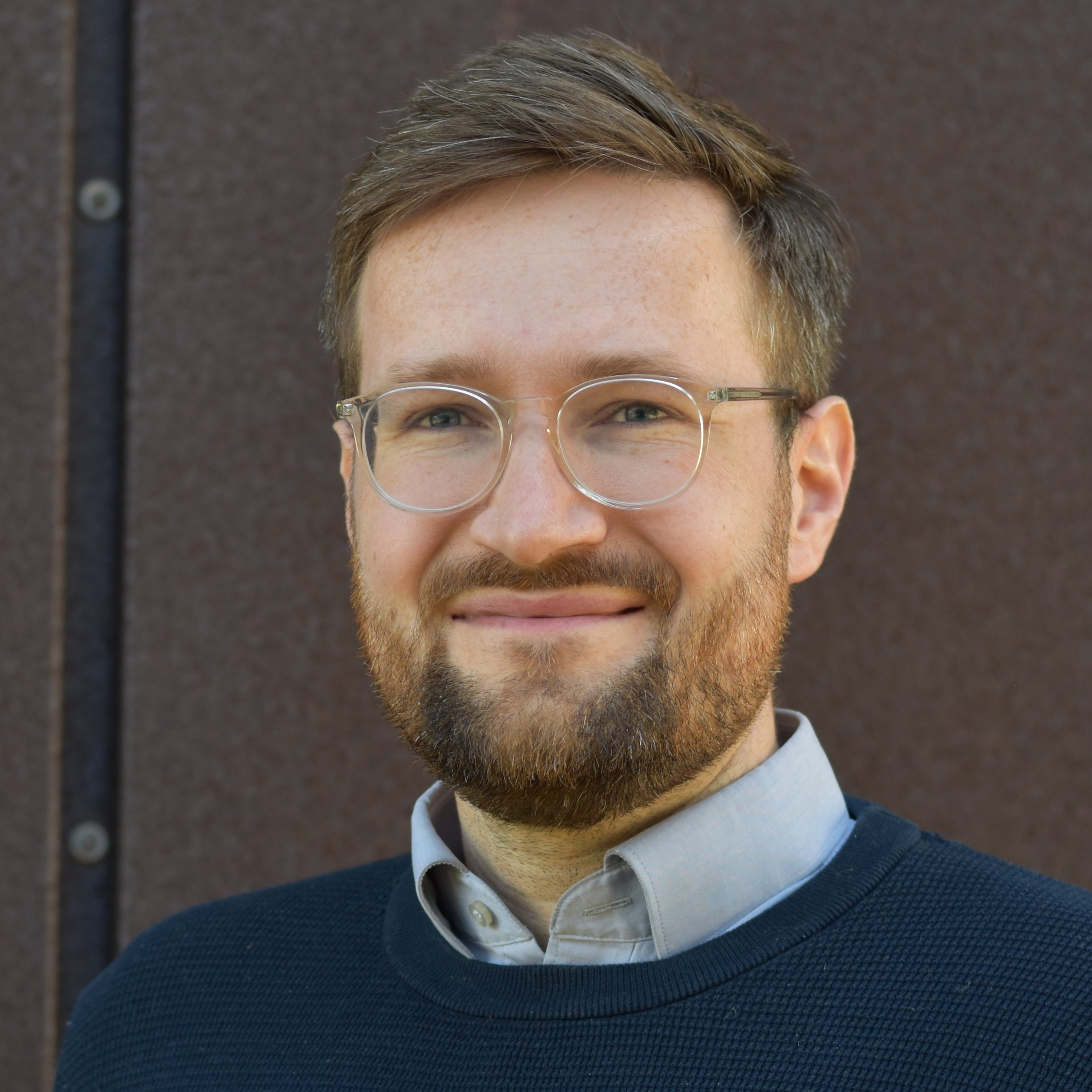
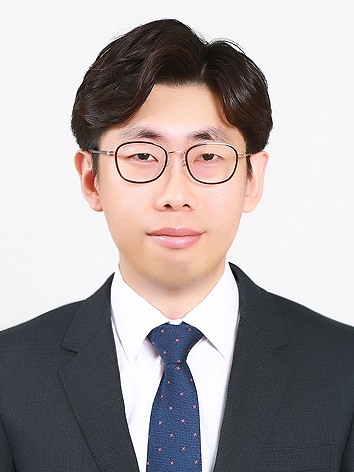
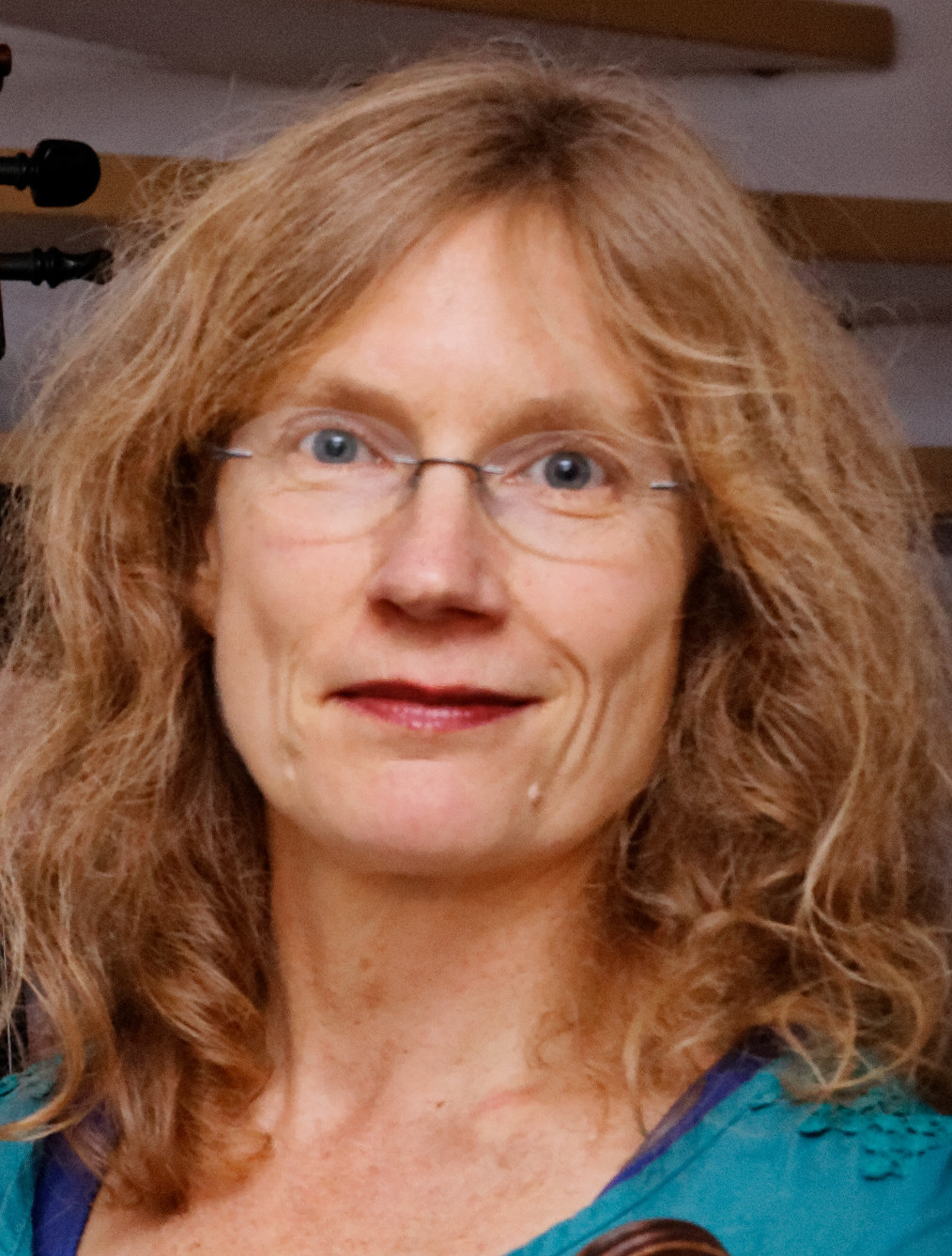
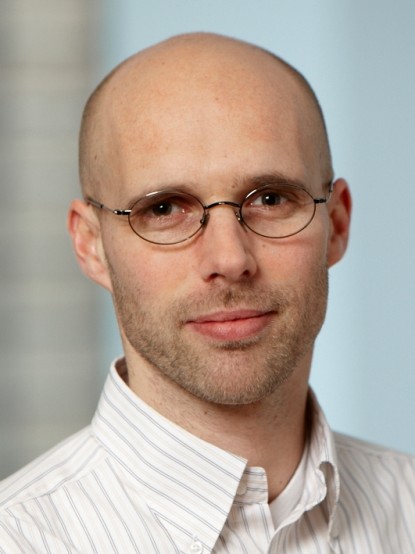
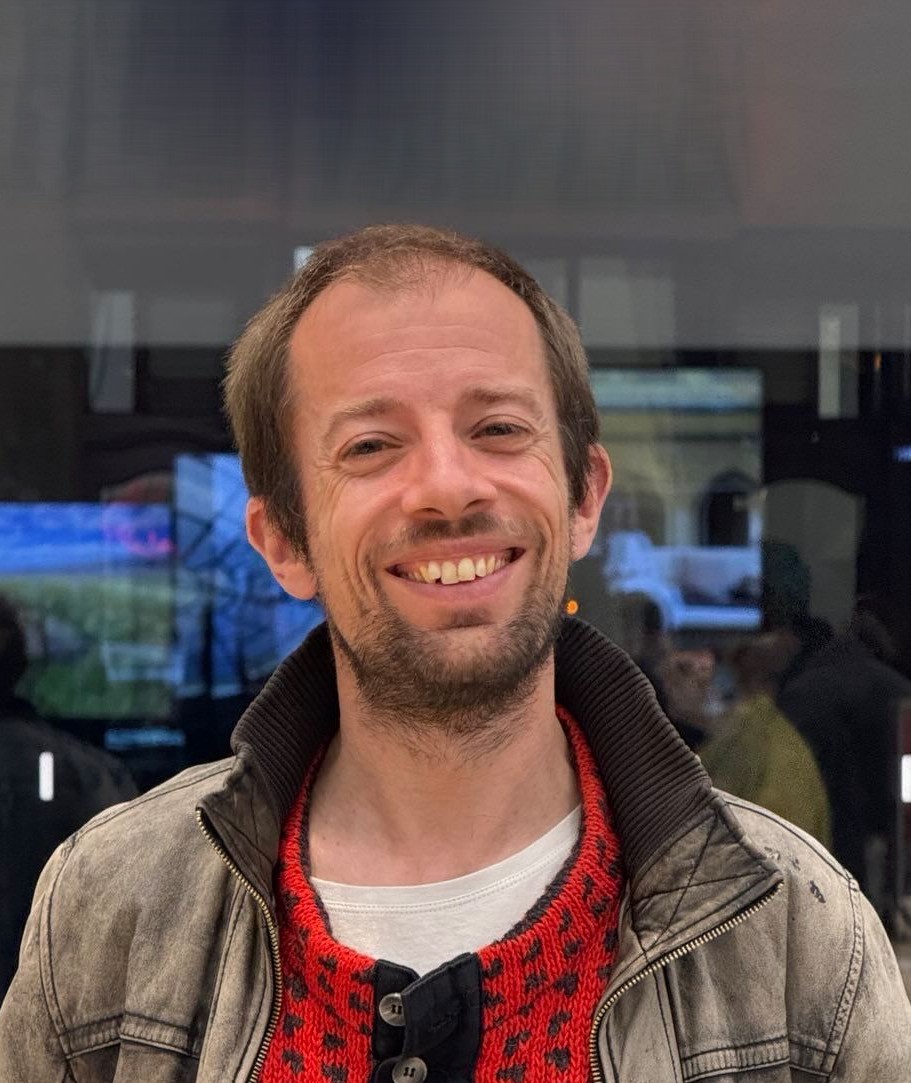
Yin Tat Lee is an Associate Professor at the Paul G. Allen School of Computer Science & Engineering , University of Washington, and a Senior Principal Researcher in Microsoft AI. His research spans convex optimization , convex geometry , graph algorithms , online algorithms , and differential privacy , with applications in machine learning and theoretical computer science.
Lars Rohwedder is an Associate Professor in the Algorithms Group at the University of Southern Denmark (SDU) in Odense. He previously held positions as an Assistant Professor at Maastricht University (Netherlands) and postdoc researcher at EPFL, Lausanne (Switzerland). He earned his Ph.D. in Computer Science from CAU Kiel (Germany), advised by Klaus Jansen, and is a recipient of the 2019 PhD of the year award from Förderverein der TF of Kiel University. His research focuses on algorithms for combinatorial optimization, including approximation algorithms, online algorithms, parameterized algorithms, and integer programming. He has contributed to solving scheduling problems, resource allocation, and optimization under uncertainty. Rohwedder has served on program committees for conferences like MAPSP, SODA, STACS, and ICALP. He is funded by NWO's Open Competition M1 project on quasi-polynomial time algorithms. His teaching includes courses on advanced algorithms, operations management, and optimization at SDU and Maastricht University. Key achievements include a quasi-polynomial approximation for the restricted assignment problem, FPT algorithms for scheduling, and contributions to the Submodular Santa Claus problem. His work bridges theoretical foundations and practical applications, with a focus on algorithmic efficiency and robustness.
Inho Hong is an Assistant Professor at the Graduate School of Data Science, Chonnam National University (Gwangju, Korea), leading the Computational Social Science and Complex Systems Lab (CSL). His research explores socio-spatial systems through data science and complex systems methods, focusing on urban dynamics, human mobility, and AI's societal impact. Education: Ph.D. in Physics (2019), Pohang University of Science and Technology (POSTECH) M.S. in Physics (2012), POSTECH B.S. in Physics (2010), POSTECH Research Interests: Urban Data Science : Analyzing urban scaling laws and innovation pathways Human Mobility : Modeling intra-city movement patterns Social Impact of AI : Ethical and societal challenges Natural Language Processing : Text embedding for policy analysis Complex Systems : Network approaches to protests and epidemics Recent Work Trends: Over 2020–2022, his articles centered on pandemic control, protest networks, and urban green spaces' psychological impact. Recent 2023–2025 work extends to vocational education analysis and mobility laws within cities. His methods combine network science with large-scale data analytics. Awards: Young Statistical Physicist Award (Korean Physical Society, 2021) Best Paper Award (Korea Computer Congress 2021) Global Ph.D. Fellowship (NRF, 2014–2017) Grants & Labs: Current lab focuses on socio-spatial systems. Past roles include Associate Research Scientist at Max Planck Institute for Human Development (2020–2023) and Postdoctoral Fellowships at POSTECH and APCTP.
Cristian Cadar is a Professor in the Department of Computing at Imperial College London, leading the Software Reliability Group . His research focuses on improving software reliability and security through practical techniques in software engineering, computer systems, and program analysis. Education: Ph.D. in Computer Science, Stanford University M.Eng. in Computer Science, MIT B.S. in Computer Science and Mathematics, MIT His research interests center on software engineering and software security , particularly symbolic execution , dynamic symbolic execution (DSE) , and multi-version execution . Current work explores techniques for scalability, constraint solving, and runtime security in software systems. Key trends in his recent articles include optimizing symbolic execution for testing, addressing path explosion in constraint-based test generation, and advancing multi-version execution for dynamic software updates. His publications also cover program analysis , automated testing , and formal methods for software reliability. Awarded prestigious honors such as the Humboldt Research Award (2024) , ERC Consolidator Grant (2018) , and IEEE New Directions Award (2022) . Other accolades include the BCS Roger Needham Award (2019) and SIGOPS Hall of Fame (2018) . Cadar supervises PhD and postdoctoral researchers in software reliability and security. His group has secured grants from the ERC and EPSRC , including a Consolidator Grant (2018) and Early-Career Fellowship (2013) . He actively contributes to conference organizing committees and editorial boards. The Software Reliability Group at Imperial College, led by Cadar, specializes in techniques like KLEE and EXE for automated testing. Their work has been adopted by industry partners such as Fujitsu, IBM, and Microsoft, particularly in runtime security tools like WIT .
Prof. Dr. Rudi Zagst is a Professor of Mathematical Finance at the Technical University of Munich (TUM), where he serves as Head of the Department of Mathematical Finance within the TUM School of Computation, Information and Technology. He has held this position since 2001 and is actively involved in teaching, research, and academic leadership. In 2003, he was appointed as a second member of the Faculty of Economics, and since 2004, he has served as Deputy Chairman of the joint elite degree program 'Finance & Information Management' of the University of Augsburg and TUM. Prof. Zagst earned his doctorate in business mathematics from the University of Ulm, where he later completed his habilitation in 2000. His academic journey began with a professional career at HypoVereinsbank AG, where he served as Head of Product Development in Institutional Investment Management before becoming Managing Director of RiskLab GmbH in 1997. His research focuses primarily on financial engineering, risk management, and asset management, with particular emphasis on portfolio optimization, mathematical finance, and quantitative risk management. His work bridges theoretical finance with practical applications, often incorporating advanced mathematical techniques to solve complex financial problems. Recent publications demonstrate his continued interest in GARCH models, portfolio optimization under various constraints, and the application of machine learning techniques to financial problems. Analysis of his recent publications (2024-2025) reveals a strong focus on portfolio optimization under complex market conditions, particularly using GARCH models to capture volatility dynamics. His work increasingly incorporates machine learning techniques (as seen in the credit spread analysis paper) while maintaining rigorous mathematical foundations. Many papers explore the intersection of theoretical finance with practical investment strategies, reflecting his commitment to bridging academic research with real-world financial applications. Professor of the Year 2007 (awarded by Unicum Profession magazine) Prof. Zagst has supervised numerous bachelor's, master's, and doctoral theses through TUM's Finance and Actuarial Science research group. His collaborative work with industry partners through the TUM CAIR Labs and RiskFactory demonstrates strong connections between academic research and practical financial applications. He has received research funding through various industry partnerships with major financial institutions including Allianz, Munich Re, and ERGO Group AG. Prof. Zagst leads the Research Group Finance and Actuarial Science at TUM, which includes Professors Matthias Scherer, Aleksey Min, and Christoph Knochenhauer. The group maintains strong industry connections through the TUM CAIR Labs initiative, collaborating with over 25 financial institutions including Allianz, Munich Re, Deloitte, PwC, and KPMG. Their RiskFactory laboratory serves as a bridge between academic research and practical financial risk management applications in the industry.
Maggie Miller is a mathematician specializing in low-dimensional topology, currently serving as an NSF Postdoctoral Fellow at the Massachusetts Institute of Technology. She previously held a position at the University of Texas, Austin, and earned her Ph.D. in 2020 from Princeton University under the supervision of David Gabai. Education: Ph.D. in Mathematics (Princeton University, 2020) Her research focuses on 3- and 4-manifolds, leveraging algebraic, combinatorial, geometric, and topological techniques to solve long-standing problems. Key contributions include developing a theory of singular fibrations in 4-manifolds and resolving a 35-year-old problem by Casson and Gordon related to fibered ribbon knots. She actively collaborates on diverse topics such as topological versus smooth isotopy, taut foliations, concordance, trisections, and knot Floer homology. Maggie's work intersects multiple subfields within topology, including Knot Theory , Manifold Theory , and Differential Topology , with a strong emphasis on geometric structures and their applications. While her recent publications aren't listed here, her research trends center on topological invariants and their implications in mathematical physics. Scientific Awards: Clay Research Fellow
Günter Rote is a Professor in the Department of Computer Science at Freie Universität Berlin, specifically within the Theoretical Computer Science group (Arbeitsgruppe Theoretische Informatik). He holds a formal academic title of Professor Dr. and is affiliated with the Faculty of Mathematics and Computer Science. His research focuses on theoretical computer science, computational geometry, algorithms, and discrete mathematics. Key research interests include geometric algorithms, optimization problems (e.g., shortest paths, traveling salesman problems), and algorithm design for parallel computing systems. His work spans topics such as systolic arrays, convex hulls, and combinatorial optimization. Rote’s contributions include foundational studies on computational geometry problems, algorithmic complexity, and practical applications in energy equity and infrastructure design. Publications highlight contributions to solving extremal equations, polygon transformations, and the quadratic assignment problem. He has been active in academic leadership, mentoring students, and contributing to computational science communities. His email is rote@inf.fu-berlin.de, and his office is located at Takustraße 9 in Berlin.
Professor Katrin Tent is a distinguished mathematician specializing in mathematical logic at the University of Münster, where she holds a professorship in the Faculty of Mathematics and Computer Science within the Institute for Mathematical Logic and Foundations Research. She is an active researcher in Mathematics Münster, an investigator in CRC 1442 Geometry: Deformations and Rigidity, and contributes to multiple research projects including Topics in Mathematics Münster T3: Models and universes, T4: Groups and actions, and T8: Random discrete structures and their limits. PhD in Linguistics, Christian-Albrechts-Universität zu Kiel (1988) Diplom in Mathematics, Christian-Albrechts-Universität zu Kiel (1989) PhD in Mathematics, University of Notre Dame (1994) Habilitation, "Model theory of groups and BN-pairs" (2000) Professor Tent's research bridges model theory, group theory, and geometry, with particular focus on finite Morley rank structures, BN-pairs, and sharply multiply transitive groups. Her work often combines methods from these areas to prove unexpected results, either constructing groups or incidence geometries with surprising model theoretic properties or using model theory to construct new and interesting geometries or groups. Her recent publications reveal a consistent trajectory connecting model theory with group-theoretic structures. She has made significant contributions to understanding sharply 2- and 3-transitive groups, finite Morley rank geometries, and the model theory of generalized polygons. Her work demonstrates how model-theoretic techniques can solve deep problems in group theory and geometry, particularly through the study of BN-pairs and incidence structures. DFG Research Fellowship (1996-1998) Bayerischer Habilitationsförderpreis (1998-2001) Heisenberg-Stipendium (2001-2004) ERC Consolidator Grants expert panel (2016, 2018) Elected to DFG Senate (2019) Professor Tent leads an active research group with current members including Marco Amelio, Dr. Benjamin Brück, Anna Cascioli, Lukas Jonuska, Silke Meissner, Zahra Mohammadi Khangheshlaghi, and Dr. Sam Shepherd. Her former research group members include Dr. Simon Andre, Dr. Isabel Müller, and Dr. Tim Clausen, among others. Her supervisory work spans both theoretical foundations and specific applications in geometric group theory and model theory. Her research group operates within the Institute for Mathematical Logic and Foundations Research at the University of Münster, collaborating closely with other researchers in the Mathematics Münster cluster. The group participates in various projects including CRC 1442 - C04: Group theoretic aspects of negative curvature, contributing to the vibrant mathematical research environment at one of Germany's leading mathematics institutions.
Prof. Dr. Johanna Heitzer is a University Professor for Mathematics Education at RWTH Aachen University since 2011. She leads the Teaching and Research Area of Mathematics Education within the university's mathematics department. Her office is located in Room 352 of the Kreuzherrenstraße 2 building in Aachen. She serves as co-editor of the journal 'mathematik lehren,' co-author of the 'Mathematics - New Ways' textbook series, and holds numerous committee positions including membership in the Faculty Advisory Board and Structural Commission of the Center Council. 1989: High school diploma 1989-1994: Mathematics and Physics Teacher Training at RWTH Aachen 1994-1996: Traineeship at Aachen Teacher Training College 1997: Research assistant at University of Münster 1998-2007: Mathematics and Physics teacher at Korschenbroich Gymnasium 2007-2010: Scientific assistant and doctorate at RWTH Aachen 2011-present: University Professor at RWTH Aachen Professor Heitzer's research focuses on the training and further education of mathematics teachers, development of contemporary teaching materials, applied and interdisciplinary mathematics, and the transition from school to university. Her work emphasizes concept formation, linguistic communication in mathematics, and the historical development of mathematical ideas as teaching resources. She investigates mathematics-specific learning and cognitive processes through multiple research projects including the Aachen school-university project iMPACt. Her recent scholarly output demonstrates a strong trend toward integrating digital technologies in mathematics education, particularly 3D printing and e-learning tools. She has increasingly focused on the social relevance of mathematics, exploring concepts of fairness, sustainability, and citizen empowerment through mathematical modeling. Her work bridges theoretical mathematics education with practical classroom applications, maintaining a strong connection to both historical perspectives and contemporary educational challenges. Special prize from Sparkasse Bad Hersfeld-Rotenburg for best mathematics Abitur (1989) Borchers Plaque for doctoral examinations passed with distinction (2011) DMV honor as Mathemaker of the Month (2013) Brigitte Gilles Prize 2013 for the MINT-L4 Center Professor Heitzer has supervised numerous doctoral students, serving as primary or secondary advisor for at least nine PhD dissertations between 2016-2021. Her research projects include the School-University Project MathePlus Aachen (iMPACt), e-Learning 'Mathematics for Civil Engineers,' and the development of mathematics items for StudiChecks NRW. She has secured funding through the Quality Initiative for Teacher Education (both phases) and participates in the ComeIn project focused on digitalization in teacher training. Her grants consistently emphasize practical applications of mathematics education research with direct impact on classroom practice. As a founding member of the MINT-L4@RWTH center and initiator of the working group Mathematical Education for Sustainable Development, Professor Heitzer has established significant collaborative structures. She participates in the Subject Didactics Forum at the Teacher Training Center of RWTH Aachen and has served in leadership roles including Chair of the Center Council (2014-2016) and Board member of the Teacher Training Center (2014-2017). Her work connects with national and international networks through her membership in the Society for Mathematics Education (GDM), the German Association for Mathematics and Science Education (MNU), and the German Mathematical Society (DMV).
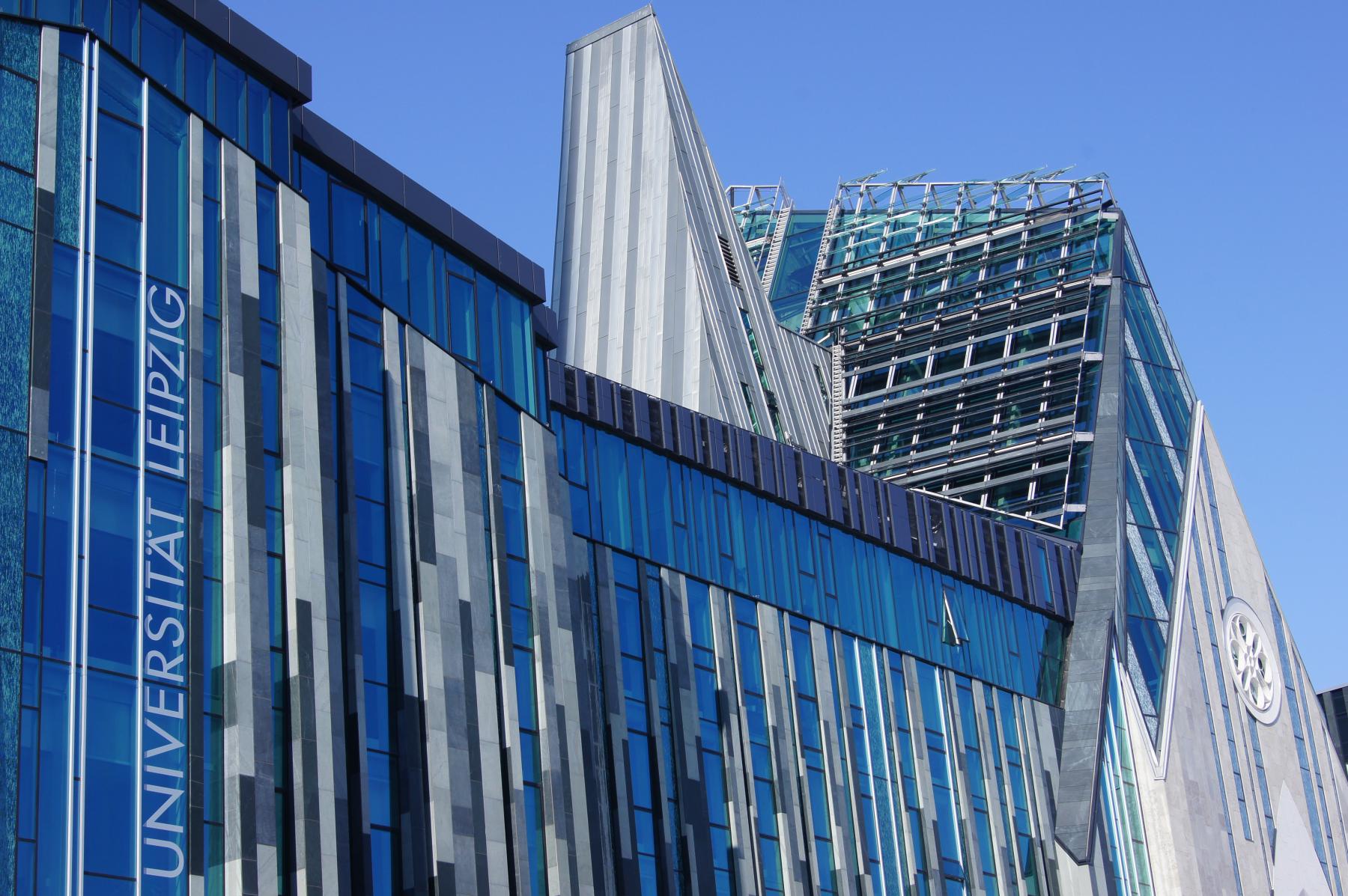
Hans-Bert Rademacher is a Professor of Differential Geometry at the University of Leipzig's Faculty of Mathematics and Computer Science, where he has held the chair since 1995. He completed his Habilitation in 1991 and earned his PhD (Dr.rer.nat., summa cum laude) in 1986 from Universität Bonn, following a Diploma in Mathematics (1983) from the same institution. Research Interests: His work focuses on differential geometry, including pseudo-Riemannian geometry, Finsler geometry, conformal geometry, Dirac operators and twistor spinors, Morse theory and closed geodesics, topology of free loop spaces, and discrete curve shortening. His research bridges geometric analysis and topology, particularly in the study of geodesic systems and curvature properties. Publication Trends: Recent articles center on closed geodesics in various geometric settings (spheres, Finsler manifolds, 3-manifolds), solitons in geometric flows, homology of loop spaces, and conformal geometry. His work frequently applies Morse theory to solve problems in global analysis and topology. Awards and Honors: University Medal (2021) Full Member, Saxon Academy of Sciences and Humanities (since 2010) Heisenberg Fellowship (1992-1995) Felix Hausdorff Memorial Prize (1985) National Mathematics Competition Winner (1978) Academic Service: He has supervised 12 PhD students and served as Dean (2011-2014) and Vice-Dean (2005-2008) of his faculty. He coordinated the Research Training Group "Analysis, Geometry and their interaction with the sciences" (2000-2010) and serves on editorial boards for several mathematics journals.
Prof. Heinz Koeppl is a Professor in the Department of Electrical Engineering and Information Technology at TU Darmstadt. His research focuses on self-organizing systems, systems biology, and control theory, with applications in synthetic biology, robotics, and stochastic processes. He explores interdisciplinary topics such as genetic circuit design, UAV swarm dynamics, and machine learning-driven modeling of biochemical systems. Key research areas include the development of deep learning frameworks for kinetic modeling, Bayesian optimization for riboswitch design, and mean field control theory for sparse networks. His work bridges theoretical foundations with practical engineering solutions, addressing challenges in molecular communication, gene regulation, and robotic swarm coordination. Publications from 2023–2025 highlight advancements in bio-inspired algorithms, swarm intelligence, and computational biology. Notable contributions include studies on RNA-based circuits, active matter dynamics, and optimization strategies for large-scale systems. His research emphasizes interdisciplinary collaboration, leveraging tools from electrical engineering, mathematics, and life sciences. No scientific awards are explicitly listed in the provided text. Advising and grants details are not available. Prof. Koeppl’s lab focuses on integrating systems biology approaches with engineering principles to solve complex problems in healthcare, environmental sustainability, and technological innovation.
Daniel Frischemeier is a Professor of Mathematics Didactics with a focus on Primary Education at the University of Münster's Faculty of Mathematics and Computer Science. He has established himself as a leading researcher in statistics and data science education for primary school students, with extensive contributions to educational methodology and teacher training. University of Münster (2021-present) TU Dortmund (2020-2021) University of Paderborn (2009-2020) Ludwig-Maximilians-Universität München (2017-2018) Dr. Frischemeier completed his doctoral studies at the University of Paderborn with a dissertation on statistical thinking and research using TinkerPlots software. His educational background includes graduate studies in Mathematics and undergraduate studies in Mathematics and Physics for teaching at various school levels. His research focuses on the design and testing of teaching-learning environments for primary mathematics education, particularly in the areas of data analysis, probability, and statistics. He conducts qualitative analysis of learners' cognitive processes related to the guiding principle of 'data and chance' in primary education. His work also includes the design and evaluation of teaching materials in data science and civil statistics, the use of learning videos to promote process-related skills, and the implementation of Fermi tasks and computer science education within primary mathematics lessons. Analysis of Dr. Frischemeier's recent publications reveals a strong emphasis on data literacy development in primary education, with increasing focus on the integration of digital tools and the conceptual understanding of data as models. His work bridges mathematics education with emerging fields of data science, addressing both theoretical frameworks and practical classroom applications. The research demonstrates a progression from basic statistical concepts toward more complex data modeling approaches suitable for young learners. Elected member of the International Statistical Institute (ISI) Chair of the Local Organizing Committees for IASE Satellite 2025 Conference Council-Member of the International Statistical Institute Special Edition Editor of the Statistics Education Research Journal Member of International Program Committees for major statistics education conferences Co-Leader of CERME Thematic Working Group 5 on Probability and Statistics Education Dr. Frischemeier serves in numerous editorial capacities and review roles for prominent journals in mathematics and statistics education. He leads significant research projects including 'Promoting Data Science Education for Teacher Education at the University level (DataSETUP)' and 'Data Science Education in STEAM for Civic Engagement and Social Justice from the Early Years (DataScEd4CiEn)'. His work has substantial impact on teacher education programs and curriculum development in statistics and data science for primary schools. He is actively involved in the development and leadership of the Math Center Münster (MaZ), which promotes mathematical potential for all students. His team includes numerous research assistants and doctoral candidates working on various aspects of mathematics education research, particularly focusing on data literacy and statistical reasoning in primary education contexts.
Prof. Gert-Martin Greuel is a distinguished mathematician and Emeritus Professor at RPTU Kaiserslautern, where he previously held a Professorship in the Department of Mathematics. His career includes roles as Director of the Mathematisches Forschungsinstitut Oberwolfach (2002-2013) and as editor of major journals like Zentralblatt MATH. He co-founded the Singular computer algebra system and led the Center for Computer Algebra at Kaiserslautern. Research Interests: His work focuses on singularity theory, algebraic geometry, and computational algebra. Key contributions include foundational studies on hypersurface singularities, equisingularity, and the development of mathematical software tools like Singular and swMATH. Awards: Greuel received the Richard D. Jenks Prize (2004) for Singular, an honorary doctorate from Leibniz University Hannover (2009), and the German Mathematical Society's Media Prize (2013). He pioneered public math exhibitions through the IMAGINARY project. Leadership & Outreach: He served as Chair of European Research Centres on Mathematics (2010-2013) and championed open-access initiatives for mathematical software and publications. His editorial roles span Oberwolfach Reports, Revista Matemática Complutense, and Ergebnisse series. Education: PhD (1973) and Habilitation (1980) from University of Göttingen and Bonn, respectively. His academic journey includes professorships in Osnabrück and Kaiserslautern, and supervision of over 20 PhD students in algebraic geometry and computational mathematics.
Christian Wald is a Post-doctoral researcher at Technical University Berlin working under Professor Gabriele Steidl, focusing on generative modeling, flow matching, and stochastic processes in machine learning. His research bridges theoretical probability with practical medical imaging applications, particularly in MRI reconstruction and analysis. He completed his PhD at Humboldt University of Berlin in 2017 with a thesis on p-adic quantum groups. His academic journey transitioned from pure mathematics to interdisciplinary machine learning research, reflecting his versatile expertise. Wald's primary research explores generative models through the lens of optimal transport and flow matching, with significant contributions to Wasserstein geometry and conditional distance metrics. His work frequently integrates stochastic processes to enhance medical image reconstruction, demonstrating strong cross-disciplinary impact in both theoretical machine learning and clinical applications. Recent publications highlight innovations in sliced MMD flows, Bayesian OT methods, and uncertainty-aware medical image analysis. Analysis of his 15 most recent publications (2019-2025) reveals a consistent trajectory toward unifying geometric probability with deep learning. Key themes include flow-based generative modeling for medical time-series data, optimal transport applications in image reconstruction, and novel kernel methods for distribution matching. His work spans both foundational theory (e.g., Fisher-Rao curves) and high-impact medical applications (e.g., coronary calcium scoring). No specific scientific awards are documented in the provided text, though his publications appear in prestigious venues including ICLR, IEEE TMI, and Physics in Medicine & Biology. Wald maintains extensive collaborations with the medical imaging group at Technical University Berlin, particularly with Andreas Kofler and Gabriele Steidl. His co-authored works demonstrate consistent contributions to MRI reconstruction pipelines and segmentation frameworks, though no formal advising roles or grant leadership are indicated. Current projects focus on uncertainty quantification in active learning for medical image segmentation. He operates within Gabriele Steidl's research group at Technical University Berlin, which specializes in mathematical imaging and machine learning. The team combines expertise in optimization, probability theory, and deep learning to solve medical imaging challenges, with Wald contributing core algorithmic innovations in generative modeling and stochastic reconstruction.
Dr. Yu Huang is an Assistant Professor in the Department of Computer Science at Vanderbilt University's School of Engineering, with a secondary appointment in the Department of Teaching and Learning at the Peabody School of Education. She is affiliated with the Institute for Software Integrated Systems, the Frist Center for Autism and Innovation, the Vanderbilt Lab for Immersive AI Translation (VALIANT), and the Vanderbilt LIVE Learning Innovation Incubator. Her academic journey began with a BS in Aerospace Engineering from Harbin Institute of Technology in China (2011), followed by an MS in Computer Engineering from the University of Virginia (2015), and culminated with a PhD in Computer Science and Engineering from the University of Michigan in 2021 under Professor Westley Weimer. Dr. Huang's research bridges human cognition and machine intelligence to enhance software development. Her work spans software, hardware, AI, medical imaging (fMRI/fNIRS), eye tracking, and mobile sensing through collaborations with Security, Education, Psychology, and Neuroscience researchers. She leads the MIND Lab (Mixed INtelligence Development for programming lab), investigating programming expertise formation, code comprehension processes, cognitive error patterns, and diversity in programming communities. Her innovative approach combines empirical human studies with AI model development to create more effective programming tools. Her recent publications reveal a growing emphasis on leveraging human attention data to improve code language models, analyzing cognitive biases in security contexts, and examining social factors in technical communication. The research shows strong interdisciplinary connections between neuroscience, psychology, and software engineering, with increasing applications of LLMs in developer tooling. Dr. Huang's work consistently demonstrates how understanding human cognition can inform better AI systems for programming tasks. Dr. Huang has received numerous prestigious recognitions including the 2025 ICPC Vaclav Rajlich Early Career Achievement Award and three ACM SIGSOFT Distinguished Paper Awards (ICSE 2019, FSE 2023, ICSE 2024). Her lab has earned the Best Presentation Award at GI2024, while her students have received the Richard Bennett/Dorothy Danforth Compton Prize scholarship and the C. F. Chen Best Paper award. She actively mentors a diverse team of graduate students (Yifan Zhang, Zach Karas, Zihan Fang, Yueke Zhang, Jiahao Zhang) and undergraduate researchers, with many former students advancing to top institutions (Stanford, Harvard, Duke, UC Berkeley) and organizations (NASA JPL). Her research is supported by a 4-year NSF grant, GitHub Tech for Social Good funding, and the Provost's Faculty Immersion Vanderbilt Grant, enabling comprehensive studies of human-AI collaboration in software engineering. The MIND Lab maintains a strong collaborative culture, frequently working with Professor Kevin Leach's research group and organizing retreats to locations like Radnor State Park and the Great Smoky Mountains. This environment fosters innovation at the intersection of human cognition and software engineering while supporting the professional development of emerging researchers in the field.