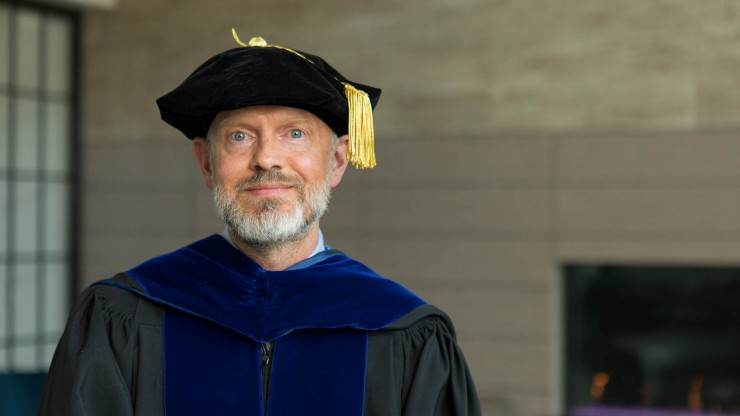
Timothy Woodcock is an Associate Professor of Mathematics at Stonehill College, recognized for his exceptional teaching through the Louise F. Hegarty Award for Excellence in Teaching in 2018. As a 1993 Stonehill alumnus, he brings a unique blend of expertise and approachability to his classroom, utilizing storytelling to demystify complex mathematical concepts and emphasize understanding over rote memorization. Full-time faculty member since at least 1993 Specializes in creating engaging learning environments with real-world applications Known for extensive office hours and personalized grading feedback His teaching philosophy focuses on critical thinking and problem-solving diversity, particularly evident in his innovative Calculus II course connecting Fibonacci sequences to differential equations. The award highlights his embodiment of Stonehill’s commitment to academic excellence, with students praising his ability to make mathematics accessible and his extraordinary dedication to their success. Scientific Awards: Louise F. Hegarty Award for Excellence in Teaching (2018)
Øystein Olav Skaar is an Associate Professor in Educational Psychology at the Faculty of Teacher Education and Pedagogy, University of Innlandet. He also serves as a researcher for Digital Learning Communities at the University of Bergen and acts as editorial secretary of the Nordic Journal of Digital Literacy. Skaar leads the research group Quality in Higher Education (KiHU) at Innlandet University College. His educational background includes: Doctorate in psychology from the University of Oslo (2019), with thesis titled 'Moments of Brilliance: Understanding the Aha-experience through Bayesian Statistics' Master's degree in pedagogy from the University of Bergen (2013), with thesis titled 'The Multimedia Expanse' Bachelor in Preschool Teaching from Bergen University College Skaar's research interests center on educational psychology with strong emphasis on methodology and research design, open and transparent research practices, and statistical analysis. He has developed the R package 'bfw: Bayesian Framework for Computational Modeling' and specializes in Bayesian statistics. His work explores digital education and competence, motivation, belief in mastery, creativity (particularly Aha experiences), and social role theory. He combines quantitative and qualitative approaches in mixed research methodologies. His publication record shows a clear trajectory focusing on educational psychology, particularly the psychology of insight learning (Aha experiences), digital competence, and the impact of the pandemic on higher education. Recent work examines doctoral supervision during crisis, inclusive educational practices, and the integration of digital tools in educational settings. His research bridges cognitive psychology, educational technology, and methodological innovation, with increasing attention to contemporary challenges such as pandemic response in educational contexts. Skaar is actively involved in research leadership as head of the Quality in Higher Education research group. His professional trajectory shows progression from research assistant and lecturer positions to his current associate professorship, with consistent contributions to both theoretical and applied educational research. He collaborates extensively with researchers like Rune Johan Krumsvik on topics related to digital literacy and educational technology. His work environment includes the Department of Pedagogy at the Teacher Education, part of the Faculty of Teacher Education and Pedagogy at University of Innlandet's Lillehammer campus. He contributes to the research communities Digital kommunikasjon og kultur (DigKom) and Kvalitet i høyere utdanning (KiHU), focusing on digital communication, culture, and quality in higher education.
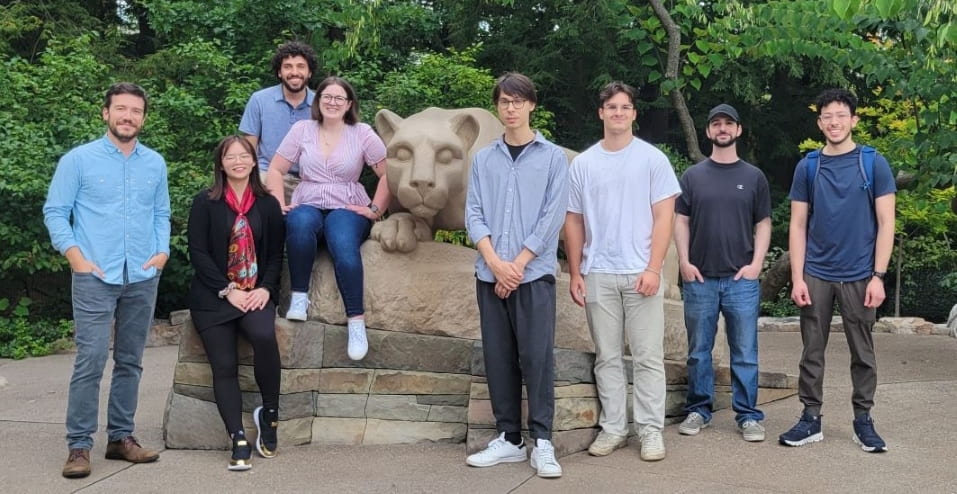
Roger Beaty is an Associate Professor of Psychology at Pennsylvania State University, where he serves as Cognitive Area Coordinator and leads the Cognitive Neuroscience of Creativity Laboratory (CNCL). His research program investigates the neural and cognitive foundations of creative thinking using multimodal approaches. Education Ph.D. (2015) from University of North Carolina at Greensboro Research Focus Dr. Beaty's work examines brain network dynamics during creative cognition using fMRI, tES-fNIRS neuromodulation, and computational methods. His lab develops open-access tools for automated creativity assessment (e.g., SemDis, CAP platform) and studies creativity across domains including musical improvisation, scientific problem-solving, and education. Key research themes include: Default and executive network interactions in creative thought Associative thinking as a core mechanism of creativity Cross-domain applications of computational creativity assessment Neuromodulation techniques for cognitive enhancement Publications Focus Dr. Beaty's recent publications (2016-2025) demonstrate three key trajectories: 1) Development of computational creativity assessment platforms using semantic distance metrics; 2) Neurocognitive investigations of brain network dynamics in creative thinking; and 3) Domain-specific creativity studies in science and music. His work consistently bridges cognitive neuroscience with computational approaches. Student Advising Dr. Beaty mentors graduate students in the CNCL lab, including award recipients of the Chateaubriand Fellowship (Simone Luchini), Matthew Ryan Serafino Scholarship (Clin Lai), and Harold F. Martin Teaching Award (Dan Zeitlen). Laboratory The Cognitive Neuroscience of Creativity Laboratory employs behavioral testing, neuroimaging (fMRI, fNIRS), and computational modeling to study creative cognition. The lab maintains an active publication record and develops open-access research tools for the scientific community.
Michael Stephen Gaines serves as a Professor in the Department of Biological Sciences within the College of Arts and Sciences at the University of Miami. He holds dual administrative appointments as Assistant Provost for Undergraduate Research and Community Outreach and Assistant Provost for Pre-Health Advising and Mentoring, demonstrating his commitment to academic leadership and student development. Dr. Gaines' research spans multiple domains with significant contributions to ecology, animal behavior, and STEM education. His ecological work focuses on spatial modeling of animal behavior, particularly with African savanna elephants and carnivores, examining how social structures influence cognitive abilities and movement patterns. In education, he has pioneered course-based undergraduate research experiences (CUREs) and developed initiatives to promote equity in STEM education for underrepresented minorities. His research demonstrates an interdisciplinary approach that bridges biological sciences with educational policy and practice. Analysis of Dr. Gaines' publication record reveals consistent scholarly output with a clear trajectory toward integrating biological research with educational innovation. His work shows increasing focus on social justice aspects of STEM education while maintaining strong contributions to ecological and behavioral sciences. The interdisciplinary nature of his research portfolio demonstrates his ability to connect fundamental biological principles with practical educational applications. As Assistant Provost, Dr. Gaines has developed and implemented programs like the UM Authentic Research Laboratories (UMARL), which has demonstrated significant impact on student outcomes, including increased engagement in individual research, higher STEM graduation rates within four years, and greater likelihood of graduating with honors. His work with the Science Made Sensible (SMS) program extended inquiry-based learning approaches internationally to South African primary schools, showing successful cross-cultural adaptation of pedagogical strategies. Dr. Gaines has also contributed significantly to understanding equity in STEM education through initiatives like Te Rōpū Āwhina (Āwhina) at Victoria University of Wellington, which focused on improving success rates for Māori and Pacific students in STEM disciplines. His scholarly work consistently emphasizes the importance of creating inclusive educational environments that support diverse learners while maintaining high academic standards.
Tim Trautwein serves as a Researcher in the Department of Psychological Diagnostics at the University of Kassel since October 2023. He holds an M.Sc. in Psychology from the University of Ulm (2023) and a B.Sc. in Psychology from the same institution (2020), with professional experience spanning test development, statistical tutoring, and research assistance in psychological diagnostics. Education Master in Psychology (M.Sc.), University of Ulm, 2023 Bachelor in Psychology (B.Sc.), University of Ulm, 2020 Research Interests His work bridges computational intelligence and psychological assessment through four core domains: Scale construction using metaheuristics for optimized psychometric properties Machine Learning Algorithms & LLM applications in psychological measurement Advanced methods for modeling personality and cognitive abilities Meta-analytic integration of diagnostic approaches This research pioneers hybrid methodologies to address limitations in traditional assessment frameworks. Publications His 2025 publications demonstrate a cohesive research trajectory applying bio-inspired optimization to psychometric challenges. Both works leverage metaheuristics—Ant Colony and Bee Swarm Optimization—to solve scale construction problems, advancing dimensional-categorical assessment balance and model specification search. These contributions establish computational psychometrics as a critical subfield within psychological diagnostics. Advising and Grants No current information available regarding student supervision or externally funded research grants. Labs and Teams He operates within Prof. Dr. Ulrich Schroeders' research group at the University of Kassel, contributing to the department's focus on innovative diagnostic methodologies and computational assessment tools development.
Josef Nerb is a Professor of Educational Psychology and Dean at the University of Education Freiburg, where he works in the Department of Social Psychology and Evaluation within the Faculty of Psychology. His office is located at KG II 220 and Heinrich-v.-Stephan-Str. 5a, 114, 1st floor (Hölderle-Carré), and he holds consultation hours on Thursdays from 2:30 p.m. to 3:30 p.m. He has been at PH Freiburg since 2005 when he received his professorship, following previous positions as a research assistant at the University of Freiburg since 1993 and a postdoc at the University of Waterloo in 2000/2001. Nerb's research spans educational psychology, cognitive psychology, and emotion studies, with particular focus on appraisal theory, attentional skills, decision making, and more recently AI applications in education. His work shows a clear trajectory from environmental risk perception studies early in his career to more recent investigations of digital technologies in educational contexts. His publications demonstrate interdisciplinary collaboration across psychology, education, and computer science fields. His recent work has increasingly focused on the intersection of technology and education, with multiple publications on voice user experience, AI in STEM education, and digital learning environments. This represents an evolution from his earlier foundational work on emotion-cognition interactions and environmental risk assessment. Nerb has supervised numerous doctoral students through graduate colleges including the Graduate College Human and Machine Intelligence in Freiburg. His research has been supported by organizations including the DFG (German Research Foundation) and the ESF (European Science Foundation). His academic leadership extends beyond his professorship to his current role as Dean, where he oversees academic operations within his faculty. His work bridges theoretical cognitive psychology with practical educational applications, making significant contributions to both research and practice in educational psychology.
Miloš Ivanović serves as an Assistant Professor at the Institute of Mathematics and Informatics within the Faculty of Natural Sciences and Mathematics at the University of Kragujevac. His academic career is deeply rooted in computer science and computational mathematics, with research spanning multiple interdisciplinary domains that bridge theoretical computer science with practical applications in engineering, physics, and biology. Dr. Ivanović earned his Doctorate in Computer Science from the Faculty of Natural Sciences and Mathematics (PMF) at the University of Kragujevac, establishing a foundation for his subsequent research career focused on computational methods and high-performance computing. His research interests represent a sophisticated convergence of computational theory and practical applications. Ivanović specializes in advanced computing paradigms including grid computing, GPGPU computing, and cloud-based high-performance computing systems. His work in fluid modeling employs meshless methods and particle dynamics approaches, particularly SPH and DPD techniques applied to microfluidic systems. The breadth of his research extends from theoretical mathematics (graph theory and chemical indices) to practical applications in hydrology, biomedical engineering, and nuclear physics. His interdisciplinary approach enables innovative solutions across diverse scientific domains that require intensive computational resources. The collection of his publications reveals a consistent trajectory of research focused on computational methods with applications spanning multiple scientific disciplines. His work demonstrates strong expertise in parallel computing architectures and their application to complex scientific problems. The publications show a progression from fundamental computational mathematics toward increasingly complex multi-domain applications, particularly in biomedical and environmental systems. His research consistently addresses the challenge of implementing computationally intensive methods on distributed and parallel architectures to solve real-world scientific problems. Throughout his career, Ivanović has participated in numerous national and European research and infrastructure projects, including FP6, FP7, and Tempus initiatives. His collaborative approach is evident in the diverse range of co-authors spanning multiple institutions and disciplines, reflecting his ability to bridge computational science with domain-specific applications. Dr. Ivanović is affiliated with the Group for Mathematical Modeling and Computer Simulations, which develops computational solutions across various domains including fluid dynamics, biomedical applications, and environmental modeling. The group's work encompasses software development for simulation purposes, as evidenced by projects like the SPH07 software package and various specialized simulation tools for engineering and biomedical applications.
Paul D. Mitchell is a Professor of Agricultural and Applied Economics at the University of Wisconsin-Madison. His work spans agricultural policy, crop insurance, and environmental management, with a focus on Wisconsin agribusinesses and farming practices. Over recent years, his research has increasingly integrated educational technologies and embodied cognition, particularly in mathematics and geometry learning. Department: Agricultural and Applied Economics Key Research Areas: Embodied Cognition, Mathematical Reasoning, Augmented Reality in Education His publications highlight the role of gestures, spatial ability, and multimodal interactions in enhancing mathematical understanding. Recent studies explore AR simulations, gesture-based learning, and collaborative knowledge-building. While his formal affiliation remains in agricultural economics, his scholarly output reflects interdisciplinary engagement with education and cognitive science.
Susan Levine is the Rebecca Anne Boylan Distinguished Service Professor in the Departments of Psychology and Comparative Human Development at the University of Chicago. She co-directs the Center for Early Childhood Research and serves as faculty director of the UChicago Science of Learning Center. Her research examines early mathematical thinking, parent-child language interactions, and the impact of math anxiety on learning. Research Focus: Cognitive development, spatial-mathematical connections, and resilience in math learning after brain injury. Scientific Awards: Ann L. Brown Award for Excellence in Developmental Research American Academy of Arts and Sciences member Grants: Funded by NIH, NSF, Heising Simons Foundation, and Overbeck Foundation. Key Contributions: Demonstrated how home math talk influences achievement, linked teacher anxiety to student outcomes, and developed interventions for spatial and numerical cognition.
François-Laurent De Winter is a Lecturer at the Faculty of Medicine, KU Leuven, affiliated with the Department of Neuroscience and working within the Neuropsychiatry unit at UZ Leuven. He is a member of the LBI - KU Leuven Brain Institute and serves on both the Faculty Council of Medicine and the Departmental Council of Neurosciences as ZAP (Zelfstandig Academisch Personeel). His professional activities span teaching, research, and institutional governance within the university's medical faculty. Dr. De Winter's research focuses on neuropsychiatry and neuroscience, with particular emphasis on neurodegenerative diseases including Alzheimer's disease, Huntington's disease, and frontotemporal dementia. His work explores the intersection of sleep disorders, brain imaging techniques (particularly fNIRS and PET), and neuropsychiatric manifestations of neurological conditions. He is currently co-promoting a project on non-invasive measurement of brain activity in freely moving populations using functional near-infrared spectroscopy (fNIRS) running from 2023-2024. His recent publications demonstrate a strong focus on the relationship between neurodegenerative processes and clinical manifestations, with particular attention to sleep physiology in Alzheimer's disease, social cognition in Huntington's disease, and behavioral aspects of frontotemporal dementia. His work spans both fundamental neuroscience and clinical applications, often employing advanced neuroimaging techniques to bridge these domains. As an educator, Dr. De Winter contributes to numerous courses in adult psychiatry, including skills training, evidence-based medicine, problem-solving abilities, and communication skills. His teaching portfolio reflects a comprehensive approach to psychiatric education across multiple dimensions of clinical practice. His professional activities demonstrate significant engagement with interdisciplinary approaches to neuropsychiatric disorders, emphasizing the importance of bridging neurological and psychiatric perspectives in understanding complex brain disorders. His work on anti-NMDA receptor encephalitis specifically highlights the challenges of interdisciplinary recognition of neuropsychiatric conditions.
Nicolao Bonini is a Full Professor of Cognitive Psychology at the Department of Economics and Management, University of Trento. His academic career spans over three decades with significant contributions to the fields of decision science, cognitive psychology, and behavioral economics. He has held various leadership roles including Coordinator of the Doctoral School in Psychological and Educational Sciences and member of several academic committees. Professor Bonini earned his Psychology degree with honors from the University of Padua in 1987 and completed his PhD in Experimental Psychology from the University of Trieste in 1993, receiving the Italian Psychology Association Award for best doctoral thesis. His academic progression at the University of Trento includes positions as Researcher (1999-2001), Associate Professor (2001-2004), and Full Professor (2005-present). His primary research interests focus on descriptive models of decision and probabilistic judgment, consumer decision-making and trust judgment, evaluation of public goods and public action, and the biological bases of decision-making. His work bridges cognitive psychology with economic behavior, examining how cognitive processes influence economic decisions, risk perception, and consumer behavior. Professor Bonini has made significant contributions to understanding how emotions, cognitive biases, and contextual factors affect decision processes in various domains including environmental behavior, financial decisions, and health-related choices. His publication record demonstrates a consistent focus on the intersection of cognitive processes and economic behavior, with recent work exploring eye-tracking methodologies to understand consumer package choices, the effects of physiological stressors like hypoxia on risk preferences, and environmental nudges to promote sustainable behavior. His research employs diverse methodologies including psychophysiological measures, behavioral experiments, and eye-tracking technology. Italian Psychology Association Award for best doctoral thesis President of the European Association of Decision Making (2011-2013) Chairman of the Jury for Jane Beattie Distinguished Research Activity Award Professor Bonini has supervised multiple doctoral students including Michele Graffeo, Valentina Perrotta, Andrea Galentino, and Alessia Dorigoni. His research has been supported by numerous grants from European Commission, Municipality of Rovereto, CNR, and MIUR, totaling over €200,000. He has served on editorial boards for journals including Psychology, Mind and Society, and Judgment and Decision Making, and has been actively involved in international academic organizations such as the European Association of Decision Making and the Society of Judgment and Decision Making.
Nilima Nigam is a Professor at Simon Fraser University (SFU) recognized for her groundbreaking contributions to industrial mathematics. Her work bridges theoretical results with practical applications in interdisciplinary research, advancing mathematical modeling methodologies. Her research focuses on Industrial Mathematics and Applied Mathematics , with emphasis on computational approaches and cross-disciplinary collaboration. She advocates for the integration of mathematical theory with real-world problem-solving in industrial contexts. In 2021, she received the prestigious CAIMS-Fields Industrial Mathematics Prize for her transformative impact on the field and national leadership in promoting industrial mathematics. This award highlights her ability to translate abstract mathematical concepts into innovative models with tangible applications.
Dan Wetzel is a Teaching Associate Professor in the Department of Biological Sciences at the University of Pittsburgh, where he teaches ecology, animal behavior, biostatistics, and scientific writing. His research bridges behavioral ecology—focusing on individual differences in avian parental care—and science education, specifically investigating student and faculty perceptions of office hours to enhance academic support systems. He earned his PhD from the University of Kentucky and MS from Georgia Southern University, both centered on behavioral ecology with emphasis on individual variation in bird parental care behaviors. Dr. Wetzel's research spans behavioral ecology and science education . In behavioral ecology, he examines individual variation in parental care syndromes , genetic and environmental influences on behavior , and amphibian disease dynamics . His science education work analyzes office hour interactions and science communication pedagogy , as demonstrated by his "De-Jargonizing SciComm" study. His interdisciplinary approach integrates field ecology, molecular techniques, and educational research methodologies to address complex biological and pedagogical questions. His publication trends (2011-2022) reveal dual trajectories: persistent contributions to avian behavioral ecology (particularly house sparrow systems) and amphibian disease ecology (focusing on chytrid fungus dynamics), alongside emerging work in science education research . This evolution demonstrates a strategic expansion from organismal ecology into educational scholarship while maintaining core expertise in behavioral variation analysis. No scientific awards are documented in the provided information. Dr. Wetzel mentors students in biological sciences though specific advisees aren't listed. His research likely involves grant funding for disease ecology and educational innovation, particularly in developing improved office hour frameworks and amphibian pathogen detection methods. While no formal lab is specified, his amphibian disease publications indicate collaboration with disease ecologists and conservation biologists, and his education research engages university teaching communities in systematic assessment of academic support structures.
Petra Heißenberger is a Professor and currently serves as Vice Rector for Teaching and School Development Consulting at the University College of Teacher Education Lower Austria (Pädagogische Hochschule Niederösterreich). She has been with the institution since 2007 and previously worked at the Pedagogical Academy in Baden from 2005-2007. Her academic career includes leadership roles such as Head of the Department of Leadership Culture (2022-2024) and Director of the Leadership Center since 2013. Professor Heißenberger's research focuses on educational leadership, particularly examining leadership personalities including the 'Dark Triad' (narcissism, Machiavellianism, and psychopathy) in school leadership contexts. Her work spans school management, educational innovation, school autonomy, and future literacy in the Anthropocene. She has led significant research projects including NÖbegabt 5-7 (2013-2018) on identifying talents in young children, INNOVITAS (since 2017) on school autonomy across Europe, TEDCA (since 2017) on teacher career development, and the Culture Nature Literacy project (since 2022). Her recent publications demonstrate a strong focus on the intersection of leadership, school development, and educational innovation. The 15 most recent articles show particular emphasis on future literacy, diversity education, AI in education, and sustainable school development. Her work often takes the form of edited journal issues for R&E-SOURCE and #schule verantworten, where she serves as editor-in-chief, ensuring these platforms address current challenges in educational leadership. 2024 Book: 'Lehrkräfte führen, fördern und fordern. Leitfaden für Schulleitungen zum Performance-Management des Kollegiums' (Guiding, Promoting, and Challenging Teachers: A Guide for School Leaders on Performance Management) 2024 Articles on AI in education and its implications for educational equity 2023-2025 Series of publications on leadership, school culture, and innovation Professor Heißenberger actively supervises students in the Master's program in School Management and has been instrumental in developing continuing education programs for school leaders. Her practical experience as a former primary school teacher (1994-2005) informs her research and teaching approach, bridging theory and practice in educational leadership. She is recognized for her ability to translate complex leadership theories into practical applications for school administrators. She leads the Leadership Center at the University College of Teacher Education Lower Austria, which serves as a hub for research, professional development, and innovation in educational leadership. The center focuses on developing leadership competencies for current and future school leaders through evidence-based approaches and practical application, with particular attention to the challenges of leading in increasingly complex educational environments.
Dr. Tatiana Jajcayová serves as Associate Professor and Department Chair at the Department of Applied Informatics, Faculty of Mathematics, Physics and Informatics, Comenius University in Bratislava. Her academic career combines leadership responsibilities with active research and teaching in discrete mathematics and theoretical computer science. Her research focuses on two primary areas: Combinatorial Semigroup Theory Algebraic Combinatorics Analysis of her recent publications (2021-2024) reveals a consistent research trajectory in theoretical discrete mathematics with occasional interdisciplinary applications. Her work primarily appears in specialized mathematics journals focusing on algebraic structures, graph theory, and computational aspects of semigroup theory. While most publications are theoretical, her 2021 paper on aphasia detection demonstrates ability to apply mathematical techniques to medical language processing problems. As Department Chair, Professor Jajcayová oversees all departmental operations while maintaining an active teaching schedule focused on foundational mathematics courses for informatics students. Her teaching responsibilities include: Discrete Mathematics I and II Mathematics for Informatics I and II Problem-Solving Methods in Artificial Intelligence Professor Jajcayová maintains an active research program with consistent publication output in specialized mathematics venues, demonstrating ongoing contributions to her field of expertise.