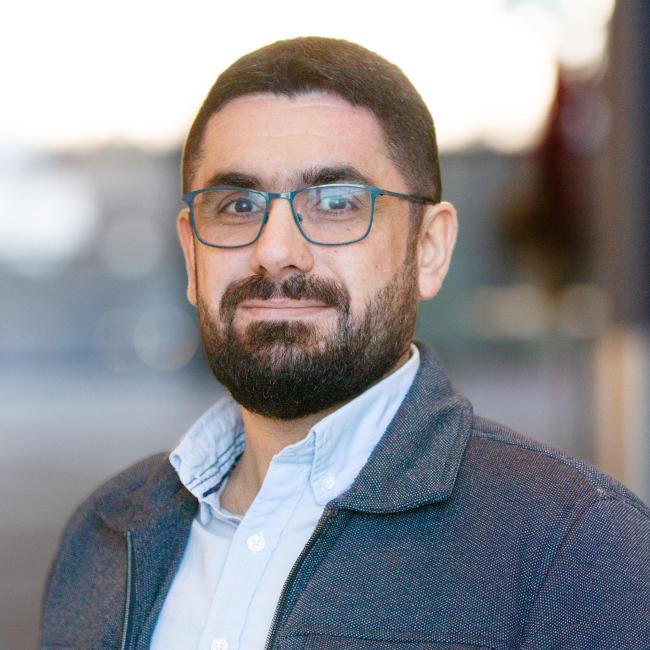
Sarah Gillet is a Postdoctoral Researcher at the Division of Robotics, Perception, and Learning at KTH Royal Institute of Technology, where she focuses on developing social robot behaviors to foster collaboration and inclusion in human groups. Her research addresses challenges like in-group favoritism through computational approaches to shape group interactions. She holds a Doctoral Thesis (2024) titled Computational Approaches to Interaction-Shaping Robotics . Her work emphasizes group dynamics , robot-mediated inclusion , and pedagogical robotics , particularly in children and adolescent populations. Key areas include gaze behavior analysis, equitable participation promotion, and social robot roles such as mediators in educational settings. Dr. Gillet teaches the Social Robotics (DD2413) course and supervises master theses. Her recent publications explore robot gaze behaviors for participation balance, socially appropriate listening, and influence prediction models like RoSI. She actively participates in conferences like ACM/IEEE HRI and IEEE RO-MAN. Her research integrates computational methods with social science insights to design robots that actively improve human group interactions, with applications in education, collaboration, and bias mitigation.
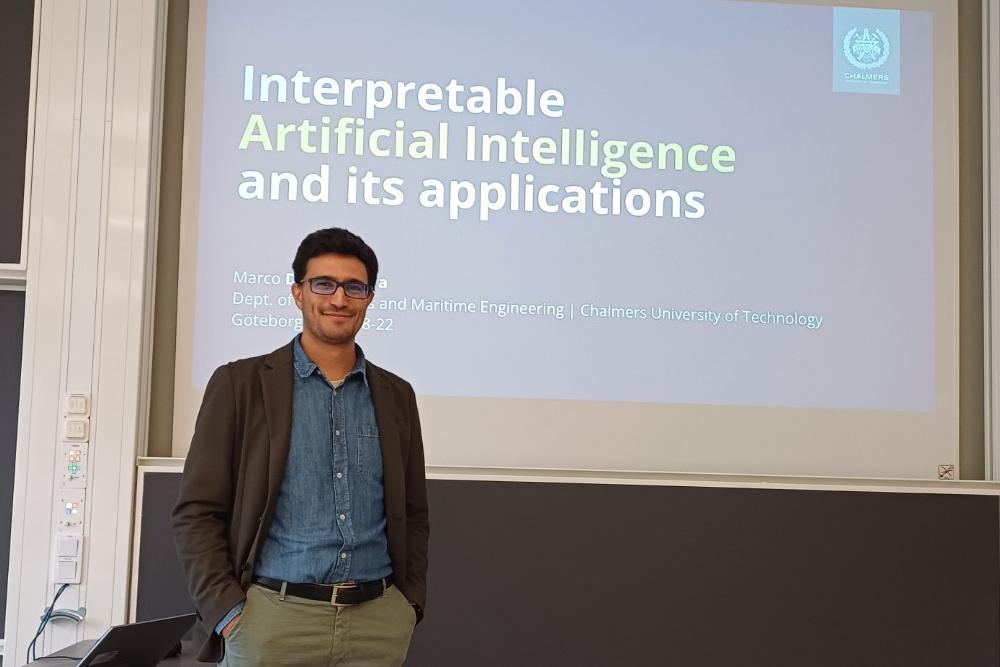
Marco L. Della Vedova is a Senior Lecturer in Applied Artificial Intelligence at Chalmers University of Technology, Sweden. He works in the Vehicle Engineering and Autonomous Systems division within the Department of Mechanics and Maritime Sciences, as part of Prof. Mattias Wahde's research group. Since 2025, he has served as Director of the Data Science and AI master's programme (MPDSC) at Chalmers, where he teaches courses including Introduction to Artificial Intelligence and Digitalization in Sports. Dr. Della Vedova earned his academic foundation at the University of Pavia, Italy, where he completed his BSc (2006), MSc (2009), and PhD (2013) in Computer Engineering. His doctoral research focused on "Real-Time Physical Systems and Electric Load Scheduling" under Prof. Tullio Facchinetti. During his PhD studies, he spent a year at U.C. Berkeley hosted by Prof. Francesco Borrelli at the Model Based Predictive and Distributed Control Lab. His research spans multiple AI domains with a strong emphasis on interpretability. Dr. Della Vedova develops interpretable methods for conversational AI, naturalness evaluation of forests using canopy height models, and geospatial applications. His work bridges theoretical AI with practical societal benefits, particularly in environmental monitoring, transportation systems, and orienteering. He has previously contributed to cloud computing, hate speech detection, and cyber-physical energy systems, demonstrating his interdisciplinary approach to AI research. Dr. Della Vedova's publication record reveals a consistent trajectory of impactful research across multiple domains of artificial intelligence. His recent work shows a strong focus on interpretability in AI systems, with significant contributions to natural language processing, geospatial analysis, and causal inference. The research demonstrates both theoretical depth and practical applications, particularly in environmental monitoring and social media analysis. His methodology often combines traditional machine learning approaches with novel interpretability techniques, creating bridges between complex AI systems and human understanding. Dr. Della Vedova has received several prestigious recognitions for his work: Best PhD thesis award from the Order of the Engineers of Bergamo (2013) Italian champion of Il Cervellone (2012) Top Italian performer in IEEEXtreme 6.0 programming competition (148th overall globally, 2012) Premio Arturo Schena award from Fondazione Credito Valtellinese (2010) With over 50 students supervised through bachelor's and master's theses, Dr. Della Vedova has established himself as a dedicated mentor in the AI community. His current PhD students include Minerva Suvanto working on interpretable NLP and Vivien Lacorre developing AI for railway infrastructure inspection. His supervision spans diverse topics from forest naturalness evaluation to hate speech detection and transportation optimization. Beyond formal supervision, he actively contributes to educational initiatives including serving as Director of Chalmers' Data Science and AI master's program and developing innovative teaching methods that connect theoretical concepts with real-world applications. Dr. Della Vedova is deeply embedded in both academic and professional communities. He leads the Applied Artificial Intelligence research group at Chalmers while maintaining strong connections with European research networks through projects like the ERASMUS+ EUrienteering initiative. His interdisciplinary approach is reflected in collaborations across computer science, environmental science, and social sciences. Notably, he applies his AI expertise to orienteering both as a researcher developing localization methods and as a licensed Event Advisor for the International Orienteering Federation, demonstrating how his professional and personal interests converge in innovative ways.
Nacira Agram is an Associate Professor at Kungliga Tekniska Högskolan (KTH), specializing in stochastic analysis, mean-field processes, and mathematical finance. She contributes to education through roles as Examiner and Teacher in advanced financial mathematics courses. Research Focus: Her work centers on stochastic differential equations with applications to financial markets, energy systems, and population modeling. Key areas include conditional McKean–Vlasov jump diffusions, singular control of stochastic Volterra equations, and deep learning applications in stochastic modeling. Publications: Recent research explores mean-field control, optimal stopping, and SPDEs with space interactions, emphasizing advanced mathematical techniques for financial and ecological systems. Teaching: Currently involved in courses like Financial Derivatives and Martingales and Stochastic Integrals , where she serves as course responsible and examiner.
Fredrik Henriksson is an Assistant Professor at Linköping University's Department of Management and Engineering (IEI), within the Division of Product Realisation (PROD). His work focuses on sustainable integrated product development, particularly addressing challenges in material selection and adoption in industries like automotive and construction. He actively contributes to curriculum development, emphasizing material-driven design education for engineering students to bridge theoretical knowledge with practical industry needs. Research Interests: His primary areas include sustainable materials innovation, decision-making processes in material selection, and the integration of production systems with product development. He explores barriers to adopting renewable materials such as wood-based solutions and investigates how production systems can adapt to circular material flows. His work also addresses industrial implementation challenges of new materials, including IoT integration in wood products and multi-material automotive body solutions. Key Contributions: His 2021 doctoral thesis highlighted the role of personal habits and biases in material selection decisions, reshaping perceptions of rationality in product development. He has developed case-study methodologies for engineering education that foster cross-disciplinary collaboration and industry-relevant problem-solving. His research outcomes are published in journals like International Journal of Sustainable Engineering and SAE International Journal of Materials & Manufacturing . Labs/Teams: He is affiliated with the Unit of Design and Product Development (PRODDOP), collaborating with the Product Realisation division to advance sustainable industrial practices. His work often involves industry partnerships to ensure real-world applicability of academic research.
Cecilia Wallerstedt is a Professor at the University of Gothenburg, affiliated with both the Artistic Faculty at the Academy of Music and Drama and the Department of Education, Communication and Learning. As Pro-Dean of the Artistic Faculty, she bridges artistic and educational research, while leading the FILUR project focused on imagination development in early childhood education. Her research explores teaching and learning in music and other aesthetic subjects across educational levels, emphasizing teacher-child interactions and sociocultural theory. Current projects address play-responsive teaching, intergenerational play dynamics, and digital media integration in preschool settings. She supervises PhD students in the PReCEC graduate school and collaborates with Nordic institutions through networks like the Studies of Artistic Vision and the Network for Internship Development. Recent publications highlight play-responsive didaktik, metacognitive strategies, and cultural historical theory applied to music, narrative play, and multilingual engagement. While no scientific awards are mentioned, her work includes EU-funded research and systematic reviews of music education practices.
Valery Chernoray is a Research Professor at the Division of Fluid Dynamics, Chalmers University of Technology. Since 1996, he has specialized in experimental fluid dynamics with extensive expertise in modern flow analysis and measurement techniques. He currently leads the Chalmers Laboratory of Fluid and Thermal Science, a university-wide research infrastructure facility that provides equal access to flow, temperature, and motion measurement capabilities for researchers across all engineering disciplines at Chalmers. Professor Chernoray's research encompasses several key areas in fluid dynamics: Experimental validation of computational models using Particle Image Velocimetry (PIV) Turbomachinery aerodynamics, particularly turbine rear structures and outlet guide vanes Bearing lubrication systems and multiphase flow in mechanical components Active flow control applications for automotive and marine systems Wind engineering for urban and marine environments Heat transfer analysis in complex engineering systems His recent publications (2022-2024) reveal a strong emphasis on experimental validation of computational models, with particular focus on lubrication systems in bearings and gearboxes, turbine aerodynamics, and active flow control. His work consistently bridges theoretical fluid dynamics with practical engineering applications, demonstrating expertise in both fundamental research and industrial problem-solving. As head of the Chalmers Laboratory of Fluid and Thermal Science, Professor Chernoray oversees comprehensive experimental facilities supporting research across multiple engineering disciplines. The laboratory provides critical infrastructure for experimental work in air, water, and solid object measurements, serving as a hub for interdisciplinary collaboration at Chalmers University.
Jenny Hallgren is an active Associate Professor of Nursing at the University of Skövde's School of Health Sciences, where she conducts research and teaches in the field of nursing with a strong focus on geriatric care and healthcare innovation. Her work spans multiple collaborative projects including the long-term Reflective STRENGTH initiative (2017-2028) which supports older adults with long-term health problems, the Food–Gut–Brain–Mind–Health project (2020-2025) examining ketogenic diet effects, and the Simulation in age-suit project (2022-2025) studying how age suit simulation impacts nursing students' understanding of aging. Her research interests center on improving care for older adults through digital health innovations, nursing education advancements, and mobile integrated care models. She has published extensively on topics including age suit simulation in nursing education, digital health technologies for elderly care, workplace experiences of healthcare professionals, and patient safety in geriatric settings. Her work frequently employs qualitative methodologies to explore the lived experiences of patients, healthcare providers, and students. Analysis of her recent publications (2023-2025) reveals a strong emphasis on digital health interventions for older adults, nursing education innovations using simulation technology, and workplace dynamics in healthcare settings. Her research consistently addresses the intersection of technology and human factors in healthcare delivery, particularly focusing on how digital tools can enhance rather than hinder patient-centered care for aging populations. As a dedicated researcher, she collaborates extensively with colleagues across multiple institutions, particularly with Catharina Gillsjö, Lina Emmesjö, and others in the Digital HEAlth Research (DHEAR) group. Her work has appeared in reputable journals including BMC Digital Health, BMC Health Services Research, Nordic Journal of Nursing Research, and International Emergency Nursing.
Maria Haak is a Professor in Health Sciences at the Faculty of Health Sciences, Kristianstad University. She serves as Director of Studies for Postgraduate Education in Nursing Science and is affiliated with the Center for Food, Health, and Retail (FOHRK) and the Human-Health-Society (MHS) research platform. PhD in Medical Science (2006) Associate Professor in Gerontology at Lund University (2014) Associate Professor in Health Sciences at Kristianstad University (2018) Her research explores how home and local environments influence health, independence, and participation in older adults, particularly those with functional limitations. Key themes include: Preventive home visits and their impact on aging populations Person-centered approaches in healthcare and rehabilitation Playfulness as a health intervention for mobility-limited seniors Group exercise programs and social belonging Design thinking in policy collaboration Recent publications analyze age-friendly communities, stakeholder engagement in exercise programs, and tools like the PLAY-SE framework for assessing playfulness in aging. She leads projects such as From Home to Society and Person-centered Health Promotion for Seniors . Maria supervises doctoral students in interdisciplinary research and contributes to curriculum development in health sciences. She actively evaluates research via peer review and conference participation.
Daniel Carelli is a postdoctoral researcher at Chalmers University of Technology specializing in Environmental Systems Analysis . He holds a Ph.D. in Political Science from the University of Gothenburg , focusing on governance strategies for major global challenges including climate change, antibiotic resistance, and pandemics. Current research emphasizes bureaucratic organizations' role in policy implementation Active in EU governance studies and transnational policy coordination Research Themes: His work bridges climate policy , public health governance , and administrative autonomy , with particular focus on institutional responses to complex global challenges. Recent publications analyze track-based policy systems and super-wicked problem coordination. Key Collaborations: Works with Jon Pierre , B. Guy Peters , and Björn Rönnerstrand on EU health governance projects. Currently involved in Mission-driven policy instruments for zero and negative emissions funded by the Swedish Energy Agency .
Fredrik Envall is a Lecturer at Linköping University working within the Department of Theme (TEMA) and specifically in the Theme Environmental Change (TEMAM). His academic work bridges environmental challenges, political processes, and technological systems with a strong interdisciplinary approach. Envall's educational background includes a PhD in Technology and Social Change (2021), a Master's degree in Political Science (2015), and a Bachelor's degree in Environmental Science (2012), all from Linköping University. This diverse academic training informs his transdisciplinary research perspective that examines how environmental problems are understood and managed in society. His research employs critical social science perspectives including socio-technical infrastructure studies, discourse analysis, and green democracy theory. Methodologically, he utilizes text analysis, interview studies, action research, and ethnographic approaches to investigate the societal processes that unfold when environmental policy ambitions are translated into practice across different contexts. Envall has a particular interest in the political and environmental impacts of technologies and governance arrangements, with empirical focus on climate change-related infrastructures. His work spans from formal policy processes to grassroots initiatives, with specific emphasis on energy communities and their democratizing potential. Current research addresses democratic and justice issues in the energy transition, including climate populism and tensions between rapid energy system change and democratic legitimacy. His recent publications (2023-2025) demonstrate a consistent focus on energy communities, smart grid pilot projects, and just transition pathways, revealing trends toward examining the democratic dimensions of technological solutions to climate change. These works collectively emphasize the tension between technical optimization and democratic participation in energy systems. Envall has contributed significantly to public understanding through popular science publications including policy briefs, reports, and study materials on energy communities as tools for just transition. His media appearances in outlets like Göteborgs-Posten and Sveriges Radio demonstrate his commitment to engaging with broader societal debates about energy justice and climate policy. Legitimacy and Acceleration in Green Energy Initiatives and Transitions (LEGIT) Trans4Demo - addressing controversial politics around climate change Research on alternative electricity system architectures Local solar energy communities and energy democracy STRIPE - interdisciplinary research on infrastructures, politics and environment Environmental Humanities research initiatives Envall teaches across multiple programs at Linköping University including Urban Planning, Environment/Climate/Sustainable Development, Political Science, and the Science for Sustainable Development Master's program. His teaching focuses on social processes around environmental problems and transitions, connecting classroom learning with real-world sustainability challenges and democratic engagement.
Saad Mubeen is a Full Professor of Computer Science at Mälardalen University, Sweden, affiliated with the School of Innovation, Design and Engineering and the Division of Networked and Embedded Systems. He holds a Master's in Electrical Engineering (Embedded Systems) and a PhD in Computer Science and Engineering from Mälardalen University (2014), with a Docent title (2018) focused on vehicular embedded systems. His research emphasizes predictable embedded systems, timing analysis for real-time communication, and component-based software design. Key areas include model-driven development for automotive systems, integration of TSN/5G networks, and fault-tolerant industrial architectures. He has led projects on end-to-end timing analysis in distributed systems, ROS 2 verification, and cognitive edge-cloud scheduling. Publications span 2021–2025, focusing on real-time systems, network protocols (TSN, AVB, 5G), and industrial automation. Notable work includes frameworks for TSN configuration, fault diagnosis tools using NETCONF, and scheduling algorithms for heterogeneous edge-cloud environments. His contributions address critical challenges in timing predictability, security, and resource optimization for cyber-physical systems. Education contributions include problem-based learning modules for vehicular software engineering. He is actively involved in bridging academia and industry through collaborative research on next-generation automotive and industrial systems.
Johannes Lunneblad is a Professor at the Department of Education, Communication and Learning at the University of Gothenburg. His research focuses on institutional responses to youth vulnerability, particularly in socially disadvantaged urban areas, examining how schools, social services, and law enforcement interact with marginalized youth. Key themes include migration's impact on education, intercultural pedagogy, and the juridification of youth behavior in schools. Education Background: Not explicitly detailed in the text, but his academic role implies advanced qualifications in education/sociology. Teaching Interests: Courses on learning, culture, language, identity, and ethnography-focused methodologies. Research Interests: Lunneblad's work critically analyzes how institutions frame social problems and youth risk, with a focus on urban schools, migration, and community partnerships. He employs ethnographic methods to explore topics like school-police collaboration, gendered violence, and intercultural education policies. Publications Trends: His recent work emphasizes institutional collaboration challenges, juridical responses to youth violence, and the sociopolitical dimensions of school-community partnerships. Key themes include ethical dilemmas in social work, the categorization of 'risk youth,' and the interplay between policy and practice in disadvantaged areas. Awards: None explicitly listed in the provided text. Grants/Advising: No specific grants mentioned, but his research collaborations (e.g., with Jenny Bengtsson, Thomas Johansson) suggest involvement in funded projects. Advising details are absent. Labs/Teams: Engaged with interdisciplinary groups studying urban education, migration, and social policy at the University of Gothenburg.
Bestoun S. Ahmed Al-Beywanee is a Professor in AI and Software Engineering at the Department of Mathematics and Computer Science, Karlstad University, Sweden. He joined the university as a Senior Lecturer in 2019, was promoted to Associate Professor in 2020, and to Professor in 2023. His roles include teaching advanced courses such as AI Engineering, Automated Software Engineering, and Software Testing Fundamentals. His research focuses on software quality assurance, trustworthy AI systems, and MLOps, with a strong emphasis on combinatorial testing, IoT systems, and applied optimization techniques. Education: BSc (Electrical and Electronic Engineering, University of Salahaddin-Erbil, 2004); MSc (University Putra Malaysia, 2009); PhD (Software Engineering, University Sains Malaysia, 2012). Postdoctoral research at the Swiss AI Lab IDSIA (2015) and positions at Salahaddin University and Czech Technical University further enriched his expertise. Research interests span Quality Assurance of machine learning systems, software testing methodologies, trustworthy AI, IoT system reliability, and optimization algorithms. He has pioneered frameworks like PatrIoT for IoT testing and contributed to MLOps robustness. His work integrates machine learning with anomaly detection, adaptive systems, and industrial applications. Recent articles highlight advancements in data-driven heat pump management, MLOps robustness, and edge-cloud AR/VR optimization. Collaborations include projects on digital twins, smart manufacturing, and industrial IoT. His contributions bridge theoretical research with practical industrial solutions, emphasizing system reliability and AI ethics.
Anna Lundh is an Associate Professor at the Swedish School of Library and Information Science, University of Borås, and an Adjunct Senior Research Fellow at Curtin University's School of Media, Creative Arts and Social Inquiry. Her research focuses on reading practices, information literacy, and accessibility, particularly in educational and digital contexts. University of Borås: Department of Library and Information Science Curtin University: Libraries, Archives, Records and Information Science Her work explores the politics of reading, audio-based technologies for accessible reading, and historical shifts in information literacy from the 20th to 21st centuries. She leads the national research school ReSource (2023-2026) funded by the Swedish Research Council. Anna's publications span critical studies of reading, disability rights-based perspectives on listening-based reading, and the sociopolitical implications of assistive technologies. She has supervised doctoral students in Sweden and Australia, emphasizing socially and discursively shaped information practices.
Cecilia Åberg is a Senior Lecturer in Nursing at the School of Health Sciences, University of Skövde. She serves as program coordinator for the Nursing Program and is actively involved in teaching at both basic and advanced levels. Her research focuses on elderly health and well-being, particularly within the DHEAR research environment and the "Välbefinnande vid långvariga hälsoproblem" research group. Research Interests: Åberg specializes in person-centered care for the elderly, digital health interventions to combat existential loneliness, and reflective dialogue techniques to enhance meaning-making in long-term health problems. Her work integrates technology like the egenKRAFT app to support self-reflection and existential conversations. Recent Article Trends: Her 2024 publications emphasize digital tools for elderly engagement, reducing involuntary loneliness, and technology-assisted care delivery. Earlier works (2022–2015) explore qualitative experiences of digital interventions, existential dialogues, and clinical education methods. Projects: Åberg leads the ongoing DigiKRAFT project (2023–2028), which promotes healthy aging through structured existential conversations. Her doctoral research (2022) focused on reflective STRENGTH-giving dialogues for elderly with long-term health issues.