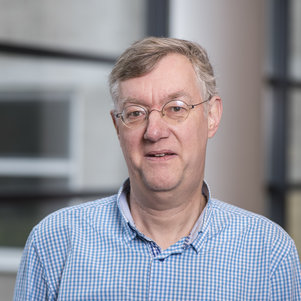
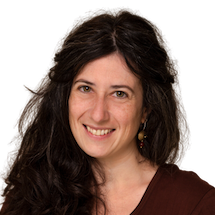
Prof. dr. Steven Hoekstra is an Associate Professor of Atomic and Molecular Physics at the University of Groningen's Faculty of Science and Engineering, within the Van Swinderen Institute. His research focuses on precision measurements using cold molecules to explore fundamental physics, including Stark deceleration, laser cooling, and searches for physics beyond the Standard Model. He leads the NL-eEDM program at Nikhef, investigating the electron's electric dipole moment. Hoekstra is also involved in educational innovation, having received the Teacher of the Year award (2020) and a Senior Teacher Qualification (2023). He has supervised over 11 PhD theses and currently mentors 5 students. His work combines experimental techniques with theoretical insights, addressing questions like symmetry violations and quantum dynamics. Key projects include manipulating BaF molecules with electrostatic fields and exploring levitated nanoparticles as sensors. Hoekstra has secured major grants, including NWO VICI (2022) and VIDI (2013), and collaborates internationally on projects like the European Strategy for particle physics. Recent articles highlight advancements in molecular beam control, spin-precession methods for EDM searches, and opportunities in radioactive molecules. He actively participates in the Physics Olympiad Netherlands as chair, contributing to science outreach and education.
Prof. Hens Runhaar is a Full Professor of Sustainable Food System Governance at Utrecht University's Copernicus Institute of Sustainable Development. His research focuses on reconciling food production with biodiversity recovery, environmental sustainability, and health through innovative governance frameworks. He emphasizes connectivity issues in food systems, such as disconnects between production and environmental conditions, and advocates for transformative practices like agroecology and nature-inclusive agriculture. Key roles include chairing the Board of Examiners for Sustainable Development and membership in Future Food Utrecht. His projects include NWO-funded initiatives like COMBINED (grassland biodiversity) and REWIRE (circular agricultural missions). He actively engages in policy dialogues, such as advising BirdLife Netherlands and contributing to the Dutch Biodiversity Council. Research highlights systemic barriers to sustainability transitions in agriculture, with recent work analyzing dairy farming and farmer collectives. His outreach includes media appearances on nitrogen policy, nature restoration, and sustainable food systems. Professional memberships span international networks like Earth System Governance and the Wageningen School of Social Sciences.
Thomas Bäck is a Professor at the Leiden Institute of Advanced Computer Science (LIACS) , Leiden University , Netherlands, and a member of the interdisciplinary programme Society, Artificial Intelligence and Life Sciences (SAILS) . His academic career spans roles at Leiden University (1996–present) and leadership positions at the Center for Applied Systems Analysis in Dortmund (1994–2000). Education : Diplom-Informatiker (Computer Science), Technische Universität Dortmund (1990) Dr. rer. nat. (Computer Science), Technische Universität Dortmund (1994) Research Interests : Dr. Bäck specializes in evolutionary computation , machine learning , and their applications in sustainable smart industry and healthcare . Recent work focuses on integrating large language models (LLMs) and quantum computing into optimization frameworks, with projects like CIMPLO (predictive maintenance), ECOLE (experience-based optimization), and SAPPAO (airline operations optimization). Scientific Contributions : His 526+ publications cover evolutionary algorithms, quantum optimization, and LLM-driven design, with recent trends including: Quantum computing (e.g., quantum approximate optimization, quantum advantage challenges) LLM integration (e.g., hyperparameter tuning, mutation control, code evolution graphs) Healthcare and industry (e.g., predictive maintenance, anomaly detection, melt quality prediction) Algorithm benchmarking (e.g., IOHprofiler, MA-BBOB, explainable benchmarking) Scientific Awards : IEEE Fellow (2022) Royal Netherlands Academy of Arts and Sciences (KNAW) member (2021) Academia Europaea member (2022) IEEE Computational Intelligence Society Evolutionary Computation Pioneer Award (2015) Fellow, International Society of Genetic and Evolutionary Computation (2003) Best Ph.D. thesis award, German Society of Computer Science (GI) (1995) Advising and Grants : He supervises Ph.D. candidates in evolutionary computation and machine learning and has secured 7 major grants from organizations like the Dutch Research Council , European Commission , and The Research Council of Norway . His editorial roles include Editor-in-Chief of the Evolutionary Computation Journal and associate editorships in leading AI journals.
Ibo van de Poel is a Full Professor at Delft University of Technology , within the Faculty of Technology, Policy and Management , specifically in the Section Philosophy . He holds the prestigious Antoni van Leeuwenhoek professorship , awarded to excellent young researchers, and is a leading figure in Design for Values , engineering ethics , and technology as social experimentation . Education: Van de Poel studied Philosophy of Science, Technology and Society at the University of Twente , with a propaedeutic exam in Mechanical Engineering . He earned his PhD in Science and Technology Studies (STS) in 1998 from the University of Twente , under the supervision of Prof. Dr. A. Rip. Research Interests: His research spans three major themes: Design for Values : Investigating how moral values can be integrated into engineering design, including empirical studies on how engineers handle value conflicts. Moral Responsibility in R&D Networks : Exploring the "problem of many hands" in large-scale research and development projects, developing formalizations and empirical methods. Ethics of Emerging Technologies : Examining ethical issues in new technologies like nanotechnology and synthetic biology , with a focus on technology as social experimentation . Publications and Impact: Van de Poel has authored over 25 international peer-reviewed articles and 15 book contributions . He is co-editor of major works including the Handbook of Philosophy of Technology and the Engineering Sciences (Elsevier, 2009), Philosophy and Engineering (Springer, 2010), and Ethics, Engineering and Technology (Wiley-Blackwell, 2011). His recent work includes leading the VICI project "New Technologies as Social Experiments" , funded by NWO. Scientific Awards: Antoni van Leeuwenhoek Professorship (TU Delft) VICI Grant for "New Technologies as Social Experiments: Conditions for Morally Responsible Experimentation" Advising and Grants: Van de Poel has led and contributed to multiple high-impact projects, including: NWO Project on "Moral Responsibility in R&D Networks" (2007–2012) EU Project on ethical issues in synthetic biology (2009–2011) VICI Project on "New Technologies as Social Experiments" (ongoing) He has also supervised PhD students and contributed to educational innovations, including the development of the AGORA web-based program and the first Dutch textbook on ethics and technology . Labs and Teams: Van de Poel is an active member of 4TU.Ethics & Technology , a federation of Dutch technical universities focused on ethics and technology. He contributes to the Simon Stevin Series in the Ethics of Technology and participates in various reading groups and PhD communities within the network.
Dr. Elisabeth (Lies) Wesseling is an Associate Professor in the Department of Literature and Art at the Faculty of Arts and Social Sciences, Maastricht University. She serves as Director of the Centre for Gender and Diversity and leads the international research network PLACIM (Platform for a Cultural History of Children's Media). Her interdisciplinary work bridges literature, cultural history, and the humanities' engagement with science and identity. Her educational background includes MA degrees in English Language and Literature and Comparative Literature (both cum laude) and a PhD in Comparative Literature, all from Utrecht University. Dr. Wesseling’s research focuses on the cultural construction of childhood, particularly through narrative forms in fiction, life writing, and film. She investigates how global adoption narratives forge kinship across cultural boundaries, drawing on postcolonial theory, literary anthropology, and life writing studies. Her work critically examines implicit cultural assumptions about parenthood, orphanhood, and identity, aiming to enrich ethical discourse on transnational adoption. Her recent publications (2020–2023) reflect a strong trajectory in children’s literature, narrative theory, and cultural critique, with a particular emphasis on mermaid myths, adoption memoirs, and postcolonial family formations. These works span edited volumes and journals, demonstrating sustained scholarly engagement. She is actively involved in academic service as congress convenor of the 21st Biennual IRSCL Conference and board member of the International Research Society for Children's Literature. She also belongs to several learned societies including the International Society for Cultural History and the Society for Literature, Science, and Art. Dr. Wesseling has supervised multiple PhD candidates and coordinates research programs funded by the Dutch Science Foundation (NWO). Her teaching spans BA, MA, and MPhil levels, focusing on arts and culture, postcolonialism, and problem-based learning. She has led major educational innovation projects such as ForUM and TAC, enhancing pedagogical practices across institutions. She leads the externally funded research program Emergent Cultural Literacy: Assimilating Children's Literature and directs the Centre for Gender and Diversity, fostering interdisciplinary collaboration on gender, identity, and cultural inclusion within the faculty.
Prof. Iris F.A. Vis is a Professor of Industrial Engineering at the University of Groningen's Faculty of Economics and Business. She specializes in logistics and operations management, focusing on optimizing processes through quantitative and qualitative methods. Her work intersects logistics with sectors like healthcare, education, and energy. She leads major projects such as SMiLES (sustainable mobility-logistics integration) and designs logistics solutions for personalized learning systems in schools. She has advised over a dozen PhD students and collaborates with industry partners globally. Awards include Fellowship in the Netherlands Academy of Engineering. Education: M.Sc. Mathematics (Leiden University), PhD in Operations Management (Erasmus University Rotterdam) Roles: Captain of Science for Topsector Logistics, Member of multiple national advisory boards Research interests span sustainable transportation networks, port optimization, healthcare logistics, and educational logistics. Key projects include LNG supply chain design, offshore wind farm maintenance planning, and synchromodal transport networks. Over 45 peer-reviewed publications and 18 media engagements highlight her impactful contributions. Teaching includes courses on supply chain network design, technology-enabled innovation, and operations management at all academic levels. She advises on industrial partnerships and digital transformation initiatives in the Northern Netherlands region.
Michel Mandjes is a Professor at the University of Amsterdam's Faculty of Science and holds a Visiting Professor position at the Faculty of Economics and Business (FEB). His research focuses on stochastic processes, queueing theory, and probability theory, with applications in risk modeling, network analysis, and operations research. Recent publications highlight his contributions to multivariate Hawkes processes , Lévy-driven systems , and dynamic random graphs , emphasizing large deviations, rare event simulation, and statistical inference. His work bridges theoretical probability with practical challenges in traffic flow, financial risk, and social network modeling. The trends in his research include the development of stochastic models for network stability, appointment scheduling optimization, and inference techniques for non-stationary processes. His methodological innovations often leverage advanced probability theory and queueing frameworks to address real-world problems in transportation, healthcare, and finance.
Peter Driessen is a full Professor of Environmental Governance at the Copernicus Institute of Sustainable Development (Utrecht University) since 2004. His research focuses on governance strategies for sustainability transitions , particularly in climate adaptation , water management , and science-policy interfaces . He leads the Environmental Governance research group and contributes to global debates on resilient governance and institutional reform . Key research themes include: Sustainable Urban Development : Analyzing institutional frameworks for climate-resilient cities Water Governance : Exploring legal and social conditions for effective water policy Science-Policy Interfaces : Enhancing decision-making through interdisciplinary collaboration His recent publications emphasize anticipatory governance in the Global South, city-to-city learning for water management, and institutional shifts in flood risk governance. Driessen’s work bridges theoretical analysis with practical policy recommendations, focusing on legitimacy , efficiency , and effectiveness of sustainability governance models. Contact: p.driessen@uu.nl
Carlijn Bouten is Full Professor of Cell-Matrix Interactions in Cardiovascular Regeneration at Eindhoven University of Technology. She leads the Soft Tissue Engineering & Mechanobiology group, investigating cellular interactions with extracellular environments in tissue growth, adaptation, and regeneration. Her research develops biodegradable heart valve prostheses that enable in vivo tissue regeneration, applying tissue engineering approaches to cardiovascular medicine. Professor Bouten holds an MSc from Vrije Universiteit Amsterdam and a PhD from TU/e. She completed postdoctoral research at Université Laval and University of London before joining TU/e's faculty. She directs the national Gravitation program 'Materials-Driven Regeneration' and received an ERC Advanced Grant for cardiac tissue organization research. Research Focus: Her interdisciplinary program spans: Mechanobiological cues in tissue regeneration Development of living heart valve replacements Advanced biomaterials for cardiovascular applications In vitro models for tissue development Soft robotic systems for cardiac assistance Recent publications demonstrate innovations in biohybrid devices, standardized biomaterial testing, and novel tissue patterning techniques. Her work integrates engineering, materials science, and clinical translation through collaborations with medtech spin-offs. Leadership and Recognition: Fellow of the European Alliance for Medical and Biological Engineering President-elect of the Heart Valve Society Member of AcademiaNet for Outstanding Female Scientists Recipient of NWO VICI grant and Aspasia award She leads multinational consortia in regenerative medicine and teaches courses on heart/blood physiology and regeneration. Her lab develops model systems spanning cellular to tissue levels to quantify mechanobiological processes.
Prof. Dr. Marc de Vries is a Full Professor in the Department of Values, Technology and Innovation at Delft University of Technology (TU Delft), Faculty of Technology, Policy and Management. He also holds affiliate professorships at Eindhoven University of Technology and KTH Royal Institute of Technology, Stockholm. His academic journey began with an M.Sc. in Physics from the Free University Amsterdam (1982) and a Ph.D. in Science Education from Eindhoven University of Technology (1988). M.Sc. in Physics, Free University Amsterdam (1982) Ph.D. in Science Education, Eindhoven University of Technology (1988) His research focuses on the philosophy and ethics of technology , with particular interests in epistemology of technology, ethics of nanotechnology, and utopian thinking in technological development. He is a leading figure in technology and science education , especially in design-based learning, argumentation in science, and values in engineering. His work bridges philosophy, pedagogy, and practical engineering education. His recent publications reflect a strong trend in design education, spatial thinking in children, argumentation in physics, and biomimicry . These works emphasize student-centered learning, cognitive development, and the integration of ethical and philosophical reflection into science and engineering curricula. His editorial role in key journals and co-authorship of foundational textbooks like Philosophy of Technology: An Introduction for Technology and Business Students underscores his influence in the field. While no specific scientific awards are listed, his extensive publication record and leadership roles indicate significant scholarly recognition. Prof. de Vries has supervised numerous students and researchers, though specific names are not listed. He has led major research initiatives in technology education and contributed to national and international curriculum development. His work is supported by academic and educational institutions, and he actively collaborates with scholars across Europe. He is affiliated with the Section Ethics/Philosophy of Technology within his department and has been instrumental in shaping philosophy of technology courses at both bachelor's and master's levels. His research group focuses on values in technological development, design pedagogy, and the integration of philosophical reflection in engineering education.
Dr. Mayke Vereijken is an Assistant Professor at the Faculty of Social and Behavioural Sciences, Utrecht University, specializing in Educational Sciences. Her work bridges educational theory and practice, with a focus on inquiry-based teaching and research integration in higher education. PhD in Medical Education (Leiden University, 2018) MSc in Educational Sciences (Radboud University Nijmegen, 2011) Her research explores interdisciplinary and transdisciplinary approaches to education, particularly how higher education can address complex problems requiring multi-, inter-, or transdisciplinary knowledge. Current work includes projects on the effectiveness of teacher professional development and scholarly teaching. Recent publications address: Transdisciplinary education frameworks Subject matter pedagogy in university teaching Professional collaboration around complex problems Authentic research practices in medical education Research integration in first-year teaching
Myriam M.A.H. Cloodt serves as an Associate Professor of Open Innovation and Entrepreneurship at the Department of Innovation, Technology Entrepreneurship & Marketing (ITEM) within the School of Industrial Engineering at Eindhoven University of Technology (TU/e). She is also affiliated with EAISI High Tech Systems as a University Researcher. Her academic career spans over two decades, with a continuous focus on understanding innovation processes in complex business environments. Dr. Cloodt earned her MSc in Business Economics from Maastricht University in 1997. After working as a lecturer for two years, she began her PhD research at the Department of Organization & Strategy, completing her dissertation at METEOR (Maastricht University) on measuring innovative performance of high-tech companies after mergers and acquisitions. She joined Eindhoven University of Technology in July 2004 as a researcher at the School of Technology Management, becoming Assistant Professor in June 2006, and was promoted to Associate Professor of Open Innovation and Entrepreneurship in August 2017. Her research focuses on open innovation, corporate entrepreneurship, and strategic management, with particular interest in corporate venturing, strategic technology alliances, mergers and acquisitions, network analysis, and value constellations within innovation ecosystems. Dr. Cloodt's work bridges academic theory and practical application, as evidenced by her participation in industry projects for companies and innovation ecosystems like the High Tech Campus Eindhoven. Her publications span prestigious journals including Research Policy, Journal of Product Innovation Management, and Technological Forecasting and Social Change, as well as book chapters for Oxford University Press. Analysis of her recent publications reveals a strong trajectory toward circular economy applications, particularly in plastics innovation, alongside continued work on innovation ecosystems, science parks, and military innovation contexts. Her research demonstrates methodological diversity, employing network analysis, case studies, and stated choice experiments to investigate complex innovation phenomena across different sectors and organizational contexts. Best Paper Award - Mature PhD Student at the ESU European University Network on Entrepreneurship Conference (2021) Dr. Cloodt actively supervises graduate students and has contributed to numerous research projects, including C-PlaNeT (Circular Plastics Network for training), SEE-V-Lab, and the Brabant Center of Entrepreneurship. Her professional engagements extend to developing publications for organizations such as Adviesraad voor het Wetenschaps- en Technologiebeleid (AWT) and Het Financieele Dagblad. In teaching, she contributes to the BSc program in Industrial Engineering & Management Science, the MSc program in Innovation Management, and the Certificate program in Technology Entrepreneurship & Management. Her work aligns with UN Sustainable Development Goals, particularly through contributions to circular economy research and sustainable innovation practices. Dr. Cloodt maintains active collaborations with industry partners and participates in significant academic conferences including the Annual World Open Innovation Conference where she serves on program committees.
Dr. Yara Khaluf is an Assistant Professor in the Information Technology Group at Wageningen University & Research, Department of Social Sciences. She holds a PhD (2014, Paderborn University, cum laude) on robot swarm task allocation, followed by postdoctoral research at Paderborn University (2014–2015) and Ghent University’s IDLab (2015–2021). Her work focuses on computational social science, hybrid human-agent societies, and distributed artificial cognition, leveraging agent-based modeling and systems dynamics for behavior prediction/modulation. She leads European-funded projects like ChronoPilot (EU Horizon2020 FET) and DELICIOS (FWO, 2019–2022). Her research explores interactions between artificial agents and humans, developing cognitive capacities for seamless interaction via social feedback networks. Notable contributions include collective foraging algorithms, time perception modeling, and agent-based simulations for public health interventions. Awards include competitive IGS and DFG fellowships. She collaborates with leading experts in swarm intelligence (Dorigo, Stuetzle), collective decision-making (Hamann, Marshall), and experimental psychology (Johansson, Vatakis). Current projects investigate modulating human time perception and delegation of conflict-of-interest decisions to AI agents. Teaching includes courses on model thinking, agent-based modeling of complex systems, and data science applications in food/consumer science. Her work bridges computational methods with societal challenges, emphasizing scalable solutions for hybrid systems.
Remco M. Dijkman serves as Full Professor in Information Systems at Eindhoven University of Technology (TU/e), chairing the Information Systems group within the Industrial Engineering and Innovation Sciences school. He additionally holds a Full Professor position at EAISI High Tech Systems and acts as research director for high-tech supply chains at the European Supply Chain Forum—a network of over 50 multinational companies. His research centers on Business Process Management with emphasis on data-driven optimization of business processes. His academic background includes both PhD and Master's degrees in Computer Science from the University of Twente. Publications span Information Systems, Computers in Industry, and Transactions on Software Engineering and Methodology, with over 100 papers and service on the editorial board of Information Systems. He has held visiting positions at New York University, Hasso Plattner Institute, IBM Zurich Research Lab, Humboldt-University Berlin, and Queensland University of Technology. Dijkman's research interests focus on detecting, diagnosing, and predicting optimal execution scenarios in business processes, developing mathematical models for quantitative process analysis , and resource assignment optimization . These are primarily applied in transportation logistics and high-tech supply chains, where he investigates data-driven predictions for transport order assignment and supply chain planning. His work bridges artificial intelligence with practical business applications. Recent publications (2024-2025) reveal concentrated efforts in deep reinforcement learning for resource allocation, process pattern discovery, and software library development (GymPN, SimPN). Key trends include predictive process monitoring for healthcare applications, event data enrichment frameworks, and uncertainty handling in logistics planning—demonstrating strong interdisciplinary integration. Scientific recognition includes: Best Demo Award (2019) Best Reviewer Award (2016) Test of Time Award (2019) He has supervised 150 students, including Lotte Vugs who received the Dow Chemical Best OML Master Thesis Award in 2020. Grant leadership spans eight projects: NXTGEN Smart Industry (2023-2030), CollChain (2023-2029), CERTIF-AI (2020-2025), FENIX (2019-2023), and DynaPlex (2021-2024), focusing on digital twins, federated networks, and AI-driven supply chain solutions. Dijkman directs the Information Systems group at TU/e and leads the European Supply Chain Forum's high-tech supply chain research. His work integrates with semiconductor manufacturing and transportation logistics through collaborations with industry partners, while his 2023 invited talks at Technical University of Munich and Humboldt University Berlin highlight his international engagement.
Virginia Pallante is a Postdoctoral Researcher at the Netherlands Institute for the Study of Crime and Law Enforcement (NSCR) since 2020, specializing in ethological analysis of human behavior within criminological contexts. Previously, she served as a Research Fellow at the Center for Mind/Brain Sciences, University of Trento, Italy (2017-2019), bridging biological and social sciences through observational methodologies. Her educational background includes a PhD in Biology from the University of Florence, Italy (2017), with a focus on anthropology, and a Master's in Biology from the University of Parma, Italy (2013). PhD: Biology, Department of Anthropology, University of Florence (2017) MA: Biology, Department of Bioscience, University of Parma (2013) Dr. Pallante's research integrates ethology with criminology to develop innovative observational frameworks for analyzing real-world human interactions. Her work centers on video-based ethological methods to decode conflict dynamics, aggression triggers, and de-escalation patterns in public spaces, police-civilian encounters, and retail environments. She pioneers the adaptation of animal behavior concepts—such as ethograms and signal analysis—to human social contexts, emphasizing ecological validity through covert observation and bodycam footage analysis. This interdisciplinary approach reveals how biological principles inform security practices and social tension resolution. Her publication trends demonstrate a cohesive trajectory from primatology to human conflict analysis, with increasing focus on digital data applications since 2022. Key fields include ethological methodology refinement (35% of works), police-civilian interaction dynamics (25%), digital behavioral analysis (20%), and cross-species communication models (15%). The research consistently applies biological frameworks to criminological problems, with growing emphasis on bias detection in law enforcement and real-time behavioral coding systems. Dr. Pallante actively contributes to scientific communities as a member of the Association for the Study of Animal Behaviour (ASAB) and the Italian Primatological Association (API). Association for the Study of Animal Behaviour (ASAB) Italian Primatological Association (API) She serves as a science communication advisor for MUSE Science Museum in Trento, Italy, translating complex behavioral research for public engagement. Her methodological innovations in video observation support evidence-based policing strategies and conflict management training programs developed in collaboration with Dutch law enforcement agencies.