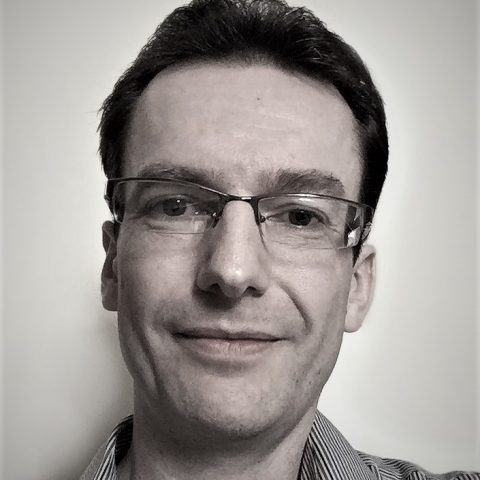
David P. Woodruff is a Professor in the Department of Computer Science at Carnegie Mellon University, part of the Theory Group within the School of Computer Science. He is actively involved in academic leadership roles, including chairing the CATCS (Conference on Theoretical Computer Science) and serving as PC chair for SODA 2024 and ICALP 2022. His research focuses on algorithms, data streams, machine learning, numerical linear algebra, sketching, and sparse recovery. He has been recognized with awards such as the Herbert Simon Award for teaching and the PODS Best Paper Award. Woodruff has advised numerous students and postdocs, including notable scholars like Ainesh Bakshi, Rajesh Jayaram, and Hongyang Zhang. His work often addresses foundational challenges in theoretical computer science, with contributions to distributed computing, streaming algorithms, and privacy-preserving techniques. He has published extensively in top conferences like NeurIPS, ICML, FOCS, and STOC, covering topics ranging from low-rank approximation to adversarial robustness in data streams. His teaching includes courses like Algorithms for Big Data and core algorithms courses, reflecting his commitment to both research and education. Collaborations span academia and industry, with applications in genomics and secure computation. Woodruff is a key contributor to the Foundations of Data Science program at the Simons Institute.
Fabio Cavalletti is a Full Professor at the University of Milan, specializing in geometric analysis, optimal transport theory, and synthetic curvature bounds. His work bridges differential geometry, mathematical physics, and functional inequalities, with particular focus on Lorentzian spaces and Ricci curvature. He has organized international workshops and conferences on optimal transport and geometric analysis. Research interests include optimal transport in Lorentzian and Riemannian settings, synthetic Ricci curvature conditions, isoperimetric inequalities, and geometric flows. Recent work explores timelike Ricci curvature bounds, null hypersurfaces in general relativity, and applications to quantum information geometry. Key contributions include foundational results on displacement convexity, quantitative Obata's theorem, and optimal transport in singular spaces. He has collaborated extensively with researchers like Andrea Mondino and Nicola Gigli, producing over 35 peer-reviewed publications. Notable activities include organizing the 2024 School and Conference on Metric Measure Spaces, 2025 Workshop on Optimal Transport and Metric Geometry, and mentoring junior researchers in geometric analysis. Current projects address synthetic timelike curvature in Lorentzian spaces and applications to general relativity.
Guangqu Zheng is an Assistant Professor in the Department of Mathematics and Statistics at Boston University. He holds a BA from Wuhan University, a Master's from Université Paris-Saclay, and a Ph.D. from the University of Luxembourg. Prior to Boston University, he was a Lecturer at the University of Liverpool and conducted postdoctoral research at the University of Melbourne and the University of Kansas. Education: Ph.D. in Mathematics, University of Luxembourg (2018) Master in Probability, Université Paris-Orsay (2014) BA in Economics and Management, Wuhan University (2011) Research Interests: His work focuses on probability theory, stochastic analysis, and SPDEs. Key areas include Malliavin calculus, Stein’s method, limit theorems, and applications to stochastic partial differential equations. Recent projects involve hyperbolic Anderson models, Lévy noise-driven systems, and spatial ergodicity. Publications: His recent articles explore central limit theorems for SPDEs, hyperbolic models, and applications of Stein’s method. These contributions highlight advancements in stochastic processes and their interdisciplinary applications. Teaching & Advising: At BU, he teaches advanced courses in stochastic analysis and advises students in probability and statistics. Expectations for students include proficiency in real analysis and probability theory.
Professor Zdzislaw Brzezniak is a Professor in the Department of Mathematics at the University of York, where he has been since 2005. He holds a PhD in PDEs from Jagellonian University, Krakow (1988). His research focuses on stochastic partial differential equations (SPDEs), turbulence, geometric analysis, and harmonic analysis, with notable contributions to Navier-Stokes and Euler equations. He has organized major international workshops, including events on stochastic PDEs at ICMS (Edinburgh) and the Isaac Newton Institute. Education: PhD in PDEs (Jagellonian University, 1988). Research Interests: SPDEs, stochastic geometric problems (e.g., Landau-Lifshitz equations), fluid dynamics, and applications in physics. His work bridges pure and applied mathematics, influencing theoretical frameworks in micromagnetism and quantum field theory. Key Awards: 2013 Best Paper Award, 1st Prize, Institute of Information Theory and Automation. Supervision: Advised over 10 PhD students, including Nimit Rana (2019) and Fabian Hornung (2018). Current students include Asma Alalyani and Hessa Alharbi. Active in mentoring across stochastic analysis and geometric PDEs. Labs/Groups: Member of Mathematical Finance and Stochastic Analysis Research Group, and Geometry and Analysis Research Group at the University of York.
Dr. Ruojun Huang is affiliated with the Department of Mathematics and Computer Science at the University of Münster, part of the Institute for Analysis and Numerical Analysis within Applied Mathematics Münster. His research focuses on probability theory and mathematical physics, particularly stochastic processes and their applications. He contributes to advancing theoretical frameworks such as regularity structures to analyze complex systems. His work includes a notable publication on scaling limits in exclusion processes, published in 2025. Huang’s academic role involves research activities within the institute, with no explicit mention of awards or grants in the provided texts. He is reachable via email and is based in Room 130.025 at Orléans-Ring 10, Münster.
Ajay Chandra is an Associate Professor in Pure Mathematics at Imperial College London's Faculty of Natural Sciences. He specializes in stochastic partial differential equations (SPDEs) with applications to statistical mechanics and quantum field theory. His work bridges probability theory, mathematical physics, and rigorous analysis of singular SPDEs. He has affiliations with the Department of Mathematics and focuses on areas like regularity structures, renormalization, and non-linear dynamics. His research interests include the analysis of singular SPDEs, gauge theories, quantum field models, and phase transitions. Notable contributions involve stochastic quantization of Yang-Mills theory, Phi^4 models, and multi-layer KPZ equations. Chandra has collaborated with leading researchers such as Martin Hairer and Hendrik Weber, advancing the field of stochastic analysis through innovative techniques like analytic BPHZ theorems and a priori bounds. His advising record includes PhD students working on topics ranging from dynamical Yukawa models to tensor field theories. Chandra's work often intersects with applied mathematics and theoretical physics, addressing foundational questions in statistical mechanics and quantum systems. He maintains an active research program with publications in top-tier journals like Inventiones Mathematicae and Communications in Mathematical Physics.
Prof. Dr. Özlem İlk Dağ is a Professor of Statistics at the Middle East Technical University (METU), Ankara, Turkey. She holds the position of Department Head of Statistics and serves on advisory boards for TUBITAK and the Journal of Biostatistics. Her academic journey includes roles from Research Assistant (1997) to Professor (2018), with affiliations in Actuarial Sciences and Biostatistics. Education: Ph.D. in Statistics (Iowa State University, 2004), M.S. and B.S. from METU. Research focuses on longitudinal data analysis, multilevel modeling, Bayesian methods, and biostatistics. She authored three editions of R Yazilimina Giris and a foundational book on multivariate longitudinal data analysis. Key contributions include developing marginalized transition random effects models (MTREM) and R packages like 'mmm'. Awards include METU's 20-year service recognition and teaching excellence. She has supervised numerous research projects and co-authored over 50 peer-reviewed articles across biostatistics, genomics, and statistical computing. Her work bridges statistical theory and application, with notable contributions to gene expression clustering, maternal antibody studies in veterinary science, and computational methods for longitudinal data. She maintains active collaborations in genomics and biostatistics, and her lab focuses on integrating statistical computing with biomedical research.
Joost Batenburg is a Professor at Leiden Institute of Advanced Computer Science (LIACS) , with a chair in Imaging and Visualization . He is affiliated with the Centrum Wiskunde & Informatica (CWI) and serves as Program Director for the interdisciplinary Society, Artificial Intelligence and Life Sciences (SAILS) initiative. His research focuses on tomographic image processing and reconstruction , where he has published over 80 journal articles and 60 conference papers. Current projects include Universal Three-dimensiOnal Passport for process Individualization in Agriculture (UTOPIA) and Center for Optimal, Real-Time Machine Studies of the Explosive Universe (CORTEX) , both funded by NWO grants. He leads the FleX-Ray Lab , a custom CT system integrated with advanced data processing algorithms. His research spans discrete tomography , real-time imaging pipelines , and AI-enhanced reconstruction methods , with applications in industrial inspection, agricultural analysis, and cultural heritage conservation. Recent articles demonstrate novel approaches to: Single-shot dynamic object tomography using level-set methods and motion modeling X-ray scattering quantification for defect detection in real-time systems Cross-modal image registration between CT scans and physical photographs Auto-differentiation in CT workflows combining classical and machine learning algorithms Scientific Awards: Dutch Award for ICT Research (2018) C.J. Kok Prize (2007) Philips Mathematics Prize (2006) He has supervised numerous PhD candidates including Mary Go, Eani Lachmansingh, and Zhichao Zhong, while maintaining editorial roles at IEEE Transactions on Computational Imaging and Journal of Mathematical Imaging and Vision . His work bridges theoretical mathematics with practical applications in agriculture, industry, and art conservation.
Evgeni Dimitrov is an Assistant Professor of Mathematics in the Department of Mathematics at the University of Southern California, housed within the USC Dana and David Dornsife College of Letters, Arts and Sciences. Before joining USC, he served as a Ritt Assistant Professor in the Mathematics Department at Columbia University. Education: PhD in Mathematics, Massachusetts Institute of Technology (MIT), advised by Alexei Borodin Undergraduate degree, Princeton University Research Interests: Dimitrov’s research sits at the intersection of probability, representation theory, and combinatorics, with a central focus on the asymptotic analysis of stochastic integrable systems . He develops hybrid techniques that blend algebraic methods from representation theory with analytic and combinatorial tools to study universal scaling limits—particularly those falling within the Kardar–Parisi–Zhang (KPZ) universality class . Key objects of study include Gibbsian line ensembles , random matrix models , log-gamma polymers , and exactly-solved stochastic particle systems such as ASEP and the six-vertex model. Publication Profile: Across 2021–2025, Dimitrov has produced a concentrated body of work addressing edge fluctuations , multi-level loop equations , and global large-deviation principles for discrete β-ensembles and related integrable systems. His papers repeatedly explore the convergence of discrete stochastic models to Airy-like universal processes, tightness questions for line ensembles, and the rigorous derivation of KPZ scaling laws, underscoring a cohesive research trajectory toward understanding universal random geometry. Scientific Awards: No awards are explicitly mentioned in the supplied material. Advising & Grants: No specific PhD students, grants, or funding details are provided in the text. Labs & Teams: No laboratory or research-group information is available from the supplied content.
Claudia Ceci is a Full Professor at the Department of Methods and Models for Economy, Territory, and Finance (MEMOTEF) at Sapienza University of Rome. Her academic work focuses on stochastic models in economics, finance, and insurance, with a particular emphasis on optimal stochastic control, filtering, asset pricing, credit risk, and self-protection strategies. Coordinates internationalization initiatives within MEMOTEF Leads the Rome Sapienza unit in the 2022 PRIN project "Stochastic control and games and the role of information" Manages the 2023 Grande Sapienza project "Stochastic Optimization Problems in Insurance, Finance and Economics" Member of the UMI-PRISMA group (Probability in Statistics, Mathematics, and Applications) Featured in the "100 Esperte STEM" initiative (Mathematics category) Her research explores risk management, counterparty credit risk, and reinsurance optimization under partial observation. She has contributed extensively to journals in quantitative finance, insurance mathematics, and stochastic control. Recent projects analyze climate-related financial risks and reinsurance strategies under contagion models. Claudia teaches foundational mathematics and risk management courses across multiple campuses. Exam procedures for her mathematics course involve computerized written tests with mandatory oral components under specific conditions, reflecting her analytical approach to assessment.
Richard Bradley is Professor of Philosophy at the London School of Economics , focusing on decision theory, formal epistemology, and philosophy of science. His work bridges rational decision-making under uncertainty, conditional reasoning, and policy implications of probabilistic models. Key affiliations: London School of Economics, Department of Philosophy, Logic and Scientific Method Education: University of Witwatersrand (undergraduate), LSE (MSc), University of Chicago (PhD) Research covers: Decision theory with human-centric uncertainty models Formal epistemology of conditionals and belief revision Philosophy of climate change and pandemic policy decisions Bayesian utilitarianism and social choice theory His 2017 book Decision Theory with a Human Face integrates these themes. Scientific contributions include: 15+ peer-reviewed articles on conditionals, uncertainty, and social ethics Collaborations with H. Orri Stefánsson on risk attitudes Work with Roman Frigg on model ensemble decision-making Philosophy of Climate Science in IPCC assessments Major projects address confidence trade-offs in climate science and pandemic policy frameworks.
Jacopo De Simoi is a Professor in the Department of Mathematics at the University of Toronto, holding appointments at both the St. George and Mississauga campuses. His research focuses on dynamical systems, particularly hyperbolic dynamics, billiards, and rigidity phenomena. He has held roles at institutions like Université Paris Diderot and the University of Maryland, College Park, and currently teaches courses such as Game Theory and Real Analysis. His work explores the interplay between deterministic systems and stochastic processes, with contributions to topics like Fermi acceleration and KAM theory. Education: Ph.D. in Mathematics from the University of Maryland (2009), Diploma di Licenza in Physics from Scuola Normale Superiore (2005), and M.Sc./B.Sc. in Physics from Università di Pisa. Research interests include stochastic properties of dynamical systems, conservative dynamics, and the ergodic theory of billiards. He has published extensively on spectral rigidity, entropy rigidity, and applications of renormalization group techniques. His recent work addresses inverse problems in billiard geometry and the statistical behavior of fast-slow systems. Teaching includes undergraduate and graduate courses in analysis, calculus, and dynamical systems. Collaborations span institutions globally, and he serves on editorial boards for journals like Communications in Mathematical Physics.
Dr. Veysel Gümüş is an Associate Professor at Harran University's Faculty of Engineering, Department of Civil Engineering, where he has been since 2014. His research focuses on turbulence modeling, computational fluid dynamics, hydrological drought analysis, and time-series trend analysis. Licence (2003), Master's (2006), and Doctorate (2014) in Civil Engineering from Harran and Çukurova Universities. His research interests span hydrological drought , computational fluid dynamics , climate trend analysis , and GIS applications in hydrology . His recent work emphasizes drought risk assessment, wind speed trends, and fluid flow simulations using AI techniques. Publications since 2023 highlight his expertise in Mann-Kendall tests , copula-based drought analysis , and CMIP6 climate projections across Turkey and Morocco. He has supervised over 15 graduate theses and served as an editor/hakem for 10+ journals, including ASCE and Theoretical and Applied Climatology.
Professor Christopher Price serves as Deputy Director of the NIHR Applied Research Collaboration (ARC) North East and North Cumbria (NENC) and holds the position of Professor of Stroke and Applied Health Research at Newcastle University's Faculty of Medical Sciences. He also functions as the NIHR's National Specialty Lead for Stroke and maintains a clinical role as a Stroke Medicine Consultant with the Northumbria Healthcare NHS Foundation Trust. Professor Price completed his medical training with an MB ChB (hons) from Birmingham in 1992, earned his MD from Newcastle University in 2003, and became a Fellow of the Royal College of Physicians (FRCP) in 2006 while simultaneously completing his MClinEd at Newcastle. As a clinical researcher, Professor Price specializes in developing and implementing interventions that improve emergency stroke treatment access. His work focuses on three main pillars: clinical trials of non-pharmaceutical technologies in stroke care, translational studies of diagnostics, and evaluation of service provision models. He has pioneered ambulance-based clinical trials evaluating novel point-of-care diagnostics and enhanced clinical assessment processes for suspected stroke patients. His research extends to stroke recovery, where he investigates innovative approaches like wristband accelerometry to encourage upper limb activity and collect recovery biomarker data. The Stroke Association has recognized his contributions with the HRH Princess Margaret Senior Reader Fellowship. Professor Price's recent publications reveal a strategic shift toward system-level interventions addressing the entire stroke care pathway. His work increasingly examines mobile stroke units, health equity in stroke care, and implementation challenges of new treatment pathways across the NHS. There's a clear progression from individual diagnostic tools toward comprehensive service redesign that considers geographic accessibility, cost-effectiveness, and patient-centered outcomes. The Stroke Association HRH Princess Margaret Senior Reader Fellowship Stroke Association HRH Princess Margaret Research Development Fellow Professor Price has mentored several doctoral researchers including Graham McClelland (focusing on stroke mimic probability scores), Eugene Tsang (researching post-stroke dementia), and Sarah Moore (investigating physical activity interventions after stroke). He has secured substantial research funding totaling millions of pounds from major organizations including the Medical Research Council, Innovate UK, NIHR, and The Stroke Association. His most significant grants include the £3 million RATULS trial on robot-assisted upper limb rehabilitation after stroke and the £1.96 million NIHR Programme Grant for 'Promoting Effective And Rapid Stroke Care,' which evaluated enhanced paramedic assessment processes for stroke patients. Professor Price leads the Stroke Research Group within Newcastle University's Population Health Sciences Institute. His team maintains strong collaborations with national and international academic institutions, industry partners, the North East Ambulance Service, and multiple NHS Trusts. The group has gained particular recognition for its innovative ambulance-based clinical trials, including the landmark PASTA trial published in JAMA Neurology, which demonstrated how enhanced paramedic assessment improves thrombolysis delivery during emergency stroke care.
Clémence Karmann is a faculty member at the University of Lorraine, affiliated with the Faculty of Science and Technology and part of the Probability and Statistics team. She is based at the Nancy campus, located at Campus, Boulevard des Aiguillettes, 54506 Vandœuvre-lès-Nancy, France. Her work aligns with the Institute Élie Cartan de Lorraine (IECL), focusing on mathematical research areas such as probability theory and statistical analysis.