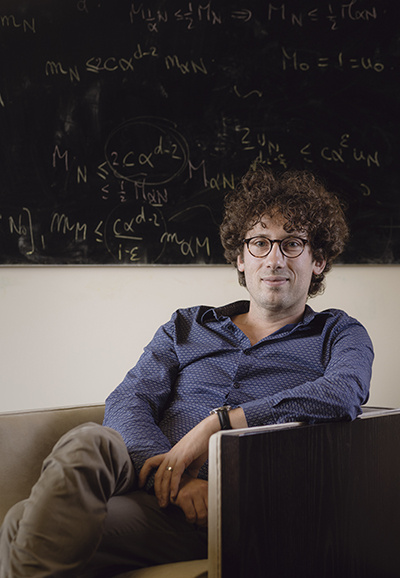
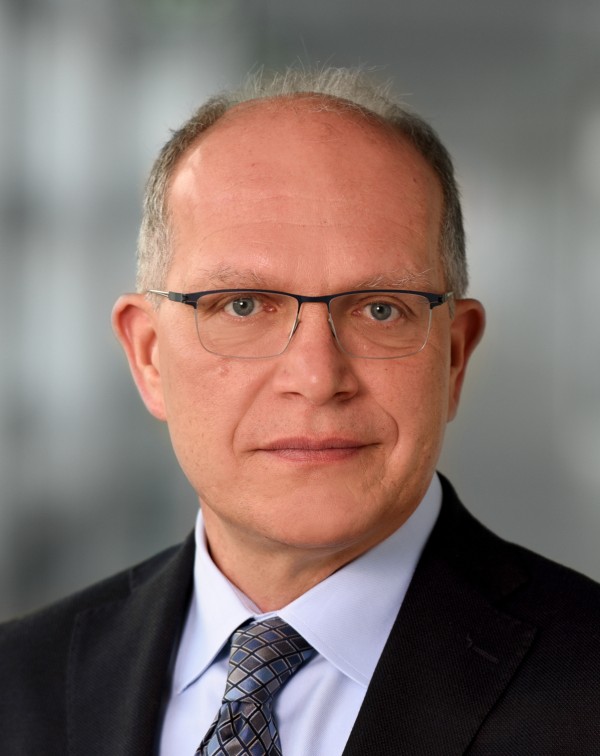
Hugo Duminil-Copin is a Full Professor at the University of Geneva and a permanent professor at the Institut des Hautes Études Scientifiques (IHES) since 2016. His research focuses on Mathematical Physics , Combinatorics , and Probability Theory . Education : École Normale Supérieure (ENS) Paris, University of Paris-Saclay Awards : 2022 Fields Medal for work in statistical physics Research Trends : Probabilistic aspects of lattice models Phase transitions and critical phenomena Conformal invariance and percolation theory Collaborations : Active collaborations with researchers such as R. Panis, S. Goswami, I. Manolescu, and others. Teaching : Offers courses in mathematical physics and probability at the University of Geneva. His recent publications emphasize critical models, random-cluster models, and Gaussian free fields, with applications in planar and high-dimensional systems. He supervises doctoral students including Emile Averous , Aman Markar , and Tiancheng He .
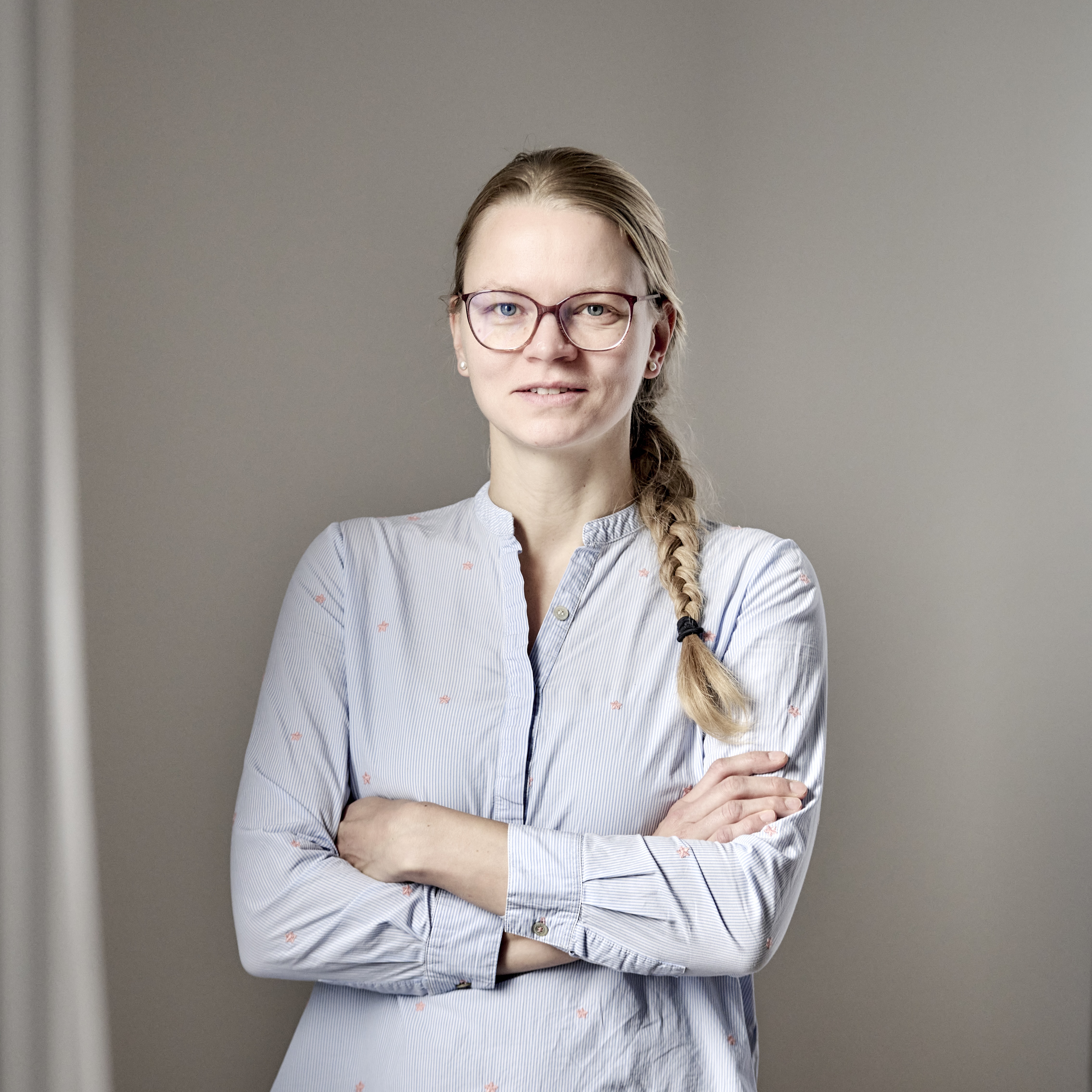
Christiane Barz is a Professor of Mathematics at the University of Zurich's Institute for Business Administration since 2016. Previously, she held academic roles at the UCLA Anderson School of Management, the Chicago Booth School of Business, and the Technical University (TU) Berlin. Her research focuses on stochastic dynamic systems, Markov decision processes, and their applications in revenue management. She emphasizes making mathematical tools accessible and practical for real-world problem-solving, particularly in optimizing decision-making under uncertainty. Education includes a degree in industrial engineering and a doctorate from the University of Karlsruhe (TH), Germany. Her career path includes postdoctoral research at the University of Chicago's Booth School of Business and roles as an Assistant Professor at UCLA. She combines academic excellence with balancing family life, advocating for gender equity in STEM fields. Her research explores risk-sensitive decision-making frameworks, dynamic pricing models for transportation and healthcare, and optimizing resource allocation in complex systems. Recent work includes applications in FlixBus, air cargo networks, and improving patient admission scheduling in hospitals. Barz's teaching philosophy prioritizes demystifying mathematics for students, encouraging critical engagement rather than fear of complexity. She collaborates with industry partners to apply operations research methods to real-world challenges, emphasizing both theoretical rigor and practical relevance.
Pietro de Anna is an Associate Professor at the Institute of Earth Sciences (ISTE), University of Lausanne, since August 2021. He holds an Italian nationality and completed a Master's in Theoretical Physics (2009) at the University of Florence, followed by a PhD in Earth Sciences at the University of Rennes 1 (2012). His research focuses on reactive transport in porous media, filtration, and interactions between bacteriological activity and flow dynamics. He directs the Environmental Fluid Mechanics Laboratory since 2015, employing microfluidics, numerical simulations, and theoretical models to study coupled physical, biological, and chemical mechanisms in confined systems. He has published 21 peer-reviewed articles, teaches environmental science courses at the Bachelor's and Master's levels, and supervised two PhD theses and four postdoctoral researchers. His work includes investigations into microbial biomass accumulation in porous media, diffusion-limited mixing, and biocementation processes. Key research themes are spatial heterogeneity effects, chemotaxis, and quorum sensing in microbial systems. He has pioneered methods combining microfluidics with microscopy to analyze transport at pore scales.
Johanna Ziegel is a Professor of Statistics at ETH Zurich, Switzerland, since 2024, and a Visiting Scientist at the Heidelberg Institute for Theoretical Studies (HITS). Previously, she held positions at the University of Bern, where she was promoted to Full Professor in 2023. Her research focuses on decision-theoretically sound methods for forecast evaluation, probabilistic forecasting, risk measures in finance, and applications in meteorology, medicine, and climate science. She is actively involved in editorial roles for journals like Bernoulli , JASA: Theory & Methods , and SIAM Journal on Financial Mathematics . Education: PhD in Stereological Analysis of Spatial Structures from ETH Zurich (2010), supervised by Paul Embrechts and Eva B. Vedel Jensen. Postdoctoral research at the University of Melbourne and Heidelberg University. Research Interests: Forecast evaluation, elicitable functionals, risk measures, isotonic regression, statistical calibration, and applications in finance, climate science, and biostatistics. Her work bridges theoretical statistics with practical challenges in uncertainty quantification and decision-making under uncertainty. Advising & Collaborations: Supervised 7 PhD students and mentored several postdocs. Collaborates with the Computational Statistics group at HITS and the Oeschger Centre for Climate Change Research. Her group explores distributional regression under order constraints and novel methods for forecast comparison. Recognition: Credit Suisse Award for Best Teaching (2022), H.I.T. Program for Academic Leadership (2021–2022). Active in professional service, including the Bernoulli Society Council and editorial boards.
Tatiana Smirnova-Nagnibeda is an Associate Professor in the Mathematics Section at the University of Geneva, where she obtained her PhD before holding positions at ETH Zurich and KTH Stockholm. She returned to UNIGE where she has established herself as a leading researcher in geometric and combinatorial group theory. Her research focuses on combinatorial, asymptotic and geometric group theory, as well as probabilities on groups and graphs. She has made significant contributions to the understanding of branch groups, self-similar groups, Schreier graphs, and spectral properties of group actions. Her work often bridges algebra, probability, and geometry, revealing deep connections between these areas through the study of Thompson's groups, Grigorchuk's group, and other important group constructions. Her recent publications demonstrate a consistent focus on subgroup structure in various classes of groups, spectral properties of Schreier and Cayley graphs, and connections to dynamical systems. She frequently collaborates with researchers from around the world, particularly with Rostislav Grigorchuk, and has mentored numerous doctoral students who have gone on to successful academic careers. Managing Editor for Groups, Geometry, and Dynamics Editor for L'Enseignement Mathématique Organizer of GAGTA conferences (2022, 2024) Organizer of specialized workshops on high-dimensional expanders (2015, 2016) She leads an active research group comprising postdoctoral fellows and doctoral students working on various aspects of group theory and its applications. Her teaching includes advanced courses on graph theory, random walks on groups, spectral theory of graphs, and amenability at the University of Geneva.
Swiss Federal Institute of Technology in LausanneSwitzerland
Michele Dolce is a Lecturer and Scientist at the École Polytechnique Fédérale de Lausanne (EPFL), affiliated with the School of Basic Sciences (SB) and the Chair of Mathematical Analysis, Calculus of Variations and PDEs (AMCV). He previously held positions as a Postdoc at EPFL and a Research Associate at Imperial College London, where he worked under Prof. Michele Coti Zelati. His academic journey includes a PhD from the Gran Sasso Science Institute. Current affiliation: EPFL, School of Basic Sciences (SB), Department of Mathematics (MATH), AMCV Past affiliation: Imperial College London His research focuses on the mathematical analysis of Partial Differential Equations (PDEs) in fluid dynamics and kinetic theory. Key areas include hydrodynamic stability, long-time behavior of viscous vortex systems, and time-decay properties of kinetic models like the Boltzmann and Wave Kinetic Equations. Recent work explores vortex merging phenomena and Taylor dispersion in rotationally symmetric flows. Scientific activities include organizing workshops such as "Long time dynamics in random and deterministic systems" (2025) and co-organizing events like the "Deterministic and random features of fluids" summer school (2023) and the "Enjoying Probability and Fluids in Lausanne" workshop (2023). His publications span journals including Communications in Mathematical Physics, Archive for Rational Mechanics and Analysis, and Journal of Mathematical Fluid Mechanics. Supported by Swiss National Science Foundation (SNF Ambizione grant PZ00P2_223294) Partially funded by GNAMPA (INdAM group)
Ulrik Brandes serves as Full Professor and Head of the Department of Humanities, Social and Political Sciences at ETH Zurich, holding the Professorship for Social Networks. He actively teaches courses including Network Analysis and Applied Network Science: Sports Networks for Fall semester 2025, with office location at WEP J 14, Weinbergstr. 109, Zurich. His research spans Social Network Analysis, Graph Theory, and Network Science, with significant applications in sociology, sports analytics (particularly soccer and Australian Football League), and archaeological networks. As a longstanding member of the International Network for Social Network Analysis (since 2001) and the Academy of Sociology (since 2017), he bridges theoretical graph algorithms with practical interdisciplinary applications, recently expanding into sports analytics through the Football Scouting Association (2023). Analysis of his recent publications reveals strong thematic continuity in network centrality, temporal dynamics, and robustness, with increasing application diversity across sports analytics, archaeological trade networks, and decentralized social media platforms. His work consistently emphasizes efficient computational methods for real-world network problems. Honors: Simmel Award (2024) Prof. Brandes maintains active research leadership through departmental oversight and course development, though specific grant details and student advisement records are not publicly documented in available sources. His departmental role indicates substantial administrative responsibilities alongside research and teaching commitments.
Alba Grassi is an Adjunct Associate Professor holding a joint faculty position between CERN's Theory Department and the University of Geneva's Section of Mathematics since November 2020, with research spanning mathematical physics and theoretical physics. Her educational background includes a Bachelor's degree from EPFL (2010), Master's degree from ETHZ (2012), and PhD from the University of Geneva (2015). Grassi's research focuses on the deep connections between mathematics and theoretical physics, specifically investigating topological string theory, supersymmetric quantum field theory, spectral theory, integrable systems, random matrix theory, resurgence theory, holography, and quantum gravity to advance fundamental theoretical frameworks. She has received the SNF PRIMA fellowship award. Advises PhD student François Matijn Collaborates with postdoctoral scholars Qianyu Hao and Cristoforo Iossa Research supported by SNF PRIMA fellowship Leads the ANALYSIS, MATHEMATICAL PHYSICS AND PROBABILITY research group at the University of Geneva.
Swiss Federal Institute of Technology in LausanneSwitzerland
Florent Krzakala is a Full Professor at École polytechnique fédérale de Lausanne (EPFL) in Switzerland, holding positions across multiple departments including the School of Basic Sciences (SB), School of Engineering (STI), and specifically within the Department of Physics (IPHYS) and Department of Electrical Engineering (IEM). He leads the Information, Learning and Physics Laboratory (IdePHICS) and maintains an office at ELD 239, Station 11, 1015 Lausanne. His research bridges statistical physics and computational disciplines, with significant contributions to understanding the theoretical foundations of machine learning and optimization problems. Dr. Krzakala received his MSc in Physics from Orsay, France in 1999, followed by a PhD in Statistical Physics from Orsay, Paris XI, France in 2002, and completed a postdoctoral position at Roma La Sapienza in 2004. This strong foundation in physics has informed his interdisciplinary approach to computational problems. His research interests span Statistical Physics, Machine Learning, Probability and Statistics, Computer Science, Information Theory, Inference on Graphs, Random Constraint Optimization, and Computational Optics. Krzakala's work focuses on applying methods from statistical physics to problems in theoretical computer science, probability, and machine learning. He investigates how concepts from disordered systems and phase transitions can illuminate computational barriers in optimization and inference tasks. His research has particular relevance for understanding the behavior of neural networks, compressed sensing, and high-dimensional statistical models. Analysis of his recent publications reveals a strong trend toward understanding the fundamental limits of learning in high-dimensional settings, with particular emphasis on phase transitions, statistical-to-computational gaps, and the theoretical properties of deep learning architectures. His work frequently bridges rigorous mathematical analysis with practical machine learning applications, demonstrating how insights from statistical physics can inform algorithm design and theoretical understanding in AI. Krzakala actively mentors the next generation of researchers, supervising numerous PhD students whose work continues to advance these interdisciplinary fields. His laboratory serves as a hub for researchers exploring the intersection of physics and computation, fostering collaborations across traditional disciplinary boundaries. He teaches advanced courses including Fundamentals of Inference and Learning, Statistical Physics, and Statistical Physics for Optimization & Learning, which examine the connections between physical principles and computational methods. His educational materials, including lecture notes on statistical physics methods in optimization and machine learning, have become valuable resources for students and researchers worldwide. As founder and scientific advisor of the startup Lighton, Krzakala has also demonstrated a commitment to translating theoretical insights into practical applications, particularly in the realm of optical computing for machine learning tasks.
Marcos Mariño is a Full Professor of mathematical physics at the University of Geneva, holding a joint appointment in the Department of Mathematics and Department of Theoretical Physics. His research explores the interplay between geometry, topology, and quantum field/string theories, with a focus on non-perturbative methods. Born in Santiago de Compostela, Spain (1970) PhD in theoretical physics from the University of Santiago de Compostela His work bridges mathematical rigor with theoretical physics challenges, particularly at the intersection of modern geometry and quantum field theory. While the text does not list specific publications or awards, his research group Analysis, Mathematical Physics and Probability includes collaborators like Maximilian Schwick, a postdoctoral scholar studying resurgence methods in string theory under his guidance.
Vincent Vargas is a French mathematician and Associate Professor at the University of Geneva, where he joined in 2021 after holding a research position at CNRS. He completed his PhD in mathematics at Paris-Diderot University under the supervision of Francis Comets. His primary research interests include: Probability Mathematical Physics Statistical Mechanics Quantum Field Theory Gaussian Multiplicative Chaos Liouville Quantum Gravity Vargas has made significant contributions to the rigorous probabilistic construction of Liouville field theory and the proof of the DOZZ formula, work that was featured in Quanta Magazine. His research bridges mathematics and theoretical physics through probabilistic methods applied to quantum gravity. Analysis of his recent publications reveals a strong focus on mathematical structures underlying conformal field theory, with particular attention to Liouville quantum gravity across various geometries and the connections between probability and quantum physics. His notable scientific achievements have been recognized with prestigious awards: Marc Yor Prize (2019) George Pólya Prize (2022) Vincent Vargas has mentored several PhD students including Romain Allez, Yichao Huang, Guillaume Rémy, and Tunan Zhu. He has been actively involved in the academic community through organizing conferences and workshops, including a trimester at the Institut Henri Poincaré in 2015 and a conference on 'Probability and quantum field theory' in 2019. His professional activities extend to industry applications through his previous consultancy with Capital Fund Management (2007-2013) and his current role on the board of their research foundation.
Swiss Federal Institute of Technology in LausanneSwitzerland
Shayan Aziznejad is a Senior ML Scientist at Distran, working on the intersection of machine learning and acoustic imaging. He was previously an ML researcher at Daedalean AI (October 2022–December 2024) and a Ph.D. candidate at Ecole Polytechnique Fédérale de Lausanne (EPFL) , where he focused on mathematical optimization and signal processing under Prof. Michael Unser. His academic background includes dual B.Sc. degrees in Electrical Engineering and Pure Mathematics from Sharif University of Technology . Research Focus: Machine learning, neural network certification, wavelet analysis, Hessian-Schatten regularization, and sparse modeling. Scientific Recognition: Swiss National Science Foundation Postdoc Fellowship (2021) Best Student Paper Award at ICASSP (2019) Gold Medalist at Iranian National Mathematics Olympiad (2011) Academic Contributions: Authored 15+ publications in top-tier journals (SIAM, IEEE, etc.) and conferences (ICASSP, EUSIPCO), with a focus on Lipschitz-regularized models, spline-based optimization, and inverse problems. Advising Experience: Supervised 11+ students across master's theses, summer internships, and semester projects, including Eliana Renzo, Joaquim Campos, and Haojun Zhu. Email: shayan.aziznejad@gmail.com
Dr. David Cock is a Senior Lecturer and Senior Researcher at ETH Zürich's Department of Computer Science, affiliated with the Systems Group. He holds a PhD from UNSW (2014) and a B.Sc. (hons) from UNSW (2004). His research focuses on formal verification, trustworthy systems, and hardware-software co-design, with notable contributions to projects like Enzian (a CPU/FPGA platform) and seL4 (formally verified kernel). He teaches Advanced Operating Systems and Informal Methods courses. Key achievements include the ACM Software System Award (2022) for seL4 and leadership in projects addressing hardware complexity and security. Research interests include formal methods for hardware modeling (Sockeye project), runtime verification, and mitigating timing channels. His work bridges theoretical foundations with practical systems, emphasizing secure and reliable computing platforms. Projects like Trustworthy BMC aim to enhance baseboard management systems' assurance. Collaborations span academia and industry, with open-source contributions to hardware designs and formal tools. Publications span formal verification, hardware modeling, and secure systems, with recent focus on heterogeneous computing and declarative hardware specifications. Teaching emphasizes practical formal techniques and OS design, leveraging real-world hardware (e.g., Barrelfish). His lab, the Systems Group, explores cutting-edge challenges in systems software and architecture.
Grigory Mikhalkin is a Full Professor at the University of Geneva, where he has been a faculty member since 2008. He is considered one of the founders of Tropical Geometry, a domain of algebraic geometry governed by (max,+)-calculus where geometric objects degenerate to their piecewise-linear limits. He leads the "ALGEBRA AND GEOMETRY" research group at the university. Mikhalkin studied at Leningrad and Michigan State University under the supervision of Oleg Viro and Selman Akbulut. After receiving his PhD in 1993, he completed postdoctoral training at Princeton, Bonn, Toronto, Berkeley, and Harvard (1993-2000). He served as associate and then full Professor at the University of Utah before moving to the University of Toronto, eventually joining the University of Geneva in 2008. Mikhalkin's primary research areas are Geometry and Topology, with a particular focus on Tropical Geometry. His work bridges algebraic geometry with combinatorial structures, exploring how complex geometric objects can be understood through their piecewise-linear tropical counterparts. This approach has proven fruitful in solving problems in enumerative geometry and has connections to mathematical physics through the study of sandpile models and self-organized criticality. His research group actively explores the connections between tropical geometry, symplectic geometry, and real algebraic geometry, organizing regular seminars including the "Séminaire Fables Géométriques." The recent publications of Professor Mikhalkin demonstrate a strong focus on the intersection of tropical geometry with sandpile models and self-organized criticality. His work has evolved to examine tropical aspects of number theory, lattice sums, and even applications to economics through auction theory. A significant portion of his recent research explores the patterns and structures that emerge in sandpile models across various lattices and dimensions, connecting discrete mathematics with continuum limits through tropical techniques. Prize of the St. Petersburg Mathematical Society (1999) Silver Medal of the Mexican Mathematical Society (2011) Canada Research Chair (2004-2009) Friedrich-Wilhelm-Bessel Research Award of the Alexander-von-Humboldt Foundation (2007-2008) European Research Council Advanced Grant (2010-2015) Chair of Fondation Sciences Mathématiques de Paris (2013-2015) Mikhalkin has successfully advised several PhD students to completion, including Kristin Shaw (2011), Lionel Lang (2014), Nikita Kalinin (2015), Mikhail Shkolnikov (2017), and Johannes Josi (2018). His research has been supported by prestigious grants including the ERC Advanced Grant and the Canada Research Chair. He presented his work at the Bourbaki seminar in 2003 and was selected as a Geometry speaker at the International Congress of Mathematicians in 2006, highlighting the significance of his contributions to the field. Professor Mikhalkin leads the "ALGEBRA AND GEOMETRY" research group at the University of Geneva, which includes current members Thomas Blomme, Francesca Carocci, Aloïs Demory, Gurvan Mével, and Antoine Toussaint. The group has a strong track record of postdoctoral fellows and alumni, including notable researchers such as Ivan Bazhov, Johan Bjorklund, Rémi Crétois, and others. They organize several seminars including the "Séminaire Fables Géométriques" and have historical connections to the Battelle Seminar and Tropical working group Seminar.
Bozidar Stojadinovic is a Full Professor and Chair of Structural Dynamics and Earthquake Engineering at ETH Zürich's Department of Civil, Environmental and Geomatic Engineering. He leads the Institute of Structural Engineering and previously held professorships at UC Berkeley and the University of Michigan. His research focuses on community disaster resilience, seismic design, and experimental methods like hybrid simulation. Education: PhD in Civil Engineering, UC Berkeley (1995) MS in Civil Engineering, Carnegie-Mellon University (1990) BS in Civil Engineering, University of Belgrade (1988) Research Interests: Performance-based probabilistic resilience evaluation of civil infrastructure. Earthquake engineering, including seismic isolation and response modification techniques. Development of experimental testing methods, such as hybrid simulations for dynamic structural analysis. Awards: ICE Journal John Henry Garrood King Medal (2023) ACI Chester Paul Siess Award (2017) NSF CAREER Award (1999) Teaching & Advising: Teaches courses on seismic design and structural dynamics at ETH. Advised 49 doctoral students to date. His work integrates advanced methodologies to enhance structural resilience against natural hazards. Labs/Teams: Leads ETH's Institute of Structural Engineering, advancing research in seismic protection and infrastructure resilience through experimental and computational innovations.