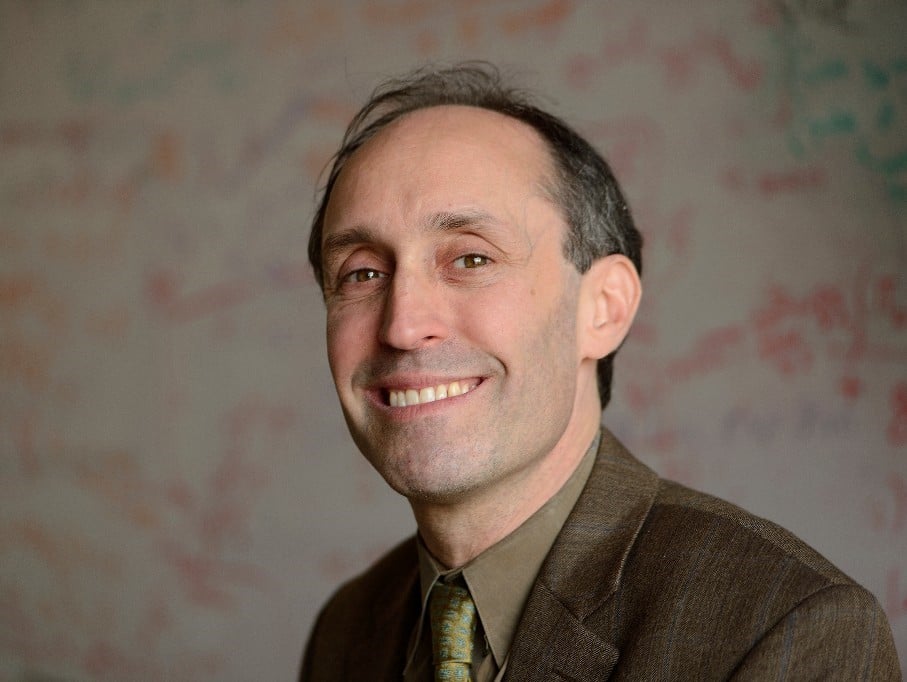
Antti Honkela is a Professor of Data Science at the University of Helsinki's Department of Computer Science, within the Faculty of Science. He also serves as the Coordinating Professor for the Privacy-preserving and Secure AI Research Programme at the Finnish Center for Artificial Intelligence (FCAI), and as Deputy Director of the Master's Programme in Data Science. His roles include membership in the Health and Social Data Permit Authority (Findata) and as an Action Editor for Transactions on Machine Learning Research. Honkela's research focuses on privacy-preserving machine learning, differential privacy, Bayesian methods, and their applications in computational biology and healthcare. He leads projects such as the European Lighthouse in Secure and Safe AI (ELSA) and the Data Literacy for Responsible Decision-making initiative. His work emphasizes developing robust frameworks for privacy-aware AI, including differentially private synthetic data and federated learning. Honkela has advised numerous PhD and Master's students, and his contributions span theoretical advancements and practical implementations, such as the D3p Python package for differentially private probabilistic programming. Key contributions include advancements in Bayesian inference from synthetic data, privacy accounting mechanisms, and computational methods for genomic epidemiology. His interdisciplinary approach bridges machine learning, statistics, and healthcare, addressing challenges in data privacy and secure AI deployment.
Sanjit A. Seshia is the Cadence Founders Chair Professor in the Department of Electrical Engineering and Computer Sciences at the University of California, Berkeley . He is affiliated with the Group in Logic and the Methodology of Science and participates in centers like the Industrial Cyber-Physical Systems Center , Berkeley AI Research , and the Simons Institute for the Theory of Computing . Research interests include formal methods for automated verification and synthesis of dependable systems, with applications to cyber-physical systems , AI-based autonomy , and computer security . His work spans SMT solving, model counting, syntax-guided synthesis, and algorithmic improvisation, with tools like UCLID5 , VerifAI , and Scenic for verifying autonomous systems and educational platforms like CPSGrader . Students and collaborators include notable researchers such as Dorsa Sadigh (Stanford), Daniel Fremont (UC Santa Cruz), and Hazem Torfah (Chalmers). He has co-founded startups like Decyphir and 20ⁿ Labs based on his research.
Matthias Feurer is a Thomas Bayes Fellow and interim professor at the Chair of Statistical Learning and Data Science, funded by the Munich Center for Machine Learning (MCML) at Ludwig Maximilian University of Munich. He is a member of the Department of Statistics at LMU Munich, working under Prof. Dr. Bernd Bischl. His academic background includes: PhD in Computer Science from Albert-Ludwigs-Universität Freiburg, supervised by Prof. Dr. Frank Hutter M.Sc. in Computer Science from the University of Freiburg B.Sc. in Computer Science and Media from the Media University Stuttgart Feurer's research focuses on simplifying machine learning usage through Automated Machine Learning (AutoML). His work encompasses hyperparameter optimization, meta-learning, and model selection, with increasing emphasis on multi-objective AutoML that considers factors beyond predictive performance such as interpretability, deployability, and fairness. He actively develops open-source tools to advance the field. His recent publications demonstrate a strong trajectory in practical AutoML systems, with growing attention to tabular machine learning, foundation models integration, and addressing real-world constraints in optimization. His work consistently bridges theoretical advances with practical implementations through several widely-used open-source projects. Notable achievements include: 1st place in the warmstarting-friendly leaderboard of the BBO NeurIPS challenge Winner of the 2nd AutoML challenge Winner of the kdnuggets blog contest on AutoML Feurer is actively mentoring and teaching, having advertised PhD positions focused on AutoML, optimization, and benchmarking. He co-founded the Open Machine Learning Foundation supporting OpenML.org. His upcoming move to TU Dortmund as an assistant professor in AutoML and Optimization signals continued growth in his academic career while maintaining his research focus on making machine learning more accessible and rigorous.
Vaishak Belle is a Reader in Logic and Learning at the School of Informatics, University of Edinburgh, and serves as Director of Research and Innovation at the Bayes Centre (40% position). His academic career focuses on the critical intersection of artificial intelligence, formal logic, and machine learning systems. His research spans multiple domains within AI: Neurosymbolic AI integration approaches Logic-based machine learning frameworks Ethics, fairness, and responsibility in AI systems Generative AI and its societal impact Robotics with advanced reasoning capabilities Causal modeling and probabilistic reasoning Belle leads a research laboratory dedicated to advancing neurosymbolic AI, which combines the explainability of symbolic systems with the learning capabilities of neural networks. His recent work has explored abduction in logical frameworks, formal languages for AI safety, and the relevance of logic for general-purpose AI systems. He has made significant contributions to bridging the gap between theoretical AI foundations and practical applications. His publications demonstrate consistent focus on creating AI systems that can reason formally while learning from data, with applications ranging from robotics to ethical decision-making frameworks. His research addresses fundamental challenges in developing trustworthy, explainable AI that can operate safely in complex environments. Beyond technical research, Belle is actively engaged in AI education through executive programs on AI leadership and ethics, and has contributed to public understanding through his children's book "The girl and the robot" which explores human-robot relationships and emotional projection onto artificial agents. He maintains an active presence in the international AI research community, regularly participating in major workshops including Dagstuhl seminars on neurosymbolic AI, and collaborating with researchers across disciplines from computer science to philosophy.
Supratik Chakraborty serves as the Bajaj Group Chair Professor in the Department of Computer Science and Engineering at Indian Institute of Technology Bombay. He maintains dual affiliations with the Centre for Formal Design and Verification of Software and the Centre for Liberal Education at IIT Bombay, demonstrating his cross-disciplinary engagement. Professor Chakraborty's research spans formal methods with focus on formal verification, rigorous analysis of system models, and automated synthesis of systems from specifications. His work bridges theoretical foundations with practical applications, particularly in developing mathematically provable guarantees for increasingly complex hardware, software, and intelligent systems. Current research interests include constrained counting and sampling, scalable formal verification of software and hardware systems, automated synthesis of programs and circuits, and applications of automata, logic and finite model theory to practical verification challenges. His publication trajectory shows a significant evolution from traditional hardware and software verification toward addressing verification challenges in machine learning and AI systems. Recent work increasingly focuses on interpretability of black-box models, verification of neural networks, and synthesis techniques applicable to intelligent systems. The research demonstrates strong interdisciplinary connections between formal methods, programming languages, and artificial intelligence. IIT Bombay Excellence in Thesis (CSE) Award 2011 (for Bhargav Gulavani's thesis) IIT Bombay Excellence in Thesis (CSE) Award 2017 (for Abhisekh Sankaran's thesis) Best Paper in Algorithms and Architecture track at IEEE International Conference on Computer Design: VLSI in Computers and Processors, 1998 Professor Chakraborty has successfully supervised 11 doctoral students, with research spanning formal verification techniques, Boolean functional synthesis, constrained counting, and applications to hardware and software systems. His students have gone on to positions at major institutions including Microsoft Research, TCS Research, Georgia Tech, and BARC, reflecting the strong industry and academic impact of his mentorship. Current research directions show increasing emphasis on verification challenges posed by machine learning systems and AI. His research group at IIT Bombay, while not explicitly named in the materials, appears to focus on formal methods with strong connections to the Centre for Formal Design and Verification of Software. The group maintains active collaborations with international researchers including Moshe Y. Vardi at Rice University, and has made significant contributions to verification tools like VeriAbs that bridge theoretical advances with practical applications.
Volodymyr Kuleshov is an Assistant Professor at Cornell Tech and Cornell University's Department of Computer Science. His research focuses on machine learning, particularly generative models, probabilistic methods, and applications in health and sustainability. He co-founded Afresh, an AI startup reducing food waste, and has commercialized genome sequencing work via Moleculo (now part of Illumina). Kuleshov earned his PhD from Stanford University, advised by prominent figures like Stefano Ermon and Serafim Batzoglou. He teaches courses like CS 5785 (Applied Machine Learning) and CS 6785 (Advanced Topics in Machine Learning). His awards include the NSF CAREER Award and Arthur Samuel Best Thesis Award. Education: PhD in Computer Science from Stanford University (2018), advised by Stefano Ermon, Serafim Batzoglou, Michael Snyder, Christopher Re, and Percy Liang. Research Interests: Core ML (generative models, approximate inference), health tech (genome sequencing, clinical decision support), sustainability (AI-driven food waste reduction). Notable projects include Caduceus for DNA sequence modeling and Diffusion Duality theory. Awards: Google Research Scholar Award (2025), Outstanding Paper Award (EMNLP 2023), NIH MIRA Award (2023). Students/Advising: Over 20 advisees across PhD, Master’s, and undergraduate programs, including Edgar Marroquin (PhD) and Charlie Marx (Stanford). Alumni include Allan Bishop (Bloomberg) and Yong Huang (UCI PhD). Labs/Teams: Leads research groups at Cornell Tech focusing on generative AI and its real-world applications. Collaborates with institutions like MILA (Montreal) and DeepMind.
Padhraic Smyth is a Distinguished Professor and Hasso Plattner Endowed Chair in Artificial Intelligence at the University of California, Irvine (UCI), holding joint appointments in the Department of Computer Science and Department of Statistics. He leads the DataLab research group, focusing on machine learning, AI, and their applications in climate science, healthcare, and education. His research spans probabilistic modeling, deep learning, and human-AI collaboration. Education: PhD in Electrical Engineering from the California Institute of Technology (1988), MSEE (1985), and BEng (1984). Prior to UCI, he worked at NASA's Jet Propulsion Laboratory (1988–1996). Research Interests: Machine learning, AI, pattern recognition, Bayesian methods, climate science applications, algorithmic fairness, and human-AI interaction. He has published over 200 papers and co-authored textbooks like Modeling the Internet and the Web . Awards: ACM Fellow, IEEE Fellow, AAAI Fellow, AAAS Fellow, and ACM SIGKDD Innovation Award recipient. He has held leadership roles in UCI's Center for Machine Learning and Data Science. Key Projects: Human-AI collaboration frameworks, robustness in deep learning, climate modeling using spatio-temporal data, and AI fairness with missing attributes. Collaborates with institutions like NASA and industry partners (e.g., Google, eBay). Labs/Teams: Director of UCI’s Data Science Initiative and HPI Research Center in Machine Learning. Supervises a vibrant PhD program with over 30 alumni in academia and industry.
Gordon Plotkin is a Professor at the School of Informatics, University of Edinburgh, where he is affiliated with the Laboratory for Foundations of Computer Science (LFCS). His research lies at the intersection of theoretical computer science and programming language semantics, with a profound influence on the formal understanding of computation. His research interests include Programming Language Theory, Semantics of Programming Languages, Domain Theory, Operational Semantics, Lambda Calculus, Type Theory, Concurrency Theory, and Algebraic Effects. His seminal work on structural operational semantics and domain theory has laid the foundation for modern semantics of programming languages. His publications span over five decades, showing a sustained and evolving research trajectory from foundational work in lambda calculus and domain theory to recent contributions in algebraic effects, probabilistic computation, and biochemical systems modeling. The articles demonstrate a consistent focus on formal methods, mathematical rigor, and the algebraic structure of computational effects. He has collaborated with leading researchers including Martín Abadi, John Power, Glynn Winskel, and John Reynolds. His work continues to influence both theoretical and practical developments in programming languages and systems. Gordon Plotkin has made foundational contributions to computer science, particularly through his development of structural operational semantics and domain-theoretic models of computation. He has advised numerous researchers and supervised many influential PhD theses, though specific student names are not listed in the provided text. His work has been supported by long-standing affiliations with the Laboratory for Foundations of Computer Science and the University of Edinburgh, and he has contributed to major collaborative projects in programming language design and verification. He is associated with several research groups and labs, most notably the Laboratory for Foundations of Computer Science (LFCS), which serves as a hub for theoretical research in programming languages, semantics, and logic at the University of Edinburgh.
Alfred O. Hero, III is the John H. Holland Distinguished University Professor of Electrical Engineering and Computer Science and the R. Jamison and Betty Williams Professor of Engineering at the University of Michigan, Ann Arbor. He is currently on leave from the University of Michigan as a Program Director in the CISE Directorate at the National Science Foundation. His primary appointment is in the Department of Electrical Engineering and Computer Science (EECS), with secondary appointments in the Department of Biomedical Engineering and the Department of Statistics. He is also affiliated with the UM Center for Computational Medicine and Bioinformatics (CCMB), the UM Graduate Program in Applied and Interdisciplinary Mathematics (AIM), the UM Applied Physics Program, and the Michigan Institute for Data Science (MIDAS), which he co-founded from 2015-2018. Hero's research focuses on data science, developing theory and algorithms for multimodality data collection, fusion, analysis and visualization that use statistical machine learning and distributed optimization. His work has applications in wearable technologies for personalized health and predictive medicine, spatio-temporal networks in biology, climate, and social discourse, anomaly detection, and data analysis for international security. His recent research interests include high dimensional spatio-temporal data analysis, multimodal data integration, statistical signal processing, and machine learning, with particular emphasis on predictive mathematical models for biological and physical sciences, social networks, network security and forensics, and personalized health and disease. His recent publications demonstrate a strong focus on high-dimensional statistical methods, contrastive learning, neural network optimization, change detection in temporal graphs, and applications in microbiome analysis and epidemic modeling. The research spans theoretical foundations in information theory and statistical learning while addressing practical applications across multiple domains. Scientific Awards: IEEE Signal Processing Society Best Paper Award (1998) Best Original Paper Award from Journal of Flow Cytometry (2008) Best Magazine Paper Award from IEEE Signal Processing Society (2010) SPIE Best Student Paper Award (2011) IEEE ICASSP Best Student Paper Award (2011) IEEE Signal Processing Society Technical Achievement Award (2014) IEEE Signal Processing Society Society Award (2015) IEEE Fourier Award (2020) University of Michigan Distinguished Faculty Achievement Award (2011) Hero has advised over 60 PhD students and 30 postdocs in areas including modeling, computation, and inference for large scale time varying data in the biosciences. He has received significant research funding from the Department of Energy, Army Research Office, Air Force Office of Scientific Research, and National Science Foundation. He has held leadership positions including President of the IEEE Signal Processing Society (2006-2007), Director of Division IX (Signals and Applications) on the IEEE Board of Directors (2009-2011), and Chair of the Committee on Applied and Theoretical Statistics of the US National Academies (2018-2020).
Agustinus Kristiadi is an Assistant Professor in the Department of Computer Science at Western University, London, Ontario, Canada. He is also a Faculty Affiliate at the Vector Institute. His research focuses on probabilistic machine learning, uncertainty quantification, and decision-making under uncertainty in foundational models like deep neural networks and large language models, with applications in scientific domains such as chemistry and biology. His recent work on efficient reward-guided text generation in large language models has been accepted to ICML 2025 and COLM 2025. His research has been recognized through a Best PhD Thesis Award and multiple spotlight papers at leading machine learning conferences. He actively contributes to the scientific community through mentoring underrepresented students and open-source development. Agustinus is currently hiring funded PhD and MSc students to work on large-scale probabilistic models, decision-making under uncertainty, and AI for Science applications. Prospective students must demonstrate mathematical maturity, programming proficiency, and reliability.
Jason Eisner is a Professor in the Department of Computer Science at Johns Hopkins University's Whiting School of Engineering, with a secondary joint appointment in Cognitive Science. He is affiliated with the Center for Language and Speech Processing (CLSP), the Human Language Technology Center of Excellence, and leads JHU's cross-departmental machine learning group. His research focuses on developing probabilistic modeling, inference, and learning techniques for linguistic structure. Eisner has authored over 100 papers in computational linguistics, particularly in parsing, grammar induction, machine translation, computational phonology, computational morphology, and weighted finite-state methods. He is the lead designer of Dyna, a declarative programming language for AI research that allows concise programs backed by efficiency tricks. Eisner's work centers on novel methods in NLP and machine learning, with emphasis on probabilistic modeling and inference in complex, structured settings. His research program combines computer science with statistics and linguistics to create statistical models that capture linguistic structure and develop efficient algorithms for applying these models to data with minimal supervision or through large pre-trained models. As an ACL Fellow, Eisner has made significant contributions to the field. His recent work (2023-2025) shows a strong focus on large language models, semantic parsing, controlled text generation, model interpretability, and privacy-preserving techniques, continuing his long-standing interest in the intersection of probabilistic modeling and linguistic structure. ACL Fellow He teaches courses including Natural Language Processing (601.465/665), Machine Learning: Linguistic and Sequence Modeling (601.765), Declarative Methods (601.325/425/625), and Selected Topics in Natural Language Processing (601.865). His advising focuses on research students through the Argo research group, with emphasis on fundamental research questions in NLP rather than immediate applied engineering.
Dr. Hong Ge serves as a Senior Research Fellow in the Department of Engineering at the University of Cambridge and holds a Fellowship at Darwin College. He maintains a dual affiliation with The Alan Turing Institute where his research centers on probabilistic programming. His work develops foundational methodologies for machine learning and intelligence with emphasis on Bayesian inference and decision-making under uncertainty. His academic background includes: MSc at the University of Edinburgh supervised by Chris Williams PhD at the University of Cambridge supervised by Zoubin Ghahramani Dr. Ge specializes in Bayesian nonparametrics, probabilistic programming, and neural networks. His research advances computational frameworks for uncertainty quantification and large-scale probabilistic modeling, with applications spanning decision theory and Gaussian processes. He bridges theoretical machine learning with practical implementations through open-source software development. He has mentored 12 researchers including current advisees Neel Alex (co-supervised with David Krueger) and Wenlin Chen (co-supervised with Miguel Hernández-Lobato and Bernhard Schölkopf), and former members such as Alexander Terenin (now at Cornell University) and Yongchao Huang (now Lecturer at Aberdeen University). His group contributed to UK government pandemic response through the Turing-RSS Health Data Lab. Dr. Ge leads the Turing.jl team developing probabilistic programming tools including AdvancedHMC.jl for Hamiltonian Monte Carlo, NestedSamplers.jl, and AbstractGPs.jl for Gaussian processes. He co-organized the CAPP Workshop on Probabilistic Programming and ACMLL Workshop on Machine Learning Languages.
Jelle Hellings is an Assistant Professor in the Department of Computing and Software at McMaster University , Canada. His research focuses on high-performance large-scale data management systems with a strong theoretical and algorithmic component, including resilient systems (blockchains) , graph databases , and external-memory algorithms . He previously worked as a Postdoc Scholar at the University of California, Davis and earned his PhD from Hasselt University in Belgium. Education: Doctor of Sciences in Computer Science (2018), Hasselt University Master of Science in Computer Science and Engineering (2011), Eindhoven University of Technology His research interests include scalable resilient systems with Byzantine fault tolerance, database theory, graph query languages, constraints on graph data, and external-memory algorithms for large graph datasets. He has authored numerous high-impact publications on blockchain-based resilient systems, query optimization in graph databases, and theoretical advancements in relation algebra expressiveness. Hellings actively contributes to academic service through program committee memberships and tutorial organization, and he currently teaches courses on future resilient databases and foundational computer science topics.
Dr. Chunyan Mu serves as a Senior Lecturer in the School of Natural and Computing Sciences at the University of Aberdeen, actively contributing to both academic instruction and cutting-edge research in computing science while currently accepting new PhD students. Her research program centers on Trustworthy AI and Safe Autonomy, with specialized expertise in formal verification of responsibility, accountability, and privacy mechanisms within multi-agent systems. She investigates resilience frameworks for autonomous intelligent systems and develops advanced methodologies for information flow security analysis, bridging theoretical computer science with practical security implementations. Analysis of her publication trajectory (2014-2025) reveals consistent innovation in applying formal methods to security-critical systems. Key thematic developments include probabilistic strategy logic for observability analysis, quantitative verification of opacity properties, and game-theoretic approaches to security verification, demonstrating increasing sophistication in handling multi-agent accountability and system resilience challenges. Dr. Mu currently supervises PhD candidates and offers a fully funded doctoral position focused on formal verification of safety properties in autonomous systems, providing comprehensive financial support including tuition coverage, £20,780 annual stipend, and dedicated research funding for candidates with strong backgrounds in formal methods and artificial intelligence.
Tatsunori Hashimoto is an Assistant Professor of Computer Science at Stanford University, specializing in artificial intelligence, machine learning, and natural language processing. His research focuses on developing robust and ethical language models, addressing challenges in bias mitigation, fairness, and transparency. He leads projects like the Stanford Alpaca, exploring instruction-following models and their societal impacts. Key research interests include generative models, AI ethics, and privacy-preserving techniques. His recent work examines language model behaviors, security risks, and the societal implications of AI systems. Notable contributions include frameworks for auditing language models, improving factual accuracy, and reducing disparities in speech recognition. His publications highlight advancements in long-context processing, few-shot learning, and automated benchmarking. He emphasizes practical applications of AI while addressing dual-use concerns and ensuring alignment with human values.