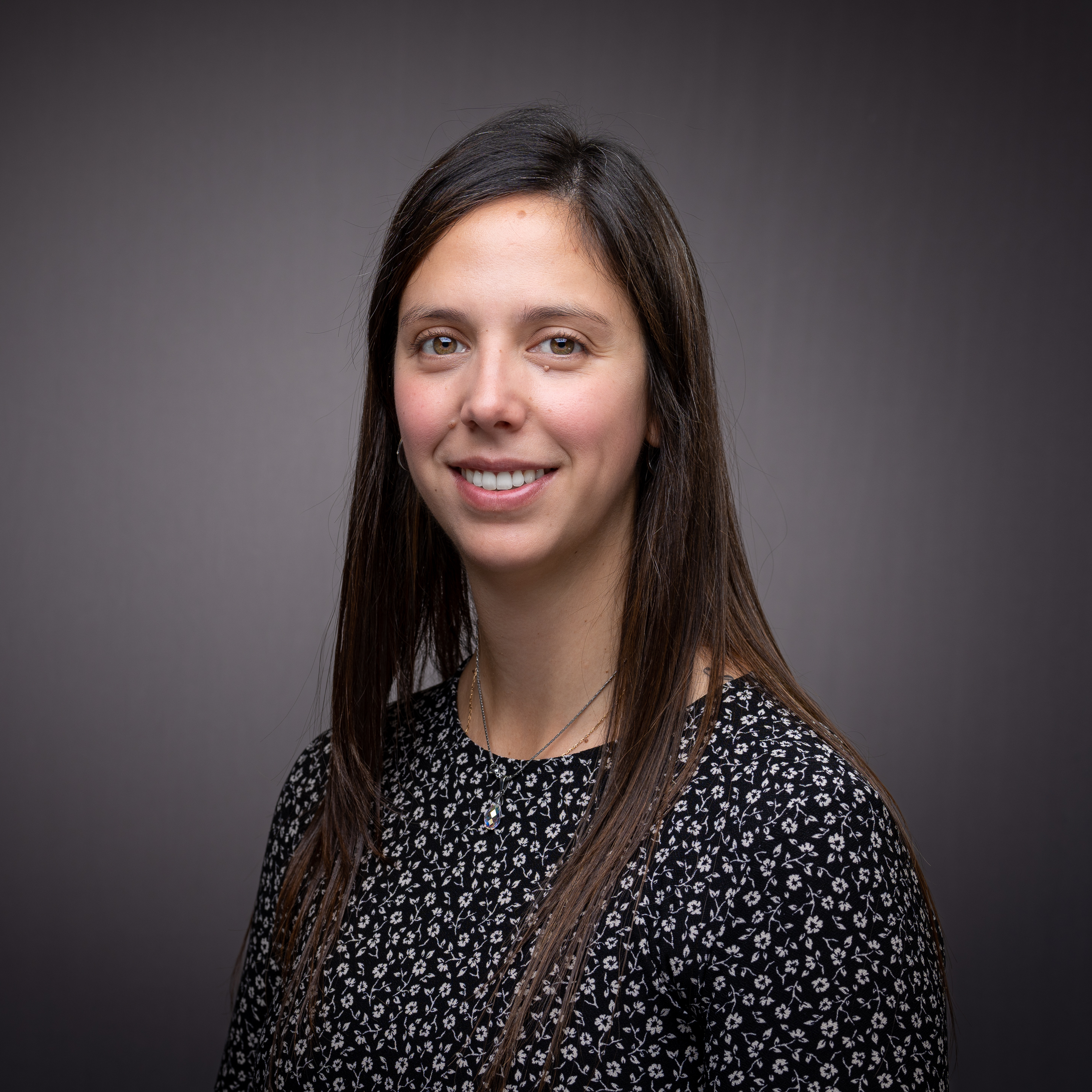
Rocio Lilen Segura is an Assistant Professor in the Department of Civil, Environmental and Sustainable Engineering at Santa Clara University's School of Engineering. She holds a Ph.D. in Civil Engineering from Sherbrooke University (2019) and a B.Sc. in Civil Engineering from Del Comahue National University (2013). Dr. Segura specializes in infrastructure resilience against extreme events and climate change, focusing on probabilistic risk assessment of critical infrastructure systems like dams and levees. Her work bridges civil engineering with machine learning and climate justice, integrating built, natural, and social systems to address environmental challenges. 2023 Severo Ochoa Mobility Programme grant 2019-2022 MITACS Accelerate industrial postdoc scholarship 2019 Léonard de Vinci medal and Scholarship Her research spans seismic risk reduction, surrogate modeling, and uncertainty quantification in dam engineering, with over 10 publications in journals like Advances in Civil Engineering and Water Journal. She previously collaborated with Hydro-Quebec during her postdoctoral research.
Professor Ole-Christoffer Granmo is a distinguished academic at the University of Agder, Norway, where he serves as Professor in the Department of Information and Communication Technology. He is the Founding Director of the Centre for Artificial Intelligence Research (CAIR) at the University of Agder, leading cutting-edge research in artificial intelligence and machine learning. Dr. Granmo obtained his master's degree in 1999 and his PhD in 2004, both from the University of Oslo. His academic journey has been marked by significant contributions to the field of AI, most notably the creation of the Tsetlin machine in 2018, for which he received the AI research paper of the decade award from the Norwegian Artificial Intelligence Consortium (NORA) in 2022. Professor Granmo's research primarily focuses on logical and causal world modeling across multiple modalities including images, sound, and natural language. His work spans logical auto-encoding, convolution, regression, transformer architectures, and reinforcement learning, all with the overarching goal of creating ultra-low-power artificial general intelligence through transparent logical learning and reasoning. His publications reveal a strong emphasis on interpretable AI systems, hardware implementations, and applications across diverse domains including cybersecurity, healthcare, social media analysis, and bioinformatics. AI Research Paper of the Decade (2022) - Norwegian Artificial Intelligence Consortium (NORA) Eight paper awards in machine learning Professor Granmo has coordinated over seven research projects and mentored 55+ master's students and nine PhD students. His leadership extends to co-founding the Norwegian Artificial Intelligence Consortium (NORA) and establishing two companies: Anzyz Technologies AS and Tsense Intelligent Healthcare AS. As an advisor at Literal Labs, he actively bridges academic research with practical industry applications, demonstrating his commitment to translating theoretical innovations into real-world solutions that address complex challenges across multiple sectors.
Stephen Turner is an Associate Professor of Data Science and Assistant Dean for Research at the University of Virginia School of Data Science . His work bridges genomics, data science, and national security , focusing on biosecurity, synthetic biology, conservation, and bioinformatics applications in human health . Previously, he was a faculty member in the UVA School of Medicine’s Department of Public Health Sciences (2011–2019) and directed the UVA Bioinformatics Core . Ph.D., Human Genetics, Vanderbilt University M.S., Applied Statistics, Vanderbilt University B.S., Biology, James Madison University Turner’s research spans computational approaches to biosecurity, biodiversity conservation, and human health . Recent publications highlight tools like the qqman and kgp R packages, PLANES for epidemiological modeling, and biorecap for bioRxiv preprint summarization. His work integrates large-scale sequencing, genome editing, and machine learning in conservation biotechnology and public health forecasting. Scientific contributions include applications in infectious disease forecasting , forensic genomics , and maternal-fetal biology . He has mentored interdisciplinary students and collaborated on NIH-funded research , while advising biotech startups at the intersection of academia, industry, government, and policy .
Markus Lange-Hegermann serves as Professor of Mathematics and Data Science at Ostwestfalen-Lippe University of Applied Sciences (TH OWL) since 2018 and holds a board position at the Institute for Industrial Information Technology (inIT). His career bridges academic research and industrial applications, with expertise in translating machine learning theory into practical engineering solutions for automation and manufacturing sectors. His educational foundation includes a Diplom (Master equivalent) in Computer Mathematics from RWTH Aachen University (2004-2008) followed by a Dr. rer. nat. (PhD equivalent) in algorithmic differential algebra (2008-2014). Prior to academia, he gained industry experience at FEV GmbH as an R&D engineer (2014-2017) and P3 automotive GmbH as a Data Science Consultant (2017-2018). Lange-Hegermann's research centers on probabilistic machine learning with distinctive emphasis on physics-informed approaches. He develops Gaussian process methodologies that incorporate differential equations to model time dependencies, uncertainties, and physical constraints in industrial systems. His work enables robust data-based modeling and optimization for cyber-physical systems, with applications spanning predictive maintenance, process control, and quality assurance in manufacturing. Analysis of his 15 most recent publications (2024-2025) reveals consistent innovation in physics-integrated machine learning, particularly using Gaussian processes to solve partial differential equations and optimal control problems. The research demonstrates strong industrial applicability across domains including medical imaging, material science, automotive engineering, and brewing processes, with recurring themes of anomaly detection in time-series data and uncertainty-aware decision making. His scientific contributions have earned significant recognition: Forschungspreis TH OWL (2024) Top reviewer award at NeurIPS (2023) Outstanding reviewer award at NeurIPS (2021) Best poster award at Bosch AI CON (2019) Borchers Plakette for outstanding dissertation (2014) Springorum Denkmünze for outstanding diploma (2009) As chairman of the Data Science study program and vice chairman of undergraduate examination boards, Lange-Hegermann actively shapes academic curricula while supervising graduate theses. His governance roles include serving on professorship search committees at multiple institutions and contributing to examination regulations. He maintains active research funding through collaborations with industrial partners and reviews proposals for initiatives like It's OWL and 3IA Côte d’Azur. Lange-Hegermann leads the Mathematics and Data Sciences research group within inIT, fostering collaboration between theoretical machine learning and industrial automation. He co-founded AICOmmunityOWL and the Informatics Europe working group on Data Analysis and Reporting, while organizing machine learning reading groups and data science hackathons to bridge academic research with industrial problem-solving.
Anna Korba is an Assistant Professor at École Polytechnique, specifically affiliated with ENSAE/CREST in the Statistics Department since September 2020. She is also a co-administrator of the Master Data Science program at École Polytechnique. Her academic journey has positioned her as a leading researcher in machine learning, with particular expertise in kernel methods, optimal transport, and statistical optimization. Dr. Korba received her PhD from Telecom ParisTech in 2018 under the supervision of Prof. Stephan Clémençon. Prior to her current position, she was a postdoctoral researcher at University College London's Gatsby Computational Neuroscience Unit working with Arthur Gretton from December 2018 to August 2020. Her academic foundation includes a Master's degree in Machine Learning and Computer Vision (MVA) from ENS Cachan and ENSAE in 2015. Anna Korba's research primarily focuses on machine learning with emphasis on kernel methods, optimal transport, optimization, particle systems, and preference learning. Her work bridges theoretical statistics with practical machine learning applications, particularly in developing novel sampling and optimization methods. She has made significant contributions to understanding Wasserstein gradient flows, density ratio estimation, and variational inference techniques. Her publication record demonstrates a strong trajectory in top-tier machine learning conferences including ICML, NeurIPS, AISTATS, and ICLR. Her research shows a clear evolution from foundational work on ranking and preference learning during her PhD to more recent contributions in Wasserstein-based optimization, sampling methods, and deep probabilistic modeling. The interdisciplinary nature of her work connects statistics, optimization theory, and practical machine learning applications. Top 10% Oral Presentation at AISTATS 2022 Top 15% Long Oral Presentation at ICML 2021 She actively mentors PhD students and postdoctoral researchers, currently advising seven PhD candidates and having successfully guided several alumni to prestigious positions. Dr. Korba also contributes to the academic community through her role in administering the Master Data Science program and collaborating with researchers across institutions worldwide. As part of the CREST research center, Dr. Korba works within a vibrant team of researchers focused on statistics, machine learning, and their applications to economic and social sciences. Her research group includes current PhD students and postdocs working on various aspects of her research interests, creating a dynamic environment for advancing the field of statistical machine learning.
Federica Sandrone is a Lecturer at the School of Architecture, Civil and Environmental Engineering (ENAC) at École Polytechnique Fédérale de Lausanne (EPFL), where she also serves as a Scientist at the Laboratory of Experimental Rock Mechanics (LEMR) within the Institute of Civil Engineering. Her academic career spans over 15 years with continuous contributions to tunnel engineering and rock mechanics research. Her research focuses on the intersection of rock mechanics and tunnel engineering, with particular expertise in tunnel pathology analysis, TBM performance in challenging geological conditions, and long-term tunnel behavior. Sandrone's work bridges theoretical analysis with practical engineering applications, addressing real-world problems in tunnel infrastructure management and maintenance. Her research methodology combines field investigations, laboratory testing, and numerical modeling to understand complex geomechanical behaviors. Analysis of her recent publications reveals a consistent focus on tunnel inspection methodologies, TBM performance prediction in difficult ground conditions, and the long-term behavior of tunnel structures. Her work has evolved from fundamental tunnel pathology studies to more advanced applications involving GIS integration, probabilistic modeling, and modern inspection techniques including laser scanning and image analysis. Engineer at SBB-Infrastructure (2008-present) responsible for Tunnels Management and Maintenance Assistant for Tunnel Engineering courses (2007-present) PhD supervision including Erika Paltrinieri's 2015 thesis on TBM performance Development of tunnel inspection methodologies and condition assessment procedures Her teaching activities include courses in Rock Mechanics and Underground Construction, where students learn about the mechanical behavior of rock materials, tunnel excavation and support design, planning and management of underground works, and risk assessment in tunnel construction.
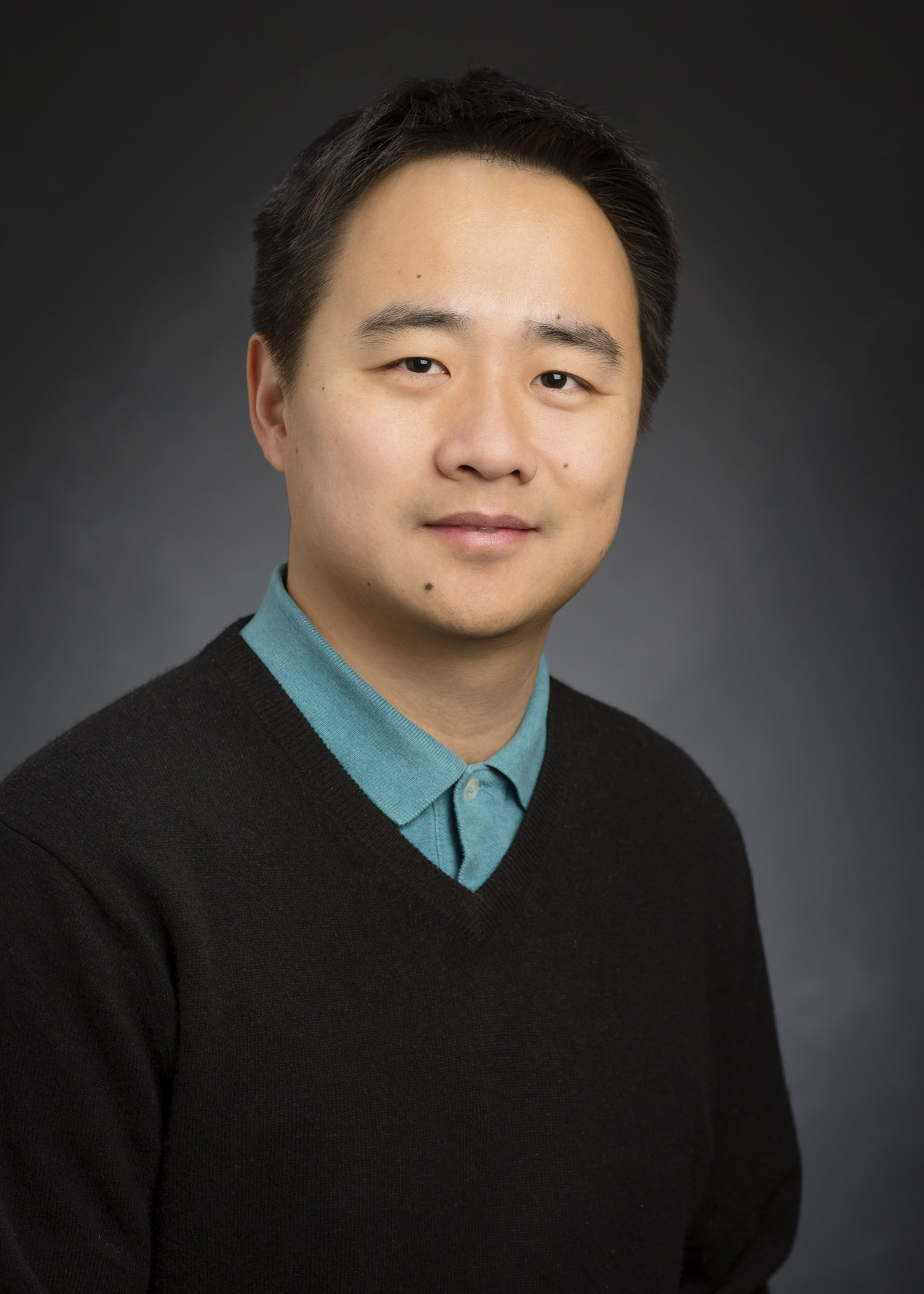
Dr. Xinqun Zhu is an Associate Professor at the University of Technology Sydney (UTS) in the School of Civil and Environmental Engineering . He has held academic positions at Western Sydney University (2016-2017), University of Western Australia (2005-2009), and University of Manchester (2001-2005). His research spans structural health monitoring, steel-concrete composite structures, physics-informed machine learning, and advanced sensor systems.
Michael Fink is a researcher at the Chair of Automatic Control Engineering , Technical University of Munich . He holds an M.Sc. in Electrical Engineering and Information Technology (2020) and a B.Eng. in the same field from Technical University Munich and University of Applied Sciences Landshut (2018), respectively. Research Interests : Model Predictive Control (MPC) with focus on stochastic and robust variants Optimal control strategies for autonomous driving and vertical farming Constraint violation probability minimization in dynamic systems Publications span topics in: Time-optimal MPC for linear systems Stochastic and robust MPC frameworks Learning-based control for greenhouse climate systems Vertical farming optimization Contact: michael.fink@tum.de
Didier Meuwly is a Full Professor of Forensic Biometrics at the University of Twente (since 2013) and Principal Scientist at the Netherlands Forensic Institute (NFI). His work focuses on automating and validating probabilistic evaluation of forensic evidence, particularly biometric traces. He has contributed to international standards via ISO Technical Committee 272 and served as Associate Editor for Forensic Science International . PhD in Forensic Speaker Recognition (University of Lausanne, 2000) Research spans forensic biometrics, likelihood ratios, AI validation, and gait/body analysis from surveillance footage. Recent work addresses ISO standards (21043), forensic AI explainability, and multimodal evidence evaluation. His publications emphasize empirical validation and statistical rigor. Key awards include: ENFSI Distinguished Forensic Scientist Award (2022) University of Lausanne Law Faculty Prize (2002) Active in global forensic networks, he chairs the ENFSI R&D Committee and collaborates across disciplines on digital evidence, biometric security, and forensic methodology.
Jian Peng is an Associate Professor and Willett Faculty Fellow at the University of Illinois at Urbana-Champaign with primary appointment in the Department of Computer Science and courtesy appointments in the College of Medicine. He holds affiliate positions at the Institute of Genomic Biology, Cancer Center at Illinois, and National Center for Supercomputing Applications. His research integrates computational biology and machine learning, focusing on functional genomics, cancer genomics, neurodegenerative diseases, deep learning architectures, and reinforcement learning applications in biological domains. His work bridges algorithmic development with real-world biomedical challenges. Analysis of recent publications (2020-2021) reveals strong emphasis on machine learning applications in drug design, protein engineering, and computational biology. Key technical themes include generative modeling for molecular structures, reinforcement learning advancements, causal inference frameworks, and novel computer vision approaches. The work demonstrates consistent interdisciplinary innovation across computational and biological domains. Major Scientific Awards: Donald Biggar Willett Faculty Fellow (2020) Overton Prize - ISCB (2020) Dean's Award for Excellence in Research (2020) C.W. Gear Junior Faculty Award (2019) NSF CAREER Award (2017-2022) Sloan Research Fellowship (2016) He leads significant research initiatives including co-directing the NSF AI Institute's Molecular Maker Lab and an ASAP collaborative grant for Parkinson's disease research. His students have secured faculty positions at leading institutions including Georgia Tech and University of Washington.
Fei He is an Associate Professor at Tsinghua University's School of Software, where he leads the THUFV research lab focused on formal verification and program analysis. His research spans formal methods, automated reasoning, and program verification, with applications in concurrent systems, networking (P4 programs), and probabilistic systems. Education & Employment: PhD from Tsinghua University (2008) Visiting Scholar at Carnegie Mellon University (2010-2011) and Politecnico di Milano (2006-2007) Faculty positions at Tsinghua since 2008 (Assistant Professor 2008-2011, Associate Professor 2011-present) Research: He's developed innovative techniques in SMT solving for concurrency verification, termination analysis, and regression verification. His tools like Deagle have won gold medals at SV-COMP. Current work focuses on probabilistic program verification and network program analysis. Publications: His 80+ publications demonstrate consistent contributions across formal methods (PLDI, OOPSLA, ICSE), networking (NSDI, INFOCOM), and software engineering (TSE, TOSEM), with recent emphasis on data-driven verification and automated invariant inference. Awards: Gold Medals in SV-COMP ConcurrencySafety (2022, 2023, 2025) Best Paper Awards at PPoPP 2022 and SETTA 2022 Advising: Mentors 13 PhD/Master's students in THUFV lab, with graduates joining Huawei, MPI-SP, and research institutions. Secured multiple NSF China grants for trustworthy software research. Service: Associate Editor for Theory of Computing Systems, program committees for PLDI/ICSE/OOPSLA, and former Local Chair for ISSTA 2019.
Jürgen Cito is an Associate Professor with tenure at Vienna University of Technology (TU Wien), specializing in software engineering, explainable AI, and performance engineering. He leads research at the IPA Lab (as indicated by his personal website) and maintains a visiting researcher position at Google. His academic journey began with joining TU Wien as an Assistant Professor in Spring 2020, with promotion to Associate Professor announced in April 2024. His research interests span multiple critical areas of modern software development, with particular focus on developer experience, program comprehension, and the intersection of AI with software engineering practices. His work bridges theoretical foundations with practical industrial applications, as evidenced by collaborations with major technology companies. Analysis of his recent publications reveals a strong emphasis on practical tools and methodologies that enhance software quality, performance, and security. His research trajectory shows increasing focus on explainable AI techniques applied to software engineering problems, performance prediction from source code, and automated security testing approaches that leverage large language models. best teaching award for distance learning for Web Engineering (2020) Cito actively contributes to the software engineering community through numerous conference committee roles, including program committee positions at ASE, ICSE, ESEC/FSE, and other major venues. His lab appears to focus on developer tools, program analysis, and AI-assisted software engineering, with connections to both academic and industrial research environments.
Dr. Xiaohan Yu is a Lecturer in Artificial Intelligence at Macquarie University's School of Computing, joining in December 2023. Previously, he completed his doctoral studies at Griffith University and served as a Research Fellow at the ARC Research Hub for Driving Farming Productivity. His research focuses on Ultra-Fine-Grained Visual Categorization (Ultra-FGVC), Smart Farming, and Automated Crop Cultivar Identification, with over 70 publications in top-tier venues like ICCV, CVPR, and IEEE Transactions. He holds editorial roles at Pattern Recognition and SN Computer Science , and received the APRS Early Career Award (2022) and ACM MM 2024 Outstanding Area Chair distinction. Education: Completed doctoral studies in Artificial Intelligence at Griffith University, Australia. Research Interests: Ultra-Fine-Grained Visual Categorization (Ultra-FGVC) Smart Farming and Agricultural Robotics Computer Vision Applications in Healthcare (e.g., trachoma detection) Deep Learning, Continual Learning, and Domain Adaptation Key Contributions: Pioneered Ultra-FGVC research, developed frameworks like Mix-ViT and CLE-ViT, and contributed to benchmarking multi-object tracking in farming. His work bridges pattern recognition with real-world applications in agriculture and healthcare. Scientific Awards: Australian Pattern Recognition Society (APRS) Early Career Researcher Award 2022 ACM Multimedia 2024 Outstanding Area Chair Award Advising & Grants: Actively involved in editorial roles (Area Chair for ACM MM, IJCNN) and grant-funded research through ARC hubs. His work is supported by collaborations in agriculture and AI-driven solutions for crop cultivar identification. Labs & Affiliations: Member of Macquarie's Smart Green Cities Research Centre and Frontier AI Research Centre , advancing interdisciplinary AI applications.
Professor Chew Lock Yue is an Associate Dean (Students) in the College of Science and a Full Professor in the School of Physical & Mathematical Sciences at Nanyang Technological University (NTU). He holds a B.Eng (Hons) in Electrical Engineering from the National University of Singapore (1991), an M.Sc in Electrical Engineering from the University of Southern California (1997), and a Ph.D. in Theoretical Physics from NUS (2004). His research focuses on complex systems, nonlinear dynamics, quantum thermodynamics, and urban systems modeling. Current projects include thermodynamics of information processing, machine learning integration with complex systems, and statistical physics of sea-level rise. Professional roles span technical leadership at DSO National Laboratories (1992-2005), academic appointments since 2005 (Assistant Professor to Full Professor), and administrative roles including Cluster Deputy Director at NTU’s Data Science & Artificial Intelligence Research Centre (2018-2021). He has received multiple teaching awards, including the Nanyang Award for Excellence in Teaching (2007) and the Best Faculty Mentor Award (2013). Research interests also encompass social-ecological systems, quantum heat engines, and spatial agglomeration patterns in urban contexts. His work bridges physics with interdisciplinary challenges like climate modeling and machine learning, with over 150 publications in peer-reviewed journals. Active in education, he teaches courses on quantum mechanics, nonlinear dynamics, and statistical physics.
Qiang Ji is a Professor in the Department of Electrical, Computer, and Systems Engineering at Rensselaer Polytechnic Institute (RPI), directing the Intelligent Systems Laboratory (ISL). He holds IEEE and IAPR Fellowships. Dr. Ji's research focuses on AI, computer vision, Bayesian methods, and robotics, with contributions to causal discovery, 3D reconstruction, and Tibetan multi-dialect speech recognition. He previously served as an NSF program director managing machine learning and computer vision initiatives. His academic journey includes positions at the University of Nevada, Reno, and visiting roles at institutions like Carnegie Mellon's Robotics Institute. Education: PhD in Electrical Engineering from the University of Washington. Research interests span machine learning, probabilistic graphical models, and human-computer interaction. Notable contributions include Bayesian adversarial learning, knowledge-augmented deep learning, and physics-aware human motion prediction. His work bridges theoretical advancements with applied systems like gaze estimation and facial action unit detection. Awards: IEEE Fellow (202?), IAPR Fellow (202?). Professional roles include conference committee chairs and editorial board memberships. Key research themes include uncertainty quantification, causal inference, and cross-domain learning challenges.