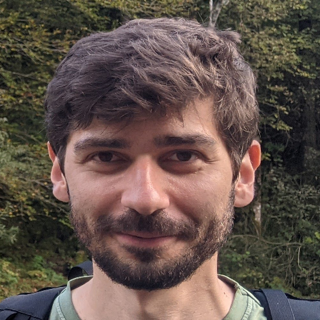
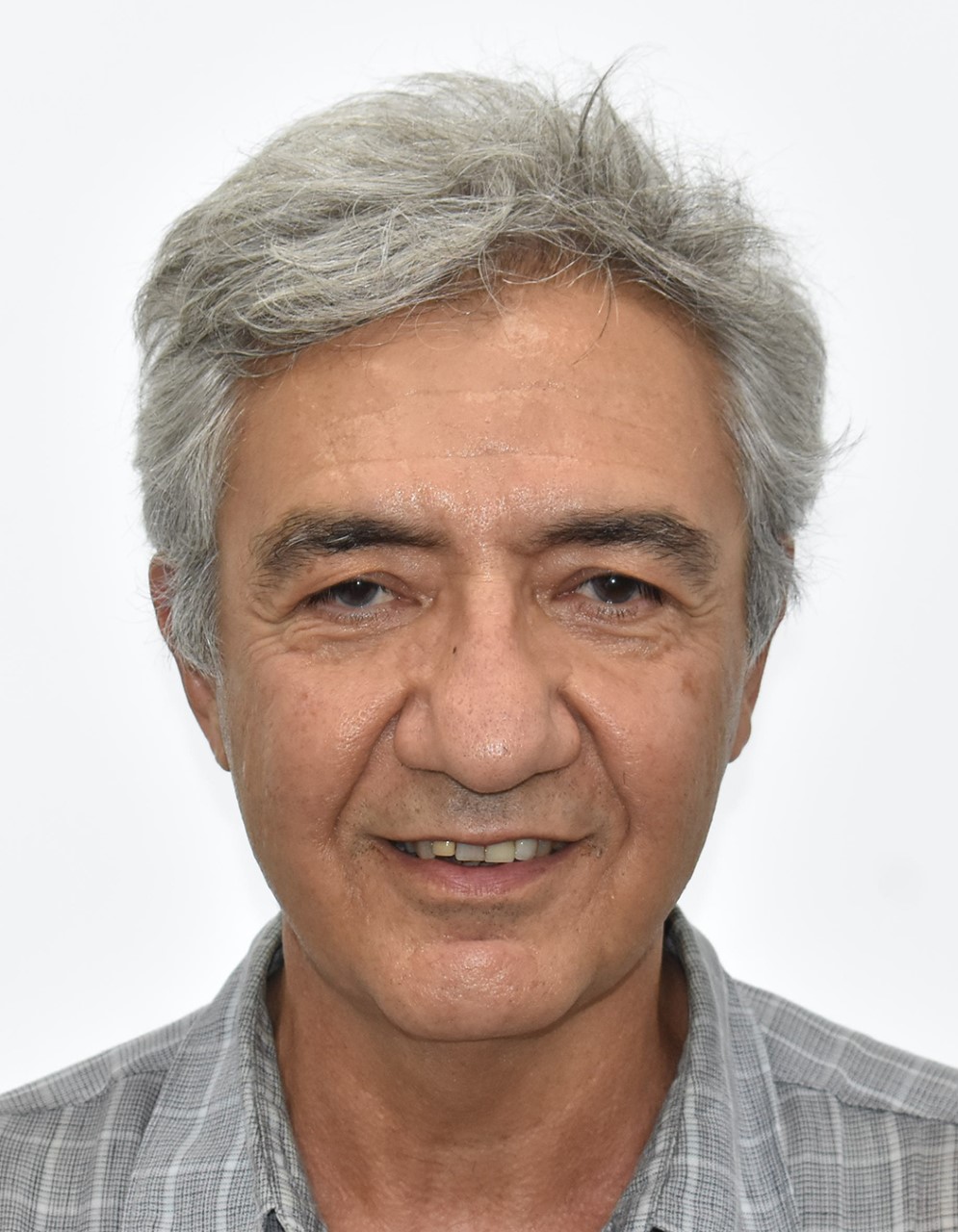
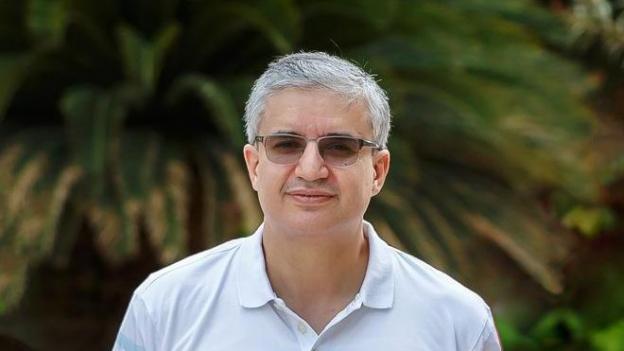
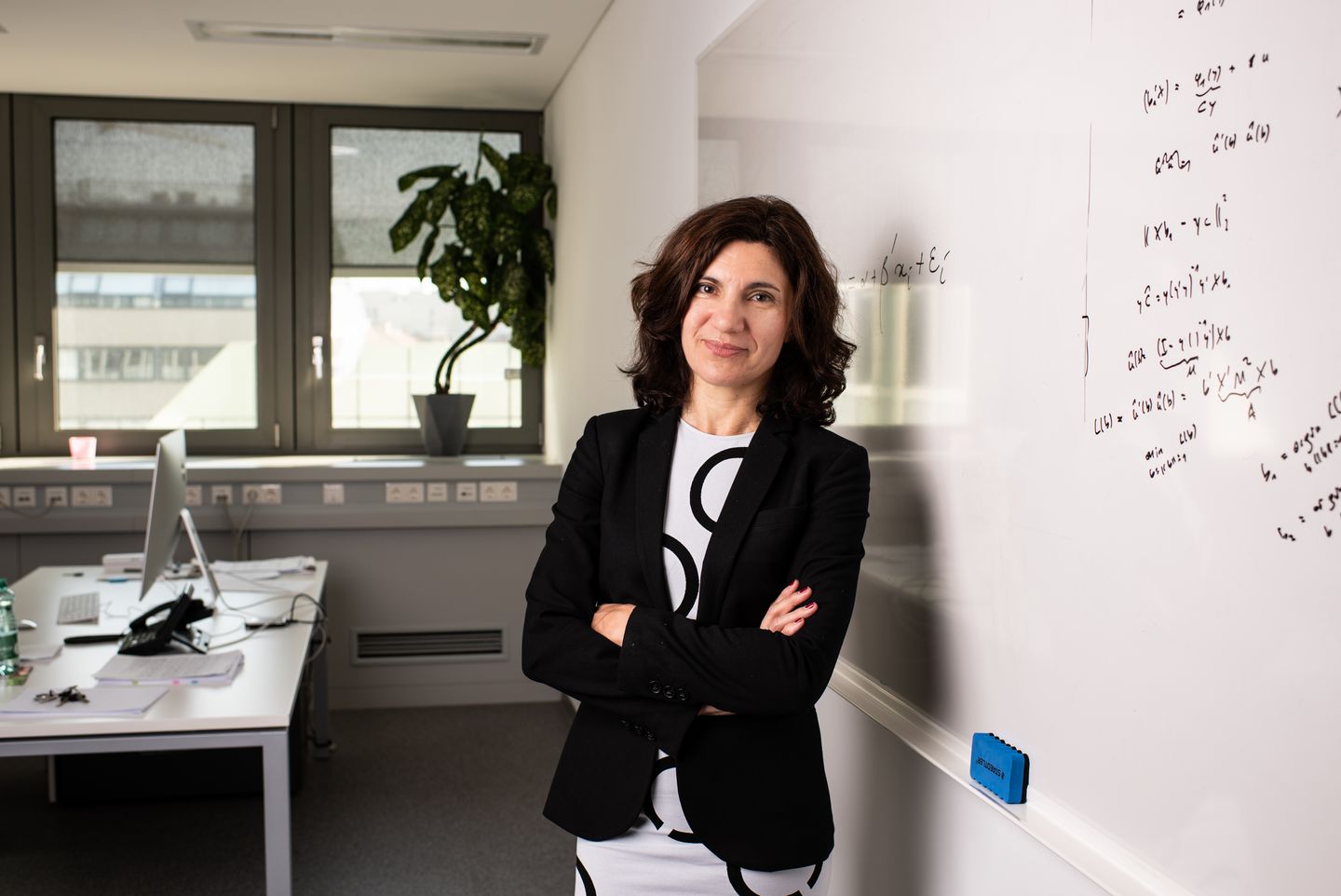
Raghavendra Selvan, an Assistant Professor (Tenure Track) at the University of Copenhagen, holds joint appointments in the Machine Learning Section (Department of Computer Science), Kiehn Lab (Department of Neuroscience), and the Data Science Laboratory. His academic journey includes a PhD in Medical Image Analysis (2018), MSc in Communication Engineering (2015), and BSc in Electronics and Communication Engineering (2009). PhD - Medical Image Analysis, University of Copenhagen (2018) MSc - Communication Engineering, Chalmers University (2015) BSc - Electronics and Communication Engineering, BMS Institute of Technology, India (2009) His research focuses on Bayesian Machine Learning with emphasis on Medical Image Analysis, Graph-based Learning, Tensor Networks, Approximate Inference, and Multi-Object Tracking Theory. Recent publications highlight his contributions to environmentally sustainable AI practices, efficient deep learning in medical imaging, and novel applications of tensor networks. Key research areas: Green AI and Environmental Sustainability Medical Image Analysis Graph Neural Networks Crystal Structure Prediction Model Compression Materials Science Applications
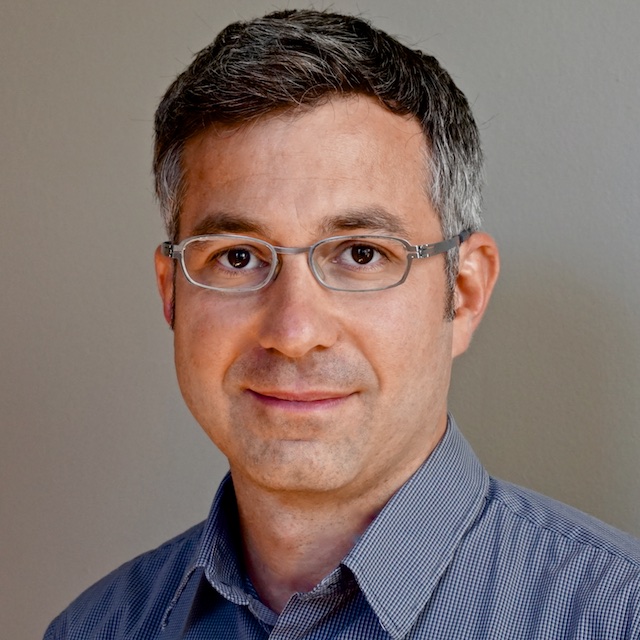
Marcus Gerhold is an Assistant Professor in the Formal Methods and Tools group at the University of Twente's Faculty of Electrical Engineering, Mathematics and Computer Science. His research focuses on model-based testing for software reliability in critical infrastructures, particularly railway systems, alongside significant contributions to game design and programming language analysis. His educational background includes: PhD in Computer Science from University of Twente (2018): Choice and Chance: Model-based Testing of Stochastic Behaviour MSc in Mathematics from Friedrich Schiller Universität Jena (2013): Embeddings of Weighted Morrey Spaces BSc in Mathematics from Friedrich Schiller Universität Jena (2011): Entropy-, Approximation- and Kolmogorov Numbers on Quasi-Banach Spaces Gerhold's research integrates theoretical model-based testing with practical critical infrastructure applications . His work on railway conformance testing addresses EULYNX controller validation, while his game design research explores affective mirroring in NPCs and procedural dungeon generation. The code modernity analysis stream leverages static analysis to quantify legacy code evolution across languages like Python and PHP, revealing version identification challenges through deep learning. Publication trends show consistent focus on model-based testing methodologies (40%), railway safety applications (25%), and innovative game design/code analysis (35%). Recent work increasingly incorporates AI/ML techniques for UML assessment and Python version identification, while maintaining rigorous formal methods foundations. He actively mentors 63 students across all academic levels and contributes to major research initiatives: STORM_SAFE (ERDF, 2024): Daily Supervisor for WP1/WP2 on software reliability for critical infrastructures ZORRO (KIC grant, 2023): Daily Supervisor for WP4 on zero downtime in cyber-physical systems MISSION (MSCA RISE, 2021-2025): Interim coordinator (early 2024) for space systems modeling As part of the Formal Methods and Tools research group, Gerhold participates in European collaborations while serving on SAC-SVT 2024 and FormaliSE 2023 program committees.
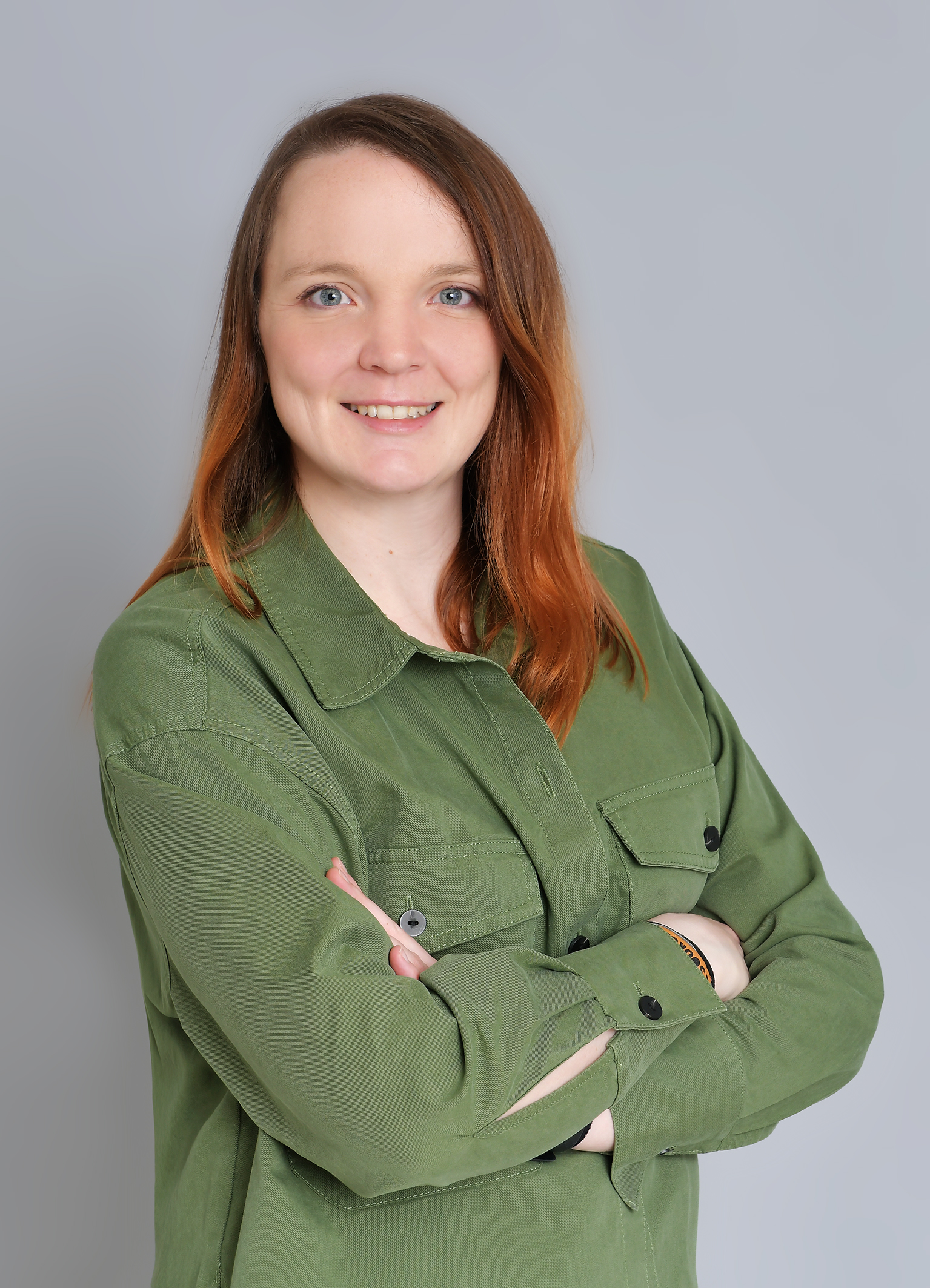
Katharina Eggensperger is an Early Career Research Group Leader at the University of Tübingen , leading the AutoML for Science group within the Cluster of Excellence Machine Learning for Science . She previously completed her Ph.D. at the University of Freiburg under Frank Hutter and Marius Lindauer (2022), and actively contributes to the AutoML community through open-source tool development and competition leadership. Co-developer of AutoML.org tools Faculty member of IMPRS-IS Chair for multiple AutoML workshops/conferences (2019-2025) Her research focuses on automated machine learning (AutoML) with specific attention to: AutoML Systems Hyperparameter Optimization Tabular Machine Learning Scientific Applications of ML She has organized multiple AutoML schools and conferences, including serving as Program Chair for AutoML 2024 and Non-archival Track Chair for AutoML 2025. Her work emphasizes making machine learning accessible through automation while maintaining scientific rigor and interpretability, particularly for tabular data applications. Katharina actively recruits PhD students through IMPRS-IS and collaborates with institutions like the University of Freiburg and Cyber Valley .
Marian Verhelst is a Professor at KU Leuven's Faculty of Engineering Science, renowned for her research in hardware-efficient computing and dedication to STEM education. Her work spans hardware acceleration for machine learning, edge AI, and in-memory computing, with a focus on energy optimization and algorithm-hardware co-design. Her research interests include: Designing flexible hardware for ultra-low-power edge AI systems Optimizing sparsity-aware architectures for deep learning workloads Advancing chiplet-based and 3D memory technologies Co-designing algorithms and hardware for probabilistic AI Pioneering STEM outreach through KU Leuven InnovationLab Recent publications (2023–2025) demonstrate strong trends in: Hardware-software co-optimization for edge ML systems Efficient data movement in heterogeneous accelerators Low-precision and sparse computation techniques RISC-V based customizable SoCs Sustainable AI accelerator design Awards & Honors: Young Academy of Europe Award (2021) for science communication and STEM advocacy She leads significant educational initiatives, including the KU Leuven InnovationLab which has engaged 150 schools and 13,000 students since 2014. The program develops hands-on STEM projects (e.g., AI-powered wheelchairs, sustainable energy systems) and provides teacher training to inspire youth in engineering.
Gerome Miklau is a Professor of Computer Science at the University of Massachusetts Amherst, affiliated with the Manning College of Information and Computer Sciences (CICS). He leads the DREAM Lab and focuses on privacy, security, and equitable data management, particularly in differential privacy and fair data analysis. His work includes designing algorithms for private data synthesis, privacy-preserving SQL engines, and auditing systems like AuditGuard. He co-founded Tumult Labs to commercialize privacy technology and advised the U.S. Census Bureau on privacy for the 2020 decennial census. Education: Ph.D. in Computer Science from the University of Washington (2005), B.S. in Mathematics and Rhetoric from UC Berkeley (1995). Research Interests: Differential privacy, secure data management, fairness in algorithms, privacy-preserving data synthesis, and forensic database analysis. His lab develops tools like Ektelo and PrivateSQL, addressing challenges in privacy-accurate tradeoffs and scalable private data processing. Awards: 2006 ACM SIGMOD Dissertation Award, 2007 NSF CAREER Award, 2013 ICDT Best Paper Award, and two ACM PODS Test-of-Time Awards (2020 and 2012). Grants & Service: Co-chair of OpenDP Advisory Board, steering committee member for TPDP workshops, and organizer of the 'Data, Responsibly' Dagstuhl workshop. His service includes program committees for SIGMOD, ICML, and FAT*. He teaches courses on databases, privacy, and programming. Labs/Teams: DREAM Lab (Data systems Research for Exploration, Analytics, and Modeling) and collaborations with the Center for Data Science and Cybersecurity Institute at UMass Amherst.
Willem Jonker is a Full Professor at the Digital Society Institute, specializing in Semantics, Cybersecurity & Services. His research focuses on encryption schemes, access control, and privacy-preserving technologies. He has contributed to over 120 publications, with recent work addressing CVE-to-CWE mapping, anomaly detection in network traffic, and functional encryption systems. His expertise aligns with UN Sustainable Development Goals related to secure digital systems and privacy. Jonker has supervised 10 students and actively participates in academic conferences, presenting on topics like secure data management and cryptographic protocols. Research interests include cryptographic protocols, secure data management, and cybersecurity solutions. Notable projects involve developing methods for detecting covert channels, enhancing data privacy in healthcare, and improving secure search over encrypted data. He has also contributed to standards in digital rights management and forensic image recognition.
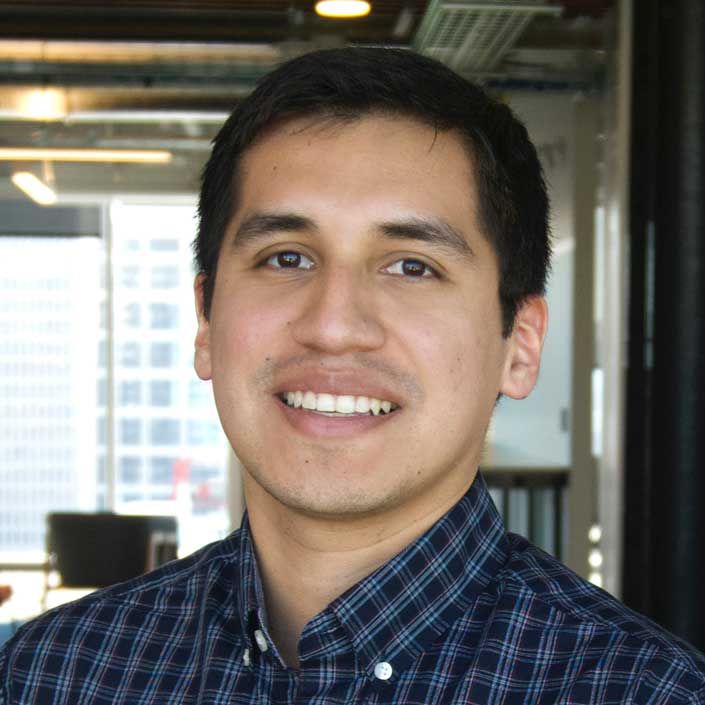
Alexander Rodríguez is an Assistant Professor in the Department of Computer Science and Engineering at the University of Michigan. His research focuses on advancing AI methods for modeling complex spatiotemporal dynamics, particularly in applications related to population health and community resilience. He specializes in machine learning, time series analysis, uncertainty quantification, and multi-agent systems, with an emphasis on scientific modeling and data-driven decision-making. Recent contributions include keynote talks at AAMAS 2025 (Autonomous Agents for Social Good workshop), presentations at the US National Academies Symposium, and invited talks at AAAI 2025 on topics like knowledge-guided machine learning and public health prediction. He co-organizes AAMAS 2025 as sponsorship co-chair and leads initiatives in AI for science and epidemic forecasting. His publications emphasize neural networks for time series forecasting, biomedical foundation models, and epidemic surveillance systems. Notable work includes 'Neural Conformal Control for Time Series Forecasting' (AAAI 2025) and 'Deepcovid: An operational deep learning-driven framework for explainable real-time forecasting' (2021). No scientific awards explicitly listed in available texts. His research group actively collaborates on grants related to AI applications in public health and infrastructure resilience, with a focus on data-centric methodologies and multi-agent systems.
Juan Felipe Carrasquilla Álvarez is an Assistant Professor in the Department of Physics at the University of Toronto. His research focuses on the intersection of condensed matter physics, quantum computing, and machine learning, emphasizing quantum many-body systems, quantum device validation, and phase identification. He holds affiliations with the Acceleration Consortium and the Centre for Quantum Information and Quantum Control at the University of Toronto, and is a Perimeter Institute Visiting Fellow. Education: PhD in Physics from SISSA (Italy), followed by postdoctoral fellowships at Georgetown University (2011-2013), the Perimeter Institute (2013-2016), and a stint as a Research Scientist at D-Wave Systems Inc. Earlier, he completed the Abdus Salam ICTP Diploma Programme (2005-2006). Research interests span quantum Monte Carlo simulations, machine learning-driven analysis of quantum systems, and applications to quantum computing validation. His work bridges theoretical physics with computational methods, addressing challenges in both classical and quantum computing paradigms. Notable contributions include developing neural network architectures for quantum state reconstruction, error mitigation in quantum simulations, and optimal control strategies for quantum thermal machines. His publications explore topics like topological order detection, shadow tomography, and hybrid quantum-classical algorithms. Awards/Fellowships: Perimeter Institute Postdoctoral Fellowship (2013-2016), Georgetown University Postdoctoral Fellowship (2011-2013), SISSA PhD Fellowship (2006-2010), and Abdus Salam ICTP Diploma Programme Fellowship (2005-2006). Advising/Grants: No formal advisee list provided. Active in interdisciplinary collaborations through affiliations with major quantum research consortia and institutions. Lab/Teams: Part of the Acceleration Consortium and the Centre for Quantum Information and Quantum Control, contributing to cutting-edge quantum computing and machine learning research.
Giuliano Casale is a Professor in the Department of Computing at Imperial College London, leading the Quality of Service Research Lab (QORE). His research focuses on performance assurance, resource management, and fault-tolerance in distributed systems. He teaches courses on Probability and Statistics and Scheduling and Resource Allocation at undergraduate and Master’s levels. Casale’s work spans cloud computing, edge AI, and machine learning applications in system modeling. Key contributions include methodologies for performance engineering, anomaly detection, and automated resource management in large-scale systems. He actively participates in international conferences, delivering keynote speeches on topics such as performance evaluation and AI-driven systems. His research integrates queueing theory, machine learning, and generative models to address challenges in distributed software systems. Casale also engages in service activities like PhD admissions tutoring and collaborates on projects involving resilience planning and cloud service optimization. His lab, QORE, emphasizes practical solutions for real-world distributed systems, including edge federations and serverless architectures. Casale’s work bridges theoretical performance analysis with industrial applications, contributing to advancements in both academia and industry.
Abbas Edalat is a Professor of Computer Science and Mathematics at Imperial College London, and an Adjunct Professor at the Institute for Research in Fundamental Sciences, Tehran. He leads two research groups: Algorithmic Human Development and Continuous Data-Types and Exact Computation. His work spans computational mathematics, psychotherapy models, and exact real-number computation. Notably, he received the LICS 2017 Test-of-Time Award for foundational contributions to logic in computer science. Research interests include self-attachment psychotherapy, computational differential calculus, topology, and bisimulation in probabilistic systems. He has pioneered exact computation frameworks for real numbers, geometry, and dynamical systems, with applications in neuroscience and artificial intelligence. Professional activities include keynote talks at conferences like IJCNN and workshops on psychotherapy in Iran and the UK. Teaching includes advanced courses on dynamical systems, quantum computing, and computational techniques. He advises PhD students globally and chairs initiatives like the Science and Arts Foundation to expand educational access in developing nations. His interdisciplinary work bridges mathematics, computer science, and clinical psychology.
Prof. Donat Fäh is a faculty member at ETH Zurich's Institute of Geophysics, part of the Swiss Seismological Service (SED). His work focuses on advancing seismic hazard assessment and site response modeling in Switzerland and beyond. He leads interdisciplinary projects integrating geophysical surveys, machine learning, and empirical data to refine risk models for urban areas like Basel and Lucerne. Key contributions include developing the ERM-CH23 national earthquake risk framework and improving methodologies for nonlinear soil behavior analysis using KiK-net data from Japan. His research emphasizes high-resolution amplification mapping, subsurface characterization via ambient vibrations, and understanding glacial and subaqueous slope dynamics. Research interests span seismic site effects, soil mechanics, landslide stability monitoring, and the application of advanced geophysical inversion techniques. He collaborates internationally to enhance earthquake risk communication and building code compliance, particularly in low seismicity regions. Current efforts include refining 3D geophysical models for urban settings and exploring Bayesian methods for subsurface structure identification. His work bridges fundamental geophysical research with practical engineering solutions for infrastructure resilience. Advising and grants: No formal advisees or grant details are explicitly listed in the provided texts. His collaborative projects, however, suggest involvement in large-scale initiatives such as URBASIS and the Swiss strong-motion network modernization. Labs and teams: Prof. Fäh is affiliated with the Swiss Seismological Service (SED) and actively contributes to ETH Zurich’s seismic monitoring infrastructure. His team collaborates with institutions in Japan (KiK-net network) and applies cutting-edge geophysical techniques to study subglacial environments and lakebed geotechnics.
Mohamed-Slim Alouini is a Professor of Electrical Engineering and Associate Dean of the Computer, Electrical and Mathematical Science and Engineering (CEMSE) Division at King Abdullah University of Science and Technology (KAUST) in Saudi Arabia. He also serves as the Associate Vice President for Research and holds the UNESCO Chair in Education to Connect the Unconnected. With over 500 journal publications and more than 46,000 citations, he is a world-renowned expert in wireless communications who was elected IEEE Fellow in 2009 at the age of 39. Education: PhD in Electrical Engineering, California Institute of Technology (Caltech), 1998 MS in Electrical Engineering, Georgia Institute of Technology (Georgia Tech), 1995 Diplôme d'Etudes Approfondies (DEA) in Electronics, Université Pierre & Marie Curie (Sorbonne University), 1993 Diplôme d'Ingénieur, École Nationale Supérieure des Télécommunications (Télécom Paris Tech), 1993 Habilitation, Université Pierre & Marie Curie (Sorbonne University), 2003 Dr. Alouini is a world-renowned expert in wireless communication and networking with research interests spanning diversity combining techniques, MIMO systems, multi-hop/cooperative communications, optical wireless systems, cognitive radio, UAV communications, and advanced modulation schemes. His current focus addresses the technical challenges of uneven information and communication technology distribution, particularly targeting rural, low-income, disaster-prone, and hard-to-reach areas through integrated ground-airborne-space networks. His work bridges theoretical foundations with practical implementations to solve real-world connectivity problems. His recent publications (2020-2024) demonstrate a clear research trajectory toward integrated communication networks combining terrestrial, aerial, and space components. There's growing emphasis on UAV communications, satellite systems, optical wireless technologies, and rural connectivity solutions, with increasing integration of machine learning techniques for network optimization. His work shows consistent focus on addressing the digital divide, with several publications specifically targeting 6G challenges for connecting underserved populations and recycling existing infrastructure for enhanced rural connectivity. Scientific Awards: Member of the European Academy of Sciences and Arts (2019) Fellow of the African Academy of Sciences (2018) IEEE Fellow (2009) Abdul Hameed Shoman Award for Arab Researchers (2016) OIC Science & Technology Achievement Award (2017) Multiple recognitions as Highly Cited Researcher NSF CAREER Award (1999) Dr. Alouini has mentored numerous successful students and post-doctoral fellows who have secured positions at top institutions worldwide including Harvard, Caltech, Imperial College, and faculty positions at Korea University, Hanyang University, and universities across the Middle East. His December 2018 PhD graduate Qurrat-Ul-Ain Nadeem received the prestigious Marconi Society Paul Baran Young Scholars award, while post-doctoral fellows have won IEEE ComSoc Young Professionals Best Innovation Award and attended the Lindau Nobel Meeting. His Communication Theory Lab at KAUST drives significant research in wireless communications with funding supporting extensive publication output and innovative projects. Dr. Alouini leads the Communication Theory Lab at KAUST and holds the UNESCO Chair in Education to Connect the Unconnected, focusing specifically on technical solutions for connecting underserved communities. His lab works on integrated ground-airborne-space networks to bridge the digital divide, with particular emphasis on rural, low-income, and hard-to-reach areas. The team develops practical solutions using UAVs, satellite communications, and recycled infrastructure to provide cost-effective connectivity where traditional approaches fail.
Efstathia Bura is a Professor heading the Applied Statistics Research Unit (ASTAT) within the Institute of Statistics and Mathematical Methods in Economics at TU Wien's Faculty of Mathematics and Geoinformation. Her research focuses on dimension reduction techniques in regression and classification, high-dimensional statistics, and their applications in biostatistics, econometrics, and legal statistics. She leads projects like ProbInG (WWTF-funded) and the SecInt Doctoral College on statistical verification of cyber-physical systems. Her work integrates advanced statistical methodologies with interdisciplinary applications, emphasizing practical solutions for complex data challenges. Current projects explore probabilistic program analysis, security properties in cyber-physical systems, and dynamic econometric modeling. She collaborates internationally, with notable contributions to statistical theory and applications in law, healthcare, and telecommunications. Key research themes include time-varying regression models, sufficient dimension reduction for mixed predictors, and fusion of statistical methods with machine learning. Her publications bridge theoretical advancements and real-world problem-solving, reflecting her role as a leading academic in modern applied statistics. Her team includes postdocs and assistants working on WWTF and SecInt grants, focusing on probabilistic systems and statistical verification. While no formal student advisees are listed, her collaborative projects engage junior researchers in cutting-edge statistical research.
Noela Müller is an Assistant Professor in the Mathematics and Computer Science school at Eindhoven University of Technology . Her research focuses on Probability Theory , Random Matrices , and Random Graphs , with significant contributions to understanding the rank of sparse matrices and clique factors in probabilistic settings. Research Outputs : Published 22 works including journal articles and preprints. Collaborations : Active in international networks, particularly in sparse matrix analysis and probabilistic combinatorics. Her recent work explores sparse pooled data algorithms , random 2-SAT models , and sharp thresholds in random graphs , showcasing interdisciplinary applications in computer science, mathematics, and theoretical physics.
Marcel Böhme is a faculty member at the Max Planck Institute for Security and Privacy (MPI-SP) , leading the Software Security research group. His work focuses on foundational advancements in fuzzing , statistical program analysis, and scalable vulnerability discovery. Education: PhD from National University of Singapore (NUS) Research interests span: Statistical and causal frameworks for software testing Efficiency/Scalability of automated testing Fundamental limits of vulnerability detection Practical fuzzing technology (e.g., Entropic in LibFuzzer) Recent publications highlight trends in: Machine learning for security analysis Privacy-preserving statistical methods Future-proof security frameworks Protocol fuzzing with large language models Scientific accolades include: ERC Consolidator Grant (2024) NUS Outstanding Young Alumni Award (2022) ARC DECRA (2019) Multiple ACM Distinguished Paper Awards He serves as: Spokesperson for Research Group Leaders at Max Planck Society Guest Editor-in-Chief for ACM TOSEM PC Chair for ASE'25 and ISSTA'26