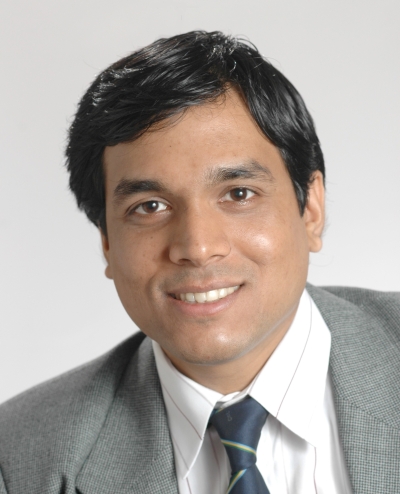
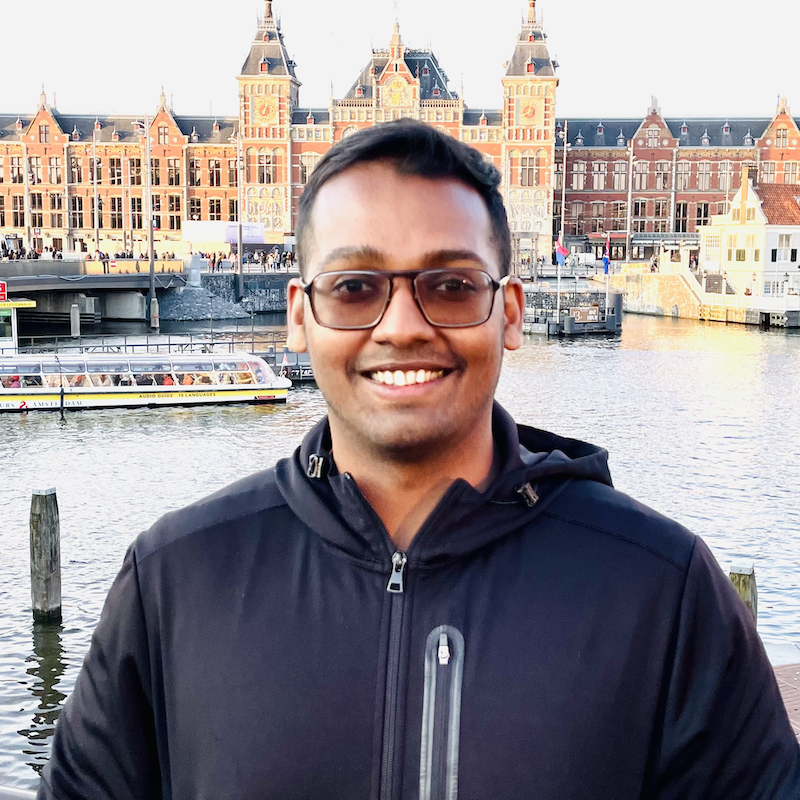
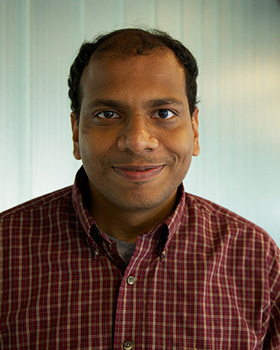
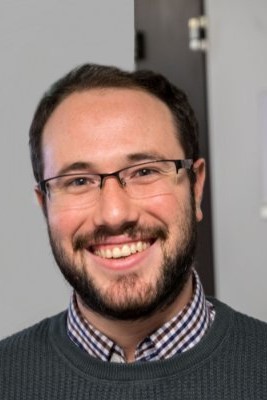
Sanjit A. Seshia is the Cadence Founders Chair Professor in the Department of Electrical Engineering and Computer Sciences at the University of California, Berkeley . He is affiliated with the Group in Logic and the Methodology of Science and participates in centers like the Industrial Cyber-Physical Systems Center , Berkeley AI Research , and the Simons Institute for the Theory of Computing . Research interests include formal methods for automated verification and synthesis of dependable systems, with applications to cyber-physical systems , AI-based autonomy , and computer security . His work spans SMT solving, model counting, syntax-guided synthesis, and algorithmic improvisation, with tools like UCLID5 , VerifAI , and Scenic for verifying autonomous systems and educational platforms like CPSGrader . Students and collaborators include notable researchers such as Dorsa Sadigh (Stanford), Daniel Fremont (UC Santa Cruz), and Hazem Torfah (Chalmers). He has co-founded startups like Decyphir and 20ⁿ Labs based on his research.
Chris De Sa is an Associate Professor in the Department of Computer Science at Cornell University, affiliated with the Cornell Machine Learning Group and leading the Relax ML Lab. His research focuses on algorithmic, software, and hardware techniques for high-performance machine learning, particularly relaxed-consistency stochastic algorithms like asynchronous and low-precision stochastic gradient descent (SGD). He earned his Ph.D. from Stanford University under advisors Kunle Olukotun and Chris Ré. His work emphasizes constructing efficient, parallel, and distributed machine learning frameworks for deep learning and data analytics. Education: Ph.D. in Computer Science, Stanford University (2017) Research Interests: Algorithmic techniques for scalable ML, quantization, distributed optimization, hyperbolic geometry in ML, and reliable measurement of ML systems. His group develops frameworks for efficient inference/training and explores the intersection of ML with domains like agriculture and plant science through courses like PLSCI 7202. Recent Highlights: DARPA YFA Grant (2024), NSF CAREER Award, Google Research Scholar Award, and multiple best paper recognitions. Key contributions include QuIP quantization methods, Coneheads attention mechanisms, and theoretical advances in decentralized training. Awards: NSF CAREER Award DARPA YFA Grant (2024) Google Research Scholar Award Mr. & Mrs. Richard F. Tucker Teaching Award Grants & Advising: Advises 8 Ph.D. students (including Ruqi Zhang, Yucheng Lu, A. Feder Cooper) and holds leadership roles in MLSys conferences. Active in grant-funded research (e.g., NSF Robust Intelligence). Labs/Teams: Leads the Relax ML Lab and participates in Cornell’s Institute for Digital Agriculture (CIDA).
Todd Millstein is a Professor in the Computer Science Department at the University of California, Los Angeles (UCLA), and served as Department Chair from 2022–2025. He is also an Amazon Scholar and a co-founder and former Chief Scientist of Intentionet (now at AWS). His research focuses on making software systems more reliable, particularly through network verification and programming language techniques. He pioneered the Batfish network configuration analyzer, which is used by AWS, Oracle Cloud, and dozens of companies, and received the ACM SIGCOMM Networking Systems Award (2025) for this work. His recent publications span probabilistic programming, network reliability, and interactive program verification, including papers at PLDI 2024 (on bit blasting probabilistic programs), NSDI 2024 (on behavioral testing of BGP), and HotNets 2024 (on network layering). Todd has received prestigious awards such as an NSF CAREER Award , a Microsoft Research Outstanding Collaborator Award , and multiple best paper awards at PLDI, OOPSLA, and SIGCOMM. He has advised Ph.D. students like Ana Brendel and Poorva Garg , and teaches courses such as CS30 (Principles of Computing), CS231 (Types and Programming Languages), and CS239 (Current Topics in PL and Systems). His professional roles include Program Chair for OOPSLA 2014 and ECOOP 2018, and committee member for numerous conferences including PLDI , SPLASH , and LAFI .
Byron Boots is the Amazon Professor of Machine Learning in the Paul G. Allen School of Computer Science and Engineering at the University of Washington, where he directs the UW Robot Learning Laboratory. He also serves as a Principal Research Scientist in the Seattle Robotics Lab at NVIDIA Research and co-chairs the IEEE Robotics and Automation Society Technical Committee on Robot Learning. Dr. Boots received his Ph.D. from the Machine Learning Department in the School of Computer Science at Carnegie Mellon University, where he was a member of the Sense, Learn, Act (SELECT) Lab co-directed by Carlos Guestrin and his advisor Geoff Gordon. Prior to joining the University of Washington faculty, he was an Assistant Professor in the School of Interactive Computing within the College of Computing at Georgia Tech, and before that, he completed a post-doc in the Robotics and State Estimation Lab directed by Dieter Fox at the University of Washington. Professor Boots' research focuses on the intersection of machine learning, artificial intelligence, and robotics, with particular emphasis on developing theory and systems that tightly integrate perception, learning, and control. His work spans computer vision, state estimation, localization and mapping, high-speed navigation, motion planning, and robotic manipulation. His group develops algorithms drawing from deep learning and neural networks, nonparametric statistics, graphical models, nonconvex optimization, quantum physics, online learning, reinforcement learning, and optimal control. The research demonstrates a strong theoretical foundation while maintaining practical relevance to real-world robotic systems. His recent publications reveal a clear trend toward integrating advanced machine learning techniques with robotics, particularly in model predictive control, motion planning, and learning-based approaches to robot control. His work shows increasing focus on developing theoretically grounded methods that can handle the complex, nonlinear dynamics of real-world robotic systems while maintaining computational efficiency. The publications span top venues including ICRA, CoRL, IROS, and NeurIPS, demonstrating broad impact across multiple subfields of robotics and AI. Finalist for Best Systems Paper at Conference on Robot Learning (CoRL-2021) Multiple papers selected for oral presentations at top robotics conferences Work recognized for theoretical contributions and practical applications in robot learning As director of the UW Robot Learning Laboratory, Boots leads a vibrant research group focused on fundamental and applied research in robot learning. The lab maintains strong collaborations with NVIDIA Research and has produced numerous high-impact publications that bridge theory and practice. Professor Boots teaches courses in autonomous robotics, machine learning, and reinforcement learning, contributing to both undergraduate and graduate education at the University of Washington.
Tathagata Srimani is an Assistant Professor in the Department of Electrical and Computer Engineering at Carnegie Mellon University (CMU), affiliated with the College of Engineering. He previously served as a Postdoctoral Scholar in Electrical Engineering at Stanford University. His academic journey includes a Ph.D. and S.M. in EECS from MIT (2022 and 2018 respectively) and a B.Tech. in E&ECE from IIT Kharagpur (2016). Research Focus: Srimani’s work centers on nanoelectronics and transformative NanoSystems. Key areas include: Carbon nanotube field-effect transistors (CNFETs) and their monolithic 3D integration with silicon Ultra-dense 3D integration of logic and memory to address the 'memory wall' in AI/ML Technology-architecture co-design frameworks for energy-efficient computing Key Achievements: Developed first silicon fab-compatible CNFET processes (TNANO ’18, Nature ’19) Enabled CNFET RISC-V microprocessor and monolithic 3D integration with Analog Devices/SkyWater Recipient of MIT Presidential Fellowship (2016) and Morris Joseph Levin Award (2018) Teaching & Outreach: Teaches semiconductor devices and hardware design, including hands-on 'Hacker Fab' courses. Leads the NEXUS Research Group exploring heterogeneous nanomaterials (e.g., magnetic and oxide semiconductors) and thermal/power management in 3D systems. Future Directions: Expanding into probabilistic computing hardware, co-design frameworks for application-specific systems, and scaling 3D NanoSystem technologies for industrial adoption.
Abolfazl Asudeh is an Associate Professor in the Department of Computer Science at the University of Illinois Chicago and director of the Innovative Data Exploration Laboratory (InDeX Lab) . He is a Senior Member of ACM and IEEE , serving as Associate Editor for IEEE Transactions on Knowledge and Data Engineering , VLDB Ambassador , and VLDB Endowment Liaison to NSF . His research focuses on Algorithm Design for Data and AI problems , emphasizing efficient, accurate, and responsible solutions through Approximation Algorithms , Randomized Methods , and Computational Geometry . Recent work explores LLM optimization ( Needle ), fair data structures ( FairHash ), and responsible AI frameworks ( Chameleon ). Scientific awards include Communications of the ACM Research Highlight Google Research Scholar Award SIGMOD 2019 Research Highlight Best of VLDB 2020 SIGMOD 2017 Reproducibility Award Grants: NSF IIS-2348919 (2024-2027): Fairness-aware Data Structures NSF IIS-2107290 (2021-2024): Collaborative Fairness Research The InDeX Lab develops systems like Needle (image retrieval) and RSR (matrix multiplication). His work integrates fairness , reliability , and computational efficiency across data structures , LLMs , and responsible AI implementations.
Santosh S. Vempala is the Frederick P. Storey II Chair and Professor of Computer Science at Georgia Institute of Technology's College of Computing with joint appointments in the H. Milton Stewart School of Industrial and Systems Engineering (ISyE) and the School of Mathematics. He teaches courses including CS6150: Computing for Good (C4G) and CS6550/CS8803DAA: Continuous Algorithms: Optimization and Sampling. His research spans multiple interconnected domains: Algorithmic convex geometry and high-dimensional sampling Continuous optimization methods Computational models of brain function Randomized algorithms with applications to machine learning Vempala's recent publications reveal a strong focus on developing efficient algorithms for high-dimensional problems, particularly logconcave sampling and convex body integration. His work bridges theoretical computer science with practical applications in optimization and neuroscience, with increasing attention to the intersection of theoretical frameworks and brain computation models through his collaboration with Christos Papadimitriou. He leads the Computing for Good (C4G) initiative which applies computational approaches to social challenges, including projects like Safe and Easy Passwords!, LifeNet, C4G BLIS, and Shelter-to-Home that address problems in resource-constrained settings. Vempala currently advises PhD students Xinyuan Cao, Mirabel Reid, Max Dabagia, and Yunbum Kook, and has authored influential books including 'Spectral Algorithms' and 'The Random Projection Method' that have shaped research in algorithmic convex geometry. His tutorials at major conferences, including STOC 2015 on 'Sampling and Volume Computation in High Dimension' and FOCS 2020 on 'Computation in the Brain,' demonstrate his leadership in connecting theoretical computer science with broader scientific challenges.
Sanjeev Kulkarni is the William R. Kenan, Jr. Professor of Electrical and Computer Engineering and Operations Research & Financial Engineering at Princeton University. He is associated with the Department of Philosophy and has held significant administrative roles including Dean of the Graduate School (2014-2017), Director of the Keller Center (2011-2014), and Master of Butler College (2004-2012). His research spans Statistics , Machine Learning , Applied Probability , Information Theory , and Signal Processing , with applications to Wireless Networks , Econometrics , and Control Systems . He has co-authored over 100 publications and supervised numerous PhD and Master’s students.
Todd Millstein is a Professor in the Computer Science Department at the University of California, Los Angeles (UCLA). He served as the Computer Science Department Chair from 2022-2025 and is also an Amazon Scholar. His research focuses on making software systems more reliable through programming languages techniques, with significant contributions to network verification and probabilistic programming. Millstein received his Ph.D. from the University of Washington Department of Computer Science, where he was a member of the Cecil group led by Craig Chambers. Prior to that, he completed his undergraduate studies at Brown University under the guidance of Paris Kanellakis and Pascal Van Hentenryck. Millstein's research spans several areas of programming languages and systems with a focus on reliability. He has made significant contributions to network verification, developing the Batfish network configuration analyzer which is now managed by Amazon Web Services and forms the basis of Oracle Cloud's Network Path Analyzer. His work has been recognized with the ACM SIGCOMM Networking Systems Award in 2025. He also works on interactive program verification through lemma synthesis and scalable reasoning methods for probabilistic programming languages. His research bridges programming languages theory with practical systems challenges, as highlighted in his SPLASH/OOPSLA 2024 keynote "Everything is a Program (even if it's not)". Millstein's recent publications demonstrate a consistent focus on verification and reliability across multiple domains. His work shows a progression from foundational programming language techniques to practical applications in networking and probabilistic systems. Key themes include data-driven approaches to program analysis, synthesis of verification artifacts, and applying programming languages techniques to non-traditional domains like network configuration. Millstein's scientific achievements have been recognized with numerous prestigious awards including an NSF CAREER Award, an ACM SIGPLAN Most Influential PLDI Paper Award, an ACM SIGCOMM Networking Systems Award, IEEE Micro Top Picks selection, best-paper awards from PLDI, OOPSLA, and SIGCOMM, a Microsoft Research Outstanding Collaborator Award, an Okawa Foundation Research Grant, an IBM Faculty Award, and a Facebook Research Award. He has also received both the Northrop Grumman Excellence in Teaching Award (for junior faculty) and the Eon Instrumentation Inc. Excellence in Teaching Award (for senior faculty) from UCLA Engineering. Millstein advises several Ph.D. students including Ana Brendel, Poorva Garg (co-advised with Guy Van den Broeck), Rajdeep Mondal (co-advised with George Varghese), and Rathin Singha (co-advised with George Varghese). His research has been supported by various grants including an NSF CAREER Award, Okawa Foundation Research Grant, IBM Faculty Award, and Facebook Research Award. He has also been a Co-Founder and Chief Scientist of Intentionet, which was later acquired by Amazon Web Services. Millstein is actively involved in the Batfish project, an open-source network configuration analyzer that has had significant practical impact. Batfish is now managed by AWS, powers Oracle Cloud's Network Path Analyzer, and is used by dozens of companies. His research group continues to work on network reliability, developing techniques for scalable BGP policy verification and behavioral testing of protocol implementations.
Marian Verhelst is a Professor at KU Leuven's Faculty of Engineering Science, renowned for her research in hardware-efficient computing and dedication to STEM education. Her work spans hardware acceleration for machine learning, edge AI, and in-memory computing, with a focus on energy optimization and algorithm-hardware co-design. Her research interests include: Designing flexible hardware for ultra-low-power edge AI systems Optimizing sparsity-aware architectures for deep learning workloads Advancing chiplet-based and 3D memory technologies Co-designing algorithms and hardware for probabilistic AI Pioneering STEM outreach through KU Leuven InnovationLab Recent publications (2023–2025) demonstrate strong trends in: Hardware-software co-optimization for edge ML systems Efficient data movement in heterogeneous accelerators Low-precision and sparse computation techniques RISC-V based customizable SoCs Sustainable AI accelerator design Awards & Honors: Young Academy of Europe Award (2021) for science communication and STEM advocacy She leads significant educational initiatives, including the KU Leuven InnovationLab which has engaged 150 schools and 13,000 students since 2014. The program develops hands-on STEM projects (e.g., AI-powered wheelchairs, sustainable energy systems) and provides teacher training to inspire youth in engineering.
Ashish Khisti is an Associate Professor at the University of Toronto's Department of Electrical and Computer Engineering (ECE), where he directs the Signals, Multimedia and Algorithms Laboratory (SMA Lab). He holds the Canada Research Chair (Tier II) and maintains affiliations with the Vector Institute for Artificial Intelligence. His research bridges communication systems, information-theoretic security, and machine learning, with a focus on real-time streaming and privacy-preserving algorithms. Research Trends: Recent publications emphasize streaming codes for latency-sensitive networks , machine learning-driven compression , and privacy mechanisms in federated learning . Scientific Recognition: Canada Research Chair (Tier II), 2012 and 2017 renewal Cisco Research Center Award, 2017 Ontario Early Researcher Award, 2012 Best Paper at NeurIPS 2021 Deep Generative Models Workshop Academic Contributions: Supervised PhD students Ahmed Badr, Farrokh Etezadi, and Si-Hyeon Lee. Served as Associate Editor for IEEE Transactions on Communications (2012-2015) and IEEE Transactions on Information Theory (2015-2018). Labs & Collaborations: Leads the Signals, Multimedia and Algorithms Laboratory, collaborating with institutions like KAUST, Texas A&M University (Qatar), and the Vector Institute. Organized workshops at BIRS and IEEE conferences.
Dominique Unruh is a Professor at RWTH Aachen University , leading the Chair for Quantum Information Systems . Additionally, they hold a Professorship in Cryptography at the Institute of Computer Science of the University of Tartu , Estonia. Their research spans quantum computing , quantum cryptography , post-quantum cryptography , and formal verification of cryptographic protocols and programs. Research Focus : Quantum programs, zero-knowledge proofs, lattice-based cryptography, and quantum random oracle model. Key Contributions : Advancements in NTRU encryption efficiency, quantum Hoare logic, and rewinding techniques for security proofs. Tools : Active development in the EasyCrypt framework for cryptographic verification. Email : unruh@cs.rwth-aachen.de
Dr. Yannick Salamin is an Assistant Professor at CREOL, The College of Optics and Photonics at the University of Central Florida (UCF). His research focuses on quantum properties of light and nonlinear optical systems, particularly exploring quantum states of light, macroscopic quantum phenomena, and applications in quantum technology. His work utilizes optical parametric oscillators (OPOs) to generate and characterize quantum states, aiming to advance computing and metrology. Dr. Salamin holds a B.S. in Electrical Engineering from the University of Applied Sciences of Western Switzerland (2010), an M.S. from Zhejiang University (2014), and a Dr.Sc. from ETH Zurich (2019). His postdoctoral research at MIT under Prof. Marin Soljačić furthered his expertise in quantum nonlinear photonics. His research group develops systems to harness quantum vacuum noise for probabilistic computing and machine learning. Key areas include controlling nonlinear driven-dissipative systems, biasing quantum vacuums, and creating macroscopic probability distributions. Recent work includes generating large Fock states and squeezed states via nonlinear bound states in the continuum. Research Themes: Quantum vacuum engineering, nonlinear photonics, stochastic computing, and quantum metrology. Applications: Quantum computing, advanced sensors, and probabilistic machine learning. Dr. Salamin has received prestigious awards including the 2025 Ralph E. Powe Award, ABB Research Prize (2021), and the ETH Medal (2020). His lab includes three Ph.D. advisees and multiple undergraduate researchers. He collaborates widely, with publications in Nature Photonics , Science , and Proceedings of the National Academy of Sciences . Current projects emphasize scalable quantum systems and novel photonic devices.
Dimitar Jetchev is a Swiss National Science Foundation Professor in number theory, arithmetic algebraic geometry, and mathematical cryptology at the School of Basic Sciences, EPFL. He leads the GR-JET research group and holds positions in the Mathematics Section (TAN) and SMA-GE unit. University of California at Berkeley, Ph.D. in Mathematics (2008) Harvard University, B.A. in Mathematics (2004) Jetchev's research spans number theory and cryptography, focusing on elliptic curves, Selmer groups, Euler systems, Heegner points, and complexity analysis of cryptologic algorithms. His work bridges pure mathematics and cryptographic applications like ECC and symmetric key protocols. His recent publications analyze isogeny graphs of abelian varieties, discrete logarithm problems in genus 2, equidistribution phenomena, and Euler systems. These works explore connections between automorphic representations, unitary groups, and cryptologic algorithms. Swiss National Science Foundation Professor Jetchev has advised PhD students including Boumasmoud Mohamed Réda, Dudeanu Alina, and Vuille Marius Lorenz. His research group GR-JET collaborates with institutions like IHES and EPFL's LACAL lab. He works on unitary Shimura varieties, special cycles, and their applications to Iwasawa theory and the Bloch-Kato conjecture. The GR-JET group investigates isogeny-based cryptosystems and algorithmic improvements in discrete logarithm computations.
Vishesh Mishra is a Prime Minister's Research Fellow at the Department of Computer Science and Engineering, Indian Institute of Technology Kanpur. He concurrently serves as a Visiting Research Fellow at INRIA Centre, University of Rennes, France, and an External Research Collaborator at CANDLE LAB, IIT Roorkee. His research centers on hardware security vulnerabilities in approximate computing systems, with focus areas including hardware trojan detection in approximate circuits, energy-efficient error-resilient architectures, and side-channel attack mitigation. He develops novel methodologies for securing IoT devices and blockchain implementations through circuit-level innovations and floating-point approximation techniques. Analysis of his 15 most recent publications reveals dominant themes in approximate arithmetic unit design (adders/multipliers), hardware trojan countermeasures, and floating-point resilience. His work bridges theoretical security models with practical VLSI implementations, consistently targeting energy efficiency without compromising critical functionality in error-tolerant applications. Scientific recognition includes: Prime Minister's Research Fellowship (India's premier PhD fellowship) Collège doctoral de Bretagne international mobility grant (€9600 for 6-month INRIA research) His research is supported through competitive fellowships rather than traditional grants, with no student advising roles documented. Current collaborations span IIT Kanpur's C3i Center, IIT Roorkee's CANDLE LAB, and INRIA's Rennes research unit, focusing on cross-institutional hardware security projects.