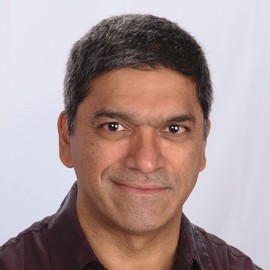
Valerio De BiagiView profile
Associate Professor
Valerio De Biagi is an Associate Professor in the Department of Structural, Geotechnical and Building Engineering (DISEG) at the Polytechnic University of Turin, Italy. He is a member of the Interdepartmental Center SISCON (Safety of Infrastructures and Constructions) and serves as Vice Coordinator of the PhD program in Civil and Environmental Engineering. He also acts as the Partnership Agreement Coordinator with STRADA DEI PARCHI, reflecting his strong engagement with industry and infrastructure safety. Research Interests: Structural robustness and progressive collapse Natural hazards (rockfalls, avalanches, debris flows) Structural health monitoring and damage modeling Reliability and risk assessment of civil infrastructure Mechanics of granular materials (snow) His recent research output shows a strong trend toward probabilistic risk assessment, experimental and numerical modeling of impact events, and the development of resilient structural systems. He frequently applies advanced computational methods, including finite element analysis and generative AI, to simulate extreme loading scenarios and infrastructure response. Scientific Roles: Effective Member, SISCO - Italian Society of Building Science (2019–present) Guest Editor, Applied Sciences (2020–present) Evaluator for Swiss National Science Foundation (MINT 2023, COST 2022) Advising and Grants: He actively supervises multiple PhD students across several cycles and leads numerous funded research projects, including competitive national grants (PRIN), PNRR initiatives, and commercial research contracts with public infrastructure agencies. His projects focus on structural safety assessment, development of monitoring protocols, and risk mitigation strategies for bridges, tunnels, and rockfall-prone areas. Labs and Teams: He leads research teams focused on structural complexity, natural hazard interaction, and granular material mechanics. His work involves experimental campaigns, field surveys, and back-analyses of real-world structural failures.