Victoria Time is Professor of Sociology & Criminal Justice at Old Dominion University, specializing in risk analysis, homeland security, and emergency management. Her research develops computational frameworks for risk communication and assesses threats ranging from natural disasters to cybersecurity. Recent publications focus on AI-enhanced risk messaging (2025), climate impacts on supply chains (2022), and validation methodologies for hierarchical models (2019). Her work integrates software engineering with mixed-methods research to address complex security challenges.
Roberto Andreotti serves as a Research Fellow in the Department of Civil, Environmental and Mechanical Engineering at the University of Trento, Italy. His work focuses on advancing seismic resilience through innovative structural systems and experimental validation methodologies. His research spans: Earthquake Engineering Structural Dynamics of Steel/Composite Systems Replaceable Dissipative Components Hybrid Simulation Techniques Seismic Resilience Quantification Specializing in experimental validation of novel structural concepts, he develops repairable systems that maintain functionality post-earthquake through strategically designed replaceable elements. Analysis of his 2022-2025 publications reveals consistent focus on experimental validation of replaceable connection systems for steel/composite structures. His work integrates full-scale hybrid simulations with probabilistic modeling to quantify seismic demand and resilience, emphasizing practical repairability metrics. Key contributions include impact mass damper optimization and high-strength steel applications for coupling beams. Collaborating extensively with Nicola Tondini, Oreste S. Bursi, and Alessio Bonelli, his research demonstrates strong industry-academia integration through real-scale testing protocols. Current projects indicate progression toward AI-enhanced seismic demand modeling and multi-hazard resilience frameworks.
Egidio Falotico is a Tenure Track Assistant Professor (RTD-B) at the BioRobotics Institute, Scuola Superiore Sant’Anna, Pisa, Italy. He leads the BRAin Inspired Robotics (BRAIR) Lab and holds roles such as Principal Investigator (PI) for the PROBOSCIS project and co-leader of Sub-Project 10 (Neurorobotics) in the Human Brain Project (HBP). His research focuses on brain-inspired motor control, soft robotics, and neurorobotics, integrating computational neuroscience with robotic systems. Education: Dual PhD in Biorobotics (Scuola Superiore Sant’Anna) and Cognitive Science (University Pierre et Marie Curie). Master’s in Computer Science (University of Pisa). Research interests include control mechanisms for soft robots using AI, bio-inspired motor control, and neuroscientific principles applied to robotics. He has contributed to projects like HBP, where he developed the Neurorobotics Platform, and PROBOSCIS, aiming to create elephant-trunk-inspired robots. Teaching includes leading PhD courses on Brain-Inspired Motor Control and Robotics at the University of Pisa. He has supervised EU-funded students and managed interdisciplinary teams in neurorobotics and soft robotics. Key projects involve HBP’s Neurorobotics Platform, soft robot control (e.g., PROBOSCIS), and collaborations in sensorized systems and adaptive learning algorithms. His work bridges neuroscience, AI, and robotics to advance soft robotic systems and bio-inspired models.
Dr. Manuel Valdano is an Assistant Professor at the School of Engineering of Comillas Pontifical University, affiliated with the Institute for Research in Technology (IIT). His expertise lies in computational mechanics and biomechanics, focusing on crashworthiness and vehicle safety engineering using multibody and finite element models. Education: Mechanical Engineering (2018), Universidad Nacional de Rio Cuarto, Argentina Research Interests: Collision biomechanics of vehicle occupants Seatbelt system optimization E-scooter rider safety analysis Finite element modeling of human body responses Certification methods for automotive dummy models Key Projects (2021-2027): Development of High Dynamic Actuator (HDA) for crash simulation (EU-funded) Injury mitigation strategies for Vision Zero initiatives (European Commission) Cervical injury prevention in e-scooter users (Fundación Mapfre) WHO global road safety data analysis (2023) Grants & Collaborations: Línea Directa: Gender biomechanical differences in frontal impacts Autoliv: Simulation and active structures (2023 exchange) CEESAR: New occupant seating positions (2021-2024) Labs/Teams: Affiliated with IIT's Vehicle Safety and Biomechanics research groups, collaborating with Autoliv, WHO, and European automotive safety organizations.
Marlon Dumas is a leading researcher in business process management and process mining at the University of Tartu, Estonia. With over 467 publications spanning from 1997 to 2025, his work has significantly advanced methodologies in business process analysis, simulation, and optimization. His research bridges theoretical foundations with practical applications, developing tools and frameworks that enable organizations to analyze and optimize operational processes. Dumas's primary research interests include business process management, process mining, business process simulation, prescriptive process monitoring, and data-aware business processes. He has pioneered methods for modeling resource availability, activity delays, and waiting times in business processes. His work on prescriptive process monitoring addresses critical challenges such as resource constraints, uncertainty in predictions, and causal effect estimation for interventions. Recent publications reveal a strong trend toward integrating artificial intelligence with business process management, particularly exploring the application of large language models to process optimization, monitoring, and redesign tasks. His research demonstrates consistent innovation, with publications appearing in top venues including Information Systems, Data & Knowledge Engineering, and the International Conference on Business Process Management. Dumas has developed several influential tools including SIMOD for automated discovery of business process simulation models, Optimos for simulation-driven process optimization, and Kairos for prescriptive monitoring. His collaborative network is extensive, featuring frequent co-authorship with prominent researchers including Marcello La Rosa, Luciano García-Bañuelos, Fabrizio Maria Maggi, and Wil M. P. van der Aalst. His work on privacy-preserving process mining, particularly regarding differentially private release of event logs, addresses critical challenges in applying process mining techniques while maintaining data privacy and compliance with regulations like GDPR. Dumas's research continues to push boundaries, with recent work exploring the integration of large language models with business process management systems, suggesting an ongoing commitment to advancing the field through innovative applications of emerging technologies.
Miloš Stojaković is a Full Professor at the Department of Mathematics and Informatics, Faculty of Sciences, University of Novi Sad, Serbia. He has held this position since 2016, following roles as Associate Professor (2011–2016) and Assistant Professor (2006–2011). His research focuses on positional games, discrete and computational geometry, discrete random structures, combinatorial algorithms, and graph theory. He leads the Foundations of Computer Science group since 2018. Stojaković earned his Ph.D. in Computer Science from ETH Zurich (2005), advised by Emo Welzl and Tibor Szabó, and holds M.Sc. and B.Sc. degrees from the University of Novi Sad. He has been recognized with the Dr Z. Đinđić Award (2008) for best young scientist in Vojvodina and the Best Student of University of Novi Sad Award (1998/99). He has advised three Ph.D. students: Mirjana Mikalački, Marko Savić, and Jelena Stratijev. His work spans over 60 publications, including seminal contributions to positional games and computational geometry. He serves on editorial boards of Discrete Mathematics & Theoretical Computer Science and the Novi Sad Journal of Mathematics . Stojaković teaches courses such as Combinatorial Algorithms, Graph Theory, and Theoretical Computer Science at the University of Novi Sad. He has also taught specialized courses on positional games at institutions like the University of Buenos Aires and Eötvös Loránd University Budapest. His research interests emphasize algorithmic and combinatorial aspects of games, geometry, and graph theory.
Sepehr Amir-Mohammadian is an Associate Professor in the Department of Computer Science at the University of the Pacific, part of the School of Engineering and Computer Science. His research focuses on cybersecurity, programming languages, and formal software security assurance, particularly applying linguistic approaches to ensure properties in security-critical applications. He earned his PhD in Computer Science from the University of Vermont (2017), focusing on in-depth security policy enforcement, following an MS in Information Security Engineering (Amirkabir University of Technology, 2011) and a BS in Information Technology Engineering (Amirkabir University of Technology, 2009). Teaching interests include computer networking, reliable software design, programming languages, and theoretical computer science. He has held leadership roles such as Engineering & Computer Science Council Chair (2020-2021) and currently represents his school in the Technology in Education Committee. His research bridges theory and practice, with contributions to audit logging correctness, quantitative information flow analysis, and cybersecurity in cyber-physical systems. Recent work emphasizes concurrent audit logging in distributed systems, timing attack analysis in cyber-physical systems, and leveraging digital twins for security quantification. Notable collaborations include the OpenMRS medical records system and PRISM-Leak tool development for probabilistic program analysis. His publications span conferences like ACM CPSS, IEEE COMPSAC, and IEEE ICNC, addressing challenges in microservices, concurrency, and formal methods. While no specific awards are noted, his contributions to security frameworks and practical implementations reflect significant scholarly impact. Research groups and projects include work on hybrid-dynamic systems, concurrent logging, and network protocol testing with large language models.
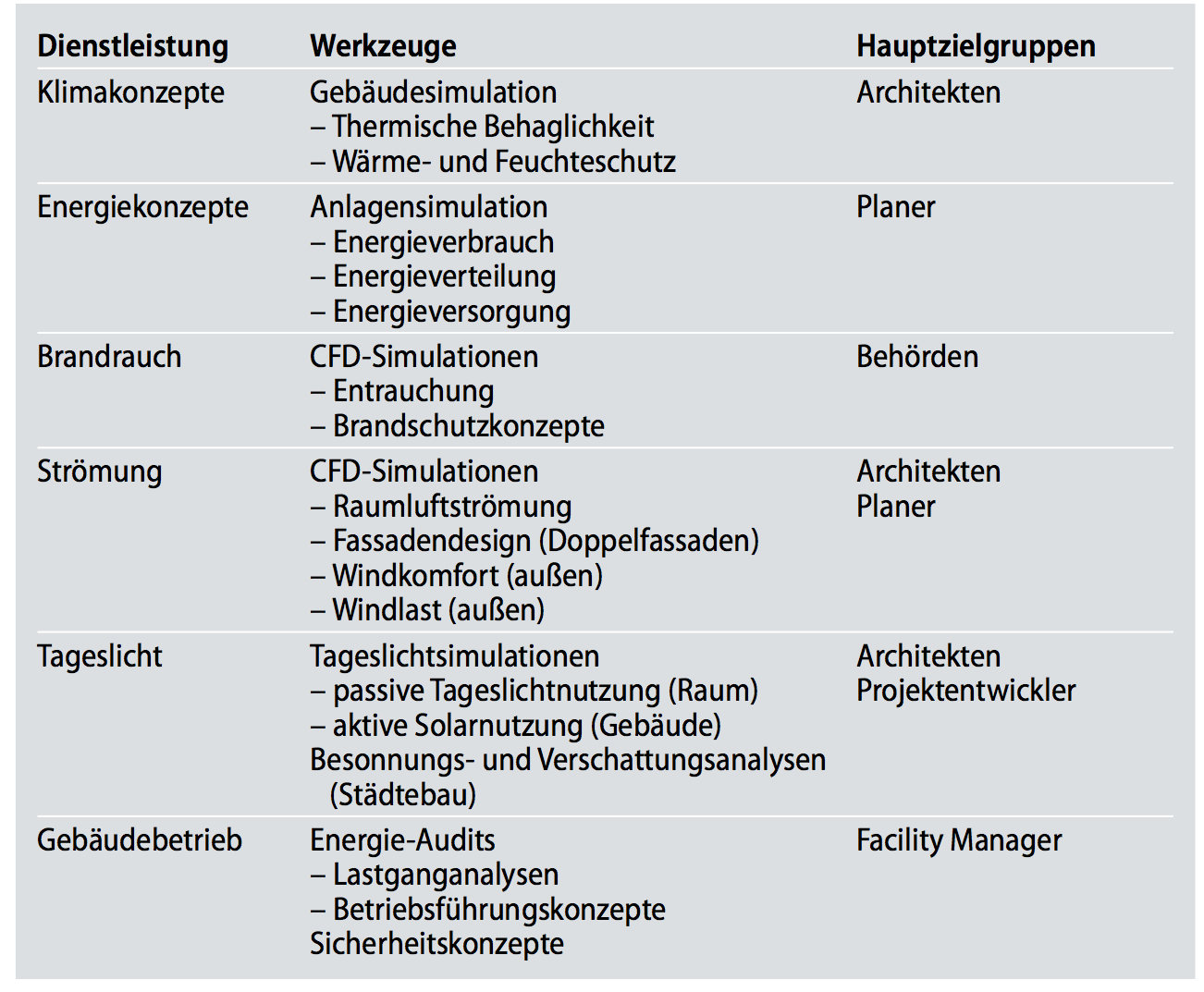
Axel Seerig is Professor of Building Climate and Building Technology at the Department of Technology and Architecture of Lucerne University of Applied Sciences and Arts (HSLU). He works at the Institute of Building Technology and Energy (IGE) and the Center for Integrated Building Technology, where he leads research and teaching in sustainable building concepts. With over 25 years of experience in building simulation and sustainable energy concepts for buildings, areas, and regions, he has established himself as a leading expert in climate-responsive building design. Seerig completed his studies in Process Engineering and earned his PhD in Thermodynamics at the Technical University of Berlin. His academic journey includes leadership roles as program director for Building Technology at the Austrian University of Applied Sciences Burgenland and senior researcher positions at AIT (Austrian Institute of Technology) and AEE-intec. His research focuses on the development of sustainable energy concepts using computer simulations for building climate control. He applies scientific principles of thermodynamics, heat transfer, and fluid mechanics through dynamic simulations in the disciplines of building climatic engineering and building simulation. His work emphasizes maximizing natural resources and user exposure to the outdoors through natural air conditioning, ventilation, and lighting, with human well-being as the central focus of planning. Current research includes energy efficiency in engineering systems for Central Asia, climate change adaptation in building design, and advanced data analysis for building performance assessment. His publication record shows a consistent focus on building energy efficiency, climate-responsive design, and simulation methods. Recent work emphasizes the integration of data analysis techniques like Monte-Carlo methods and artificial neural networks with traditional building simulation approaches. His research addresses critical challenges including climate change impacts on building performance, uncertainty in occupancy patterns, and the development of robust building concepts that maintain performance throughout their lifecycle. Seerig serves as an advisor in the Master of Science program MSE in Building Technologies and for doctoral studies at Middlesex University in London. He has received research funding through projects like SCCER FEEB&D (Swiss Competence Center for Energy Research) and has consulted internationally for the German Society for International Cooperation (GIZ) in Central Asia and Africa. He is an active member of the building science community, serving on the board of the International Building Performance Simulation Association (IBPSA), as a reviewer for the Austrian Research Promotion Agency (FFG), and as a member of professional organizations SIA and VDI. His work connects academic research with practical building projects, including notable collaborations with firms like Gruner AG on buildings such as the Roche OPAL office building, Siemens Headquarters Austria, and the Vienna Central Station.
Dr. Berat Feyza SOYSAL ALBOSTAN is a Researcher in the Department of Civil Engineering at Çankaya University (full-time since 2021). Previously, they served as Research Assistant at Middle East Technical University (2011-2020). Their academic roles include Department Deputy Head (2024–present) and Faculty Management Committee member. Education includes a PhD in Civil Engineering from METU (2014–2021), MSc (2011–2014), and BSc (2006–2011), all from METU. Research focuses on seismic behavior of concrete structures, particularly gravity dams, using advanced numerical methods like discrete element modeling and finite element analysis. Key interests include damage accumulation mechanisms, seismic intensity relationships, and performance-based design principles. They have conducted over 20 research projects supported by TÜBİTAK and TÜBA, with notable contributions to seismic hazard evaluation using spectrum intensity metrics. Teaching includes courses on earthquake engineering fundamentals, numerical methods for civil engineers, and structural dynamics. Advised four master's students focusing on earthquake-resistant design and dam structural integrity. Awards include the 2013-2014 Graduate Student Performance Award from METU. Professional activities include peer review for journals like Scientific Reports and Structures and Buildings , and participation in international conferences such as the World Conference on Earthquake Engineering. Their work bridges computational modeling with practical engineering solutions for seismic resilience in critical infrastructure.
Dmitry Berenson is an Associate Professor in the Robotics Department and Electrical Engineering and Computer Science Department at the University of Michigan. He holds a B.S. from Cornell University (2005) and a Ph.D. from Carnegie Mellon University (2011). His research focuses on algorithms for robotic manipulation, motion planning, and control, emphasizing integration with real-world systems and open-source distribution. He has received the IEEE RAS Early Career Award and NSF CAREER Award. His academic journey includes postdoctoral work at UC Berkeley (2012) and faculty positions at Worcester Polytechnic Institute (2012-2016). He leads the ARM Lab, exploring topics such as deformable object manipulation, tactile control, and learning-based planning. Teaching responsibilities include courses like ROB 502 (Programming for Robotics), EECS 465 (Algorithmic Robotics), and ROB 520 (Motion Planning). Education: B.S., Electrical and Computer Engineering, Cornell University (2005) Ph.D., Robotics Institute, Carnegie Mellon University (2011) Postdoctoral Research, UC Berkeley (2012) Research Interests: Learning and motion planning for manipulation Control theory and optimization Deformable object interaction Robot perception and tactile systems Key Contributions: Development of algorithms for manipulation under uncertainty Advances in motion planning with contact feedback Integration of learning with classical robotics methods Recent publications emphasize probabilistic modeling, tactile-driven control, and generalization in learned dynamics. His work addresses challenges in cluttered environments, deformable objects, and safe human-robot collaboration.
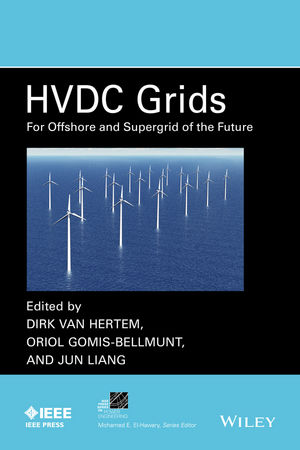
Professor Dirk Van Hertem is a faculty member at KU Leuven, Belgium, where he leads the Energy Transmission Competence Hub (ETCH) within the ELECTA division. He earned his M.Eng. (2001) from KHK Geel, M.Sc. (2003) and PhD (2009) from KU Leuven, and held a postdoctoral position at KTH Royal Institute of Technology (2010). His research focuses on power system planning, operation, and control, particularly for future transmission systems involving HVDC grids, offshore energy infrastructure, and supergrid concepts. Key research areas include: HVDC grid protection Underground power systems Cost-effective resilient energy supply Renewable energy integration Hybrid AC/DC system optimization He co-edited the seminal book HVDC GRIDS: For Offshore and Supergrid of the Future with researchers from UPC Barcelona and Cardiff University. His team includes 12 postdoctoral researchers and 24 PhD students working on topics ranging from grid restoration algorithms to cable fault localization and digital twin applications. Scientific distinctions: Fellow of the IEEE (PES, IAS) Active member of Cigré Principal investigator in multiple EU-funded projects Teaching responsibilities include advanced power system courses co-taught with senior professors. Regular PhD and postdoc vacancies are available through KU Leuven's job portal and the ETCH website.
Ceyhun Yildiz is a Doctor Lecturer at the Circuits and Systems Department within the Faculty of Engineering and Natural Sciences at Bandırma Onyedi Eylül Üniversitesi. Previously, he held academic positions at Kahramanmaraş İstiklal University and Kahramanmaraş Sütçü Imam University, serving as Department Head at Kahramanmaraş İstiklal University's Elbistan Vocational School. His academic career spans over a decade with roles including research assistant (2005-2008) and lecturer positions in Electrical Engineering. His research focuses on renewable energy systems, power electronics, and artificial intelligence applications in energy sectors. Key interests include wind energy optimization, machine learning-driven forecasting (e.g., wind power, solar output, electricity prices), and hybrid energy system integration. He has led projects on optimal turbine placement, energy storage solutions, and grid stability analysis. Yildiz has authored/co-authored over 40 publications, with recent works emphasizing deep learning models for electricity load forecasting and wind farm layout optimization. He teaches graduate courses on machine learning applications in engineering and has supervised master's theses on solar power estimation and hybrid energy systems. His work integrates theoretical and applied research, addressing challenges in renewable energy scalability and grid compatibility.
Özkan Kale is an Associate Professor at the Department of Civil Engineering, TED University. He holds academic affiliations with the Graduate Programs in Civil Engineering and has served as a Coordinator for academic activities. His professional experience includes roles as a research associate at Bogazici University Kandilli Observatory and Earthquake Research Institute (2015) and Rice University (2016). He teaches courses such as 'Structural Analysis', 'Earthquake Resistant Design', and 'Probability and Statistics for Engineers', reflecting his expertise in Civil Engineering education. Dr. Kale's research focuses on earthquake engineering and engineering seismology, particularly ground motion characterization, probabilistic seismic hazard analysis, and seismic design spectra. He has contributed to national and international projects, including the development of ground motion predictive models and strong-motion databases for Turkey and Europe. His work emphasizes uncertainty quantification in seismic evaluations and the application of advanced statistical methods to improve seismic risk assessment. Recent publications highlight his analysis of ground motions from the 2023 Türkiye earthquakes, evaluation of site effects in Kahramanmaraş, and development of regional ground-motion models. His research trends emphasize data-driven methodologies, regional adaptation of models, and practical applications for infrastructure resilience. Dr. Kale advises on academic projects and has been involved in several research grants focused on seismic hazard and risk mitigation. He actively contributes to the TED University academic community through teaching and coordinating graduate programs.
Dr. Marina Riabiz is a Lecturer in Statistics at King's College London's Department of Mathematics, within the Faculty of Natural, Mathematical & Engineering Sciences. She holds a PhD from the University of Cambridge and a Master’s in Mathematical Engineering from Politecnico di Milano. Her research focuses on computational statistics, probabilistic machine learning, Bayesian inference, and medical engineering applications. She co-leads the DT4Health Centre for Doctoral Training, which develops digital twins for healthcare innovation. Key projects include uncertainty quantification in cardiac models and virtual patient cohort simulations. Her work spans MCMC optimization, Gaussian approximation, and state space models with stable processes. She has contributed to high-impact journals and conferences, including Annual Review of Statistics and IEEE Transactions. Education: PhD in Signal Processing, University of Cambridge (UK) MSc in Mathematical Engineering, Politecnico di Milano (Italy) BSc in Mathematical Engineering, Politecnico di Milano (Italy) Research Interests: Bayesian computational methods Medical data science Uncertainty quantification Machine learning integration with statistical inference Publications Overview: Riabiz’s recent work emphasizes MCMC postprocessing, optimal thinning algorithms, and Gaussian approximation for stable noise systems. Her cardiac modelling research bridges computational statistics with biomedical applications, including electrophysiology model calibration and virtual patient cohorts. These contributions advance both theoretical statistics and translational healthcare technologies. Awards: No specific awards listed. Grants and Collaborations: Active in multidisciplinary teams at King’s College London and the Alan Turing Institute. Leads DT4Health’s recruitment and mentoring initiatives. Labs/Teams: Cardiac Electro-Mechanics Research Group (BMEIS), Centre for Doctoral Training in DT4Health.
Gustavo Corte is a Research Associate at Heriot-Watt University's School of Energy, Geoscience, Infrastructure and Society, affiliated with the Institute for GeoEnergy Engineering. His research focuses on 4D seismic inversion, reservoir engineering, and carbon capture applications. He has contributed to projects involving Bayesian inversion techniques, machine learning applications in seismic data analysis, and CO2 dissolution modeling in North Sea reservoirs. Research interests include dynamic reservoir monitoring through seismic data, probabilistic estimation of subsurface parameters, and integration of geophysical data with reservoir simulation tools. His work emphasizes practical applications in hydrocarbon fields and carbon storage validation. Key collaborations include studies on the Catcher Fields and West of Shetlands regions. Corte's publications span peer-reviewed journals like Geophysical Prospecting and conference proceedings, with a focus on advancing seismic data interpretation methods. His work has been cited 36 times and accessed widely in academic platforms.