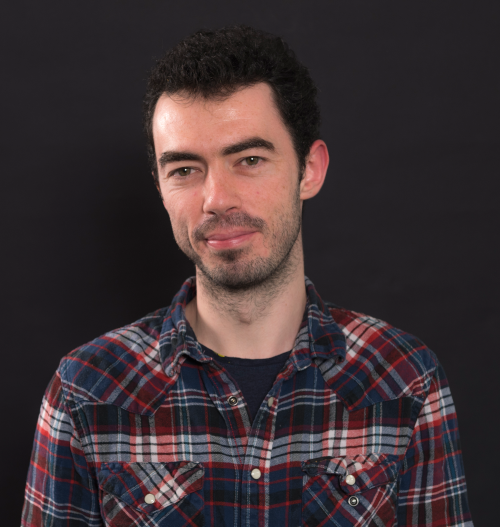
Siddharth Srivastava is an Associate Professor at the School of Computing and Augmented Intelligence , Arizona State University , where he directs the Autonomous Agents and Intelligent Robotics (AAIR) Lab. His research focuses on principled AI systems for generalizable planning , sequential decision-making under uncertainty , and user-driven AI assessment . He previously served as Staff Scientist at United Technologies Research Center and postdoctoral researcher at UC Berkeley . Education Ph.D. in Computer Science, University of Massachusetts-Amherst M.S. in Mathematics, Indian Institute of Technology (IIT) Kanpur His work spans AI planning , robotics , and neuro-symbolic methods , emphasizing safe, reliable AI systems that can learn abstractions , transfer knowledge , and self-assess capabilities . Recent publications focus on user-aligned explanations , integrated task-motion planning , and stochastic reinforcement learning . Scientific recognition includes: NSF CAREER award Top 5% Faculty Award (Fulton Schools of Engineering) Best Paper at ICAPS Outstanding Dissertation (UMass Amherst) Best Final Year Thesis (IIT Kanpur) Chambliss Medal (AAS) He has supervised multiple Ph.D. students including Pulkit Verma , Naman Shah , and Rushang Karia , and developed the JEDAI system for teachable robot planning. His research has been featured in BBC , Motherboard , and IEEE Spectrum .
Andrei Popescu is a Senior Lecturer in the Department of Computer Science at the University of Sheffield, specializing in formal verification and proof assistants. Previously, he held faculty positions at Middlesex University and TU Munich. University of Sheffield (2020–present) Middlesex University (2014–2020) TU Munich (2010–2020) His research focuses on proof assistants (Isabelle/HOL), inductive/coinductive reasoning, syntax with bindings, and information flow security. Key projects include CoCon (verified conference system) and CoSMeDis (confidentiality-verified social media). Recent publications address Gödel's incompleteness theorems, modular (co)datatypes, and security verification. Awards include POPL Distinguished Paper Awards (2023–2025) and the RS 3 Best Paper Award (2012–2013). He teaches courses on software/hardware verification and previously taught decision support systems, web development, and verification techniques. Andrei is actively involved in conference organization and program committees, including POPL, ITP, and CSF.
Marion Leibold is a Private Lecturer at the Faculty of Electrical Engineering , Technical University of Munich (TUM) . She holds a Habilitation (2020) and a Dr.-Ing. in Control Engineering (2007) from TUM, preceded by a Diploma in Techno-Mathematics (2002) from TU Munich. Research interests include Nonlinear and Robust Control , Model Predictive Control (MPC) , Safety in Regulation , and applications to Bipedal Robots and Autonomous Driving . Her work focuses on stochastic MPC , trajectory planning , and uncertainty handling in dynamic environments. Recent publications address greenhouse climate control , autonomous driving safety , data-driven MPC , and dual-arm robotic manipulation . She collaborates frequently with researchers like Dirk Wollherr and Martin Buss , with affiliations to the Chair of Control Engineering at TUM.
Dirk Wollherr is a Senior Researcher and Lecturer (Privatdozent) at the Institute of Automatic Control Engineering, Faculty of Electrical Engineering and Information Technology, Technical University of Munich (TUM). He received his Dipl.-Ing. (2000), Dr.-Ing. (2005), and Habilitation (2013) from TUM. His career includes research at TU Berlin and a JSPS Fellowship at the University of Tokyo. He led the Cluster of Excellence 'Cognition for Technical Systems' (2006-2008) and is a TUM Carl-von-Linde Junior Fellow (2010-2013). Research Interests: Autonomous mobile robots, human-robot interaction, SLAM, real-time trajectory planning, stochastic model predictive control, and robotic manipulation under uncertainty. His work bridges control theory and practical applications in urban robotics, agriculture automation, and autonomous vehicles. Publication Trends: Recent articles (2021-2025) focus on robust control under uncertainty, human-robot collaboration, agricultural automation, and probabilistic motion planning. Key themes include constraint violation minimization, data-driven control, and ethical human-robot interaction. Awards & Recognition: Japanese Society for the Promotion of Science (JSPS) Research Fellowship (2004) TUM Carl-von-Linde Junior Fellowship (2010-2013) Projects & Leadership: Principal investigator in EU projects (Robot@CWE, IURO), General Chair of Robotik 2008, and Co-Chair of ARSO 2013. Leads research on the Autonomous City Explorer and human-robot interaction frameworks.
Florian Pfaff is a Junior Professor (Assistant Professor) at the Institute of Automation and Software Systems, University of Stuttgart, leading the professorship for "Cognitive Sensor Technology for Future Mobility". He earned his doctorate in computer science from Karlsruhe Institute of Technology (KIT) with summa cum laude distinction. His research focuses on: Sensor fusion and multi-target tracking algorithms Probabilistic modeling for robotic systems Industrial automation and optical material sorting Estimation theory for high-dimensional spaces His publication trends show strong emphasis on sensor-based sorting systems, stochastic filtering techniques, and applications of machine learning in industrial automation. Recent work demonstrates increasing focus on 3D pose estimation and real-time control systems. Awards and honors include: ISIF Young Investigator Award SICK Science Award for best doctoral thesis Inclusion in "Excellent Computer Science Dissertation" compendium Multiple best paper awards He has led research projects at KIT on optical bulk material sorting, served as visiting scholar at University College London, and visiting professor at University of Oxford. He teaches courses on software systems and sensor networks. Leads the Cognitive Sensor Technology research group at University of Stuttgart, focusing on sensor fusion applications for mobility systems.
Sandor Szedmak serves as a Research Fellow in the Department of Computer Science at Aalto University, Finland, and is affiliated with the Helsinki Institute for Information Technology (HIIT). He operates within Professor Juho Rousu's research group, focusing on interdisciplinary machine learning applications with strong ties to computational biology and bioinformatics. His institutional presence is active, as evidenced by current contact details and ongoing publication output. Dr. Szedmak's research specializes in developing advanced machine learning frameworks for complex biological and educational challenges. His primary interests include drug combination effect prediction, protein function annotation through multi-view learning, strain design optimization using reinforcement learning, and personalized educational systems for computer science students. He pioneers methods in latent tensor reconstruction, scalable variable selection, and kernel generalization, targeting high-dimensional data problems in pharmacology and computational biology. His publication trajectory from 2020-2025 reveals a concentrated effort in bioinformatics applications, with landmark papers in Nature Communications and Bioinformatics on drug combination prediction. The work consistently leverages tensor factorization and multi-view learning to model biological systems, while recent expansions include educational data mining for programming behavior analysis. This demonstrates both methodological consistency in machine learning innovation and strategic domain diversification. No scientific awards or fellowships are documented in the provided materials. While no student advisees or grant details are explicitly listed, Dr. Szedmak's collaborative publication pattern—particularly within the Rousu research group and HIIT—suggests active participation in team-based research initiatives. His work appears funded through institutional channels given the consistent output in computational biology. He operates within the Helsinki Institute for Information Technology (HIIT), a joint research institute of Aalto University and the University of Helsinki, and is embedded in Professor Juho Rousu's research group. This environment facilitates cross-disciplinary collaboration between computer science and life sciences, with infrastructure supporting high-performance computing for large-scale biological data analysis.
Jatan Shrestha is a Doctoral Researcher at Aalto University, affiliated with the Department of Electrical Engineering and Automation. His research focuses on applying machine learning techniques to solve complex problems in robotics and autonomous systems. Department: Electrical Engineering and Automation Email: jatan.shrestha@aalto.fi Research Interests: Jatan's work spans machine learning, robotics, and optimization. Key areas include autonomous driving algorithms, multi-agent trajectory planning, visibility-aware navigation, and GPU-accelerated computing for real-time robotic applications. Publication Trends: His research output demonstrates expertise in applying machine learning to hardware optimization (2024), advancing autonomous driving algorithms in dense traffic scenarios (2023), and developing GPU-based optimization frameworks for robotic navigation (2021-2022).
Lynn Keith Shay is a Professor in the Department of Ocean Sciences at the Rosenstiel School of Marine, Atmospheric, and Earth Science, University of Miami. Her research focuses on upper-ocean dynamics and their role in tropical cyclone intensification, integrating satellite, aircraft, and in situ measurements. Specializes in ocean-atmosphere interactions during hurricanes Investigates oceanic heat content's role in storm development Develops predictive models for sea surface temperature cooling Contributes to adaptive sampling strategies for marine robotics Her recent publications analyze glider navigation algorithms, Lagrangian eddy transport, and thermodynamic fluxes in tropical cyclones. Current work includes real-time probabilistic ocean forecasting for hurricane response and marine technology development. Research outputs address: Hurricane intensity prediction Loop Current eddy dynamics Turbulent kinetic energy distribution High-frequency radar validation Marine pollution dispersion
Jouko Lampinen serves as the Dean of the School of Science (SCI) at Aalto University, Finland, overseeing academic and research operations across the institution. His professional contact includes the dean-sci@aalto.fi email address and phone number +358505604827. Lampinen maintains an active research profile in computational information technology while fulfilling his administrative leadership role, with expertise grounded in advanced algorithmic and statistical methodologies. His research spans machine learning, Bayesian statistics, neural networks, and their applications in brain imaging (fMRI/MEG) and computer vision. Key interests include probabilistic modeling for emotion recognition, object detection in autonomous systems, and medical diagnostics. His work addresses critical challenges in reproducibility, scalability, and interpretation of complex models, bridging theoretical machine learning with practical neuroscience and robotics applications. This interdisciplinary focus demonstrates consistent innovation from the late 1990s through 2018. Analysis of his recent publications reveals a dominant trend in applying Bayesian methods and neural networks to neuroimaging data, with significant contributions to emotion processing algorithms, brain-computer interfaces, and point cloud analysis for autonomous vehicles. His scholarly output shows increasing emphasis on real-world validation of computational models, particularly in medical diagnostics and human-computer interaction contexts, while maintaining foundational work in statistical learning theory. No scientific awards or honors were documented in the provided information. Details regarding student mentorship, grant funding, or specific research teams/labs are absent from the source material, though his deanship implies strategic oversight of research infrastructure within Aalto University's School of Science.
Thao Nguyen is an Assistant Professor in the Department of Computer Science at Haverford College . She focuses on robotics and artificial intelligence, particularly in areas like visual object search, language-conditioned observation models, and hierarchical planning systems. Her office is located at KINSC L303. Her research bridges human-guided robot learning with advanced state abstractions and multimodal interaction frameworks. Key contributions include integrating gesture-based inputs and natural language queries into robotic object retrieval systems, enabling more intuitive human-robot collaboration. Recent publications highlight her work on language-visual alignment , contextual robotics , and non-Markovian planning . Her projects leverage Bayesian inference, deep learning, and temporal logic to enhance robot perception and task execution.
Pierluigi Graziani is an Associate Professor of Logic and Philosophy of Science at the University of Urbino Carlo Bo , affiliated with the Department of Pure and Applied Sciences (DiSPeA) . His academic career spans over two decades, during which he has held postdoctoral positions at the University of Urbino and the University of Chieti-Pescara, and has been actively involved in teaching, research, and academic service. Education: Master Degree in Philosophy, University of Urbino (Italy), 2001 Ph.D. in Logic and Epistemology, University of Rome “La Sapienza”, 2007 Research Interests: Graziani's research is deeply rooted in the intersections of logic, philosophy of science, and computer science . He has made significant contributions to the foundations of geometry , exploring the logical and philosophical underpinnings of geometric systems. His work in logic and computer science includes formal methods, modal logics, and their applications in software engineering and artificial intelligence. Additionally, he delves into the history and philosophy of logic and mathematics , examining the evolution of logical and mathematical thought from historical and epistemological perspectives. His interests also extend to social robotics , where he investigates the ethical and logical aspects of human-robot interactions. Scientific Contributions and Trends: Graziani's publications reflect a consistent engagement with formal logic and its applications . Recent works include studies on probabilistic modal logics , ignorance and belief reasoning , and geometric problem taxonomies . His research often bridges theoretical developments with practical applications, such as software engineering and formal verification. The trend in his articles indicates a focus on epistemic logics , formal methods in computer science , and historical-philosophical analyses of scientific concepts . Scientific Awards and Honors: While specific awards are not listed, Graziani has received National Scientific Qualifications for Associate Professorship in Italy , attesting to his recognized expertise and contributions to his field. Advising and Research Supervision: Graziani has supervised a substantial number of bachelor's and master's theses , guiding students in topics ranging from intuitionistic logic and Church-Turing thesis to artificial intelligence ethics and virtual reality philosophy . His mentorship reflects his broad expertise and commitment to nurturing the next generation of scholars. Labs, Teams, and Future Works: He serves as the Scientific Coordinator for several departmental research projects, including studies on formal models in social phenomena , epistemological analyses of ignorance , and history of science . His ongoing projects suggest a continued focus on interdisciplinary approaches combining logic, philosophy, and computer science to address contemporary scientific and societal challenges.
Mattias Ohlsson is a Visiting Professor at the School of Information Technology , Halmstad University . His research focuses on machine learning and deep learning for analyzing diverse health data, particularly patient trajectory modeling with multimodal approaches. Primary affiliation: IT - Computer Department Collaboration areas: Healthcare sector and industry His work emphasizes explainable AI in clinical contexts, including survival analysis, cardiac event prediction, and cross-domain applications in satellite poverty mapping. Recent projects explore temporal healthcare data analysis using transformer architectures and self-supervised learning . Key article trends include: 2025: AI integration with medical expertise for emergency diagnostics 2024: Survival model evaluation, temporal data challenges, and graft failure prediction 2023: Multi-robot routing optimization and fatty liver disease etiology modeling 2022: Heart failure mortality algorithms and anomaly detection systems Current affiliations include the CAISR Health research group, with technical expertise spanning CNNs, transformers, and robust imputation methods.
Yushan Li is currently a Postdoc Researcher in the Division of Decision and Control Systems at KTH Royal Institute of Technology, Sweden. He received his Ph.D. in Control Science and Engineering from Shanghai Jiao Tong University (SJTU) in 2024 and a B.E. in Automation from Huazhong University of Science and Technology (HUST) in 2018. His research focuses on cooperation and inference in networked systems, with applications to robotic networks and control security. Education: B.E. in Automation (2018) from HUST Ph.D. in Control Science and Engineering (2024) from SJTU His research interests include networked dynamical systems, multi-robot cooperation, topology inference, and cybersecurity in control systems. He has contributed to adversarial strategies against formation control, secure collaboration algorithms, and topology preservation under attacks. Recent publications highlight his work on network topology inference, secure control mechanisms, and adversarial strategies. His research has been accepted in prestigious journals such as IEEE Transactions on Automatic Control and IEEE Transactions on Robotics , with presentations at international conferences like CDC and IFAC World Congress. Scientific Awards: 2025 SJTU Outstanding Doctoral Dissertation Award 2023 SJTU Academic Star National Scholarships (2023, 2022, 2019) 2023 Best Oral Presentation Award at ZJU Swarm Intelligence Forum Li has also served as a teaching assistant for undergraduate courses on intelligent optimization of network systems and as a reviewer for leading journals including IEEE Transactions on Automatic Control and Automatica . He co-founded the Distributed Control, Optimization, and Security Zhizhen Forum and contributed to organizing major international conferences.
Dr. Paúl Pauca is a Professor in the Department of Computer Science at Wake Forest University, where he integrates teaching and research under the teacher-scholar model. His work focuses on applying computational technologies to critical environmental and societal challenges. Ph.D., Computer Science, Duke University (2001) M.S., Computer Science, Wake Forest University (1996) B.S., Mathematics and Computer Science, Wake Forest University (1994) His research spans machine learning , computational imaging , and remote sensing , with emphasis on environmental conservation. Recent projects involve deep learning for change detection in tropical forests, UAV exploration algorithms, and data fusion techniques for ecological monitoring. Publications highlight his interdisciplinary collaborations with biology and environmental science teams. Dr. Pauca contributes to open-source methodologies for high-performance computing in conservation and advises student researchers in the IRSC Lab , which partners with institutions like Dartmouth College and the Center for Amazonian Scientific Innovation in Peru. His grants include funding from The Boeing Company, Air Force Office of Scientific Research, and National Geospatial-Intelligence Agency.
Raoul de Charette is a Research Director in computer vision at Inria Paris, leading the Astra-Vision group within the ASTRA team. His academic journey includes a PhD from Mines Paris (2012) and Habilitation (HDR) in 2022, with research stints at Carnegie Mellon University (2011), Mines Paris (2013), and the University of Makedonia (2014). His educational background comprises: PhD from Mines Paris (2012) Habilitation (HDR) (2022) De Charette's research centers on robust and interpretable visual scene understanding , spanning 3D scene reconstruction, domain adaptation, material recognition, and physics-grounded vision foundation models. His work integrates physical principles and synthetic data to enhance model robustness in real-world scenarios like autonomous driving and urban environments. Key contributions include uncertainty-aware 3D scene completion (PaSCo), material extraction from single images (Material Palette), and prompt-driven domain adaptation (PODA). Recent publications reveal a strategic shift toward vision-language integration, material-centric scene understanding, and foundation models that minimize labeled data dependency. His group pioneers physics-informed approaches to improve interpretability and resilience against environmental challenges like adverse weather conditions. Key scientific recognition includes: Best Paper Honorable Mention at EGSR 2025 for MatSwap ELLIS Membership PR[AI]RIE-PSAI Fellowship De Charette actively mentors four PhD students—Fatima Balde, Mohammad Fahes, Ivan Lopes, and Tetiana Martyniuk—often in industry collaborations with Valeo.ai and Kyutai. He secures funding through fellowships and industry partnerships, regularly opening PhD positions (including a 2025 opening for Physics-Grounded Vision Foundation Models). As an area chair for CVPR, ECCV, WACV, and IROS, he shapes the field through conference leadership and co-organizing initiatives like the African Computer Vision Summer School. He directs the Astra-Vision group within Inria Paris' ASTRA team, driving interdisciplinary research at the intersection of computer vision, machine learning, and physics-based modeling for real-world deployment in robotics and intelligent transportation systems.