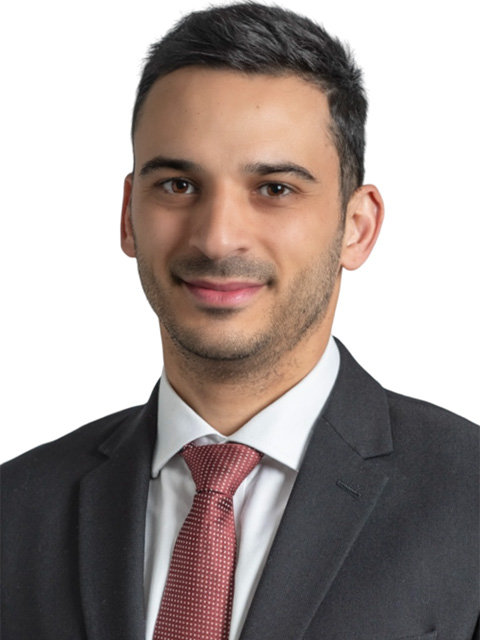
Georgios Hadjidemetriou is a Lecturer in Construction Management specializing in applying Data Science to address climate, socio-economic, and technological challenges in transport infrastructure and construction. His research focuses on optimizing automation/robotics in construction, predictive maintenance systems, and resilient infrastructure design. He holds MEng, MSc, and PhD qualifications. Education: MEng, MSc, PhD (specific fields not explicitly stated) Research interests include integrating Artificial Intelligence with construction processes, digital twins for highway monitoring, and sustainability strategies. His work bridges Transport Infrastructure, Construction Management, and Systems Science to enhance infrastructure resilience. Key projects include the EU-funded SAFEWAY system for extreme event response, the RE-PLACE urban planning initiative, and digital twin-based maintenance frameworks. He has led projects for the Israel Ministry of Innovation, Innovate UK, and SKANSKA UK. Notable Grants: DRF Initiative (UKRI/EU MSCA COFUND) RE-PLACE (Innovate UK KTP) SAFEWAY (EU Horizon-2020) Expertise includes predictive modeling (Bayesian, machine learning), asset information management, and infrastructure criticality assessment. His research outputs span over 30 peer-reviewed articles focusing on pavement condition prediction, AI-based defect detection, and resilient infrastructure systems.
Salim Ahmed is an Assistant Professor in the Department of Chemical Engineering at Memorial University of Newfoundland's Faculty of Engineering and Applied Science since February 2012. He holds a B.Sc. and M.Sc. in Chemical Engineering from Bangladesh University of Engineering and Technology (BUET) and a Ph.D. in Process Control from the University of Alberta. Prior roles include a postdoctoral fellowship at the University of Alberta (2006-2008), an Assistant Professorship at Qatar University (2008-2012), and a Lecturer position at BUET (1997-2000). His research focuses on safety and risk engineering, process systems, and model-based process control. Notable projects include an IgniteR&D grant-funded risk-based alarm system for process industries and early warning systems design. His expertise spans system identification, continuous-time models, model validation, and valve stiction analysis. Teaching responsibilities include undergraduate and graduate courses in Process Engineering and Oil and Gas Engineering. Awards include the 2010 Best Student Research Award (Energy and Environment category) at the Qatar Foundation Annual Research Forum. Research outputs include over 30 peer-reviewed articles, conference papers, and book chapters, emphasizing fault detection, data-driven modeling, and risk assessment in process systems. He has developed tools like StepID for step-response identification and AlarmSoft for alarm management.
Dr. Brian C. Ancell is a Professor in the Department of Geosciences at Texas Tech University, where he leads the Atmospheric Science Group. He specializes in numerical weather prediction, data assimilation, and the predictability of high-impact weather events. Dr. Ancell directs both a deterministic and ensemble real-time weather prediction system at Texas Tech University, providing forecast guidance at convection-allowing scales for operational and research purposes. B.S., Civil Engineering, University of Illinois, Urbana-Champaign, 1998 Ph.D. Atmospheric Science, University of Washington, Seattle, 2006 Dr. Ancell's research focuses on the predictability of high-impact weather events across various scales. His current work emphasizes severe convection, winter precipitation events, and wind power forecasting. He investigates how irrigation, wind farms, and urban heat islands contribute to non-local inadvertent weather modification. Using ensemble and adjoint sensitivity analysis, he develops tools to improve forecast accuracy for severe weather events and collaborates with the National Weather Service to transition these techniques into operational use. His work includes maintaining real-time deterministic and ensemble prediction systems at Texas Tech's High Performance Computing Center. Analysis of Dr. Ancell's recent publications reveals a strong focus on ensemble sensitivity techniques for improving high-impact weather prediction. His research demonstrates how ensemble-based methods can identify critical forecast sensitivities and improve probabilistic forecasting through ensemble subsetting. Much of his work bridges theoretical atmospheric science with practical applications in wind energy forecasting, severe storm prediction, and operational meteorology. His publications show increasing collaboration across disciplines, particularly in renewable energy applications and hydrological modeling. Dr. Ancell has secured significant research funding from multiple federal agencies including the National Science Foundation, National Oceanic and Atmospheric Administration, and Department of Energy, as well as industry partners like Shell Wind Energy. His $721,883 NSF CAREER award supports research on inadvertent weather modification and educational outreach through the Museum of Texas Tech University. He actively mentors graduate students, with multiple PhD and Master's students completing or working on research related to ensemble forecasting, severe weather prediction, and wind energy applications. Dr. Ancell serves as Associate Editor for three major meteorological journals and contributes to professional societies including the American Meteorological Society and American Geophysical Union. Dr. Ancell leads the Texas Tech real-time ensemble and deterministic weather prediction systems, which run on approximately 1,000 computing cores. These systems support operational forecasting applications, commercialization efforts, and research into advanced ensemble techniques. His work on the NSF-funded Big Weather Web project aims to establish computing infrastructure for university big data research in weather prediction. Through the Museum of Texas Tech University exhibit "How Weather Works: Our Place between the Sun and a Storm," he engages the public in understanding weather principles and human impacts on atmospheric processes.
Floriana Petrone is an Assistant Professor in the Department of Civil & Environmental Engineering at the University of Nevada, Reno, part of the College of Engineering. Her research focuses on advanced numerical modeling of structural systems, high-performance computing for civil engineering challenges, structural damage assessment, and probabilistic safety analysis. She is actively seeking motivated graduate students to work on projects involving seismic design optimization and experimental testing of structural health monitoring techniques. Dr. Petrone’s work emphasizes practical applications such as improving building resilience to earthquakes and developing innovative methods for structural safety evaluation. Her research group employs cutting-edge tools like optical sensor systems for measuring building drift during seismic events, contributing to safer infrastructure design. Her publications span topics including progressive collapse analysis of reinforced concrete structures, calibration of capacity models, and composite material behavior. She holds a patent for a self-supporting steel truss system in mixed steel-concrete structures.
Virginia Polytechnic Institute and State UniversityUnited States
Stephen Eubank is an Adjunct Professor in the Department of Population Health Sciences at the Virginia-Maryland College of Veterinary Medicine, Virginia Tech. He holds a PhD in Physics from the University of Texas and postdoctoral experience at Los Alamos National Lab and the La Jolla Institute. His research focuses on computational epidemiology, network science, and socio-technical systems simulation. He has led major projects like the Epidemiological Simulation System (EpiSims) and contributed to the NIH MIDAS network for infectious disease modeling. Professional roles include Deputy Director of the Network Systems Science and Advanced Computing division at the University of Virginia’s Biocomplexity Institute. His work spans infrastructure resilience, pandemic response strategies, and agent-based modeling of complex systems. He has developed tools for evaluating vaccine allocation, analyzing cascading failures in power grids, and assessing economic impacts of public health policies. Research interests include network structure analysis, scaling in complex systems, and diffusive processes on networks. His articles prioritize understanding disease spread dynamics, network reliability, and policy implications of pandemic interventions. Collaborative efforts involve interdisciplinary teams addressing global health challenges such as Ebola and influenza outbreaks, as well as socio-technical system vulnerabilities.
Tian Guo is a Research Scientist with the National Soil Erosion Research Laboratory and Department of Agricultural and Biological Engineering at Purdue University's College of Engineering. She teaches Introduction to Surveying (ASM 216) course and conducts research on watershed erosion prediction and water quality modeling. Dr. Guo received her PhD from the Department of Agricultural and Biological Engineering at Purdue University under the mentorship of Dr. Bernard Engel in 2016. Dr. Guo's research focuses on the evaluation of the impacts of climate and land use changes, and human decisions on crop yields, and sediment and nutrient reductions at various scales in the Mississippi River Basin and the Great Lakes region. Her primary research goals are to improve soil health, climate resiliency, agricultural sustainability, and water quality. She specializes in the Watershed Erosion Prediction Project (WEPP) model and its applications for soil and water conservation. Her work combines hydrological modeling with field data to address complex environmental challenges related to agricultural practices and water resources management. Analysis of Dr. Guo's recent publications reveals a strong focus on improving and applying hydrological models like WEPP and SWAT for watershed management. Her research spans soil erosion prediction, nutrient transport modeling, climate change impacts on water resources, and evaluation of agricultural conservation practices. A significant portion of her work addresses water quality issues in the Great Lakes region, particularly Lake Erie's harmful algal blooms. Her publications demonstrate expertise in model calibration, validation, and uncertainty analysis, with increasing emphasis on probabilistic approaches and ensemble modeling. Dr. Guo has established collaborative research networks with various stakeholders including farmers, local agencies, and the general public. Her professional experience includes engagements with USDA-ARS scientists, particularly through the National Soil Erosion Research Laboratory. Dr. Guo's laboratory work is associated with the National Soil Erosion Research Laboratory at Purdue University, which is part of the USDA Agricultural Research Service. This facility provides the infrastructure for her research on soil erosion processes, hydrological modeling, and water quality assessment.
Dr. Jessica Escareno is an Assistant Professor in the Department of Population Health Leadership and Analytics at the University of Texas at Tyler. She holds a PhD in Health Systems Policy and Management from the University of Memphis, where her dissertation investigated organizational factors affecting mammography follow-up rates using systems approaches. Her research focuses on healthcare access disparities, community engagement, and public health outreach, particularly in underserved communities. Current projects include COVID-19 outreach in Northeast Texas communities, public health social media strategies, and healthcare dynamics involving adults with autistic siblings. With a professional background observing healthcare challenges in underserved border communities, Escareno's work bridges healthcare resources with community needs. She applies systems thinking to analyze market and organizational factors affecting healthcare quality and accessibility.
Joseph Palese is a Research Assistant Professor at the University of Delaware, specializing in Railroad Engineering. His research focuses on structural mechanics, inspection methodologies, maintenance planning, and data science applications for railway infrastructure. With over 30 years of industry experience, he has contributed to software development for maintenance planning, holds patents, and developed inspection systems. His current work explores relationships between asset failure modes using inspection and asset data. Education: Ph.D., University of Delaware (2019) M.S., Rowan University (1998) M.S., University of Delaware (1990) B.S., University of Delaware (1988) Research Interests: Dr. Palese’s expertise spans railway infrastructure resilience, predictive maintenance, risk assessment frameworks, and data-driven solutions for track geometry degradation and asset management. His work integrates advanced analytics with traditional railway engineering to improve safety and efficiency. Awards & Grants: While no specific awards are listed, his extensive industry collaboration and patent portfolio highlight his impactful contributions. His research has been applied in real-world systems like the Geocell Track Substructure Support System and intelligent rail inspection vehicles. Labs & Teams: His work involves interdisciplinary teams focusing on railway systems, leveraging technologies like GPR, AI, and statistical modeling to address challenges in track maintenance and safety.
Shangjia Dong is an Assistant Professor in the Department of Civil, Construction and Environmental Engineering at the University of Delaware, and a core faculty member of the Disaster Research Center (DRC). He also holds an Early Career Research Fellowship from the Gulf Research Program at the National Academy of Sciences. His interdisciplinary research focuses on smart and resilient urban systems, combining network science, civil engineering, and social science to address community resilience and equity. Dong earned his B.S. from the University of Electronic Sciences and Technology, and his M.S. and Ph.D. in Civil Engineering (with a Computer Sciences minor) from Oregon State University. After his doctoral studies, he served as a Postdoctoral Research Associate at Texas A&M University. His research emphasizes data integration, machine intelligence, and risk-informed decision-making to enhance infrastructure resilience against disasters. Key areas include flood impact analysis, transportation network vulnerability, opioid treatment accessibility during disasters, and equitable resilience planning. He has developed frameworks for predictive flood risk monitoring, critical facility accessibility assessment, and post-disaster resource allocation. Notable contributions include the 'metanetwork framework' for analyzing interdependent infrastructure systems and the 'household service gap model' for assessing disaster vulnerability. His work bridges technical and social dimensions, advocating for systems that prioritize both functionality and equity in disaster-prone regions. Education: Bachelor of Science, University of Electronic Sciences and Technology Master of Science, Oregon State University Doctor of Philosophy (Civil Engineering), Oregon State University Awards: Bentley Systems Early Career Professorship Early Career Research Fellowship (NASEM Gulf Research Program) Key Projects: Flood resilience in Delaware and Texas transportation networks Social equity in post-disaster communication restoration Agent-based modeling for evacuation behavior analysis His lab integrates computational methods with empirical data to create actionable strategies for disaster mitigation, emphasizing collaboration between engineers, policymakers, and communities.
Julian Padget is a Reader (equivalent to Associate Professor) in the Department of Computer Science at the University of Bath, with extensive affiliations across multiple research centers including the EPSRC Centre for Doctoral Training in Statistical Applied Mathematics (SAMBa), Water Innovation and Research Centre (WIRC), UKRI CDT in Accountable, Responsible and Transparent AI, Centre for Therapeutic Innovation, and Institute for Digital Security and Behaviour (IDSB). His work bridges computer science with energy systems, healthcare, and digital governance through interdisciplinary collaborations. Padget's research centers on multiagent systems , agent architecture , norm representation and reasoning , and fusing symbolic and statistical AI , with significant contributions to distributed ledgers, policy modeling, and narrative models. His fingerprint analysis reveals dominant connections to multi-agent systems (100%), web services (72%), and normative frameworks (48%), reflecting his focus on creating ethically aligned autonomous systems for complex socio-technical environments. Recent work demonstrates increasing integration of AI with energy infrastructure and biomedical applications. Analysis of his 15 most recent publications shows a clear trajectory toward operationalizing AI ethics, particularly in bias management and trust frameworks, while maintaining strong foundations in multiagent coordination. His energy sector research increasingly focuses on digital spine architectures for data sharing, and biomedical collaborations explore molecular imaging techniques for cancer research. The consistent thread across domains is the development of governance frameworks for autonomous systems. Padget actively supervises doctoral students with 23 supervised works documented and serves as Principal Investigator on major grants including EPSRC-funded energy network projects (2025-2026) and Innovate UK collaborations with the BBFC. His policy impact is evidenced by parliamentary testimony in March 2025 that generated coverage across 16 news outlets. Current projects emphasize AI for agile energy networks, value-aware agent architectures, and statutory compliance frameworks for online media. His laboratory ecosystem spans the IAAPS Innovation Bridge and Institute for Digital Security and Behaviour, focusing on translating theoretical agent frameworks into practical applications for energy systems, digital governance, and health interventions. The Water Innovation and Research Centre provides critical infrastructure for his energy-related simulations, while therapeutic innovation collaborations enable biomedical applications of his norm-representation frameworks.
Professor Matthew Street is a Senior Lecturer in the Department of Spanish at the University of Virginia's College of Arts and Sciences. He specializes in innovative educational methodologies, focusing on ePortfolios, project-based learning, and active learning in foreign language courses. His teaching practices incorporate flipped classrooms and emphasize creating collaborative, interactive learning environments. While his academic career centers on Spanish education, his research portfolio reveals a parallel focus on financial modeling and credit risk analysis dating back to the 1990s. Dr. Street's publications demonstrate expertise in credit scoring systems, economic modeling, and financial risk management. His work spans topics like neural networks in credit assessment, regulatory capital requirements, and energy-efficient mortgage risk. Notably, he combines machine learning approaches with traditional financial modeling techniques in consumer lending contexts. The most recent 15 publications reflect a consistent focus on credit risk frameworks, portfolio optimization, and decision-making under uncertainty. His academic journey includes significant contributions to credit union research, dental practice economics, and hotel market feasibility studies. While no specific awards or students are mentioned in the provided text, his work on educational technologies like ePortfolios and his dual expertise in language education and financial modeling highlight unique interdisciplinary achievements.
Dr. Anne K.I. Remke is a Full Professor in the Department of Mathematics of Operations Research at the University of Twente's College of Engineering. Her research focuses on stochastic modeling, hybrid systems, and formal verification techniques, with applications in energy systems, cybersecurity, and healthcare. She contributes to UN Sustainable Development Goals related to affordable and clean energy (SDG7) and industry innovation (SDG9). Her recent work includes developing stochastic hybrid system specifications, intrusion detection systems for smart grids, and parameter estimation methods for battery models. She has collaborated internationally on projects involving energy distribution networks and cybersecurity infrastructure. Remke has supervised 3 PhD students and maintains an active publication record with over 76 research outputs since 2004. Her technical expertise spans model checking algorithms, probabilistic verification, and algorithm design for infinite-state systems. She frequently publishes in peer-reviewed journals like Energy Informatics and conferences such as E-Energy and IEEE CSR, focusing on real-world applications like smart grid communication and energy management optimization.
Prof. Gravio Giulio is a Full Professor at the Sapienza University of Rome within the Department of Industrial and Management Engineering . His work focuses on systemic safety, cyber-physical systems, and resilience engineering. He specializes in risk assessment methodologies like STAMP/STPA and FRAM, with applications in aviation, industrial automation, and healthcare. Research interests include Functional Resonance Analysis (FRAM) Cyber-socio-technical systems Emergency management systems Human reliability analysis Safety-critical systems design His recent work explores STAMP-based simulations for eVTOL safety, knowledge graphs in industrial near-miss reporting, and cyber resilience in critical infrastructure. He has pioneered tools like myFRAM for functional resonance analysis. Key projects include: - Systemic risk management for Advanced Air Mobility - Resilience engineering in anesthesia practices - Safety analysis of medical gas pipelines - STPA-Sec for security-critical systems Prof. Giulio collaborates with ANSPs (Air Navigation Service Providers) and industry partners, focusing on bridging theoretical frameworks with practical safety implementations.
Riccardo Patriarca is an Assistant Professor in Industrial Systems Engineering at Sapienza University of Rome's Department of Mechanical and Aerospace Engineering, part of the Faculty of Civil and Industrial Engineering. He holds adjunct professor and lecturer roles in courses such as Operations Management and Risk Management. His research focuses on resilience engineering, risk assessment, and safety management in complex socio-technical systems, including aviation, industrial plants, and critical infrastructures. He co-founded aiComply, a Sapienza spin-off addressing risk and compliance challenges. His work combines theoretical frameworks (e.g., STAMP, FRAM) with practical applications in cyber-physical systems and emergency response. Education: BSc and MSc in Aerospace/Aeronautical Engineering (Sapienza), PhD in Industrial and Management Engineering (2017). Postdoctoral research at Sapienza (2018–2021) and collaborations with Lund University and Eurocontrol. He has authored over 100 peer-reviewed papers, edited journals including Safety Science and Reliability Engineering , and serves as a guest editor for Sustainability . Research highlights include systemic safety analysis for advanced air mobility (eVTOLs), Bayesian methods for hydrogen safety, and resilience metrics for healthcare systems. Awards include the Royal Aeronautical Society Young Person Award (2017), Forbes 30 Under 30 (2019), and National Academic Qualification as Associate Professor (2018). His work bridges academia and industry, emphasizing human factors and digital transformation.
Sean Elvidge is a Professor of Space Environment at the University of Birmingham, leading the Space Environment and Radio Engineering (SERENE) group within the School of Engineering. His research focuses on advancing space weather forecasting through innovative mathematical methods, addressing risks posed by space weather to technology-dependent societies. He holds a PhD in ionospheric modelling (2014) and an MSci in Mathematics (2011), both from the University of Birmingham. Research interests include space weather prediction, ionospheric dynamics, and radio engineering applications. His work emphasizes probabilistic models for extreme space weather events, such as the May 2024 geomagnetic superstorm analysis. He has contributed to global initiatives like the AIDA real-time ionosphere/plasmasphere model and collaborates with institutions worldwide. Elvidge is a science communicator, engaging with over 1,500 people annually through talks, BBC collaborations, and media articles. He advises UK government bodies (Ministry of Defence, Cabinet Office) on space weather risks and serves on committees including the URSI Commission G (Vice-Chair 2023–2029) and AGU Radio Science journal. Awards: Inaugural Forbes Europe 30 Under 30 (Science & Healthcare, 2024). Advisory Roles: UK Space Environment Impacts Expert Group (SEIEG) member, COSPAR ISWAT teams. His lab, SERENE, develops tools to mitigate space weather impacts, with recent publications on ionospheric retrieval, thermospheric climate change, and superstorm probability analysis.