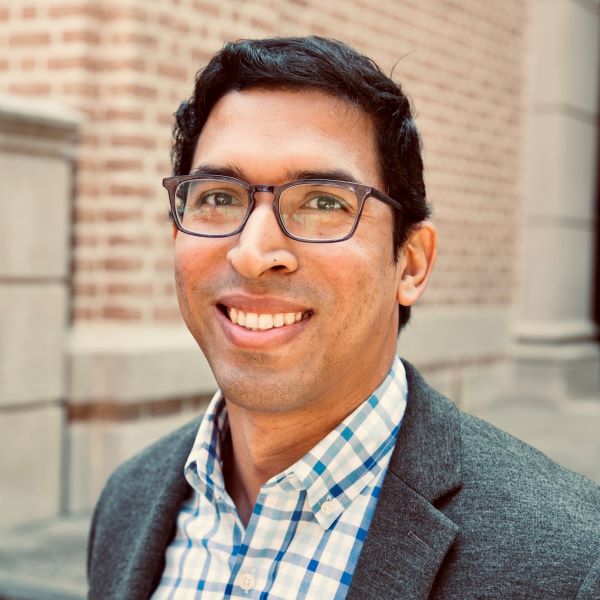
Maria Olga Varrà is a fixed-term researcher in the Department of Food and Drug Sciences at the University of Parma, Italy. Her work focuses on food safety, traceability, and health risk assessment for animal-derived products, with particular expertise in spectroscopic and elemental analysis techniques. Research Interests: Food safety monitoring for toxins and contaminants Application of near-infrared spectroscopy (NIR) in food authenticity Traceability systems using isotopic and elemental markers Health risk assessment for dietary metal exposure Metabolomics in livestock health monitoring Publication Trends: Recent articles emphasize analytical chemistry methods for detecting contaminants (alkaloids, heavy metals) in food chains, development of rapid spectroscopic tools for freshness monitoring, and chemometric approaches to seafood authentication. Teaching Activities: Instructs courses on hygienic control of animal-origin products and food quality systems.
Matthew Brake is an Associate Professor of Mechanical Engineering at Rice University's George R. Brown School of Engineering, where he has been a faculty member since 2016. He leads the Tribomechadynamics Lab, which focuses on the confluence of structural dynamics, contact mechanics, and tribology to predict the response of assembled structures during the design stage and optimize interfacial components. Dr. Brake completed his entire academic training at Carnegie Mellon University, earning B.S. (2002), M.S. (2004), and Ph.D. (2007) degrees in Mechanical Engineering. Prior to joining Rice, he worked for nine years at Sandia National Laboratories. Ph.D., Mechanical Engineering, Carnegie Mellon University, 2007 M.S., Mechanical Engineering, Carnegie Mellon University, 2004 B.S., Mechanical Engineering, Carnegie Mellon University, 2002 His research spans multiple disciplines within mechanical engineering, with a particular focus on understanding interfaces across length scales from nano to macro. His work bridges theoretical foundations with practical applications in aerospace, defense, and automotive industries, addressing constitutive modeling for impact dynamics, joint mechanics, and the application of additive manufacturing for system-level assemblies. Dr. Brake has established himself as a leader in his field through significant contributions to nonlinear dynamics and joint mechanics, evident in his book 'The Mechanics of Jointed Structures' published by Springer and his founding of the Nonlinear Mechanics and Dynamics (NOMAD) Institute. Scientific Awards and Honors Future Energy Leaders Program, CERAWeek (2020) Favorite Teacher Honor, Will Rice College, Rice University (2019) The 2018 C. D. Mote Jr., Early Career Award The 2012 Presidential Early Career Award for Scientists and Engineers (PECASE) (awarded in 2014) ASME Fellow (2019) As a Fellow of the American Society of Mechanical Engineers since 2019, Dr. Brake has held several leadership positions including Executive Director of the ASME Research Committee on Mechanics of Jointed Structures, Vice Chair of the SEM Technical Division for Nonlinear Structures and Systems, and Vice Paper Solicitation Chair for the STLE Contact Mechanics Committee. He has also been a visiting academic at the University of Oxford and taught as an adjunct professor at the University of New Mexico. His Tribomechadynamics Lab hosts both graduate and undergraduate researchers as well as the Nonlinear Dynamics of Coupled Structures and Interfaces (ND-CSI) Summer Research Program, fostering the next generation of mechanical engineers and researchers in this specialized field.
Professor Lucy Marshall is a faculty member at the University of New South Wales, affiliated with the College of Engineering and the Department of Civil and Environmental Engineering. She specializes in hydrology, Bayesian statistics, and uncertainty analysis, focusing on water resources management and hydrological modeling. Ph.D. Civil and Environmental Engineering, University of New South Wales, 2006 Master of Engineering Science, University of New South Wales, 2002 Bachelor of Civil Engineering, University of New South Wales, 2001 Her research quantifies hydrologic processes and develops methods for model diagnostics and uncertainty analysis, particularly through Bayesian statistics and multi-model approaches. She addresses challenges in forecasting water availability and understanding the dynamics of water systems under climate change. Recent publications highlight her work in integrating Bayesian deep learning with hydrological models, analyzing hydropower systems under extreme climate conditions, and advancing probabilistic error characterization techniques. Her studies span water resources forecasting, neural networks, and ecological impact assessments. Contact: lucy.marshall@unsw.edu.au , Phone: (+61 2) 9385 7944, Office: Level 1, Room VA132, Vallentine Annexe (H22), Kensington Campus.
Benoit Chachuat serves as an Adjunct Assistant Professor in the Department of Chemical Engineering at McMaster University. His academic appointment reflects his active engagement in research and scholarly activities within the field of process systems engineering, with particular emphasis on optimization, sustainability, and environmental assessment of chemical processes. Dr. Chachuat's research interests span across multiple domains of chemical engineering with a strong focus on process systems engineering. His work integrates advanced mathematical modeling, optimization techniques, and environmental considerations to address challenges in sustainable energy systems, chemical process design, and bioprocess engineering. Key research areas include real-time optimization, life cycle assessment, sustainable aviation fuels, carbon utilization technologies, and the application of machine learning to industrial process monitoring and control. His research demonstrates a consistent commitment to developing methodologies that balance economic viability with environmental sustainability in chemical engineering applications. Analysis of his recent scholarly output reveals a clear trend toward sustainability-focused research, particularly in sustainable aviation fuels, waste-to-chemicals conversion, and carbon utilization technologies. His work increasingly incorporates environmental life cycle assessment alongside techno-economic analysis, reflecting the growing importance of holistic sustainability metrics in process design. The integration of machine learning tools for process monitoring and control represents another significant trend in his recent publications, demonstrating adaptation to emerging technologies in industrial applications. Dr. Chachuat's scholarly activity demonstrates substantial impact across the chemical engineering community, with numerous publications in high-impact journals and conference proceedings. His research has been referenced in patents, policy sources, and news outlets, indicating practical relevance beyond academic circles. The breadth of his work spans from fundamental mathematical methods in optimization to applied environmental assessments of emerging technologies. His research collaborations extend across multiple domains, including sustainable energy systems, biopharmaceutical manufacturing, and environmental process engineering. Recent work has particularly focused on pandemic-response vaccine manufacturing and supply chain resilience, highlighting the adaptability of process systems engineering methodologies to address urgent global challenges. While specific grant information isn't detailed in the provided text, the scope and impact of his research suggest substantial external funding support.
Prof. Dr. Deyan Radev is a full Professor of FinTech, Banking, and Systemic Risk at Sofia University "St. Kliment Ohridski", where he has served since 2020. He also holds the EUI Fernand Braudel Senior Fellow position at the European University Institute in Florence, Italy, and directs the CEE Centre for Digital Finance. His academic career spans institutions including the University of Bonn, Goethe University Frankfurt, and Johannes Gutenberg University Mainz. Doctor of Economics (Summa cum laude) - Goethe University Frankfurt (2013) Master of Business Administration - University of Konstanz (2008) Bachelor of Science in Economics - Sofia University (2006) Prof. Radev's research focuses on systemic risk and financial contagion in the EU, with groundbreaking work on sovereign-bank linkages during the Eurozone crisis. His current work explores FinTech , banking regulation , and digital finance through projects like "Development of AI-based algorithms for credit risk" and "Leveraging alternative data for unbiased credit scoring". His recent publications analyze topics like fintech cluster competitiveness, digital euro implications, and bank resolution regimes. His systemic risk indices are used by the European Central Bank in the ESRB Risk Dashboard. He has secured multiple grants exceeding €200,000 from Bulgarian National Science Fund and Sofia University. Scientific Awards: Hochschulpreis des Deutschen Aktieninstituts (2014) Deutsche Bundesbank Special Prize (2014) Professional Memberships: American Economic Association European Finance Association International Network of Financial Education
Nicolas Chopin is a Professor of Data Sciences at ENSAE, Institut Polytechnique de Paris. He joined ENSAE in 2006 after serving as a lecturer at the University of Bristol (2003-2006). He holds a PhD from Université Paris VI (2003) and an HDR (habilitation) earned in 2010. His research centers on Bayesian computation methodologies, including: Sequential Monte Carlo (particle filters) Markov chain Monte Carlo Variational inference Probabilistic Machine Learning He develops computational frameworks for complex statistical inference problems. Analysis of his recent publications (2022-2025) reveals strong emphasis on: Monte Carlo innovations (e.g., waste-free SMC, quasi-Monte Carlo), scalable Bayesian modeling, debiasing techniques for sequential inference, and applications in optimization/bandit problems. Theoretical rigor combined with computational efficiency is a consistent theme. Awards: Savage Award for Best Doctoral Dissertation in Bayesian Statistics (2002)
H. Dharma Kwon is an Associate Professor of Business Administration and Robert and Karen May Faculty Fellow at the Gies College of Business, University of Illinois at Urbana-Champaign. He holds a Ph.D. in Management and Operations Research from UCLA Anderson School of Management (2008) and a B.S. in Physics from KAIST (1991). His research focuses on strategic decision making under uncertainty, stochastic dynamic games, and technology management. He explores topics such as free-rider problems, Bayesian sequential decisions, and real options, with applications in supply chain management, project contracts, and employee retention strategies. His work bridges theoretical rigor and practical business challenges, addressing issues like optimal pricing strategies, investment decisions under spillovers, and cooperative game theory. He has published extensively in journals like Operations Research , Mathematics of Operations Research , and Management Science . His research also extends to early-career physics, with studies on superconductors and quantum phase transitions. Awarded the Robert and Karen May Faculty Fellowship (2018–present), Kwon is recognized for his teaching excellence, receiving the Excellent Teacher award multiple times (2014–2018, 2019–2020, 2023–2023). He serves as an Associate Editor for Management Science and Decision Analysis . His courses include Operations Management (BADM 275) and Decision Analytics (BADM 573), emphasizing data-driven decision frameworks and probabilistic methods.
Robert L. Givan is an Associate Professor in the Elmore Family School of Electrical and Computer Engineering at Purdue University. His academic affiliations include Purdue’s Department of Electrical and Computer Engineering and the Max W and Maileen Brown Family Hall. He holds a B.S. in Mathematics and Biology from Stanford University (1987), an M.S. in Computer Science from Stanford (1987), and a Ph.D. in Computer Science from MIT (1996). His research focuses on artificial intelligence, reinforcement learning, automated reasoning, knowledge representation, and stochastic modeling. Notable projects include applying automated reasoning to AI planning domains and exploring reinforcement learning techniques for stochastic control problems. He has contributed to areas such as probabilistic planning, heuristic search, and formal verification. His recent publications span topics like stochastic enforced hill-climbing, automated feature induction, and formal verification methods. His work often bridges theoretical foundations with applied challenges in AI and robotics. Givan’s research has been supported by NSF grants in AI and computer engineering. Labs and collaborations include involvement with Purdue’s AI and robotics initiatives, though no specific lab names are mentioned. He emphasizes student collaboration through directed research and thesis opportunities, particularly in AI and related fields.
Conor Mayo-Wilson is an Assistant Professor in the Department of Philosophy at the University of Washington, part of the College of Arts & Sciences. He holds a Ph.D. (2012) and two M.S. degrees (2009) from Carnegie Mellon University, along with B.S./B.A. degrees (2006) in Mathematics and Philosophy from Stanford University. His research focuses on formal and social epistemology, philosophy of science/mathematics, decision/game theory, and logic. Key areas include causal inference, testimonial norms in science, and the epistemology of probability. Education: Ph.D. Philosophy, Carnegie Mellon University (2012) M.S. Logic, Computation, and Methodology (2009) M.S. Mathematics (2009) B.A. Philosophy (Honors), Stanford University (2006) B.S. Mathematics, Stanford University (2006) Research interests span formal epistemology (scoring rules, imprecise credences), social epistemology (scientific collaboration, testimony reliability), and foundational issues in science/mathematics (causality, historical developments). Notable publications include work on structural chaos, wisdom of crowds dynamics, and the independence thesis in group epistemology. Awards include the Josephine de Karman Fellowship (2010-2011) and Stanford’s Chick D’Arpino Prize (2003). Teaching includes courses on philosophy of mathematics, epistemology, probability, and the scientific revolution. He coordinates the MA program at the Munich Center for Mathematical Philosophy and has organized conferences like FEW 2017. His work integrates computational models (e.g., agent-based simulations) to study epistemic processes and scientific communities.
Scott Huettel is a Professor in the Department of Psychology and Neuroscience at Duke University, holding concurrent roles as Senior Associate Dean for Research in Trinity College of Arts & Sciences and Bass Fellow. He also serves as Professor of Neurobiology and Psychiatry and Behavioral Sciences, and holds affiliations with multiple interdisciplinary centers including the Center for Cognitive Neuroscience and Duke Institute for Brain Sciences. His research focuses on decision neuroscience, investigating brain mechanisms underlying economic and social decisions using fMRI, behavioral assays, and computational methods. He has authored influential textbooks like Functional Magnetic Resonance Imaging and pioneered applications of fMRI analysis techniques such as functional connectivity and pattern classification. Education: Ph.D. in Psychology from Duke University (1999). Research Interests : Decision neuroscience, neuroeconomics, social decision making, and the neural basis of individual differences in behavior. His work bridges cognitive neuroscience with computational models to explore how brain systems mediate complex choices, particularly in contexts involving risk, ambiguity, and social dynamics. Grants & Leadership : Leads major grants including the NIH-funded Neurobiology Training Program and Duke’s Psychiatry Physician-Scientist Residency Program. Past roles include Chair of Psychology and Neuroscience and Interim Co-Director of the Duke Institute for Brain Sciences. Active in educational innovation through Bass Connections and courses like Decision Neuroscience. Labs & Teams : Core faculty in the Center for Brain Imaging and Analysis, contributing to advanced neuroimaging methodologies. Collaborates across disciplines to address translational challenges in health behavior, consumer decision-making, and aging.
Anura De Zoysa is an Associate Professor in the School of Business at the University of Wollongong. He holds professional qualifications including CPA, CMA, and FCA memberships, and has over 30 years of teaching experience across Sri Lanka, Japan, and Australia. His research focuses on cost management, corporate governance, accounting education, CSR, and sustainability. He has authored over 90 publications, with 82,000+ downloads on Research Online, and has an H-index of 18 (Google Scholar). De Zoysa earned his PhD in Accounting from the University of Wollongong (2001). Prior to academia, he spent 8 years in Japan researching Japanese cost management systems (e.g., Genka Kikaku, JIT). He teaches management accounting and financial management, and has supervised 17 HDR students, including 12 PhD candidates. His awards include the 2019 Vice Chancellors Award for Outstanding Teaching and Research Supervision (Highly Commended). He has secured grants such as the New Colombo Plan (2022-2023) and served on institutional committees, including the University Thesis Examination Committee and Faculty Education Committee. His work bridges academic research with practical applications in accounting education and corporate sustainability.
Kalil Erazo is an Assistant Teaching Professor in the Department of Civil and Environmental Engineering at Rice University. His research focuses on structural health monitoring (SHM) for resilient civil infrastructure, particularly in regions prone to natural hazards. Erazo emphasizes integrating stochastic methods, Bayesian estimation, and advanced sensor technologies to assess structural integrity and predict performance under extreme events. Education: Postdoctoral Scholar, Rice University (2015-2016) Ph.D. in Civil and Environmental Engineering, University of Vermont (2015) M.S. in Civil and Environmental Engineering (Fulbright Fellow), Georgia Tech (2012) B.S. in Civil Engineering, Instituto Tecnológico de Santo Domingo (2009) Research Interests: Erazo’s work bridges theory and practice in resilient infrastructure design. Key areas include SHM for historic structures (e.g., UNESCO’s Colonial City of Santo Domingo), stochastic modeling for uncertainty quantification, Bayesian methods for nonlinear systems, and post-disaster decision-making frameworks. He advocates for integrating computational tools with physical infrastructure to enhance safety and sustainability. Research Group: The Structural Monitoring for Resilient and Sustainable Infrastructure group addresses National Academy of Engineering Grand Challenges by developing cyber-physical systems that monitor infrastructure health and predict performance under hazards like hurricanes and earthquakes. Outputs include sensor-based frameworks, digital twin technologies, and risk-assessment protocols.
Dr. Jinzhu Yu is an Assistant Professor at the University of Texas at Arlington, holding primary affiliation in Civil Engineering and a secondary appointment in Industrial, Manufacturing, and Systems Engineering. He earned his Ph.D. in Interdisciplinary Systems Engineering from Vanderbilt University and conducted postdoctoral research at Rensselaer Polytechnic Institute. His work focuses on resilient urban systems through network science, operations research, and AI/ML. Research interests include infrastructure resilience, disaster management, transportation networks, and decision-making under uncertainty. Education: PhD, Interdisciplinary Systems Engineering, Vanderbilt University (2020) MS, Civil Engineering, Tongji University (2016) BS, Civil Engineering, Tongji University (2013) Research Highlights: Dr. Yu develops models for infrastructure resilience, climate adaptation, and equity. Recent projects include TxDOT-funded work on transportation asset management and crowd-sourced bicycle/pedestrian safety data. His lab integrates data science and network analytics to enhance urban systems. Awards: Urban Resilience Fellow (2024) STARs Award (2022) Student Merit Award (2017) Grants & Advising: Active projects include $319K TxDOT grant (2024) and leadership in NSF reviews. Supervises interdisciplinary students in civil engineering, systems engineering, and computer science.
Ravi Ravichandran is a Professor of Civil Engineering at Clemson University, specializing in geotechnical engineering with a focus on resilience and sustainability under extreme events like earthquakes and climate change. His work integrates advanced computational modeling and experimental investigations. Education: BSCE (University of Peradeniya), M.Eng. (University of Tokyo), Ph.D. (University of Oklahoma) Research: Finite element modeling of geotechnical systems, bio-inspired foundation designs, seismic site response analysis, climate-adaptive infrastructure, and robust optimization. Recent publications highlight his work on coupled hydro-mechanical modeling, seismic amplification in Charleston, SC, and bio-inspired foundation systems leveraging tree root mechanisms. He actively collaborates with the South Carolina Department of Transportation and employs numerical simulations for hurricane hazards, retaining wall optimization, and wind turbine foundation analysis. As a member of ASCE, Geo-Institute, and NEES, he contributes to advancing geotechnical practices. He teaches courses in finite element analysis, geotechnical design, and soil-structure interaction.
Matthew Janssen is a Research Assistant Professor at the Department of Civil, Environmental, and Ocean Engineering, Stevens Institute of Technology. His research focuses on coastal hazards, littoral processes, and developing computationally efficient models to assess risks to coastal infrastructure using field observations, numerical modeling, and data-driven techniques. He holds a PhD (2022), MS (2016), and BS (2011) in Ocean Engineering from Stevens Institute of Technology and the University of Rhode Island, respectively. His work emphasizes understanding storm erosion potential, dune performance under climate change scenarios, and the impact of coastal structures. Notable contributions include methodologies for quantifying storm erosion considering sea level rise and probabilistic forecasting of coastal storm impacts. He currently serves as Assistant Director of the NJ Coastal Protection Technical Assistance Service and has prior industry experience with firms like Rising Tide Waterfront Solutions and McLaren Engineering Group. Key Research Areas: Coastal resilience, numerical modeling, climate adaptation, dune dynamics, sediment transport. Recent Focus: Long-term dune performance under extreme and nuisance erosion events; integration of machine learning (CART models) for erosion prediction. Publications highlight his work on hurricane impacts, breakwater effectiveness, and navigation channel management. He received the John P. Breslin Award (2022) and is active in professional societies like ASBPA and COPRI. His technical reports include analyses of New Jersey beach sediment characteristics and shoreline impacts at North Wildwood. He collaborates on projects balancing engineering solutions with ecological and economic considerations.