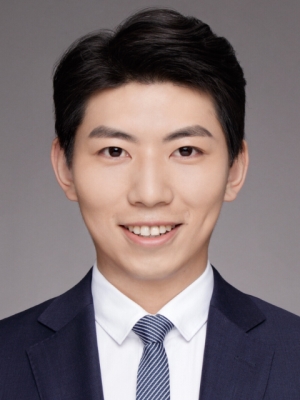
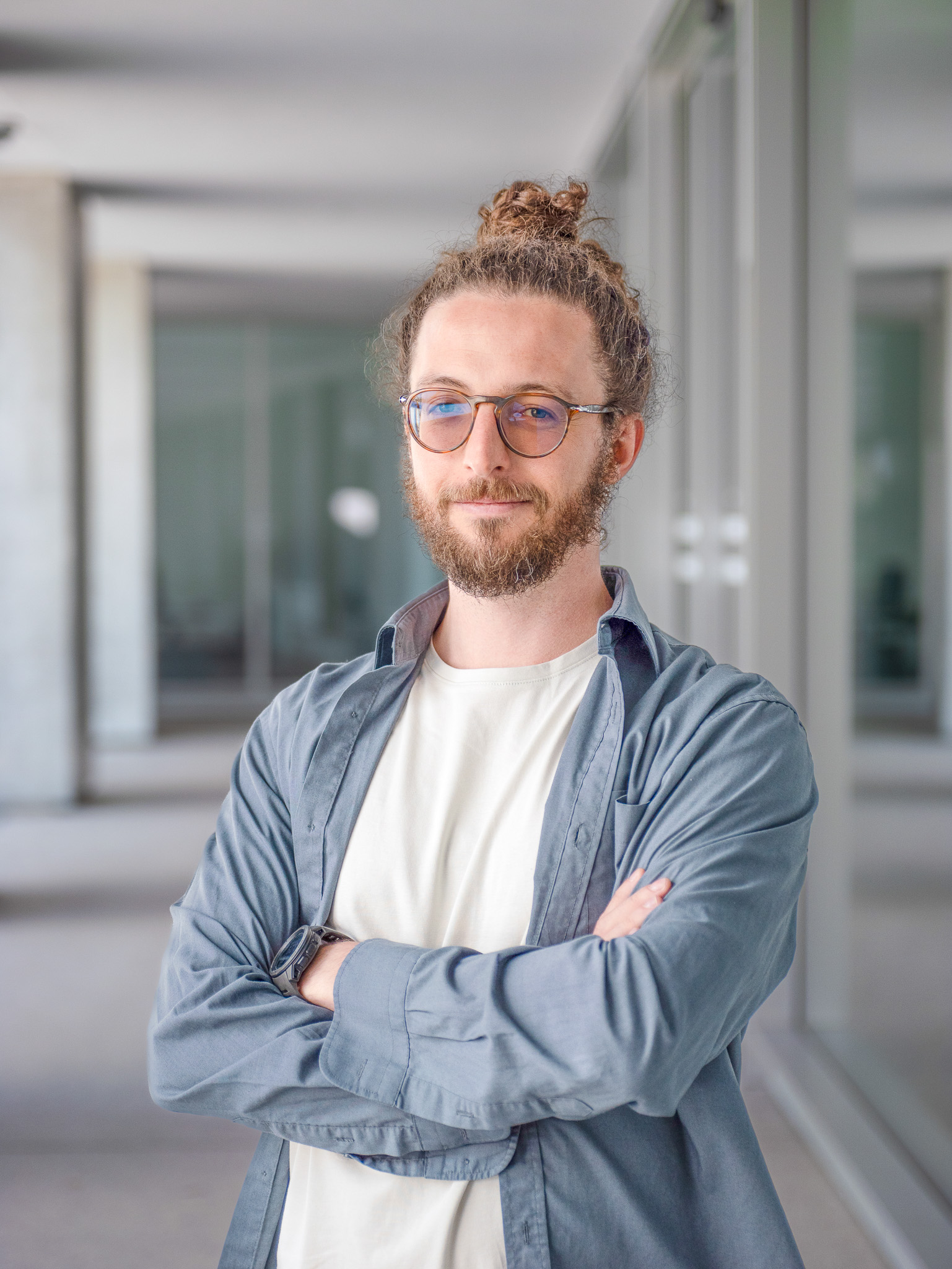
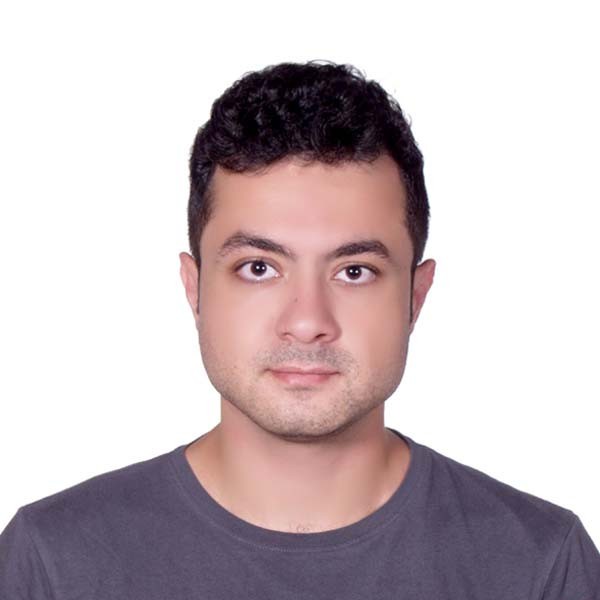
Gerhard Stefan Székely is a Lecturer and Head of the Bachelor's Program in Mechanical Engineering at the Lucerne School of Engineering and Architecture (HSLU). He specializes in mechanical systems for space research, systems engineering, and innovative teaching methods like flipped classrooms and blended learning. His industry experience includes 16 years at RUAG Space Zurich, leading R&D in FEM analysis for satellite mechanisms and systems engineering for projects like GAIA BRM and ALADIN instruments. Education: TU München: Mechanical Engineering (Aerospace focus) PhD from Universität Innsbruck: Stochastic structural mechanics for ESA projects Research Focus: Space mechanical systems, systems engineering methodologies, and educational innovation in STEM. Notable projects include the VenSpec-H spectrometer for ESA's EnVision mission and the COW experiment studying cartilage in microgravity. Professional Contributions: Authored over 20 peer-reviewed publications and technical reports on space mechanisms, structural reliability, and educational methodologies. Leads HSLU's contributions to national MINT education networks.
Jeffrey Huang is a Full Professor at EPFL, holding joint appointments in the Faculty of Computer and Communication Sciences (IC) and the Faculty of Architecture, Civil and Environmental Engineering (ENAC). He directs the Institute of Architecture and leads the Media x Design Laboratory (MxD Lab). His areas of expertise include Design Thinking, Artificial Intelligence in Architecture, Urban Digital Twins, and Computational Urbanism. Educated at ETH Zurich (DiplArch), Harvard University (Masters and PhD), Huang has held academic roles at MIT, Harvard, Tsinghua University, and the Singapore University of Technology and Design (SUTD). He is a recipient of the Gerald McCue Medal for academic excellence and the 2023 ACSA Best Article Award for his work on GANs and architectural design. Recent research focuses on combining machine learning with architectural design, particularly exploring generative adversarial networks (GANs), spatial analysis, and urban digital twins. His projects include the Blue City Innosuisse Flagship Project and the Singapore Prototypologies initiative. Awards include the 2023 ACSA Best Article Award and the Best Presentation Award at CAAD Futures 2009. He supervises numerous PhD students and has led significant research grants such as the Innosuisse Flagship Project and the MIT-SUTD collaborations. Huang co-founded Convergeo, a strategic design firm, and has been involved in creating new architectural education programs, including the Architecture and Sustainable Design Pillar at SUTD.
Timon Gehr is part of the Professorship for Computer Science at ETH Zurich's Department of Computer Science, affiliated with the Institute of Programming Languages and Systems. His research focuses on quantum computing, probabilistic programming, neural network robustness, and privacy enforcement. He has contributed to the development of quantum languages like Silq and frameworks for certifying adversarial robustness in machine learning systems. His research interests include formal methods for programming languages, scalable symbolic reasoning, and applying probabilistic techniques to security and privacy. Recent work emphasizes robustness certification of neural networks and symbolic integration in machine learning. Key projects involve exact inference for probabilistic programs and differential privacy violation detection. Notable publications include work on quantum uncomputation, adversarial examples, and integrating logic into neural networks. No specific advising or grant details are provided in the text, but his involvement with the Institute of Programming Languages and Systems indicates active participation in academic collaborations and research teams.
Dr. Mengshuo Jia is a Senior Scientist and Principal Investigator at ETH Zürich, affiliated with the Power Systems Laboratory (PSL) within the Department of Electrical Engineering. He holds a Ph.D. from Tsinghua University (2016–2021) and a B.Eng. from North China Electric Power University (2012–2016). His roles include Guest Lecturer for 'Optimization in Energy Systems' and Associate Editor for IEEE Systems Journal and IET Renewable Power Generation. Education: Ph.D. in Electrical Engineering, Tsinghua University (2016–2021) B.Eng. in Electrical Engineering, North China Electric Power University (2012–2016) Research focuses on AI4Science , Uncertainty Modeling , Probabilistic Analysis , Stochastic Optimization , and Data-Driven Power Systems . Notable contributions include the RePower LLM-driven research platform and the DALINE toolbox for power flow linearization. His work bridges AI advancements with energy system challenges, enhancing autonomous research and grid optimization. Recent publications emphasize LLM applications in energy systems, small modular reactor integration, and hydrogen supply chain optimization. Over 10 peer-reviewed articles since 2022 highlight interdisciplinary innovation. Awards: 2023 ESI Hot Paper (top 0.1%) and Highly Cited Paper (top 1%) 2023 China First Prize of High-influence Papers 2022 Springer Thesis Award Advising and grants include leadership in Swiss National Science Foundation projects and editorial roles in top-tier journals. Collaborations emphasize data-driven methodologies and privacy-preserving distributed algorithms. Labs: Active in the Power Systems Laboratory (PSL) at ETH Zurich, advancing research in energy system optimization and AI integration.
Dr. Yi-Chi Liao is a Lecturer in the Department of Computer Science at ETH Zürich, specializing in intelligent interactive systems. Their research focuses on human-robot interaction, wearable technology, and optimization techniques for user interface design. Key areas include developing datasets for naturalistic handover behaviors with robotic limbs, human-in-the-loop optimization methods, and computational workflows for designing input devices. Research Interests: Explores the intersection of robotics, machine learning, and human-centered design. Recent work emphasizes Bayesian optimization techniques, affordance theory, and tactile feedback systems. Projects like the 3HANDS dataset and ThirdHand wearable robotic arm demonstrate innovation in human augmentation and interaction design. Advising: Supervises doctoral student Peizhuo Li in the D-INFK program. Research outputs span 2015–2025, with notable contributions to haptic interfaces, multi-objective optimization, and wearable computing. Active in conferences and journals addressing HCI, robotics, and design automation.
Fabio Widmer is a PhD researcher at the Institute for Dynamic Systems and Control (IDSC) within ETH Zürich's Department of Mechanical and Process Engineering. He received his B.Sc. and M.Sc. degrees in mechanical engineering from ETH Zürich in 2015 and 2017, respectively, with distinction, focusing on electric mobility and energy flows during his studies. His academic background includes: B.Sc. in Mechanical Engineering, ETH Zürich (2015) M.Sc. in Mechanical Engineering, ETH Zürich (2017) Widmer's research centers on model-based optimization of thermal and energy management systems for electrified public transport vehicles. His work spans electric buses, hydrogen hybrid vehicles, and charging infrastructure optimization. He has made significant contributions to understanding energy-comfort trade-offs in HVAC systems, developing optimization methods for charging strategies, and creating online-capable control algorithms for hydrogen vehicles. His research combines theoretical modeling with practical applications, utilizing dynamic programming, model predictive control, and scenario-based optimization approaches to address real-world transportation challenges. Widmer has received recognition for his academic achievements, including two Outstanding Bachelor Awards and a scholarship from ETH Zürich's Excellence Scholarship and Opportunity Programme. His research has resulted in numerous publications in high-impact journals such as Control Engineering Practice, Energy, and Energies, demonstrating both theoretical rigor and practical relevance to sustainable transportation systems. As part of his research activities, Widmer has contributed to projects including ISOTHERM and Swiss eBus Plus. He was also actively involved with ETH's formula student team AMZ, where student teams develop and compete with self-developed electric race cars, reflecting his hands-on approach to electric mobility research.
Anne Kathrin Bolender is a Lecturer and former Director of the Institute for Digitalization and Management. She specializes in project management, resilience, and inclusion, teaching academic writing and supervising student papers. Her academic credentials include a degree in Business Administration, MA in Supply Chain Management, M.Sc. in Project Management, and an MBA. She is a Fellow of the Association for Project Management and member of the Zurich Regional Church Parliament Synod. Her research focuses on resilience in project management, agile methodologies, and inclusion of people with disabilities. She writes regularly for the Kalaidos blog, addressing topics like cultural dimensions in international projects, AI ethics, and team climate optimization. Key publications include analyses on project resilience (2022) and the future of project management in agile contexts (2022). Education: Business Administration (FH) MA in Supply Chain Management M.Sc. in Project Management MBA Research Interests: Resilience strategies in crisis scenarios Cross-cultural project leadership Disability inclusion in education and workplaces Ethical AI applications Risk management frameworks Agile vs. traditional project management paradigms Publications Trends: Her articles emphasize practical applications of theoretical concepts, with recent focus on digital transformation challenges, pandemic-era project adaptation, and ethical implications of emerging technologies. She frequently examines intersections between project management and societal issues like diversity and sustainability. Awards: Fellow of the Association for Project Management Grants/Advising: She advises on continuing education programs in project and lean management, collaborating with industry, healthcare, and hospitality sectors. Her work promotes inclusion through targeted educational initiatives and interviews with industry leaders. Labs/Teams: While no formal lab is mentioned, her work involves collaborative projects with educational providers and industry partners.
Daniele Zambon is a postdoctoral researcher at the Dalle Molle Institute for Artificial Intelligence (IDSIA), affiliated with Università della Svizzera italiana (USI) in Lugano, Switzerland. He is a member of the Faculty of Computer Science and the Graph Machine Learning Group, as well as the IEEE Task Force on Learning for Graphs. PhD : Informatics, Università della Svizzera italiana (USI), 2022 Master’s & Bachelor’s : Mathematics, University of Milan, Italy Visiting Researcher : University of Florida, University of Exeter Internship : STMicroelectronics, Italy His research lies at the intersection of machine learning and graph-structured data, with a strong emphasis on graph representation learning , learning in non-stationary environments , and time series analysis . He explores how to model dynamic graphs, detect anomalies and changes over time, and develop deep learning methods for spatiotemporal forecasting. His work integrates statistical testing, geometric deep learning, and neural architectures like Graph Neural Networks (GNNs) and Neural ODEs. The recent publications highlight a clear trend toward temporal and dynamic graph modeling , especially for time series forecasting and irregularly sampled data . There is a growing focus on generative and foundation models for graphs , uncertainty-aware learning , and the creation of benchmark datasets like PeakWeather. His work bridges theoretical contributions (e.g., statistical tests, Kalman filters on graphs) with practical applications in sensing, environmental modeling, and system monitoring. Co-author of patent: Method for the Detecting Electrocardiogram Anomalies and Corresponding System (US10610162B2) PhD thesis featured in D22 Excellent Computer Science Dissertations (2022) Associate Editor, IEEE Transactions on Neural Networks and Learning Systems (IEEE TNNLS) Organizer of tutorials and special sessions at ICML, LoG, KDD, and ESANN Daniele actively contributes to the academic community through advising and teaching at USI’s Bachelor’s and Master’s programs. He has co-supervised research projects and co-organized educational initiatives such as tutorials on graph deep learning. His collaborative work involves grants and partnerships with institutions like MeteoSwiss, leading to impactful datasets and applied research. He is deeply involved in building research capacity through workshops and community engagement in the graph learning field. He is a core member of the Graph Machine Learning Group at IDSIA and contributes to the IEEE Task Force on Learning for Graphs , fostering international collaboration and setting research agendas in the domain of graph-based AI.
Soheil Gholami is a Postdoctoral Researcher at the Learning Algorithms and Systems Laboratory (LASA) at the École Polytechnique Fédérale de Lausanne (EPFL) since March 2022. His research bridges robotics and human motor control , focusing on human-robot interaction , task/motion planning , ergonomics , and skill assessment . Prior affiliations include the Human-Robot Interfaces and Interaction (HRII) group at the Italian Institute of Technology (IIT) and the Neuroengineering and Medical Robotics Laboratory (Nearlab) at the Polytechnic University of Milan . Ph.D. in Bioengineering (2022) from Polytechnic University of Milan (Italy) and Italian Institute of Technology (IIT, Genoa) M.Sc. in Control Engineering (2015) from K. N. Toosi University of Technology (Tehran, Iran) His work explores teleoperation interfaces , ergonomic assessment , and scalable control schemes for robots. Key areas include microrobotics for surgery , industrial human-robot collaboration , and adaptive control methods . Articles highlight applications in telerobotics , supernumerary robotic arms , and bio-inspired control systems .
Prof. Dr. Kurt Stockinger is a Professor of Computer Science at ZHAW School of Engineering and holds a doctorate at the University of Zurich . He serves as Head of the MAS Data Science program and co-leads the ZHAW Datalab . His research focuses on Intelligent Information Systems , bridging information systems, natural language processing, and machine learning. Affiliated with the University of Zurich, he contributes to Quantum Machine Learning and Open Data Exploration initiatives. Stockinger's educational background includes a PhD in Computer Science (University of Vienna & CERN), a Master in Business Informatics (University of Vienna), and a CAS in Didactics & Methodology (ZHAW). He has taught courses in Quantum Computing , Big Data for Natural Sciences , and Data Science programs at ZHAW and University of Zurich. His research spans Data Science , Big Data , Natural Language Query Processing , Knowledge Graphs , and Quantum Machine Learning . Recent publications focus on quantum autoencoders , hybrid quantum neural networks , and prompt engineering for knowledge graph question answering. He has developed frameworks like ScienceBenchmark for real-world NL-to-SQL evaluation and NQuest for natural language query exploration. Scientific awards include the Best Paper Award at 7th Swiss Conference on Data Science (2020) He leads major projects such as DataGEMS (Data Discovery Platform, Horizon Europe) Digital Health Zurich (Clinical Innovation Lab) INODE4StatBot.swiss (NL-to-SQL Translation) GraphQueryML (Graph Database Optimization) ScienceBenchmark (NL-to-SQL Evaluation) Stockinger's work intersects with computer vision , biomedical data , and industrial applications , demonstrated through collaborations with institutions like Lawrence Berkeley National Laboratory, CERN, and University of Washington. He has contributed to establishing QuantumBasel and ZHAW Datalab as research hubs.