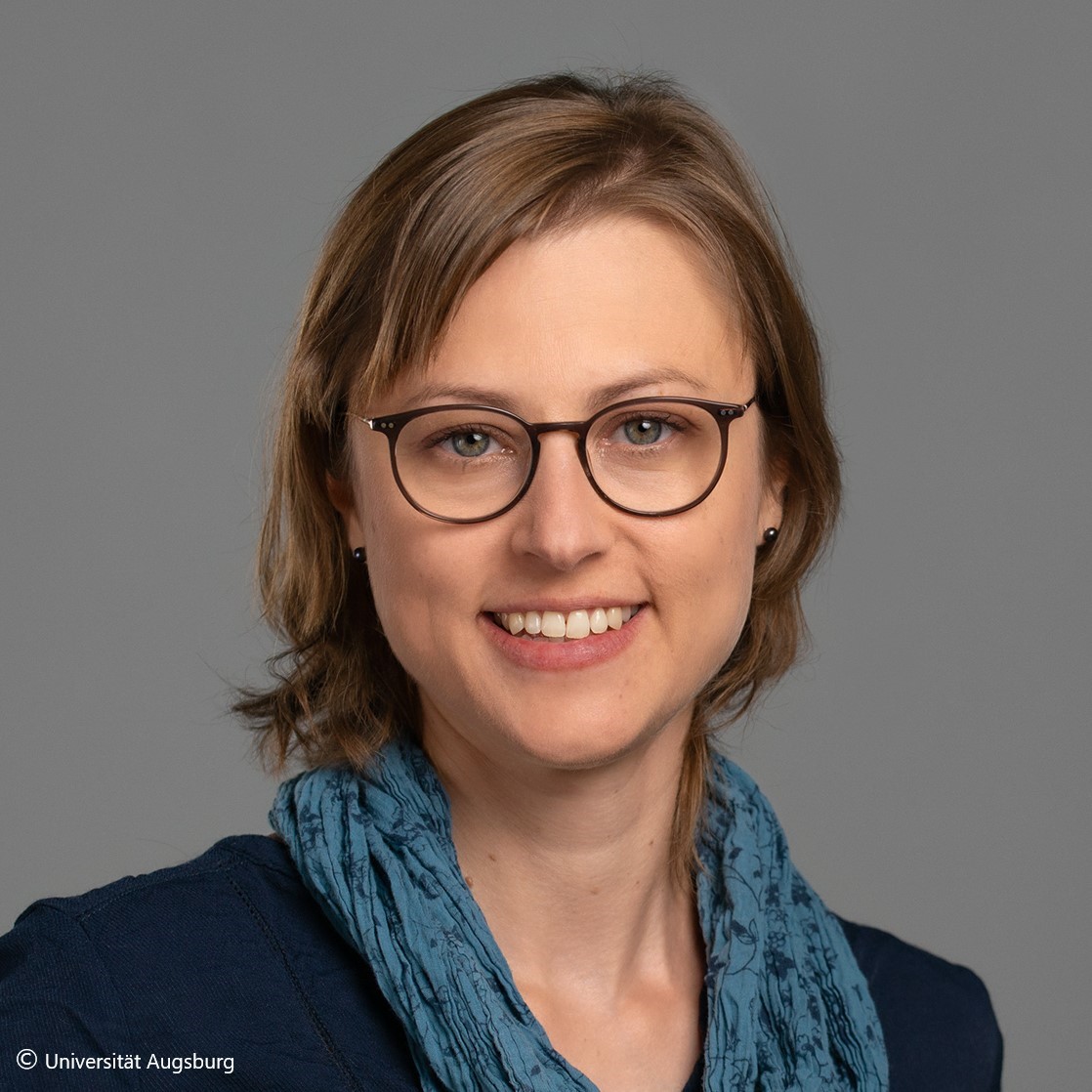
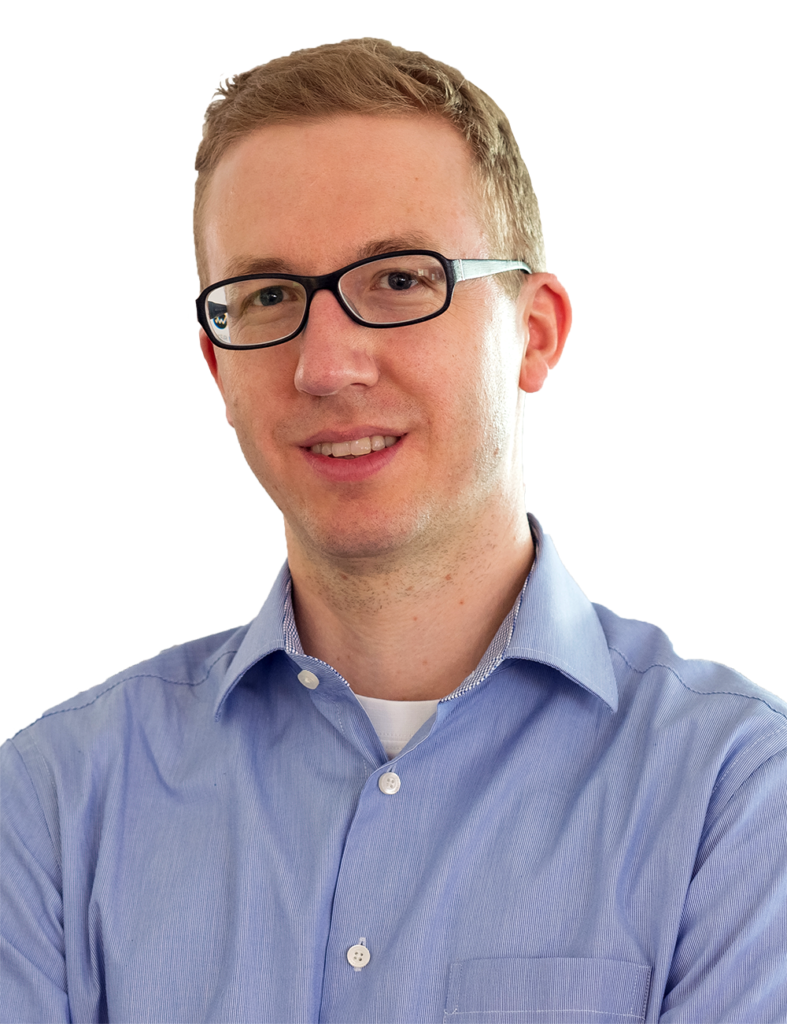
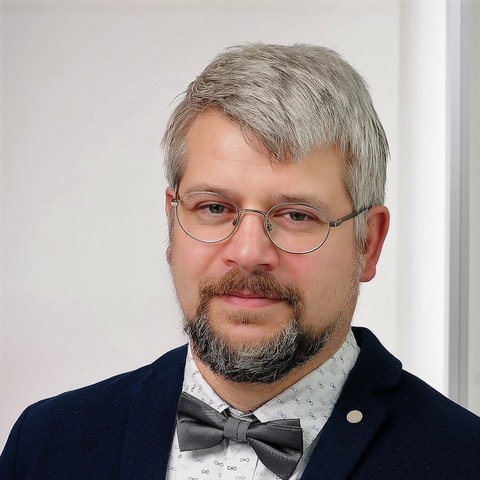
Backhausz Ágnes is a Assistant Professor at Eötvös Loránd University's Faculty of Science , specifically in the Department of Probability Theory and Statistics . She also holds a part-time Researcher position at the Alfréd Rényi Institute of Mathematics . Her academic journey includes habilitation and a PhD in Mathematics, focusing on random graph models and their asymptotic properties. Research Group: Struktúrák limeszei (since 2013, part-time since 2015) Grants: ERC Grant on 'Limits of Discrete Structures' (2014–2019) Ágnes specializes in Probability Theory and Random Graphs , with emphasis on graph limits , factor of i.i.d. processes , and spectral theory . Recent publications analyze epidemic spread on multilayer networks, entropy inequalities, and action convergence in graph operators. Her work bridges theoretical mathematics with applications in network science and stochastic processes. Notable awards include the Grünwald Géza Memorial Medal (2014) from the Bolyai János Matematikai Társulat. She actively contributes to academic service as a Supervisor and Training Lead for the Beyond The Edge Marie Curie Doctoral Network (2024–2027) and serves on program committees for conferences like Eurocomb and the European Girls' Mathematical Olympiad . Her teaching portfolio spans Probability Theory, Stochastic Processes, and Mathematical Statistics at both undergraduate and graduate levels.
Antonio Carzaniga is a Full Professor and founding member of the Faculty of Informatics at Università della Svizzera italiana (USI), where he has been active since 2004. Previously, he served as an Assistant Research Professor at the University of Colorado at Boulder from 2001 to 2007. He holds a Ph.D. in Computer Science and a Bachelor’s degree in Electronic Engineering from Politecnico di Milano. Full Professor, Faculty of Informatics, Università della Svizzera italiana (2004–Present) Assistant Research Professor, Department of Computer Science, University of Colorado at Boulder (2001–2007) Ph.D. in Computer Science, Politecnico di Milano Bachelor’s in Electronic Engineering, Politecnico di Milano His research spans distributed systems and software engineering, with a strong focus on content-based addressing networks, publish/subscribe systems, middleware, software fault tolerance, and verification. He has pioneered work in information-centric networking and developed the Siena project, a scalable publish/subscribe service. His recent work extends into programmable networks, GPU-accelerated matching, and performance annotations for cloud systems. The 15 most recent publications highlight a consistent trajectory in scalable, high-performance networking and adaptive software systems. Key themes include content-based communication, packet subscriptions, information-centric networking, and leveraging redundancy for fault tolerance and testing. His work bridges theoretical foundations with practical implementations, often involving system-level software and performance evaluation. Best Paper Award, ACM SIGCOMM Workshop on Information-Centric Networking (ICN'13) Carzaniga has advised multiple graduate students, including Michele Papalini, Koorosh Khazaei, and Daniele Rogora, and has collaborated on funded research projects in distributed systems and networking. He has contributed to software development through projects like the Siena Fast Forwarding engine and the Synthetic Workload Generator. His service includes organizing workshops and contributing to major conferences in software engineering and computer systems. He leads research initiatives such as Siena and Content-Based Networking, focusing on scalable, decentralized communication infrastructures. His lab has developed key tools for evaluating publish/subscribe performance and implementing high-speed forwarding algorithms.
Dr. Matteo Spada is a Senior Researcher in Risk and Resilience at the Zurich University of Applied Sciences (ZHAW) School of Engineering, where he focuses on Technology Assessment. His research spans multiple institutions including the Paul Scherrer Institute, Swiss Seismological Service, and Istituto Nazionale di Geofisica e Vulcanologia in Italy. His educational background includes a Ph.D. in Earth Sciences from ETH Zurich (2006-2011) and an MSc in Physics from the University of Bologna (1999-2005). Dr. Spada's research focuses on risk and resilience assessment of critical infrastructure systems, with particular expertise in energy systems, natural hazards, and multi-criteria decision analysis. His work integrates quantitative methods with practical applications to inform policy and decision-making processes related to infrastructure safety and security. He has developed innovative approaches for probabilistic risk assessment, uncertainty quantification, and decision support systems that have been applied across multiple sectors including energy, water resources, and transportation. His recent work has particularly emphasized the energy transition, analyzing comparative accident risks across different energy technologies and developing frameworks for assessing resilience of electricity supply systems. Through his research, he has contributed to understanding the societal implications of energy infrastructure failures and developing methodologies for more robust risk assessment. Dr. Spada is an active member of several professional networks including the European Safety and Reliability Association (ESRA), the Institute for Operations Research and the Management Sciences (INFORMS), and the Special Activity Group - Sustainable Concrete Structures of the International Federation for Structural Concrete. He leads several research projects including 'Innovative Spatio-Temporal multi-criteria decision analysis Interface to support informed decision-Making for real-world applications' and contributes to initiatives focused on urban energy transition, resilient supply chains, and building decarbonization. His work often involves interdisciplinary collaboration with engineers, economists, and policy experts to address complex infrastructure challenges. Dr. Spada maintains an active research laboratory focused on risk and resilience assessment, where his team develops and applies advanced analytical methods to real-world infrastructure challenges. The lab utilizes a combination of statistical modeling, simulation techniques, and decision analysis tools to support evidence-based policy making.
Jean-Marc Odobez is a Senior Scientist at the IDIAP Research Institute and Adjunct Professor at the Swiss Federal Institute of Technology Lausanne (EPFL), where he is affiliated with the School of Engineering and serves on the Electrical Engineering Doctoral committee (EDEE). He leads the Perception & Activity Understanding Group at Idiap and has extensive teaching responsibilities across multiple departments. Dr. Odobez received his PhD in Computer Science from Rennes University in 1994. His research focuses on multimodal perception systems combining computer vision, statistical machine learning, and deep learning for activity recognition, behavior understanding, and human-robot interaction. His work spans diverse application domains including human health assessment, social robotics, and media content analysis. His recent research shows strong trends in gaze estimation, human activity recognition, and multimodal processing. His team has developed innovative solutions for gaze tracking, head pose estimation, and activity recognition using depth sensors and neural networks. His work increasingly bridges computer vision with digital humanities, particularly in the analysis of ancient Maya glyphs. IEEE member Associate Editor of Machine Vision and Applications journal Dr. Odobez has supervised numerous PhD students and serves as a committee member for the Electrical Engineering Doctoral program. He has been principal investigator for over 16 European and Swiss research projects and has worked on 10 technology transfer projects with SMEs. He co-founded Klewel SA and Eyeware SA, focusing on eye tracking and attention modeling technologies. His research group actively collaborates with industry partners and maintains strong connections with the computer vision and human-computer interaction research communities.
Dmitry Vetrov serves as a Professor of Computer Science at Constructor University in Bremen, where he founded and leads the Bayesian Methods Research Group. His academic foundation includes graduation from Moscow State University in 2003 and completion of his PhD in 2006, establishing a career centered on advancing probabilistic machine learning methodologies. His educational trajectory features: Undergraduate studies at Moscow State University (2003) Doctoral degree (PhD, 2006) Vetrov's research program critically bridges Bayesian statistics with deep learning architectures, with his group pioneering efficient diffusion model algorithms, loss landscape characterization in neural networks, scalable stochastic optimization tools, tensor decomposition applications for large-scale ML systems, and enhanced conditional text generation frameworks. This work manifests practical implementations across generative AI domains while maintaining theoretical rigor in probabilistic modeling. Analysis of his 2024-2025 publications reveals a concentrated research thrust toward diffusion model innovation, spanning text generation (token embedding smoothing, language model encoding properties), image synthesis (hair transfer, gesture generation), and scientific applications (protein modeling, genetic fine-mapping). Key thematic threads include sampler acceleration, theoretical property analysis of diffusion processes, and robust evaluation frameworks for generative systems. No scientific awards were documented in the source materials. Mentorship outcomes demonstrate significant impact, with three recent PhD students securing research positions at DeepMind. While specific grant details remain undisclosed, the group's prolific output across NeurIPS, ICML, and CVPR indicates sustained research funding. The Bayesian Methods Research Group operates as an integrated innovation hub within Constructor University's academic ecosystem. The research collective he directs maintains active development of Bayesian-deep learning fusion techniques, with current projects emphasizing diffusion model efficiency, theoretical foundations of optimization landscapes, and cross-domain applications in computational biology and multimodal generation.
Dr. Kevin J Liang is a Research Scientist at Meta Platforms, Inc. , specializing in Deep Learning , Computer Vision , and 3D Reconstruction . He earned his PhD in Electrical & Computer Engineering from Duke University in 2020, with a dissertation on Deep Automatic Threat Recognition for Airport X-Ray Baggage Screening . His research focuses include: 3D Computer Vision (ICON, Fast3R) Few-Shot Learning (Sylph, HyperMix) Federated Learning (WAFFLe) Object Detection (EgoTracks, Self-Supervised Methods) Recent publications demonstrate his leadership in Egocentric Vision (Ego-Exo4D) and Transformer Applications (GliTr). He has received numerous awards including the E Bayard Halsted Fellowship (2017) and Summa cum laude (2015), and serves on program committees for major conferences like NeurIPS and CVPR . As an educator, he developed and taught tutorials for Duke University's Machine Learning School and Coursera courses, covering TensorFlow, PyTorch, and foundational ML concepts for over 600 students.
Annemarie Friedrich is a tenured University Professor for Natural Language Understanding (Computational Linguistics) at the Faculty of Applied Computer Science, University of Augsburg. She also holds membership in the Faculty of Philology and History. Previously, she worked as a Senior Expert on Natural Language Processing and Computational Linguistics at the Bosch Center for Artificial Intelligence. Currently, she serves as president of the German Society for Computational Linguistics (GSCL), the primary scientific association for NLP research in German-speaking regions, and is a member of the ACL Special Interest Group for Annotation (ACL SIGANN). University: University of Augsburg School: Faculty of Applied Computer Science Department: Institute of Computer Science Position: University Professor (tenured) for Natural Language Understanding Professor Friedrich's research focuses on computational linguistics and natural language processing with emphasis on semantics and information extraction from text. Her work spans both machine-learning oriented approaches to text mining for scientific text, syntactic and semantic parsing, and uncertainty in deep learning for NLP, as well as corpus-linguistic research on syntax-semantics interface, discourse, pragmatics, aspect, genericity, and modal verbs. She has particular expertise in annotation and corpus creation, recognizing that machine learning models depend fundamentally on underlying data quality. Her research group at Augsburg actively contributes to computational linguistics through numerous publications and datasets. Analysis of Professor Friedrich's recent publications reveals a strong focus on table question answering, patent text processing, uncertainty modeling, and multimodal scientific document understanding. Her work consistently bridges theoretical linguistics with practical NLP applications, with increasing emphasis on robust evaluation methodologies and domain-specific adaptations of language models. Notably, her research group has produced significant resources including the AnnoCTR dataset for cyber threat reports, PAP2PAT for patent generation, and FREB-TQA for evaluating table QA robustness. Professor Friedrich actively mentors multiple PhD students working on diverse topics including document-level patent processing (Valentin Knappich), temporal processing (Timo Schrader), document-level text modeling (Wei Zhou), and topic modeling for digital forensics (Jenny Maria Felser). Her collaborative approach is evident in co-supervision arrangements with researchers from institutions including Bosch Center for Artificial Intelligence, TU Dresden, and Hochschule Mittweida. She has also successfully guided previous PhD students including Sophie Henning (Uncertainty Modeling), Stefan Grünewald (Syntactic Dependencies), and Subhash Pujari Chandra (Neural Patent Classification). Her teaching responsibilities include courses such as Introduction to Natural Language Processing, Introduction to Python Programming, and specialized seminars on Natural Language Understanding for both Bachelor's and Master's students. These courses reflect her commitment to both theoretical foundations and practical implementation skills in computational linguistics.
Marc Pouly is a Professor of Artificial Intelligence at Lucerne University of Applied Sciences and Arts (HSLU), where he also serves as Co-Head of the Applied AI Research Lab. He holds a PhD in Artificial Intelligence from the University of Fribourg (2008) and has extensive industry experience as a Chief Data Scientist at Jaywalker AG and Scientific Advisor for Alpine AI and Artificialy SA. His research focuses on AI-driven solutions for healthcare, computer vision, natural language processing, and industrial optimization. Education: PhD in Artificial Intelligence (2004–2008), University of Fribourg MSc in Computer Science & Mathematics (2002–2004), University of Fribourg BSc in Computer Science (1999–2002), University of Fribourg Research Interests: His work spans Medical AI (e.g., dermatology diagnostics via computer vision), Generative Models , Recommender Systems , and AI Ethics . He co-developed the SkinApp for automated skin analysis and pioneered projects like CleanPatrick for image data quality audits. His expertise in self-supervised learning addresses data scarcity challenges in healthcare. Key Achievements: 2023: Best Paper Awards (IARIA, MICCAI) 2021: Research Mosaic recognition by swissuniversities 2017: Aha! Award for the SkinApp project Labs & Collaboration: He leads the Applied AI Lab and collaborates with institutions like ETH Zurich (co-supervising PhDs) and industry partners such as Prepress Media AG and the Swiss Allergy Centre. His work bridges academia and industry, emphasizing AI’s practical applications in healthcare, marketing, and cybersecurity.
Radu Vintan is a Doctoral Assistant and PhD student at École polytechnique fédérale de Lausanne (EPFL) in the School of Computer and Communication Sciences, affiliated with the Institute of Computer Science and the Theory of Computation Laboratory 2 (THL2). He is part of the Doctoral Program in Computer and Communication Sciences (EDIC). Education: Bachelor's and Master's in Computer Science, Technical University of Munich (TUM), Germany PhD in Computer Science, École polytechnique fédérale de Lausanne (EPFL), Switzerland (ongoing) His primary research interests lie in theoretical computer science , particularly online algorithms and approximation algorithms . He also has experience in machine learning and software engineering . His work often involves algorithmic design and analysis for graph and network problems. The recent publications reflect a strong focus on online edge coloring and network update algorithms , with contributions to top-tier conferences such as FOCS, STOC, SODA, and INFOCOM. These works explore both theoretical limits and practical algorithmic solutions, often bridging deterministic and randomized approaches. Scientific Awards: No awards mentioned. Advising and Grants: Radu Vintan is advised by Professor Ola Svensson. There is no mention of him advising students or receiving independent grants. His research is conducted within the Theory group at EPFL, supported through his Doctoral Assistant position. Laboratories and Teams: He is an active member of the Theory of Computation Laboratory 2 (THL2) at EPFL, contributing to foundational algorithmic research in collaboration with leading experts in theoretical computer science.
Daniel Kuhn is a Full Professor at the Swiss Federal Institute of Technology Lausanne (EPFL), where he holds the Chair of Risk Analytics and Optimization in the College of Management of Technology. His research focuses on developing computational methods for data-driven decision-making under uncertainty, with applications in engineered systems, machine learning, and finance. Previously, he held positions at Imperial College London and Stanford University. Education includes: PhD in Economics, University of St. Gallen MSc in Theoretical Physics, ETH Zurich Research interests span data-driven optimization , stochastic programming , and robust decision-making frameworks . His work develops computationally tractable methods for uncertainty quantification in complex systems, bridging operations research with statistical learning. Current investigations focus on distributionally robust optimization using Wasserstein metrics and applications in energy markets and fair machine learning. Publication analysis reveals three primary trends: 1) Fundamental advances in distributionally robust optimization theory, 2) Machine learning applications with uncertainty guarantees, and 3) Energy system optimization under regulatory constraints. His methodological work consistently emphasizes computational tractability and practical applicability. As lab director of the Risk Analytics and Optimization group, he leads research on: Stochastic control systems Data-driven decision frameworks Robust machine learning Current PhD students include researchers working on federated learning fairness, optimal power flow, and reinforcement learning theory. Past graduates have made significant contributions to Wasserstein distributionally robust optimization and vehicle-to-grid frequency regulation.
Prof. Ryan Cotterell is an Assistant Professor in the Department of Computer Science at ETH Zürich. His research focuses on machine learning and natural language processing, particularly in transformer models, syntactic control of language systems, and computational linguistics. He teaches courses such as Neural Networks and Computational Complexity, Natural Language Processing, and Advanced Topics in Machine Learning. His work bridges theoretical foundations and practical applications, exploring topics like language model expressivity, information locality, and formal language theory. Recent publications highlight innovations in controlled generation, model evaluation, and multimodal systems. While no specific awards are listed, his contributions to the field are evident through his extensive publication record and academic roles. Advising and grant details are not explicitly mentioned in the provided texts, but his involvement in teaching and research indicates active mentorship and project leadership. No lab or team affiliations specific to Ryan Cotterell are detailed here.
Andrea Raballo is a Full Professor at the University of Lugano (USI) within the Faculty of Biomedical Sciences. His research focuses on prevention of mental disorders, psychopathology, and youth mental health, particularly in schizophrenia spectrum disorders and clinical high-risk (CHR-P) populations. He leads projects addressing early intervention strategies, diagnostic accuracy, and the neurodevelopmental underpinnings of psychopathology. His work integrates AI-driven methodologies (e.g., LLMs, adaptive RAG systems) for mental health screening and psychometric analysis. Research Interests Psychosis spectrum disorders and their early detection Neurodevelopmental models of self-disorders Transdiagnostic frameworks for youth mental health Evidence-based interventions in clinical high-risk populations Psychiatric diagnosis beyond traditional heuristics His recent publications emphasize challenges in CHR-P management, including pharmacological transparency and baseline treatment effects. He advocates for methodological rigor in prognostic precision and early intervention services to bridge gaps between child and adult mental health systems. Advising & Grants No formal advisees listed. His research is supported by funded projects focusing on translational psychiatry and clinical staging frameworks. Labs/Teams Part of the Parma Early Psychosis Program and contributes to international initiatives like ENIGMA and the EPA Summer School on Research.
Paul Bürkner is a Full Professor of Computational Statistics at TU Dortmund University , focusing on probabilistic (Bayesian) methods. His research sits at the intersection of statistics and machine learning, with applications across quantitative sciences. Key Roles : Developer of the brms R package, member of the Stan and BayesFlow development teams. Research Pillars : Bayesian inference, uncertainty quantification, amortized workflows, simulation-based inference, and probabilistic programming. His lab advances methods for prior specification, model evaluation, and scalable inference, collaborating on applications from cognitive science to ecology. Recent work emphasizes neural superstatistics and BayesFlow for efficient mixture and multilevel models. Students and researchers are encouraged to reach out for collaboration or thesis opportunities. Key Labs/Teams : BayesFlow Development Team Stan Project ELLIS Network (European Laboratory for Learning and Intelligent Systems)
Michael A. Conrad is a cultural historian and digital humanist who holds a doctoral degree in Cultural History and Theory from Humboldt University of Berlin. He is a member of the Digital Society Initiative (DSI) at the University of Zurich, where he explores the intersection of historical research, game studies, and computational methods. In parallel, he teaches courses on the sociology of games and programming for humanities students at the University of St. Gallen and the University of Konstanz. Research interests: Game Studies: historical and contemporary analysis of games as cultural artefacts Game-based Learning & Research: leveraging games for educational and investigative purposes Digital Humanities & Computational Methods: applying Python, R, SQL, data visualisation and AI to humanistic questions Medieval Cultural History: especially the role of games in modelling uncertainty in medieval military, economic and cosmological contexts Iberian Cultural History & Transculturality: studying cross-cultural exchanges in historical Iberia Decision Theory: theoretical frameworks informing strategic and probabilistic thinking His current projects combine these interests by using modern data-analytic techniques to interrogate historical corpora and game artefacts, thereby opening new methodological avenues in both game studies and medieval studies. Teaching & Outreach: Michael is scheduled to teach a course on the "Sociology of Games" at the University of St. Gallen and to deliver practical programming instruction in Python for humanities students at the University of Konstanz.
Evelina Trutnevyte is an Associate Professor and Head of the Renewable Energy Systems group at the University of Geneva. She specializes in energy systems analysis, focusing on renewable energy integration, long-term projections, and decision-making under uncertainty at the science-society interface. Her work bridges technical modeling with socio-political dimensions of energy transitions. Educated at ETH Zurich (PhD in Natural and Social Science Interface), she has collaborated across institutions including University College London, Carnegie Mellon University, and Vilnius Gediminas Technical University. She leads the SWEET-EDGE consortium (2021–2027), a 22.3 million CHF initiative involving 19 research groups and 60 partners to advance decentralized renewable energy in Switzerland. Her research interests include spatial optimization of energy systems, public acceptance of renewable technologies, and governance frameworks for geothermal energy. She has secured over 7.8 million CHF in grants from Swiss National Science Foundation, European Horizon programs, and industry partnerships. Notable awards include the Eccellenza (2021–2025) and Ambizione Energy (2015–2018) grants. Trutnevyte serves on the Federal Energy Research Commission (CORE) and editorial boards of Renewable and Sustainable Energy Transition and Climatic Change . Her work emphasizes participatory modeling, trust-building in climate policies, and addressing regional disparities in energy transition impacts. Her projects highlight innovative approaches to energy justice, such as analyzing fossil fuel phaseout equity and developing trust inoculation strategies against climate disinformation. She co-leads interdisciplinary efforts to model energy systems' weather resilience and mineral dependency risks, ensuring technical rigor aligns with societal needs.