Simon Weber is a researcher affiliated with the ETH Zurich (Department of Computer Science). His work focuses on Unique Sink Orientations (USOs) , a combinatorial abstraction of optimization problems like Linear and Quadratic Programming. Simon's research spans three areas: (1) Structure of USOs and their links to Oriented Matroids; (2) Constructions of high-dimensional USOs to analyze algorithm complexity; and (3) Algorithmic improvements for sink-finding. He also explores topics in graph compression, neural networks, and ∃R-complete problems. Key Publications: PhD thesis on USO reductions, ∃R-completeness in neural training, and USO phase analysis. Scientific Contributions: Advances in USO complexity, FPT algorithms for MaxCut, and recognition of geometric hypergraphs and nerves of convex sets. He has supervised multiple theses at ETH Zurich, including topics on USO visualization, MaxCut algorithms, and necklace splitting. His teaching experience includes being a Head Assistant for courses like Geometry: Combinatorics & Algorithms and Topological Data Analysis . Simon's work has been recognized with Best Paper and Best Student Paper Finalist awards at SC19.
Anastasios Vassilopoulos serves as Head of the Composite Mechanics Group (GR-MeC) and Adjunct Professor at École Polytechnique Fédérale de Lausanne (EPFL), within the School of Architecture, Civil and Environmental Engineering. He directs the Doctoral Program in Civil and Environmental Engineering while maintaining active roles in the Structural Engineering Group and School Council. His research focuses on composite materials for renewable energy infrastructure , particularly wind turbine rotor blades. Key areas include fatigue analysis of adhesively bonded joints, experimental methods for FRP composites under complex loading, and design methodologies for composite structures. His work bridges fundamental mechanics with industrial applications through extensive collaboration with wind energy stakeholders. Analysis of his 15 most recent publications reveals dominant themes in thick adhesive joint mechanics (73% of articles), fatigue/fracture characterization (67%), and machine learning applications (40%). The research consistently targets wind turbine blade challenges, with 87% of articles addressing specific aspects of renewable energy infrastructure. Methodological trends show increasing integration of computational-experimental approaches and AI-driven predictive modeling. Dr. Vassilopoulos has secured 18 major research projects since 2000, primarily funded by Swiss National Science Foundation and international collaborations. Current projects include NSF-funded work on wind turbine blade adhesive joints (2020-2024) and fire-resistant composite bridge decks. His teaching portfolio includes advanced courses on composites design, structural mechanics, and floating offshore renewables. As Doctoral Program Director, he oversees PhD training while personally supervising 17 doctoral students to completion.
Dr. Thomas Sutter is a Researcher affiliated with the Department of Computer Science at ETH Zurich , specifically part of the Professorship for Medical Data Science. His work focuses on advanced machine learning techniques applied to medical data, including anomaly detection, generative AI, and multimodal learning. He contributes to healthcare innovation through projects like improving radiology diagnostics via Vision-Language Models (RadVLM) and developing denoising techniques for physiological signals in cardiology. Research Interests: Medical Data Science, Anomaly Detection in Healthcare, Generative AI for Biomedical Signals, Multimodal Representation Learning, and Cardiac Function Prediction using Echocardiograms. His methods often combine deep learning with domain-specific medical challenges. Key Publications Trends: Recent work emphasizes medical imaging analysis (e.g., MIMIC-CXR studies), generative models for signal denoising, and contrastive learning for anomaly detection. His research bridges computer science theory with clinical applications, particularly in cardiology and radiology. Awards & Grants: No specific awards or grants mentioned in the provided texts. Advising & Teams: While no advisees are listed, he collaborates within the Medical Data Science research group at ETH Zurich, contributing to interdisciplinary projects in healthcare AI.
Yoav Zemel is a Lecturer at the École polytechnique fédérale de Lausanne (EPFL) , affiliated with the School of Basic Sciences and Department of Mathematics . He specializes in statistical aspects of optimal transport and related geometric methods. B.Sc. Mathematics & Economics, Hebrew University of Jerusalem (summa cum laude, 2010) M.Sc. Applied Mathematics, EPFL (2012) PhD Mathematical Statistics, EPFL (2017), advised by Victor M. Panaretos His research focuses on geometrical statistics , point processes , shape theory , and optimal transportation . Recent work explores covariance operators, Gaussian processes, and stochastic algorithms in Wasserstein spaces. Publications bridge theoretical advancements with applications in ecology, genetics, and machine learning. Scientific awards include the Robert May Prize , Swiss government scholarship , and multiple Hebrew University honors. He has taught courses on probability, statistical machine learning, and optimal transport at EPFL, Göttingen, and Cambridge.
Björn Jensen is a Professor and Co-Head of the AI Robotics Research Lab at Lucerne University of Applied Sciences and Arts (HSLU), specifically within the Lucerne School of Computer Science and Information Technology. He also teaches medical robotics at the University of Bern's Biomedical Engineering Program. His professional background includes roles at the Autonomous Systems Lab at EPFL, Switzerland, and founding the startup Singleton 3D focusing on 3D laser measurement technology. Educational background: MSc in Electrical Engineering (Automation & Image Processing) from TU Darmstadt (1998), followed by a Master's in Industrial Management from the same institution. PhD in human-robot interaction from EPFL (2005), with research stints at Tokyo University (2005) and involvement in projects like Robox@Expo.02 and Smarter-Elrob. Research interests span robotics, human-robot interaction, autonomous systems, medical robotics, and sensor-based navigation. Notable projects include the 'Smart Ennoblement Factory', 'NaviMow' autonomous lawnmower, and 'Bagger Assistenzsysteme'. His work emphasizes real-world applications of robotics in dynamic environments and human-centric systems. Lab leadership includes co-directing the AI Robotics Research Lab, focusing on advancing robotics technologies for practical scenarios. No scientific awards explicitly listed, but contributions to industry-academia collaborations are highlighted through startup ventures and applied research projects.
Thomas Weber is a Full Professor at the École Polytechnique Fédérale de Lausanne (EPFL) , holding the Chair of Operations, Economics, and Strategy (OES) within the College of Management (CDM) . He serves as Director of the Doctoral Program in Management of Technology and contributes to academic governance through roles in committees such as the CDM Academic Evaluation Committee. PhD Students: Zhang Ru, Han Jun, Mark Michael, Razeghian Jahromi Maryam Email: thomas.weber@epfl.ch His research spans behavioral economics, risk analysis, and optimization in dynamic systems, with a focus on sharing economy applications, inventory management, and cryptocurrency market dynamics. Recent publications address robust decision-making frameworks, self-exciting point processes, and economic implications of information endogeneity. Key teaching activities include: Information: Strategy & Economics Innovation & Entrepreneurship in Engineering Microeconomics
Jean-Cédric Chappelier is a Senior Lecturer and Researcher at École Polytechnique Fédérale de Lausanne (EPFL) in the School of Computer and Communication Sciences. He works in computational linguistics and natural language processing, with a focus on robust parsing techniques, semantic indexing, and clustering algorithms. His research interests span computational linguistics, natural language processing, machine learning, tree substitution grammars, and semantic indexing. His publications from 2000-2006 demonstrate expertise in stochastic parsing, ontology-based indexing, and community structure analysis in complex networks. He has supervised multiple EPFL PhD students including Florian Seydoux and Emmanuel Eckard. Jean-Cédric holds an Ms.Sci. and Ph.D. in Computer Science from École Nationale Supérieure des Télécommunications de Paris. He teaches courses on object-oriented programming, computer systems, and natural language processing at EPFL.
Francesco Leofante is a Research Fellow at Imperial College London , affiliated with the Centre for Explainable AI . His work focuses on Explainable AI (XAI) , particularly counterfactual explanations with formal robustness guarantees against perturbations. Imperial College Research Fellowship DAAD AINet Fellowship (Safety and Security in AI) Imperial PFDC Supporting Research Staff and Students Award 2023 Research Interests center on Explainable AI , emphasizing counterfactual explanations , robustness , model multiplicity , and formal verification in critical systems like energy and aviation. His work bridges AI , formal methods , and human-AI collaboration . Publications include studies on robust counterfactual explanations , parametric ReLUs for verification, and multi-agent systems with formal guarantees. These appear in top venues like AAAI , KR , IJCAI , and AAMAS , often addressing AI safety and trustworthy systems . Scientific Awards include the Imperial PFDC Supporting Research Staff and Students Award 2023 , DAAD AINet Fellowship , and Imperial College Research Fellowship . He also contributes to workshops and program committees at conferences like AAAI, KR, and IJCAI. Future Work includes expanding robust XAI into critical infrastructure systems (energy, aviation) and developing tools like OMTPlan for AI planning and verification .
Dr. Stefano Marelli is a Lecturer at ETH Zürich's Department of Civil, Environmental and Geomatic Engineering, affiliated with the Risk, Safety, and Uncertainty Quantification Chair. He holds a MSc in Physics (University of Milano Bicocca, 2006) and a PhD in Applied and Environmental Geophysics (ETH Zurich, 2011). His research focuses on uncertainty quantification (UQ), surrogate modeling, reliability analysis, and Bayesian inversion, with applications in engineering, astrophysics, and economics. He leads the development of UQLab, a general-purpose UQ software framework, and collaborates on interdisciplinary projects like HIPERWIND. Key research areas include high-dimensional UQ, stochastic simulators, and surrogate modeling for dynamical systems. Recent work emphasizes multifidelity methods, Bayesian tomography, and noise-aware reliability analysis. He teaches structural reliability and risk analysis at ETH and contributes to international UQ training programs. Education: MSc Physics (Milano Bicocca, 2006); PhD in Geophysics (ETH Zurich, 2011) Roles: Senior Scientist (2018–present); Postdoc (2012–2018) Software: UQLab, UQ [py] Lab Collaborations: Cross-disciplinary projects in astrophysics, mechanical engineering, and remote sensing His articles (2020–2025) highlight advancements in surrogate modeling, Bayesian inversion, and UQ applications. Notable contributions include frameworks for noisy data analysis, time-variant reliability, and industrial fragility assessment.
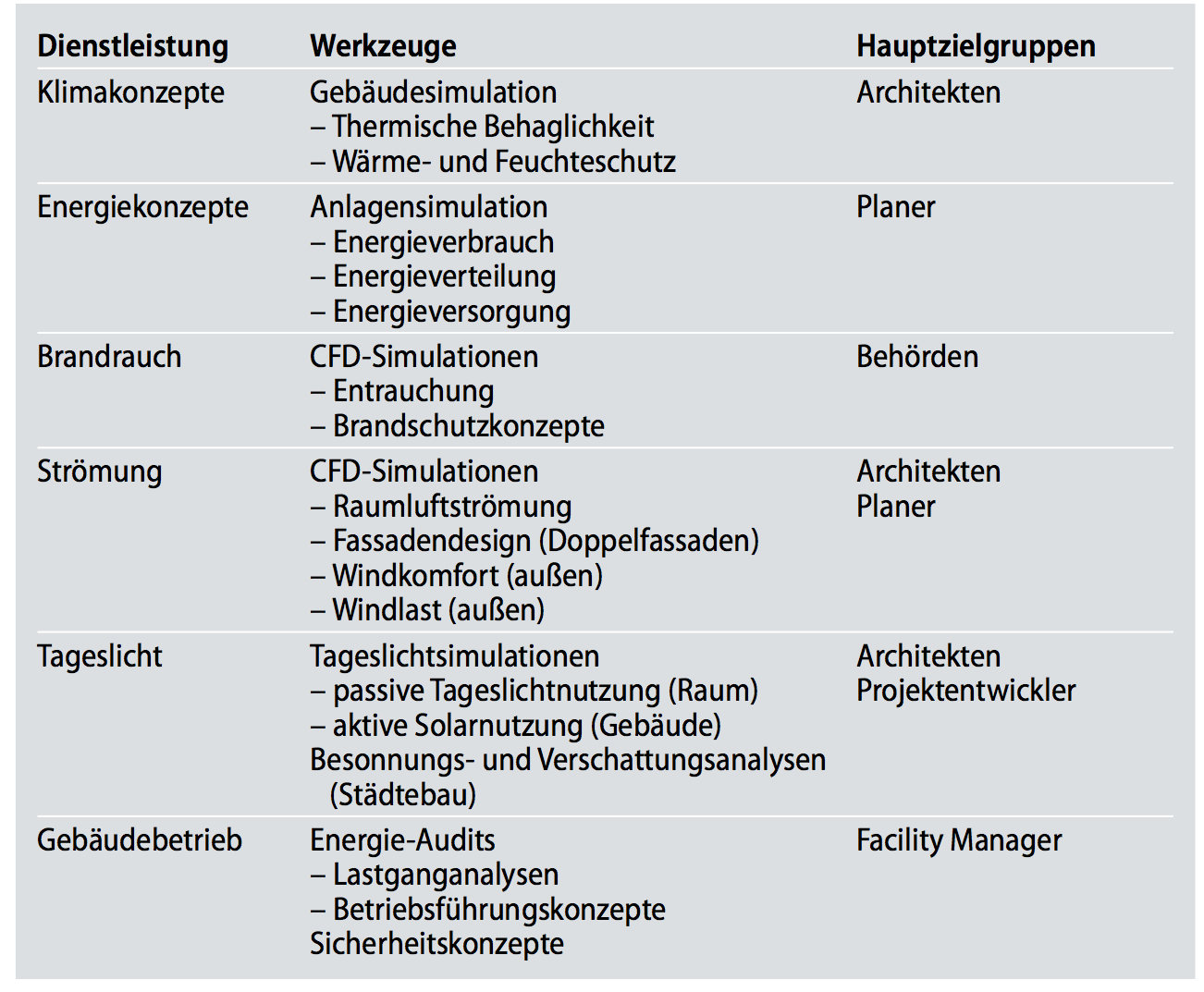
Axel Seerig is Professor of Building Climate and Building Technology at the Department of Technology and Architecture of Lucerne University of Applied Sciences and Arts (HSLU). He works at the Institute of Building Technology and Energy (IGE) and the Center for Integrated Building Technology, where he leads research and teaching in sustainable building concepts. With over 25 years of experience in building simulation and sustainable energy concepts for buildings, areas, and regions, he has established himself as a leading expert in climate-responsive building design. Seerig completed his studies in Process Engineering and earned his PhD in Thermodynamics at the Technical University of Berlin. His academic journey includes leadership roles as program director for Building Technology at the Austrian University of Applied Sciences Burgenland and senior researcher positions at AIT (Austrian Institute of Technology) and AEE-intec. His research focuses on the development of sustainable energy concepts using computer simulations for building climate control. He applies scientific principles of thermodynamics, heat transfer, and fluid mechanics through dynamic simulations in the disciplines of building climatic engineering and building simulation. His work emphasizes maximizing natural resources and user exposure to the outdoors through natural air conditioning, ventilation, and lighting, with human well-being as the central focus of planning. Current research includes energy efficiency in engineering systems for Central Asia, climate change adaptation in building design, and advanced data analysis for building performance assessment. His publication record shows a consistent focus on building energy efficiency, climate-responsive design, and simulation methods. Recent work emphasizes the integration of data analysis techniques like Monte-Carlo methods and artificial neural networks with traditional building simulation approaches. His research addresses critical challenges including climate change impacts on building performance, uncertainty in occupancy patterns, and the development of robust building concepts that maintain performance throughout their lifecycle. Seerig serves as an advisor in the Master of Science program MSE in Building Technologies and for doctoral studies at Middlesex University in London. He has received research funding through projects like SCCER FEEB&D (Swiss Competence Center for Energy Research) and has consulted internationally for the German Society for International Cooperation (GIZ) in Central Asia and Africa. He is an active member of the building science community, serving on the board of the International Building Performance Simulation Association (IBPSA), as a reviewer for the Austrian Research Promotion Agency (FFG), and as a member of professional organizations SIA and VDI. His work connects academic research with practical building projects, including notable collaborations with firms like Gruner AG on buildings such as the Roche OPAL office building, Siemens Headquarters Austria, and the Vienna Central Station.
Prof. Dr. Bryan T. Adey is a full Professor at the Swiss Federal Institute of Technology in Zurich (ETHZ) within the Department of Civil, Environmental and Geomatic Engineering . He directs the Institute for Construction and Infrastructure Management and leads the Masters Spatial Planning and Infrastructure Systems program. His research focuses on improving infrastructure management through process standardization, automation, and optimization for systems like road networks, rail networks, and water distribution networks. Specializes in infrastructure resilience and post-disaster recovery Active participant in European research projects (e.g., Destination Rail, Foresee) Editorial Board member of Journal of Infrastructure Asset Management and Journal of Infrastructure Systems His recent publications emphasize: Ensemble learning for water pipe failure prediction Simulation-based optimization for flood recovery Resilience quantification frameworks Cost-benefit analysis for urban mobility transitions He contributes to global infrastructure standards through: Leadership in VSS committee 4.3 Consultancy for major infrastructure owners Active reviewing for 20+ international journals
Alessandro Facchini is a Professor at the Department of Innovative Technologies at SUPSI - University of Applied Sciences Western Switzerland, based in Lugano, Switzerland. He holds a PhD in Computer Science (2010) from the University of Lausanne and the University of Bordeaux, with prior research roles at institutions including the University of Warsaw, University of Amsterdam, and University of California, Santa Cruz. His current research focuses on logic, rationality theories, probability, and the philosophy and ethics of AI, complemented by past work in automata theory and game theory. He has received notable awards such as the FNP Homing Plus Grant (2012) and the Paul Bernays Award (2011). Education PhD in Computer Science (2010), co-supervised by Prof. J. Duparc (U. Lausanne) and I. Walukiewicz (U. Bordeaux) Doctoral Program in Logic and Foundations of Mathematics (2004-2006), University of Barcelona Master in Humanities (Logic, Linguistics, Mathematics) (1998-2003), University of Neuchâtel Research Interests : Facchini’s work bridges formal logic, AI ethics, and foundational questions in probability and quantum theory. His recent projects include the European University on AI in Curricula and SmartH2O, a platform leveraging gamification for water resource management. He explores topics like quantum rational preferences, causal models, and the societal implications of AI systems. Awards & Recognition : FNP Homing Plus Grant (2012) Paul Bernays Award (2011) Teaching & Leadership : Facchini leads courses such as “Ethics of Technology and Engineering” and “Fundamentals of Artificial Intelligence,” emphasizing ethical and legal dimensions of data analytics. He also oversees projects like the Smart UniverCity initiative. Collaborations & Labs : Active member of IDSIA (Istituto Dalle Molle di Studi sull’Intelligenza Artificiale), a leading Swiss AI research institute. His work often intersects interdisciplinary teams addressing environmental, healthcare, and ethical challenges posed by AI.
Masashi Sugiyama is a Professor at the Department of Complexity Science and Engineering, Graduate School of Frontier Sciences, The University of Tokyo, where he has been serving since 2014. He concurrently serves as the Director of the RIKEN Center for Advanced Intelligence Project (AIP) since 2016, leading research groups focused on fundamental AI technologies, AI applications, and social issues of AI. His academic journey began at Tokyo Institute of Technology, where he earned his Bachelor, Master, and Doctor of Engineering degrees in Computer Science in 1997, 1999, and 2001 respectively, before becoming an Assistant Professor and later Associate Professor at the same institution. Sugiyama's research primarily focuses on statistical machine learning, with particular expertise in weakly supervised learning, learning from noisy supervision, and learning under distribution shift. His work has established important theoretical frameworks for density ratio estimation, covariate shift adaptation, and non-stationary environments. He has developed numerous practical algorithms including KLIEP (Kullback-Leibler importance estimation procedure), uLSIF (unconstrained least-squares importance fitting), and LSDD (least-squares density difference), which have become standard tools in the machine learning community. Analysis of his recent publications reveals a strong emphasis on reliable and robust machine learning techniques that can handle imperfect supervision and data distribution changes. His work spans theoretical foundations, algorithm development, and practical applications across various domains including bioinformatics, anomaly detection, and dimensionality reduction. The recurring themes in his research include direct density ratio estimation methods, importance weighting techniques, and mutual information-based approaches for various machine learning tasks. Award for Science and Technology from the Japanese Minister of Education, Culture, Sports, Science and Technology (2022) Japan Academy Medal (2017) Japan Society for the Promotion of Science Award (2017) Faculty Award from IBM (2007) Nagao Special Researcher Award from the Information Processing Society of Japan (2011) Young Scientists' Prize for the Commendation for Science and Technology by the Minister of Education, Culture, Sports, Science and Technology Japan (2014) Sugiyama has served as program co-chair for major machine learning conferences including NeurIPS 2015, AISTATS 2019, and ACML 2010 and 2020. He has received prestigious fellowships including the Alexander von Humboldt Foundation Research Fellowship (2003-2004) and the European Commission Program Erasmus Mundus Scholarship (2006). He is the (co-)author of influential machine learning monographs including Machine Learning in Non-Stationary Environments (MIT Press, 2012), Density Ratio Estimation in Machine Learning (Cambridge University Press, 2012), Statistical Reinforcement Learning (Chapman & Hall, 2015), and Machine Learning from Weak Supervision (MIT Press, 2022). At RIKEN AIP, Sugiyama leads research initiatives focused on developing robust AI systems that can operate reliably in real-world conditions with imperfect data. His laboratory maintains an active software development effort, providing open-source implementations of many of his research contributions, which has significantly influenced both academic research and practical applications of machine learning.
Desi R. Ivanova is a research fellow at the University of Oxford's Department of Statistics under the Florence Nightingale Bicentennial Fellowship. Her work bridges probabilistic machine learning, Bayesian experimental design, and LLM evaluation frameworks. She holds a DPhil in Statistics from Oxford's StatML CDT program (2020-2024) and an MMORSE in Mathematics from University of Warwick (2011-2016) with Erasmus exchange at LMU Munich. Research spans causal machine learning and uncertainty quantification Developed CO-BED and Step-DAD frameworks Focus on LLM evaluation methodology and calibration Expert in real-time adaptive experimental systems Her publications demonstrate expertise in Bayesian self-consistency methods, neural data compression, and privacy-preserving dataset merging. Key contributions include improving amortized inference efficiency and developing gradient-based causal experimental designs. Current work emphasizes rigorous statistical evaluation of language models, advocating for appropriate uncertainty quantification when analyzing performance across small datasets. She critiques CLT-based methods for LLM evaluation and proposes more robust frequentist and Bayesian alternatives.
Backhausz Ágnes is a Assistant Professor at Eötvös Loránd University's Faculty of Science , specifically in the Department of Probability Theory and Statistics . She also holds a part-time Researcher position at the Alfréd Rényi Institute of Mathematics . Her academic journey includes habilitation and a PhD in Mathematics, focusing on random graph models and their asymptotic properties. Research Group: Struktúrák limeszei (since 2013, part-time since 2015) Grants: ERC Grant on 'Limits of Discrete Structures' (2014–2019) Ágnes specializes in Probability Theory and Random Graphs , with emphasis on graph limits , factor of i.i.d. processes , and spectral theory . Recent publications analyze epidemic spread on multilayer networks, entropy inequalities, and action convergence in graph operators. Her work bridges theoretical mathematics with applications in network science and stochastic processes. Notable awards include the Grünwald Géza Memorial Medal (2014) from the Bolyai János Matematikai Társulat. She actively contributes to academic service as a Supervisor and Training Lead for the Beyond The Edge Marie Curie Doctoral Network (2024–2027) and serves on program committees for conferences like Eurocomb and the European Girls' Mathematical Olympiad . Her teaching portfolio spans Probability Theory, Stochastic Processes, and Mathematical Statistics at both undergraduate and graduate levels.