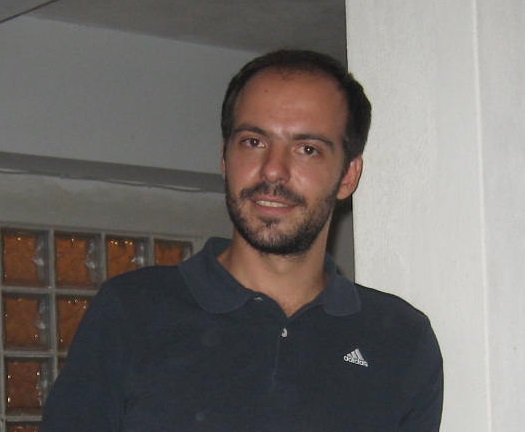
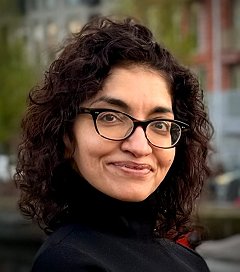
Konstantinos Tyros is Associate Professor in Mathematics at the University of Athens, specializing in combinatorial analysis and Ramsey theory. His research connects density theorems in combinatorics with problems in Banach space geometry and probabilistic methods. Key contributions include density versions of combinatorial theorems (Carlson-Simpson, Hales-Jewett), structure theorems for stochastic processes on discrete cubes, and concentration inequalities for high-dimensional random arrays. His work on spreading models in Banach spaces reveals new structures in functional analysis. He has developed novel approaches to nonlinear spectral gaps and dual Ramsey theory for trees, while advancing the Moser-Tardos algorithmic framework. Honors include technical excellence awards from Greek academic institutions.
Panagiotis Katsaros is an Associate Professor at the Department of Informatics, Aristotle University of Thessaloniki. His research spans formal verification, model-based system design, dependability, security, and simulation-based performance analysis. He contributes to rigorous methods for embedded systems, IoT, and fault-tolerant computing. His work focuses on Formal verification and model checking Model-based design for multi-core and embedded systems Dependability and security of distributed systems Probabilistic analysis of security risks He has published extensively on these topics, with recent works addressing reactive streaming software, IoT systems, and cloud elasticity. His research often bridges theoretical rigor with practical applications in real-time and safety-critical domains. Scientific awards include BEST PAPER AWARD at 17th Panhellenic Conference on Informatics (PCI 2013) BEST PAPER AWARD at 15th Panhellenic Conference on Informatics (PCI 2011) He collaborates with international institutions and has supervised students in software verification and distributed systems. His contributions to conferences like ETAPS, DSN, and COMPSAC highlight his expertise in systems analysis and software reliability.
Lagoudakis Michael is a Professor at the School of Electronic & Computer Engineering of the Technical University of Crete since 2005. His academic journey includes a PhD in Computer Science from Duke University (2003), a Master's from the University of Louisiana, Lafayette (1998), and a Diploma in Computer Engineering and Informatics from the University of Patras (1995). Education: PhD in Computer Science, Duke University, 2003 MSc in Computer Science, University of Louisiana, Lafayette, 1998 Diploma in Computer Engineering and Informatics, University of Patras, 1995 Research interests span Machine Learning, Reinforcement Learning, Decision Making under Uncertainty, Multi-Agent Systems, Robotics (particularly robotic team coordination), Complex Systems, and DNA Computing. His work has produced significant publications in top venues like Robotics: Science and Systems , IEEE IROS , Journal of Machine Learning Research , and NIPS . He has contributed to projects such as EURECA-PRO (2020–present), DialogRL (2016–2020), and LSPI (2000–2003). Scientific awards include the Outstanding Dissertation Award from Duke University's Department of Computer Science and the Outstanding Teaching Assistant Award received twice. He is a member of AAAI, IEEE, and ACM.
Aretakis Nikolaos is a Professor in the Department of Mechanical Engineering at the National Technical University of Athens (NTUA), affiliated with the School of Mechanical Engineering and the Section of Fluids. His research focuses on engine monitoring, fault diagnosis for turbomachines, and performance modeling of gas and steam turbines, with applications in aerospace, marine, and power generation systems. Education: PhD in Mechanical Engineering (2000), NTUA BSc in Mechanical Engineering (1994), NTUA His expertise spans experimental techniques in turbomachines, vibration analysis, and techno-economic power plant assessments. Recent research trends include machine learning integration for turbofan diagnostics, alternative fuel modeling, and multi-disciplinary aero-engine design optimization. Scientific Awards: 2012 Best Paper Award, Cycle Innovations Committee of IGTI/ASME 2002 Best Paper Award, Controls and Diagnostics Committee of IGTI/ASME At NTUA, he teaches undergraduate courses on jet propulsion and gas turbine diagnostics, and postgraduate courses on thermal machines. He serves as Deputy Representative in the Library Senate Committee and coordinates Erasmus programs for international students.
Aris-Evangelos Dimeas is an Assistant Professor at the Department of Electric Power, National Technical University of Greece (NTUA). He teaches undergraduate and postgraduate courses including 'Introduction to Electrical Power Systems', 'Power System Analysis (Steady State Operation)', and 'Probabilistic Analysis of Energy Systems' within interdepartmental programs. His research interests focus on electrical power systems, industrial electronics, and the digitalization of energy systems. He is affiliated with the Old Electrical Building, office 1.2.15B, and can be reached at adimeas@power.ece.ntua.gr. Professional activities include supervision of energy systems management and involvement in energy control center methodologies. No specific awards or grants are explicitly mentioned in the provided information.
Chadjiconstantinidis Stathis is a Professor at the Department of Statistics and Insurance Science, University of Piraeus. He earned his Doctorate in Statistics (1990) and Diploma in Mathematics (1985) from Aristotle University of Thessaloniki. His academic roles include undergraduate and postgraduate teaching across multiple institutions including the University of Athens and Athens University of Economics and Business. Research Focus: His work spans actuarial mathematics, risk theory, and statistical optimization. Primary domains include: Ruin theory and bankruptcy modeling in insurance contexts Collective risk models with dependencies Optimal experimental designs for statistical efficiency Reliability theory and stochastic pattern analysis Publications: His 15 most recent articles show consistent focus on risk modeling (compound processes, ruin probabilities) and statistical design optimization (D-optimal cyclic designs). Actuarial mathematics dominates newer works (2005–2013), while earlier publications emphasize experimental design combinatorics. Academic Leadership: Department President (2007–2009) Director of Master’s Program in Actuarial Science & Risk Management (2007–2011) Deputy Chairman of Actuary Licensing Committee (Ministry of Finance) Senate Member at University of Piraeus (1997–1998, 2007–2009) Doctoral Supervision: Mentored dissertations on risk theory and statistics pedagogy. Current advisees not specified.
Theodosis Dimitrakos is an Associate Professor at the Department of Mathematics, University of the Aegean, specializing in Applied Probability and Stochastic Operations Research . His work focuses on optimal control of stochastic systems across diverse domains. University of the Aegean School of Sciences Department of Mathematics His research spans epidemic processes , biological populations , preventive maintenance , vehicle routing , and medical emergency systems . Publications emphasize semi-Markov decision processes and dynamic programming . Recent articles analyze stochastic vehicle routing, maintenance optimization, and predator-prey dynamics. Key trends include stochastic demand modeling , penalty systems , and multi-compartment logistics . Teaching courses: Undergraduate and Postgraduate Statistics , Probability I , and Stochastic Modeling . Author of the textbook Probability, Statistics and Stochastic Models (Eudoxos code: 143557808).
Ourania Theodosiadou is a Researcher at the Department of Mathematics, Aristotle University of Thessaloniki (since Oct 2024). Previously, she served as a Postdoctoral Researcher at the Institute of Information and Communication Technologies (CERTH) from 2019 to 2024 and held multiple contracted lecturer roles at Aristotle University and the University of Macedonia. She earned a PhD in Mathematics (2019) and a Master's in Statistics and Modeling (2014), both from AUTH, with a focus on stochastic processes and financial applications. Her doctoral thesis explored latent stochastic processes with jumps in finance under Prof. Georgios Tsaklidis. Her research interests span stochastic modeling, time series analysis, computational statistics, and machine learning. Recent work includes real-time threat assessment using Hidden Markov Models (2023), cryptocurrency transaction analysis for illegal activity detection (2023), and centrality-based network node identification (2022). Methodological contributions include state space modeling with constraints (2021) and Kalman filter applications for jump detection in financial markets (2017-2019). Publications reflect interdisciplinary applications in finance, security, and computational methods. Current work extends AI-driven solutions against terrorist financing and explores blockchain forensics through time series analysis.
Karaliopoulou Margarita is a Lecturer affiliated with the Department of Mathematics at the National and Kapodistrian University of Athens, within the School of Science. She holds the capacity of 'Teachers outside the department,' indicating cross-departmental academic involvement. Her work spans mathematics education, stochastic processes, and educational technology. She has contributed to emergency remote teaching strategies during the pandemic and explored student perceptions of programming environments. Her research interests prominently feature semi-Markov processes in statistical analysis and their applications to word occurrences. She also investigates technology integration in education, particularly in programming pedagogy and dual modality tools. Her earlier work (1999–2009) focused on foundational mathematics education and probabilistic modeling. Notable recent efforts include analyzing asymptotic properties in semi-Markov sequences (2022) and evaluating teaching methodologies under pandemic constraints (2021). Her articles consistently bridge theoretical mathematics with practical educational challenges.
Christos Kaklamanis is a Full Professor and Chair of the Department of Computer Engineering and Informatics at the University of Patras, Greece, with significant leadership roles including President of Computer Technology Institute & Press "Diophantus" (CTI) from 2016-2021. His academic career includes serving as Vice-Chair of the Department (2009-2011 and 2003-2005) and Director of the Division of Applications and Foundations of Computer Science (1997-2003). Dr. Kaklamanis earned his S.B. in Computer Science and Engineering from MIT (1986), followed by S.M. (1989) and Ph.D. (1992) from Harvard University. He completed postdoctoral work at DIMACS (Center for Discrete Mathematics and Theoretical Computer Science) and worked as a research consultant for NEC Research Institute, Princeton. His research spans theoretical and applied computer science with expertise in algorithm design, computational complexity, communication networks, parallel and distributed computing, and algorithmic game theory. He has made significant contributions to network algorithms, particularly in optical networks and wireless communication, with recent expansion into computational social choice and educational technology applications. His work bridges theoretical foundations with practical implementations, especially in developing educational tools that make complex algorithms accessible. Analysis of his publication history reveals an evolution from foundational algorithm research toward practical applications of theoretical concepts, particularly in educational technology and community-oriented computing solutions. His recent work focuses on creating web and mobile applications that address real-world challenges in campus management, cultural tourism, and community engagement while maintaining strong theoretical underpinnings. Elected member of EATCS council (2009-2021) Active in ACM, IEEE, SIAM, and Technical Chamber of Greece Program Committee Chair for WAOA (Workshop on Approximation and Online Algorithms) Conference co-chair for ICALP (International Colloquium on Automata, Languages and Programming) As an educator, Dr. Kaklamanis has taught core courses including Theory of Computation, Parallel Algorithms, Communication Algorithms, and Cryptography. He has led major research initiatives including EU-FET projects CRESCCO and AEOLUS (as coordinator), EU-ICT Project EULER, and the "DIGITAL SCHOOL" project focused on national educational platforms. His leadership extends to directing research laboratories in Combinatorial Algorithms, Distributed Systems and Telematics, and Pattern Recognition. His current work continues to bridge theoretical computer science with practical applications, particularly in educational technology, with numerous recent publications focused on developing interactive learning tools and platforms that leverage algorithmic principles for educational and community benefit.
Michael A. Zazanis is a Professor in the Department of Statistics at the Athens University of Economics and Business (AUEB), where he has been a faculty member since 1997. He previously held positions as Assistant Professor at Northwestern University (1986-1993) and Associate Professor at the University of Massachusetts, Amherst (1993-1997). Dr. Zazanis received his Engineering Diploma from the National Technical University of Athens (1982), followed by an M.Sc. (1983) and Ph.D. (1986) in Applied Mathematics from Harvard University. His academic journey reflects a strong foundation in both engineering and theoretical mathematics. His research focuses on Applied Probability, Queueing Systems, Stochastic Simulation, and applications in Manufacturing and Risk Management. Over his career, his work has evolved from foundational perturbation analysis of queueing systems to contemporary research on age-of-information metrics in communication networks. His contributions span theoretical developments in stochastic processes and practical applications in production control systems and risk analysis. Dr. Zazanis has published extensively in leading journals including Journal of Applied Probability, Stochastic Processes and their Applications, Operations Research, Management Science, and Queueing Systems. His 1988 paper in Management Science on perturbation analysis for the M/G/1 queue is considered seminal in the field. Best Publication Award from the TIMS College on Simulation (1990) He has served in administrative roles including Graduate Program Director (2003-2006) and Head of the Statistics Department (2006-2008) at AUEB. Dr. Zazanis teaches undergraduate courses in Mathematical Methods, Stochastic Processes, and Probabilities, as well as graduate courses in Advanced Stochastic Processes and Operations Research. He is married to Corinna Anastassakou and has one son, Aristomenes.
Işıl Dillig is an Associate Professor of Computer Science at the University of Texas at Austin, where she leads the UToPiA research group. Her academic career spans over a decade of significant contributions to programming languages research, particularly in program analysis, verification, and synthesis. Dr. Dillig received all her academic degrees (BS, MS, and PhD) from Stanford University before joining the faculty at UT Austin. Her educational background established the foundation for her innovative research approach that bridges theoretical computer science with practical applications. Her research focuses on developing techniques to make software systems more reliable, secure, and easier to build through advanced program analysis, verification, and synthesis methods. She has pioneered approaches that combine symbolic reasoning with machine learning to tackle complex software engineering challenges across multiple domains including security, databases, and programming language theory. Her work demonstrates exceptional depth in creating practical tools that address real-world software development problems while maintaining strong theoretical foundations. Analysis of Dr. Dillig's publication record reveals a consistent trajectory of innovation in program synthesis, with recent work expanding into neurosymbolic approaches that bridge neural networks with formal methods. Her research shows strong connections between theoretical foundations and practical applications, particularly in security-critical systems, database technologies, and blockchain applications. The evolution of her work demonstrates increasing sophistication in handling complex program structures while maintaining practical usability. Dr. Dillig has received prestigious recognition for her research contributions: Sloan Fellowship NSF CAREER award As a dedicated educator and research leader, Dr. Dillig has served in significant roles including Program Chair for PLDI 2022 and Steering Committee member for PLDI. She has mentored numerous students through her UToPiA research group, guiding research in program synthesis, verification, and analysis. Her work has been supported by substantial research grants that have enabled innovative projects at the intersection of programming languages and security. Dr. Dillig leads the UToPiA (UT Austin Programming, Languages, and Analysis) research group, which focuses on developing novel techniques for program analysis, verification, and synthesis. The group maintains strong collaborations with industry partners and academic institutions worldwide, translating theoretical advances into practical tools that address real software engineering challenges.
Yufei Ding is an Associate Professor in the Computer Science & Engineering Department at the University of California, San Diego (UCSD), where she leads the PICASSO Lab. Her research spans domain-specific language design, architecture and compiler optimization, and hardware acceleration, with current focus on developing high-performance, energy-efficient, and high-fidelity programming frameworks for quantum computing and machine learning. Dr. Ding received her Ph.D. in Computer Science from North Carolina State University and a B.S. in Physics from the University of Science and Technology of China. Her interdisciplinary background bridges physics and computer science, enabling her to tackle challenges in emerging computing paradigms. Her research interests focus on Compiler Technology, Machine Learning, and Quantum Computing , with specific expertise in domain-specific language design, architecture and compiler optimization, and hardware acceleration. Dr. Ding's work addresses critical challenges in programming frameworks for emerging technologies, particularly in making quantum computing more accessible and efficient through innovative compiler techniques and runtime systems. Dr. Ding's scientific contributions have been recognized with prestigious awards including the NSF CAREER Award (2020) and the IEEE Computer Society TCHPC Early Career Researchers Award for Excellence in High-Performance Computing (2019) . As an active researcher and educator, Dr. Ding serves on program committees for major conferences including PLDI, PPoPP, and SPLASH. She currently has Ph.D. openings in quantum computing and machine learning systems research, as well as a postdoc position in quantum computing for physics Ph.D. candidates with relevant background. Dr. Ding founded and leads the PICASSO Lab at UCSD, which focuses on developing innovative solutions for programming emerging computing technologies. The lab's work bridges theoretical foundations with practical implementations to address real-world challenges in high-performance computing.
Amal Ahmed is a Professor and Associate Dean for Graduate Programs at Khoury College of Computer Sciences, Northeastern University, where she leads research in programming languages and secure compilation. She received her PhD in Computer Science from Princeton University and has established herself as a leading researcher in compiler correctness, language interoperability, and type systems. Her research focuses on correct and secure compilation across the software-hardware stack and safe language interoperability, including design of sound foreign-function interfaces (FFIs) and richly typed compiler intermediate languages. She makes extensive use of semantics and type systems for reasoning about imperative and probabilistic programming languages, multi-language systems, security, concurrency, and provenance. Her work has significantly advanced the understanding of gradual typing, compiler verification, and compositional language interoperability. Dr. Ahmed's publications reveal a research trajectory focused on building solid semantic foundations for language interoperability and secure compilation. Her recent work spans topics from probabilistic separation logic to WebAssembly interoperability, with consistent emphasis on formal verification and semantic techniques. She has developed frameworks for reasoning about multi-language systems that preserve security properties across language boundaries. NSF CAREER Award recipient Editorial Board: Journal of Functional Programming (2017–present) Editorial Board: Mathematical Structures in Computer Science (2016–present) Member: IFIP Working Group 2.8 (Functional Programming, 2014–present) As an educator and mentor, Dr. Ahmed has advised numerous PhD students, postdocs, and undergraduates, many of whom have gone on to successful academic and industry careers. She has organized the Programming Languages Mentoring Workshop and regularly teaches advanced courses in programming languages. She serves on the steering committees of major conferences including POPL, SPLASH, and PLMW, and has chaired program committees for ESOP and POPL.
Marc Pouzet is a Professor at École Normale Supérieure (ENS) in the Department of Computer Science (DIENS), where he serves as Director of CS studies. He leads the INRIA project-team PARKAS and was a Junior Member of the Institut Universitaire de France (2007–2012). His research centers on synchronous programming languages for safety-critical embedded systems, with contributions to real-time software verification, hybrid systems modeling, and probabilistic reactive programming. Research Focus Pouzet's work bridges theory and practice in: Synchronous Languages : Design/extensions of Lustre, Lucid Synchrone, and Zelus for embedded control Formal Methods : Mechanized semantics (Coq) and verified compilers (Vélus) for correctness guarantees Hybrid Systems : Integrating ODEs with discrete logic (ProbZelus for probabilistic inference) Real-time Systems : Scheduling, latency constraints, and memory-safe compilation Awards & Leadership Inria–Académie des sciences Innovation Award (2016) Program committees: EMSOFT, PLDI, POPL, ECRTS Associate Editor: EURASIP Journal on Embedded Systems Advising & Projects Supervised 19+ PhD students on topics spanning compiler verification (Bourke, Pesin), probabilistic languages (Baudart), and hybrid systems (Pauget). Leads development of open-source tools: Zelus (synchronous language with ODEs) Vélus (verified Lustre compiler) ReactiveML (reactive extension of OCaml)