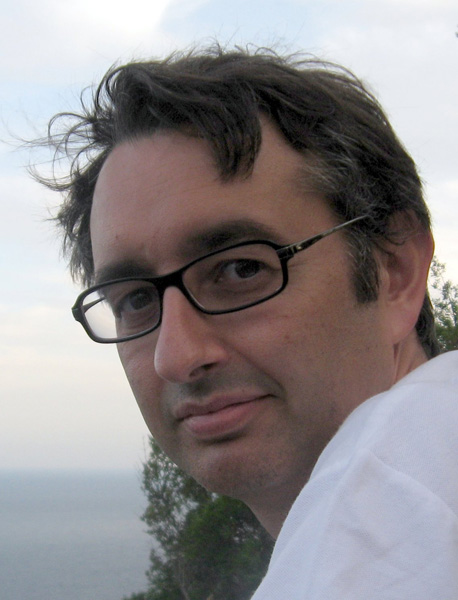
Univ.-Prof. Dr. Georg Moser is a Professor in the Department of Computer Science at the University of Innsbruck. His research focuses on theoretical computer science, complexity analysis, automated reasoning, and formal methods. He leads the Theoretical Computer Science (TCS) group, with expertise in term rewriting systems, programming language semantics, and algorithmic learning theory. Key research areas include: complexity analysis of programs via rewriting techniques, automated tools for resource analysis (e.g., ATLAS), and foundational work on proof theory and logic. His work bridges theory and practice, addressing challenges in program verification and probabilistic systems. Selected publications (2021–2025) highlight advancements in reinforcement learning, quantum program analysis, and modular rule-based systems. He teaches courses like 'Discrete Mathematics' and 'Introduction to Theoretical Computer Science'.
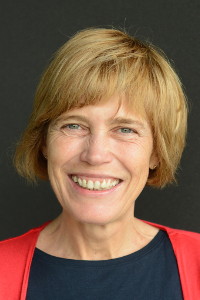
Ana Sokolova is a Full Professor in the Department of Computer Science at the University of Salzburg. Her research focuses on formal methods, concurrency theory, and coalgebra, with significant contributions to probabilistic systems and concurrent data structures. Department: Computational Systems Group, University of Salzburg Key Research Areas: Formal Methods, Concurrency Theory, Coalgebra, Probabilistic Systems Her work bridges theoretical and applied computer science, including memory management, real-time systems, and security. She has been actively involved in organizing international conferences and workshops, such as Dagstuhl Seminar 22492 , and served on program committees for venues like FoSSaCS, CAV, and CONCUR. Recent publications explore coalgebraic trace semantics, probabilistic anonymity, and concurrent data structures. She has supervised numerous PhD students, including Sebastian Arming and Clemens Brunner, and is recognized for her Elise Richter Fellowship.
Joël Ouaknine is a Scientific Director at the Max Planck Institute for Software Systems since 2016, where he led the Institute as Managing Director from 2018 to 2020. He is also an Adjunct Professor at Saarland University's Department of Computer Science and a part-time Professorial Research Fellow at Oxford University's Department of Computer Science. His academic career includes a Full Professor role at Oxford (2010-2016), Deputy Head of Department (2014-2016), and prior positions at Carnegie Mellon and Tulane Universities. Education: PhD in Computer Science (2001, Oxford University) MSc in Mathematics (1995, McGill University) BSc in Mathematics (1993, McGill University) Joël's research focuses on foundational aspects of algorithmic verification, linear dynamical systems, logic in verification, automated software analysis, concurrency, and verification of real-time, probabilistic, and infinite-state systems. His work bridges theoretical and applied computer science, emphasizing formal methods for system reliability. Joël has secured major funding, including the CRC 248 grant (€11M, 2018-2022) as a principal investigator and an ERC Consolidator Grant (€1.835M) for research on infinite-state systems. He has received prestigious awards such as the BCS Roger Needham Award , EPSRC Leadership Fellowship , and multiple Outstanding Teaching Awards . His work has also been recognized with best paper awards at ICALP 2014 and CONCUR 2011. Joël actively contributes to the academic community as Associate Editor for the Journal of Computer and System Sciences and through leadership roles in conference program committees, including co-chairing LICS (2017), RP (2014), MFPS (2011), and FORMATS (2009). He has served on approximately 50 program committees and remains on the steering committees of LICS (since 2017) and MFPS (since 2012).
Georg Weissenbacher is a Full Professor in the Institute of Logic and Computation at TU Wien, leading the Formal Methods in Systems Engineering group. His research focuses on automated software verification, formal methods, and concurrency bug analysis. He holds a DPhil from Oxford and has held positions at Princeton and ETH Zurich. Education: TU Wien (since 2010), Postdoctoral Researcher at Princeton University (2010–2012), PhD from Oxford University (2008–2010), Research Assistant at ETH Zürich (2005–2010), Master's at TU Graz (until 2003). Research Interests: Automated software verification, formal methods, model checking, concurrency bug detection, logic and automated reasoning, symbolic simulation, and test case generation. His work addresses challenges like Heisenbugs in concurrent systems and robustness verification of neural networks. Grants & Projects: Lead projects such as AutoTest (Vienna Science Fund), LogiCS-Scholarships (2017–2025), and contributions to the National Research Network 'Rigorous Systems Engineering' (FWF). Active in the FWF-funded doctoral college 'Automated Reasoning' (2025). Advising: Supervised over 20 PhD and master's students, including notable works on Heisenbugs, mutation testing, and neural network verification. Current advisees include Thomas Hader and Sarah Sallinger. Labs & Teams: FORSYTE Group at TU Wien, collaborating on formal methods and automated reasoning. Engaged in international conferences like CAV and FMCAD as program chair/co-chair.
Javier Esparza is a Professor at the Technische Universität München, holding the Chair of Foundations of Software Reliability and Theoretical Computer Science since 2007. Prior to this, he held chairs at the University of Stuttgart (2003-2007) and the University of Edinburgh (2001-2003), along with academic positions dating back to 1990. Education: M.S. in Theoretical Physics (1987, University of Zaragoza), Ph.D. in Computer Science (1990, University of Zaragoza), and Habilitation in Computer Science (1994, University of Hildesheim). His research focuses on formal verification, distributed systems, and software reliability, particularly through algorithms for software model checking, logic and automata theory, and analysis of probabilistic systems. His work has been supported by numerous grants from the German Research Council (DFG), British Engineering and Physical Sciences Research Council (EPSRC), and the Humboldt Foundation. Scientific Awards: Doctor honoris causa from Masaryk University (2009), TeachInf Awards for best Bachelor and Master courses (2009, 2010), TU München Diploma for excellent teaching (2011), Member of Academia Europaea (2011), and Dissertation Prize from the University of Zaragoza (1990). Esparza has supervised over 15 PhD students, including Dr. Stefan Schwoon, Dr. Claus Schröter, and Dr. Michael Luttenberger, and collaborated on research projects with institutions across Europe and the UK.
Univ. Prof. Dr. Ezio Bartocci is a Professor at TU Wien, leading the Forschungsbereich Cyber-Physical Systems . His research focuses on formal methods, runtime verification, and probabilistic systems in Cyber-Physical Systems (CPS). He leads projects like 'Distribution Recovery for Invariant Generation of Probabilistic' and 'Trustworthy IoT for CPS'. Key interests include specification mining, probabilistic hyperproperties, and developing tools like MoonLight for spatio-temporal monitoring. Recent work explores reinforcement learning ethics, neural network verification, and adaptive testing frameworks. His contributions span conferences such as HSCC and RV, with notable publications on parameter synthesis, fault localization in CPS, and moment-based analysis of probabilistic loops. Research Interests : Cyber-Physical Systems (CPS) design and validation Formal specification and verification techniques Probabilistic systems and hyperproperties Runtime monitoring and adaptive testing Neural networks and ethical AI Labs/Teams : Active in TU Wien's Cyber-Physical Systems research unit, collaborating with industry and academia on CPS security and autonomous systems.
Christel Baier is a Full Professor for Algebraic and Logical Foundations of Computer Science at the Faculty of Computer Science, Technical University Dresden. She has held this position since 2006, following her role as Professor for Theoretical Computer Science at Rheinische-Friedrich-Wilhelms Universität Bonn (1999-2006). Her research focuses on probabilistic systems, modeling and specification formalisms, semantics of coordination languages, probabilistic model checking, quantitative analysis, temporal and modal logics, and automata theory. Her work bridges theoretical computer science with practical applications in system verification and analysis, particularly in developing formal methods for probabilistic and timed systems. Professor Baier's publications demonstrate consistent contributions to theoretical computer science with a clear trajectory from foundational work in automata theory to applied model checking techniques. Her research shows particular strength in probabilistic verification methods and their application to complex system analysis. Award for visiting professor (1 month in both years), CNRS/ENS Cachan, France (2005 and 2006) ETAPS Best Theory Paper Award (2008) Professor Baier has advised numerous PhD students throughout her career, including Alexander Asteroth, Nathalie Bertrand, Marcus Groesser, Verena Wolf, and Frank Ciesinski. She currently supervises 4 PhD students at TU Dresden. She has served as Chair of the examination board for bachelor, master and diploma programs in Computer Science at TU Dresden and has been Principal Investigator for 4 national projects funded by the German Research Foundation (DFG). Her research group at TU Dresden focuses on advancing formal verification methods for probabilistic systems. She maintains active involvement in the academic community through editorial board membership of the Journal of Universal Computer Science, steering committee participation for major conferences, and extensive program committee service for top-tier theoretical computer science venues.
Kurt Hornik is a Professor at the Vienna University of Economics and Business (WU) , where he heads the Institute for Statistics and Mathematics and the Research Institute for Computationally Intensive Methods . He is renowned for his co-development of the R programming language, a cornerstone in statistical computing with over 15,000 extension packages. His research spans statistical data processing, machine learning, and quantitative risk management, focusing on combining ordinal ratings (e.g., credit scores) into consensus-based models. Education: Technical Mathematics (PhD, 1987, Vienna University of Technology) Postdoctoral work in statistics and mathematics Research Interests: Hornik's work addresses challenges in statistical modeling of ordinal preferences, particularly in creditworthiness assessment. He developed composite likelihood methods to improve calibration of credit rating systems, which underpin key Eurosystem monetary policies. His recent publications explore hyperspherical variational autoencoders, Watson distributions, and Kummer's function bounds, reflecting his contributions to computational statistics and high-dimensional data analysis. Scientific Awards: Golden Decoration of Merit for Services to the Republic of Austria (2007) Contributions: Hornik's research has produced widely used R packages like colors , ROI , and mvord , advancing statistical software infrastructure. He collaborates globally, with publications in journals such as Journal of Statistical Software and Annals of Applied Statistics .
Laura Kovacs is a Professor at TU Wien's Research Area Formal Methods in Systems Engineering. Her work focuses on automated reasoning, symbolic computation, and formal verification of (probabilistic) programs. She leads projects like Automated Reasoning with Theories and Induction and Effective Formal Methods for Smart-Contract Certification . Key research areas: Automated Reasoning, Formal Methods, SMT Solving Projects: Game-Theoretic Security, Probabilistic Loop Analysis Recent publications emphasize SAT-based subsumption, induction in saturation, and algebraic loop reasoning. Her team includes researchers like Marcel Moosbrugger and Sophie Rain. She contributes to tools like Vampire and Z3 for symbolic attackers and finite field reasoning.
Wolfgang Schreiner is an A.Univ.-Prof. (Associate University Professor) at the Research Institute for Symbolic Computation (RISC), Johannes Kepler University Linz, Austria. His research focuses on formal methods, parallel and distributed computing, and symbolic computation. He leads projects in automated reasoning, programming language semantics, and educational software tools. His work emphasizes practical applications of formal methods, including the development of tools like RISCAL for model checking and the RISC ProgramExplorer for program reasoning. He collaborates on interdisciplinary projects, such as analyzing queueing systems using probabilistic model checking and designing grid computing frameworks for medical applications. Key research interests include semantics-based language design, theorem proving, and educational technology. He has authored textbooks like *Concrete Abstractions* and *Thinking Programs*, emphasizing foundational concepts in computer science. His contributions span theoretical advancements and practical implementations, with notable work in distributed systems, formal verification, and computational logic.
Christine Paulin-Mohring is a Full Professor at Université Paris-Saclay's Faculty of Science since 1997. She previously held a secondment at INRIA Futurs/Saclay Île-de-France (2006-2008), was a CNRS Researcher at ENS Lyon (1989-1997), and an assistant professor at ENS Paris (1985-1989). She earned her PhD in 1989 from Université Paris 7 under Gérard Huet's supervision at INRIA Rocquencourt and ENS Paris. Her research focuses on Program verification Type theory Interactive theorem proving Formal methods Coq proof assistant Randomized algorithms She has developed the ALEA Coq library for randomized programs and led the ProVal research group until 2011. Her award highlights include ACM Software System Award (2013) Doctor Honoris Causa from University of Gothenburg (2011) Prix Michel Monpetit (2015) Academia Europaea membership (2014) She has advised 15 PhD students and coordinated major projects like DigiCosme Labex (2007-2011). Her administrative roles include Dean of the Faculty of Science (2016-2021) and leadership in doctoral schools.
Dr. Milosh Jovanovikj holds the role of Associate Professor at the Faculty of Computer Science and Engineering in Skopje, North Macedonia, and concurrently serves as a PostDoc Researcher at TU Wien in Vienna, Austria. He is also a Senior R&D Knowledge Graphs Engineer at OpenLink Software in London. His primary research focuses on Knowledge Graphs (KGs), including their lifecycle processes such as modeling, enrichment, and analytics-driven AI applications. He has contributed to over 10 international and 25 national research projects, authored 60+ publications, and co-authored 3 books. His expertise spans Data Engineering, Semantic Web technologies, Linked Data, and Applied AI. Significant contributions include developing frameworks like RDFGraphGen for RDF graph generation and PharmKE for pharmaceutical text analysis. He has led initiatives in geospatial semantic web standards (GeoSPARQL) and healthcare informatics, including predictive analytics for nephrology data. Education: PhD in Computer Science and Engineering His work bridges academia and industry, with projects like the 3DFed federation engine and Semantic Sky (a Gmail plugin). He has extensive experience in ontology development (e.g., SEOntology, VEO for CO2 emissions) and open data initiatives, including LinkedDrugs for global drug data consolidation. Active in dissemination, his articles span knowledge graph applications in music recommendation, finance sentiment analysis, and drug-disease relation discovery. He has collaborated on benchmarks like the GeoSPARQL Compliance Benchmark and Mighty Storage Challenge (MOCHA). Grants/Projects: HOBBIT, SAGE, 3DFed, LinkedDrugs He leads teams in advancing semantic web integration, cloud service platforms (Semantic Sky), and educational materials like Web Programming Basics . His labs and teams focus on AI-driven solutions for healthcare, geospatial analytics, and enterprise systems.
Eva Schenner is a Researcher at TU Wien's Department of Software Engineering, affiliated with both the Office Services and eduLAB teams. She specializes in formal methods, program analysis, and machine learning applications in software engineering. Her work focuses on testing tools, smart contract certification, and probabilistic models for material design. She has led multiple high-profile projects, including the FWF-funded 'Types4Strings' (2024–2027), WWTF's 'Effective Formal Methods for Smart-Contract Certification' (2023–2027), and an Amazon Research Award project on testing Dafny (2024–2027). Her research also spans metamorphic testing of machine-learning models and probabilistic hybrid models for material design. Education: Mag.a phil. (Master of Philosophy) Her awards include Amazon and Google Research Awards, and grants from the WWTF and Max-Planck-Gesellschaft. She actively contributes to initiatives like Bebras, promoting computational thinking education since 2007. Labs/Teams: Involved in the Software Engineering group within the Faculty of Informatics, collaborating with industry partners like Amazon and Google.
Ingo Feinerer serves as an Associate Professor at Vienna University of Technology's Faculty of Informatics, specifically within the Institute of Information Systems Engineering (E192-02). His research bridges theoretical computer science and practical applications in database systems, artificial intelligence, and text mining, with significant contributions to configuration management and formal methods. His educational background includes: PhD Dissertation (2007): A formal treatment of UML class diagrams as an efficient method for configuration management Diploma Thesis (2005): Formal program verification: a comparison of selected tools and their theoretical foundations Feinerer's research focuses on database theory (particularly schema mapping and dependencies), AI-driven configuration systems using integer linear programming, and text mining infrastructure development in R. His work combines theoretical rigor with practical tool development, notably through the textcat and tm packages. The integration of formal methods in software engineering remains a consistent thread throughout his publications. Analysis of his 15 most recent publications reveals strong specialization in database constraints (40%), text mining applications (30%), and software configuration systems (30%), with increasing interdisciplinary work connecting computer science to digital humanities. His notable recognition includes: INiTS Award (2007) for technology commercialization potential Feinerer has supervised doctoral research including F. I. Chertes' work on schema mapping languages and diploma theses on UML semantics and probabilistic databases. He led major research projects HINT (2012-2017) and SEE (2012-2016) focusing on database technologies and information systems. His work demonstrates consistent funding through Austrian national research programs. As a core member of the Databases and Artificial Intelligence research group, he collaborates extensively on R package development for text analysis and contributes to international workshops on theoretical aspects of software engineering.
Holger Hermanns is a Professor at Saarland University , holding the Chair for Dependable Systems and Software within the Faculty of Mathematics and Computer Science on the Saarland Informatics Campus. He has held academic positions at Universiteit Twente (Netherlands), INRIA Rhône-Alpes (France), and Universität Erlangen-Nürnberg (Germany), with part-time roles at INRIA (2007-2010) and Universiteit Twente (2001-2006). His research spans modeling and verification of concurrent systems , resource-aware embedded systems, compositional performance evaluation , and energy informatics . Recent work focuses on satellite network architectures, AI-driven system management, and ethical considerations in algorithmic accountability. Authored over 200 peer-reviewed papers (ha-index 92, h-index 56) Co-chaired program committees for CAV, CAV, CONCUR, TACAS, and QEST Keynote speaker at numerous international conferences Honors include the ERC Advanced Grant (2016), Preis des Fakultätentages Informatik (2013), and membership in Academia Europaea (2013). He serves on steering committees for ETAPS and TACAS, and has led Dagstuhl Foundation initiatives.