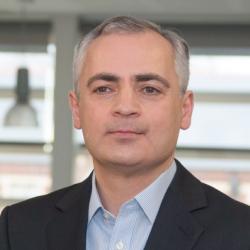
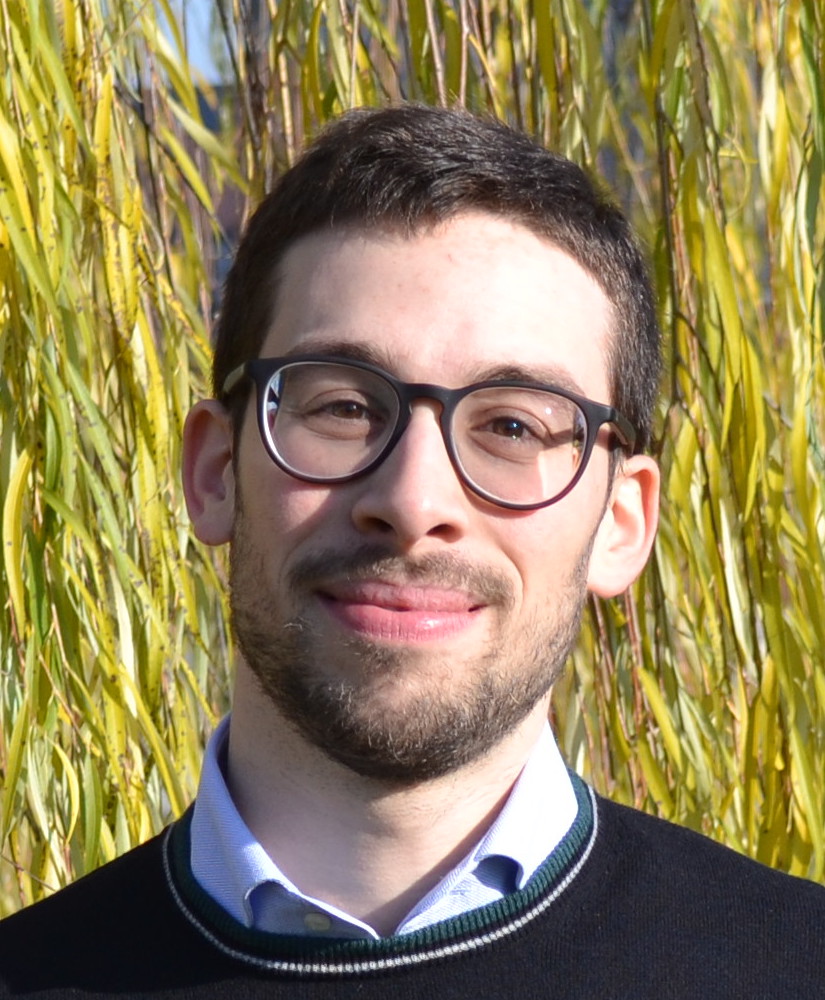
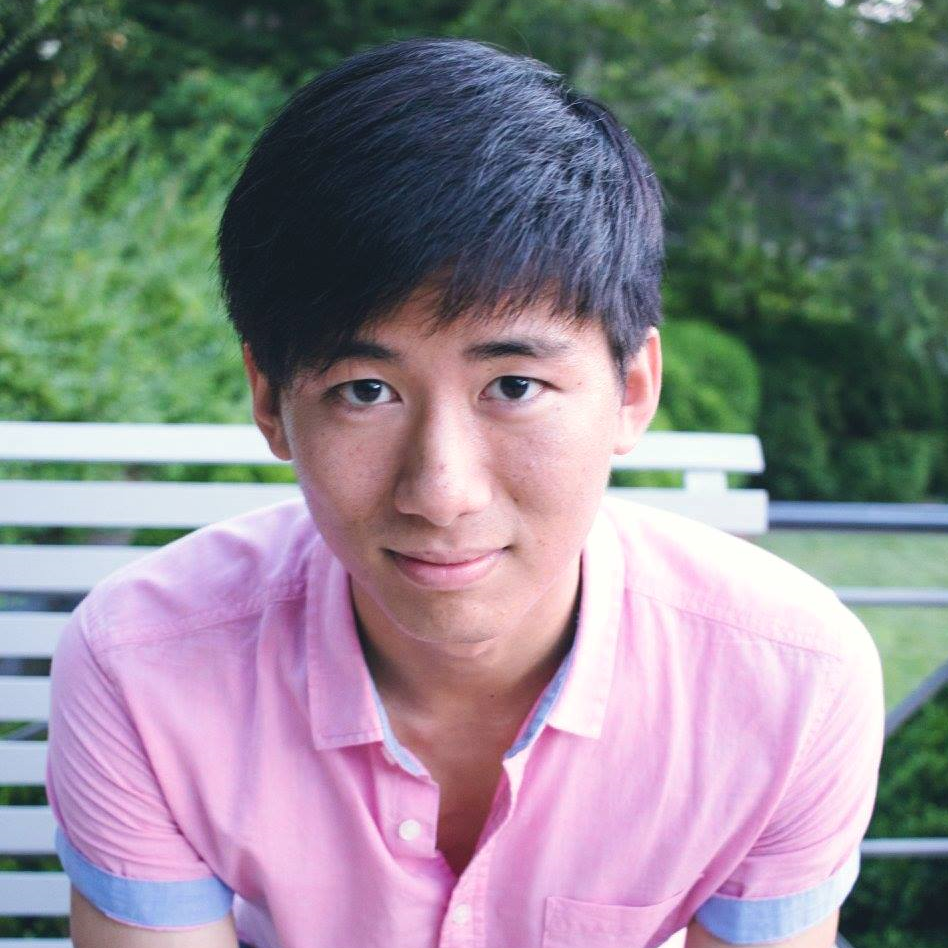
Andrea Nardin is a Fixed-term Assistant Professor at the Department of Electronics and Telecommunications (DET) within Politecnico di Torino. He is an active member of the Interdepartmental Center CARS@PoliTO (Center for Automotive Research and Sustainable Mobility), contributing to advancements in telecommunications and navigation systems. His research spans Digital Signal Processing Global Navigation Satellite Systems (GNSS) Signal Integrity Wireless Communication Andrea's scholarly work focuses on GNSS signal applications, ranging from combating electromagnetic interference to developing robust tracking architectures and orbit determination algorithms. His recent publications highlight innovations in jammer localization, lunar navigation, and Kalman filter optimization for space environments. Teaching engagements include collaborations on courses such as Numerical Estimation Methods for Radionavigation Hardware & Wireless Security Satellite Navigation Systems across multiple academic programs. He supervises PhD candidate Francesco Fiorina in the field of Electrical, Electronics, and Communications Engineering.
Dr Jiawei Lim is a Lecturer in Financial Mathematics at the Department of Mathematics, College of Engineering, Design and Physical Sciences, Brunel University. His research focuses on financial mathematics, applied probability, and operations research, with specific interests in Parisian option pricing, excursion theory, and simulation of Levy processes. Research Trends His publications (2013–2020) emphasize stochastic modeling, martingale theory, and algorithmic solutions for financial derivatives. Key areas include Levy processes, Parisian options, and Brownian motion simulations. Education PhD in Statistics from the London School of Economics
Inderjit Dhillon , Professor at the University of Texas at Austin , is a leading researcher in machine learning and big data analytics. As Director of the Center for Big Data Analytics, his work focuses on scalable algorithms for high-dimensional data, social network analysis, and gene-disease association prediction. ACM, IEEE, SIAM, and AAAS Fellow Gottesman Family Centennial Professor (2014) ICES Distinguished Research Award (2013) Research Interests: His contributions span machine learning , bioinformatics , and scientific computing , with recent work emphasizing deep learning for time series, adversarial robustness, and distributed optimization. Publications in top venues like NeurIPS and ICML highlight his expertise in inductive matrix completion and non-convex optimization . Scientific Awards: 2016: AAAS Fellow 2014: ACM, SIAM, IEEE Fellow 2013: ICES Distinguished Research Award 2011: SIAM Outstanding Paper Prize His students and collaborators frequently publish in areas like extreme classification , kernel methods , and multi-scale spectral decomposition . Labs and teams under his leadership have advanced nomadic computing and asynchronous optimization for massive datasets.
Professor Fehmi Cirak is a faculty member at the University of Cambridge, Department of Engineering, specializing in Computational Mechanics. He joined Cambridge in 2006 after five years as a Senior Scientist at the California Institute of Technology (Caltech). His research integrates advanced computational methods with structural and materials analysis, emphasizing innovation in finite element techniques and data-informed modeling.
Ana Sokolova is a Full Professor in the Department of Computer Science at the University of Salzburg. Her research focuses on formal methods, concurrency theory, and coalgebra, with significant contributions to probabilistic systems and concurrent data structures. Department: Computational Systems Group, University of Salzburg Key Research Areas: Formal Methods, Concurrency Theory, Coalgebra, Probabilistic Systems Her work bridges theoretical and applied computer science, including memory management, real-time systems, and security. She has been actively involved in organizing international conferences and workshops, such as Dagstuhl Seminar 22492 , and served on program committees for venues like FoSSaCS, CAV, and CONCUR. Recent publications explore coalgebraic trace semantics, probabilistic anonymity, and concurrent data structures. She has supervised numerous PhD students, including Sebastian Arming and Clemens Brunner, and is recognized for her Elise Richter Fellowship.
Francisco Javier Esparza Estaun (born 1964) is a Professor at the Technical University of Munich, holding the Chair for Foundations of Software Reliability and Theoretical Computer Science within the Department of Computer Science at the TUM School of Computation, Information and Technology. He has held academic positions at Edinburgh University (2001-2003) and the University of Stuttgart (2003-2007) prior to his current appointment at TUM since 2007. Prof. Esparza's research spans theoretical computer science with a focus on formal methods for software verification. His primary interests include algorithms and tools for the design and verification of reactive and distributed systems, verification of systems with infinitely many states, software model checking, program analysis, formal models for distributed systems (particularly Petri nets and process algebras), logic and automata theory, and analysis of probabilistic systems. His work applies mathematical techniques including logic, automata theory and complexity theory to develop methods for locating and eliminating errors in software systems or verifying their correctness. His research output shows consistent contributions to verification techniques, with recent publications focusing on parameterized verification, population protocols, and novel approaches to model checking. His work bridges theoretical foundations with practical verification tools, demonstrating how deep theoretical insights can lead to efficient verification algorithms. ERC Advanced Grant (2018) Honorary Doctor of Masaryk University, Brno, Czech Republic (2009) Member of Academia Europaea (2011) Prof. Esparza has supervised numerous PhD students who have gone on to successful careers in academia and industry. His current research projects include the Continuous Verification of Cyber-Physical Systems (ConVeY) funded by a DFG Research Training Group. Previously, he led the Parameterized Verification and Synthesis (PaVeS) project funded by an ERC Advanced Grant. His research group has developed several influential verification tools including Rabinizer (for LTL translation), Strix (for LTL synthesis), Peregrine (for population protocol verification), and Owl (for omega-automata). His laboratory focuses on developing theoretical foundations for software verification while creating practical tools that implement these theories. The group maintains active collaborations with researchers worldwide and contributes to major verification conferences and journals.
Guy Even is a prominent researcher in Computer Science and Mathematics, with significant contributions to approximation algorithms, graph theory, and network design. His work spans theoretical and applied domains, including algorithmic complexity, Steiner tree problems, and IEEE floating-point arithmetic optimization. Research Interests: His research focuses on combinatorial optimization, generalized connectivity in graphs, and efficient algorithm design. He has advanced methodologies for divide-and-conquer strategies, feedback set approximation, and spreading metrics in undirected and directed graph problems. Key Article Trends: His publications from 1992 to 2013 highlight advancements in approximation algorithms for NP-hard problems, with a particular emphasis on Steiner networks (undirected/directed), Boolean network observability, and hardware-efficient rounding techniques for floating-point arithmetic. These works bridge theoretical insights with practical applications in computing. Collaborations: Guy has collaborated with notable researchers such as Chandra Chekuri, Anupam Gupta, and Danny Segev. His co-authorship network includes Moti Medina (71 publications), Nissim Halabi (14 publications), and other leading scholars in algorithmic and computational fields. Notable Affiliations: While specific institutions are not explicitly stated in the provided text, his work is cited in prestigious venues like ACM, IEEE, and Springer, indicating strong ties to academia and research communities.
Dr. Andrea Carron is a Senior Lecturer at ETH Zürich, affiliated with the Intelligent Control Systems group under Professor M. Zeilinger at the Department of Mechanical and Process Engineering. He holds a PhD in Information Technology from the University of Padova (2016) and was a Postdoc at ETH Zurich from 2016 to 2020. Education: B.S. and M.Sc. in Control Engineering (University of Padova, 2010 and 2012) Professional Roles: Senior Lecturer (ETH Zurich, 2022–present), Postdoc Fellow (ETH Zurich, 2016–2020) Research Interests: Andrea Carron's work focuses on Model Predictive Control (MPC) and Learning-based Control with safety guarantees. His research addresses challenges in Distributed Safe Learning , Coverage Control , and Autonomous Racing , utilizing Gaussian Processes and Stochastic Control frameworks. He has developed safety filters for racing vehicles, scalable MPC for mobility-on-demand systems, and Kalman-filter-enhanced GP regression techniques. Article Trends: Recent publications emphasize Autonomous Racing (ForzaETH Race Stack), Safe Learning for distributed systems, Gaussian Process applications in control, and Robust MPC under uncertainty. His work bridges machine learning and classical control theory, with applications in robotics and real-time systems. Teaching Activities: He has taught courses such as Signals and Systems and Advanced Model Predictive Control at ETH Zurich and Ashesi University since 2017. Course content includes discrete-time signal processing, system identification, and control algorithms.
Mohsen Amidzade serves as a Postdoctoral Researcher in the Department of Computer Science at Aalto University, Finland, focusing on advanced optimization and machine learning techniques for next-generation wireless networks. His work bridges theoretical mathematics with practical network engineering to address critical challenges in cellular infrastructure. Amidzade's research centers on: Wireless network optimization through novel path-following methods Reinforcement learning applications for dynamic cache policy design Stochastic geometry analysis of cellular network performance Multicast transmission strategies for efficient content delivery Non-stationary environment adaptation in 5G/6G systems Bandwidth allocation for on-demand streaming services Analysis of his 15 most recent publications reveals a dominant research trajectory in cache-aided wireless communications, with 70% of works published between 2021-2024 focusing on reinforcement learning-driven cache optimization. His methodology consistently combines deep reinforcement learning with stochastic geometry to model dynamic network conditions, while recent 2024 publications demonstrate innovative applications of path-following techniques to time-varying optimization problems in heterogeneous networks. Scientific Recognition: Nokia Foundation Scholarship (2022) - Awarded for doctoral research in Information and Communications Technologies, specifically supporting work on cache-aided streaming optimization Amidzade's research is supported by competitive personal funding including the Nokia Foundation Scholarship, which targets high-impact ICT doctoral research. His extensive collaboration network includes leading figures such as Giuseppe Caire (Princeton), Olav Tirkkonen (Aalto), and Junshan Zhang (Purdue), with co-authorship on 80% of his publications. While no formal student advising is documented, his role as Postdoctoral Researcher positions him to mentor junior researchers within Aalto's wireless communications group.
Peter K. Friz is a Professor of Mathematics at the Technical University of Berlin and affiliated with the Weierstrass Institute for Applied Analysis and Stochastics . His research focuses on stochastic analysis , rough path theory , and quantitative finance , particularly volatility modeling . Key Affiliations: Institute of Mathematics, TU-Berlin Weierstrass Institute Major Grants: ERC Starting Grant (2010-2016) ERC Consolidator Grant (2016-2021) DFG Research Unit Coordination (2016-2019) Einstein Foundation Grant His work bridges rough path theory with stochastic differential equations and financial mathematics . Recent publications emphasize rough volatility models , nonlinear SPDEs , and pathwise analysis . He co-authored the book Multidimensional Stochastic Processes as Rough Paths with Nicolas Victoir. Scientific Awards: ERC Starting Grant ERC Consolidator Grant Einstein Professorship Friz has organized major conferences like 5ECM, SPA, and Newton Institute workshops. He has mentored PhD students in areas related to stochastic analysis and rough paths , though specific names are not listed here.
David Russell Luke is a Professor of Continuous Optimization at the Institute for Numerical and Applied Mathematics, University of Göttingen, where he also serves as Managing Director of the Institute. He holds editorial positions as Area Editor for the Open Journal of Mathematical Optimization and Associate Editor for multiple prestigious journals including Journal of Optimization Theory and Applications, ESAIM: Control, Optimization and Calculus of Variations, SIAM Journal on Optimization, and Advances in Computational Mathematics. Dr. Luke earned his BSc with honors in Applied Mathematics from the University of California, Berkeley in 1991, followed by an MSc (1997) and PhD (2001) in Applied Mathematics from the University of Washington under James Burke. His academic journey included positions at the University of Göttingen (2001-2003), Simon Fraser University (2002-2004), and University of Delaware (2004-2009) before returning to Göttingen. His research focuses on Continuous Optimization, Variational Analysis, and Inverse Problems , with particular expertise in nonsmooth and nonconvex optimization, phase retrieval, and computational imaging. His work bridges theoretical mathematics with practical applications in photonic imaging, tomography, and adaptive optics. Current research projects include atomic orbital tomography, stochastic computed tomography for X-FEL imaging, probabilistic analysis in fixed point theory, and topological optimization for tree structure analysis. Analysis of his recent publications reveals a strong trend toward computational methods for imaging science, particularly phase retrieval problems, with increasing focus on three-dimensional reconstruction techniques and applications in photoemission orbital tomography. His work consistently integrates theoretical convergence analysis with practical algorithm development, often implemented in the ProxToolbox software framework. NASA/GSFC Graduate Student Research Fellow (1998-2001) Editorial roles with multiple leading optimization journals Principal investigator on numerous DFG-funded research projects Dr. Luke has advised several PhD students including Patrick Neumann and Thao Nguyen. His research has been supported by significant grants from the National Science Foundation, German Research Foundation (including Collaborative Research Center 755, Graduiertenkolleg 2088), Bundesministerium fuer Bildung und Forschung, German Israeli Foundation, and Australian Research Council. He leads the Working Group on Continuous Optimization, Variational Analysis and Inverse Problems at the University of Göttingen, which maintains the ProxToolbox software laboratory for proximal algorithms and optimization methods. The group actively develops computational tools for inverse problems and optimization, with applications ranging from space telescope wavefront reconstruction to atomic-scale imaging. Current projects are organized within the Collaborative Research Center 1456 and Graduiertenkolleg 2088 frameworks, focusing on mathematical modeling of complex imaging scenarios and developing efficient numerical algorithms for large-scale optimization problems.
Claudio di Ciccio is an Associate Professor at the Department of Information and Computing Science within the Faculty of Science at Utrecht University, Netherlands. Previously, he worked with the Department of Computer Science of Sapienza University of Rome (Italy) and the Institute for Information Business of the Vienna University of Economics and Business (WU Vienna), Austria. He received his PhD in Computer Science and Engineering in 2013 from Sapienza University. His research interests span across Process Mining, Formal Methods, Automated Reasoning, and Blockchain & Distributed Ledger Technologies. He has developed expertise in Process Modelling and Simulation, Distributed Computing, Logic, and Artificial Intelligence. His work bridges theoretical formal methods with practical applications in business process management and decentralized systems. His recent publications focus on advancing Process Mining techniques while addressing critical challenges in data privacy and security, particularly in decentralized environments. His research explores the intersection of visual analytics and process mining, developing innovative approaches for multi-faceted process information analysis through time and space. He has made significant contributions to formal methods for process specification verification and constraint satisfaction. Member of the Steering Committee of the IEEE Task Force on Process Mining General Chair of the Conference on Process Mining (ICPM) in 2023 PC chair of ICPM in 2021 PC chair of the Conference on Business Process Management (BPM) in 2022 PC chair of the Blockchain Forum at BPM in 2019 and 2024 Di Ciccio has been actively involved in numerous significant research projects related to process mining, blockchain applications, and formal methods. His work demonstrates a consistent focus on developing practical tools and frameworks that address real-world challenges in business process management while maintaining strong theoretical foundations. His research group appears to focus on the intersection of process science with emerging technologies, particularly in secure and decentralized environments.
Dr. Lea Eisenstein is a postdoctoral researcher at the Institute of Meteorology and Climate Research (IMKTRO) , Karlsruhe Institute of Technology (KIT), specializing in extratropical cyclones and mesoscale wind hazards. She focuses on numerical modeling, statistical downscaling, and predictability of extreme weather systems. Education : M.Sc. (2018) and B.Sc. (2016) in Meteorology from KIT. Affiliations : IMKTRO (KIT), Regional Climate and Weather Hazards group. Her research combines numerical weather prediction models with machine learning techniques (e.g., random forests) to detect and analyze high-wind features like sting jets in European winter storms. Key projects include 'Waves to Weather' (SFB/TRR 165) and HIWeather, addressing cyclone dynamics and hybrid forecasting systems. Recent publications emphasize mesoscale wind climatology , 3D frontal structure analysis , and disaster impact studies of storms such as Ylenia and Dudley. She has co-authored peer-reviewed work in Weather and Climate Dynamics and presented at major conferences like the AMS Annual Meeting.
Dr. Kevin J Liang is a Research Scientist at Meta Platforms, Inc. , specializing in Deep Learning , Computer Vision , and 3D Reconstruction . He earned his PhD in Electrical & Computer Engineering from Duke University in 2020, with a dissertation on Deep Automatic Threat Recognition for Airport X-Ray Baggage Screening . His research focuses include: 3D Computer Vision (ICON, Fast3R) Few-Shot Learning (Sylph, HyperMix) Federated Learning (WAFFLe) Object Detection (EgoTracks, Self-Supervised Methods) Recent publications demonstrate his leadership in Egocentric Vision (Ego-Exo4D) and Transformer Applications (GliTr). He has received numerous awards including the E Bayard Halsted Fellowship (2017) and Summa cum laude (2015), and serves on program committees for major conferences like NeurIPS and CVPR . As an educator, he developed and taught tutorials for Duke University's Machine Learning School and Coursera courses, covering TensorFlow, PyTorch, and foundational ML concepts for over 600 students.
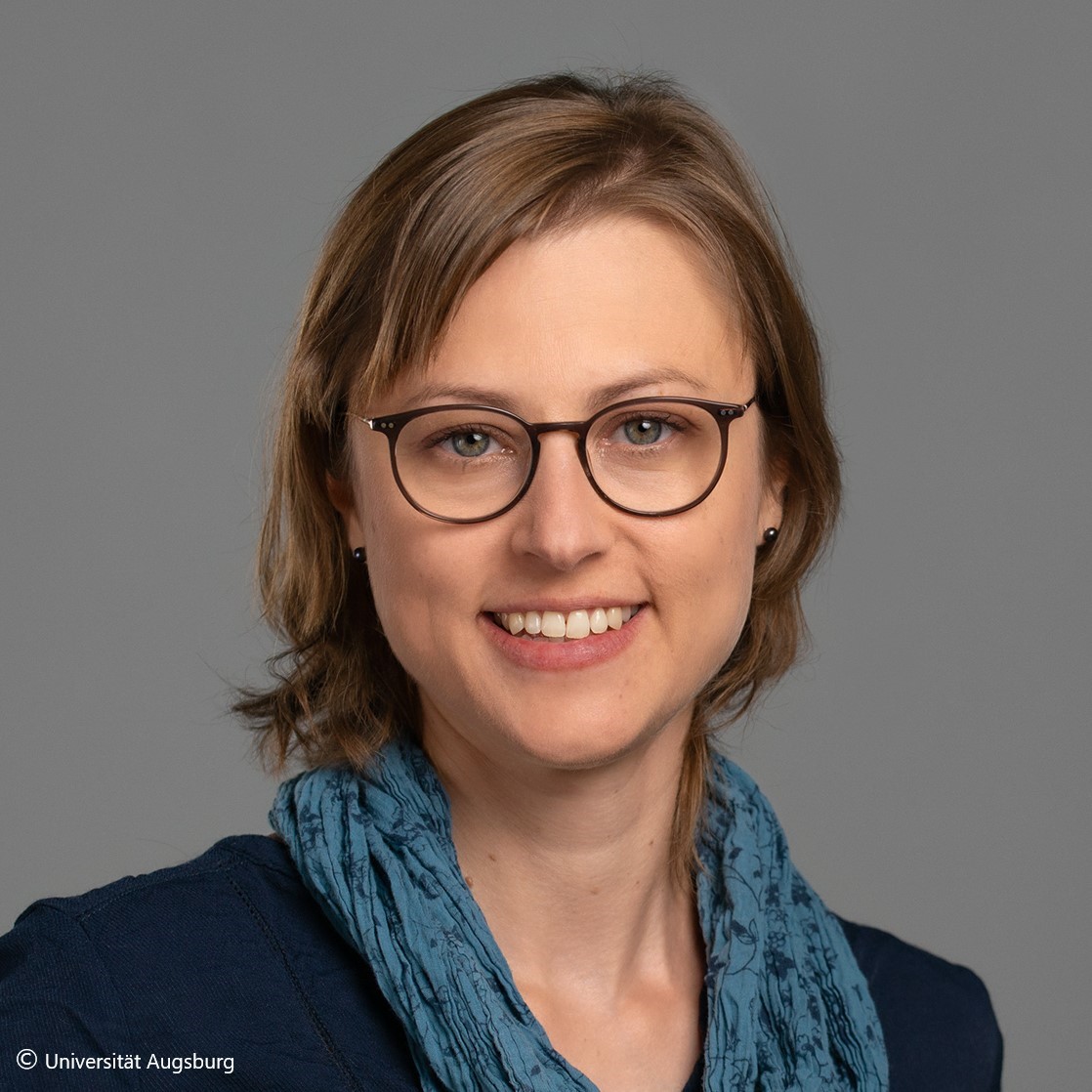
Annemarie Friedrich is a tenured University Professor for Natural Language Understanding (Computational Linguistics) at the Faculty of Applied Computer Science, University of Augsburg. She also holds membership in the Faculty of Philology and History. Previously, she worked as a Senior Expert on Natural Language Processing and Computational Linguistics at the Bosch Center for Artificial Intelligence. Currently, she serves as president of the German Society for Computational Linguistics (GSCL), the primary scientific association for NLP research in German-speaking regions, and is a member of the ACL Special Interest Group for Annotation (ACL SIGANN). University: University of Augsburg School: Faculty of Applied Computer Science Department: Institute of Computer Science Position: University Professor (tenured) for Natural Language Understanding Professor Friedrich's research focuses on computational linguistics and natural language processing with emphasis on semantics and information extraction from text. Her work spans both machine-learning oriented approaches to text mining for scientific text, syntactic and semantic parsing, and uncertainty in deep learning for NLP, as well as corpus-linguistic research on syntax-semantics interface, discourse, pragmatics, aspect, genericity, and modal verbs. She has particular expertise in annotation and corpus creation, recognizing that machine learning models depend fundamentally on underlying data quality. Her research group at Augsburg actively contributes to computational linguistics through numerous publications and datasets. Analysis of Professor Friedrich's recent publications reveals a strong focus on table question answering, patent text processing, uncertainty modeling, and multimodal scientific document understanding. Her work consistently bridges theoretical linguistics with practical NLP applications, with increasing emphasis on robust evaluation methodologies and domain-specific adaptations of language models. Notably, her research group has produced significant resources including the AnnoCTR dataset for cyber threat reports, PAP2PAT for patent generation, and FREB-TQA for evaluating table QA robustness. Professor Friedrich actively mentors multiple PhD students working on diverse topics including document-level patent processing (Valentin Knappich), temporal processing (Timo Schrader), document-level text modeling (Wei Zhou), and topic modeling for digital forensics (Jenny Maria Felser). Her collaborative approach is evident in co-supervision arrangements with researchers from institutions including Bosch Center for Artificial Intelligence, TU Dresden, and Hochschule Mittweida. She has also successfully guided previous PhD students including Sophie Henning (Uncertainty Modeling), Stefan Grünewald (Syntactic Dependencies), and Subhash Pujari Chandra (Neural Patent Classification). Her teaching responsibilities include courses such as Introduction to Natural Language Processing, Introduction to Python Programming, and specialized seminars on Natural Language Understanding for both Bachelor's and Master's students. These courses reflect her commitment to both theoretical foundations and practical implementation skills in computational linguistics.