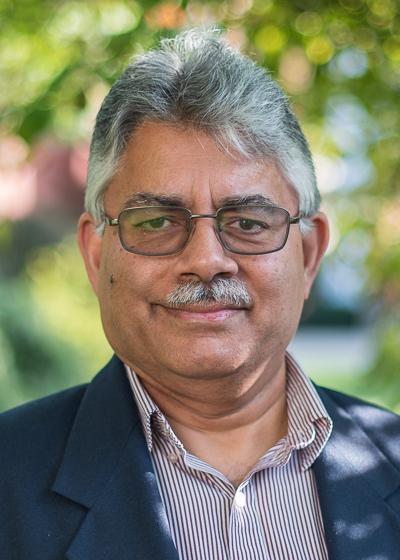
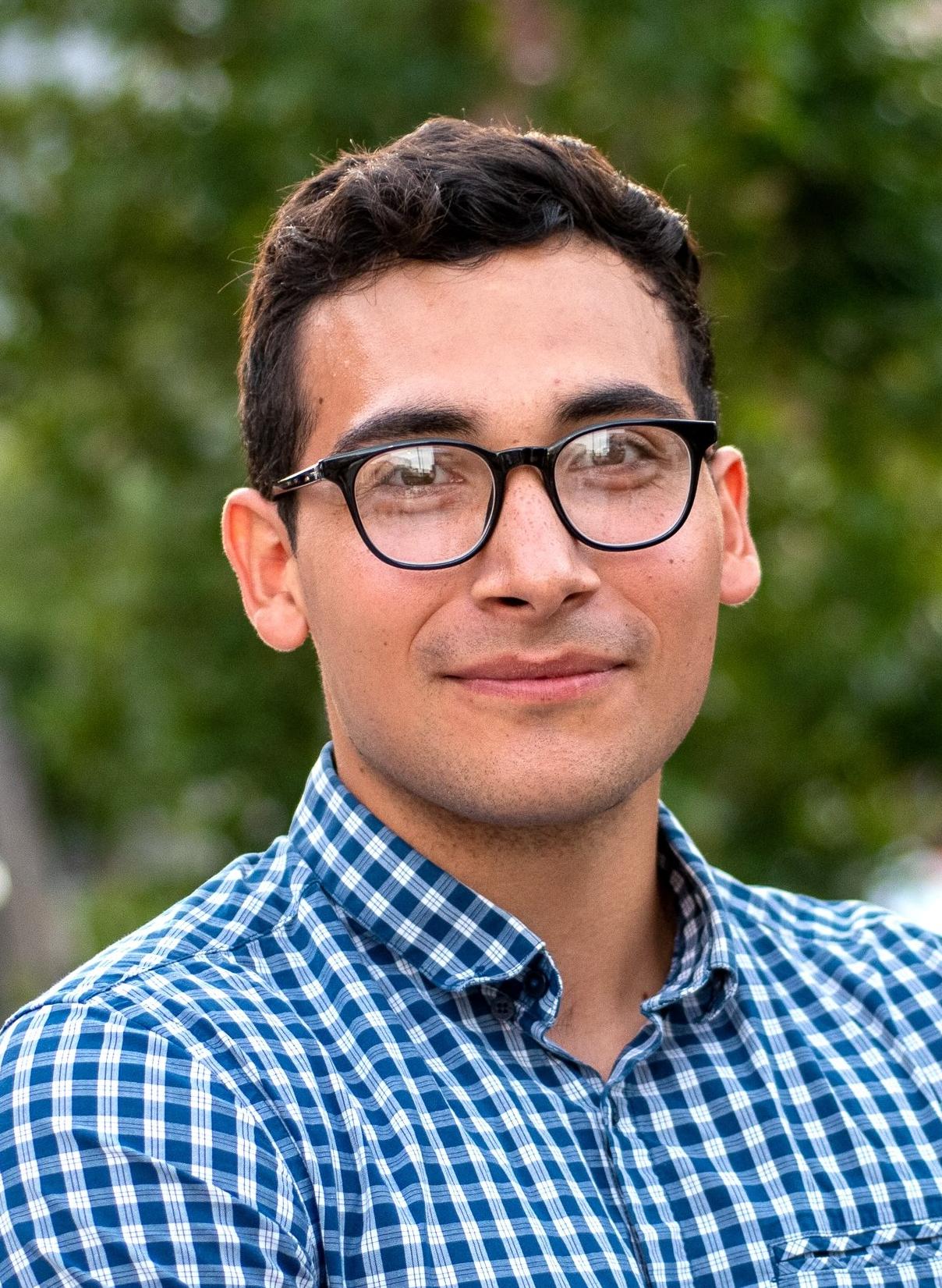
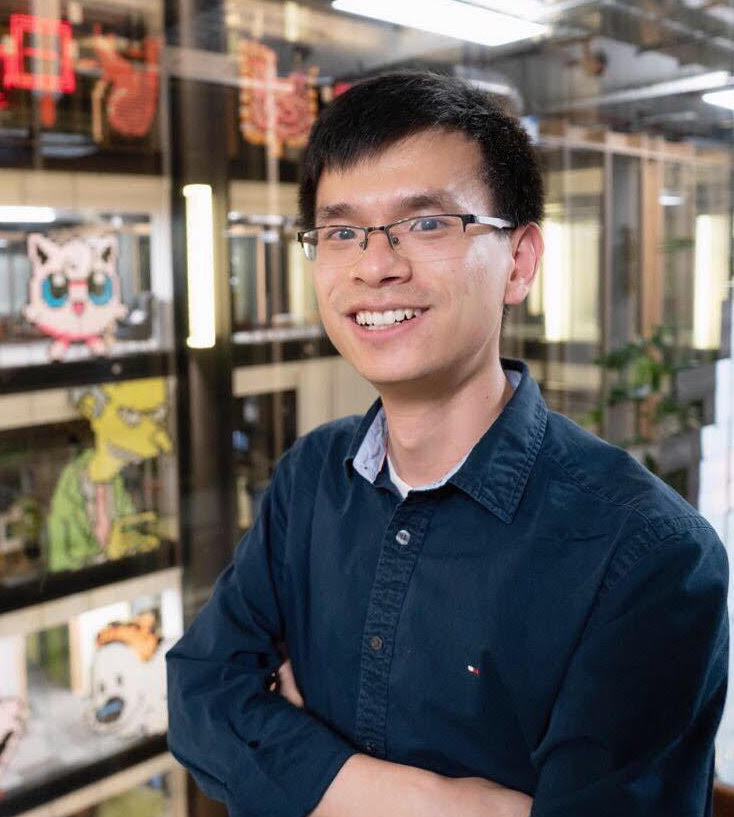
Miguel Ángel Sotelo Vázquez is a full Professor at the University of Alcalá, leading the INVETT Research Group (Intelligent Vehicles and Traffic Technologies). He holds the Department of Automatic Control and specializes in autonomous systems, particularly in path planning, sensor fusion, and human-vehicle interaction. His research integrates machine learning, robotics, and control theory to address challenges in intelligent transportation systems. He earned his Ph.D. in 2001 with a thesis on autonomous vehicle navigation in partially known environments. His work emphasizes real-world deployment, explainable AI, and safety-critical systems. Recent projects focus on lane change prediction, pedestrian behavior modeling, and cybersecurity for autonomous systems. Key contributions include neuro-symbolic frameworks for decision-making, real-time multi-physics field reconstruction, and cross-cultural studies of pedestrian interactions. He collaborates internationally on urban mobility resilience and hydrogen refueling infrastructure. Research Highlights : Development of knowledge graph-based prediction architectures Experimental validation of human-vehicle interaction in VR environments Creation of the SCOUT trajectory prediction framework
Scott Walbridge is the Chair of the Department of Civil and Environmental Engineering at the University of Waterloo, where he has been actively teaching and researching since 2006. He holds a Doctorate in Civil Engineering from the Swiss Federal Institute of Technology (EPFL), a Master's from the University of Alberta, and a Bachelor's in Civil Engineering from the same institution. His research focuses on enhancing structural safety and durability through fatigue assessment, retrofitting of welded metal structures, modular construction, and life-cycle cost analysis. He chairs the CSA aluminum structures technical subcommittee for bridge design codes (S6) and actively contributes to code development for structural welding and aluminum design. Walbridge has been Program Director for Waterloo’s Architectural Engineering program (2018–2022) and serves on editorial boards for journals like Structural Engineering International and ASCE Journal of Bridge Engineering . Education: PhD, Civil Engineering (Steel Structures), EPFL, Switzerland (2005) MSc, Structural Engineering, University of Alberta (1998) BSc, Civil Engineering, University of Alberta (1996) Research Interests: Fatigue assessment, welded metal structures, modular construction, structural reliability, fracture mechanics, and life-cycle cost analysis. His work bridges theoretical frameworks with practical applications, such as improving fatigue life prediction for aluminum bridge decks and optimizing material selection for corrosion resistance. Professional Engagement: Chair of CSA S6 Aluminum Structures Subcommittee, active member of welding code committees (W59, W59.2), and contributor to national bridge design standards. His leadership in code development ensures alignment with modern material technologies and sustainability goals. Teaching & Advising: Recently taught courses like CIVE 512 (Rehabilitation of Structures) and CIVE 704 (Bridge Design). He is currently accepting graduate students in structural engineering and bridge design.
Professor Paul Neville Balister is a faculty member and Fellow in the Mathematical Institute at the University of Oxford, where he serves as a University Lecturer and Professor of Mathematics. His research is centered in combinatorics and discrete mathematics, with strong ties to probabilistic methods and theoretical computer science. His research interests include combinatorics, graph theory, random graphs, probabilistic combinatorics, cellular automata, and discrete probability. These areas are evident from his extensive publication record in top-tier mathematical journals such as the Journal of the European Mathematical Society and Random Structures and Algorithms . The recent publications demonstrate a consistent focus on structural and probabilistic aspects of discrete systems, particularly in monotone cellular automata, graph saturation games, and random graph orderings. His work often explores threshold phenomena, extremal configurations, and asymptotic behavior in combinatorial models. While no formal awards are listed in the provided text, his active collaboration with leading mathematicians and publication in premier venues indicate significant recognition in the field. Professor Balister advises students and contributes to research grants, though specific names and projects are not detailed. He is part of the Combinatorics research group at Oxford, which fosters collaborative work in discrete mathematics and its applications.
Vladimir Vinogradov is a Professor in the Department of Mathematics at the College of Arts and Sciences, Ohio University. He is based in Morton Hall 579 and can be reached at vinograd@ohio.edu. His academic career reflects long-standing engagement in probabilistic and statistical theory with applications in finance, actuarial science, and population dynamics. Research Interests: His work spans a wide spectrum of stochastic processes and statistical methodologies. Key areas include Stochastic Analysis, Lévy and Markov Processes, Branching and Particle Systems, Fluctuation and Extreme Value Theory, Large Deviations, and Asymptotic Expansions. He also contributes to Distribution Theory, Saddlepoint Approximations, Generalized Linear Models, and probabilistic models in Population Genetics. Grants and Awards: Dr. Vinogradov has received sustained research support, including multiple Ohio University Research Challenge Program Grants (1999–2003), NSERC Canada Individual Research Grants (1995–2003), and a Fields Institute Conference Grant (2014). He also received the BC Asia Pacific Scholars' Award and several UNBC Conference Travel Grants. Education: Ph.D., Moscow State University Professional Activities: He co-organized the International Conference on Analysis, Applications and Computations in memory of Lee Lorch in 2014. His funding history indicates active collaboration and academic leadership. There is no mention of advising students or lab affiliations in the provided text.
Dina Khaled Sayed Abdelhadi is a Doctoral Assistant at the Communication Theory Laboratory (LTHC) within the School of Computer and Communication Sciences (IC) at École Polytechnique Fédérale de Lausanne (EPFL). She is also a PhD student in the Doctoral Program in Computer and Communication Sciences (EDIC), hosted under the EDOC school at EPFL. Her work is centered in the Institute of Computer and Communication Sciences (IINFCOM), focusing on theoretical and applied aspects of communication systems. Her research interests are rooted in Information Theory , Communication Theory , and Signal Processing , with potential applications in wireless networks and data transmission. Given her affiliation with LTHC, her work likely involves advanced mathematical modeling, probabilistic methods, and algorithm design for communication systems. No scientific awards or publications were mentioned in the provided text. However, her position as a Doctoral Assistant suggests active involvement in research projects funded by EPFL or external agencies, possibly including collaborations within the laboratory or international consortia. She is advised by faculty within the LTHC group, though no advisor is explicitly named. There is no mention of students supervised by her. She is part of a structured doctoral program, indicating rigorous academic training and research progression. The Communication Theory Laboratory (LTHC) at EPFL is known for cutting-edge research in information theory, network coding, and communication algorithms. As a member of this lab, Dina contributes to ongoing projects that bridge theoretical advances with practical communication technologies.
Aryeh Kontorovich is a Professor in the Computer Science Department at Ben-Gurion University. His research primarily focuses on theoretical machine learning, with expertise in probability, statistics, Markov chains, and metric spaces. His research interests span theoretical machine learning, with particular emphasis on: Probability theory and concentration inequalities Statistical learning theory Markov chains and mixing time estimation Metric space learning Kernel methods Sample compression schemes Professor Kontorovich's recent publications (2021-2025) demonstrate a continued focus on theoretical foundations of machine learning. His work shows strong trends in statistical estimation for Markov processes, distribution learning, metric space analysis, and sample compression. Many papers explore the intersection of probability theory and machine learning, particularly examining concentration inequalities, minimax optimality, and theoretical guarantees for learning algorithms. His research consistently bridges abstract mathematical theory with practical machine learning applications. Scientific awards and recognitions: Distinguished contribution award at MLG 2007 for "A Universal Kernel for Learning Regular Languages" Professor Kontorovich has advised numerous students and collaborated extensively with researchers in theoretical machine learning. His work spans both theoretical foundations and practical applications, with significant contributions to understanding the mathematical limits of learning algorithms. While specific grant information isn't provided in the source material, his extensive publication record in top venues suggests successful funding for his research programs. He maintains active collaborations with researchers worldwide, including prominent names like L. Gottlieb, D. Berend, and S. Hanneke.
Sanjay Srinivasan is a Professor of Petroleum and Natural Gas Engineering and the John and Willie Leone Family Chair in the Department of Energy and Mineral Engineering at Penn State University. He serves as Director of the EMS Energy Institute and leads the Penn State Initiative for Geostatistics and GeoModeling Applications. His research focuses on petroleum reservoir characterization, CO2 sequestration, and integration of seismic data in reservoir models through advanced geostatistical and machine learning methods. Ph.D., Petroleum Engineering, Stanford University M.S., Petroleum Engineering, University of Southern California B. Tech, Petroleum Engineering, Indian School of Mines Srinivasan’s work addresses reservoir recovery processes, unconventional reservoirs, and subsurface energy security. His methodologies include probabilistic modeling, data assimilation, and AI-driven workflows for fracture network mapping and porous media generation. Key applications span Gulf of Mexico deepwater plays and geological carbon storage. Recent publications highlight trends in: Reinforcement learning for geostatistical workflows and well optimization Physics-informed GANs for 3D porous media modeling Probabilistic integration of geomechanical and geostatistical inferences Machine learning approaches for seismic fracture identification CO2 sequestration in heterogeneous reservoirs Scientific awards include Distinguished Member (SPE, 2022), SPE Faculty Pipeline Award (2012), Cox Visiting Fellowship (Stanford, 2010), and SPE Southwest Region Reservoir Description Award (2009).
Ellen Kuhl serves as the Catherine Holman Johnson Director of Stanford Bio-X and the Walter B. Reinhold Professor in the School of Engineering at Stanford University. She holds dual appointments as Professor of Mechanical Engineering and, by courtesy, Bioengineering, leading interdisciplinary research at the convergence of physics, computation, and biology. Her academic credentials include: Habil., TU Kaiserslautern (2004) Ph.D., University of Stuttgart (2000) M.S., Leibniz University of Hanover (1995) B.S., Leibniz University of Hanover (1993) Kuhl pioneers Living Matter Physics , developing computational frameworks that integrate physics-based modeling with machine learning to simulate biological systems across scales. Her work spans cardiovascular dynamics (including the 400-member global Living Heart Project), neurodegenerative disease progression (Alzheimer's tau pathology), and sustainable food systems (mechanics of plant/fungi-based meats). Recent innovations focus on automated model discovery using constitutive neural networks to democratize simulation tools for soft matter systems, with applications in precision medicine and climate-resilient food innovation. Her lab actively bridges engineering fundamentals with urgent societal challenges in healthcare and planetary health. Her publication trajectory reveals accelerating integration of AI with biomechanics, particularly in automated constitutive modeling for diverse tissues and food materials. Key trends include uncertainty quantification in neural networks, physics-informed machine learning for digital twins, and democratization of simulation tools for non-experts – reflecting her commitment to accessible computational science. Major recognitions include: National Science Foundation Career Award (2010) Humboldt Research Award (2016) ASME Ted Belytschko Applied Mechanics Award (2021) ERC Advanced Grant (2024) Fellowships in ASME and AIMBE As Bio-X Director, Kuhl orchestrates major interdisciplinary initiatives connecting engineering with life sciences, securing substantial funding including the 2024 ERC Advanced Grant. Her leadership extends to the US National Committee on Biomechanics and World Council of Biomechanics, while her Living Heart Project demonstrates exceptional translational impact through industry/medical partnerships across 24 countries. The Living Matter Lab operates as a nexus for high-impact research, developing computational tools that transform cardiovascular medicine, decode neurodegenerative mechanisms, and engineer sustainable food alternatives. Current projects leverage AI to accelerate plant-based meat development, model elephant-trunk-inspired soft robotics, and personalize cardiac simulations – all unified by her vision of physics-driven machine learning for global challenges.
Marielle De Jong is an Associate Professor at Grenoble Ecole de Management, serving as the Academic Director of the USA DBA program. Her expertise spans portfolio management, fixed income, and sustainable investing, with a focus on bond portfolio construction and liquidity scoring. MSc in Econometrics from Erasmus University of Rotterdam MSc in Operational Research from Cambridge University PhD in Finance from the University of Aix-Marseille Defended HDR in 2022 Her research integrates quantitative finance with sustainability, addressing topics like ESG investing, derivatives in asset management, and risk modeling. She has extensive industry experience in investment management, notably with HSBC Sinopia and Amundi, where she led fixed-income quant research teams. Marielle's publications highlight trends in bond risk assessment, CDS applications, and green finance. She is Editor-in-Chief of the Journal of Asset Management, emphasizing rigorous quantitative methodologies and sustainable investment frameworks.
Moïse Blanchard is an Assistant Professor and Tennenbaum Early Career Professor at the H. Milton Stewart School of Industrial and Systems Engineering at Georgia Institute of Technology, having joined in August 2025. Previously, he was a Postdoctoral Fellow at Columbia University Data Science Institute. His academic journey includes a Ph.D. in Operations Research from MIT (2024), and M.Sc. and B.Sc. degrees in Applied Mathematics from École Polytechnique. Blanchard's research focuses on the intersection of machine learning theory, statistics, and optimization. His work addresses fundamental questions in universal learning, online algorithms, and convex optimization under memory constraints. His research program explores learnability under minimal assumptions, query complexity/memory tradeoffs, and decision-making in adversarial environments. This work has significant implications for theoretical computer science, operations research, and statistical learning theory. His publications reveal a strong emphasis on foundational aspects of learning theory and optimization. Recent work demonstrates expertise in universal learning frameworks, memory-constrained optimization, and probabilistic analysis of combinatorial problems. His research often bridges theoretical computer science with practical optimization challenges, particularly in contexts where traditional i.i.d. assumptions don't hold. Columbia DSI postdoctoral fellowship, 2024 INFORMS Transportation Science & Logistics (TSL) best student paper award, 2023 Air Force Office of Scientific Research Grant (AFOSR), with Prof. Patrick Jaillet, 2023 COLT 2022 Best student paper runner-up Bronze medal, Alibaba Global Mathematics Competition, 2022 Blanchard has received significant research funding including an Air Force Office of Scientific Research Grant. His work has been recognized with multiple prestigious awards, including the INFORMS TSL best student paper award for his research on the k-Traveling Salesman Problem. His extensive publication record in top venues demonstrates a strong research trajectory with impactful contributions to theoretical machine learning and optimization.
Asif Zaman is an Associate Professor in the Faculty of Arts and Science at the University of Toronto. His research focuses on Analytic Number Theory , Probabilistic Number Theory , and Arithmetic Statistics , with applications to Algebraic Structures , L-functions , and Modular Surfaces . He has contributed to problems involving the distribution of prime numbers, zeros of L-functions, and mass equidistribution. Research highlights include work on the Chebotarev Density Theorem , Random Multiplicative Functions , and Binary Quadratic Forms . His recent publications address advanced topics such as Artin L-functions , GL(n) Sieve Methods , and Multiplicative Chaos in number theory. Zaman has co-authored articles with prominent researchers like James Thorner and Robert J. Lemke Oliver, focusing on non-vanishing properties, explicit density estimates, and Siegel zeros. Zaman teaches mathematics courses at the University of Toronto, including MAT237 Multivariable Calculus with Proofs and MAT198 Cryptology . His teaching philosophy emphasizes active learning, collaboration, and analytical skill development, inspired by resources like Mathematical Mindsets and the American Mathematical Society blog series.
Prof. Dr.-Ing. Stefan Kopp is a faculty member at Bielefeld University's Faculty of Engineering and serves as Research Group Leader of the Cognitive Systems and Social Interaction Group . He also holds administrative roles as Vice Dean and Deputy CITEC Coordinator . His work focuses on Artificial Intelligence , Cognitive Systems , and Socio-Technical World research areas. Research Group Leader: Cognitive Systems and Social Interaction Group Vice Dean: Faculty of Engineering Deputy Coordinator: Center for Cognitive Interaction Technology (CITEC) Project Manager: TRR 318 "Constructing Explainability" subprojects His research explores human-agent interaction , multimodal conversational agents , and social AI through projects like 39-Inf-11 Human-Machine Interaction and 39-M-Inf-VKI Virtual Humans and Conversational Agents . Publications address topics including adaptive explanation generation , gesture synthesis , and social cognition in dynamic environments. Current research topics span cooperative AI , explainable decision-making , and sensorimotor grounding in artificial systems.
James Urquhart Allingham is a Research Scientist at Google DeepMind , working on the Gemini project. He completed his PhD in the Machine Learning Group at the University of Cambridge under the supervision of José Miguel Hernández-Lobato, with funding from EPSRC, the Michael E. Fisher Studentship in Machine Learning, and the Qualcomm Innovation Fellowship. He was also part of the ELLIS PhD program, advised by Eric Nalisnick at AMLab UvA. Current affiliation: Google DeepMind (Research Scientist) PhD: University of Cambridge (Machine Learning Group) Academic networks: ELLIS PhD program, Darwin College His research focuses on the intersection of Bayesian deep learning and probabilistic methods in deep learning. Key areas include deep generative models , zero-shot classification , prompt engineering , Monte Carlo gradient estimation , and applications to sustainability and climate change . His work has explored energy-based models , neural architecture search , and equivariance in convolutional networks . Selected scientific awards and grants include the Michael E. Fisher Studentship , Qualcomm Innovation Fellowship , and MPhil in Advanced Computer Science with Distinction . He has collaborated with institutions such as the Amsterdam Machine Learning Group (AMLAB) and University of the Witwatersrand .
Andrew Zammit Mangion is an Associate Professor at the University of Wollongong , affiliated with the School of Mathematics and Applied Statistics . His research focuses on spatio-temporal statistics, computational methods, and environmental informatics, with applications in climate science and geospatial data analysis. Education : PhD in Statistics (University of Sheffield, 2012), B.Eng. (University of Malta, 2007) Research Themes : Spatio-temporal modeling, Bayesian inversion frameworks (e.g., WOMBAT v2.S), deep learning integration, and statistical software development (e.g., FRK package) Grants & Projects : ARC DECRA Fellow (2018), Chief Investigator on ARC Discovery Project (greenhouse gases), ARC Special Research Initiative (Securing Antarctica's Environmental Future), and ARC Industrial Transformation Hub (TIDE). Collaborations : University of Bristol, University of Edinburgh, ESA CCI, NASA OCO-2 data projects Scientific Awards include the prestigious Australian Research Council Discovery Early Career Researcher Award (DECRA). His work spans Antarctic ice sheet analysis, CO2 flux inversion, and scalable spatial statistical models for environmental monitoring.
Xujie Si is an Assistant Professor in the Department of Computer Science at the University of Toronto. He is also a faculty affiliate at the Vector Institute and an affiliate member at Mila - Quebec AI Institute, holding a Canada CIFAR AI Chair. Previously, he served as an Assistant Professor at McGill University's School of Computer Science. Education: Ph.D., Computer and Information Science, University of Pennsylvania (advised by Mayur Naik) M.S., Computer Science, Vanderbilt University B.E. (with Honors), Nankai University Research Focus: His work bridges AI and program reasoning, emphasizing the integration of statistical and logical methods. Key areas include: Static analysis and verification using deep learning/reinforcement learning Neuro-symbolic systems for urban simulation (e.g., LogiCity) Automated theorem proving via LLMs and symbolic reasoning Program repair and compiler fuzzing Recent Article Trends: Recent work focuses on synergizing LLMs with symbolic reasoning (e.g., Olympiad inequality proving), advancing SAT solving with graph neural networks, and applying neuro-symbolic methods to Euclidean geometry formalization. Awards: Canada CIFAR AI Chair (2023) Lab/Teams: Leads research teams exploring program analysis, neuro-symbolic AI, and formal verification at the University of Toronto and Vector Institute.