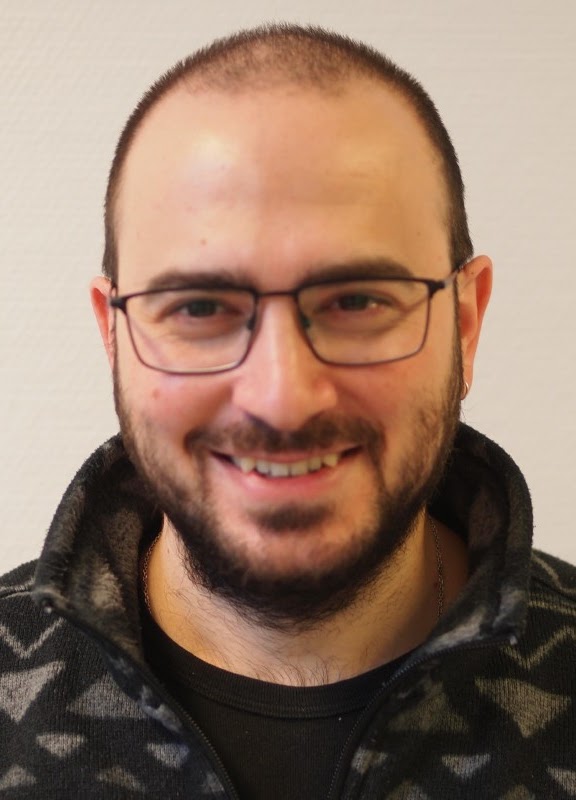
Raghavendra Selvan, an Assistant Professor (Tenure Track) at the University of Copenhagen, holds joint appointments in the Machine Learning Section (Department of Computer Science), Kiehn Lab (Department of Neuroscience), and the Data Science Laboratory. His academic journey includes a PhD in Medical Image Analysis (2018), MSc in Communication Engineering (2015), and BSc in Electronics and Communication Engineering (2009). PhD - Medical Image Analysis, University of Copenhagen (2018) MSc - Communication Engineering, Chalmers University (2015) BSc - Electronics and Communication Engineering, BMS Institute of Technology, India (2009) His research focuses on Bayesian Machine Learning with emphasis on Medical Image Analysis, Graph-based Learning, Tensor Networks, Approximate Inference, and Multi-Object Tracking Theory. Recent publications highlight his contributions to environmentally sustainable AI practices, efficient deep learning in medical imaging, and novel applications of tensor networks. Key research areas: Green AI and Environmental Sustainability Medical Image Analysis Graph Neural Networks Crystal Structure Prediction Model Compression Materials Science Applications
Georgios Arvanitidis is an Associate Professor at the Technical University of Denmark (DTU) in the Department of Applied Mathematics and Computer Science, specifically within the Section for Cognitive Systems (CogSys). He has established himself as a leading researcher in geometric machine learning, focusing on the application of differential geometry principles to enhance machine learning models. His work bridges theoretical mathematics with practical applications in artificial intelligence, with particular emphasis on understanding the geometric structure of data manifolds and latent spaces. Dr. Arvanitidis completed his educational journey with a Bachelor's degree from the Department of Informatics at the Aristotle University of Thessaloniki, followed by a Master's degree in Computer Science from Saarland University supported by the Max Planck Institute for Informatics. He earned his PhD at DTU's Cognitive Systems section under the supervision of Søren Hauberg, with additional research experience at Philipp Hennig's Probabilistic Numerics group. Prior to his current position as associate professor, he was a PostDoc at the Max Planck Institute for Intelligent Systems working with Bernhard Schölkopf. Dr. Arvanitidis's research primarily focuses on differential geometry in machine learning , where he explores how geometric structures can enhance representation learning and statistical modeling. His work in generative models investigates how learning the geometry of data manifolds can improve deep learning architectures. In the domain of deep learning theory , he examines why deep learning models generalize effectively on unseen data, with particular attention to the curvature properties of loss landscapes. His research in approximate Bayesian inference applies geometric principles to improve uncertainty quantification in neural networks. Through his innovative approaches, Dr. Arvanitidis has established himself as a leading researcher in geometric machine learning, contributing to both theoretical foundations and practical applications across various domains including robotics and life sciences. The publication trends of Dr. Arvanitidis reveal a consistent and evolving focus on geometric approaches to machine learning problems. His recent work (2023-2025) demonstrates increasing sophistication in applying Riemannian geometry to deep learning architectures, with particular emphasis on latent space geometry, optimization on manifolds, and geometric interpretations of neural network behavior. A notable pattern is the progression from foundational work on geometric representations to more applied research in areas like robotics and causal inference. His publications span top-tier conferences including NeurIPS, ICML, ICLR, and AISTATS, reflecting the high impact of his research. The interdisciplinary nature of his work is evident in collaborations across mathematics, computer science, and robotics domains, with recent papers addressing challenges in multimodal sampling, safety guarantees for dynamical systems, and counterfactual explanations. Dr. Arvanitidis has received several notable scientific awards and recognitions: Sapere Aude starting grant from the Independent Research Fund Denmark (DFF) GADL funding i-Rase, Pathfinder, and EIC (European Innovation Council) funding Best reviewer award for NeurIPS 2019 Best reviewer award for NeurIPS 2018 Best student paper award at Robotics: Science and Systems (R:SS) 2021 Dr. Arvanitidis actively mentors PhD students and researchers, currently supervising Alejandro Valverde, Johanna Gegenfurtner, and Albert Kjøller Jacobsen. He has previously co-supervised Alison Pouplin's PhD and worked with research assistant Georgios Pantis. His group receives substantial funding through multiple prestigious grants including the Sapere Aude starting grant from the Independent Research Fund Denmark, as well as European Innovation Council funding. He has been instrumental in creating opportunities for students interested in geometric machine learning, offering BSc and MSc thesis projects focused on generative models, deep learning theory, and optimization techniques. Dr. Arvanitidis also contributes significantly to the academic community as a reviewer for top conferences including ICLR and TMLR, and as an area chair for NeurIPS, ICML, AISTATS, and UAI. He co-organized the Machine Learning Summer School 2020 in Tübingen, further demonstrating his commitment to education and community building. Dr. Arvanitidis leads a vibrant research group focused on geometric machine learning within the Cognitive Systems section at DTU. His team includes multiple PhD students working on cutting-edge research at the intersection of differential geometry and artificial intelligence. The group has developed notable software tools, including the "geometric_ml" GitHub repository with over 70 stars, which contains implementations for applying Riemannian geometry in machine learning. His research has practical applications in robotics, where geometric approaches enable more robust motion planning, as evidenced by his work on "Reactive Motion Generation on Learned Riemannian Manifolds" which received a best student paper award. Additionally, his methodologies have found applications in life sciences, as mentioned in his 2022 AISTATS paper. The collaborative nature of his work is evident through extensive partnerships with researchers at institutions including the Max Planck Institute for Intelligent Systems, University of Cambridge, and various European universities. His recent news items indicate active engagement with the academic community through talks, conference presentations, and ongoing supervision of new PhD students joining his group.
Johannes Bjerva is a Full Professor at Aalborg University's Department of Computer Science (Campus Copenhagen), leading the Copenhagen branch and conducting interdisciplinary NLP research integrating linguistic typology. His work focuses on low-resource languages, language model security, and societal AI impact. PhD (University of Groningen, 2017): Thesis on multitask/multilingual lexical modeling M.A. & B.A. in Computational Linguistics (Stockholm University) Research interests span linguistically-informed NLP , language model security , and low-resource language technology . Current projects include the DFF Sapere Aude grant (2025) for language model detection security and the LM2-SEC project (2025–2030). His 2024 ACL paper on embedding inversion security and 2024 EMNLP paper on typological diversity exemplify recent work. Scientific awards include: 2021: Teacher of the Year (AAU Computer Science) 2019: Google Cloud research credits 2022: Carlsberg Semper Ardens (5M DKK) 2024: Novo Nordisk Data Science grant (~10M DKK) Supervision includes 8 PhD students across projects like CreoleVal and HiFi-KPI . He serves on the Industrial Researcher Committee at Innovation Fund Denmark and is a member of Det Unge Akademi (2023–2028).
Jes Frellsen is an Associate Professor at the Department of Applied Mathematics and Computer Science (DTU) since 2016. Previously, he held academic positions at the IT University of Copenhagen (2016-2019), postdoctoral roles at University of Cambridge (2013-2016) and University of Copenhagen (2011-2013). Education: PhD in Bioinformatics (2011), University of Copenhagen MSc in Bioinformatics (2007), University of Copenhagen BSc in Mathematics and Computer Science (2005), University of Copenhagen EAP Exchange at University of California, Santa Cruz (2004-2005) Research Focus Jes Frellsen specializes in statistical machine learning , particularly generative AI and deep generative models with applications in bioinformatics . His work integrates Bayesian inference , directional statistics , and Markov chain Monte Carlo methods to address challenges in macromolecular structure prediction and missing data imputation . Recent efforts explore uncertainty quantification in image segmentation and generative modeling for materials science. Advising & Collaborations He actively supervises PhD students and postdoctoral researchers in projects spanning news recommendation systems , medical imaging , and 3D structure generation . Collaborations include work with Zoubin Ghahramani (Cambridge) and Thomas Hamelryck (Copenhagen), with contributions to protein structure prediction and statistical methods in structural bioinformatics .
Arijit Khan is an Associate Professor in the Department of Computer Science at Aalborg University, Denmark. He leads the Data Engineering, Science and Systems group and is affiliated with the Technical Faculty of IT and Design. His research focuses on Graph Neural Networks , Blockchain , Data Management , and AI interpretability . He is the Principal Investigator (PI) of a major project on Data Management, Fundamental Algorithms, and Machine Learning for Emerging Problems in Large Networks (2022–2027). Research Interests : Graph Data Management & Machine Learning Blockchain Transaction Analysis Large Language Model + Knowledge Graph Synergies Healthcare AI (e.g., ICU glucose prediction) Explainable AI for Graph Neural Networks Research Trends : His publications emphasize neuro-symbolic systems , uncertain graph analysis , and AI-driven blockchain insights . Recent work bridges large language models with knowledge graphs and explores GPU performance optimization via shader code analysis. Awards & Grants : No explicit awards listed, but his active research grants include a 5-year project on large network analysis with interdisciplinary applications in life and health sciences. Funding emphasizes algorithmic innovation and data science integration. Labs/Teams : Head of the Data Engineering, Science and Systems research group, focusing on AI for societal impact ('AI for the People') and scalable graph data systems. Collaborations span blockchain analytics, healthcare informatics, and GPU architecture design.
Kasper Green Larsen is a Professor in the Department of Computer Science at Aarhus University. His research focuses on theoretical computer science, machine learning, algorithms, and data structures. He has made significant contributions to boosting algorithms, PAC learning theory, and computational geometry. His work often bridges algorithm design with complexity theory, addressing challenges in optimization, memory efficiency, and lower bounds analysis. Key research areas include: Algorithmic Learning Theory (e.g., boosting, bagging, and PAC learners) Data Structure Design (e.g., invertible Bloom tables, succinct representations) Computational Complexity (e.g., lower bounds for dynamic and oblivious algorithms) Geometric Algorithms (e.g., hierarchical searching, range queries) Recent publications emphasize foundational advancements in learning theory (e.g., optimal weak-to-strong learning) and data efficiency (e.g., memory-reduced Bloom filters). His work frequently appears in top conferences like IJCAI, ICALP, and SODA, reflecting rigorous theoretical contributions with practical implications.
Ali Lashgari is a Marie Skłodowska-Curie Postdoctoral Research Fellow at Aalborg University's Department of the Built Environment (Faculty of Engineering and Science). He holds a PhD in Geotechnical Engineering from Semnan University (2019) and serves as a visiting researcher at Hong Kong University of Science and Technology. His research focuses on seismic hazards, offshore energy infrastructure resilience, and probabilistic geotechnical analysis. Education: PhD in Geotechnical Engineering, Semnan University (2019) MSc in Geotechnical Engineering, Semnan University (2013) BSc in Civil Engineering (not specified) Research Interests: Development of predictive models for geohazards (e.g., submarine landslides, liquefaction), offshore foundation resilience, and probabilistic analysis of seismic risks. His work integrates numerical modeling (e.g., DEM-FEM), machine learning, and big data analytics for hazard assessment frameworks. Awards: Marie Skłodowska-Curie Postdoctoral Fellowship (2023) Grants & Projects: PRO-SLIDE: EU-funded project (2023–ongoing) for offshore energy infrastructure resilience against seismic submarine landslides (PI) EU-COST Action CA23155: Pan-European network on ocean tribology (participant) Professional Activities: Founder of Intelligent Environmental Risks Analyzers (2016) Membership in AGU, DFI, GEER, IGS, and IRCEO Lab/Team Affiliation: Risk, Resilience, Safety, and Sustainability of Systems Research Group at Aalborg University.
Chenjuan Guo is an Associate Professor at the Department of Computer Science, Aalborg University, within The Technical Faculty of IT and Design. She is affiliated with the Data Engineering, Science and Systems group and the AI for the People initiative, and is part of the Daisy - Center for Data-intensive Systems. Her research focuses on machine learning, data engineering, spatio-temporal data analysis, and time series forecasting. Key projects include the Villum Foundation-funded 'Explainable AI for Complex Microbial Community Interactions and Predictions' (2021-2024) and the Astra project on time series analytics in spatial networks (2018-2021). Her research interests span representation learning, autoencoders, path representation, outlier detection, trajectory data analysis, and time series modeling. She has supervised 3 PhD students and contributed to over 60 publications, with a recent emphasis on transformer-based forecasting, neural architecture search, and continuous learning frameworks for spatio-temporal data. Her work bridges theoretical advancements with practical applications in environmental science, cloud computing, and urban mobility systems. Key achievements include developing frameworks like AutoCTS++ for automated time series forecasting and LightGTS for lightweight models. She actively collaborates internationally, contributing to conferences like ECML PKDD and CVPR. Her research is supported by grants from the Villum Foundation and other institutions.
Thomas Martini Jørgensen is a Senior Researcher at the Department of Applied Mathematics and Computer Science at the Technical University of Denmark (DTU). His work primarily focuses on machine learning applications in telecommunication networks and industrial processes. Key Research Areas: Machine Learning, Deep Learning, Network Impairments, Fault Detection Collaborations: Active collaborations in AI for cable broadband networks and optical network diagnostics Recent research involves integrating operations research with deep learning for network topology reconstruction and applying conditional diffusion models for fault detection in optical networks. His work spans both theoretical and applied domains, with a focus on industrial applications. He supervises PhD projects including: Anomaly Detection in Cable Broadband Networks Machine Learning Applications in Field Service His publications demonstrate expertise in convolutional neural networks for flocculation analysis and geomechanical modeling of fracture networks in petroleum engineering.
Peyman Afzali Gorouh is a Postdoctoral Researcher in the Applied Power Electronic Systems group within the Faculty of Engineering and Science at Aalborg University, Denmark. His research focuses on developing innovative models for energy communities, smart grids, and renewable energy integration. Dr. Afzali's research interests span power engineering, smart grid technologies, renewable energy systems, and energy communities. His work particularly emphasizes prosumer economics, peer-to-peer energy trading, risk modeling in power systems, and energy democracy frameworks. He has developed novel approaches for optimizing energy communities while considering socio-economic-environmental factors, demand response, and uncertainty management. His recent publications (2020-2024) demonstrate a consistent focus on energy community modeling, with particular emphasis on peer-to-peer trading mechanisms, risk-constrained optimization, and multi-objective planning. His work bridges technical power system challenges with socio-economic considerations, creating integrated models that address both engineering and human aspects of modern energy systems. Dr. Afzali maintains an active research profile with numerous publications in high-impact journals including IEEE Transactions on Engineering Management, Energy and Buildings, Applied Sciences, and Sustainable Cities and Society. His research shows strong international collaboration, particularly with researchers from Iranian institutions.
Alvaro Torralba is an Associate Professor in the Department of Computer Science at Aalborg University, Denmark, affiliated with the Technical Faculty of IT and Design. His research focuses on symbolic search, heuristic functions, and planning algorithms within artificial intelligence and machine learning. Notable projects include the ConAn initiative exploring contrastive analysis for state-space exploration. He has contributed extensively to classical planning, probabilistic planning, and automated planning competitions, earning awards such as the First Prize in the Agile Track of the 10th International Planning Competition (IPC’23). His work often bridges theoretical advancements with practical applications, including game-based network update synthesis and believable non-player character development. Research outputs include over 60 publications since 2011, with a focus on optimizing search algorithms and enhancing planning efficiency through techniques like operator-potential heuristics and bidirectional search strategies. His scientific contributions span algorithmic innovation, verification methodologies, and large-scale abstraction evaluation. Collaborations and datasets include foundational work on PDDL generators and pattern databases, with open-access resources available via Zenodo. As a program committee member and award-winning researcher, Torralba actively contributes to advancing the frontiers of AI planning and decision-making systems.
Mateja Novak is an Assistant Professor at AAU Energy, Aalborg University, Denmark, within the Department of Applied Power Electronic Systems under the Faculty of Engineering and Science. Her research focuses on model predictive control, multilevel converters, machine learning, and reliability of power electronic systems, contributing to sustainable energy systems and renewable energy integration. She holds a Ph.D. from Aalborg University (2020) and an M.Sc. from Zagreb University (2014). Previously, she was a Postdoc at AAU Energy (2020-2023) and a visiting researcher at Kiel University (2018) and Danfoss (2023). Notable achievements include the EPE Outstanding Young EPE Member Award (2019) and 2nd place in the 2021 IEEE-IES Student and YP Competition. Her work spans projects like ALL2GaN (2023-2026) and AI-Power (2022-2027), addressing GaN IC solutions and AI-driven power electronics advancements. She is actively involved with IEEE societies including the Power Electronics Society and IEEE Women in Engineering. Her research outputs emphasize control strategies for power electronics, reliability analysis, and optimization techniques. Key areas of exploration include thermal stress balancing in converters, statistical model checking, and multiobjective control algorithms. Collaborations with industry partners like Danfoss and academic institutions like Kiel University underscore her interdisciplinary approach to advancing power electronics technology.
Henrik Madsen is a Professor at the Department of Applied Mathematics and Computer Science, Technical University of Denmark (DTU). His work focuses on energy systems, stochastic processes, and mathematical modeling. He leads research in areas such as demand response in district heating, probabilistic forecasting, and integration of renewable energy sources. Madsen has supervised multiple PhD students and contributes to projects like the IEA DHC Annex TS9 and SEEDS initiative. His expertise includes statistical analysis, time series modeling, and data-driven approaches for energy systems. He actively engages in collaborative research on smart grids, thermal energy storage, and sustainable energy solutions. Education: Academic qualifications from DTU, though specific details are not provided in the text. Research Interests: Mathematical modeling of energy systems Probabilistic forecasting methodologies Integration of wind and solar power Dynamic modeling for district heating Data assimilation in hydrological systems Optimization of energy flexibility Publications & Trends: Recent works emphasize demand response strategies, district heating optimization, and machine learning tools like the nabqr Python package and evalprob4cast R package. His research bridges theoretical stochastic methods with practical applications in energy infrastructure. Grants & Projects: IEA DHC Annex TS9: Digitalization of district heating SEEDS: RES-integrated electrified heating systems Data-Driven Methods for Demand-Side Flexibility Labs/Teams: Collaborates with DTU's Dynamical Systems group and participates in interdisciplinary initiatives like the Frigg 2.0 energy system analysis framework.
Jacob Holm is a Tenure Track Assistant Professor in the Department of Computer Science at the University of Copenhagen, specializing in the Algorithms and Complexity research section. His work focuses on theoretical computer science with emphasis on graph algorithms and data structures. Dr. Holm's research interests span multiple areas of theoretical computer science: Dynamic graph algorithms, particularly for planar graphs Biconnectivity and triconnectivity in dynamic settings Efficient data structures for graph problems Parallel and distributed algorithms for graph processing Computational geometry and pursuit-evasion problems His publication record shows 25 research outputs including 17 article in proceedings, 6 journal articles, 1 book chapter, and 1 Ph.D. thesis. His work demonstrates consistent contributions to theoretical computer science, with numerous publications in top venues like the ACM-SIAM Symposium on Discrete Algorithms (SODA). Analysis of his recent publications reveals a strong focus on worst-case performance guarantees for dynamic graph problems, particularly in planar graph settings where maintaining efficiency during updates presents significant theoretical challenges. Dr. Holm maintains an active research profile with an ORCID identifier (0000-0001-6997-9251) and collaborates extensively with researchers in the theoretical computer science community, particularly with Eva Rotenberg as evidenced by multiple co-authored publications. His work bridges theoretical computer science with practical applications, developing algorithms that maintain efficiency even as graphs dynamically change.
Brian Nielsen is an Associate Professor at Aalborg University's Department of Computer Science, under The Technical Faculty of IT and Design. His research focuses on Distributed Systems, Embedded Systems, Real-Time Systems, Model Checking, IoT Networks, and Autonomous Vehicles. He has been actively involved in projects such as domOS (operating system for smart buildings), FED (Flexible Energy Denmark), and compositional verification of multicore avionics systems. His work emphasizes model-based validation, formal methods, and industrial applications, particularly in safety-critical systems. Recent research highlights include energy-efficient motion planning for autonomous vehicles, comparative analysis of network simulators, and sigfox-based IoT modeling. He has received awards including the Application Coordinator Pool and START funds (both in 2007). Key Projects: domOS, FED, compositional verification of multicore systems Grants: Multiple EU-funded projects (e.g., Horizon Europe) and industry collaborations Awards: Application Coordinator Pool (2007), START funds (2007) His publications span over 80 articles, with a focus on real-time systems, IoT interoperability, and model-driven development. He has advised two PhD students and has been actively involved in organizing international conferences and workshops.