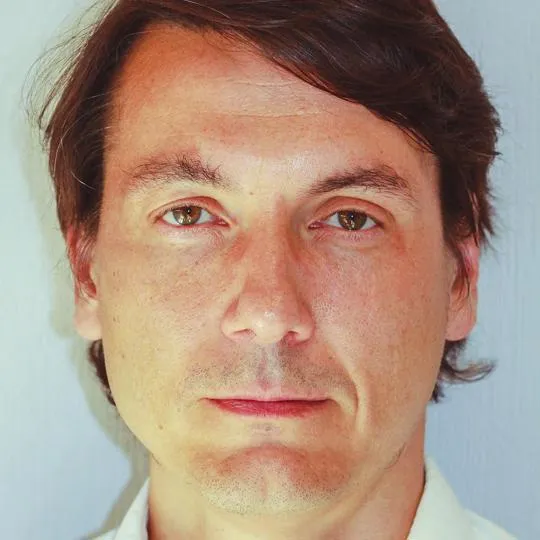
Erik P. de Vink is an Associate Professor at Eindhoven University of Technology (TU/e), Department of Mathematics and Computer Science. He also serves as an Associated Research Fellow at CWI, the Dutch National Research Institute for Mathematics and Computer Science. His research focuses on formal methods, software product lines, dynamic system adaptation, and probabilistic process algebra. He has held roles such as Treasurer of Formal Methods Europe and organized symposia like the International Symposium on Formal Methods (2018). His academic background includes a PhD from VU Amsterdam, a Senior Researcher position at KPN, and prior teaching at Leiden University. Key research interests include formal modeling of software systems using tools like mCRL2 and Prism, analysis of feature-behavior interactions in software product lines, and validation techniques for dynamic system adaptation. He has co-promoted 9 PhD students in areas like denotational semantics, security, and probabilistic process algebra. His work integrates theoretical computer science with practical applications in distributed systems and concurrency. Recent articles explore topics such as formal methods education, bisimulation in polyhedral models, and probabilistic process analysis. He contributes to open-source tool development (e.g., mCRL2) and has published extensively in journals like Formal Aspects of Computing and Journal of Logical and Algebraic Methods in Programming .
Somayeh Asadi is an Associate Professor in the Department of Architectural Engineering at Pennsylvania State University . Her research integrates sustainable building design, renewable energy systems, and infrastructure resilience. Key areas include energy-efficient building envelopes, asphalt material science, and urban electrification planning. She leads projects funded by NSF, including a $1M grant for autism-inclusive AI career pathways. Education & Affiliations: Affiliated with Penn State's Institutes of Energy and the Environment, focusing on Integrated Energy Systems and Equitable Communities. Active in the College of Engineering's interdisciplinary initiatives. Research Highlights: Recent work emphasizes: Optimizing classroom daylighting and energy use across U.S. climate zones Thermal performance of photovoltaic-integrated façade systems Data-driven equity in EV charging infrastructure placement Resilience of food-energy-water systems in changing climates Grants & Recognition: 2023 U.S. Fulbright Scholar awardee. Leads NSF-funded projects on autism career pathways and Arctic climate adaptation. Recent publications address microgrid design, pavement material innovation, and bike-trip-driven urban sustainability transitions. Technical Expertise: Combines engineering principles with data science approaches, including agent-based modeling and probabilistic programming for energy systems. Collaborates internationally on projects in Indonesia and Arctic communities.
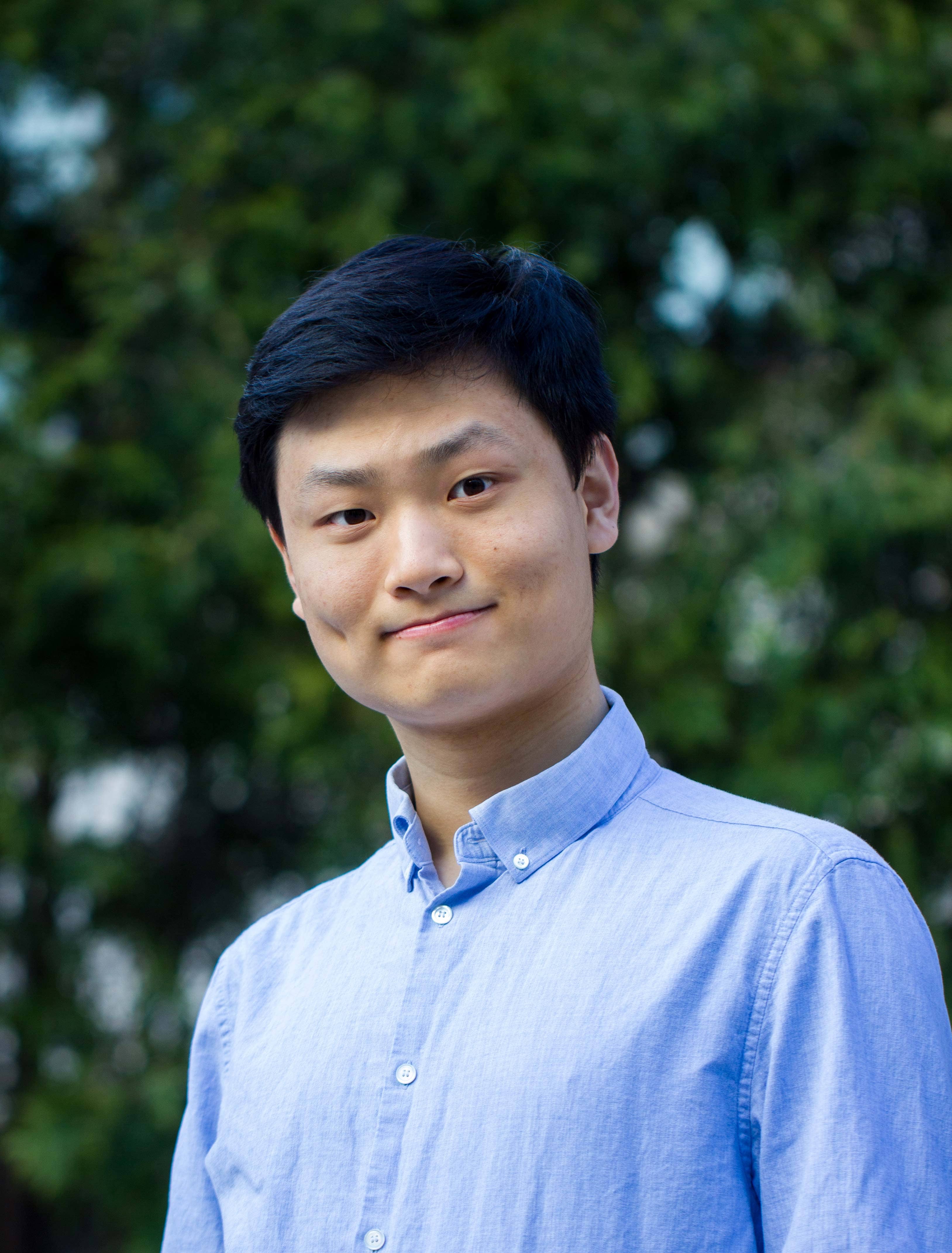
Yifan Jing is an Assistant Professor in the Department of Mathematics at The Ohio State University (OSU). He previously held postdoctoral positions at the University of Oxford’s Mathematical Institute and Wolfson College, mentored by Ben Green. His academic journey includes a PhD from the University of Illinois Urbana-Champaign (2021), supervised by József Balogh and Xiaochun Li, an M.Sc. from Simon Fraser University (2018) under Bojan Mohar, and a B.Sc. from the University of Science and Technology of China (2016), advised by Jack Koolen. His research focuses on Arithmetic Combinatorics, Analytic and Combinatorial Group Theory, Lie groups, Abstract Harmonic Analysis, Representation Theory, Additive Number Theory, Model Theory applications, Discrete Probability, and Theoretical Computer Science. Notable contributions include work on measure growth in Lie groups, inverse theorems for geometric inequalities, and structural graph theory. He received the 2023 Kirkman Medal for his research contributions. He currently organizes OSU’s Combinatorics Seminar and teaches Math 4507: Geometry. His advising includes PhD students Yewen Sun, Chavdar Lalov, and Yuchen Meng, alongside mentoring multiple undergraduate researchers at Oxford. Collaborators include leading mathematicians such as Chieu-Minh Tran, Ruixiang Zhang, and Bojan Mohar. His work bridges analysis, algebra, and logic to address problems across combinatorics, number theory, and geometry.
Professor Ivan Tyukin is a faculty member at King's College London's Department of Mathematics, holding the position of Professor of Mathematical Data Science and Modelling since 2022. Previously, he served as a Professor of Applied Mathematics at the University of Leicester (2018–2022) and held roles from Lecturer to Reader there (2012–2018). He also served as an Adjunct Professor at the Norwegian University of Science and Technology (NTNU) from 2019 to 2021. Education: PhD (2001), DSc (Habilitation, 2006), University of Leicester academic roles (2007–present). Research Interests: Focuses on high-dimensional data analysis, neural networks, machine learning, dynamical systems, control theory, and mathematical modelling. His work bridges theoretical foundations of AI with practical applications in healthcare, cybersecurity, and urban analytics. Publications: Over 123 peer-reviewed articles, including recent works on adversarial AI attacks, stealth edits to language models, and applications of ML in cardiology. His research often emphasizes robustness and reliability in AI systems. Awards: Best Paper Award (2023). Grants: Leads EPSRC-funded projects like the Turing AI Acceleration Fellowship and initiatives in clinical AI and material science. Labs/Teams: Involved in interdisciplinary teams at King's College, collaborating on projects like self-learning AI for clinical care and automated archaeological analysis.
Guoliang (Larry) Xue is a Professor of Computer Science and Engineering at Arizona State University's School of Computing and Augmented Intelligence. He holds a Ph.D. from the University of Minnesota (1991) and has held prior positions at the Army High Performance Computing Research Center and the University of Vermont. His research focuses on network survivability, resource allocation, and applications in IoT, cloud computing, and quantum networks. He has published over 300 papers and is an IEEE Fellow (2011). Awards include the IEEE Communications Society's Distinguished Technical Achievement Award (2017) and ASU's Researcher of the Year (2007). Education: Ph.D., Computer Science, University of Minnesota-Twin Cities (1991) M.S., Operations Research, Qufu Normal University (1984) B.S., Mathematics, Qufu Normal University (1981) Research Interests: Dr. Xue’s work spans network security, IoT, quantum communication, and optimization. Recent projects include quantum internet protocols, IoT activity inference, and blockchain payment systems. His research is funded by NSF, ARO, and DOE. Grants & Service: He has led over 20 grants since 2003, including NSF-funded projects on edge computing and spectrum allocation. He served as IEEE Communications Society Vice President (2016–2017) and on its Fellow Evaluation Committee (2016–2018). Labs & Teams: His research is supported by the Optimization Laboratory (http://optimization.asu.edu) and collaborations with industry partners. He advises students on topics like quantum networks and IoT security.
Prof. Ralf Möller is a Professor of Artificial Intelligence in Humanities at the University of Hamburg's Faculty of Humanities, Department of Philosophy. He leads the Institute of Humanities-Centered Artificial Intelligence (CHAI) and serves as spokesperson for the 'Data Linking' research field within the Cluster of Excellence ‘Understanding Written Artefacts’ (UWA, 2019–2025). His research focuses on intellectics, causal and probabilistic-relational models, and AI applications in humanities, emphasizing sustainable data management and multimodal foundation models. He heads the Data Linking Lab and the CHAI Institute, overseeing projects like the TAMAR initiative for manuscript research. His work bridges technical AI advancements with humanities needs, addressing challenges in data curation, federated information systems, and ethical AI integration. He contributes to interdisciplinary collaborations, including ethics committees and cultural heritage preservation initiatives. Key research themes include lifted inference in probabilistic graphical models, temporal data prediction, and synergistic OCR-LLM systems for damaged documents. His projects emphasize scalability, sustainability, and human-centered design principles. Supervising doctoral candidates in AI and humanities intersections, he advocates for AI systems grounded in cultural and ethical considerations. Labs/Teams: CHAI Institute, Data Linking Lab. Current Projects: UWA Cluster (2019–2025), Data Linking Infrastructure development, Humanities-Centered AI applications. Grants include leadership roles in institutional and collaborative research funding.
Chenghao Liu is a postdoctoral Research Fellow at the California Institute of Technology (Caltech), where he is supervised by Prof. Frances Arnold starting in 2025. He previously completed his Ph.D. at McGill University (2019-2024) under Prof. Dmytro Perepichka and collaborated with Prof. Yoshua Bengio at Mila. He co-founded the protein design startup Dreamfold (2021-2025) and was a Vanier Canada Graduate Scholar (2021-2024). His research bridges chemistry and computer science, focusing on AI-driven molecular and materials design. His recent publications highlight work on generative AI for 3D molecule synthesis (SynCoGen), GFlowNets for synthesizable molecular generation (RGFN), and covalent organic frameworks with tailored electronic properties. He has contributed to machine learning applications in chemistry, including protein backbone generation and CO₂ photoreduction catalysts. His work spans molecular design , AI algorithms , and materials discovery . Scientific Awards Vanier Canada Graduate Scholar (2021-2024)
Pooya Ronagh is a Research Assistant Professor at the University of Waterloo, affiliated with the Department of Physics & Astronomy and the Institute for Quantum Computing (IQC). He also serves as a Scientific Lead at the Perimeter Institute Quantum Intelligence Lab (PIQuIL) and directs the Hardware Innovation Lab at 1QBit. His work bridges quantum computation, machine learning, and optimal control, focusing on quantum algorithms, error correction, and hybrid quantum-classical systems. Education: PhD in Mathematics (University of British Columbia, 2016), MSc in Mathematics (UBC, 2011), dual BSc in Mathematics and Computer Science (Sharif University of Technology, 2009). Awards include the Benjamin Franklin Fellowship (2009). Research Interests: Quantum algorithms for machine learning, reinforcement learning, fault-tolerant quantum architectures, cryogenic systems, and quantum control. He explores applications of quantum simulation to improve learning efficiency and robustness in AI systems. Recent work includes optimizing quantum error correction decoders, developing scalable superconducting architectures, and advancing neural network-based quantum state tomography. His contributions span theoretical frameworks (e.g., lattice surgery scheduling) and experimental methods (e.g., SFQ pulse control). Teaching: Courses like PHYS 490 (Machine Learning in Physics) emphasize practical coding and interdisciplinary projects. Grants and collaborations involve industry and academic partners in quantum hardware and software development. Labs: Hardware Innovation Lab (1QBit), IQC Quantum Control Group Future Work: Scaling quantum supercomputers, cryogenic neural decoders, quantum-enhanced generative AI
Fotios Lygerakis is a doctoral student and university assistant at the Department of Cyber-Physical Systems (CPS) at Montanuniversität Leoben, Austria. His research focuses on advancing machine learning and robotics, particularly in representation learning, visuotactile fusion, and reinforcement learning for robotic manipulation. He holds a Diploma in Electrical and Computer Engineering from the Technical University of Crete (2019) and has held roles including teaching assistant at the University of Texas at Arlington, research assistant at Demokritos (Athens), and research intern at Toshiba Research Europe. His research interests span representation learning, multimodal fusion, reinforcement learning, and healthcare robotics. Notable contributions include work on CR-VAE and M2CURL, earning a Best Student Paper Award at the 2024 Ubiquitous Robotics Conference. Lygerakis actively supervises theses in areas like human-robot interaction and self-supervised learning, and teaches courses on machine learning and deep learning. Lygerakis maintains active engagement in the scientific community through reviewing for journals/conferences (e.g., IROS, IJRR), organizing workshops, and leading the Neural Coffee Reading Group. He has presented invited talks at institutions like New York University and Technical University of Crete, and his work has been featured in outlets like Computer Vision News.
Mark J. Clayton is the William M. Pena Professor of Information Management in the Department of Architecture at Texas A&M University's School of Architecture. A native of New Orleans, Dr. Clayton has been a faculty member at Texas A&M since 1995. He has served in significant administrative roles including Executive Associate Dean of the School of Architecture and Interim Head of the Department of Architecture. Previously, he taught at Cal Poly from 1988 to 1991. Dr. Clayton's educational background demonstrates interdisciplinary expertise spanning architecture and engineering: B.Arch from Virginia Polytechnic Institute and State University (1983) M.Arch from University of California-Los Angeles (1987) Ph.D. in Civil and Environmental Engineering from Stanford University (1998) Dr. Clayton's research focuses on the intersection of digital technologies and architectural design. His scholarly interests include architectural design, computational design, Building Information Modeling (BIM), parametric modeling, digital fabrication, facility management, information technology, and sustainable design. His work bridges theoretical design concepts with practical building performance considerations, particularly in how digital tools can enhance design processes and outcomes. He has been instrumental in developing frameworks for integrating BIM with other simulation tools for energy analysis, thermal comfort, and urban planning applications. Analysis of Dr. Clayton's recent publications (2017-2024) reveals a consistent trajectory toward increasingly sophisticated applications of computational methods in architecture. His work shows evolution from foundational BIM applications toward more complex integrations with artificial intelligence, urban climate modeling, and multi-objective optimization. Key thematic areas include thermal comfort assessment using BIM, AI-assisted spatial layout planning, energy performance evaluation of climate-adaptive building envelopes, and the integration of aesthetic considerations into computational design optimization. His research demonstrates a progression from technical implementation toward addressing broader architectural and urban challenges. Dr. Clayton has been actively involved in architectural education and practice, serving in leadership roles within the School of Architecture. His interdisciplinary background combining architecture and engineering has positioned him to bridge gaps between design theory and technical implementation. While specific grant information isn't provided in the available materials, his extensive publication record suggests sustained research activity and likely external funding support for his work in computational design and building information modeling. Dr. Clayton's work appears to be closely associated with the CRS Center at Texas A&M University, though specific laboratory facilities aren't detailed in the provided information. His research collaborations seem to span architecture, engineering, and computer science domains, reflecting the interdisciplinary nature of his work in computational design and building information modeling.
Professor Yves Atchade is a faculty member at the Department of Mathematics and Statistics at Boston University, holding the Duan Family Faculty Fellow of Data Science position. He leads the FORMES research group focused on statistical methods for environmental sciences. His work bridges probability, high-dimensional computation, and applied environmental modeling. Current projects include large-scale Bayesian inference , deep learning for rainfall prediction in West Africa , and inverse problems in remote sensing . Collaborations with institutions like ENSEA, Abidjan and the TAHMO Foundation drive environmental sensor network deployments in Côte d'Ivoire. His research emphasizes MCMC algorithm design and unbiased Monte Carlo methods , with applications spanning environmental science, machine learning, and high-dimensional statistics. Recent publications explore unbiased MCMC , cyclical sampling , and Bayesian PINNs . Scientific contributions include: Unbiased MCMC with Couplings (2020) High-dimensional Bayesian Computation (2018) Efficiency bounds in semiparametric models (2020) Adaptive MCMC Confidence Intervals (2016) He actively mentors students and postdocs, with methodological developments in Markov chain theory , stochastic optimization , and Monte Carlo variance reduction . The FORMES group welcomes inquiries from prospective researchers via email at atchade@bu.edu .
Professor Brett Ninness is a faculty member at the University of Newcastle, Australia, holding the position of Professor in the School of Electrical Engineering and Computing. He has served in various administrative roles, including Assistant Dean (Research Training), Deputy Head of Faculty, and Acting Pro Vice Chancellor. His research focuses on dynamic system modeling, system identification, stochastic signal processing, and wireless communications. He has authored over 100 papers and held editorial roles in journals like Automatica and IEEE Transactions on Automatic Control. Education: Brett Ninness earned his BE, ME, and PhD in Electrical Engineering from the University of Newcastle. His teaching spans systems theory, signal processing, digital systems, and communications. Research Interests: He specializes in system identification, noise-robust signal processing, and applications in wireless communications. His work includes developing algorithms for state estimation, Kalman filtering, and nonlinear model identification. Recent projects involve collaborations with industry partners like Bell Labs and Agere Systems. Publications: His most recent works address smoothed state estimation, nonlinear system identification, and distributed Kalman filtering. Articles highlight advancements in stochastic processes, control systems, and Bayesian methods. Awards: Recipient of the 2001 Tall Poppy Award for outstanding scientific contribution. He is a member of editorial boards and international committees, including the IEEE Technical Committee on System Identification and IFAC. Grants & Supervision: Extensive grants in system identification and control theory. Supervised numerous PhD/Master’s students, though specific names are not listed here. Collaborations: Partnerships with institutions like Royal Institute of Technology (Sweden), Linköping University, and Vrije Universiteit Brussel. Active in global research networks through IEEE and IFAC committees.
Adrian Wills is an Associate Professor in the School of Engineering (Mechatronics) at the University of Newcastle, Australia. He leads the Mechatronics Engineering program and holds academic appointments since July 2015. His research focuses on Bayesian estimation, system identification, and control engineering, with applications in robotics and mechatronics. Wills has collaborated with institutions globally, including Linköping University, Uppsala University, and the University of British Columbia. He earned his B.E. (Elec.) and Ph.D. from the University of Newcastle in 1999 and 2003, respectively. Teaching expertise includes delivering advanced courses in estimation and optimization within the Mechatronics Engineering program. Administrative roles include program convenor for Mechatronics Engineering. Research highlights include contributions to state-space models, nonlinear system identification, and model predictive control. His work bridges theoretical advancements with practical applications in engineering systems and healthcare. Key collaborations involve Professors Lennart Ljung, Thomas Schön, and Bhushan Gopaluni, among others. His technical contributions span MATLAB toolboxes (e.g., UNIT), FPGA/ASIC implementations for control systems, and interdisciplinary projects in strain measurement using neutron diffraction.
Luc Rey-Bellet is a Professor and Honors Coordinator in the Department of Mathematics and Statistics at the University of Massachusetts Amherst. He has been a faculty member at UMass since 2002, progressing from Assistant Professor to Associate Professor in 2008, and to Full Professor in 2013. His office is located in LGRT 1423K, and he maintains regular office hours on Tuesdays and Fridays. Dr. Rey-Bellet received his Dipl. Phys. from Eidgenössiche Technische Hochschule Zürich (ETH Zurich) in 1994 and his Ph.D. in Mathematics from Université de Genève in 1998. Following his doctoral studies, he held postdoctoral positions at Rutgers University (1998-1999) and served as a Whyburn Instructor at the University of Virginia (1999-2002) before joining UMass Amherst. Professor Rey-Bellet's research spans statistical mechanics, applied probability, and their applications across various domains. His work focuses on both theoretical foundations and practical applications, with particular emphasis on non-equilibrium systems, large deviations theory, and computational methods. He has made significant contributions to understanding physical and mathematical properties of non-equilibrium steady states, developing coarse-graining strategies for complex systems, and creating numerical schemes for lattice spin systems and stochastic processes. His research also extends to evolutionary game theory, mathematical economics, Monte-Carlo methods, information theory, uncertainty quantification, and machine learning. Recent publications reveal a strong trend toward interdisciplinary work at the intersection of probability theory, statistical mechanics, and machine learning. Rey-Bellet has been particularly active in developing mathematical frameworks for generative modeling, with focus on Wasserstein distances, divergence measures, and gradient flows. His work on structure-preserving generative models, group-invariant networks, and uncertainty quantification demonstrates how classical statistical mechanics concepts can inform modern machine learning theory. The consistent theme across his recent work is developing rigorous mathematical foundations for understanding complex probabilistic systems and their computational representations. Rey-Bellet has secured significant research funding throughout his career, with grants totaling $101K in 2003, $106K in 2006, $99K in 2010, $280K in 2015, $370K in 2020, and $300K in 2023. Notably, he was awarded larger collaborative grants of $900K in 2019, $1.950M in 2021, and $900K in 2016, reflecting the significance and collaborative nature of his research. While specific teaching awards aren't detailed in the available information, his faculty profile notes "Award-winning teaching," suggesting recognition for his pedagogical contributions. His role as Honors Coordinator further indicates his commitment to undergraduate education and academic excellence. Professor Rey-Bellet maintains an active research group, frequently collaborating with colleagues including Markos A. Katsoulakis, Jeremiah Birrell, Panagiota Birmpa, and others. His research spans theoretical developments in probability and statistical mechanics while maintaining strong connections to computational methods and applications in machine learning and data science. Current projects appear focused on developing mathematically rigorous frameworks for generative modeling, uncertainty quantification, and understanding the statistical properties of complex systems.
Dr Dalia Chakrabarty is a Reader in Statistical Data Science at the Department of Mathematics, University of York. Previously, she held positions as Senior Lecturer at Newcastle University and Lecturer at Lancaster University. Her research focuses on probabilistic methods, Bayesian inference, and machine learning applications in fields such as medicine, astronomy, and materials science. She specializes in kernel methods, random graph analysis, and causal forecasting. Notable contributions include developing methodologies for uncertainty quantification and non-parametric learning. Her academic career includes a Royal Society Dorothy Hodgkin Fellowship and supervision of students like Kane Warrior. Dr Chakrabarty's work bridges theoretical statistics and real-world challenges, with publications spanning journals like Plos One and Artificial Intelligence in Medicine . She also authored the textbook Supervised Learning: Mathematical Foundations & Real-world Applications (2024, CRC Press). Research Highlights: Inter-graph distance metrics for medical data analysis Bayesian state-space modeling of galactic dynamics High-dimensional data applications in oncology and materials science Collaborations: Maintains ties with Brunel Mathematics for PhD supervision and international research networks. Contact: Email dalia.chakrabarty@york.ac.uk , Tel: +44 (0)1904 32 1486